Search Results for: hudson yards

May 10, 2017

Finance firms in talks to move to Vornado’s proposed Hotel Pennsylvania-replacing supertall

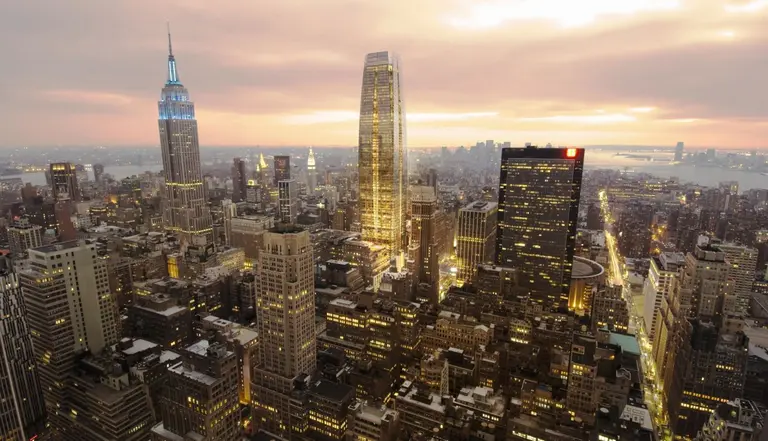
Plans to replace the century-old Hotel Pennsylvania with a 1,216-foot office building have surfaced again. Financial firms Morgan Stanley and Deutsche Bank are reportedly contemplating a move to Vornado Realty Trust’s planned supertall skyscraper, 15 Penn Plaza, according to the Post. Vornado first won the city’s approval in 2007 to build a supertall at the location of Hotel Pennsylvania on Seventh Avenue and nearly signed a deal with Merrill Lynch to be a tenant until the financial crisis dissolved the agreement. This design, by Pelli Clarke Pelli, is being presented to the firms along with new options says a source.
Find out more
April 21, 2017

Work to begin this spring on Penn Station-Moynihan Train Hall complex

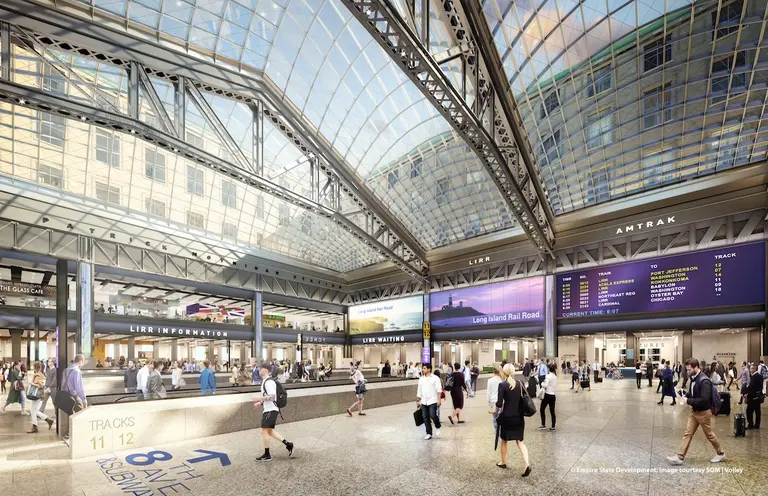
This spring, the 650,000 commuters who travel through Penn Station daily may finally start to witness Governor Cuomo’s $1.6 billion plan to revamp what he called the “overcrowded, decrepit and claustrophobic” station into a more spacious and high-tech transit hub. As the Daily News reports, the first phase of the overall Moynihan Station Development Project will begin soon, extending Penn Station’s West End Concourse to reduce congestion. The second phase will transform the James A. Farley Post Office into the new Moynihan Train Hall, which will hold more than 112,000 square feet of retail and 588,000 square feet of office space, in addition to new ticketing and waiting areas for Amtrak and Long Island Railroad passengers.
More details right this way
November 8, 2016

Photographer Danica O. Kus provides new interior views of Bjarke Ingels’ Via 57 West

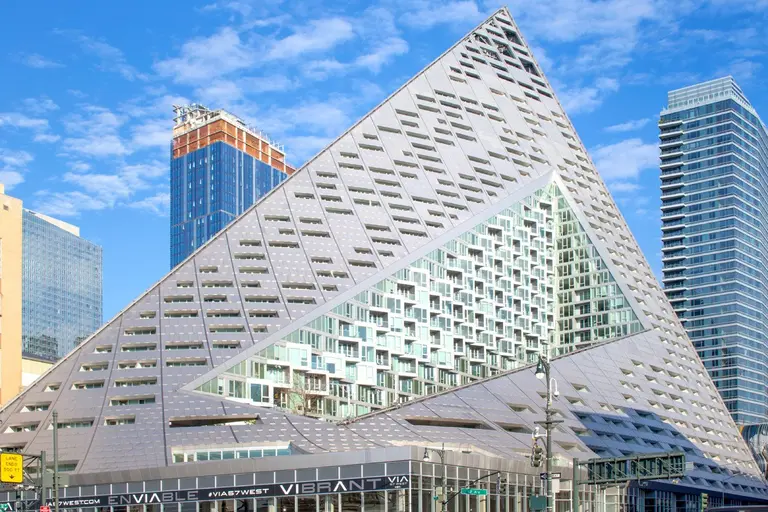
Photograph © Danica O. Kus For architectural photographers, Bjarke Ingels' self-described "courtscraper" Via 57 West is a dream. From its sharp angles and unique tetrahedron design to its winding courtyards and geometric interiors, the 32-story rental offers plenty of artistic shots. A couple months ago, just as the Midtown West project wrapped up construction, Iwan Baan released a set of images that showed new vantages of the central outdoor space and views of how the building fits in with the skyline. Now, ArchDaily shares a collection of photos from Danica O. Kus, these providing never-before-seen looks at Via's interior spaces--including the lobby, pool, and balconies--as well views of the the building's public art piece and highly artistic shots of its facade.
go inside
October 24, 2016

Life in New York City before indoor toilets  

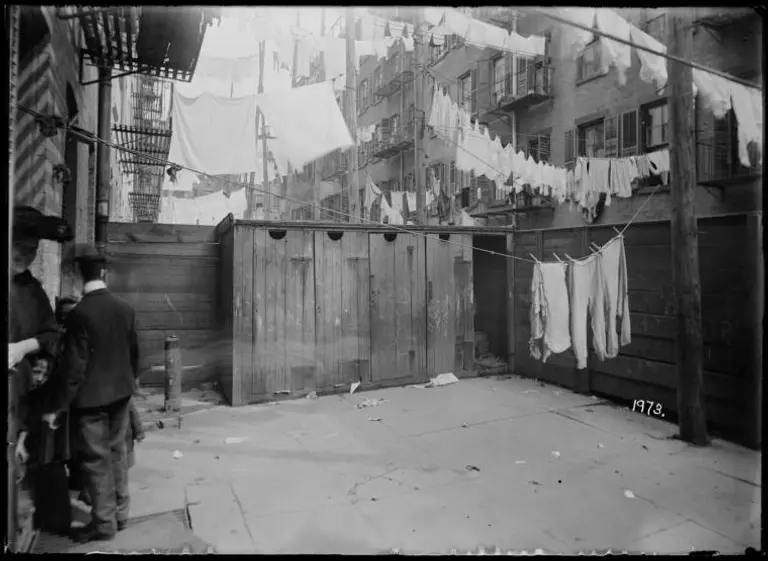
If you’ve ever bemoaned the fact that you share a bathroom with several family members or housemates, you’re not alone. Most New Yorkers live in apartments and most units have just a single bathroom. A hundred and fifty years ago, however, the situation was much worse. At the time, New Yorkers had just a few choices when it came to taking care of their lavatory needs and by modern standards, none of the options were appealing—visit an outhouse or use a chamber pot. Nevertheless, indoor toilets proved slow to gain popularity when they were first introduced in the second half of the nineteenth century. Initially, many residents feared the newfangled invention would bring poisonous gases into their homes, leading to illness and even death.
learn more here
September 26, 2016

Could Bjarke Ingels’ floating shipping containers work for student housing in NYC?

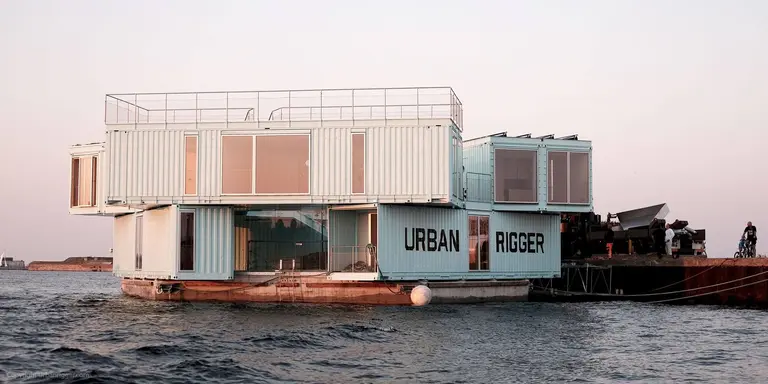
When college students arrive to the big city they often bring with them dreams of glamorous apartments, but they soon get hit the reality of a cramped dorm room covered by student loans or an awkward apartment shared with several strangers. Over in Denmark, where 40,000 beds are needed to accommodate an exploding student population, Kim Loudrup realized the enormity of the student housing shortage (inventory and affordability) and partnered with the country's prodigal son Bjarke Ingels on a new, sustainable student housing design made from floating shipping containers. Called Urban Rigger, they hope this modular idea can extend to other waterfront cities and even solve other housing problems like the refugee crisis.
Could this idea take off here?
June 15, 2016

Developer Wants to Erect the World’s Tallest Free-Fall Ride Atop Penn Station

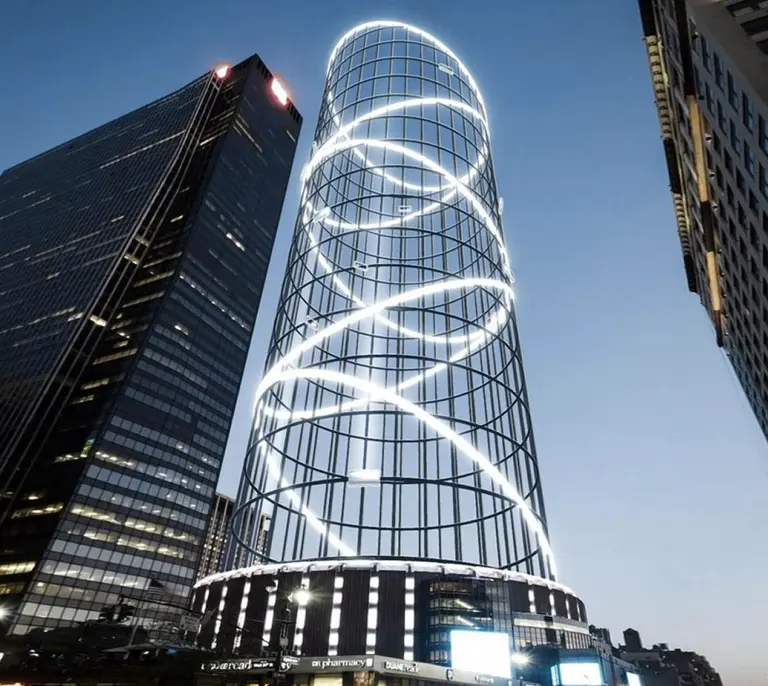
Observation decks boasting panoramic city views have been to date the way to add a "thrill-seeking" element to new developments, but here's a new proposal that really wants visitors to throw their arms up in excitement. As the Daily News first reports, two Brooklyn developers want to turn the top of Penn Station into the world's tallest free-fall tower ride, an idea that would be developed alongside all the renovations planned for the outdated transit hub. "Halo," as it would be called, is the work of AE Superlab and would rise an incredible 1,200 feet from the roof of Madison Square, or be tacked onto the back of the adjacent Farley Post Office, which is slated to be converted into a waiting hall to support expanding station. And in addition to Halo's towering height (to put that 1,200 feet in perspective, the Empire State Building is 1,250 feet at its parapet), the ride's 11 cars would boast adjustable speeds. Cars could be modified to move as quickly as 100 miles per hour giving it a top-to-base free fall of about six seconds.
find out more here
June 7, 2016

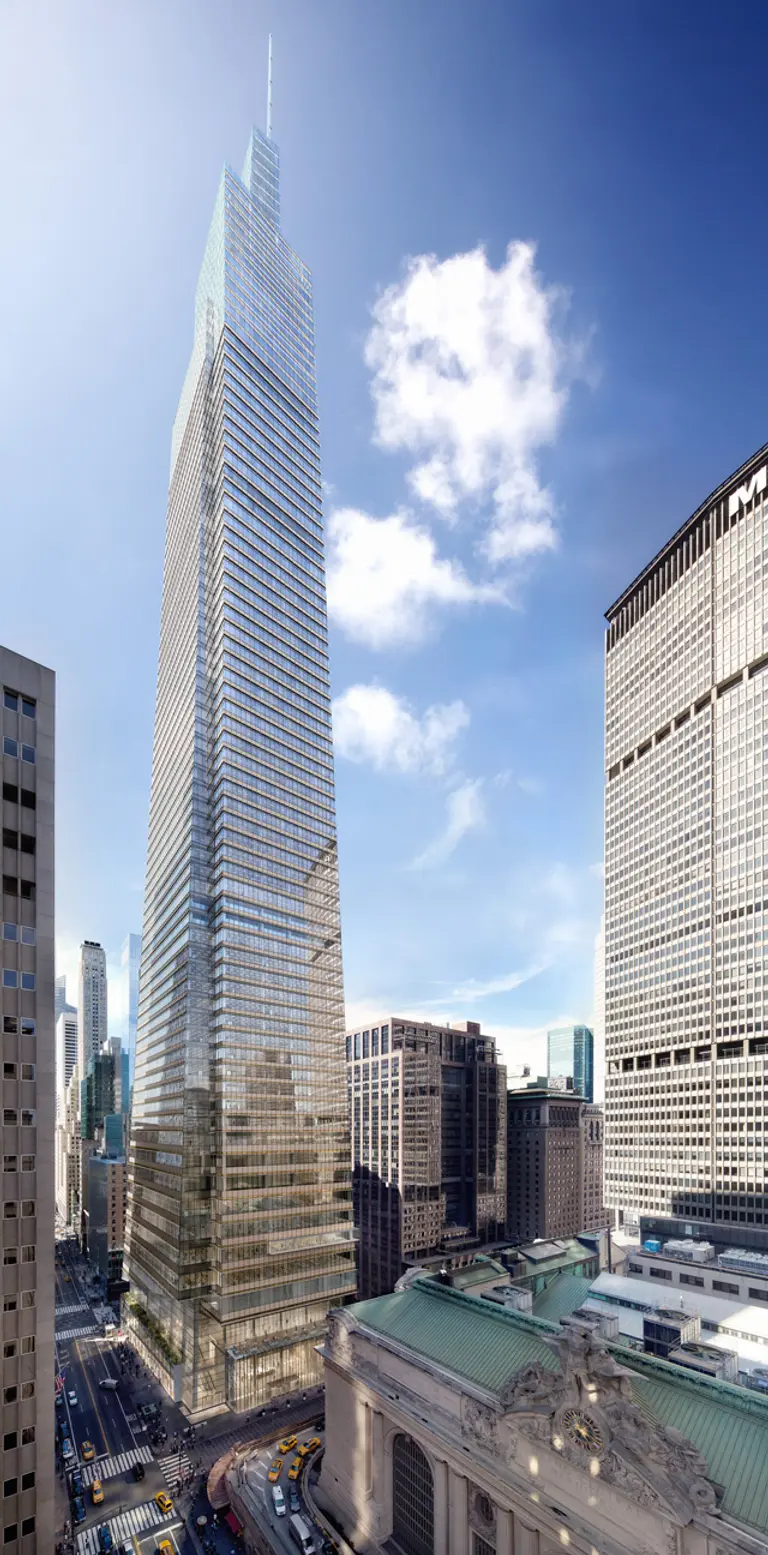
One Vanderbilt Will Cost a Whopping $3.14 Billion

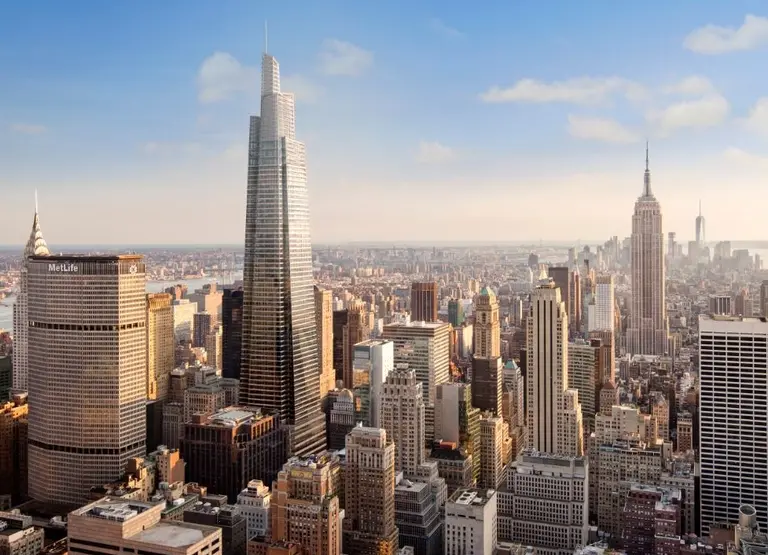
Another supertall tower will join the $3 billion+ club. The Real Deal reports that SL Green Realty has pegged the cost of One Vanderbilt, Midtown's future tallest tower, at $3.14 billion. The city's largest office landlord also said it hopes to close on a $1.5 billion construction loan by the end of the summer, leaving $1.64 in equity needed to complete the 1,401-foot tower designed by Kohn Pedersen Fox. As TRD notes, One World Trade Center became the world's most expensive office tower in 2014 when it opened with a final cost of around $3.8 billion. Bjarke Ingels' planned High Line tower known as the Spiral is also expected to run over $3 billion.
More details this way
May 13, 2016

Odds You’ll Score an Affordable Apartment Through a City Lottery Are 1,000 to 1

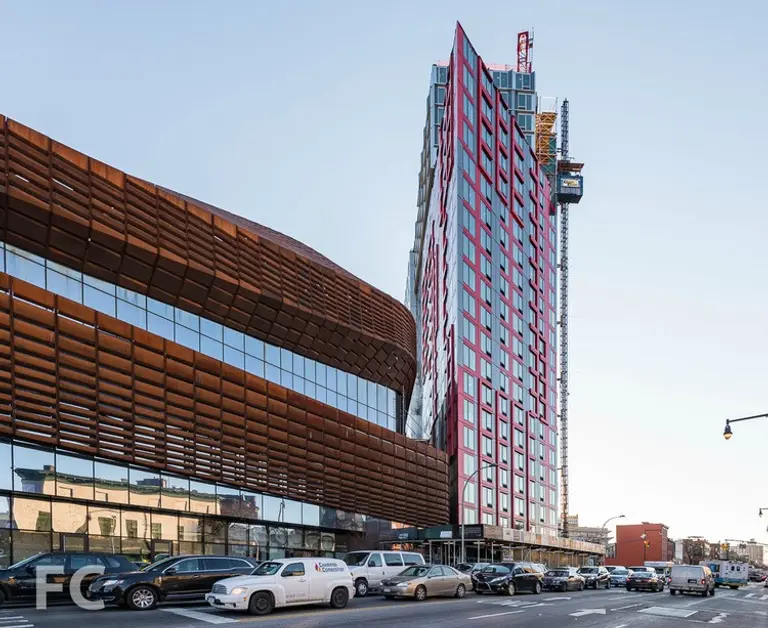
Last August 6sqft reported that about 696 applicants were applying for each of the city's available affordable housing units, and those odds have gotten even longer. So far this year 2.54 million applicants have applied via the city’s Housing Connect website for 2,628 affordable apartments, which puts the odds at about 1,000 to 1. The number of hopefuls vying for units like the 181 well-below-market rate apartments–from $559/month studios to $3,012 two-bedrooms–available at Pacific Park's 461 Dean Street has increased dramatically since 2013, when 364,000 applicants applied for around 2,300 units, reports the New York Post.
Who's included in those depressing odds?
May 6, 2016

Five-Star ‘Lazar Hotel’ Coming to Midtown, Will Meld Modern With Late-1700s Baroque

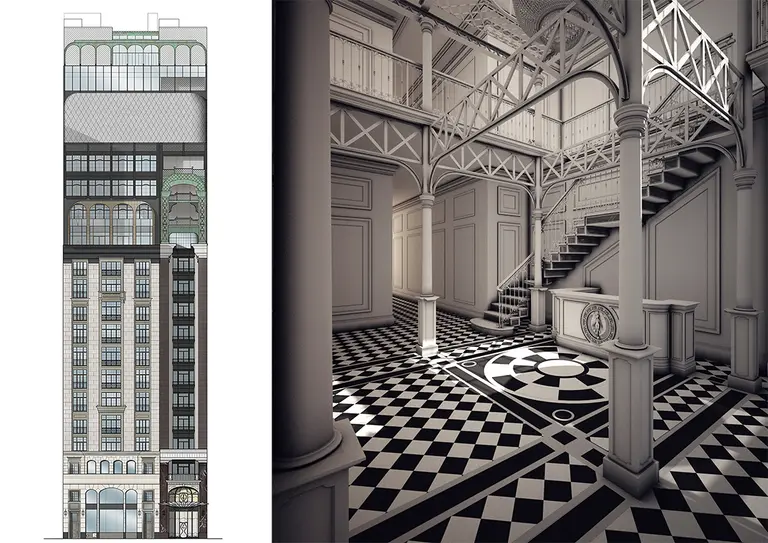
West 44th Street between Fifth and Sixth Avenues is home to some of the city's most elite hotels, such as the Royalton, Sofitel and Algonquin, and also  to esteemed institutions like the Harvard Club, Penn Club and New York Yacht Club. Near the stretch's Fifth Avenue corner, a new 20-story, 96-key hotel tower is in the works at 7 West 44th Street, and it will be festooned in Baroque stylings, Juliet balconies, twisted columns, cast-iron railings, and a grand lobby staircase.
READ MORE
May 3, 2016

Skyline Wars: New Jersey’s Waterfront Transforms With a Tall Tower Boom

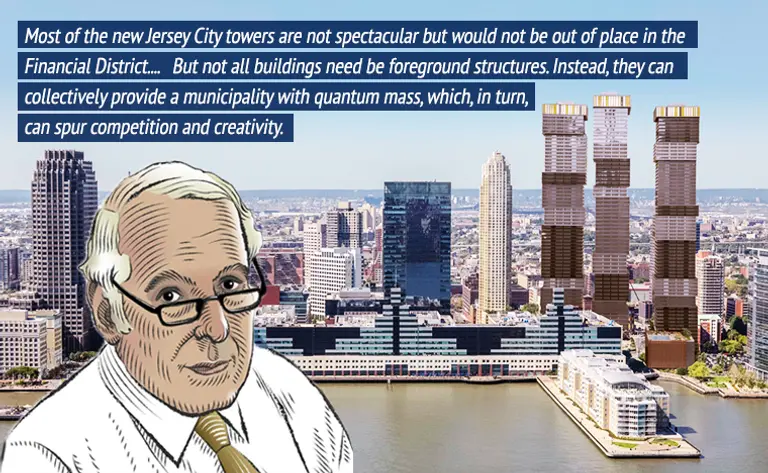
Carter Uncut brings New York City’s latest development news under the critical eye of resident architecture critic Carter B. Horsley. Here, Carter brings us his seventh installment of “Skyline Wars,” a series that examines the explosive and unprecedented supertall phenomenon that is transforming the city’s silhouette. In this post Carter looks at the new New Jersey skyline. The hulking, 781-foot-high Goldman Sachs tower at 30 Hudson Street in Jersey City is like the Rock of Gilbraltar to Lower Manhattan’s famed skyline: massive and impressive. To some, perhaps, it conjures a Monty Python catapult or a very steep cliff on which to mount the Guns of Navarone for an assault on Lower Manhattan. It dominates the Jersey City skyline, which is a bit Spartan, especially in comparison with Brooklyn’s. Most of the skyscrapers in Brooklyn, however, are not directly on the waterfront and the Goldman tower is very much “in your face” on the water. Furthermore, all of a relative sudden, Jersey City is about to explode with three taller towers, which I can only describe as delirious, dancing, shimmy-shimmy-shake buildings with drop-dead vistas of Manhattan and the Hudson.
read more from carter here
April 27, 2016

Transit Think Tank Says MSG Move Could Be a $5B Example of ‘Architects Run Wild’

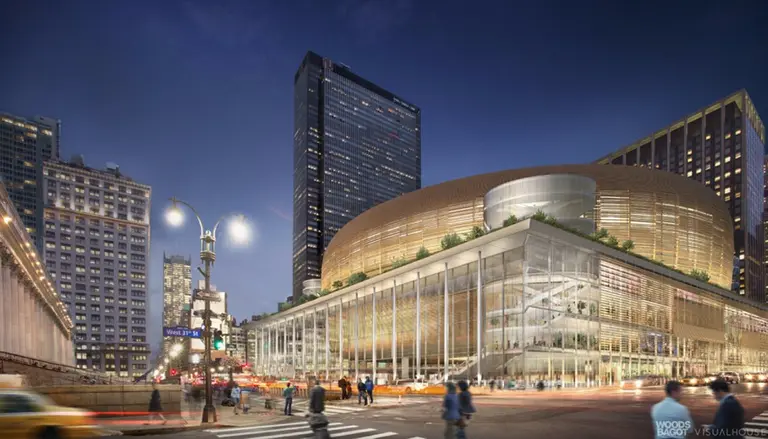
Moving MSG to make room for a bigger, better Penn Station train hub would be really expensive and probably not a good idea, according to a new report by transit think tank Rudin Center for Transportation Policy. Commercial Observer reports that the just-released study outlines the concern that moving the arena would come with a price tag of over $5 billion, take, like, forever, and would generally "become an urban planner’s worst nightmare." The study refers to the proposed overhaul of Pennsylvania Station and the idea of extending it to the post office off Eighth Avenue as well as suggestions by urban planners for relocating MSG.
So what's going to cost so much?
April 26, 2016

Skyline Wars: As Queens Begins to Catch Up, A Look at the Towers Defining Its Silhouette

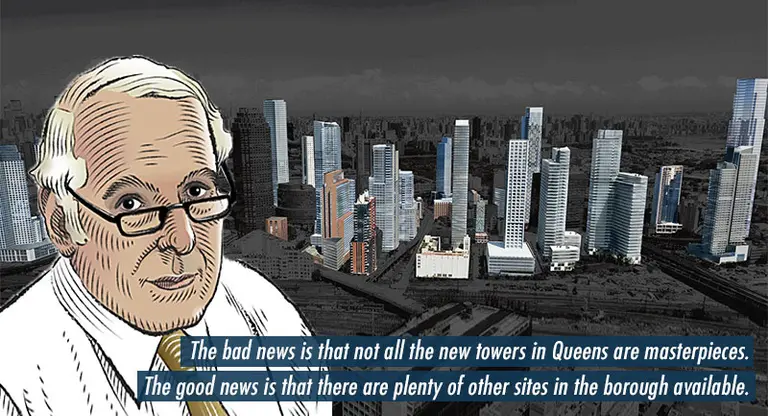
Carter Uncut brings New York City’s latest development news under the critical eye of resident architecture critic Carter B. Horsley. Here, Carter brings us his sixth installment of “Skyline Wars,” a series that examines the explosive and unprecedented supertall phenomenon that is transforming the city’s silhouette. In this post Carter looks at the new towers defining the Queens skyline. For a long time, the glass tower erected by Citibank was the lone skyscraper of note in Queens. Known initially as Citicorp at Court Square, it was built in 1989 and designed by Raul de Armas of SOM as a blue-green metal-panel-and-glass office tower with just a few setbacks at its 633-foot-high top—an extremely clean-cut, modern obelisk of fine proportions. In a 1988 article in The New York Times, Anthony DePalma wrote that the tower “dominates the Queens skyline like a sequoia in the desert” and Paul Goldberger, then the newspaper’s architecture critic, wrote the tower was “rapidly becoming one of the most conspicuous structures in the entire city.” He added, “It is a very unlikely thing, this building—no other skyscraper in New York is remotely like the Citicorp tower, not so much for its design as for the fact that it stands free, alone in this landscape of gas stations, warehouses and row houses,” The bank tower transformed “the landscape of New York” and “no longer does Manhattan virtually by itself control the skyline,” Mr. Goldberger continued. “Skyscrapers built at random all over New York would be devastating, but an occasional exclamation point, well designed and carefully placed, will do the skyline no grievous harm,” he concluded. This is a very important but also very controversial point as currently evidenced in Manhattan where traditional precincts are being pin-pricked to exhaustion and confusion by supertalls.
more on the queens skyline

April 21, 2016

100architects Propose a Vertical Park Made of Stacked Glass Pods for Times Square

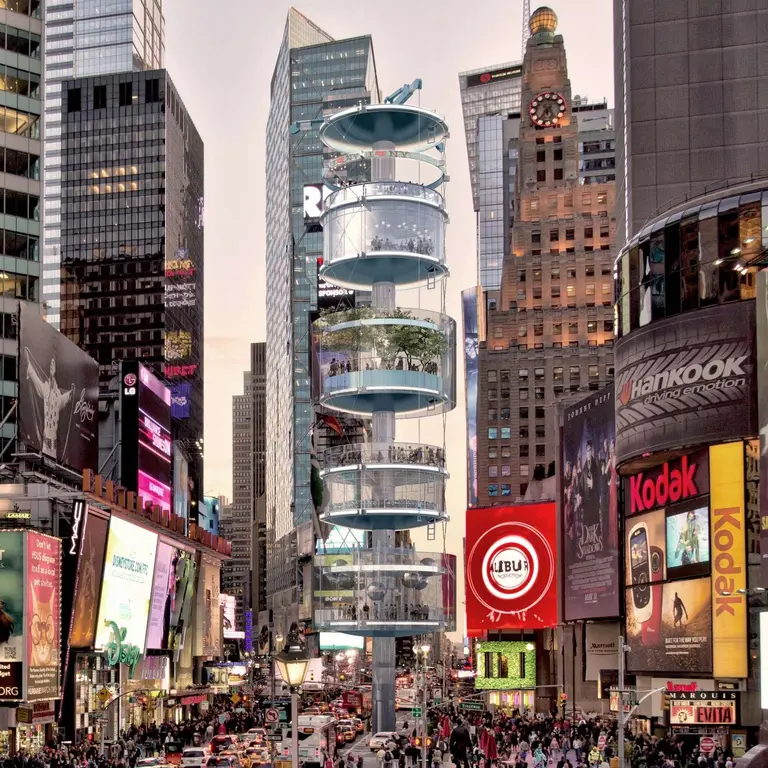
Shanghai-based architecture firm 100architects noticed how New Yorkers are always trying to get out of Times Square as fast as possible, which made them wonder if there was a way to engage people in the urban setting without them having to deal with the chaos at street level. That's where their proposal for Vertical Times comes in (h/t Architizer). The 180-foot-tall tower is a stack of six cylindrical glass pods along a central column that "multiplies the intended space for public recreation in a vertical way." Within these spaces would be a carousel, ball pit, hammock plaza, sky garden, restaurant, and bar.
Get the rest of the details
March 30, 2016

POLL: Are Floating Parks the Future of Public Space in NYC?

Yesterday, 6sqft uncovered conceptual renderings for a nine-acre island/pier in the Hudson River that would serve as a final terminus for the High Line. It would be a circular-shaped cultural and recreational center, dotted with five interconnected pyramid-shaped buildings, as well as an elevated promenade and a marina. It’s quite similar in design and theory to Barry Diller’s […]

December 20, 2015

Architensions’ Writing Pavilion Is a Tiny Backyard Retreat for Two Brooklyn Creatives

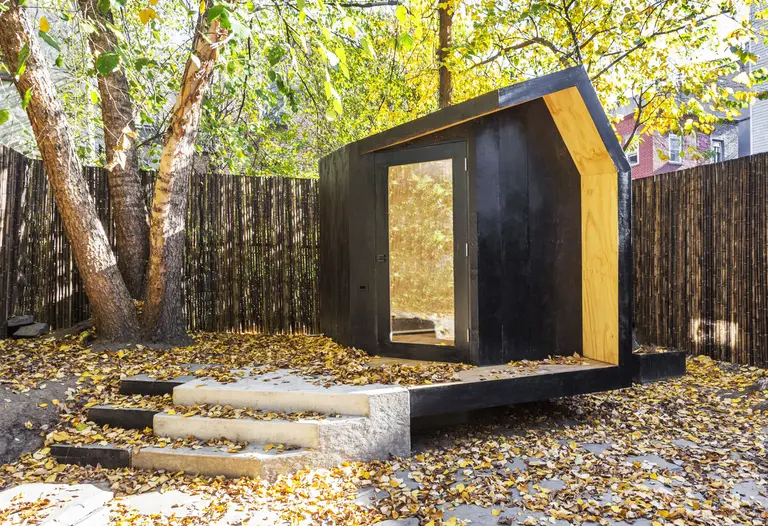
Most Brooklyn creatives head to the local cafe when they need to escape to get work done, but this lucky couple can retreat right to their backyard garden (h/t Inhabitat). They enlisted local firm Architensions to design a space where they can find "a condition of isolation or immersive solitude" for writing and drawing. The result is the Writing Pavilion, a 50-square-foot wooden structure that is light-filled and serene, but purposefully simple and void of distractions.
Find out more about this outdoor escape
October 28, 2015

Surreal Estate: NYC Listings That Are Scary, Hairy, and Totally Hideous

As if New York City home prices, monthly rents and apartment sizes weren’t scary enough. Between the horrors of Airbnb, overpriced dorm-style “co-living,” super-expensive micro-apartments, and Donald Trump, it’s hard to imagine we'd need Halloween to scare ourselves silly. But scare we do. Because of listings like these that know no season. Because sometimes real estate gets a little too real. From spookily dilapidated to eerily obscure to downright hideous, 6sqft has rounded up some of the most horrifying listings out there.
Be very afraid
October 13, 2015

Mayor de Blasio Supports Plan for $11B Underground Cross-Harbor Freight Tunnel

Now that he's done battling the state for MTA funding, perhaps Mayor de Blasio can set his sights on the Port Authority and the long-proposed Cross-Harbor Rail Tunnel. Representative Jerrold Nadler has been pushing for the freight rail tunnel for three decades, but the Bloomberg administration was strongly against it. Now, Nadler has a supporter in de Blasio, and the Port Authority is even studying the plan, which calls for a tunnel running from Jersey City to Bay Ridge, Brooklyn and another into Queens and Long Island. Why do politicians feel a multibillion-dollar tunnel is necessary? WNYC points out that NYC is the most truck-dependent city in the nation. Ninety percent of the 400 million tons of freight that come through the city each year travel by truck. The reason is that "New York City has no direct link to the national freight rail network, so goods coming into the ports and rail yards in New Jersey mostly cross the river by truck." Nadler has claimed that the new tunnel would take 2,500 trucks off the Hudson River crossings every day, thereby reducing pollution and the price of goods.
Find out more
June 24, 2015

Looking at NYC’s 10 Scenic Landmarks and What Sets Them Apart from Other Public Parks

Since 2015 marks the 50th anniversary of the New York City landmarks law, we've been talking a lot about historic buildings–those that have been saved, those that were destroyed, secrets of some of the city's most famous spots. We even discovered that there are two landmarked individual trees. And starting tomorrow, the New York City Parks Department is hosting a new exhibit at the Arsenal in Central Park called Living Landmarks, which takes a look at nine of the city's ten scenic landmarks, showcasing "their contributions to landscape design and to the dynamism of the city through historical and contemporary photography, renderings, maps, artifacts, and memorabilia." Many of these, like Central Park, Prospect Park, and Bryant Park, are no brainers, while others like Verdi Square, Fort Tryon, and Ocean Parkway, are a little more under-the-radar.
See the rest and find out what makes these public spaces landmark-worthy
April 20, 2015

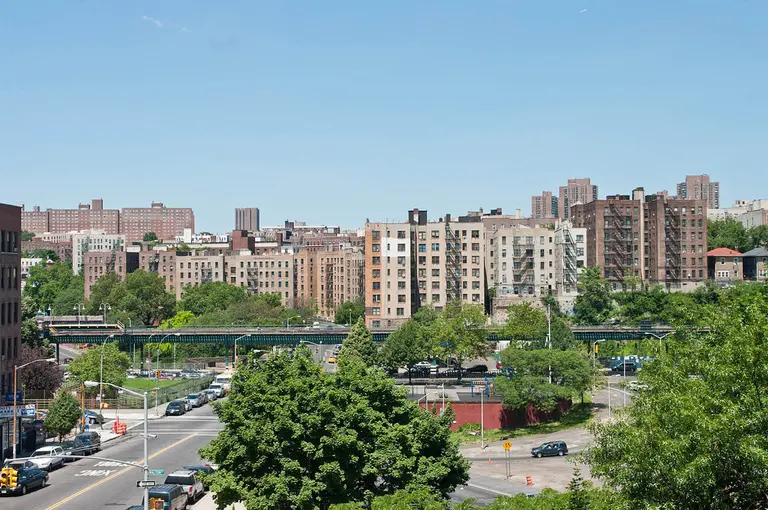
Going Green and Curbing Gentrification: How the Bronx Is Doing It Differently

“Ladies and gentlemen, the Bronx is burning." The infamous phrase, uttered in a 1977 broadcast of a Bronx fire, has stuck in the mind of many New Yorkers even today. Indeed, the Bronx saw a sharp decline in population and quality of life in the late 1960s and 1970s, which culminated in a wave of arson. By the early 1980s, the South Bronx was considered one of the most blighted neighborhoods in the country, with a 60 percent decline in population and 40 percent decline of housing units. Although revitalization picked up by the '90s, the Bronx never quite took off like its outer-borough counterparts Brooklyn and Queens. While media hype, quickly rising prices and a rush of development has come to characterize those two boroughs, the Bronx has flourished more quietly. The borough, nevertheless, has become home to growth and development distinct from the rest of New York City. Innovative affordable housing, adaptive reuse projects, green development and strong community involvement are redefining the area. As Bronx Borough President Ruben Diaz Jr. said during this Municipal Arts Society discussion in 2014, this is "The New Bronx."
Keep Reading About What's Going on in the Bronx
March 26, 2015

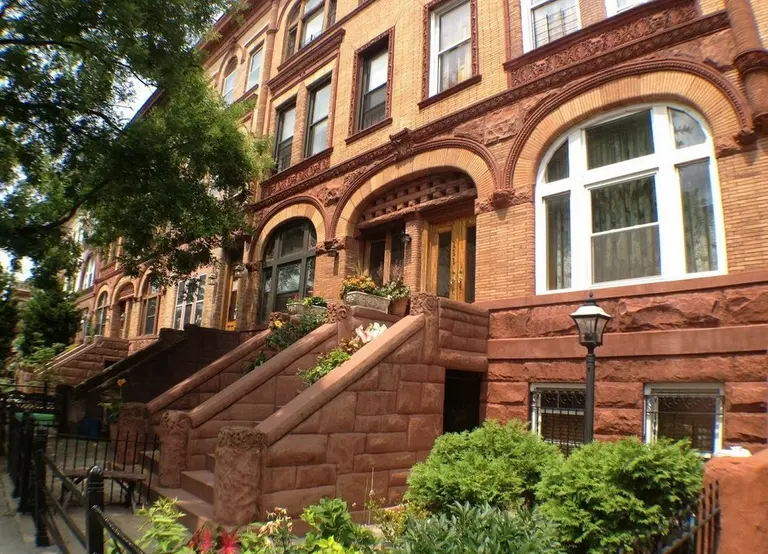
Mayor’s Affordable Housing Plan Flawed, More Likely to Harm Brooklyn’s Most Expensive Nabes

The revitalization of East New York is at the center of Mayor Bill de Blasio's affordable housing plan, but like his ambitious Sunnyside Yards project, his ideas for the fallen areas of Brooklyn are apparently also filled with holes. According to a piece published by the Wall Street Journal yesterday, de Blasio's plan to re-zone 15 neighborhoods to allow for taller and denser housing won't do much good for affordable housing. The main reason? The rents are too low. In fact, housing experts believe that his plan is more likely to hurt the character of Brooklyn's most tony areas, including Park Slope, Fort Greene, and Crown Heights, amongst many others.
More on their findings here
March 18, 2015

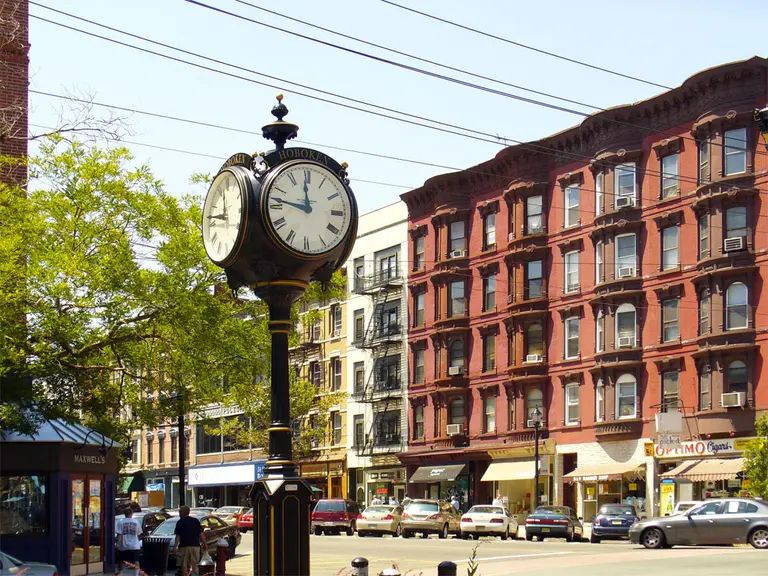
Move Over Brooklyn, Hoboken Is the Hipster Capital of America

Is Hoboken really America's most hipster city? According to a study conducted by "data-driven" blog FindtheBest, Hoboken out-hipsters us all with its souped up offer of 13 cafes and one yoga studio per 10,000 residents—the vast majority of whom are aged between 20 and 34 years old. FindTheBest looked at the top 19 municipalities with 50,000 or more inhabitants, evaluating both the locale and people against certain attributes they deemed characteristically hipster. Hilariously, the site defines a hipster as one who associates with a "subculture all about nonconformity and effortless nonchalance" and embodies an appearance that conjures up one “reading Proust over an overpriced cup of coffee.”
More on the study here