Search Results for: which region New York included

January 5, 2018

A 407-acre state park will replace a landfill in Central Brooklyn next year

Gov. Andrew Cuomo on Thursday announced a plan to create a 407-acre state park on Jamaica Bay in Brooklyn, which would be the largest state park in New York City. As a part of the $1.4 billion "Vital Brooklyn" initiative, the park would add much-needed green space in the Central Brooklyn neighborhood, an area the governor has described as a "park desert." Formerly the site of two landfills, the open space will be converted into parkland with opportunities for biking, hiking, fishing, kayaking, as well as educational facilities and an amphitheater.
See renderings of the park here
December 22, 2017

On this day in 1937, the Lincoln Tunnel opened to traffic

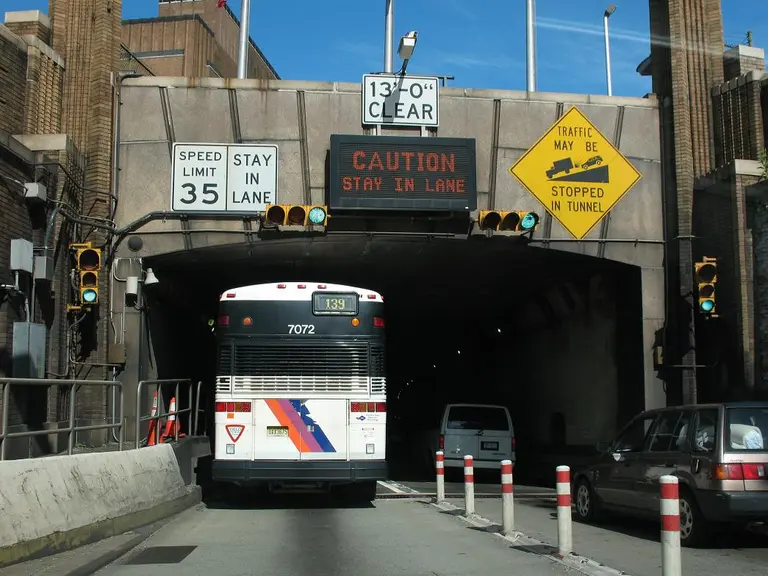
On December 22, 1937, the center tube of the Lincoln Tunnel opened to traffic. The $85 million project ($1.5 billion in today's dollars) linking Weehawken, NJ to Midtown Manhattan was hailed as a "new link of friendship between New York and New Jersey" and an "engineering feat." On that inaugural day, 7,661 cars drove through the 1.5-mile-long tunnel, paying 50 cents and likely not realizing they were 97 feet underwater.
Find out about the characters who made this day even more eventful
November 20, 2017

Preservation unbound: Is a plan to re-build the original Penn Station a viable option?

In August 6sqft reported that major work was underway in the $1.6 billion transformation of Penn Station's James A. Farley Building into a state-of-the-art, 225,000-square-foot “world-class 21st century transportation hub” called Moynihan Train Hall. That hasn't stopped the flow of suggestions for how to best make use of New Yorkers' un-favorite transport hub, which have included Practice for Architecture and Urbanism founder Vishaan Chakrabarti's proposal to repurpose, then move the old building to create a neighborhood gathering spot and a plan by Columbia University’s DeathLab  to turn the the station into a landscaped cemetery. Among those voices-with-a-vision is Rebuild Penn Station, a group of architects and preservationists whose intent is to recreate the original McKim, Mead and White-designed Penn Station, and a new ad campaign aims to get commuters on board (h/t Curbed).
Find out more
June 28, 2017

17-stop outer borough light rail proposed as a NYC subway alternative

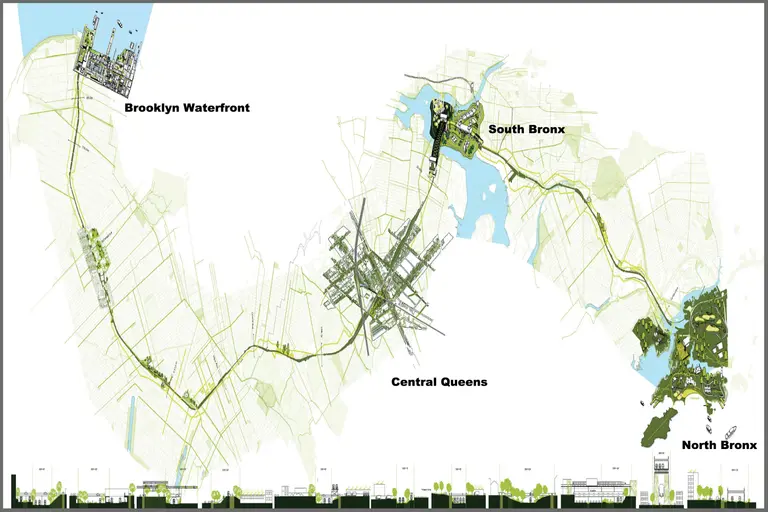
While pols and officials twiddle their thumbs and shift blame for the subway system's current state of chaos, the Regional Planning Association (RPA) and Rockefeller Foundation are actively looking for long-term solutions to help ease the city's transportation woes. As first shared by DNA Info, earlier this year the two organizations put out a design competition asking participants to develop proposals that could transform various areas of the New York metropolitan region. Four ideas were awarded $45,000 by the RPA and Rockefeller, one of which included a transportation alternative that would exclusively serve the Bronx, Queens, and Brooklyn.
more details here
June 23, 2017

American Medical Association issues health warning over LED streetlights

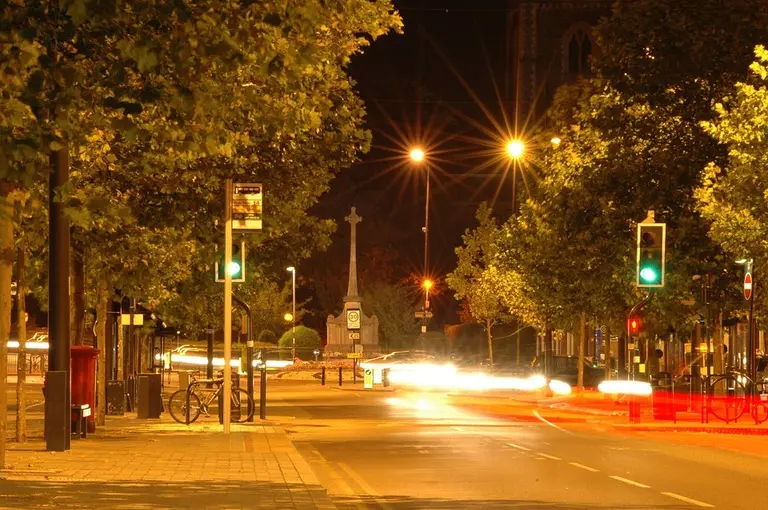
In May 2015, New York City’s Department of Transportation began an initiative to replace roughly 250,000 old streetlights with new LED fixtures in all five boroughs. The city chose to switch over to energy-efficient lights to save money and time; the lights last 15 years and require less maintenance. Following hundreds of complaints from residents about the harshness of the lights, the city had to then replace these new lights with dimmer bulbs. Now, the American Medical Association (AMA) warns of the potential harmful human health and environmental effects of LED lights, including damage to one's eyesight and disruption in sleep patterns. As CNN reports, the AMA has released guidelines for communities to follow when choosing LED streetlights.
Find out more
June 6, 2017

Is the C train the root of the NYC’s subway problems?

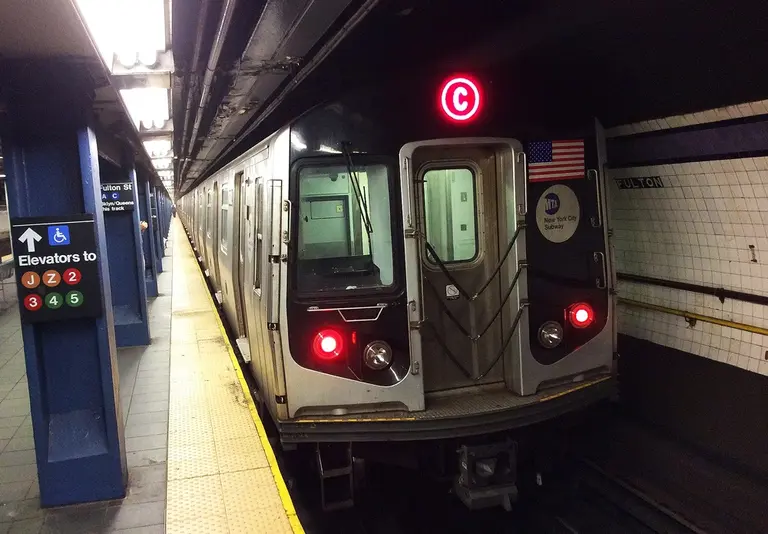
There's plenty of blame to go around when it comes to the chronic failures of the NYC subway system, from the lack of funds to the lack of leadership. But now the latest piece of the MTA to get finger wag is not a person or a line in the budget, but the system's C line. As the Times reports, C trains, the oldest and most break down-prone cars in the system, can many times be traced back to as the cause of system-wide failures. Breaking down roughly every 33,527 miles—as opposed to 400,000 miles for the average car, or 700,000 miles for new cars—when C line cars see delays, pangs can be felt throughout the entire network, making everyone's commute increasingly miserable.
so what's being done?
April 27, 2017

First fleet of electric buses will be rolled out in NYC this year

In recognition of Earth Week, Governor Cuomo announced a new pilot program to bring electric buses to New York City this year. The MTA board has approved to lease the first five electric buses, and the lease for the next five will be presented later this year. The program will cost $4 million for three-year leases, which includes six depot charging stations. A charging station will be located at the Grand Avenue Depot in Maspeth, where buses will charge overnight. The first leg of the pilot will also include one "en-route" charging station at the Williamsburg Bridge Plaza in Brooklyn, which will serve as the hub for nine routes.
Find out more
April 20, 2017

50 years ago, computer expert Peter Samson started the ‘subway challenge’

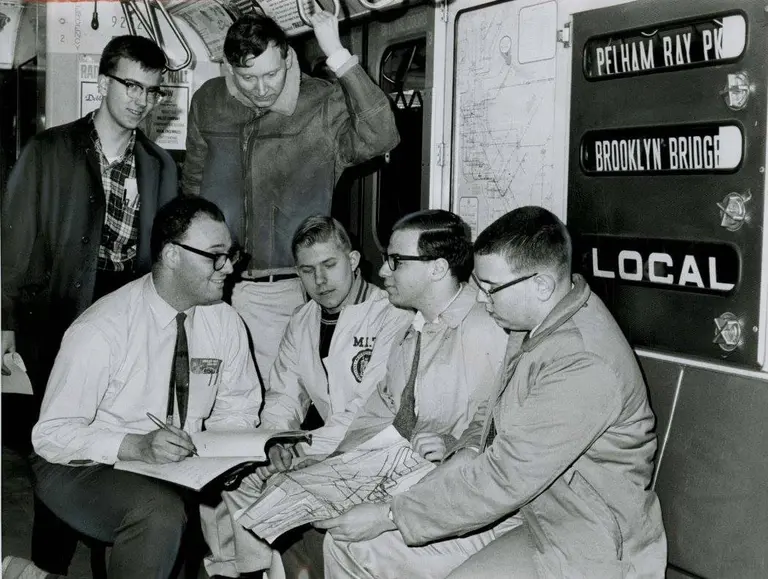
In May of 1940, electric railroad enthusiast Herman Rinke became the first person to tour the entire New York City subway system on a single token, putting in 25 some hours underground all for fun. After reading about Rinke’s journey, Peter Samson, a computer software engineer who later invented the world’s first video game Spacewar, decided to take a stab at making his own record. As the Times recounts, he formed the Amateur New York Subway Riding Committee (ANYSRC) to develop rules for the challenge. After one failed attempt in 1966, Samson, with the help of 15 volunteers and a computer program that tracked the fastest route, completed the trip in 25 hours, 50 minutes and 30 seconds on April 21, 1967. Since then, the subway challenge has taken off for puzzle and transit lovers worldwide.
Find out more
March 16, 2017

Bid on a VIP tour of Yale with Robert A.M. Stern and other starchitect experiences

The Van Alen Institute announces their fourth annual Auction of Art + Design Experiences, offering a rare international sampling of curated events with leading names in the creative world. Like an omakase of "distinctive experiences" with some of today's most notable innovators in the architecture, design and culture spheres, the benefit auction, available via Paddle8, offers a Robert A.M. Stern-led VIP preview of the architect’s addition to the Yale University campus, an afternoon in the archives of Lina Bo Bardi’s Casa de Vidro outside São Paulo, a workout at Medellín Sports Coliseum with its architect, Giancarlo Mazzanti, a visit to a collection of stilted Miami beach houses with architect Terry Riley, meditation studio time with Winka Dubbeldam and a tour of John Lautner-designed horror story homes in the Hollywood hills, to name just a few.
More cool experiences to bid on, ahead
February 24, 2017

J.P. Morgan’s 120-year-old ‘Great Camp Uncas’ in the Adirondack wilderness reduced to $2.7M

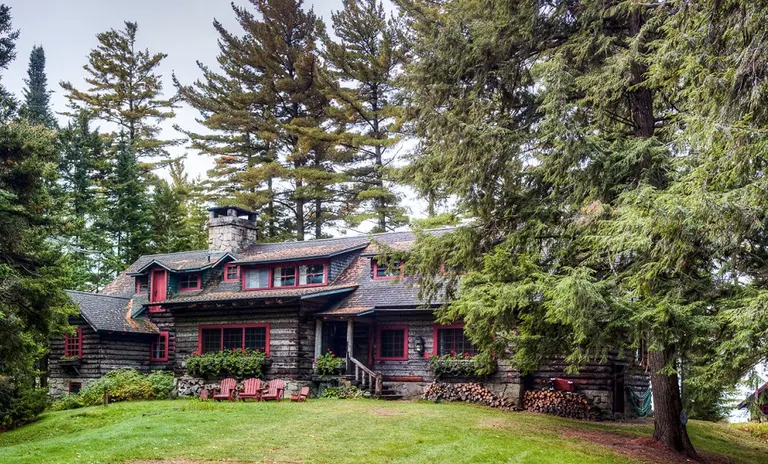
A standout even among the region's Great Camps, the secluded Camp Uncas was built in 1895 by Brooklynite William West Durant, who is credited with perfecting the iconic Adirondack Great Camp style. The compound's biggest claim to fame, however, is that it once belonged to financier J.P. Morgan, who purchased the 1,500 acre property from Durant in 1897; for the fifty years that followed, it served as a vacation home for Morgan and his family. Though the property has traded hands several times since, the appeal of its iconic architecture remains as compelling as its history. Designated as a national landmark by the U.S. Department of the Interior in 2010, this historically significant piece of the Adirondacks is for sale for $2.7 million, reduced from its original 2015 ask of $3.25M.
Explore this extraordinary historic property
January 19, 2017

Gain free admission to these NYC cultural institutions on Inauguration Day

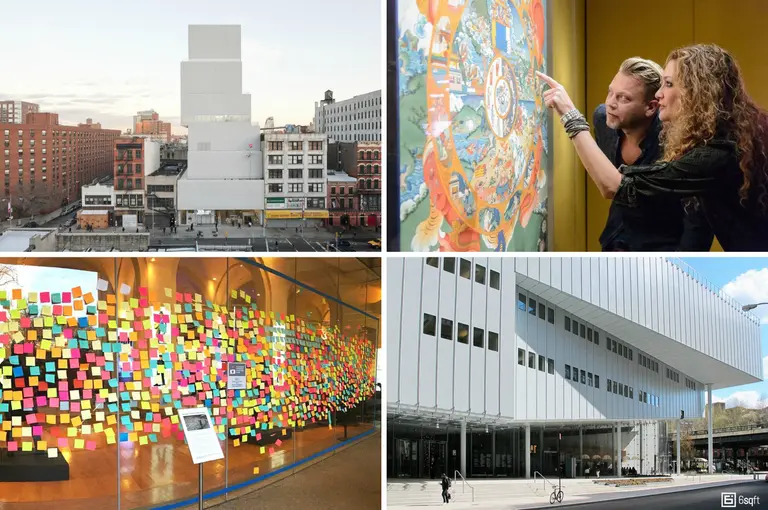
A couple weeks ago, a long list of artists, including Cindy Sherman and Richard Serra, started a petition calling for cultural institutions to close on Inauguration Day as "an act of noncompliance" against "Trumpism." That list has grown to 740 artists and critics, and many galleries, museums, and academic spaces will shut their doors tomorrow according to the J20 Art Strike. But there's also a long list of museums and cultural institutions across the city that have decided to take an alternate approach and remain open, offering free admission and/or special programming. From a marathon reading of Langston Hughes’s"Let America Be America Again" at the Brooklyn Museum to special gallery tours at the Rubin, these are all the (free!) ways to use the arts as an outlet on Inauguration Day.
See the full list here
January 6, 2017

Before & After: 10 NYC blocks and enclaves transformed by pedestrian-friendly design

New York clocks in more steps on average than any other state in the country, and that number is most definitely skewed by New York City where more residents hit the pavement than the gas pedal. But in a town that's seemingly dominated by pedestrians, car culture maintains the right of way. According to Vision Zero, NYC's program to reduce traffic-related fatalities, being struck by a vehicle is the leading cause of injury-related death for children under 14, and the second leading cause for seniors. Providing more public space for pedestrians has become an increasing concern for the city over the last decade, and as such, a multitude of plans have been put forward to create sanctuaries from traffic or to reconfigure streets to keep people safe. But beyond preventing traffic accidents, by planting more trees, expanding sidewalks and bike paths, and installing seating, these urban renewal projects have also been key in promoting walking, biking, health and ultimately a more desirable and habitable New York City.
see more here
September 21, 2016

The Urban Lens: A walk through the 90th annual Feast of San Gennaro in Little Italy

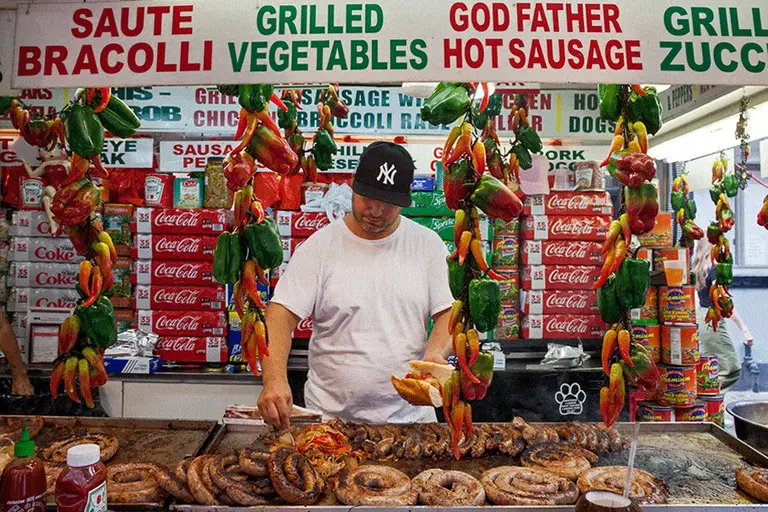
6sqft’s ongoing series The Urban Lens invites photographers to share work exploring a theme or a place within New York City. In this installment, award-winning authors and photographers James and Karla Murray introduce us to the faces and food vendors that make up the 2016 Feast of San Gennaro in Little Italy. Are you a photographer who’d like to see your work featured on The Urban Lens? Get in touch with us at [email protected]. 2016 marks the 90th anniversary of the Feast of San Gennaro, which is held in the "Little Italy" neighborhood of lower Manhattan from Thursday, September 15 through Sunday, September 25th. The Feast is an 11-day salute to the Patron Saint of Naples, Saint Januaries, and it is the longest and most popular street fair in New York City (anticipated to bring in one million tourists and New Yorkers this year). Little Italy was once known for its large population of Italian immigrants and is now centered on Mulberry Street between Broome and Canal Streets. Italians first began to settle in the area during the 1850s, but by the 1960s, wealthy Italians began to move out and Chinese merchants for the first time began to move north of Canal Street—the traditional boundary between Chinatown and Little Italy. Observing the changes in the neighborhood, Italian merchants and restaurateurs formed an association dedicated to maintaining Mulberry Street north of Canal as an all-Italian enclave, which it still largely remains. Ahead we document some of the longtime New Yorkers, tourists, and decades-old Italian vendors who've added their own flavor to this year's festivities.
our account and more photos here
August 16, 2016

City Says Yes to Bronx Complex, No to Flatiron Site for Affordable Housing Plan

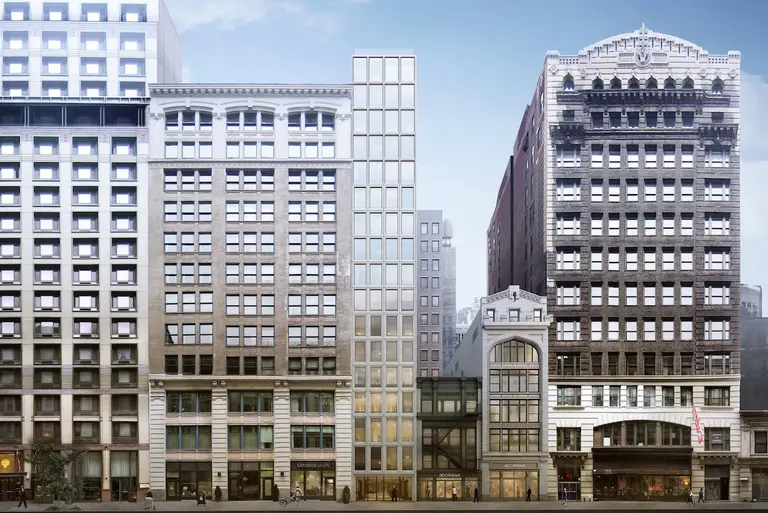
The New York City Planning Commission has voted to approve a boutique condominium project on Manhattan's west side without the mayor's new Mandatory Inclusionary Housing plan in place, the New York Times reports; a much larger development in the Bronx also got the green light, and will be among the first to be included in the new affordable housing program. 6sqft reported previously on the controversy over whether a 17-story condominium slated to replace a parking lot and two low rise buildings at 6th Avenue at West 18th should be among the first recipients of the mayor’s new mandatory inclusionary housing (M.I.H.) program. Both the city and the project's developers, Acuity Capital Partners, made the argument that the proposed project is “more of a rejiggering of the zoning than an enlargement,” and therefore does not fall under the M.I.H. rules.
Find out more
April 26, 2016

Skyline Wars: As Queens Begins to Catch Up, A Look at the Towers Defining Its Silhouette

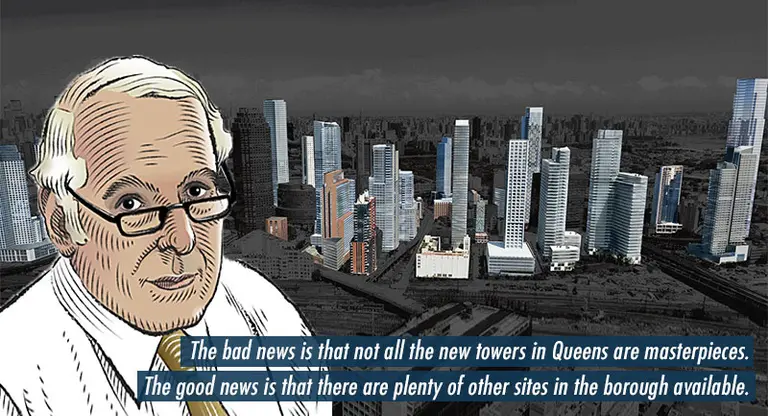
Carter Uncut brings New York City’s latest development news under the critical eye of resident architecture critic Carter B. Horsley. Here, Carter brings us his sixth installment of “Skyline Wars,” a series that examines the explosive and unprecedented supertall phenomenon that is transforming the city’s silhouette. In this post Carter looks at the new towers defining the Queens skyline. For a long time, the glass tower erected by Citibank was the lone skyscraper of note in Queens. Known initially as Citicorp at Court Square, it was built in 1989 and designed by Raul de Armas of SOM as a blue-green metal-panel-and-glass office tower with just a few setbacks at its 633-foot-high top—an extremely clean-cut, modern obelisk of fine proportions. In a 1988 article in The New York Times, Anthony DePalma wrote that the tower “dominates the Queens skyline like a sequoia in the desert” and Paul Goldberger, then the newspaper’s architecture critic, wrote the tower was “rapidly becoming one of the most conspicuous structures in the entire city.” He added, “It is a very unlikely thing, this building—no other skyscraper in New York is remotely like the Citicorp tower, not so much for its design as for the fact that it stands free, alone in this landscape of gas stations, warehouses and row houses,” The bank tower transformed “the landscape of New York” and “no longer does Manhattan virtually by itself control the skyline,” Mr. Goldberger continued. “Skyscrapers built at random all over New York would be devastating, but an occasional exclamation point, well designed and carefully placed, will do the skyline no grievous harm,” he concluded. This is a very important but also very controversial point as currently evidenced in Manhattan where traditional precincts are being pin-pricked to exhaustion and confusion by supertalls.
more on the queens skyline

April 25, 2016

Innovative 1931 Long Island ‘Skyscraper House’ Was Built by the Father of Palm Springs Modern

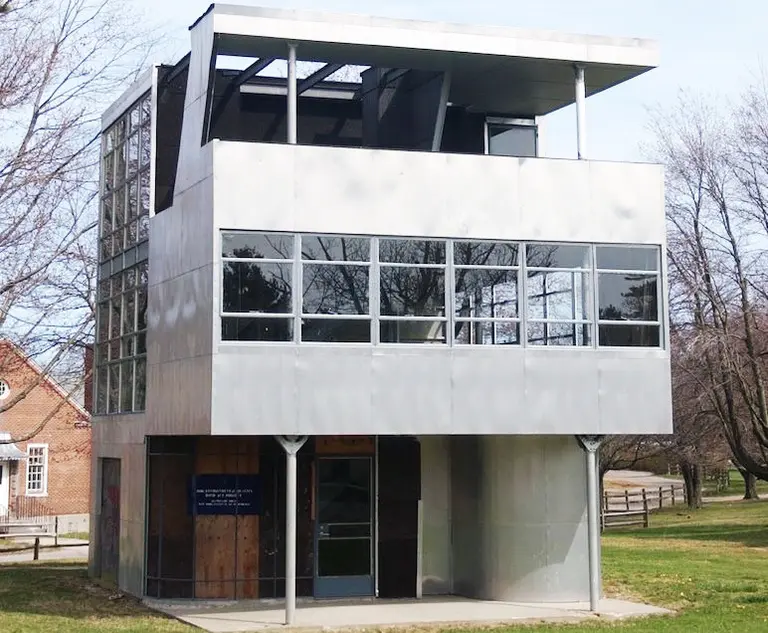
In a 1932 article in Modern Mechanix magazine, the design of this three-story Long Island “skyscraper house” was touted as the “latest in homes,” with an all-metal frame and glass walls. What the story doesn’t mention is that this little house in the ‘burbs was designed as a case study home by noted architects Albert Frey (who spent his early years in Le Corbusier's studio) and A. Lawrence Kocher. Known as the Aluminaire House, this diminutive dwelling is among the earliest examples of European-inspired modern architecture in the eastern U.S.. It was included by Philip Johnson in a MoMA exhibit in 1931 that later became the manifesto for the International Style of architecture–one of only six American buildings in the show to exemplify the style. With the Coachella music festival in the recent spotlight, visions of Palm Springs-style desert homes have been popping up at every turn, and though this little skyscraper house couldn't be further away geographically, its co-creator Albert Frey is known for establishing the "desert modernism" style exemplified in those iconic Palm Springs homes. And as with many ideas in the ultra-creative 1930s, the construction of this Modernist gem in 1931 was well ahead of its time.
Find out more about the story and future of Aluminaire House
April 14, 2016

Mayor’s Affordable Housing Push Brings Tough Questions on Racial Integration

Affordability vs. racial inclusion may sound like an odd battle to be having, yet it's one that often simmers below the surface in discussions of neighborhood change. The words "Nearly 50 years after the passage of the federal Fair Housing Act..." are, of course, no small part of the reason. And in a city known for its diversity–one that often feels more racially integrated than it is–the question of how housing policy might affect racial makeup tends to be carefully sidestepped, but the New York Times opens that worm-can in a subsection called "Race/Related."
Is there a tradeoff between integration and affordability?
January 20, 2016

Staten Island’s Abandoned Farm Colony to Undergo $91M Development for Senior Housing

Over a year ago, 6sqft shared the news that Staten Island's abandoned farm colony was set to undergo a massive rehabilitation that included a large senior housing building and a massive public park. And just yesterday, the City Council approved the New York City Economic Development Corporation's plan to sell 45 of the site's 96 acres to Staten Island developer Raymond Masucci for $1, according to the Times. Mr. Masucci will pour $91 million into the project, dubbed Landmark Colony, rehabilitating five crumbling Dutch Revival-style structures, tearing down five more but saving their stones for reuse, preserving a 112-year-old dormitory "as a stabilized ruin," constructing 344 condominiums for the 55 and older crowd, and designing 17 acres of public outdoor space.
More on the project and the history of the site
September 18, 2015

Grandiose Castle Hotel & Spa in Tarrytown Helps You Relax and Restore Medieval-Style

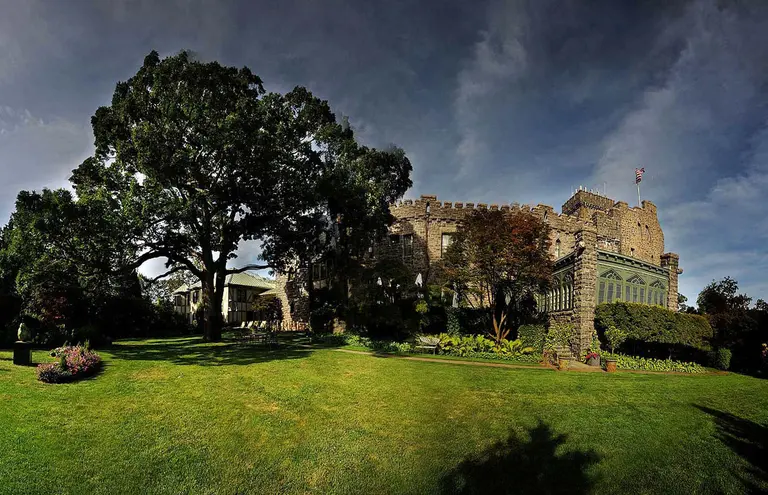
Located at 400 Benedict Avenue in Tarrytown, NY, a short thirty minutes north of Manhattan, Castle Hotel & Spa sits atop one of the highest points in Westchester County. This majestic palace (h/t FEH) overlooks the Hudson River and quaint suburbs below. The Castle is over 100 years old and a visit will easily whisk you away to America's enchanted Gilded Age.
Learn more about the historic property
September 11, 2015

Lavish Lenox Hill Pad of Late Socialite and Philanthropist Carroll Petrie Lists for $30M

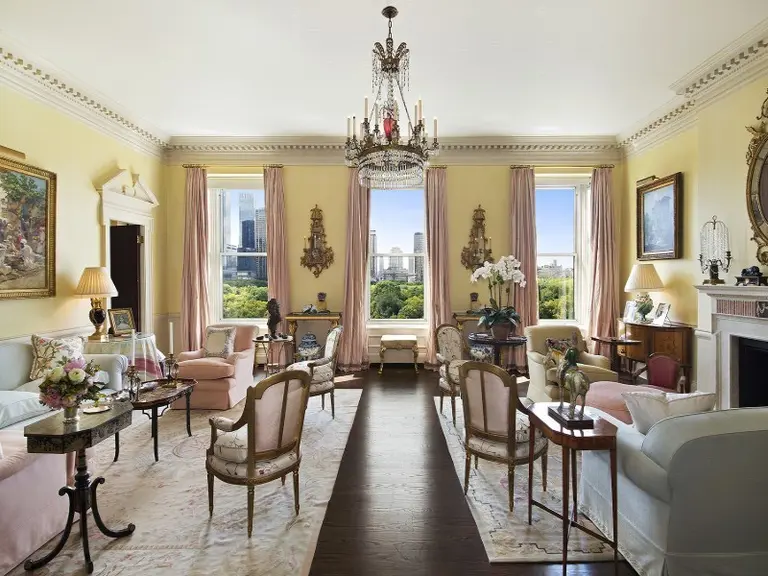
The lavish pad of the late socialite and philanthropist Carroll Petrie at big-name favorite 834 Fifth Avenue has just hit the market, and it's asking a very impressive $30 million. The big question is, where will the sale money go when the time comes? Carroll, who was married to the late retailing giant Milton Petrie, passed away in February, but drama quickly started brewing over her $100 million will. She left $12.5 million to her daughter Andrea Portago, whom she had with her former late husband, Spanish race car driver Alfonso de Portago, but with an odd stipulation based on their contentious relationship. The bulk of her estate was left to her Carroll Petrie Foundation, which supports the Dog Rescue Project of the ASPCA. But this likely isn't sitting well with Andrea, who already retained estates and trust attorney Harvey E. Corn (he also worked on the cases of Brooke Astor and Huguette Clark). Whatever the legal outcome, the 11-room home will certainly make its new owner feel like NYC royalty.
Take a look around the impressive apartment
August 5, 2015

The Many Lives, and Miraculous Recovery, of NYC’s First Cancer Hospital

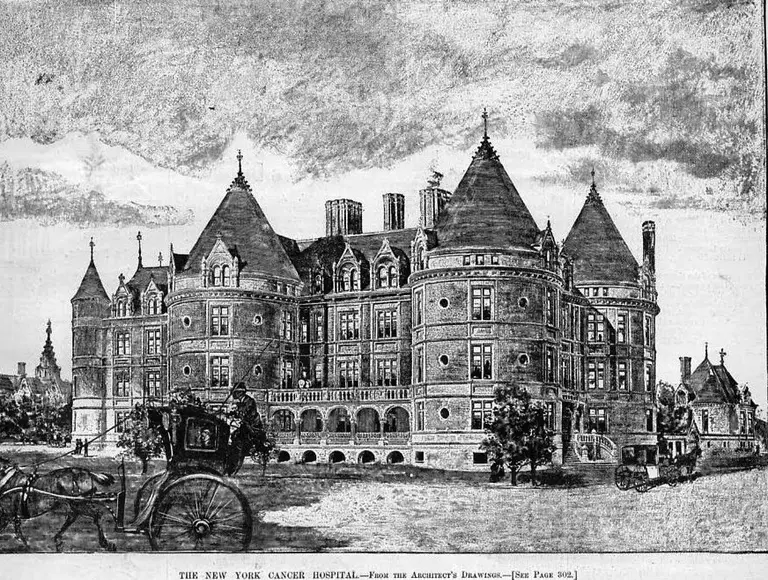
Walking down Central Park West from the north end of the park, it's hard to miss the castle-like structure on the corner of 105th Street. The facade is dominated by great conical towers, majestic turrets, deep red brick, and a soft Belleville brownstone. A closer look reveals stained glass windows and intricate stonework, all convincing details that someone went out to build a fairy-tale castle on the perimeter of Central Park. Among the surrounding townhouses and co-op buildings, it's a stunning piece of architecture that looks like it doesn't quite belong. Indeed, the story of how this building, constructed at 455 Central Park West in 1887, still stands is an unlikely one that is rooted in medical history–a dark medical history, at that. This was New York's first cancer hospital, and the first hospital in the United States dedicated specifically to its treatment. This was a time when cancer treatment was unfamiliar to most doctors–in the back of the castle was a crematorium and smokestack that was often in use. After the hospital's closure in 1955, it became a notorious nursing home known for mistreating its patients. When investigations caused the nursing home to close in 1974, the building was left to rot. Not until a redevelopment plan took off in 2000 was it restored into a luxury condo development. Today, despite its grim past, it remains an important piece of New York's medical and architectural history.
Keep reading for the full story
April 22, 2015

Forbes Tallies the World’s Richest Real Estate Tycoons

Forbes recently released their annual list ranking the world’s billionaires for 2015. The universe’s wealthiest human is still Bill (Gates, that is), with a fortune worth $79.2 billion at last count. In the overall under-40 crowd, Marc Zuckerberg topped the list with $35.1 billion, his fortune far outstripping the rest of the youngsters on the list. A look at the world’s top real estate billionaires—the list can be sorted by industry among other factors—gives us a peek at some interesting facts and figures about the world’s top property tycoons.
Find out which real estate big-wigs are swimming in billions here
February 3, 2015

Then and Now: From Luchow’s German Restaurant to NYU Dorm

For those of us who came to the city within the past decade, it's hard to imagine East 14th Street without its stretch of bulky NYU dorms, big-box supermarkets, and mini-chain restaurants. But of course this wasn't always what the area looked like. In the late 19th century, the area centered around Irving Place, was full of entertainment venues like the Academy of Music, the city's opera house, Steinway Hall, Tammany Hall, and the City Theatre movie house. And at the heart of it all was a restaurant that catered to both the theater crowd and the German population of the East Village–Luchow's. Luchow's was established in 1882 at 110 East 14th Street at Irving Place when German immigrant August Lüchow purchased the café/beer garden where he worked as a bartender and waiter. It remained in operation for a full century, becoming an unofficial neighborhood and city landmark, until it was replaced by NYU's University Hall dormitory.
Read the full history here
December 9, 2014

Don’t Forget, One World Trade Was Supposed to Be the Greenest Building in America

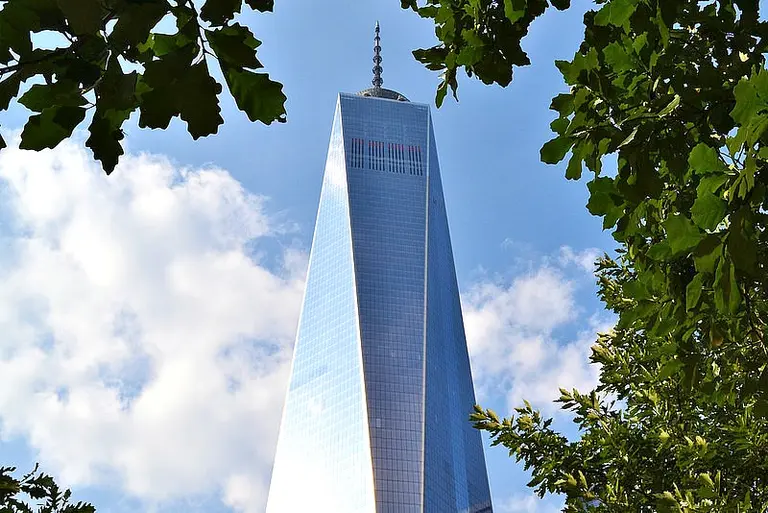
Since the opening of One World Trade Center just a few weeks ago, the world has been in an uproar over the design and the incredible cost of making New York's tallest tower a reality. But one feature that we all seemed to have forgotten was the promise that the tower would be the greenest building in America. A recent City Lab article looks at what went wrong, and why, in a race to meet contractual obligations to its anchor tenant, Condé Nast, the development dumped a major part of its plans to go green, currently leaving the building in a state of noncompliance.
Find out more here
September 16, 2014

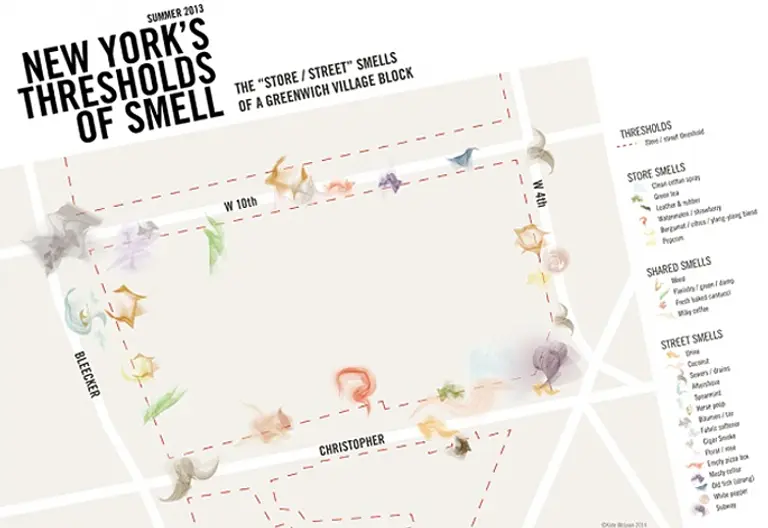
Pee-Eww! Artist Kate McLean is Creating a ‘Smellmap’ of NYC

New York City stinks, yes, but this city of ours is rich in smells like no other. To document the odors that linger, excite and nauseate inhabitants, British multi-sensory artist Kate McLean and her army of sniffers are running around town with their noses to the wind—and deep in trashcans. McLean has so far mapped a block of Greenwich Village and her latest jaunt took her and her team out to Bedford Avenue, where she found the most offensive odor to be "the aroma of a marijuana joint". Not convinced?
Her findings here