Search Results for: times square

August 21, 2017

New renderings of Hudson Yards’ Norman Foster-designed tower and food pavilion

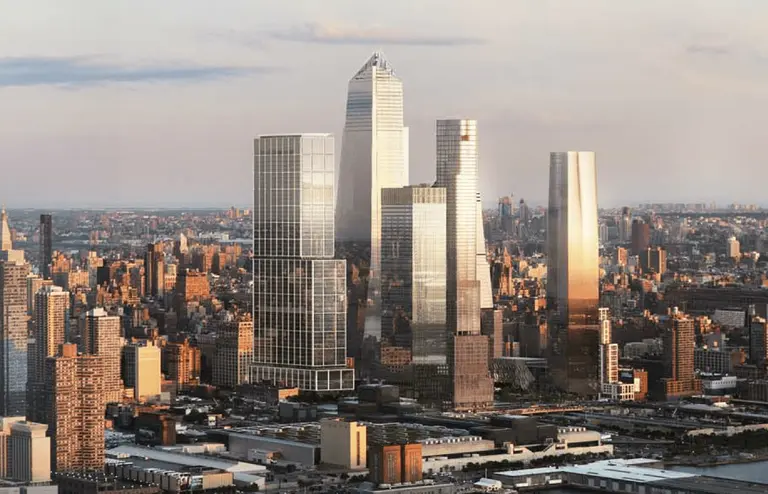
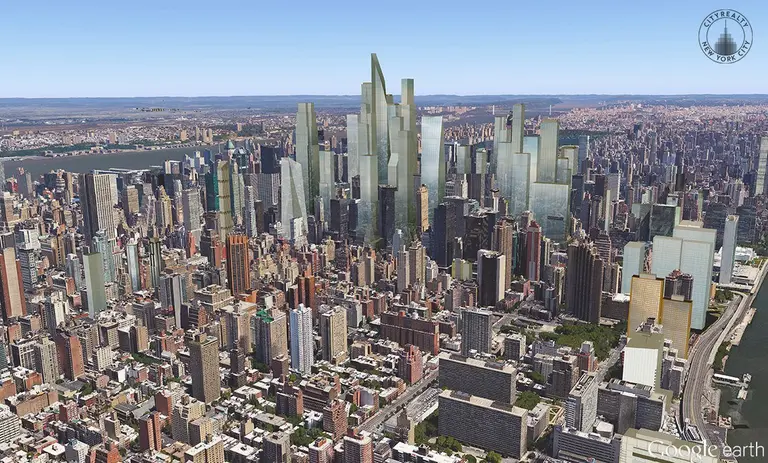
A decade after first embarking on Hudson Yards--the largest private development in the nation's history--developer Related Companies is in the thick of things, with listings live at 15 and One Hudson Yards and construction underway at 30, 35, and 55, as well as The Shed cultural center and the Vessel public art piece. Keeping the momentum moving, Yimby has now uncovered a new rendering of Norman Foster's 985-foot 50 Hudson Yards, which at $3.94 billion will be the city's most expensive office tower, and the first view of the food and beverage pavilion that will sit in the Eastern Railyard.
All the details ahead
August 18, 2017

Watch The Shed, an 8-million-pound structure, glide effortlessly alongside the High Line

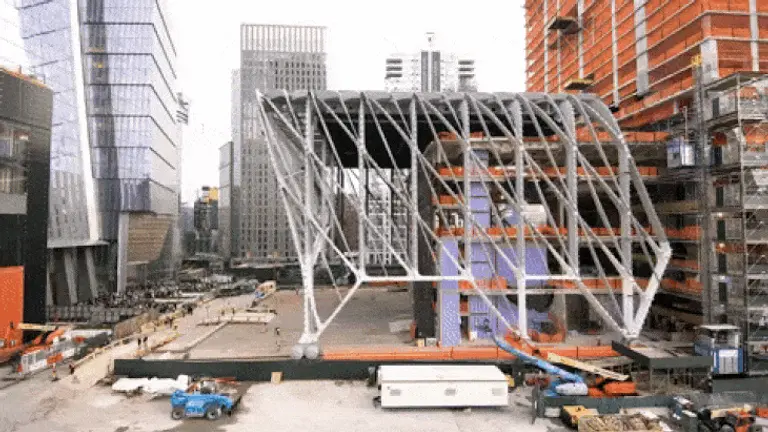
The Shed courtesy of Diller Scofidio +Renfro, via The New York Times Construction of The Shed, a six-level flexible structure that can adapt to different art forms and technologies, continues to progress where the High Line meets Hudson Yards. While the building, an independent non-profit cultural organization, has an expected opening date of 2019, the massive eight-million-pound structure can now slide along the High Line for five minutes on a half-dozen exposed steel wheels that measure six-feet in diameter (h/t NY Times). The Shed, designed by Diller Scofidio + Renfro, in collaboration with Rockwell Group, features a movable shell on rails that sits over the fixed base of the building, allowing for it to change size depending on the type of event.
See the Shed slide
August 16, 2017

Stuyvesant Town goes green: How the 70-year-old complex is reinventing itself in a modern age

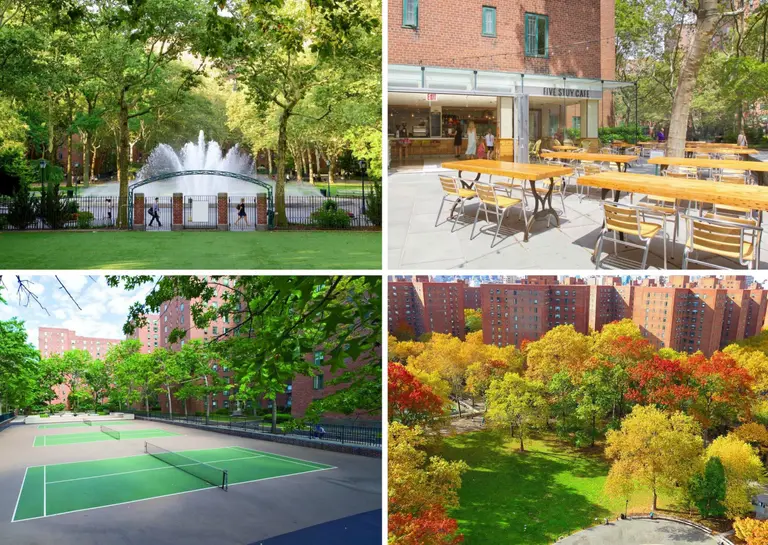
"Think of us as a 1947 Cadillac retrofitted with a Tesla engine," says Marynia Kruk, Stuyvesant Town and Peter Cooper Village's Community Affairs Manager. Though the 80-acre residential complex's 110 red brick, cruciform-shaped buildings were constructed 70 years ago this month, their imposing facades are hiding an intense network of systems that, since 2011, have allowed the development to reduce its on-site carbon emissions by 6.8 percent, equal to over 17 million pounds of coal saved. To put this in perspective, that's roughly the same savings as 3,000 drivers deciding to bike or take the train for an entire year or planting a forest of 400,000 trees. This massive sustainability push, along with new ownership (Blackstone Group and Canadian investment firm Ivanhoe Cambridge bought the complex for $5.3 billion in October 2015), updated amenities, and an affordable housing commitment, is driving Manhattan's largest apartment complex into the future, and 6sqft recently got the inside scoop from CEO and General Manager Rick Hayduk and Tom Feeney, Vice President of Maintenance Operations, who is spearheading the green initiative.
READ MORE
August 15, 2017

INTERVIEW: Author Ed Hamilton on how the Chelsea Hotel inspired personal stories of gentrification

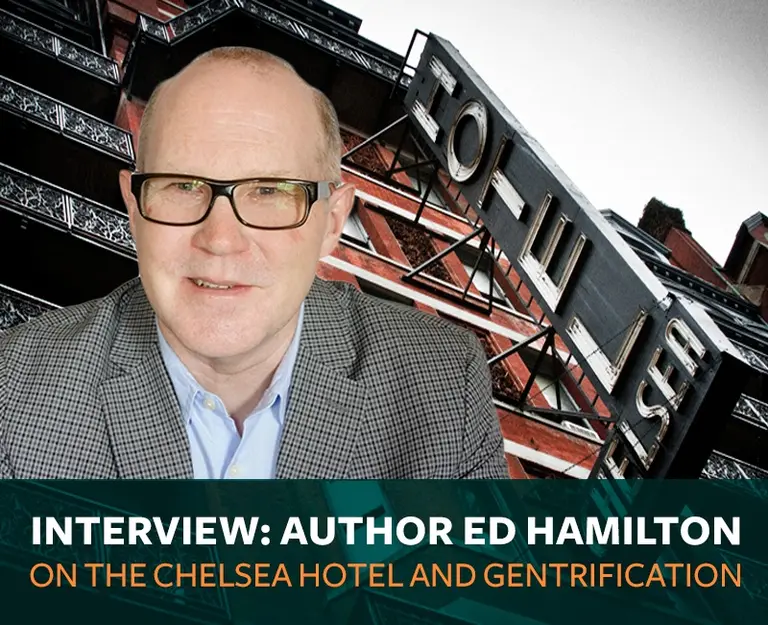
When it comes to the Chelsea Hotel, Ed Hamilton has seen it all. He and his wife moved to the iconic property in 1995, living among artists and musicians in a 220-square-foot, single-room-occupancy unit. The storied, artistic community nurtured inside the hotel came to an end a decade ago when the building sold for the first time and evictions followed. Since then, the property has traded hands a number of times with talks of boutique hotel development, luxury condos, or some combination of the two. Hamilton started tracking the saga at his blog Living With Legends and published a book, "Legends of the Chelsea Hotel," in 2007. After the book's success, Hamilton wrote a short story collection titled "The Chintz Age: Stories of Love and Loss for a new New York." Each piece offers a different take on New York's "hyper gentrification," as he calls it: a mother unable to afford her lofty East Village apartment, giving it up to a daughter she shares a strained relationship with; a book store owner who confronts his failed writing career as a landlord forces him out of now highly valuable commercial space. Ultimately, many of the stories were inspired by the characters he met inside the Chelsea Hotel. And his tales offer a new perspective on a changing city, one that focuses on "the personal, day-to-day struggles about the people who are trying to hang onto their place in New York." With 6sqft, he shares what it's like writing in the under-construction Chelsea Hotel, what the Chintz Age title means, and the unchanged spots of the city he still treasures.
READ MORE

August 10, 2017

From oysters to falafel: The complete history of street vending in NYC

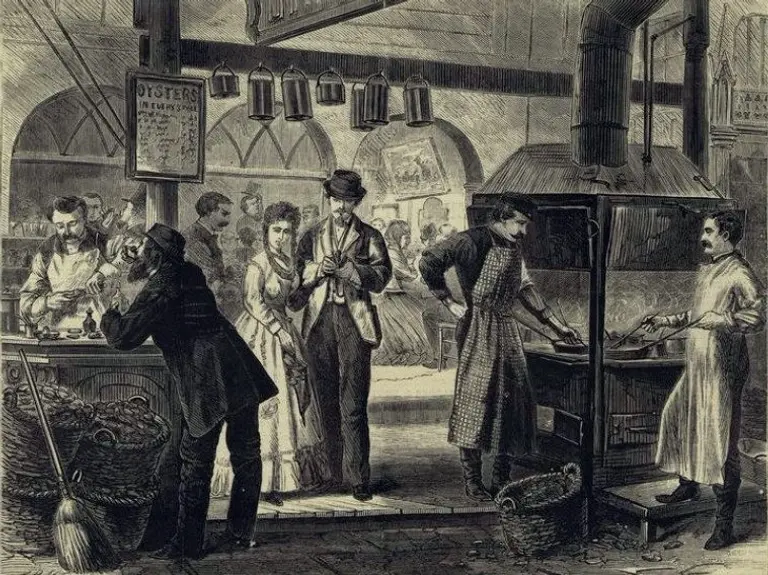
To fully experience New York City, you have to eat. And then eat some more. So inextricably linked with its food, the city’s social and cultural history requires an exploration of its endless cuisines. And while street food is not unique to New York, the city provides some of the most diverse dining options in the world, with over 10,000 people make a living by street vending. But this tradition dates all the way back to the 1600s when European settlers enjoyed eating shellfish on the streets. Food vendors took on a more formal incarnation in the early 1800s on the Lower East Side and have changed with every new immigrant group that's landed here since. From oysters and knishes to hot dogs and Halal, the city's street vendors reflect its constant evolution and also what brings New Yorkers together.
Dive in to the full history
August 10, 2017

City Council unanimously approves Midtown East rezoning plan

After five years, the City Council approved a rezoning for Manhattan’s Midtown East on Wednesday, by a 42-0 vote. The proposal will rezone roughly 78 blocks, running from East 39th Street to East 57th Street and from Third Avenue to Madison Avenue, clearing the way for 6.5 million square feet of office space in the area. A new updated zoning code is expected to incentivize new, dense development, allowing Midtown to compete with other booming business districts in the borough like Hudson Yards and the Financial District. As the New York Times reported, this change which lets developers build to a higher floor area ratio could result in new supertall towers.
Find out more
August 7, 2017

For less than $300K, own a huge Italianate home in what may be New Jersey’s next hot spot

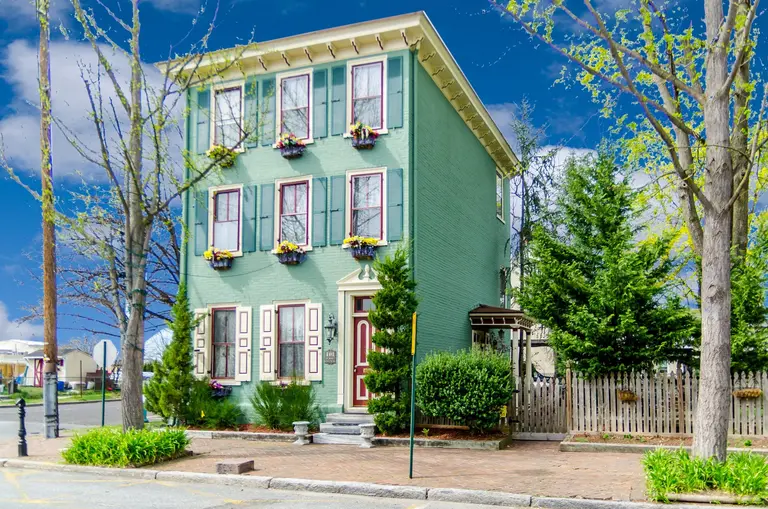
There's no denying that the gentrifying-at-lightning-speed town of Asbury Park, NJ is one of the state's hippest cities (it even got the Times treatment this weekend). One of the key players in the resurgence has been the Smith Group, who've opened some of Asbury's most popular bars and restaurants, as well as a condo project. The developer is now hoping to replicate this success in Burlington, NJ, a historic city on the Delaware River just 90 minutes outside NYC. And though the transformation is already underway (Smith bought four old homes and is turning a decommissioned firehouse into a trendy restaurant/bar), the time to buy in Burlington is now, as gorgeous 18th- and 19th-century homes can still be gotten for a bargain. Take this 1793 Italianate stunner; it's situated on a half-acre corner lot, occupies 3,300 square feet, and is asking just $278,950 (h/t CIRCA).
Tour the home here
August 4, 2017

No state is spared a roasting in this 19th-century nickname map

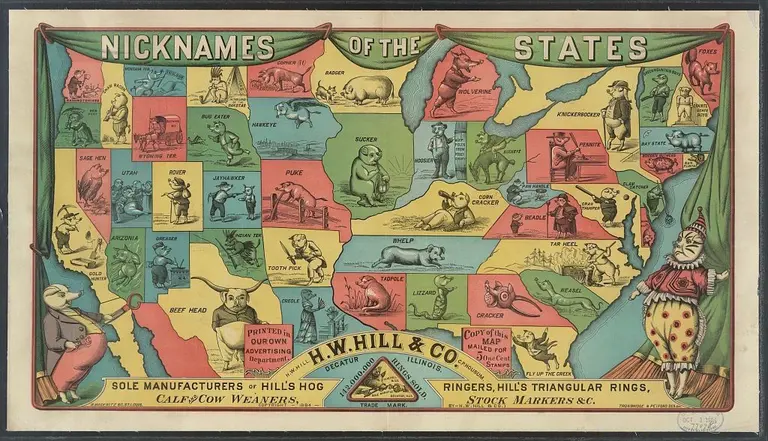
When a livestock supply company tries to get clever, the result is likely to be something like this "odd and obscure" (h/t Slate) map of the U.S. showing common state nicknames of the day, many of which haven't changed since the map was printed as a promotional offering by H.W. Hill & Co. in 1884. Each state's nickname is illustrated by a portly porker doing whatever it is that state would probably rather not be known for doing best: New York's "knickerbocker," Ohio's "buckeye" and Michigan's "wolverine" are present and accounted for; Kentucky's "corn cracker" and Georgia's "cracker" are similarly skewered.
This way for more pig tales
July 27, 2017

Billionaires are clamoring to move into this Montauk trailer park

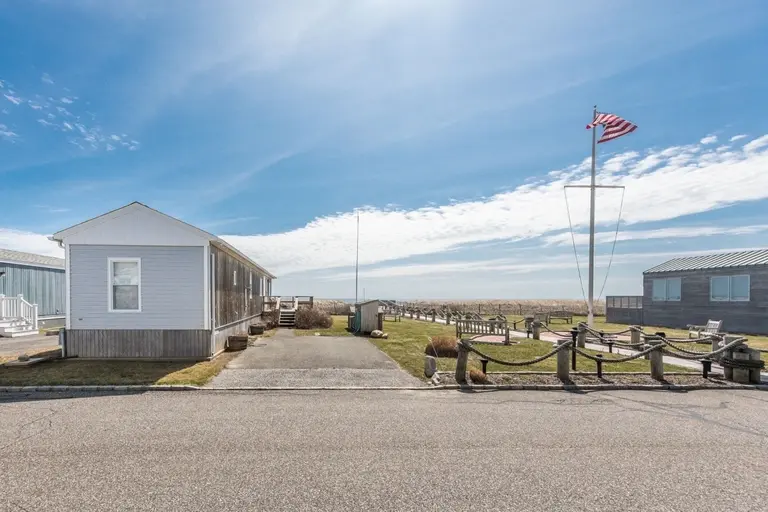
Owning a "box of air on the land" at the Montauk Shores trailer park has become the ultimate status symbol for summering rich and famous, reports the New York Post. From "glorified changing room" after a day at the beach to compact escape chamber, denizens of the boho-chic beach town have snapped up so many modular mobile homes at the Montauk trailer park that it now has its own "Billionaires' Corner." The trailer park wasn't always trendy; it began as a pop-up tent campsite in the 1940s and ’50s, eventually becoming a resort of sorts for police and firefighters, teachers and fishermen.
More history of this hip mobile hideaway
July 27, 2017

MTA board members seek an end to routine fare hikes, mulls selling subway station naming rights

The Metropolitan Transportation Authority revealed on Tuesday an $800 million emergency rescue plan to fix the city’s failing subway system, which includes hiring 2,700 workers, removing some seats and adding additional train cars. And on Wednesday the MTA board grappled with ways to pay for the plan, with some members calling for the agency to end its routine fare and toll hikes and find revenue through other means. However, according to the New York Times, the authority’s chief financial officer, Robert Foran, said the agency needed to continue to raise fares by roughly 4 percent every other year as part of their long-term financial plan.
Find out more
July 25, 2017

Artist proposes installing a Hollywood-style ‘Brooklyn!’ sign to attract visitors

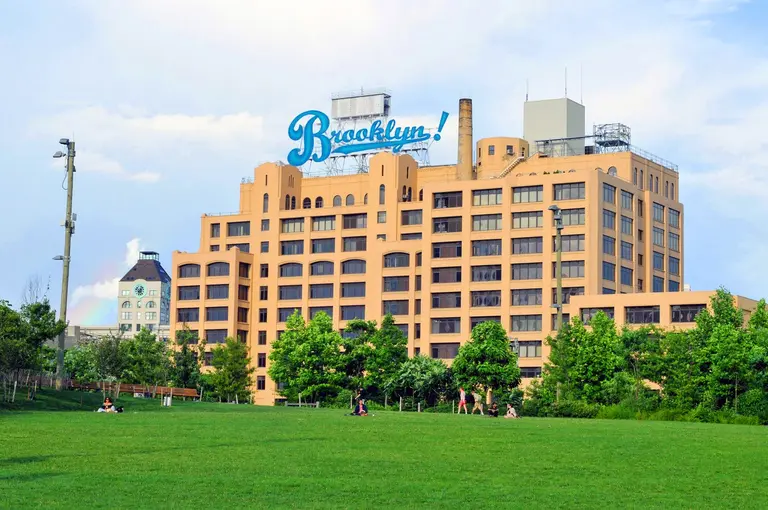
"Brooklyn is a potent idea as well as a place,” according to Susanna Briselli, who explains in the Brooklyn Eagle that the borough's name "summons vivid images and associations.” Briselli, who is an artist and photographer, suggests this potent chemistry is a compelling enough reason to create an enormous free-standing illuminated sign that reads “Brooklyn!” The massive work would be used to draw in more visitors and increase value, placed where the soon-to-be removed "Watchtower" sign in Brooklyn Heights now stands, or at another highly visible site such as Pier 7.
A sign of the times
July 17, 2017

First closings commence at Zaha Hadid’s 520 West 28th Street

The architect’s signature curves and organic indoor and outdoor architecture made the late Pritzker Prize winner Zaha Hadid’s 520 West 28th Street 6sqft’s Building of the Year. Now, closings have begun in the stunning Chelsea condo, starting with a pair of two bedroom units. Residences 9, which sold for $6 million, and 14, which sold for $6.2 million, are 2,147-square-foot two-bedroom homes with private balconies.
Find out more
July 14, 2017

On this day in 1645, a freed slave became the first non-Native settler to own land in Greenwich Village

In 1626, the Dutch West India Company imported 11 African slaves to New Amsterdam, beginning New York’s 200 year-period of slavery. One man in this group, Paolo d’Angola, would become the city’s first non-Native settler of Greenwich Village. As the Greenwich Village Society for Historic Preservation (GVSHP) discovered, and added to their Civil Rights and Social Justice Map, as a recently freed slave, d’Angola was granted land around today’s Washington Square Park for a farm. While this seems like a generous gesture from a slave owner, d’Angola’s land actually served as an intermediary spot between the European colonists and the American Indians, who sometimes raided settlements. This area, in addition to Chinatown, Little Italy, and SoHo, was known as the “Land of the Blacks.”
Find out more
July 10, 2017

From NoLiTa to SoHa: The practice and controversy of rebranding NYC neighborhoods

New York is home to dozens of distinct neighborhoods with their own names, identities, and histories. Some of these neighborhoods acquired their names by misfortune (Hell’s Kitchen gained its moniker due to its tough reputation), others by function (the Battery was once home to a series of artillery batteries), and some were coined by local artists playing with abbreviated combinations (SoHo is likely the most well-known example). However, at least some New York City neighborhoods, including the East Village and NoLita, were created by real estate agents in an attempt to “rebrand” areas that historically had a reputation for being either undesirable or simply boring places to live. Increasingly, this now well-established practice is coming under attack and if one local state senator is successful, the practice may even soon be illegal.
read more here
July 6, 2017

VIDEOS: Watch footage from the Third Avenue El train’s last days in 1955

As a solution to Manhattan's rapid population growth and street congestion in the late 1800s, railroad companies decided to better serve their passengers by elevating the trains above ground. Originally, four elevated lines ran the length of Manhattan, but after complaints about the trains blocking light and emitting extremely loud noise, they suffered from a decrease in ridership. The elevated trains that ran along Second, Sixth and Ninth Avenues were all demolished between 1939 and 1942. The one line that stood its ground for a bit longer was the Third Avenue El, which was constructed between 1875 and 1878 and ran from South Ferry to Chatham Square before closing for good in 1955.
See the final days of the El train
July 5, 2017

Tenant holdout snarls developer’s plan to build Billionaire’s Row tower

Image via Google Street View With a legendary tenants' rights lawyer on board, a longtime leaseholder is standing fast against a developer's 'dream tower' plans, claiming their business has a valid lease and is being wrongfully evicted, according to the New York Times. Irving and Samuel Morano, the antiques dealers who own Metropolitan Fine Arts and Antiques, are the largest remaining tenant at 10 West 57th Street, a prime location opposite Bergdorf Goodman. 89-year-old developer Sheldon Solow has been amassing properties along the "Billionaire's Row" strip, where the Solow Building, his office tower at 9 West 57th Street stands, since 1977. With grand plans in place to erect a sleek Skidmore Owings & Merrill-designed 54-story hotel and condominium tower, Solow has evicted tenants, erected scaffolding and started demolition on one of the properties along the strip.
Find out more
June 30, 2017

Four architecture teams envision NYC’s driverless transit future

With NYC residents owning fewer personal vehicles than any other city in the U.S., it’s no surprise that it may soon become a major hub for autonomous transportation. To ensure the future efficiency of driverless vehicles in such a densely populated area, Blank Space and the City of New York created a Driverless Future Challenge to solicit visions for the future of autonomous transit. According to Archinect, participants from over 25 countries sent proposals, which have now been narrowed down to four finalists. Their ideas include a plug-and-play public square, curbside pickup system, a rideshare platform for the outer boroughs, and a local food delivery service.
Find our more about each proposal and watch the project videos
June 27, 2017

My 1100sqft: Designers Laura Yeh and Zach Jenkins turn a blank Bushwick loft into a pastel dreamscape

Creativity runs high in this Bushwick loft, which comes as no surprise when you learn that it's the home of Laura Yeh, a designer at cult beauty brand Glossier, and Zach Jenkins, a furniture and lighting designer at the ultra-luxe Hellman-Chang. The duo moved into their space roughly one year ago following a cross-country road trip that brought them from their previous home in San Francisco to NYC. Although Laura, having studied at Parsons, was no stranger to the city, Zach had never lived in New York. Thus, as new beginnings go, the couple opted to start fresh in Bushwick with an 1100-square-foot cavern with plenty of room to flex their creative prowess. Ahead, see how Laura and Zach use airy style, refined textures, and beautiful furniture designed, built, or restored themselves to turn a nondescript space into a perfectly edited pastel dreamscape.
go inside their dreamy loft
June 23, 2017

The Urban Lens: Artist and food writer John Donohue is drawing every restaurant in NYC

Former New Yorker editor, artist, and food writer John Donohue is on a mission not to eat at every restaurant in New York City, but to draw them. He describes his project, Every Restaurant in New York as "an ongoing visual compendium of the city’s eateries," and as "intentionally hyperbolic." He's figured out that by spending 20 minutes on each illustration, it's mathematically possible to visit all 24,000 restaurants in the city in under a year. To date, he's drawn nearly 200 restaurants, has an exhibit up of his drawings in Park Slope, and is selling prints of the restaurants (a portion of the proceeds from which he'll donate to hunger-relief organizations). Ahead, John shares a collection of his drawings, from classic New York restaurants like Katz's and the Grand Central Oyster Bar to new spots like Shake Shack and Carbone, and tells us how he got started on the project, about his process, and why he thinks drawing is good for the mind.
See John's drawings ahead
June 21, 2017

Top architects and engineers present solutions for NYC’s soon-to-explode population

As more and more people move to the Big Apple, the city is running out of room to house all of them. According to Mark Ginsberg of Curtis & Ginsberg Architects, even if the city were developed to the maximum capacity legally allowed, this would still only be enough room to house 9.5 million New Yorkers. Building up every square foot that has been zoned for development is impossible and the city’s population is projected to pass 9 million by 2040. At a real estate conference hosted by Crain’s last week architects from five different firms laid out their plan to serve the city’s swelling population and each focused on a specific borough.
See the proposals
June 21, 2017

Art Nerd NY’s top art, architecture, and design event picks – 6/22/-6/28

Art Nerd New York founder Lori Zimmer shares her top art, design and architecture event picks for 6sqft readers! Tomorrow, experience a slice of New York life in 1850 at the Merchant’s House Museum or check out a modern street photographer at The Quin. Head up to the Bronx to check out two artists who have evolved from the subway art scene, then check out Astoria’s art offerings beyond the Museum of the Moving Image. Of course, there’s the biggest party of all this weekend- PRIDEFest, so put your dancing or marching shoes on. The female gaze is debunked at a beautiful show at The Untitled Space, the romance novel cover is examined and art critic Roberta Smith speaks to SVA for a free lunchtime talk.
Details on these events and more this way
June 20, 2017

Hunt Architecture’s garden studio offers a tiny backyard retreat in Boerum Hill

Sometimes you don't need to go far to escape the frenzy of the city. Forget about charming mountain retreats or luxury seaside homes, this humble beauty provides the perfect place to escape it all right in a Boerum Hill, Brooklyn backyard. Crafted by local studio Hunt Architecture using salvaged cedar and fence pickets, the Brooklyn Garden Studio is a grown-up version of the classic treehouse.
Learn more about this small wooden shed
June 20, 2017

For $2.4M, this sun-filled brick Greenpoint townhouse wraps modern comfort in historic charm

Greenpoint has quietly over the past decade become one of Brooklyn's most livable and lovable neighborhoods; its waterfront location, a diverse family-friendly vibe, proximity to McCarren Park and Williamsburg, and exciting new developments on the way are just a few of the reasons why. Townhouses here are rarer than lofts and condos, but they do pop up for lucky buyers, and this three-story home at 184 Calyer Street, asking $2.395 million, is a move-in ready example. The fully-renovated two-family house with a private garden is comprised of a spacious owners' duplex and a good-sized one-bedroom apartment with its own outdoor space.
Give the G line a try
June 14, 2017

Looking back at New York’s ‘Summer of Love’ and the birth of the East Village

It has been 50 years since 1967’s “Summer of Love” when young people from around the world flocked to San Francisco’s Haight-Ashbury district and to other urban neighborhoods, including New York’s East Village, to trip out at psychedelic dance parties, sleep in city parks, and live and do whatever they pleased. While the hippie subculture was already flourishing prior to the Summer of Love, by mid 1967, hippies and their music, style, and communal way of life had caught the attention of the mainstream media and as a result, reached a critical mass of young people who were now eager to ditch their suburban homes to “turn on, tune in, and drop out.” Reactions to the Summer of Love in New York were predictably mixed. An estimated 50,000 young people descended on the city to join the movement, but many New Yorkers, including longstanding residents, police officers, and politicians, had little interest in spending the Summer of Love soaking up the good vibes. In the end, the city’s Summer of Love saw as much conflict and violence as peace and love, and debates about rental prices, real estate values, and the gentrification of the Lower East Side were all part of the conflict.
find out more here