
Search Results for: times square

October 17, 2017

My 865sqft: A treehouse bedroom grows inside the Williamsburg loft of two creatives

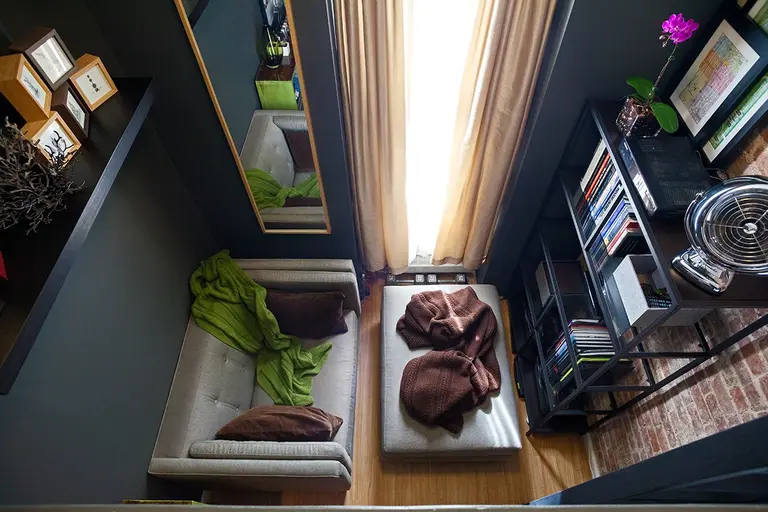
Raw, industrial loft spaces are increasingly difficult to come by these days in NYC, so when you walk into one that's been custom outfitted by its tenants to a tee, the experience is truly unique. Found inside none other than Williamsburg's infamous artists bunker, 475 Kent, is the 865-square-foot loft of French furniture designer Gregoire Abrial and Vietnamese-born marketing creative Hang Pham. Ahead the international duo offer up a tour of their inimitable Brooklyn space (that upon move-in seven years ago had nothing more than a bathtub, toilet, and kitchen sink) which they've outfitted with "slow designs" by Gregoire (more on that ahead), items bartered with neighbors, refuse found on the street, tchotchkes and treasures from family, friends and travels, and, of course, a pretty amazing DIY treehouse bedroom.
go inside their creative home
October 17, 2017

What happens if Amazon’s HQ2 doesn’t land in New York?

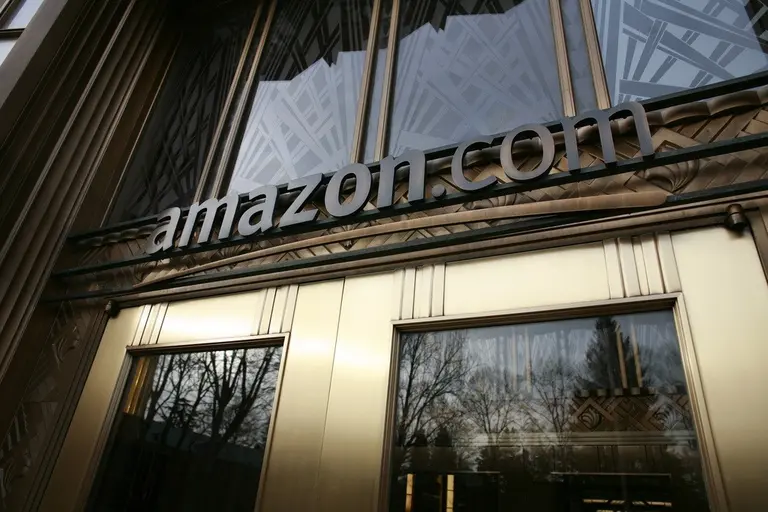
Amazon’s nationwide competition to find a home for its second headquarters draws to a close this week, with pitches from stakeholders due Thursday. While New York City meets most of the requirements the tech giant listed for its HQ2-- a population of at least 1 million people, proximity to an international airport, mass transit access and talented workforce--business costs in the city would be sky-high. However, as Crain’s reported, even if Amazon does not set up shop in NYC, politicians and developers have been preparing for a comparably-sized company to move in for over a decade. The failure of the city to win the 2012 Olympics bid back in 2005 actually turned into a success, allowing apartments to rise in Brooklyn where sports stadiums never did.
Find out more
October 13, 2017

Jennifer Connelly’s former Park Slope townhouse is back on the market for $14.5M

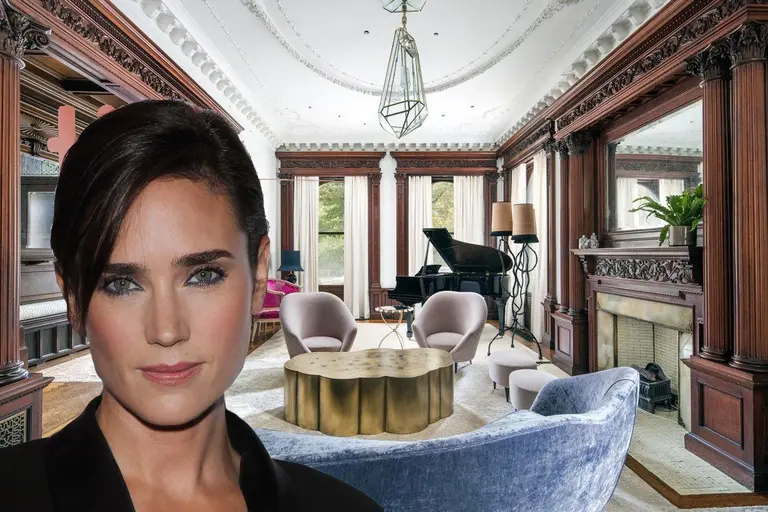
The Oscar-winning actress and her husband, Paul Bettany, bought the detail-laden limestone mansion overlooking Prospect Park in 2003 for $3.7 million; the 6,500-square-foot townhouse changed hands two more times since then: the couple sold it for $8.5 million to a Google exec who divested of it in 2015 for $12.4 million (a neighborhood record a the time). It's on the market once again asking $14.5 million. Filled with historic detail and dressed to the nines, the elegant home is exactly what you'd expect to find behind the elegant facade of a Park Slope limestone. Built in 1899 and designed by renowned architect Montrose W. Morris, the 25-foot-wide five-story home at 17 Prospect Park West is a showcase of stained glass windows, mahogany columns and herringbone floors, with five working gas fireplaces, a 600-bottle wine cellar and a verdant gated yard.
Take the tour
October 11, 2017

Why are the Second Avenue Subway’s newsstands still empty?

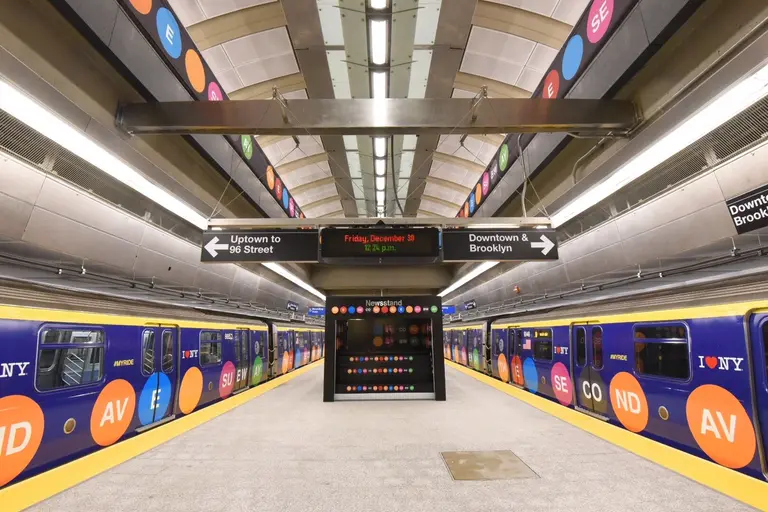
TodWhen the city first got a look inside the new Second Avenue Subway stations ahead of the line's New Year's Day 2017 opening, one of the shiniest, most colorful elements was the collection of newsstands. Ten months later, however, the kiosks still sit empty, decked out in the signature marketing of rainbow polka dots. According to the New York Times, the MTA says it's selected an operator for the newsstands, and though they won't reveal who, claim that they'll open soon. But is the fact that Q train riders seem overwhelmingly unaware and unaffected by the lack of newsstands a sign that they're not actually wanted or needed in a time when newspapers and magazines have been replaced by tablets and iPhones and candy and sodas with organic oatmeal and Juice Press?
Get the whole scoop
October 6, 2017

The Urban Lens: Documenting NYC’s vanishing ATMs

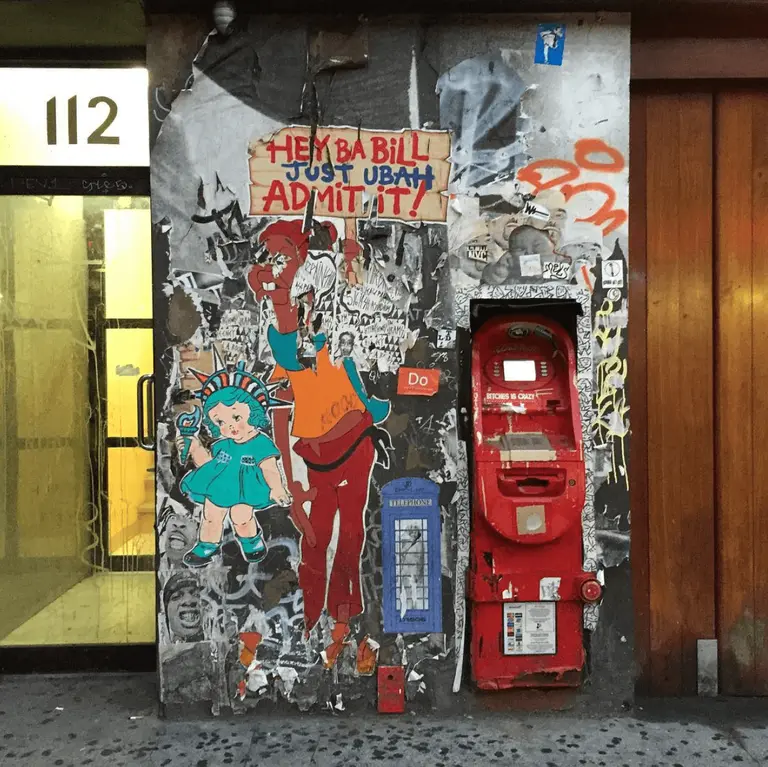
6sqft’s ongoing series The Urban Lens invites photographers to share work exploring a theme or a place within New York City. In this installment, Ivan Kosnyrev shares photos from his Instagram series Unreliable ATM. Are you a photographer who’d like to see your work featured on The Urban Lens? Get in touch with us at [email protected]. We recently shared photographer's before-and-after photos of Tribeca, a project that helped him learn about the history and present evolution of his neighborhood. Having only moved to NYC three years ago from Moscow, Ivan uses his documentary photography as a way to get acclimated with his new home. And when he wants to go outside his home base, he often does so through the lens of his Instagram account Unreliable ATM, which documents the vanishing street ATM. Not only does this disappearance represent changing times and technologies, but it's a visual reminder of how the city is losing its small businesses and culture. Ahead, Ivan shares some of his favorite ATM photos and talks about his inspiration for the project.
All that, this way
October 6, 2017

Jennifer Lopez lists enormous Nomad penthouse for $27M

Bronx native and superstar J.Lo is selling her duplex penthouse in the Whitman, a luxurious condominium conversion at 21 East 26th Street, for $26.95 million. Lopez, who currently stars in the television show “Shades of Blue,” first purchased the Nomad pad in 2014 for $20.16 million. As the New York Times reported, the four-bedroom apartment overlooks Madison Square Park, spans 6,540 square feet on the building’s top two floors, and includes an additional 3,000 square feet of outdoor space spread across four sprawling terraces. Though Jenny from the Block will be departing (and taking her Grammy pictured above with her!), the next owner can still hobnob with the building's other A-listers Chelsea Clinton and NASCAR driver Jeff Gordon.
See inside
October 4, 2017

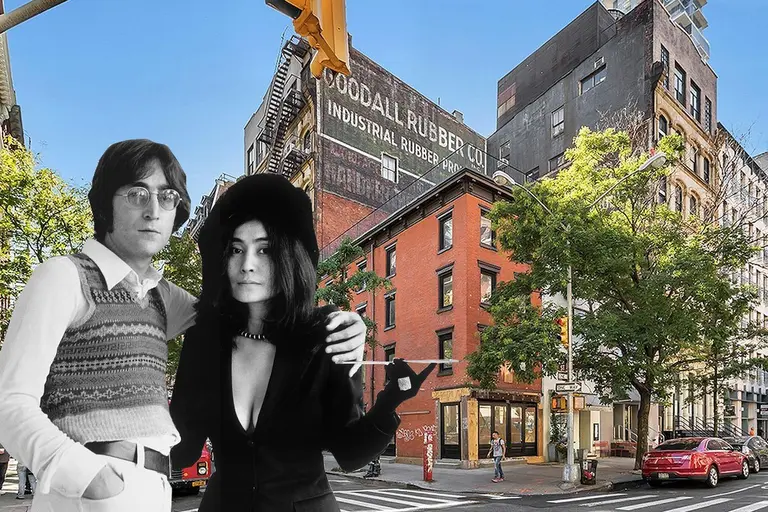
Tribeca townhouse with an address once used for John Lennon and Yoko Ono’s ‘Nutopia’ is for rent

John Lennon and Yoko Ono never lived at this Tribeca townhouse—it's well known they preferred the Upper West Side—but they certainly have a unique connection to it. Here's the story, per the New York Times: in 1973, Lennon and Ono announced the birth of Nutopia, "a conceptual country" with no boundaries and "no laws other than cosmic." Mr. Lennon, who was being threatened with deportation because of a 1968 marijuana conviction in England, was seeking diplomatic immunity and United Nations recognition as a Nutopian ambassador. The iconic couple gave 1 White Street as the embassy address.
Check out the interior
October 2, 2017

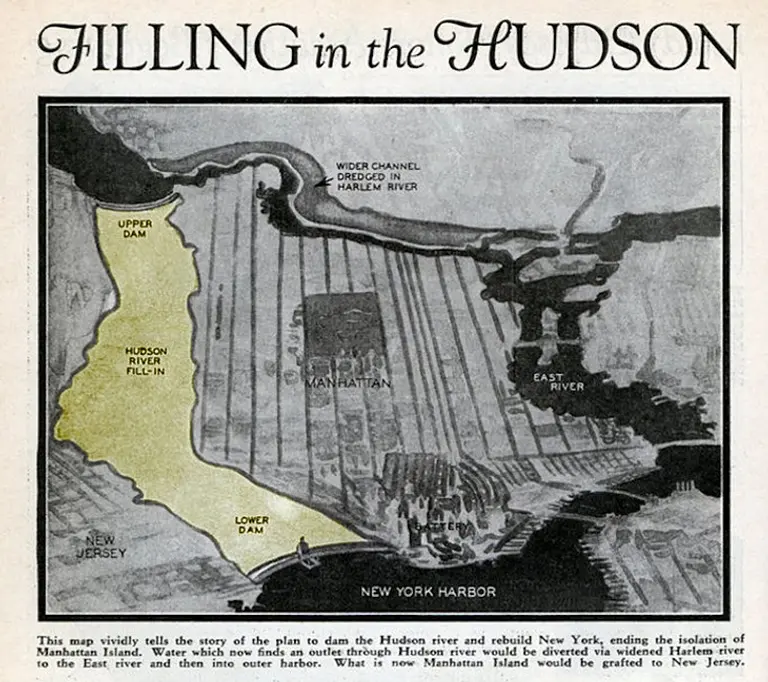
A 1934 engineer’s plan fills in the Hudson River for traffic and housing

In mid-20th century America–particularly in New York City–a roaring economy emboldened by our ascendant international stature filled many a scholar of public infrastructure with eagerness to execute grand ideas. This proposal to drain the East River to alleviate traffic congestion, for example. Another ambitious but unrealized plan–one that would make it a lot easier to get to New Jersey–was championed in 1934 by one Norman Sper, "noted publicist and engineering scholar," as detailed in Modern Mechanix magazine. In order to address New York City’s traffic and housing problems, Sper proposed that if we were to "plug up the Hudson river at both ends of Manhattan,” and dam and fill the resulting space, the ten square miles gained would provide land to build thousands of additional buildings, as well as to add streets and twice the number of avenues to alleviate an increasingly menacing gridlock.
So how much would it cost?
September 29, 2017

INTERVIEW: Architect Lee H. Skolnick on designing New York City’s 9/11 Tribute Museum

This summer, the 9/11 Tribute Museum opened in a brand-new space at 92 Greenwich Street in the Financial District. The 36,000-square-foot gallery became the second iteration of the museum which originally occupied the former Liberty Deli from 2006 until earlier this year. While many are more likely to be familiar with the 9/11 Memorial Museum just a few blocks up the street, the Tribute Museum differs in that rather than focusing on the implications of the tragedy, documenting the events as they unfolded and examining its lasting impact, it assumes a more inspired take, dedicating its exhibits and installations to the stories of the survivors, first responders, relatives of victims, and others with close connections to the tragedy who found hope in the terror and stepped up to help their fellow New Yorkers. Ahead, Lee Skolnick, principal of LHSA+DP and lead architect of the 9/11 Tribute Museum, speaks to 6sqft about the design and programming of this important institution, and how he hopes its message will inspire visitors to do good in their communities during these uncertain times.
read 6sqft's interview with Skolnick here
September 28, 2017

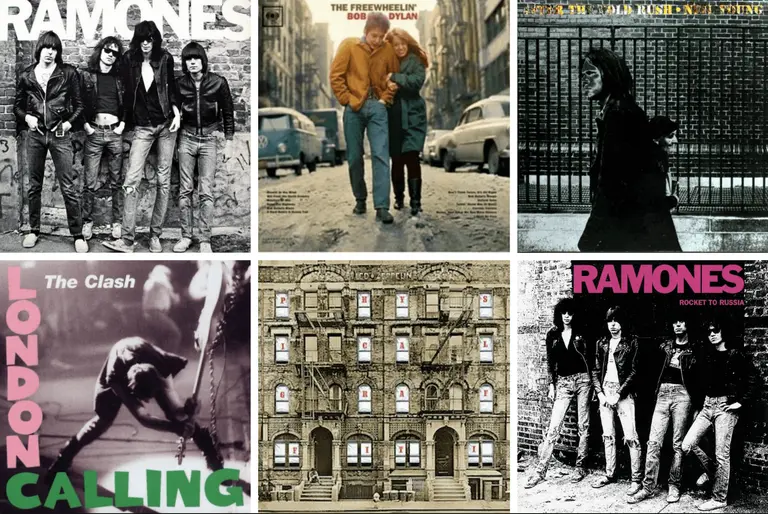
Iconic album covers of Greenwich Village and the East Village: Then and now

There’s no shortage of sites in the Village and East Village where great makers of popular music lived or performed. Less well known, however, are the multitude of sites that were the backdrop for iconic album covers, sometimes sources of inspiration for the artists or just familiar stomping grounds. Today, many are hiding in plain sight, waiting to perform an encore for any passersby discerning enough to notice. Ahead, we round up some of the most notable examples, from "The Freewheelin' Bob Dylan" to the Ramones' self-titled debut album.
Learn about the covers and see what the locations look like today
September 27, 2017

There’s a trolley car graveyard buried without a trace in Canarsie, Brooklyn

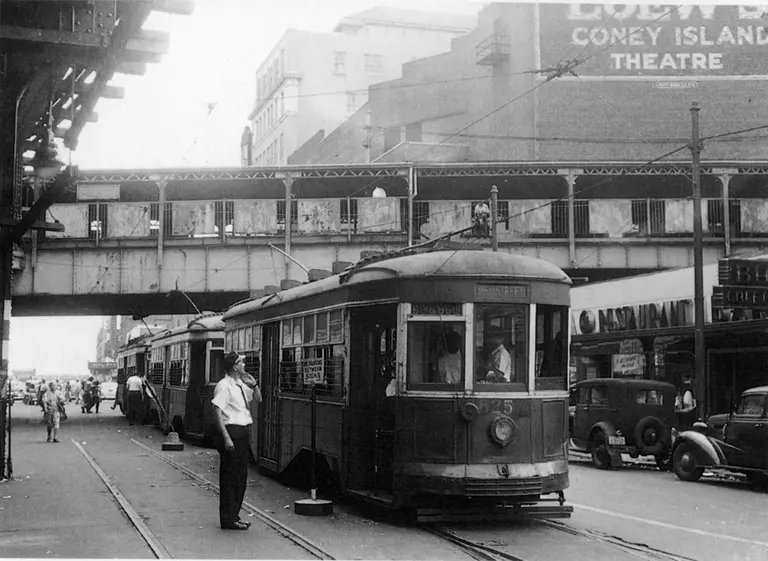
It may be hard to imagine today, but Brooklyn of the late-19th and mid-20th centuries was full of trolley cars. A number of different companies built out an expansive trolley system that connected residents to different neighborhoods and up to Queens—in fact, by 1930, nearly 1,800 trolleys were traveling along the streets of Brooklyn from Greenpoint to Gowanus to Bay Ridge and beyond. (The Brooklyn Dodgers were originally known as the “Trolley Dodgers,” for the practice of jumping out of the path of speeding electric streetcars.) But as automobiles began to take over the streets, trolley use diminished throughout New York. That, of course, meant that Brooklyn needed to figure out what to do with all those unneeded cars. According to Atlas Obscura, there were a few options, including sending cars to other cities as well as countries as far as South America, or selling them to museums. But the most fascinating—and forgotten—end to the Brooklyn trolley car can be found in Canarsie, where many were simply sunk into a pit about the size of a city block at the end of the Canarsie train line.
Learn more about this trolley graveyard
September 27, 2017

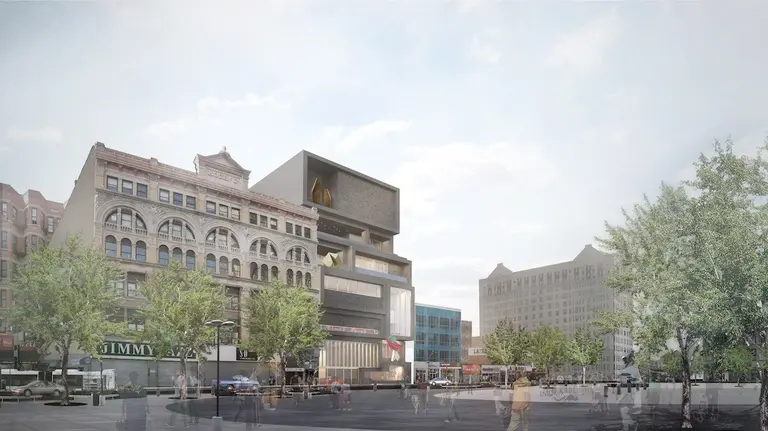
David Adjaye’s design for Harlem’s new Studio Museum building revealed

The Studio Museum in Harlem is scheduled to break ground on a new 82,000-square-foot home, designed by internationally renowned British architect David Adjaye, in late fall of 2018. Director and Chief Curator Thelma Golden and Chairman of the Board of Trustees Raymond J. Mc Guire unveiled designs for the new building Tuesday along with the announcement of a $175 million capital campaign to fund and maintain the new museum space. The groundbreaking coincides with the celebrated cultural institution's 50th anniversary year. In 2015, the museum announced that it would be working with Adjaye Associates in collaboration with Cooper Robertson on the new building, having outgrown its current home, a century-old building on West 125th Street that it has occupied since 1982.
See more renderings and find out more
September 25, 2017

POP-UP concept is a floating parking garage with moving water reservoir and green space

Due to a combination of population growth, car dependency and climate change, coastal cities across the country face growing issues with flooding, parking and lack of green space. As a solution, Danish architecture firm THIRD NATURE designed a 3-in-1 facility that stacks a water reservoir, parking facility, and urban space on top of each other (h/t ArchDaily). The project, called POP-UP, combines a large water reservoir with a parking garage that can move up and down as the reservoir fills and empties with water. Embracing the Archimedes principle of flotation, POP-UP works like a “piece of cork in a glass of water,” allowing the parking structure to correspond to the weight of the displaced water.
See the design
September 22, 2017

Top 10 can’t-miss events for NYC’s Archtober 2017

Archtober is New York City’s annual month-long architecture and design festival of tours, lectures, films, and exhibitions taking place during October when a full calendar of events turns a focus on the importance of architecture and design throughout our city in everyday life. Organized by the Center for Architecture, in collaboration with over 60 partner organizations across the city, the festival raises awareness of the important role of design and the richness of New York’s built environment. Now in its seventh year, Archtober offers something for everyone—from the arch-intellectual who wants to talk Jane Jacobs to the armchair architect with a thing for skyscrapers, parks or historic buildings—in the 100+ event roster. Ahead, 6sqft has hand-picked 10 don't-miss highlights in this year’s program.
Learn about the architecture of NYC at these cool events
September 18, 2017

In New York City, how much space is too little?

Walking through Union Square in late August, it was difficult to miss the new advertising campaign for Breather. Breather is just the latest space-by-the-hour option for New Yorkers who are in desperate need of space, even if it is simply a small room barely large enough to accommodate two chairs and a table. Of course, Breather isn’t the only company now selling space-by-the-hour to city residents. The market for shared workspaces also continues to grow, providing a growing army of local freelancers with access to desks and even soundproof telephone booths where it is possible to talk to clients without explaining a barking dog or screaming baby in the background. That so many New Yorkers are willing to pay anywhere from $40 to $100 per hour for a small room where it is possible to have a thought or make a phone call without distraction may appear to offer profound evidence of the city’s space crisis. But are New Yorkers really lacking space, or is our sense of space simply unrealistic? Are we just too precious about the space needed to live and work?
read more here
September 15, 2017

Tri-State Trail proposal would connect New York, New Jersey and Connecticut with 1,650 miles of trails

The NY-NJ-CT region features hundreds of parks and landscapes, from the Catskills and Pinelands to the beaches of Jersey and Long Island. Despite all of this open space, these recreational spots are disjointed from each other and from the communities that would use them. To better connect the parks to one another and to residents, the Regional Plan Association (RPA) has released a new proposal that calls for a Tri-State Trail network, linking 1,650 miles of biking, hiking, and walking trails in the greater New York region. The trail network would put over 8 million of the area’s residents within a half-mile of a trail, increasing access by 25 percent. It would put over 80 percent of today’s residents, or roughly 18.6 million, within just two miles of a trail.
Find out more
September 11, 2017

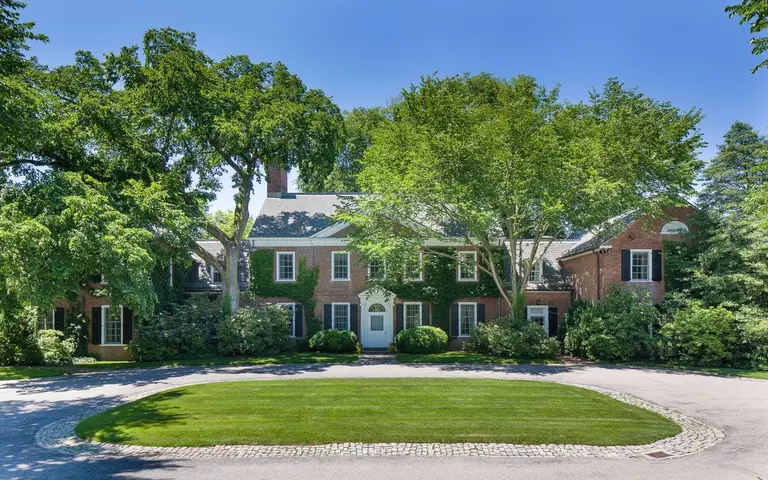
David Rockefeller’s 75-acre Westchester estate asks $22M

Some call it the end of an era of understated wealth. David Rockefeller, philanthropist, art collector and former CEO of Chase Manhattan bank–and the last surviving grandson of oil baron John D. Rockefeller–died in March at the age of 101. His properties have been up for sale since then, including his legendary art collection featuring works by Matisse, Cezanne, Gauguin, Seurat, and Picasso that headed for auction at Christie’s, his Upper East Side townhouse with an ask of $33 million and a retreat in Maine asking $19 million. The billionaire’s treasured Westchester estate, Hudson Pines, has just been listed at $22 million. Only 45 minutes from New York City, the property, which was home to the aforementioned art collection as well as the owner's antique carriage collection and his collection of 250,000 beetle specimens–Rockefeller was an avid entomologist–seems a world away from the bustle of daily life.
Find out more about this magical estate
September 7, 2017

6sqft Guide: Everything parents need to know about renting for college-age kids in NYC

Living in a college residence might be fun for a year or two, but most college-age kids eventually want to move out. And who can blame them? After all, who wants to show ID to a security guard every time they arrive home, share a room with a stranger, or eat in a cafeteria night after night? In many smaller college towns, sending your kid first and last month’s rent is more than enough to get them out of residence and into their first apartment. In New York City, it’s a bit more complicated. In most cases, parents need to be directly involved in the housing search and rental process and prepared to come up with a substantial deposit, which can meet or even exceed the money needed to purchase a starter home in many U.S. cities. In order to rent an apartment in New York City, renters typically must come up with first and last month’s rent, a security deposit, and a broker’s fee (the fee is either one month’s rent or anywhere from 10 to 15 percent of the first year’s rent). Also, as a rule, owners and management companies require lease holders to have an established credit history, to make more than 40 times the monthly rent on an annual basis, or to have a guarantor who exceeds these criteria. This 6sqft guide outlines everything parents need to know before going on the market to rent an apartment for a college-age child, including advice on where to find listings and how to decode them.
the full scoop here
September 6, 2017

100 free things to do in New York City

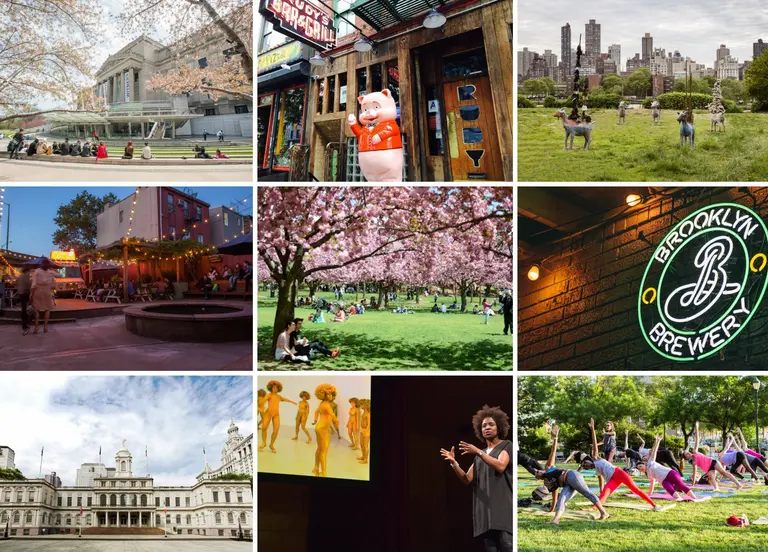
Despite being one of the most expensive cities to live in, New York City offers many free activities, events, and attractions all year round, letting you pinch pennies when the rent check is due. From free lectures at the Met to free group meditation classes, there are tons of activities that don't cost a dime. To help New York visitors and natives alike, we've put together a guide of the 100 best wallet-friendly things to do in the Big Apple.
More this way
August 24, 2017

Chinatown’s low-income senior building is taking applications for the first time in 25 years

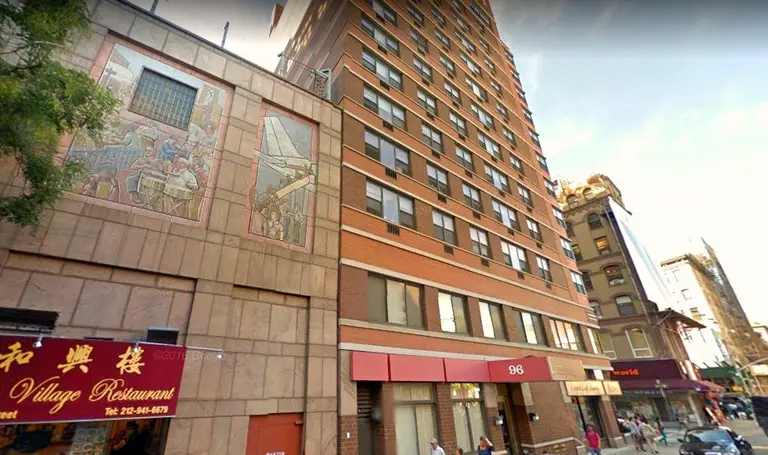
The 13-story, 88-unit rental building for low-income seniors at 96 Baxter Street in Chinatown has opened its waiting list to new applicants this week for the first time in 25 years (h/t Lo-Down). Only people aged 62 and older (over 18 if they are mobility impaired) can apply. The units rent for 30 percent of one's annual income; studios are available to those earning less than $33,400 a year and one-bedroom to those earning less than $38,200. The waitlist originally contained over 3,000 names, a number which now stands at only a handful. Among the building's current tenants, two are reportedly 108 years old. The youngest residents are about 85.
See the qualifications
August 21, 2017

New renderings of Hudson Yards’ Norman Foster-designed tower and food pavilion

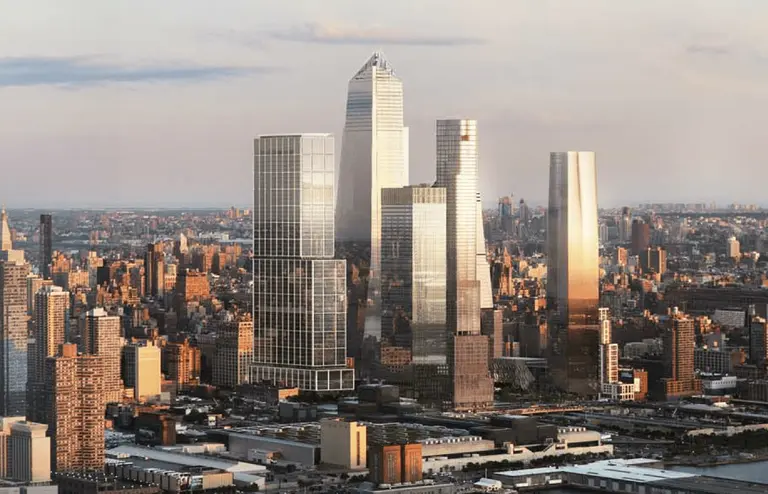
A decade after first embarking on Hudson Yards--the largest private development in the nation's history--developer Related Companies is in the thick of things, with listings live at 15 and One Hudson Yards and construction underway at 30, 35, and 55, as well as The Shed cultural center and the Vessel public art piece. Keeping the momentum moving, Yimby has now uncovered a new rendering of Norman Foster's 985-foot 50 Hudson Yards, which at $3.94 billion will be the city's most expensive office tower, and the first view of the food and beverage pavilion that will sit in the Eastern Railyard.
All the details ahead
August 18, 2017

Watch The Shed, an 8-million-pound structure, glide effortlessly alongside the High Line

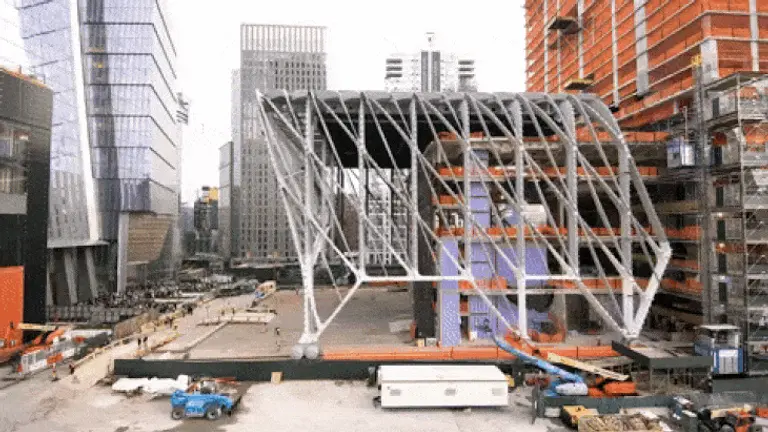
The Shed courtesy of Diller Scofidio +Renfro, via The New York Times Construction of The Shed, a six-level flexible structure that can adapt to different art forms and technologies, continues to progress where the High Line meets Hudson Yards. While the building, an independent non-profit cultural organization, has an expected opening date of 2019, the massive eight-million-pound structure can now slide along the High Line for five minutes on a half-dozen exposed steel wheels that measure six-feet in diameter (h/t NY Times). The Shed, designed by Diller Scofidio + Renfro, in collaboration with Rockwell Group, features a movable shell on rails that sits over the fixed base of the building, allowing for it to change size depending on the type of event.
See the Shed slide
August 16, 2017

Stuyvesant Town goes green: How the 70-year-old complex is reinventing itself in a modern age

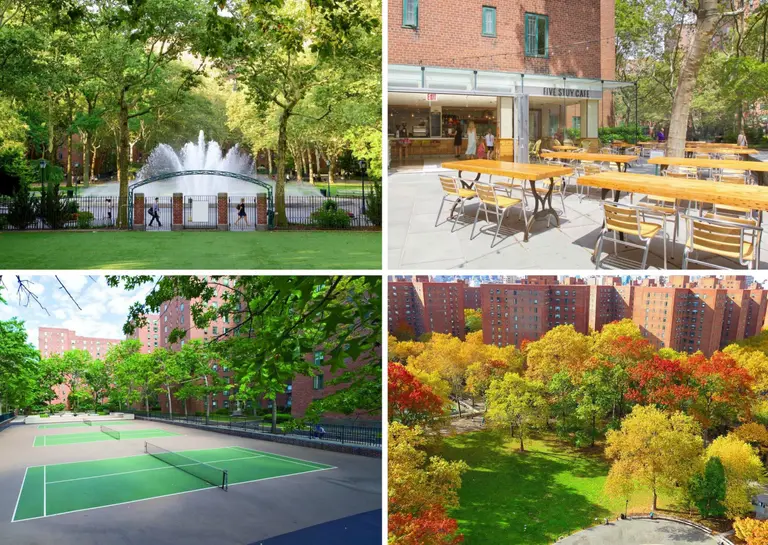
"Think of us as a 1947 Cadillac retrofitted with a Tesla engine," says Marynia Kruk, Stuyvesant Town and Peter Cooper Village's Community Affairs Manager. Though the 80-acre residential complex's 110 red brick, cruciform-shaped buildings were constructed 70 years ago this month, their imposing facades are hiding an intense network of systems that, since 2011, have allowed the development to reduce its on-site carbon emissions by 6.8 percent, equal to over 17 million pounds of coal saved. To put this in perspective, that's roughly the same savings as 3,000 drivers deciding to bike or take the train for an entire year or planting a forest of 400,000 trees. This massive sustainability push, along with new ownership (Blackstone Group and Canadian investment firm Ivanhoe Cambridge bought the complex for $5.3 billion in October 2015), updated amenities, and an affordable housing commitment, is driving Manhattan's largest apartment complex into the future, and 6sqft recently got the inside scoop from CEO and General Manager Rick Hayduk and Tom Feeney, Vice President of Maintenance Operations, who is spearheading the green initiative.
READ MORE
August 15, 2017

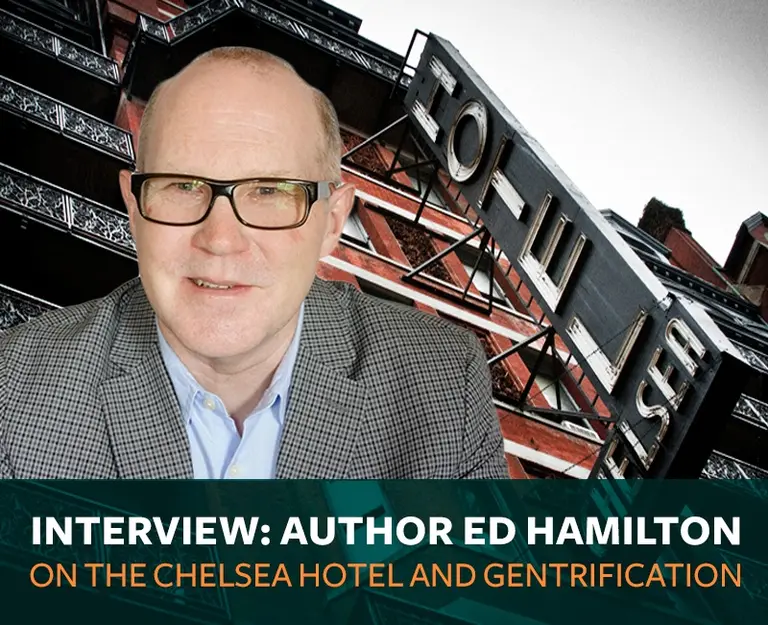
INTERVIEW: Author Ed Hamilton on how the Chelsea Hotel inspired personal stories of gentrification

When it comes to the Chelsea Hotel, Ed Hamilton has seen it all. He and his wife moved to the iconic property in 1995, living among artists and musicians in a 220-square-foot, single-room-occupancy unit. The storied, artistic community nurtured inside the hotel came to an end a decade ago when the building sold for the first time and evictions followed. Since then, the property has traded hands a number of times with talks of boutique hotel development, luxury condos, or some combination of the two. Hamilton started tracking the saga at his blog Living With Legends and published a book, "Legends of the Chelsea Hotel," in 2007. After the book's success, Hamilton wrote a short story collection titled "The Chintz Age: Stories of Love and Loss for a new New York." Each piece offers a different take on New York's "hyper gentrification," as he calls it: a mother unable to afford her lofty East Village apartment, giving it up to a daughter she shares a strained relationship with; a book store owner who confronts his failed writing career as a landlord forces him out of now highly valuable commercial space. Ultimately, many of the stories were inspired by the characters he met inside the Chelsea Hotel. And his tales offer a new perspective on a changing city, one that focuses on "the personal, day-to-day struggles about the people who are trying to hang onto their place in New York." With 6sqft, he shares what it's like writing in the under-construction Chelsea Hotel, what the Chintz Age title means, and the unchanged spots of the city he still treasures.
READ MORE
August 10, 2017

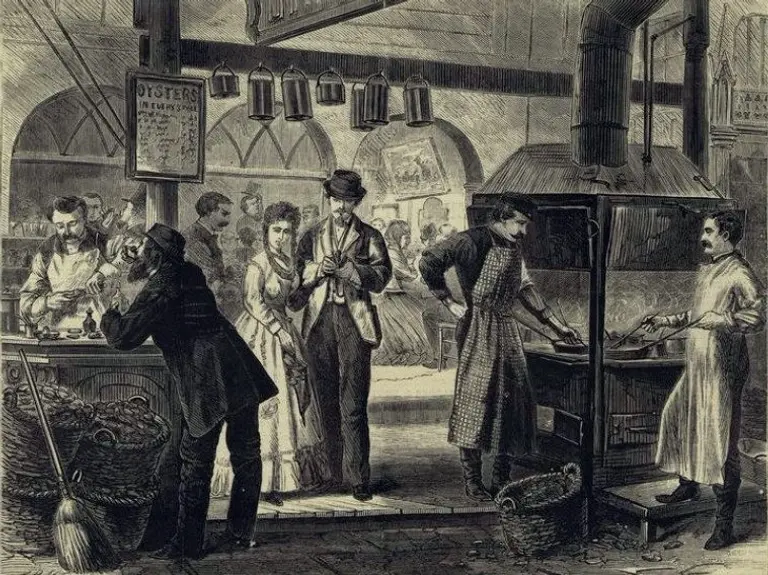
From oysters to falafel: The complete history of street vending in NYC

To fully experience New York City, you have to eat. And then eat some more. So inextricably linked with its food, the city’s social and cultural history requires an exploration of its endless cuisines. And while street food is not unique to New York, the city provides some of the most diverse dining options in the world, with over 10,000 people make a living by street vending. But this tradition dates all the way back to the 1600s when European settlers enjoyed eating shellfish on the streets. Food vendors took on a more formal incarnation in the early 1800s on the Lower East Side and have changed with every new immigrant group that's landed here since. From oysters and knishes to hot dogs and Halal, the city's street vendors reflect its constant evolution and also what brings New Yorkers together.
Dive in to the full history