Search Results for: affordable+brooklyn+neighborhoods+for+rent+apartments

April 7, 2020

4,000 spots open on waitlist for middle-income units across Bushwick, Bed-Stuy

Applications are currently being accepted to replenish a 4,000-name waitlist for income-restricted apartments across central Brooklyn. Located at 806 St. John's Place, 924 Myrtle Avenue, 682 Chauncey Street, 1140 Bushwich Avenue, and 18 Stanhope Street, the buildings are located in Crown Heights, Bed-Stuy, and Bushwick. New Yorkers earning 130 percent of the area median income can apply for the apartments, which include studios starting at $1,700/month and two-bedrooms from $2,000/month.
Find out if you qualify
February 5, 2020

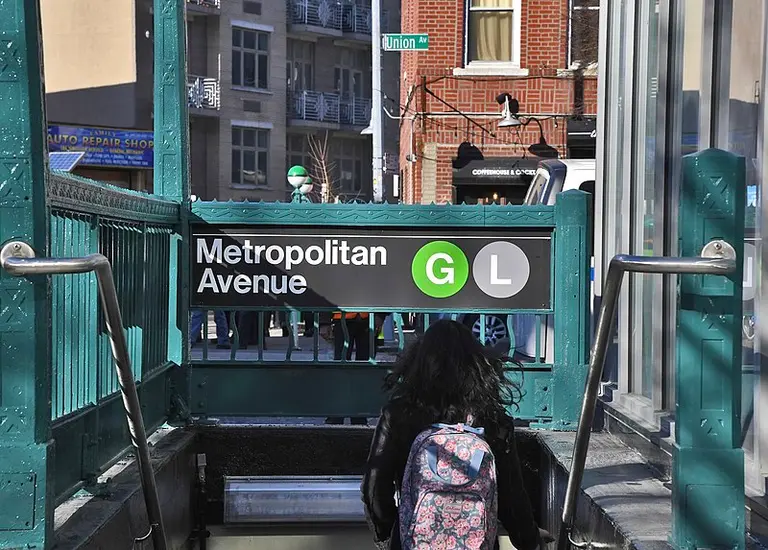
Live off trendy Metropolitan Avenue in Williamsburg, from $1,174/month

Two new buildings in prime Williamsburg are launching affordable housing lotteries this week. The rental at 196 North 4th Street is accepting applications from New Yorkers earning 80 and 130 percent of the area median income for studios to two-bedroom apartments, starting at $1,174/month. At 660 Driggs Avenue, those earning the same AMI can apply for units, starting at $1,458/month for a two-bedroom and going up to $2,320/month for a one-bedroom.
Details this way
December 16, 2019

NYC real estate experts offer their 2020 predictions

In some ways, 2019 was a continuation of the past few years: political and global uncertainty loomed over the New York real estate market, development continued at a steady pace, and prices were as high as ever. (Oh wait -- they were actually higher.) But the year also brought notable changes, from a total overhaul of rent and tenant protections, increased urgency in regards to climate change, an increasingly buyer's market, and dry-up of the once pervasive rental concessions. So what's in store for the year ahead? Real estate experts believe sustained political uncertainty -- particularly around an election year -- could mean buyers proceed cautiously. The new rent laws will undoubtedly shape New York, as both the rental and condo markets tighten. Pre-war design will make a comeback in defiance of glassy modern architecture, while the focus on sustainability will increase and amenities will become more flexible.
Keep reading for the 6sqft's full roundup of 2020 predictions.
December 5, 2019

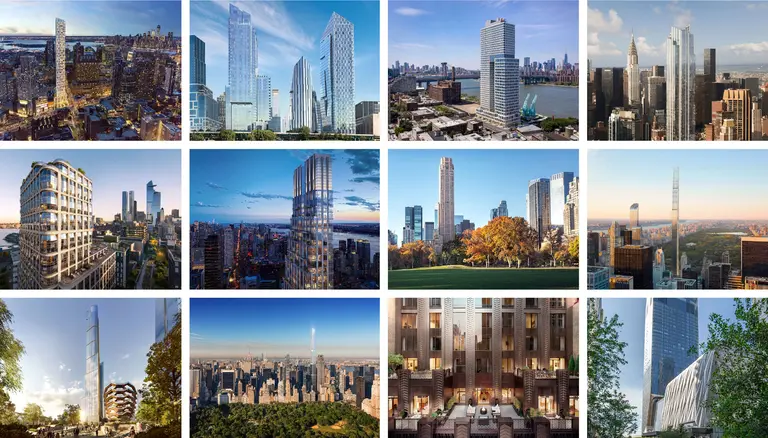
VOTE for 6sqft’s 2019 Building of the Year

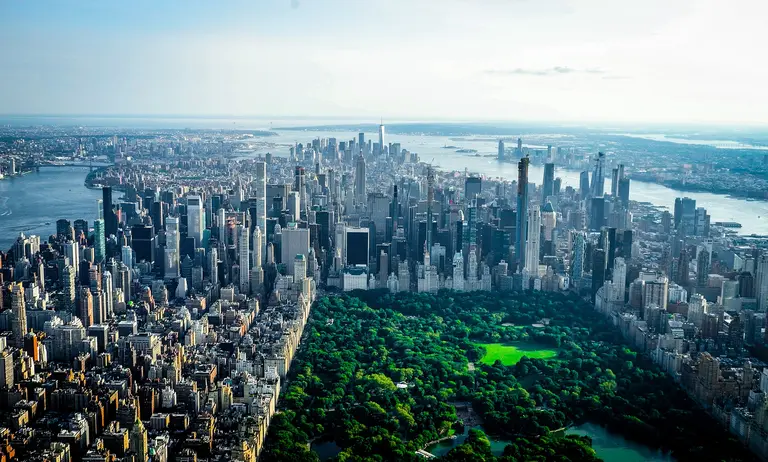
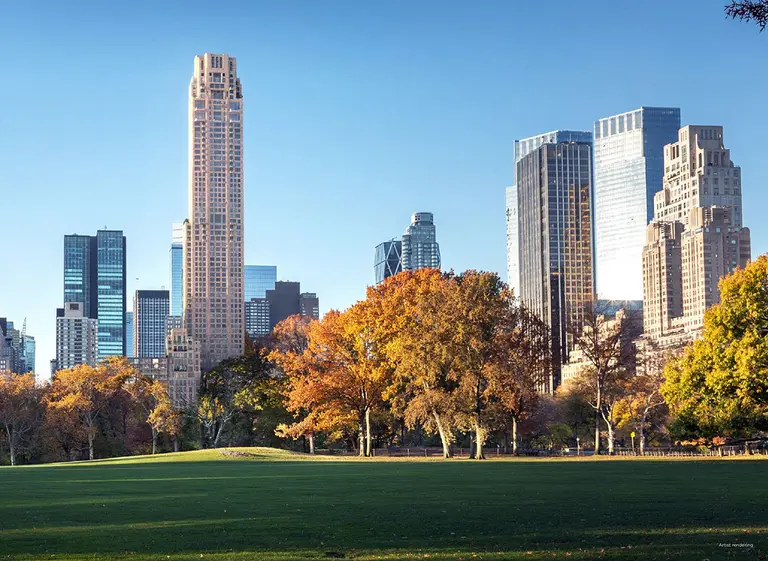
If you had to boil it down, 2019 has been an important year for advancing the city's most noteworthy residential projects. Perhaps no news was more important than the official opening of Hudson Yards, which introduced a collection of sleek towers to the Manhattan skyline. (Two Hudson Yards buildings, 15 and 35 Hudson Yards, have made this list.) But that still didn't overshadow other glittering towers now transforming the skyline: the world's tallest residential tower at Central Park Tower, the most expensive residential sale in the country at 220 Central Park South, and the highest infinity pool in the Western Hemisphere at Brooklyn Point. It's been a year of construction progress, eye-popping sales prices, and exceptionally luxurious apartments and amenities behind unique facades. Our picks are down to 12 of the most notable residential structures this year. Which do you think deserves 6sqft’s title of 2019 Building of the Year? To have your say, polls for our fifth annual competition will be open up until midnight on Friday, December 13th and we will announce the winner on Monday, December 16th.
Cast your vote!
November 26, 2019

141 middle-income units up for grabs at Prospect-Lefferts’ tallest tower, from $2,156/month

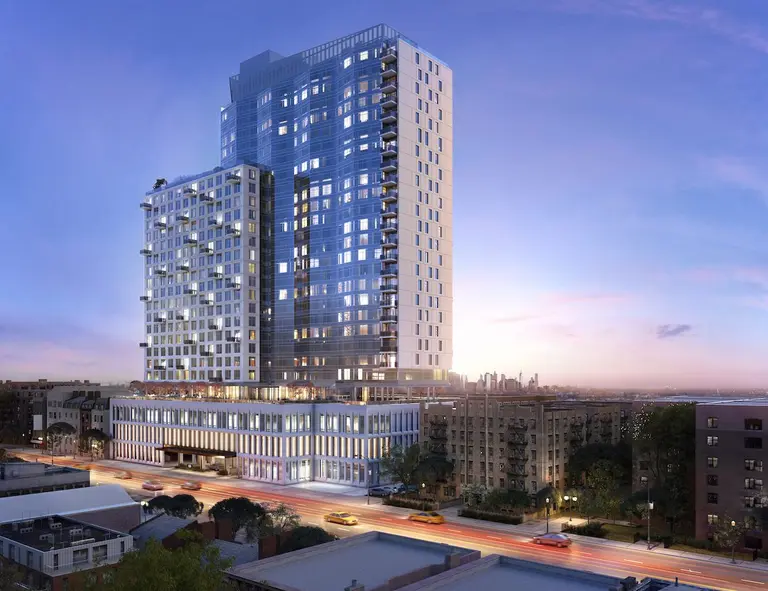
A housing lottery launched this week for 141 middle-income apartments at a newly constructed building that borders Brooklyn's Flatbush and Prospect-Lefferts Gardens neighborhoods. Dubbed "PLG," the 26-story tower at 123 Linden Boulevard sits a few blocks from the southern end of Prospect Park and boasts 50,000 square feet of indoor and outdoor amenity space. As the tallest building in the neighborhood at 320 feet, PLG offers unobstructed panoramic views of Prospect Park, the Manhattan skyline, and the Verrazano Bridge. Qualifying New Yorkers earning 130 percent of the area median income can apply for the units, which range from $2,156/month studios to $3,122/month three-bedrooms.
Find out if you qualify
October 8, 2019

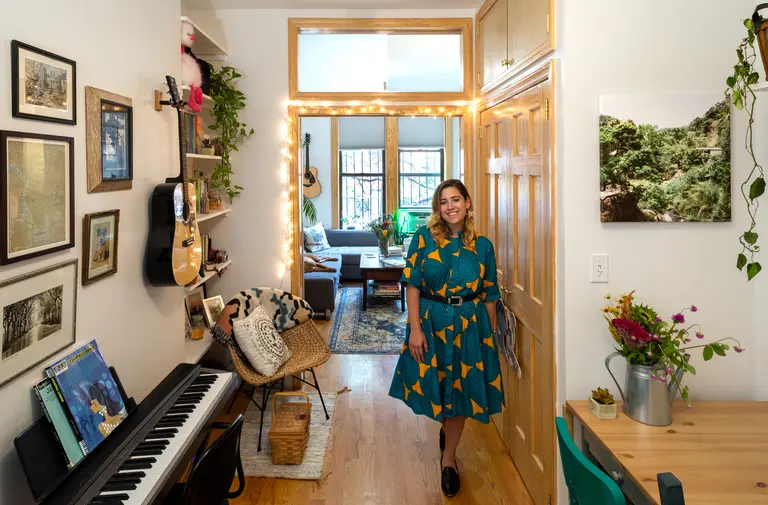
My 750sqft: A marketing strategist’s passion for sustainability is on full display in her Park Slope pad

Many New Yorkers fill their apartments with second-hand goods for that vintage aesthetic or because it's affordable. But Long Island-native Natalie Skoblow thrifts because it also benefits the environment. "From the clothes in my closet to the photos on the wall, almost everything in our apartment is either locally made, thrifted, or sustainably made," Natalie told us on a recent tour of her Park Slope apartment. What began as a hobby in high school became a "full-fledged love affair" with supporting sustainable, ethical brands. From the books found on the sidewalks of her neighborhood to the antique maps of Brooklyn above the piano, Natalie and her boyfriend Jesse's apartment brings new life into old pieces. Ahead, meet Natalie, along with the couple's newly adopted puppy Ollie, and tour her apartment, which she describes as "playful, vibrant, and welcoming."
Meet Natalie and see inside
August 14, 2019

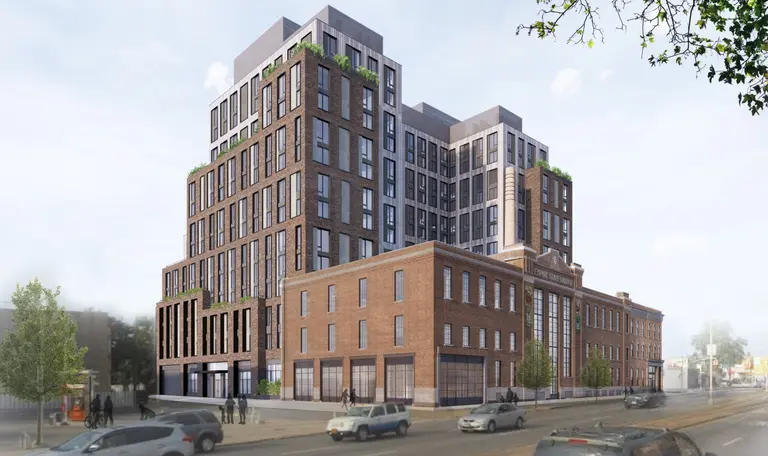
LPC approves 14-story complex behind East New York’s landmarked Empire State Dairy building

Update 8/14/19: The Landmarks Preservation Commission on Tuesday approved Dattner Architects' plan to construct a 14-story building behind the Empire State Dairy. According to Brownstoner, the architects removed the cantilever element from the project's previous design and plan to preserve the chimney, instead of demolishing it. The new tower will replace two existing, but not landmarked, buildings, and include over 330 affordable apartments. An affordable housing developer on Tuesday presented plans to the Landmarks Preservation Commission for a new building that would cantilever over the Empire State Dairy building in East New York. HP Brooklyn Dairy Housing Development Fund Company, part of the nonprofit Housing Partnership Development Corporation, wants to construct a 14-story tower on top of the early 20th-century factory, located at 2840 Atlantic Avenue. Landmarked in 2017, the factory is notable for its architectural style and decorative tile murals. Dattner Architects created the designs for the proposed complex shown in the new renderings. The new construction would be a major change for the property, which was purchased by the developer for $16.75 million last year.
See more, this way
June 26, 2019

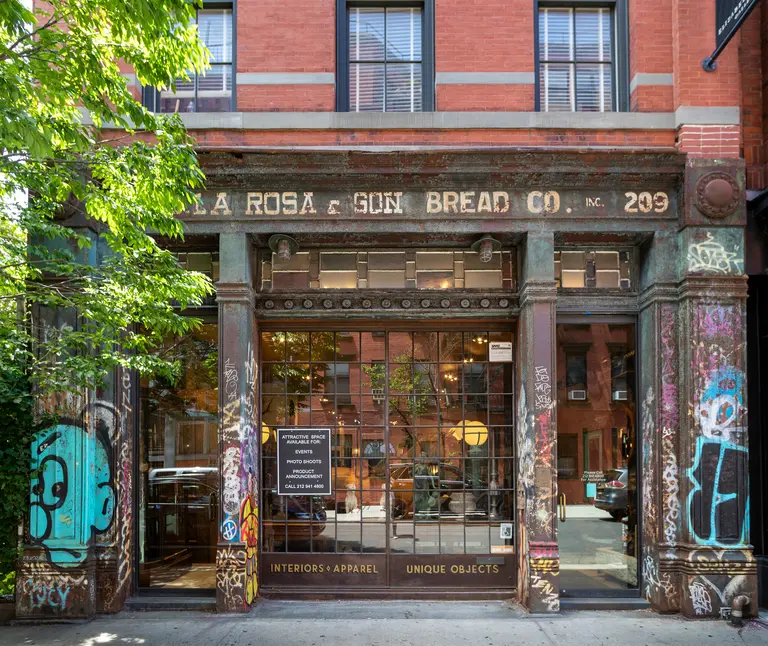
Behind the scenes at Little Italy’s Elizabeth Street Garden and Gallery

Shortly upon arriving in New York in the 1990s, Allan Reiver traveled to Coney Island with one goal in mind: find a shooting gallery. Reiver, who has always had a knack for finding art out of other people’s junk, bought one that same day from an older man who told him it had been boarded up since the 1930s when it became illegal to shoot live ammunition. Nearly 30 years later, the 10-foot high boardwalk game, still operational, sits in the back of the Elizabeth Street Gallery in Little Italy, where Reiver has housed unique artifacts and fine objects for nearly a decade. Rare finds can also be found next to the gallery, scattered across a lush green space known as the Elizabeth Street Garden. Since 1991, Reiver has leased the land from the city, slowly transforming the lot with unique sculptures, columns, and benches, all plucked from estate sales. In 2012, the city revealed plans to replace the garden with a senior affordable housing complex, known as Haven Green, igniting a battle between garden advocates and affordable housing supporters. The City Council votes on the project Wednesday. Ahead of the decision, 6sqft toured Reiver’s gallery and the garden next door and spoke to him about building the green space and the plan to fight the Haven Green project in court.
More this way
April 25, 2019

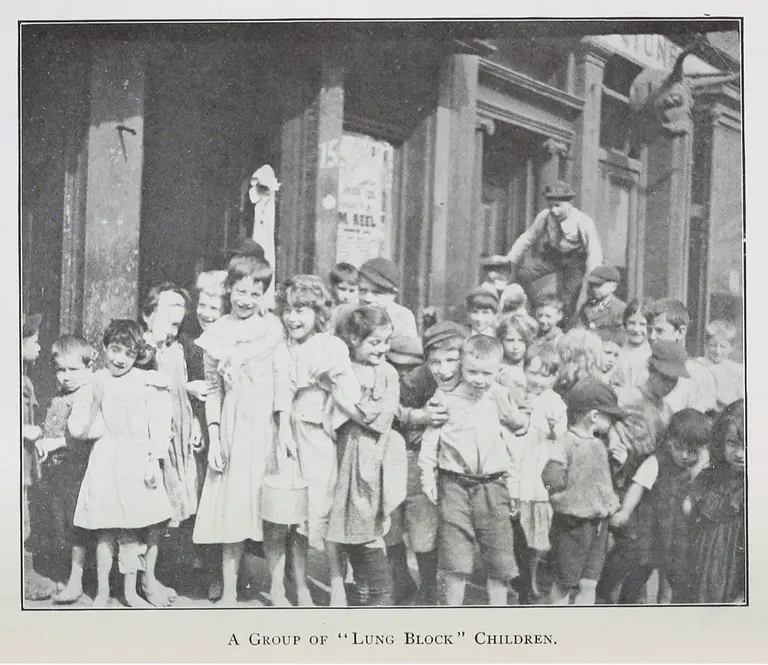
The Lower East Side’s forgotten Lung Block: The Italian community lost to ‘slum clearance’

In 1933, a new development rose on the Lower East Side. It was Knickerbocker Village, the first federally-funded apartment complex in the United States, and one of the first developments that would later fall under the umbrella of the city’s “Slum Clearance” program. The “slum” that Knickerbocker Village replaced wasn’t just any rundown collection of buildings – it was the notorious “Lung Block” between the Brooklyn and Manhattan bridges, bounded by Cherry, Monroe, Market and Catherine Streets, which in 1903, Pulitzer Prize-winning journalist Ernest Poole named the most congested and disease-ridden place in the city, or, perhaps, the world. But was it? “The Lung Block: A New York City Slum and its forgotten Italian Immigrant Community,” a new exhibit opening April 25th at the NYC Department of Records curated by researchers Stefano Morello and Kerri Culhane, will revisit the neighborhood and the immigrant community that called it home. With maps, journals, photos and other artifacts, the exhibit will consider the connections between health and housing, affordability and gentrification, public health and progressive reform, and architecture and the immigrant experience.
Learn more about this community
February 28, 2019

Why Ken Griffin’s $238M condo is taxed like it’s worth $9.4 million

We've heard it before, but it's always a shock to hear about how the city’s tax system undervalues big-ticket apartments in expensive neighborhoods. The Wall Street Journal reports that the effective tax rate on billionaire hedge funder Ken Griffin’s sky mansion at 220 Central Park South comes out to about 0.22 percent–compared with about one percent in the city's less affluent neighborhoods. The reasoning behind this is tied to a complicated city property tax system that assesses all co-ops and condos as if they were rental properties. Rental income at nearby buildings is assessed in order to estimate a condo's value.
What's going on here?
December 31, 2018

6SQFT’S TOP STORIES OF 2018!

As we wrap up 2018, 6sqft is taking a look back at the top stories of the past 12 months in topics like apartment tours, new developments, real estate trends, and history. From a behind-the-scenes tour of Williamsburg's abandoned oil tanks to a sneak peek at Amazon's new Long Island City home to a look back at how Native American ironworkers built the NYC skyline, these are the stories that readers couldn't get enough of.
See the full list here
December 13, 2018

NYC plans to sell $1B in NYCHA air rights to developers

The New York City Housing Authority will sell its unused air rights to developers for the first time ever, Mayor Bill de Blasio announced on Wednesday. The authority said it will transfer a portion of its 80 million square feet of air rights to generate $1 billion in capital repairs for nearby developments. The air rights announcement is one part of a 10-year plan the mayor unveiled, called NYCHA 2.0, which aims to resolve $24 billion in necessary repairs at public housing. In total, the agency needs nearly $32 billion over five years for necessary repairs.
Get the details
December 10, 2018

50 years at Co-op City: The history of the world’s largest co-operative housing development

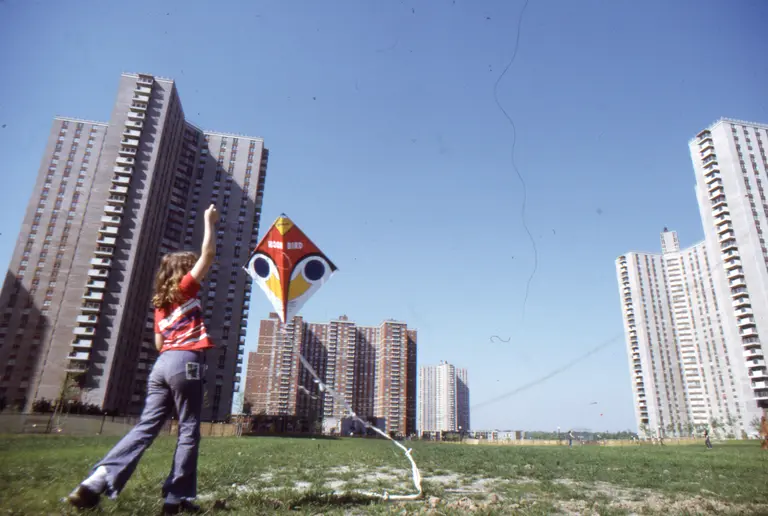
When Governor Rockefeller, Robert Moses, Jacob Potofsky of the United Housing Foundation, and Abraham Kazan, known as “the father of US cooperative housing,” broke ground on Co-op City in the Baychester section of the Bronx on May 14, 1966, they were doing something truly groundbreaking. In fact, Rockefeller called it a “completely sound investment in a better society.” Co-op City is the world’s largest co-operative housing development. Built on 320 acres just north of Freedomland, the sprawling, self-contained development provides homes for over 15,000 families across 35 buildings, and supports its own schools, weekly newspaper, power plant, and planetarium. Originally built by the Amalgamated Clothing Workers of America and the United Housing Foundation as cooperative, affordable, middle-income workers’ housing, Co-op city has remained dedicated to open membership, democratic control, distribution of surplus, and diversity for half a century.
READ MORE
November 2, 2018

The Durst Collection shows ‘New York Rising’ from the 17th century to the skyscraper age

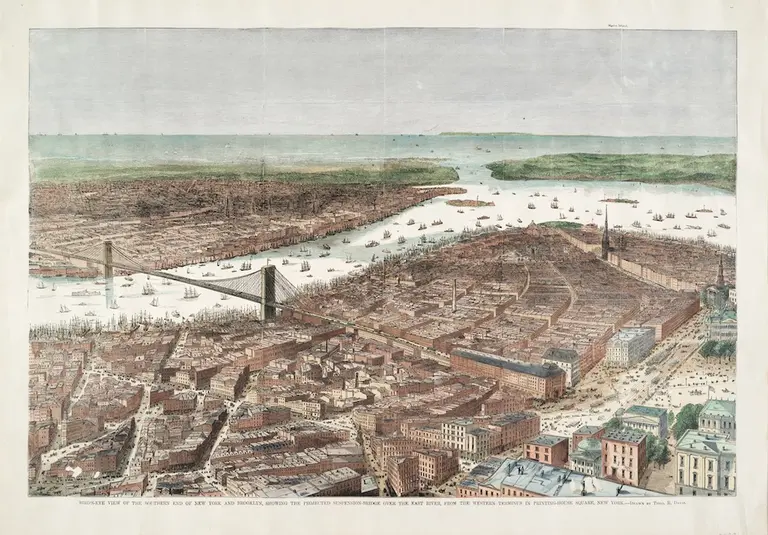
If you want to go on a visual journey that begins with Manhattan's first European settlement, way back in the seventeenth century, up through the skyscrapers and urban planning of the late twentieth century, look no further than New York Rising: An Illustrated History from the Durst Collection. The book, set to come out on November 13th, originates from the sprawling Durst Collection at Columbia University's Avery Architectural & Fine Arts Library. Incredible photography captures the most definitive parts of New York history, accompanied by the thoughts of ten scholars who were asked to reflect on the images. Their writing ranges from the emergence of public transit to the "race for height" to affordable housing. 6sqft spoke with Thomas Mellins, who edited the book with Kate Ascher, on their efforts delving into the Durst Collection -- which has its own unique history -- to come up with this comprehensive visual history. See a selection of photos from the book, along with thoughts from Mellins, after the jump.
READ MORE
October 29, 2018

Apply for 67 middle-income units near the J, M, Z lines in Bushwick, from $1,759/month

For those looking to move away from the soon-to-be-shuttered L train but remain in Brooklyn, this affordable housing lottery may be a decent solution. Applications are now being accepted for 67 middle-income apartments across two buildings in Bushwick, both conveniently near the J, M, Z subway lines. Qualifying New Yorkers earning 130 percent of the area median income can apply for the apartments, ranging from $1,759/month studios to $2,506/month two-bedrooms.
Find out if you qualify
September 17, 2018

With most approved residential units in NYC, the Bronx building boom continues

Out of the 20 New York City neighborhoods with the most residential units approved within the past year, seven of them are in the Bronx, more than any other borough. According to a new report from Localize.city, a group that analyzes data related to housing, 13 percent of all approved apartments between 2010 and 2015 were in the Bronx. In the first half of 2018, the Bronx had 27 percent of the city's share of approved new units. While a majority of new buildings in the borough are affordable, increasing land prices could mean more market-rate projects are on the horizon, the New York Times reported.
Get more details
August 9, 2018

59-block Inwood rezoning vote draws protests from residents who fear its character will be lost

On Wednesday the City Council approved a rezoning plan for a 59-block section of Inwood, a neighbhorhood often referred to as the "last affordable neighborhood in Manhattan," the New York Times reports. The plan was approved last week by the city's zoning subcommittee and the Land Use Committee. The Inwood rezoning is part of Mayor Bill de Blasio’s plan to rezone neighborhoods across the city as part of the push to create and preserve 300,000 affordable housing units by his goal date of 2026. Inwood is the fifth neighborhood–including the also-controversial East New York and East Harlem–to be approved for rezoning under the plan.
Find out more
July 16, 2018

New Yorkers paid over $507M for security deposits in 2016, report says

In addition to having some of the highest rents in the country, New York City requires renters to provide a substantial chunk of money up front to cover an apartment's security deposit. According to a new report by City Comptroller Scott Stringer, New Yorkers forked over more than $507 million for security deposits over the course of 2016. Stringer is calling for an overhaul of the city's security deposit system, which he says has created a financial barrier that has intensified the city's affordable housing crisis. "For too long, the deck has been stacked against New York’s working-class renters but we’re taking a step forward to reimagine how the housing system works in our City," Stringer said in a press release.
Learn more
June 29, 2018

Apply for a $960/month one-bedroom apartment in colorful Bushwick

Photo via bslax28 on Flickr An affordable housing lottery launched this week for just two one-bedroom apartments in the heart of hip Bushwick in Brooklyn. Located at 176 Knickerbocker Avenue, the newly constructed rental sits just off bustling Flushing Avenue, as well as near beloved spots like pizza place Roberta's, Art Deco cocktail bar The Narrows and music venue House of Yes. Qualifying New Yorkers earning 60 percent of the area median income can apply for the two available $960/month one-bedroom units.
Find out if you qualify
June 27, 2018

Live across from Crown Heights food hall Berg’n, from $1,769/month

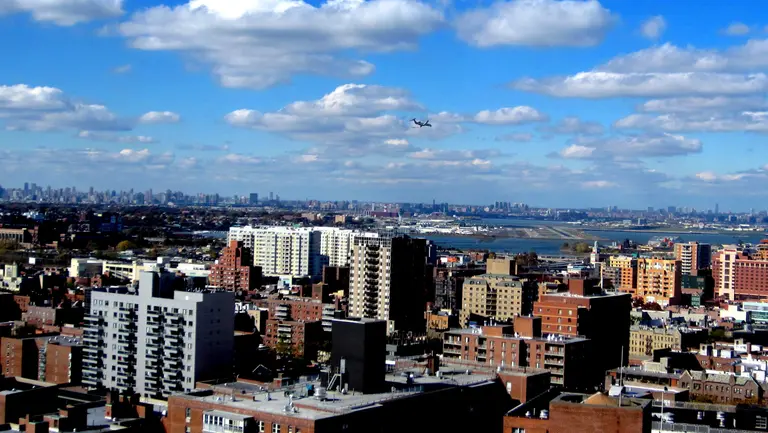
Photo via Berg'n An affordable housing lottery launched Wednesday for four newly constructed, middle-income apartments in Crown Heights. Located at 916 Bergen Street, the rental building sits directly across from local favorite, Berg'n, a beer/ food hall from the founders of Smorgasburg. Residents will have access to a bike room and the building's rooftop. Qualifying New Yorkers earning 130 percent of the area median income can apply for the units, including one $1,769/month studio and three $2,635/month three-bedrooms.
Find out if you qualify
June 12, 2018

3 middle-income units up for grabs in a quiet section of Flushing in Queens, from $1,700/month

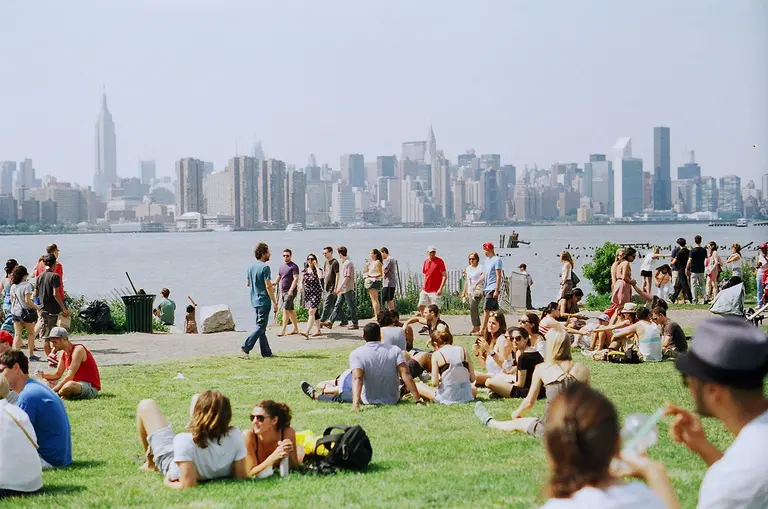
Photo via Wikimedia A newly constructed four-story residential building in Murray Hill is now accepting applications for three middle-income units. But it's not the Murray Hill of Manhattan you know, but instead a quiet enclave in Queens, part of the sprawling neighborhood of Flushing. Found at 168-05 Depot Road, the rental sits just four blocks from the Long Island Rail Road station at Broadway. Qualifying New Yorkers earning 130 percent of the area median income can apply for the $1,700/month one-bedroom and two $1,950/month two-bedrooms.
Find out if you qualify
June 7, 2018

Live next to foodie-favorite Smorgasburg in Williamsburg, from $1,407/month

Photo via Harold Navarro on Flickr A lottery launched this week for affordable apartments across two multi-family apartment buildings in the Williamsburg neighborhood of Brooklyn. Located at 27 and 34 North 6th Street, the 347-unit site sits just steps away from the waterfront as well as the East River State Park, home to stunning views and beloved weekly market, Smorgasburg. Qualifying New Yorkers earning 80 percent of the area median income can apply for the units ranging from a $1,407/month studio to a $1,820/month two-bedroom.
Find out if you qualify
May 4, 2018

Two buildings near Crotona Park in the South Bronx launch lotteries, from $897/month

Sixteen moderate-income apartments are up for grabs in two buildings located in the Claremont and Morrisania neighborhoods of the South Bronx. The buildings, located at 625 Jefferson Place and 3531 Third Avenue, sit near Crotona Park, a nearly 128 acre public park with a lake, 20 tennis courts a massive swimming pool and 28 species of trees. Qualifying New Yorkers earning 80 percent of the area median income can apply for the apartments ranging from $897/month studios to a $1,764/month four-bedrooms.
Find out if you qualify
April 18, 2018

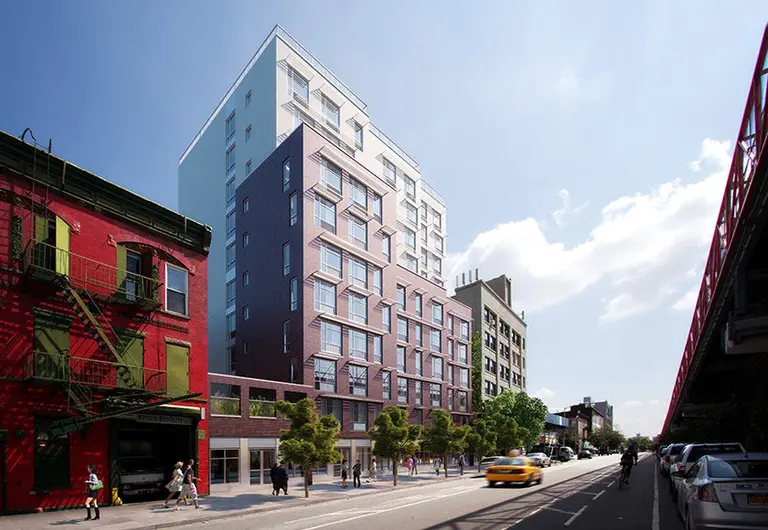
Live in the heart of hip Williamsburg, from $865/month

Via Dattner Architects Although rental prices are dropping in Williamsburg due to the impending L-train shutdown, a recently launched lottery is offering up a can't-miss deal. A brand new building located at 105 South Fifth Street has 38 affordable units up for grabs. In addition to the housing units, the Datter Architects-designed mixed-use project features roughly 4,000 square feet of retail and a 1,000-square-foot medical facility. Qualifying New Yorkers earning 60 percent of the area median income can apply for apartments ranging from an $865/month studio to a $1,121/month two-bedroom.
Find out if you qualify
April 16, 2018

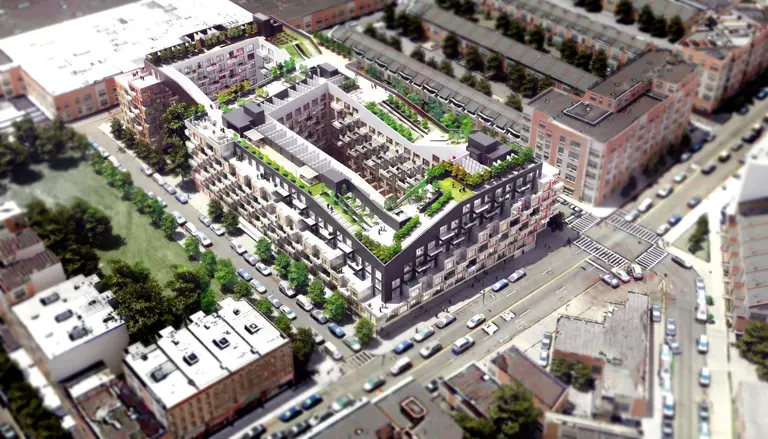
100 chances to live at ODA’s Rheingold Brewery development in Bushwick, from $913/month

A lottery launched this week for 100 affordable units at 10 Montieth Street, part of the massive ODA-designed Rheingold Brewery development in Bushwick. The seven-story, 392-unit building topped out last September, with its distinct modular form, sloping rooftop garden and colorful frames. Amenities at the building include a climbing wall, laundry room, interior courtyard, game room, bike storage, children's playroom, art studios and much more. Qualifying New Yorkers earning 60 percent of the area median income can apply for the units, ranging from $913/studios to $1,183/two-bedroom apartments.
Find out if you qualify