History

November 5, 2018

How the Men’s League for Women’s Suffrage helped win voting rights in New York

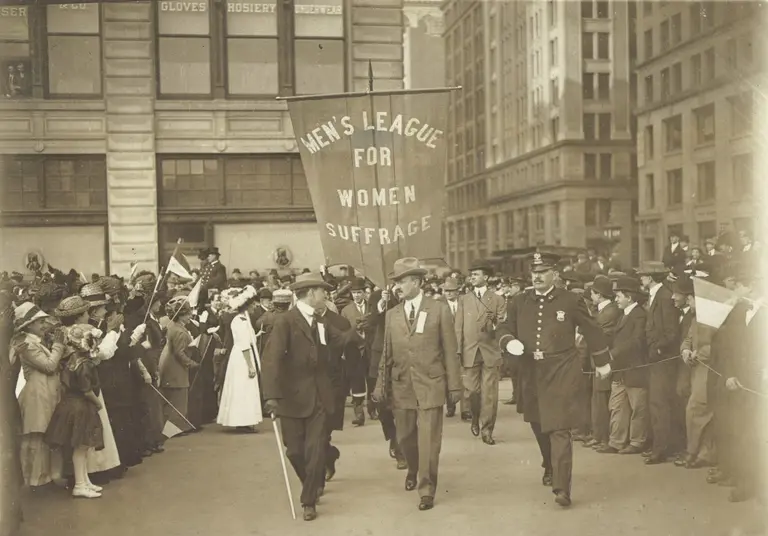
James Lees Laidlaw, the president of the National Chapter of the Men’s League for Women’s Suffrage, wrote in 1912, “The great educational work in the woman’s movement has been done by women, through a vast expenditure of energy and against great odds. There is still work to be done and hard work. We men can make it easier and happier work if we join in it, and no longer stand aside, as too many men have done, leaving the women to toil and struggle, making up in vital energy what they lack in political power.” Thanks to an ongoing great expenditure of energy, American men and women will vote tomorrow. In our own time, there is still work to be done, and hard work, in the fight for equality, justice and universal dignity. The history of the Men’s League for Women’s Suffrage, founded in New York in 1909, offers the reminder that we all can make it easier and happier work if we join in it, and provides a stirring example of how anybody might offer organized, meaningful support to a vital cause.
The Story of Support Continues
November 2, 2018

The Durst Collection shows ‘New York Rising’ from the 17th century to the skyscraper age

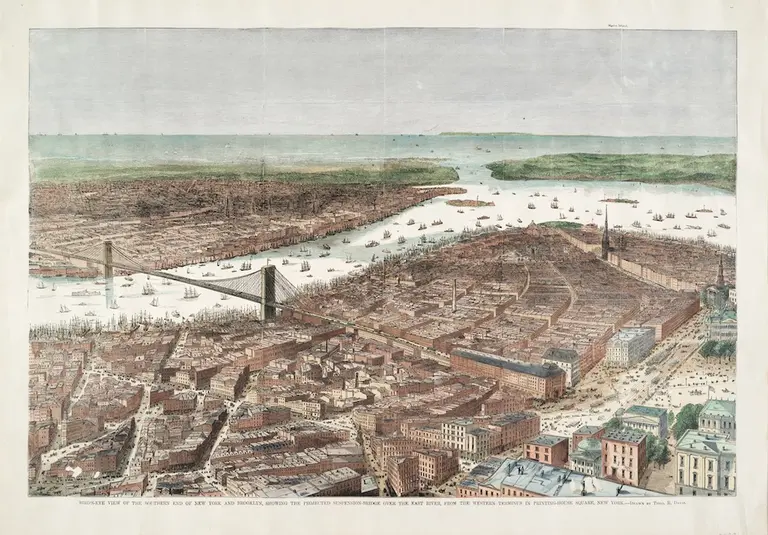
If you want to go on a visual journey that begins with Manhattan's first European settlement, way back in the seventeenth century, up through the skyscrapers and urban planning of the late twentieth century, look no further than New York Rising: An Illustrated History from the Durst Collection. The book, set to come out on November 13th, originates from the sprawling Durst Collection at Columbia University's Avery Architectural & Fine Arts Library. Incredible photography captures the most definitive parts of New York history, accompanied by the thoughts of ten scholars who were asked to reflect on the images. Their writing ranges from the emergence of public transit to the "race for height" to affordable housing. 6sqft spoke with Thomas Mellins, who edited the book with Kate Ascher, on their efforts delving into the Durst Collection -- which has its own unique history -- to come up with this comprehensive visual history. See a selection of photos from the book, along with thoughts from Mellins, after the jump.
READ MORE
November 2, 2018

You can buy the earliest ‘portable’ NYC subway map for $12,000

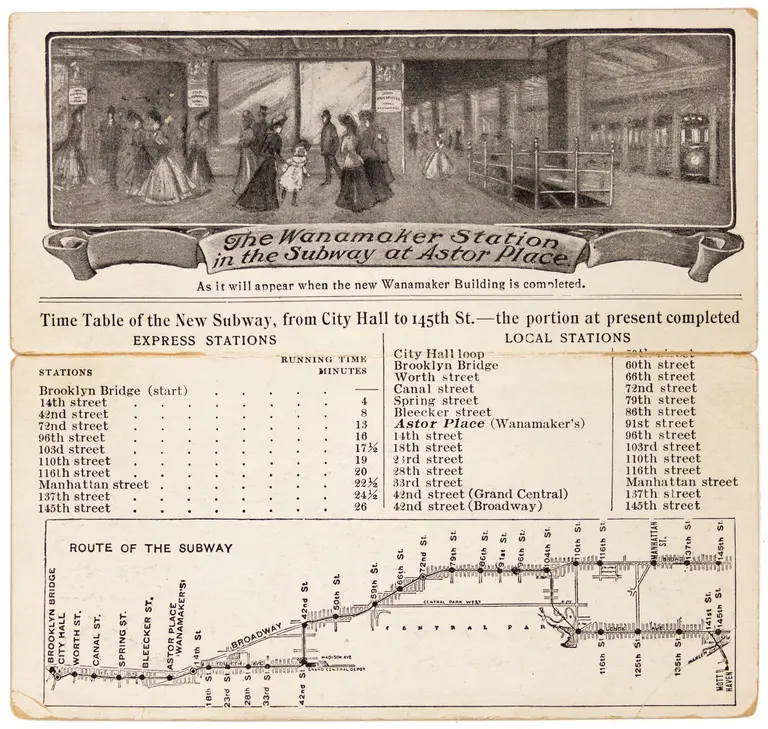
New Yorkers have used maps to navigate the city's subway system since the first year the system opened 114 years ago. And one of only two known examples of the Interborough Rapid Transit's first guide is for sale for $12,000, the New York Times reported. That 1904 transit guide, along with many more historic maps of New York, can be found at the Martayan Lan Gallery, which is kicking of its  "New Amsterdam to Metropolis: Historic Maps of  New York City 1548-1964" exhibit on Nov. 9.
More this way
November 1, 2018

Stopped in its tracks: The fight against the subway through Central Park

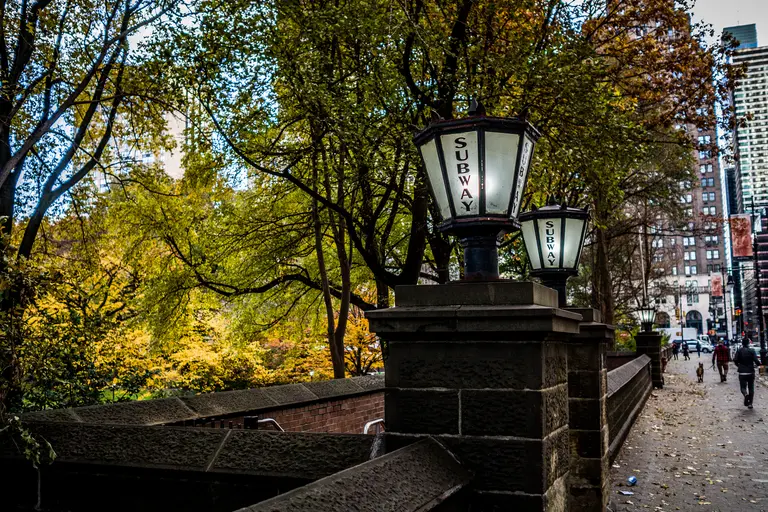
In 2018, Mayor Bill de Blasio closed all of Central Park’s scenic drives to cars, finishing a process he began in 2015 when he banned vehicles north of 72nd Street. But not all mayors have been so keen on keeping Central Park transit free. In fact, in 1920, Mayor John Hylan had plans to run a subway through Central Park. Hylan, the 96th Mayor of New York City, in office from 1918 to 1925, had a one-track mind, and that track was for trains. He had spent his life in locomotives, first laying rails for the Brooklyn Union Elevated Railroad (later the Brooklyn Rapid Transit Company, or BRT), then rising through the ranks to become a conductor. In that capacity, he was involved in a near-accident that almost flattened his supervisor, whereupon he was fired from the BRT. Nevertheless, Hylan made transit his political mission, implementing the city's first Independent subway line and proposing that it run from 59th Street up through Central Park to 110th Street.
So, what happened?
October 26, 2018

John Lennon, Muhammad Ali, and the 1970s: Jeff Rothstein takes us back to a bygone NYC

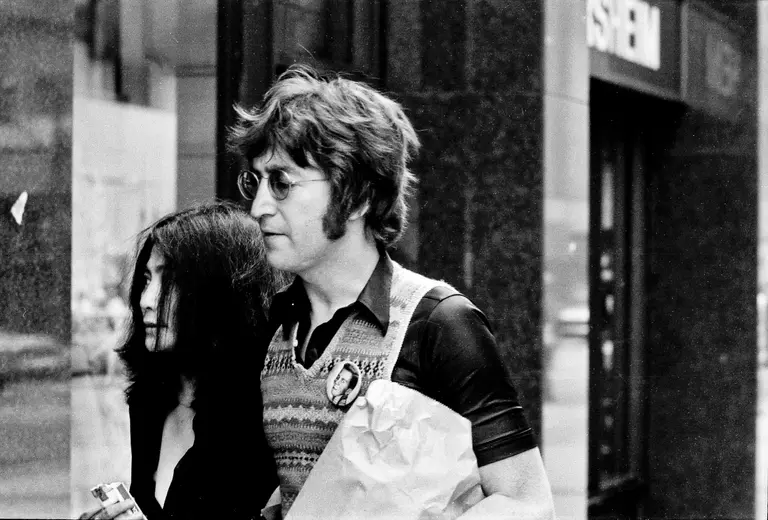
6sqft’s series The Urban Lens invites photographers to share work exploring a theme or a place within New York City. In this installment, Jeff Rothstein shares a collection of 1970s street photos. Are you a photographer who’d like to see your work featured on The Urban Lens? Get in touch with us at [email protected]. Brooklyn native Jeff Rothstein bought his first 35 mm camera in 1969, hoping to get some good shots at the Yankees and Mets game he frequently attended. But what he found was a love for NYC that turned him into an avid street photographer for the rest of his life. Jeff recently compiled a selection of these black-and-white images in his book "Today’s Special: New York City Images 1969-2006," and he shared a subset of 1970s photos with 6sqft. From John Lennon, Yoko Ono, and Muhammad Ali to protests shows at the Filmore East, and candid shots of everyday New Yorkers, Jeff's work captures a bygone NYC with a delicate intimacy.
Hear from Jeff and travel back to 1970s NYC with him
October 25, 2018

This block-by-block drawing shows Broadway in 1899

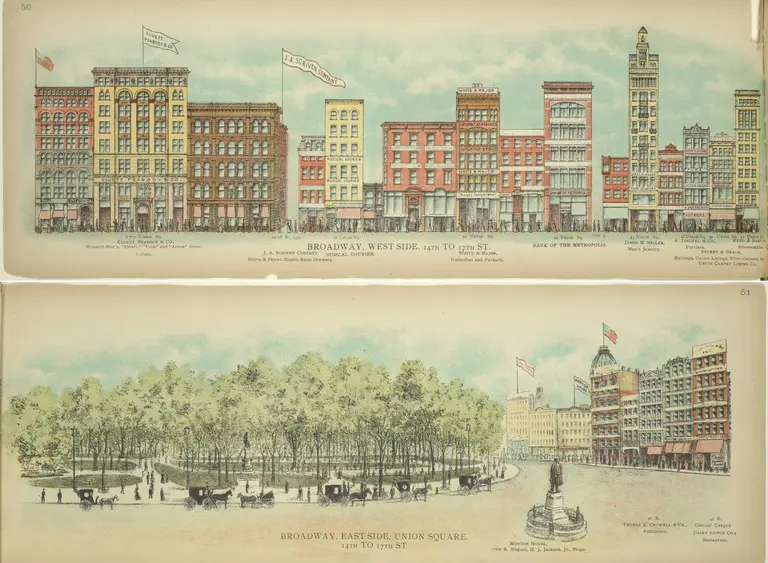
As part of Archtober, NYC's annual celebration of the city's buildings, the New York Public Library (NYPL) has been providing virtual tours of Archtober venues and offering resources to help us learn more about them. One fascinating example: A block-by-block visual record of Broadway at the turn of the 20th century, from Bowling Green in Lower Manhattan to 56th Street. The pictorial description in the library's digital collection includes advertisements and business indeces that relate to nearby businesses. Published by the Mail & Express Company who also published the Evening Mail daily newspaper, the panoramic drawings give a snapshot of history along "America's most notable thoroughfare."
Check it out
October 25, 2018

Remembering Soho’s Tunnel Garage: An automobile age marvel

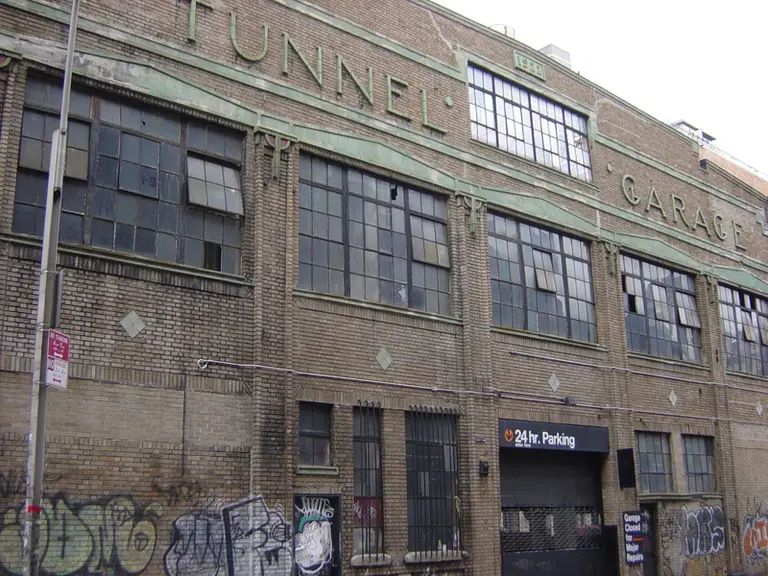
As the old saying goes, you win some, you lose some.  That’s particularly true in preservation, where sometimes in spite of the most heroic of efforts and compelling of cases, historic treasures succumb to the wrecking ball. GVSHP is frequently asked, “Which fight do you most regret losing; which building do you mourn the loss of most?” It often comes as a surprise that the answer, inevitably, is a parking garage — one which seemed to almost eerily peer into the future. But the Tunnel Garage, at Broome and Thompson Streets, where the South Village meets Soho, was no ordinary parking garage. Built in 1922, it was a thing of extraordinary beauty, a sublime ode to the dawn of the automobile age and to the engineering marvel of its time which was the Holland Tunnel.
So, what happened?
October 24, 2018

10 secrets of Gracie Mansion

Gracie Mansion, the gracious Federal-Style mansion that overlooks the East River from Yorkville’s Carl Schurz Park, has been New York’s Mayoral residence since 1942. But the house had a long history before it started hosting municipal magistrates. Since construction began in 1799, Gracie Mansion has served as a residence, a museum, and even an ice cream stand. From a connection to Alexander Hamilton's death to the stubborn mayors who refused to live in the residence, here are 10 secrets of the People’s House.
Get all the history
October 23, 2018

The full interior of 116-year-old Glaser’s Bake Shop is for sale

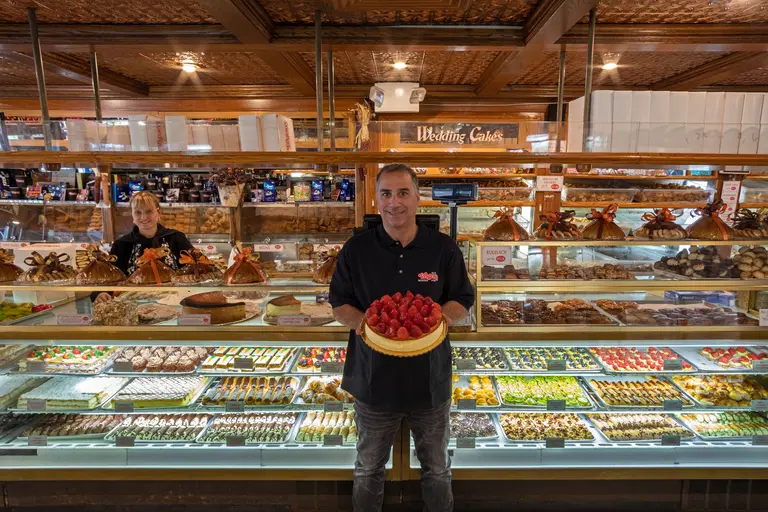
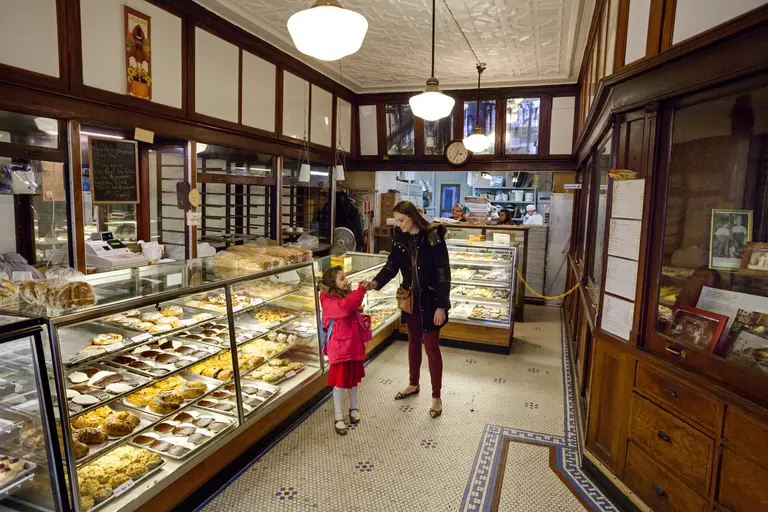
For those still struggling with the absence of Yorkville institution Glaser's Bake Shop, which sadly closed its doors in June, there's a chance to hold on to some of that sweet nostalgia. The complete interior of the beloved bakery, which first opened on the Upper East Side in 1902 and is credited with inventing black-and-white cookies, is for sale. The Demolition Depot announced this week they are selling classic features of Glaser's, including its apothecary-style wooden showcases, sliding glass doors, original silvered mirrors, milk glass upper panels, marble countertop, and more (h/t Vanishing New York).
Get the details
October 19, 2018

Meet Theodate Pope Riddle, New York’s first licensed female architect

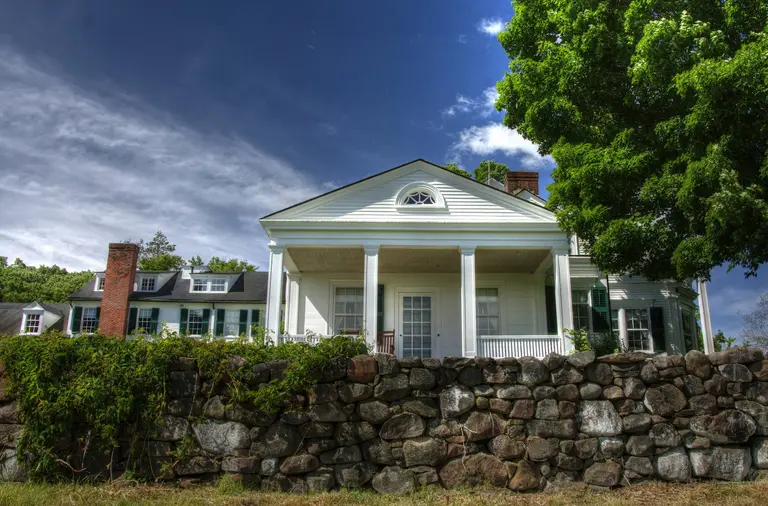
Original Plans for Hill-Stead, from McKim, Mead and White papers 1901, designed by Theodate Pope Riddle, via Hill Stead Theodate Pope Riddle not only made history as New York’s first licensed female architect but also lived it as a passenger aboard the Lusitania, the British ocean liner torpedoed off the coast of Ireland in 1915. The sinking of the Lusitania helped draw the United States into World War One, but neither German torpedoes nor the social strictures of her time could sink Theodate’s indomitable, independent spirit. She would go on to collaborate with McKim, Mead & White on a Colonial Revival masterpiece in Connecticut, as well as reconstruct Theodore Roosevelt’s birthplace on East 20th Street.
The whole history
October 12, 2018

How a Greenwich Village brownstone became known as the ‘House of Death’

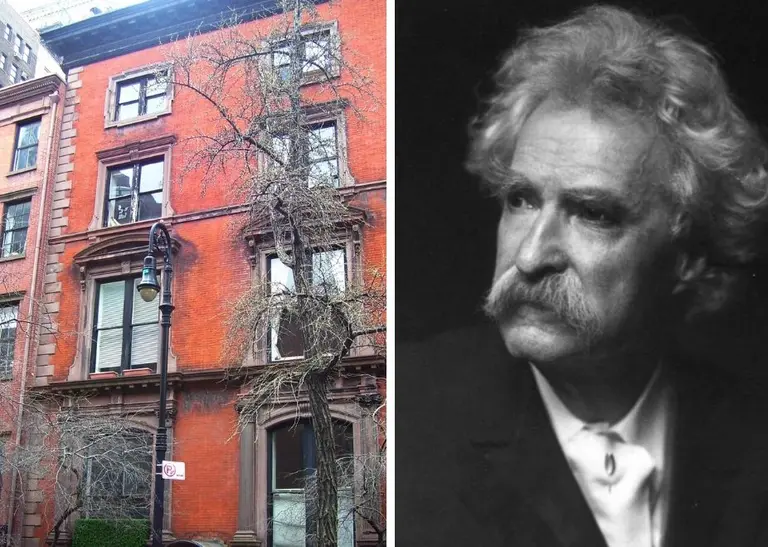
Despite its picturesque exterior, the building at 14 West 10th Street in Greenwich Village has a not-so-cute history. Since being constructed in the 1850s near the start of the Civil War, 22 people have died in the home, referred to as the House of Death. And as the New York Post reported, some of their spirits allegedly have never left. Residents have reported sightings of the spirit of Samuel Clemens aka Mark Twain, who lived at the building between 1900 and 1901, and other bone-chilling ghosts who have haunted the Greenwich Village block for over a century.
More on the haunted home here
October 11, 2018

Open House New York in Greenwich Village: The history of three unique sites

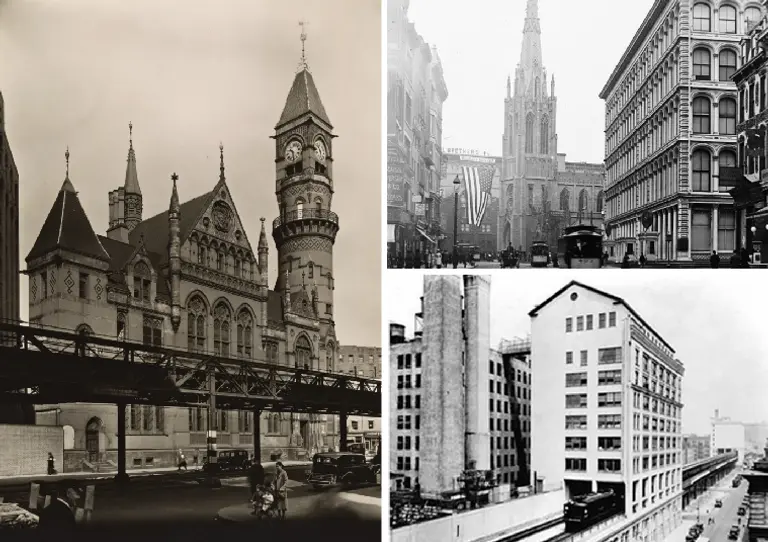
Among the many delights included in this weekend’s Open House New York will be three iconic Greenwich Village buildings--a Gothic Revival church with many architectural firsts, a library that was originally a courthouse which heard the "Trial of the Century," and a groundbreaking artists' housing complex that was formerly home to Bell Telephone Labs and the site where color television was invented. These extraordinary landmarks span three centuries of American history, reflecting the evolution of our city’s spiritual, artistic, industrial, scientific, and civic life.
Learn more about their unique histories
October 9, 2018

The history behind the interlocking ‘NY’ logo on the Yankees uniform

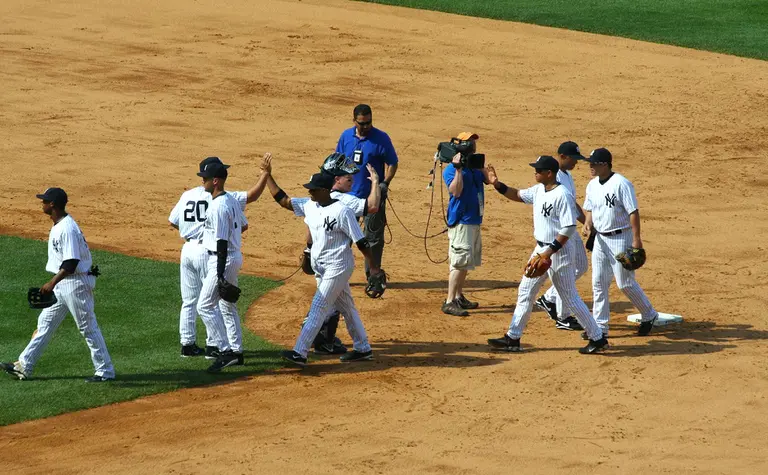
Considered one of the most recognizable logos in sports, how did the interlocking NY logo of the Yankees develop? The logo is actually older than the baseball team itself, as Untapped Cities learned. At the start of their franchise in 1903, the Yankees, then known as the Highlanders, wore uniforms with the letters N and Y sitting separately on each breast section of the jersey. In 1905, the team adopted a new interlocking version but later tossed this logo out and returned to their old emblem.
Get the lowdown on the logo
October 9, 2018

Where modernism meets tradition: Inside the Japan Society’s historic headquarters

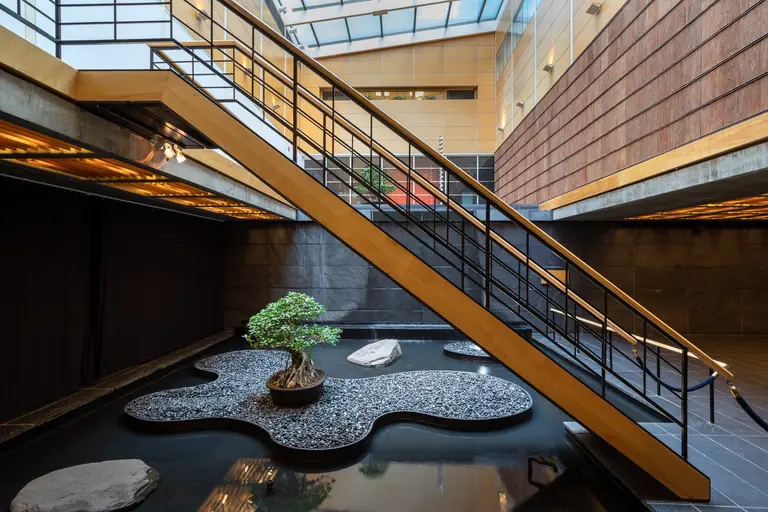
As a media sponsor of Archtober–NYC’s annual month-long architecture and design festival of tours, lectures, films, and exhibitions–6sqft has teamed up with the Center for Architecture to explore some of their 70+ partner organizations. For the last 111 years, the mission of the Japan Society has remained the same: to create a better understanding between the United States and Japan. While strengthening relations originally meant introducing Japanese art and culture to Americans, today in its second century, the nonprofit’s purpose, along with its programming, has expanded, with education and policy now a core part of its objective. The headquarters of the Japan Society is located in Turtle Bay at 333 East 47th Street, purposely constructed just blocks from the United Nations. In addition to being known for its extensive curriculum, the architecture of the society's building also stands out. Designed by architects Junzō Yoshimura and George G. Shimamoto, the building is the first designed by a Japanese citizen and the first of contemporary Japanese design in New York City. The structure, which first opened in 1971, combines a modern style with traditional materials of Japan. In 2011, the building was designated a city landmark, becoming one of the youngest buildings with this recognition. Ahead, learn about the Japan Society's evolving century-long history, its groundbreaking architecture, and its newest exhibition opening this week.
Take a look inside the landmarked building
October 4, 2018

10 of NYC’s most impressive Terra-cotta buildings

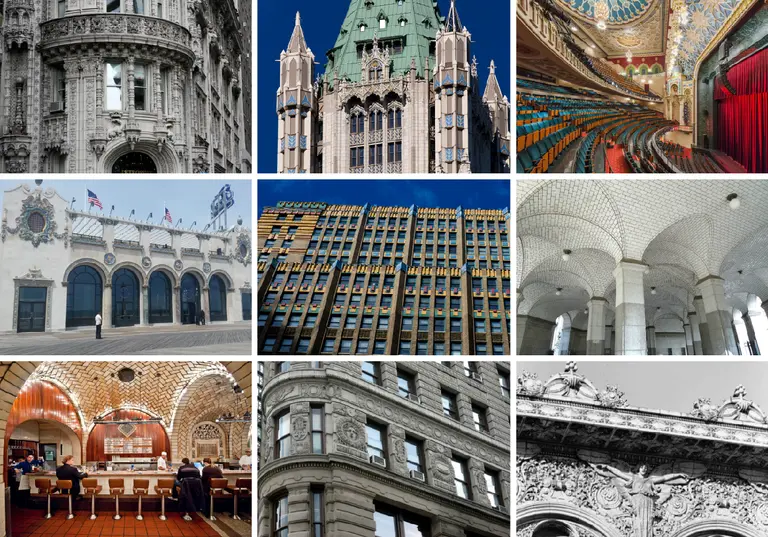
Terra-cotta, Latin for "fired earth," is an ancient building material, made of baked clay, first used throughout early civilizations in Greece, Egypt, China the Indus Valley. In more modern times, architects realized that "fired earth" actually acts as a fire-deterrent. In the age of the skyscraper, terra-cotta became a sought-after fire-proof skin for the steel skeletons of New York’s tallest buildings. In the early part of the 20th century, the City’s most iconic structures were decked out in terracotta. You’ll find terra-cotta on famous facades from the Flatiron to the Plaza, but the material often flies under the radar of pedestrians and architecture buffs alike because it can mimic other materials, like cast-iron or carved wood. Now, this long-underappreciated material is getting its due. On October 24th, the Historic Districts Council will present its annual Landmarks Lion Award to the terra-cotta firms Boston Valley Terra Cotta and Gladding, McBean, which work to keep terra-cotta alive worldwide, and to the preservation organization Friends of Terra Cotta, which has worked to preserve New York’s architectural terra-cotta since 1981. The ceremony will take place at Grand Central’s Oyster Bar, under the magnificent Guastavino terra-cotta ceiling recently restored by Boston Valley Terra Cotta. Fired up about finding “fired earth” around town? Here are 10 of the most impressive examples of New York terra-cotta!
Learn more about New York's Terra Cotta Treasures
October 1, 2018

Ten secrets of the Eldridge Street Synagogue

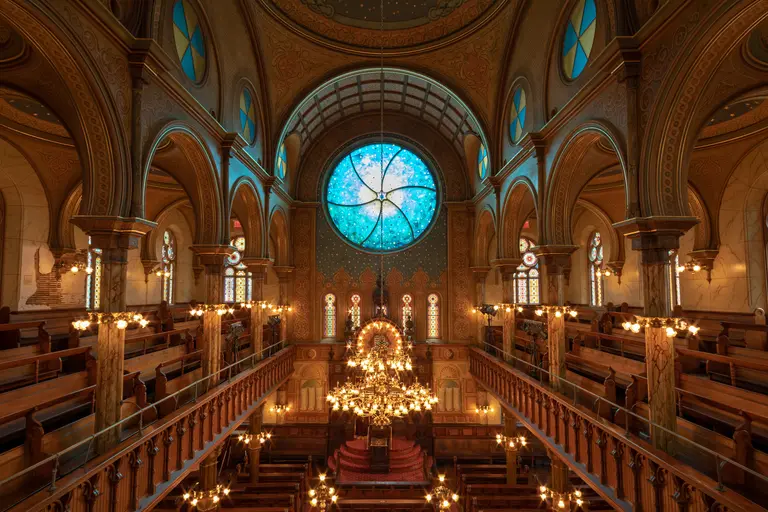
As a media sponsor of Archtober–NYC’s annual month-long architecture and design festival of tours, lectures, films, and exhibitions–6sqft has teamed up with the Center for Architecture to explore some of their 70+ partner organizations. With stunning stained glass windows and a striking mix of Moorish, Gothic, and Romanesque features, the Eldridge Street Synagogue cuts an imposing figure on the Lower East Side. The Synagogue opened in 1887 as the first and finest Orthodox house of worship built by Eastern European Jews in America and served as a spiritual headquarters for millions of immigrants as they made new homes in New York. By the turn of the 20th century, over 4,000 congregants supported three daily services, and holiday crowds overwhelmed the building. But, by the 1940s, the congregation dwindled, and the doors of the great sanctuary were sealed; not to be reopened until the 1970s. When preservationists rallied to save the building on its 100th anniversary, they rediscovered the splendor of the sacred structure and spent 20 years restoring it. Following a meticulous restoration, the Synagogue reopened in 2007 as the Museum at Eldridge Street. Today, the museum welcomes visitors from around the world, and preserves city’s immigrant history as well as the structure’s sacred secrets.
Learn about these 10 secrets of the synagogue
September 27, 2018

What’s in a name? Gay Street

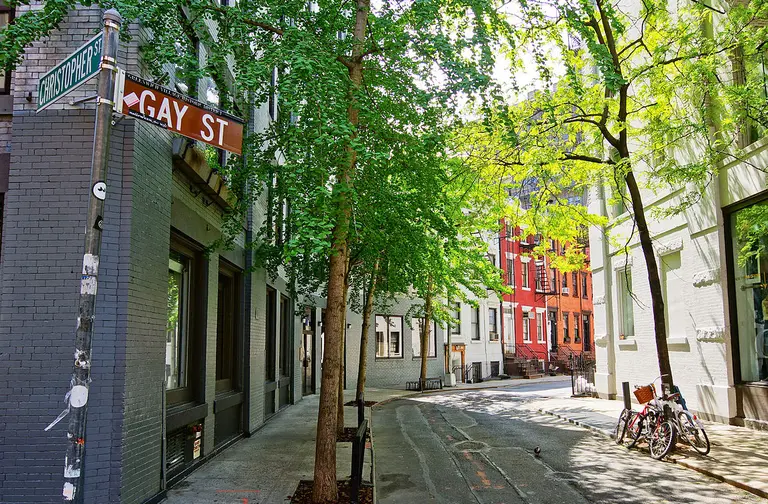
Gay Street is one of the most charming and picturesque streets in Greenwich Village, an icon of the historic neighborhood’s anachronistic character. But the origins of its name are hotly debated, with the LGBT rights movement and abolitionism often cited as the source of its unusual nomenclature. And while the street certainly has strong connections to gay liberation and the African-American struggle for freedom, the history behind the name is a little murkier, and a little more complicated to unravel, than one might expect.
Get the story
September 21, 2018

How Prohibition restructured NYC real estate and architecture (and built the Seagram Building)

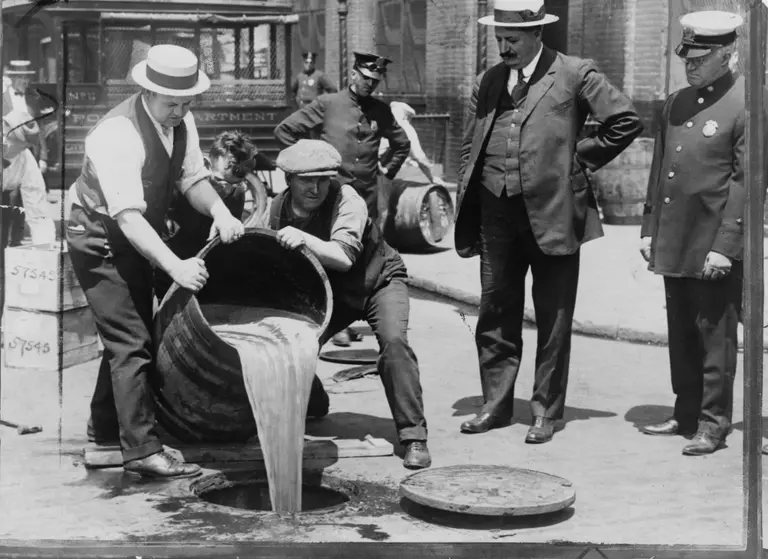
One hundred years ago, the United States Congress passed a temporary Wartime Prohibition Act banning the sale of beverages with an alcohol content of over 1.28 percent. The 1918 amendment later led to full-blown Prohibition, which wouldn’t officially end until the early 1930s. Find it difficult to imagine a spirit-less New York? In 1918, many New Yorkers, including city officials, also had a difficult time imagining a New York without alcohol. After all, with alcohol banned, the future remained uncertain for an estimated 9,000 hotel and saloon properties. The city itself stood to lose roughly $18 million in tax revenues related to the sale of liquor. In the end, however, New York not only survived the Prohibition Era but, indirectly, had its architecture altered.
Booze and bootlegging this way
September 19, 2018

How the East Village grew to have the most community gardens in the country

Awash in gray pavement and grayer steel, New York can be a metropolis of muted hues, but with 39 community gardens blooming between 14th Street and East Houston Street, the East Village is the Emerald City. The neighborhood boasts the highest concentration of community gardens in the country thanks to a proud history of grassroots activism that has helped transform once-abandoned lots into community oases. By the mid-1970s, as the city fought against a ferocious fiscal crisis, nearly 10,000 acres of land stood vacant throughout the five boroughs. In 1973, Lower East resident Liz Christie, who lived on Mott Street, refused to let the neglected lots in her neighborhood lie fallow. She established the urban garden group Green Guerillas, a rogue band of planters who lobbed “seed bombs” filled with fertilizer, seeds, and water into vacant, inaccessible lots, hoping they would flourish and fill the blighted spaces with greenery.
Get to the root of the story!
September 13, 2018

See George Washington’s handwritten farewell address and more at NYPL’s new permanent exhibit

The New York Public Library announced on Thursday it will open a permanent exhibition of rotating treasures at their Fifth Avenue and 42nd Street location. The exhibit will be the first to showcase the depth of the library's holdings, which includes over 46 million items in its research collection. While the specifics are still being determined, some notable artifacts from the collection being considered for the treasures exhibit include the original Bill of Rights, the Declaration of Independence written by Thomas Jefferson, a handwritten farewell address from George Washington, the original Winnie-The-Pooh, writings from Lou Reed, and manuscript material from Maya Angelou.
See the treasures
September 13, 2018

The oldest house in the Village? It’s not what you think

The Village is known as one of the oldest parts of New York City, where historic architecture can be found everywhere, and charming houses from a bygone era still stand. Here at the Greenwich Village Society for Historic Preservation, a perennial question we’re asked is “which is the oldest house in the Village?” It’s a great question, with a complicated answer. Is it one of the two charming wooden houses? The "brick" house with connections to Paul Revere? The Merchant's House Museum, Manhattan's first individual landmark? The handsome Stuyvesant Street house built by Peter Stuyvesant's great-grandson?
The answer might surprise you
September 10, 2018

In 1867, this lost Broadway bridge caused a feud between two hat shop owners

Lower Broadway is the city’s oldest thoroughfare and has always been one of the busiest. In fact, in 1867, the intersection of Broadway and Fulton Street was “continually thronged with vehicles of all kinds, rendering it almost impossible for pedestrians to pass.” Without the benefit of traffic lights, the crush of traffic was so snarled and thick that policemen had to untangle the flow during business hours so pedestrians could cross. Concerned that the sheer mortal hazard of simply crossing the street was losing him business, nearby hat shop owner Philip Genin convinced the City to build a bridge across Broadway that would ease foot traffic and just so happen to deliver pedestrians safely to his shop.
Hats off to the rest of the story
September 5, 2018

How New York City’s female teachers led the charge for ‘Equal Pay for Equal Work’

With public schools back in session as of today, let’s remember that it was from the classrooms of New York City that the call for “Equal Pay for Equal Work” was sent thundering around the world. In 1893, Kate Hogan graduated from NYU Law School with the first class of women allowed to earn JDs. By 1906, she was working as a seventh-grade teacher in Manhattan. At the time, the starting salary for a male teacher in the New York City public schools was $900 per year, but a woman in the same position earned just $600. Seeing no justice in that situation, Hogan founded the Interborough Association of Women Teachers. The Association’s mission and cry: “Equal Pay for Equal Work.”
Learn more!
August 31, 2018

Upcoming walking and bike tours explore NYC’s historic and hidden waterways

Being the concrete jungle it is today, it’s hard to believe New York City was once a maritime powerhouse, its surrounding harbor waters serving as a vital trading port for the rest of the country. Before paved over and developed, Manhattan boasted forests and wildlife, supported by many freshwater ponds and streams. Today, some of the city's oldest waterways remain hidden in plain sight, their pathways relegated underground. NYC H20, a nonprofit who aims to educate New Yorkers about the city's water, is hosting five walking and bike tours of historic waterways throughout the month of September, giving New Yorkers a chance to get their feet wet with knowledge about NYC's water.
Learn more
August 30, 2018

In 1988, Donald Trump wanted to repair the Williamsburg Bridge, but the Mayor said no thanks

In addition to thinking he could own the Empire State Building and build the tallest building in the world, Donald Trump also had a pipedream of single-handedly repairing the Williamsburg Bridge in 1988. Yesterday, Gothamist's Editorial Director Jen Carlson tweeted a series of stories from the time detailing how the Donald presented the city with a proposition to get the necessary repairs (the then-85-year-old bridge was closed due to cracked and corroded beams) done quicker and cheaper. According to the Associated Press, "Trump said the deal could work the same way as [Central Park's Wollman Rink] construction in 1986 - he would advance the money, get the job done and be reimbursed for costs."
So how'd he screw this one up?