
Search Results for: times square

October 2, 2014

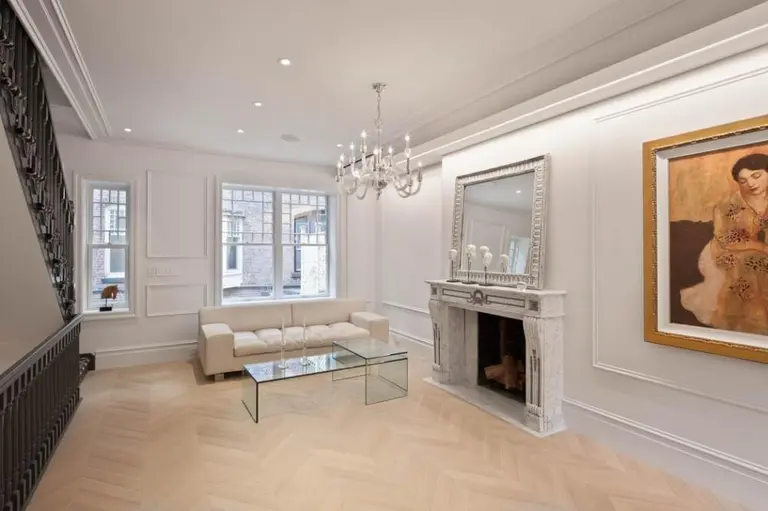
Historic Henderson Place Townhouse Asks $7.5 Million

Oh, how the times change. In the late 19th century, developer John C. Henderson began constructing an enclave of townhouses, designed by architectural firm Lamb & Rich, and intended for “persons of moderate means”. Today, one of those Yorkville homes is available for rent, asking $25,900 per month… or if you’d like to purchase it outright, $7.495 million. If you’re looking for remnants of 146 East End Avenue’s low-income housing past, you’re in for a disappointment. The result of a “painstaking” two-year gut renovation, this desirable dwelling only speaks the language of luxury. However, if there’s any city that knows how to preserve its history while providing modern amenities, it’s New York. The final result is a beautifully updated home that pays homage to its honorable past.
Take a look inside this historic home, here
September 29, 2014

Real Estate Wire: Robert A.M. Stern’s “Scaled-Down” Luxury; Controversial Astoria Cove Project Approved

Robert A.M. Stern, the architect behind 15 Central Park West, is bringing a new 17-story tower to 20 East End Avenue. The building—said to be less pricey than Stern’s others—will have 43 units starting at $4.5M. Penthouses will go for $20M. [NYT] New renderings and listings appear for One John Street. [Brownstoner] East New York’s rapidly rising […]

September 26, 2014

Real Estate Wire: A Look Inside the Woolworth Condos; Another Tall Residential Tower for DoBro

A first glimpse inside the new Woolworth condos. [NYT] The penthouses at Tribeca’s Seven Harrison have hit the market. [CityRealty] This block near the final section of the High Line is real estate gold. [TRD] Downtown Brooklyn’s skyline is a getting another tall residential tower. This one will rise 65 stories at 420 Albee Square. [Brownstoner] […]

September 23, 2014

City Kids: Why Parents Pick City Living Over the Suburbs

The 'American Dream' may have dominated the last few decades, causing a mass exodus to the suburbs, but today's families are reversing the trend and turning their attention back to the city. The reasons are many: An appreciation for cultural offerings, the camaraderie and creative cross-pollination of networks of colleagues, friends and family, the convenience of being able to walk or bike to school, work or child care without a long commute—just to name a few. New York City has always been a haven for the forward-thinking, albeit a challenging one. And its newly-”discovered” outer boroughs as well as an unprecedentedly low crime rate have made the city a prime choice for family living. But what is it about those city kids—the ones with parents who planned from the start to raise their kids in a non-stop urban environment? We interrupted the busy schedules of five families currently raising school-age (or soon-to-be) children in New York City's many diverse and multifaceted neighborhoods to get some insight about why they wouldn’t have it any other way.
Hear what five parents of city kids have to say
September 22, 2014

Goldilocks Blocks: (Far) East 7th Street in Alphabet City

Between hyper-developed hotspots, main drags in up-and-comers, big-ticket townhouse enclaves, and those genuinely avoidable areas, there can often be found a city's "just-right" zones. Free from corner menace, sticker shock and boom-time developer schlock, these special spots often span only a few blocks in each direction and are close enough to the center of their 'cool destination' nabes to legitimately bear their names. They aren't commonly known, and are best found by pounding the pavement, but these micro-neighborhoods often hide within them real estate gems coupled with perfectly offbeat vibes—you just have to be willing to do a little legwork. But when you do find them, don’t sleep on them... Winners like the Columbia Street Waterfront District were once Goldilocks blocks. Today we'll look at a unique 7th Street stretch hidden in Alphabet City.
Find out what makes this Alphabet City block so special.
September 22, 2014

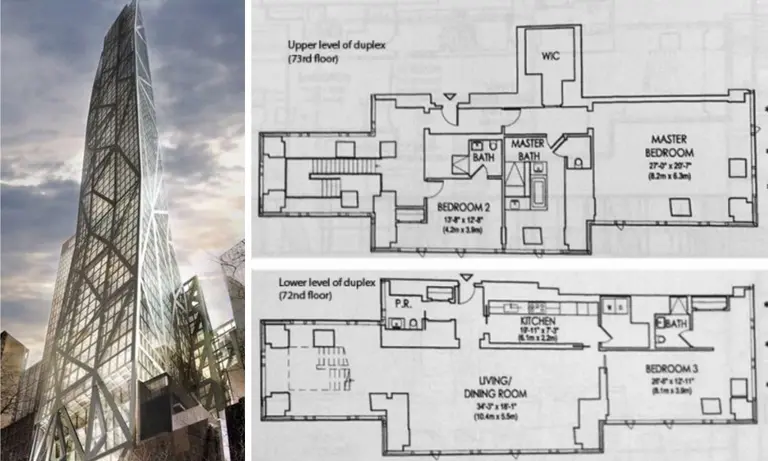
REVEALED: Penthouse Floorplans for Jean Nouvel’s MoMA Tower

Just last week, we announced that the Jean Nouvel-designed MoMA residential tower was finally moving forward, after the purchase of $85 million in air rights and with a new construction loan of $860 million. Now, The Real Deal has obtained penthouse floorplans for the 82-story tower, and they are nothing to sneeze at.
Check out the floorplans and dream about living in a Nouvel-approved penthouse
September 18, 2014

Glass vs. Stone: An Epic Architecture Battle

Decisions, decisions...sometimes there's just far too many in New York City. Thai or Chinese takeout? Subway or bus? Central Park or the High Line? The list goes on. And one of the most grueling decisions we make as New Yorkers is where to live. From choosing a borough and neighborhood to deciding on a price point, it's quite the undertaking. But what about the most elementary component of the building in which we decide to live--it's material. To be more exact, glass or stone. Glass tower dwellers are often drawn to the floor-to-ceiling windows, panoramic views, and clean lines, whereas buyers of apartments in stone buildings prefer a more traditional feel, with pre-war-style layouts that provide great separation of spaces. And some of the city's most prominent architects have become synonymous with one style or the other. Think Richard Meier for glass and Robert A.M. Stern for stone. CityRealty decided to take a closer look at this epic battle and see how pairs of glass and stone developments fared across the city.
See how these buildings battle it out
September 18, 2014

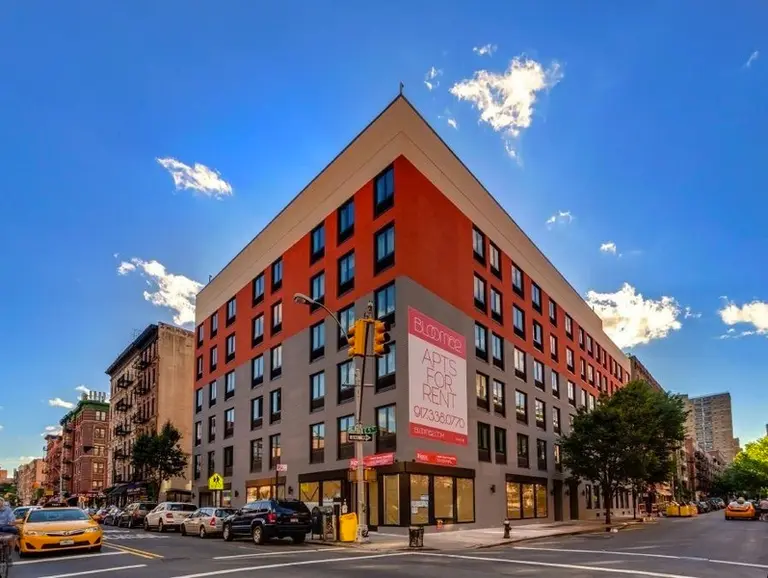
Will a New Waldorf School at Ben Shaoul’s Bloom 62 Attract Spendy Families?

Back in 2012, when Magnum Real Estate's Ben Shaoul announced plans to turn the Cabrini nursing home in the East Village into condos, more than a handful of "Sledgehammer Shaoul" flags went up in protest. Plans moved ahead despite public outcry, and now more than two years later, the former nursing home has transformed into a luxury residential building called Bloom 62. Although not much has been done to dress up the exterior, the 26-unit condo is no slouch and boasts a number of enviable luxuries, including a landscaped roof deck and gym. But Bloom 62's most valuable amenity may be what sits on its ground floor: a school.
More on the benefits to be reaped here
September 17, 2014

Sunset Park: How Creativity and Commerce are Transforming This Waterfront Neighborhood

With plans in place that call for a public waterfront bustling with creative industry and commerce rather than luxury residential developments, Sunset Park is not on its way to becoming the next hip NYC residential neighborhood–and that’s a good thing. Located on Brooklyn's western waterfront flank, there are really two sides to Sunset Park. The neighborhood, generally defined as the area between 65th Street, the Prospect Expressway, Eighth Avenue and the East River, has long been a thriving residential community. Sunset Park is also home to about 15 million square feet of warehouse and light industrial space. The key to the neighborhood’s future may be the point at which the two meet.
Find Out How Fashion May Give Sunset Park a Chance to Shine As the New Garment District
September 12, 2014

Landmarked Fort Greene Stable Perfectly Suited for Two-Legged Residents with $1.2M to Spare

It’s hard to imagine a place as crowded and cosmopolitan as New York City once being filled with the clip-clop of equine hooves, but at the turn of the century it is estimated there were 130,000 horses working in Manhattan—more than 10 times the number of taxicabs on the streets here today! In most cases, the stables that housed our four-legged friends have long since been razed to make way for buildings more suitable to modern commercial enterprise or human occupancy. Fortunately, the Feuchtwanger Stable located at 159 Carlton Avenue in Fort Greene didn’t meet a similar fate. Nearly a century after its construction in 1888, this gorgeous Romanesque Revival building was designated by the National Register of Historic Places and subsequently underwent a stunning condo conversion now home to a lovely one-bedroom apartment.
Read on to see one stable that survived
September 8, 2014

A Chef and a Sculptor Balance Work and Home in This Elizabeth Roberts-Designed Williamsburg Loft

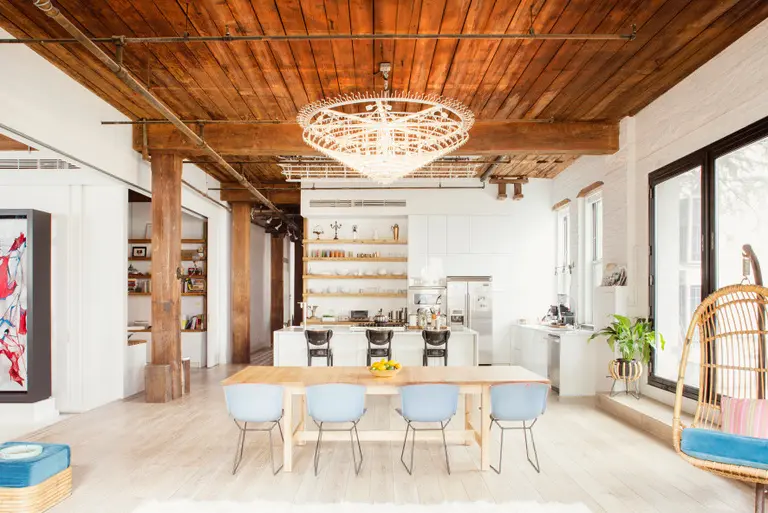
After years of searching for an industrial space to use as a studio and a comfortable home, a married couple—he's a chef and food writer, she's a sculptor—transformed this 3,500 square-foot ground-floor Williamsburg Loft into a well-balanced live/work space that includes a top tier kitchen and plenty of light and space for creating art.
See how a creative couple makes use of this versatile, comfortable space
September 5, 2014

New Yorker Spotlight: Sue Chin on Designing for a Very Different Type of Client at the Wildlife Conservation Society

Susan (Sue) A. Chin, FAIA is an architect and designer with a very different type of clientele. Currently, her roster includes tigers, gorillas, and sharks, all of whom have very specific design needs. As the Vice President of Planning & Design and Chief Architect at the Wildlife Conservation Society (WCS), Sue oversees the architectural and design needs of the Society's zoos and parks (Bronx Zoo, New York Aquarium, Central Park Zoo, Prospect Park Zoo, and Queens Zoo), as well as their conservation work around the globe. The organization currently has about 500 projects in 65 countries, which means her work is showcased as far away as Madagascar. 6sqft recently spoke with Sue about WCS, how she got into the field as a teenager, her clients (both human and non), and the exciting new exhibit under construction at the New York Aquarium in Coney Island.
Read our full interview with Sue here
September 3, 2014

Coffee Culture: Are Neighborhood Cafes the First Sign of Gentrification?

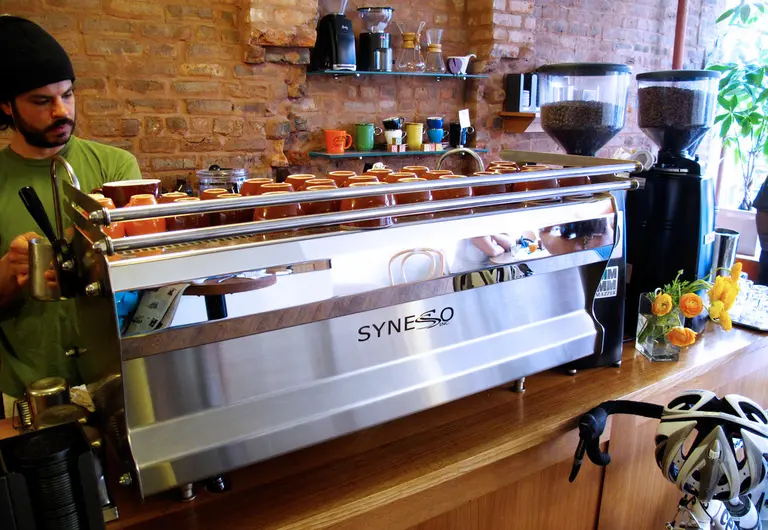
From “coffices” to lab-like minimalist gourmet coffee meccas to cozy neighborhood hangouts, neighborhood cafes are a fine example of the essential “third place” mentioned in discussions of community dynamics: that place, neither work nor home, where regulars gather and everyone’s welcome. Along with yoga studios, art galleries, community gardens, vintage clothing shops, restaurants with pedigreed owners and adventurous menus and, some say, a change in the offerings on local grocery shelves, cafes are often the earliest sign of neighborhood change. The neighborhood cafe serves as a testing ground for community cohesiveness while adventurous entrepreneurs test the still-unfamiliar waters around them. Beyond the literal gesture of offering sustenance, cafes provide a place where you can actually see who your neighbors are and appreciate the fact that at least some of them are willing to make an investment locally.
Get a fleeting glimpse of old New York City cafe culture in the West Village, meet the future of coffee distribution in Red Hook.
September 2, 2014

INTERVIEW: Andrew Berman, Executive Director of the Greenwich Village Society for Historic Preservation

There's been a lot of controversy around preservation in New York City as of late, and through it all, the Greenwich Village Society for Historic Preservation (GVSHP) seems to always make its voice heard. From debunking myths about affordable housing and historic districts to advocating for the Village's next great landmark, GVSHP remains on the front lines of the field. Founded in 1980 to preserve the architectural heritage and cultural history of the Village, the organization now includes the East Village, South Village, Far West Village, Noho, and Meatpacking District in its purview. Part of the reason for GVSHP's expansion stems from the tireless efforts of its longtime Executive Director, Andrew Berman. Since 2002, he has overseen the research, educational programming, and advocacy of one of the city's leading preservation nonprofits. We recently sat down with Andrew to learn more about his views on the current state of preservation in the city and where he hopes to take GVSHP in the future.
Read our full interview here
August 26, 2014

Gluck+ Architects’ Rado Redux is a Naturally Modern Take on a Classic 1950s Home

New York-based Gluck+ Architects recently renovated a classic mid-century modern home to its former glory. Built back in 1956, the Rado Redux House in Armonk was originally designed by Czech émigré architect Ladislav Rado, who arrived from Europe with an invitation from Walter Gropius and eventually became Harvard University's architecture chairman. Exemplary of its time, the building is openly related to its external environment and features influences from Japan.
Learn more about the classic Rado Redux house here
August 26, 2014

$4 Million Unit in the Neil Denari-Designed HL23 Shines with Unbelievable Windows

Kanye West is in luck. As of just a few days ago, a new unit popped up in the iconic Neil Denari-designed HL23 condominium he once so desperately coveted; asking $3.95 million. It’s no wonder the starchitect’s first free-standing building is such a draw. Not only did the futuristic design inspire former New York Times architecture critic Nicolai Ouroussoff to write car metaphors, but it's also sustainably built. Making the city a better place and looking good while doing it? What’s not to love?
Take a look inside, here
August 18, 2014

Let the Sunlight In and Save Up to 70% on Energy Costs with the Lightcatcher Solar Dome

In theory, it seems silly to pay for light bulbs and electricity when natural sunlight is free, and now this eco-fantasy is becoming a real possibility. Developed by EcoNation and installed on the roof, Lightcatcher is a sun-tracking solar dome that uses a mirror and technology-based system to generate green energy, bring light indoors, and mitigate temperature fluctuations. The sensors and motorized mirror and lenses harvest sunlight, reducing energy costs and environmental impact eight times more than solar panels, according to EcoNation. The company also claims that Lightcatcher can provide sufficient light for up to ten hours per day, using only 1-3% of roof surface area.
More details on the new technology
August 15, 2014

New Yorker Spotlight: Chloe Stinetorf on Her Delectable Cookie Dough Delivery Upstart, Chloe Doughy

Chloe Stinetorf is the New York City cookie fairy. Each month, her company Chloe Doughy delivers two tubs of cookie dough to apartments and offices across Manhattan and in parts of Brooklyn. And while she doesn’t fly with sparkly wings to make deliveries, her staff can be found riding around on Citi Bikes. In return for her delectable service, all she asks is that New Yorkers focus on the important part of baking: being with friends and family. Of course, Chloe also wants bakers to enjoy all the fun that comes from scooping dough, eagerly waiting as the cookies bake, and that first fresh-out-of-the-oven bite. Thanks to Chloe Doughy’s membership delivery service, New Yorkers—who want to bake at midnight, need cookies for their children's school, or have to prepare dessert for that last minute-dinner party—can now bake without the hassle. Over iced teas in Chelsea, 6sqft spoke with Chloe and learned how Chloe Doughy is changing the way the city bakes cookies.
Read our interview with Chloe
August 14, 2014

Extra! Extra! Read All About.…This Exquisite Newswalk Condo in Prospect Heights

Built in 1927, 535 Dean Street once housed the printing facility for the New York Daily News. For over 70 years the nightly presses delivered the latest local happenings to millions of New Yorkers in time for their morning coffee. These days, thanks to a 2002 condo conversion, residents can read their morning paper in grand style (though we aren’t sure if the New York Times is permitted on the premises).
Extra! Extra! Read More About It!
August 14, 2014

Could You Live on a 9 x 18 NYC Public Parking Space?

Earlier this year, the Savannah College of Art and Design (SCAD) unveiled new ideas for public housing--in a parking lot on its Atlanta campus. SCADpads, as they're called, reimagined the common public park space as a solution to the growing need for sustainable, efficient housing worldwide. Now, a team of architect-fellows at the Institute for Public Architecture are building on the same idea, proposing ways to turn unused public parking spaces in New York City into housing, co-working spaces, bike-share stations, playgrounds, and farmers markets. The group is called 9 x 18, the size of a typical parking spot, and they have reevaluated the current zoning laws surrounding parking and affordable housing, using the Carver Houses in East Harlem neighborhood as a case study.
More about the new ideas
August 13, 2014

Live in the Plywood Version of Philip Johnson’s Glass House for $1.6M

Philip Johnson is best known for his use of glass, and his iconic Glass House in New Canaan, Connecticut, is without question his most famous work. But did you know that Johnson also dabbled in plywood construction? In fact, the architect designed several wood homes in the forestlands of Connecticut, including the Wiley Speculative House. The home was the first (and ultimately, only) of Johnson's "speculative houses" planned for a large scale residential development headed by the Wiley Development Corporation in 1954. Though built without a hitch, and despite Wiley's willingness to replicate the home for anyone, anywhere in Connecticut's Fairfield County, Wiley's hope for a Johnson-designed development flopped as nobody wanted to pay $45,000 to live in one of the houses. As a result, the Wiley Speculative House saw a somewhat sad fate and remained under the ownership of Wiley's trust until it was sold off a year later. Since then, the home has changed hands at least nine times, and now nearly 60 years later it's for grabs again, this time for $1.575 million.
More on the lesser-known Johnson house here
August 12, 2014

Billionaire Peter Brant Buys an Incredible Converted Con-Ed Substation for $27M

It's a common saying that money can't buy good taste, but Peter Brant proves that old adage doesn't apply to billionaires. According to city records, the American industrialist and businessman just closed on a former Con-Ed substation located at 421 East 6th Street for $27 million—$2 million above asking. Constructed in 1920 to serve the city's power needs, the building was altered in the 60s and again in the 80s to accommodate a live-work space for a famed sculptor Walter de Maria. Even with more than a century of history behind it, today the structure still keeps many of its original relics and the overall gritty aesthetic of its industrial past. As a lover of art himself, we're curious to know how Brant will go about redesigning the space—if he does. Brant, who also happens to be married to supermodel Stephanie Seymour, is the publisher of both Interview and Art in America magazines and has been previously been called a "Donald Trump with taste" by the New York Times.
learn more about the building here
August 11, 2014

Scoping Out Staten Island: New Developments in the Oft-Forgotten Borough

You won't find any Staten Island jokes or snarky references to secession here. No, we're celebrating the borough that so easily gets forgotten amid the shiny new towers of Manhattan and trendy culture waves of Brooklyn. But just because it might not make daily headlines, doesn't mean that Staten Island isn't in the middle of some pretty amazing developments. From the Staten Island Ferris Wheel to the borough becoming the next great tech hub, we've rounded up the cultural, economic, and architectural projects that are going to make you want to board the Staten Island Ferry in pursuit of your new home.
Check out our list and get ready to start packing
August 7, 2014

The Wilson Hunt House: The History of a Rare 19th Century House Towed to Tribeca by Truck

In the 1970s, after obtaining landmark status in 1969, three 19th century houses were actually towed by truck from a no-longer-existing stretch of Washington Street to avoid demolition in the Washington Market Urban Renewal area (a 38-acre site planned by the city’s Housing and Development Administration during the 1960s and 1970s, 10 blocks north of what would become the World Trade Center). Their final destination? Next to three already existing townhouses on Harrison Street, a quiet site that was once the well-known farm of alleged skirt lifter, and one of NYC's first settlers, Annetje Jans. In 1976, New York City put them up for sale (from $35,000 to $75,000) following a restoration by Oppenheimer, Brady & Vogelstein the year before. And more recently, nearly four decades after the sale, CORE brokers Tom Postilio and Mickey Conlon exclusively listed 37 Harrison Street with surprising results.
Fast forward to present day to find out what happened to The Wilson Hunt House