Explore 100 years of jazz history in the Village with this new interactive map
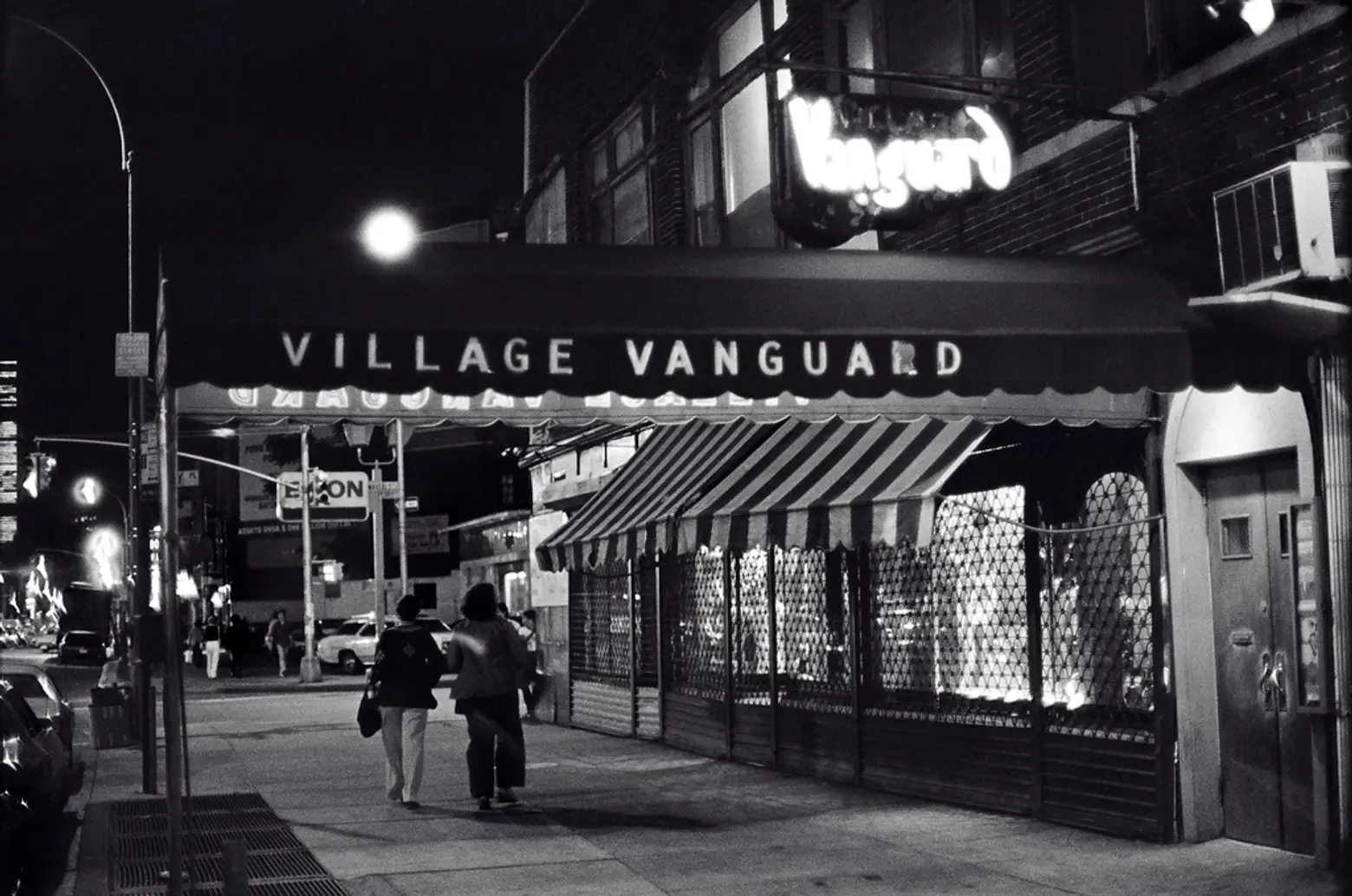
Village Vanguard in 1976. Photo By Tom Marcello via Wikimedia
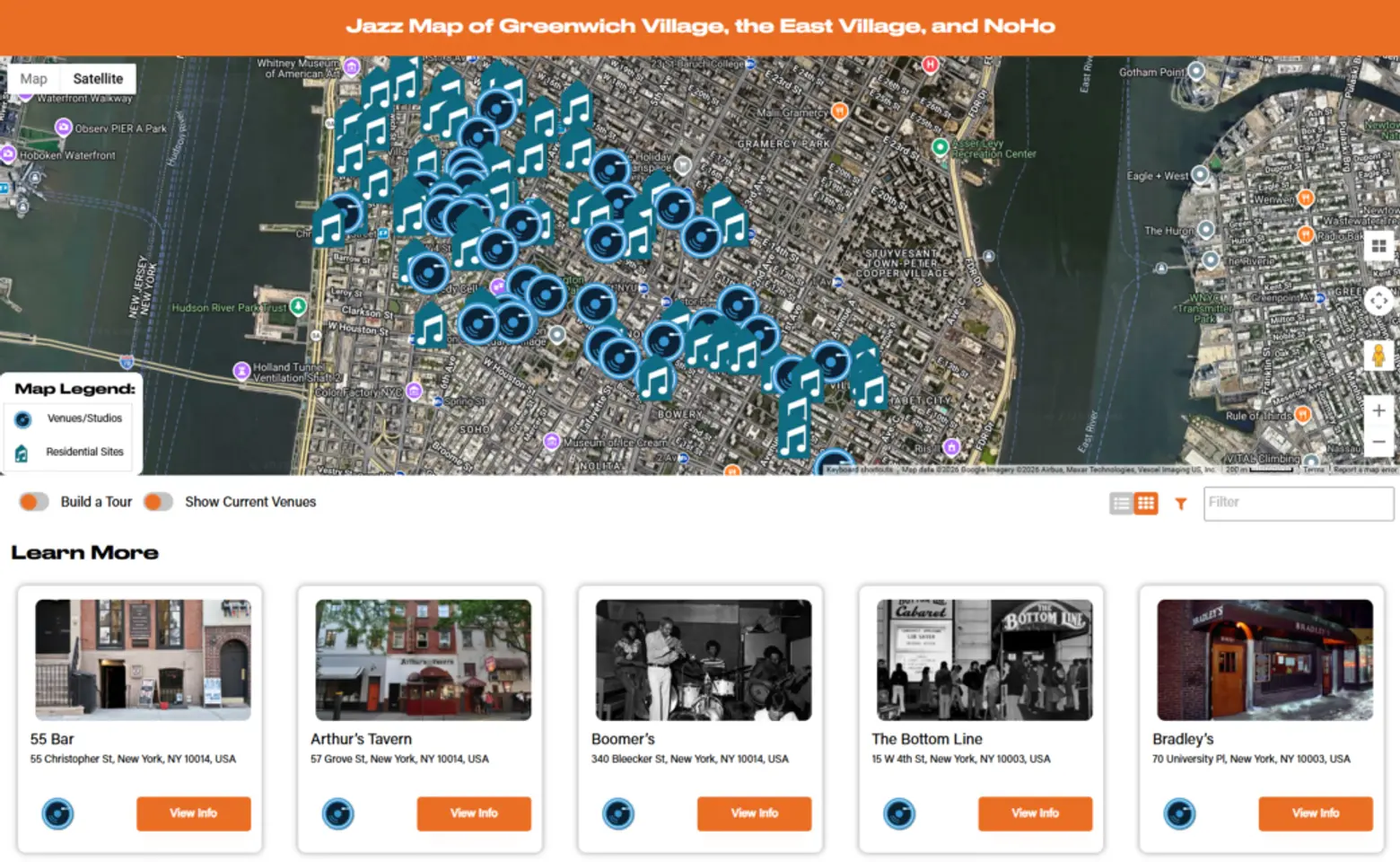
In celebration of Jazz Appreciation Month, Village Preservation has launched an interactive map charting a century of jazz history across Greenwich Village, the East Village, and Noho. Released on Wednesday, the map allows users to explore more than 100 sites, including music venues, recording studios, and artists’ residences across the three neighborhoods, along with historical context for each location.
“We’re thrilled to provide this never-before-available resource that commemorates the century-long history of jazz in our neighborhoods and connects the public to the key role our neighborhoods played in popularizing and shaping this music,” Andrew Berman, executive director of Village Preservation, said.
“As we celebrate jazz in April and 250 years of American achievements in 2026, this map shows the remarkable impact that musicians, recording studios, and performance venues located in these neighborhoods had in transforming and propelling forward this quintessentially American art form.”
The history of the three Lower Manhattan neighborhoods is closely intertwined with the development of jazz, as nightclubs across the area introduced the music to new audiences and served as key spaces for the genre’s evolution.
Many legendary jazz musicians made these neighborhoods their home and, thanks to their proximity and abundance of venues, collaborated on projects that helped shape jazz history.
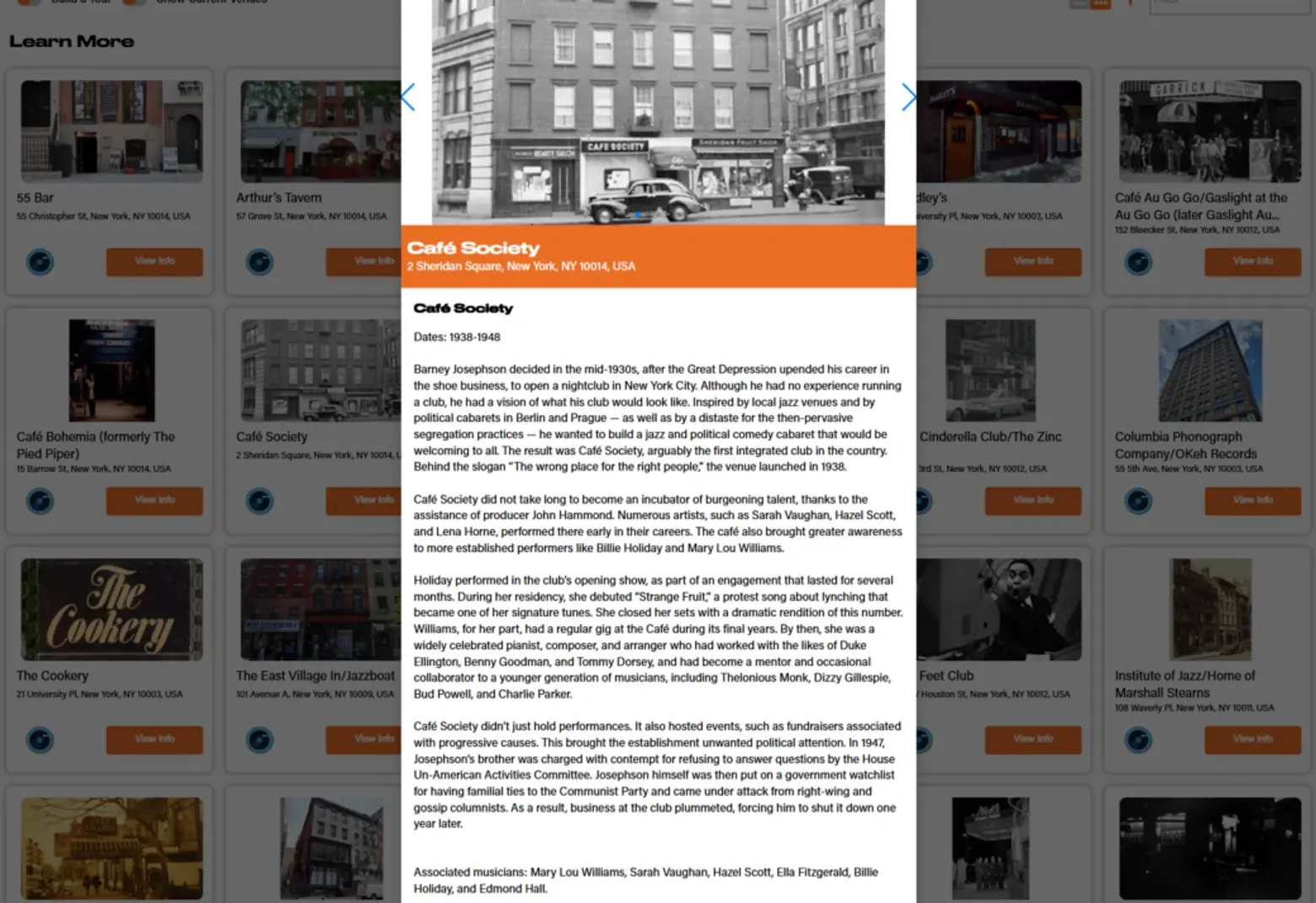
The map builds on this legacy by highlighting local venues, recording studios, archives, and musicians who lived in the area. Each entry includes images, audio samples, and descriptions of the role these places and individuals played in the development of jazz.
Users can search entries by musician, venue, style, or decade to focus on specific eras, or build customized tours based on their interests. These tools allow users to explore how the jazz movement unfolded across the neighborhoods and how the music evolved from the 1920s through the 1980s.
While the three neighborhoods have changed significantly over time, many venues remain in operation. The map includes a filter highlighting current sites, underscoring jazz’s continued presence in the Village.
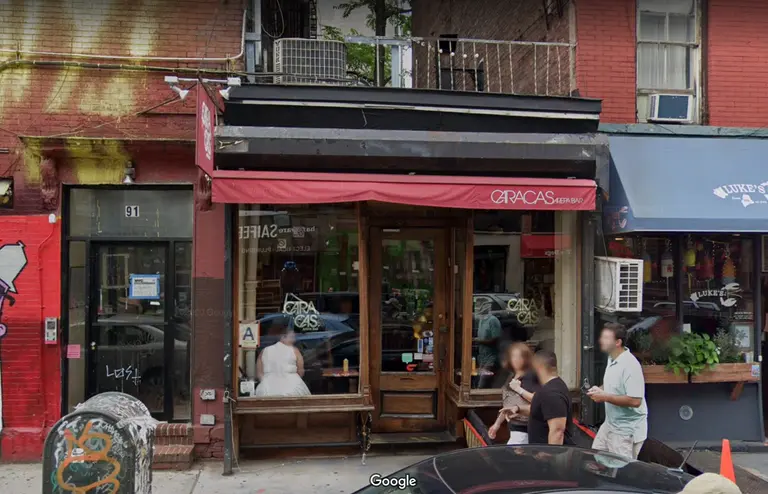
Some of the highlighted entries include Charlie Parker’s townhouse at 151 Avenue B; Café Society at 2 Sheridan Square, considered the first integrated club in the country and the venue where Billie Holiday debuted her signature song “Strange Fruit”; and the home of George Gershwin at 91 Second Avenue, where he wrote dozens of jazz standards.
Also included on the map is the Columbia Phonograph Company at 55 Fifth Avenue, where producer John Hammond oversaw Billie Holiday’s first recording session, early hits by Benny Goodman, and one of the first integrated recording sessions in history.
While Lower Manhattan was home to many influential jazz figures, the genre’s pioneers also had a strong presence in Queens. In September 2024, Flushing Town Hall released the Digital Queens Jazz Trail Map, highlighting 125 jazz legends who once called the borough home. The map also features key sites such as the Louis Armstrong House Museum and the Black American Heritage Foundation’s Music History Archive.
The map also joins dozens of other interactive maps created by Village Preservation, which shed light on the history of Greenwich Village, the East Village, and NoHo. Other projects document important sites connected to hip-hop, women’s suffrage, and civil rights and social justice movements.
RELATED: