History

November 28, 2016

Fidel Castro Threatens to Sleep in Central Park in Outrage Over Hotel Prices During 1960 Visit

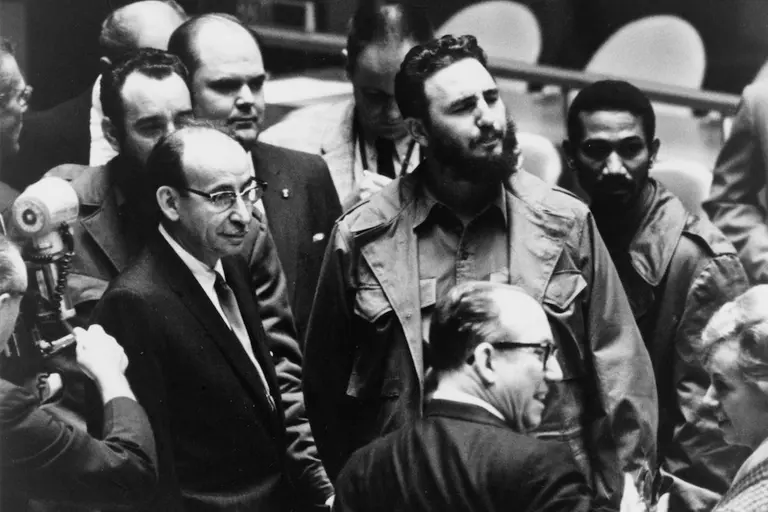
Just four months after Cuban President Fidel Castro led a successful revolution to overthrow Cuban dictator Fulgencio Batista in 1959, he visited New York City for 11 days on an invitation from the American Society of Newspaper Editors. With his signature green army uniform and boots, bushy beard, and exuberant nature, Castro reportedly hired a PR firm (though it seems he hardly needed to), enjoyed the city’s famous hot dogs, and "kissed ladies like a rock star, and held babies like a politician," according to Mashable. During a tour of the Bronx Zoo, which he called “the best thing New York City has,” Mr. Castro is said to have jumped a railing and stuck his hand into a cage to pet a Bengal tiger.
More shenanigans to come
November 25, 2016

VIDEO: Watch the Frenzy of New York Holiday Shoppers in 1930

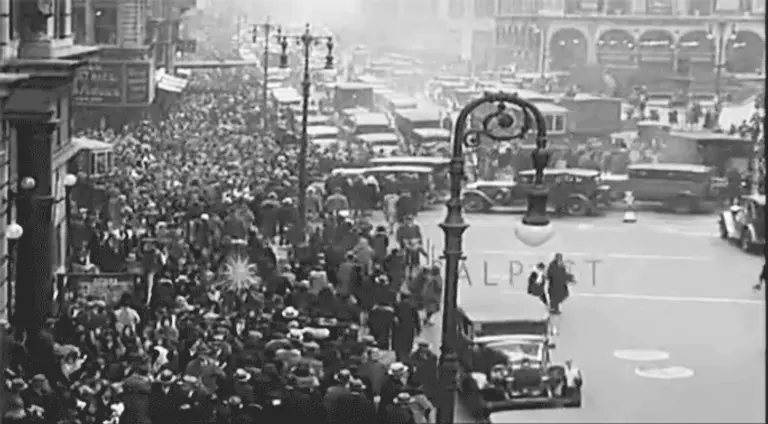
Before the days of Amazon, last-minute holiday shopping actually required putting clothes on and interacting with other human beings. To fully understand just how far we've come (and really appreciate the ability to "add to cart"), take a look at this HD stock footage from Critical Past that shows the rush of New York holiday shoppers in 1930. The sidewalks are a sea of black trench coats, with shoppers trying to squeeze their way into stores on 34th Street and buy wares from vendors on what looks like it may be Orchard Street, once the hub of discount shopping.
Watch the full video
November 16, 2016

Central Park squirrels: Once exotic, now basically in charge

Squirrels may be so common in today’s city parks that they threaten to make off with our junk food, but at one time the creatures were rare and exotic visitors whose delightful presence was carefully encouraged. Dan Lewis of Now I Know tells us that the ubiquitous squirrel may have been indigenous to North America, but Central Park's squirrels didn't come with the territory: The bushy-tailed natives had become all but extinct on Manhattan island by the 1850s due to rapid development. Just a year before the park’s creation, one lone squirrel, heading down a tree trunk on its way to extinction, stopped traffic as charmed New Yorkers marveled at the antics of the "unusual visitor" to the extent that they had to be dispersed by police, according to accounts by a paper of the day.
So how did they get here?
November 14, 2016

New York’s dirty little secret: The apartment kitchen

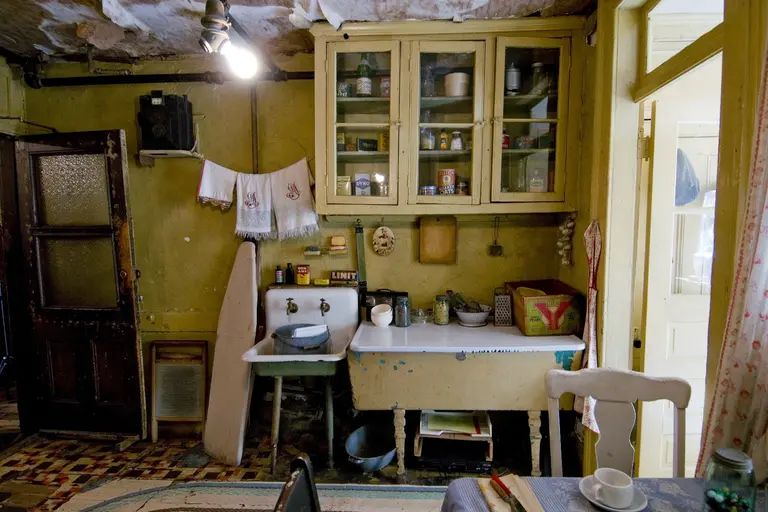
Unlike the warm and welcoming kitchens found in many U.S. cities, in New York, kitchens are more likely to be dark and dank hallways or neglected corners crammed with miniature appliances than actual rooms. In many New York apartments, kitchens don’t even merit their own room but take the form of what is commonly described on listings sites as the “open concept living/kitchen area” (a feature welcomed only by those who don’t use their kitchen or have no qualms about grilling a steak just inches away from their sofa). Worse yet, New York kitchens not only frequently merge with living rooms but also other parts of the home. In many old tenements, bathtubs and showers can be found in the kitchen too.
more on the history of the NYC kitchen
November 9, 2016

Lincoln Center: From Dutch enclave and notorious San Juan Hill to a thriving cultural center

The glossy cultured patina of Lincoln Center reveals nearly nothing of what the neighborhood once was, and New Yorkers, accustomed to the on-going cycle of building and demolition, have likely forgotten (or never knew) about the lively San Juan Hill neighborhood that was demolished to make way for the famous cultural center. Any such development dating from the 1960s wouldn't be without the fingerprints of the now-vilified Robert Moses, who was more than willing to cut up neighborhoods both poor and wealthy in the eye of progress.
Learn more about Lincoln Center's incredible past here
November 8, 2016

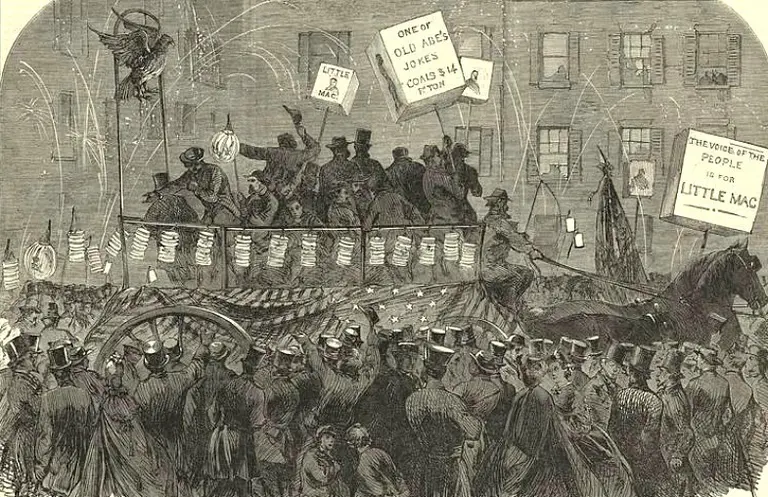
The 1864 presidential election and the thwarted plot to burn New York City

This election has been turbulent to say the least, erupting into contentious rhetoric, violence at rallies, and collective anxiety. But this isn’t the first time the U.S. has experienced such uproar from an election. In 1864, in the throws of the Civil War, incumbent Republican Abraham Lincoln was running for re-election against Democratic candidate George B. McClellan, his former top War general. Although both candidates wanted to bring the Civil War to an end, Lincoln wanted to also abolish slavery, while McClellan felt slavery was fundamental to economic stability and should be reinstated as a way to bring Confederate states back into the Union. Here in New York, this battle led to a plot to burn the city to the ground.
What led to this dramatic twist in the election?
November 7, 2016

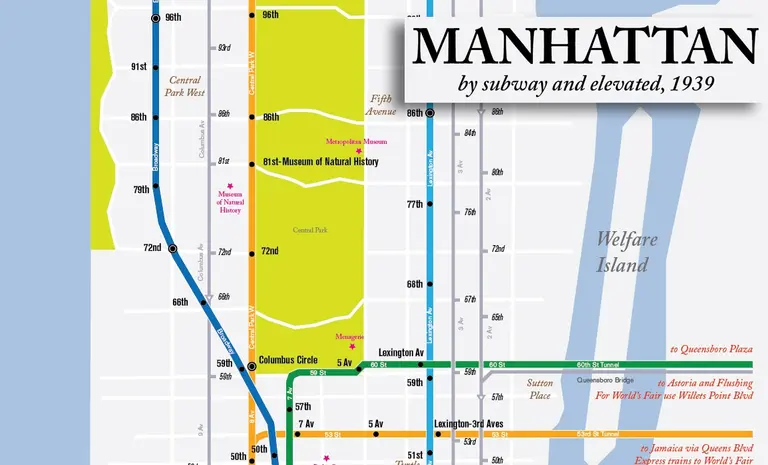
MAP: Here’s what the NYC subway system looked like in 1939

We often think of the NYC subway as a relatively modern marvel, a system that has expanded and evolved tremendously over 100-plus years, and a shell of what it was when it first debuted in 1904. However, the reality is that the majority of the lines that make up today's network were actually built before The Great Depression. In fact, as graphic designer Jake Berman's insightful throwback map depicts, it was pretty much all systems go by 1939.
see the complete map here
November 4, 2016

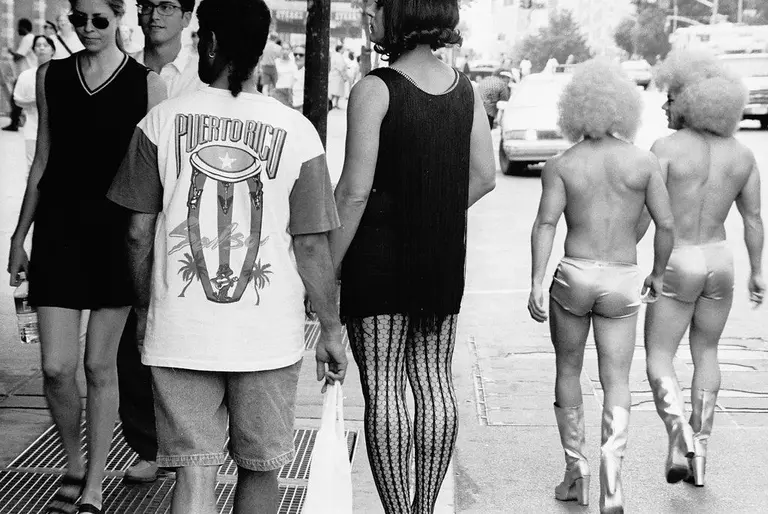
The Urban Lens: Ira Fox travels back to the ’90s for the East Village’s Wigstock drag festival

6sqft’s ongoing series The Urban Lens invites photographers to share work exploring a theme or a place within New York City. In this installment, Ira Fox takes us back in time to the East Village of the '90s. Are you a photographer who’d like to see your work featured on The Urban Lens? Get in touch with us at [email protected]. Ira Fox is best known for his use of black-and-white photography and cinematic approach, credited to his background in theater. He focuses on urban New York scenes and portraits, one example of which is his series "Wigstock at the Palladium." Wigstock was the annual Labor Day drag music festival in the East Village that was co-founded by Lady Bunny and hosted the likes of Crystal Waters, RuPaul, and Leigh Bowery in the '80s and '90s. In his shots, which were taken outside the famed Palladium nightclub, Ira captures the diverse characters who partook in the jubilant event during the '90s.
See all the photos here and find out about a special promotional offer for 6sqft readers
November 2, 2016

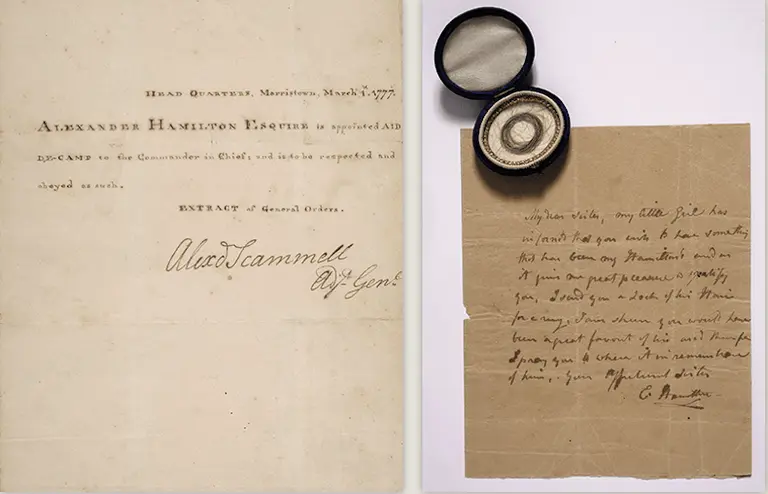
Rare collection of Alexander Hamilton’s unpublished letters headed for auction

Auction house Sotheby's has announced the sale of a rare collection consisting of hundreds of Alexander Hamilton's letters and personal manuscripts held by his family at auction on Jaunary 18. Alexander Hamilton: An Important Family Archive of Letters and Manuscripts will offer a trove that contains, among others, love letters from the first United States Secretary of the Treasury to his wife, Eliza, and the condolence letter, sealed with black wax, that his father-in-law sent to her after Hamilton was killed in the infamous duel with Aaron Burr, the New York Times reports.
Find out more about this rare collection
October 31, 2016

René Lalique’s windows saved this Fifth Avenue building from destruction in the 1980s

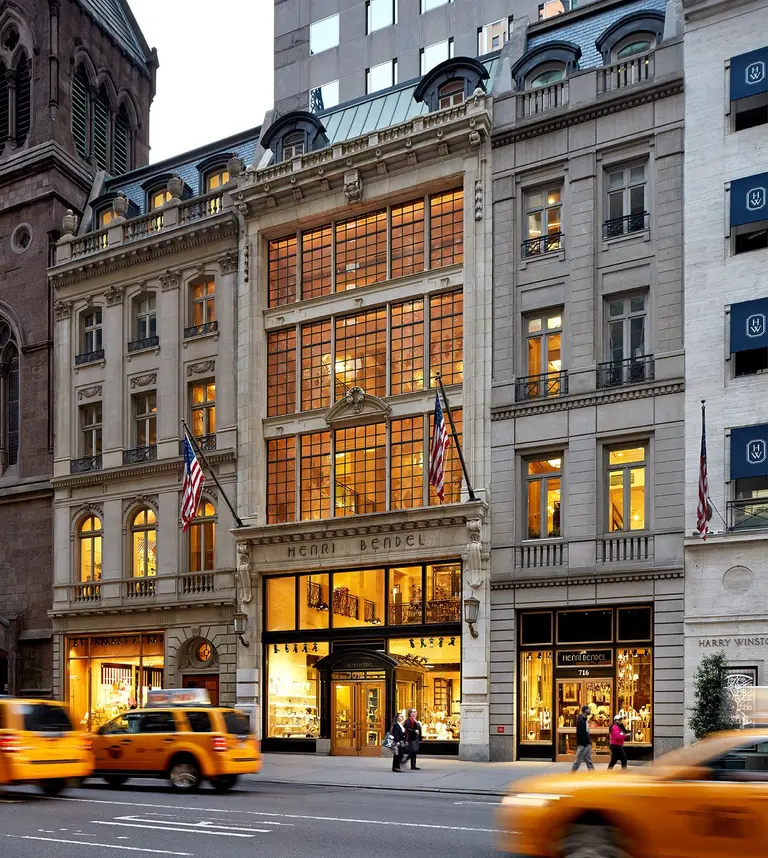
In 1984, a series of grime-covered windows at 714 Fifth Avenue caught the attention of an architectural historian by the name of Andrew Dolkart. Seemingly innocuous, and almost industrial in aesthetic—at least from afar—the glass panes would later become the foundation for a preservation victory.
more this way
October 30, 2016

Join the Society of Magicians on Halloween for a séance at Harry Houdini’s former Upper East Side home

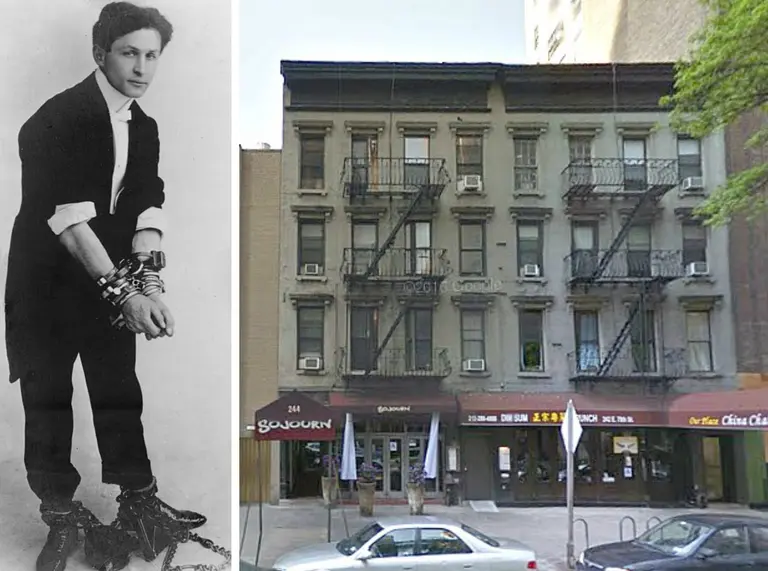
Last week, a commemorative plaque was installed on the facade of the former Upper East Side home of Harry Houdini at 244 East 79th Street, marking the 90th anniversary of his death and celebrating National Magic Week. To coincide with this, the Society of American Magicians will meet tomorrow for a séance at the building's Sojourn restaurant in hopes of contacting the great illusionist. As the Wall Street Journal notes, when he and his family moved into the top-floor studio of the boardinghouse in 1887, a young Houdini practiced his tricks and escapes in the space that now holds the eatery.
The rest of the story here
October 27, 2016

20 years ago, the city told Donald Trump he couldn’t put his name on the Columbus Circle globe

These days, New Yorkers are going to great lengths to get Trump's name off their buildings, and even his company itself has personally shed his moniker from their hotel brand amid declining bookings. But back in the '80s and '90s, the Donald would freely slap his name on just about anything he wanted. That is until 1996, when the Giuliani administration (sense the irony here?) denied his request to brand the giant globe outside the Trump International Hotel & Tower. The Times recently got its hands on a 20-year-old City Planning Department memorandum that outlines how the agency deemed any lettering on the sculpture illegal.
Get the full story
October 25, 2016

Star Power: Celestial ceilings and zodiac symbols in New York architecture

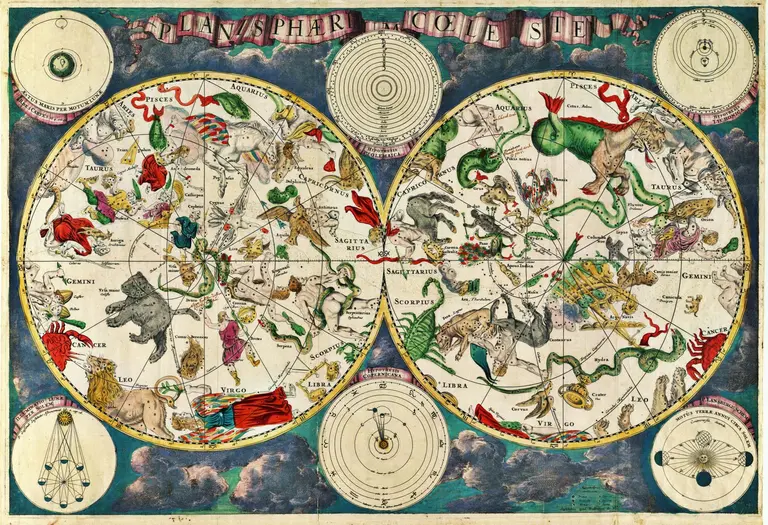
These days if an architect were to ask a developer “What’s your sign?" they probably wouldn't be taken very seriously. But in the early 1900s, it was an entirely different story. A century ago, wealthy industrialists, bankers, businessmen and civic planners were erecting opulent buildings with the help of top architects and artists. And in addition to elaborate ornamentation, celestial ceilings with zodiac symbols were also requested in a number of iconic building designs. Ahead we point out six historic New York area buildings where you can still encounter these astral vestiges.
Where to find Zodiac signs in NYC
October 24, 2016

Life in New York City before indoor toilets  

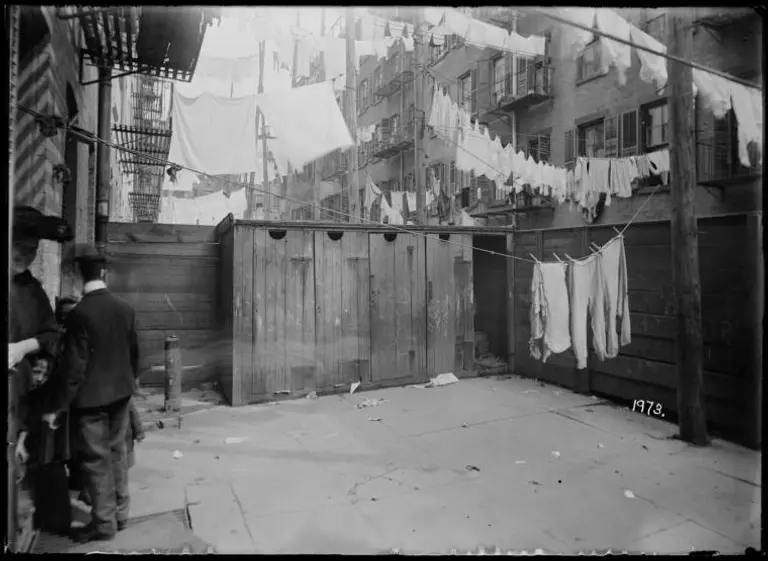
If you’ve ever bemoaned the fact that you share a bathroom with several family members or housemates, you’re not alone. Most New Yorkers live in apartments and most units have just a single bathroom. A hundred and fifty years ago, however, the situation was much worse. At the time, New Yorkers had just a few choices when it came to taking care of their lavatory needs and by modern standards, none of the options were appealing—visit an outhouse or use a chamber pot. Nevertheless, indoor toilets proved slow to gain popularity when they were first introduced in the second half of the nineteenth century. Initially, many residents feared the newfangled invention would bring poisonous gases into their homes, leading to illness and even death.
learn more here
October 17, 2016

Oldest map of New York may become most expensive map ever sold at $10M

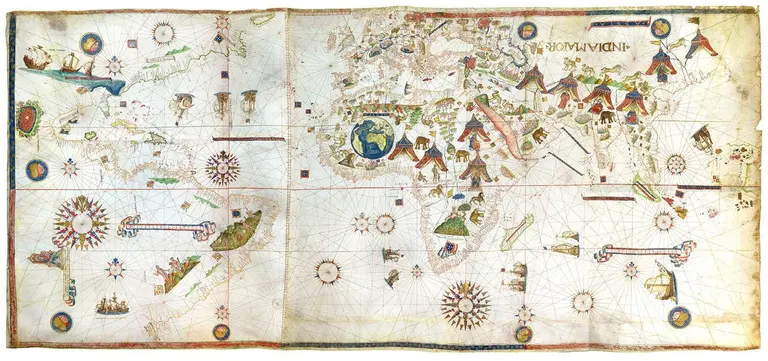
In 1531, Italian sailor and cartographer Vesconte Maggiolo created a "Portolan planisphere," a navigational chart of the known world, that included the first depiction of the eastern seaboard and therefore of New York harbor. Bloomberg tells us that the 6.7' x 3' map made of six goat skins is now in the possession of rare book and map dealer Daniel Crouch, who will put it up for sale for a whopping $10 million this Saturday at TEFAF art fair. If it fetches this price, it'll become the most expensive map ever publicly sold.
More on the map this way
October 17, 2016

Diego Rivera’s psychedelic Rockefeller Center mural was destroyed before it was finished, 1934

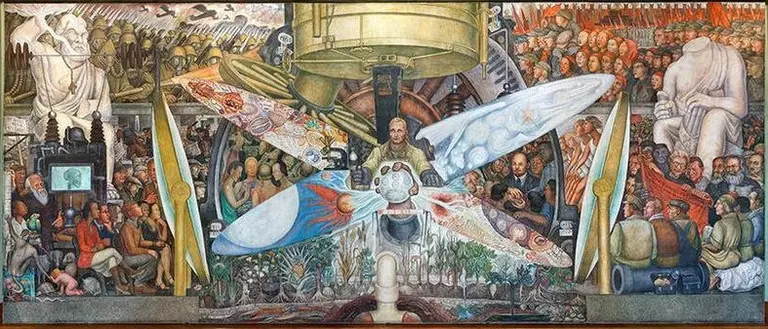
In 1932, Mexican artist Diego Rivera was commissioned by Nelson Rockefeller to add a mural to the soaring lobby of Rockefeller Center. Despite being known for his petulant temper and loyalty to Communism, Rivera was still one of the most highly sought after artists of his time, lauded for his creative genius and his detailed paintings. But politics, artistic vision, power and wealth collided in 1934 when a displeased Rockefeller had the very mural he commissioned from Rivera chiseled off the wall the night before it was to be completed.
read about the mysterious mural here
October 10, 2016

In 1892, NYC celebrated an entire Columbus Week

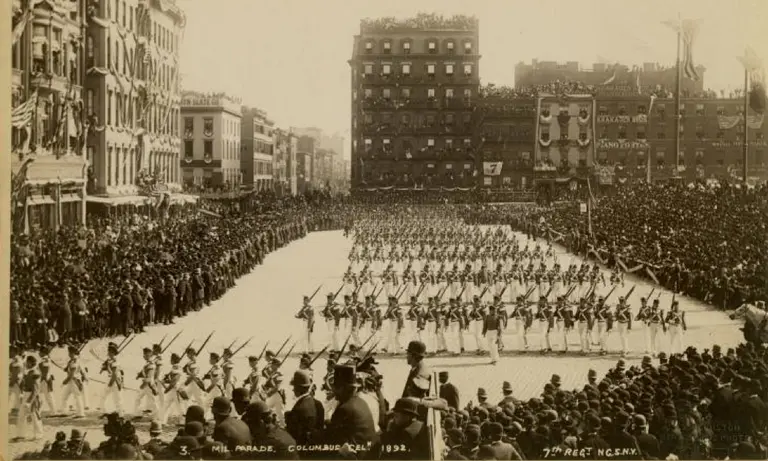
Annually, the Columbus Day parade draws nearly a million viewers to Fifth Avenue, but that's nothing compared to the festivities of 1892 when New Yorkers celebrated the 400th anniversary of the Italian explorer’s Caribbean landing for seven full days. Columbus Week was a completely decked out party with a Hudson River naval parade, Brooklyn Bridge fireworks, a music festival, and the first Columbus Day Parade, which consisted of 12,000 public school children, 5,500 Catholic school children, military drill squads, and 29 marching bands.
More history
October 5, 2016

Buried treasures from the city’s past will be on view at a new Manhattan research center

New York City has catalogued and created a digitized archive of the many buried artifacts from its past; Wednesday the Landmarks Preservation Commission is officially opening a repository of those countless artifacts. The New York Times reports that the Nan A. Rothschild Research Center–the first municipal archive devoted to a city’s archaeological collection, has found a home in Midtown Manhattan. More than a million artifacts will now be available for viewing by researchers and scholars by appointment; a digital archive is already available. The climate-controlled repository at 114 West 47th Street contains artifacts from 31 excavated sites from all five boroughs, including the city’s first major historical dig, the Stadt Huys (now 85 Broad Street in Lower Manhattan), which, when the artifacts were discovered in 1979, raised the idea that archaeological treasures were buried beneath old buildings.
Find out what you can dig up at the digital archive
October 4, 2016

NYC bike lanes date back to 1899, and trucks blocked them then too

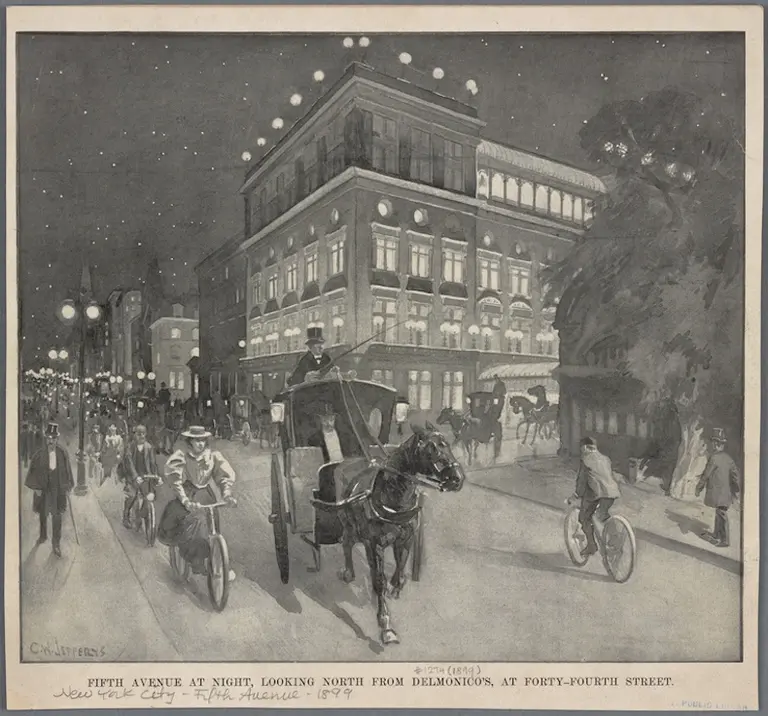
Vehicles parked smack in the middle of bike lanes are among the biggest scourges faced by city cyclists. It’s illegal (yes, there’s a $115 fine) though the law is rarely enforced–but it’s not just a modern obstruction. As it turns out, the main reason early bike lanes were created in the 1890s was because of lobbying by cyclists in the hopes getting more open riding space. New York City began paving whole streets and laying down asphalt strips specifically for cyclists–and, ironically, carts, wagons and other vehicles immediately began blocking them.
Naming and shaming the scofflaws
October 4, 2016

How Otis’ elevator made modern skyscrapers possible

Advances in engineering continue to push modern skyscrapers to dizzying new heights, but at the core of these structures, quite literally, is an often overlooked technology that’s been key to their proliferation: the elevator. The earliest known reference to the elevator was by Roman architect Vitruvius, who reported that Archimedes built his first elevator around 236 B.C. The design was fairly rudimentary, a platform using pulleys and hoisted by hand or by animal. While elevators found their way into countless buildings and homes in the centuries that followed, including that of Louis XV who used a private lift to connect his Versailles apartment to that of his mistress, it wasn’t until the late 19th century that their true potential was unlocked.
read more about the elevator here
September 28, 2016

New York’s 1940s ‘victory gardens’ yielded a whopping 200 million pounds of produce

During the Second World War the United States (and other European nations) experienced significant food shortages, as the majority of the country's food supply was being sent overseas to aid in the war effort. In response, government organizations encouraged citizens to plant "victory gardens" to help ease the burden. U.S. President Woodrow Wilson said "Food will win the war," and launched through the Bureau of Education a United States Garden Army. The program, funded by the War Department, began in 1943 and urbanites living in New York City collectively grabbed their shovels to adorn the bare concrete streets with a far more plentiful kind of landscaping.
learn more here
September 27, 2016

Inside the mind of Ernest Burden, one of New York’s preeminent architectural renderers

The art of architectural illustration paints a window into the future and intends to portray a designer's vision or work in its purest, most ideal light. As the art form has progressed from hand mediums to digital, Ernest Burden III and his studio Acme Digital have straddled the industry's dramatic transformation using both computer and manual approaches to inform and improve what they produce. As a renderer with more than 30 years in the industry, Ernest's roster of clients include some of the country's biggest real estate heavyweights, such as the Trump Organization, Related Companies and Tishman-Speyer Properties; and renowned architectural clients like I.M. Pei, Robert A.M. Stern and Kohn Pedersen Fox. Recently, Ernest completed a collection of renderings and detailed vignettes for Toll Brothers' and Barry Rice Architects' 100 Barrow Street. In the series, he effortlessly juxtaposes the timeless intent of the new structure with the energy of the surrounding West Villlage. In fact, Ernest's renderings played a considerable role in the Landmarks Preservation Commission's vote to approve the project in 2014. To learn more about Ernest's unique style and his thoughts on the evolving business and craft of architectural rendering, 6sqft sat down with him for a chat.
read our interview with ernest here
September 19, 2016

The ‘empty mansions’ of Huguette Clark: Luxury and mystery of an era past

Reclusive copper heiress Huguette M. Clark died in 2011 at the age of 104; in the years preceding and after her demise, obsessive followers of her story puzzled over her decision to remain in a small hospital room for the last 20 years of her life after having rarely left her apartment in the decades before. In this day of heiresses who run fashion companies and give house tours, Huguette Clark’s wealth and her retreat from the public eye—despite being by all accounts entirely lucid—have made her the target of endless fascination. But almost as fascinating are the storybook-grand properties that still stand as remnants of a gilded age long past and what remains of one of its biggest fortunes, barely touched and preserved as if in aspic until their recent acquisition by a new generation of magnates and heirs.
See more of Huguette Clark's abandoned Gilded Age opulence
September 15, 2016

Fallout Shelters: Why some New Yorkers never planned to evacuate after a nuclear disaster

Decades after the end of the Cold War, ominous black-and-yellow fallout shelter signs still mark buildings across New York City’s five boroughs. The actual number of designated fallout shelters in the city is difficult to discern. What is known is that by 1963, an estimated 18,000 shelters had been designated, and the Department of Defense had plans to add another 34,000 shelters citywide. While the presence of a fallout shelter in one’s building may have given some residents peace of mind in an era when nuclear destruction seemed imminent, in reality, most of New York’s fallout shelters were little more than basements marked by an official government sign.
more on the history of new york's fallout shelters
September 9, 2016

Back to school with C.B.J. Snyder: A look at the architect’s educational design

Now that school is back in session, 6sqft decided to take a look at the public school buildings of C.B.J. Snyder. An architect and mechanical engineer, he served as Superintendent of School Buildings for the New York City Board of Education between 1891 and 1923. It was this work that Snyder is known for, having transformed the construction process, design, and quality of the city's school buildings. He oversaw the creation of more than 140 elementary schools, ten junior high schools, and 20 high schools, incorporating his innovative H-shaped layout, three-tiered windows, and mid-block locations. Working mainly in the styles of Renaissance Revival and Beaux-Arts, Snyder created structures that not only revolutionized the way school design was approached, but that were beautiful works of design.
Take a look at some of our favorite C.B.J. Snyder schools and see how they're being used today