Search Results for: times square

May 12, 2016

7,500-Name Waitlist Opens for 975 Affordable Units at Harlem’s Riverton Complex

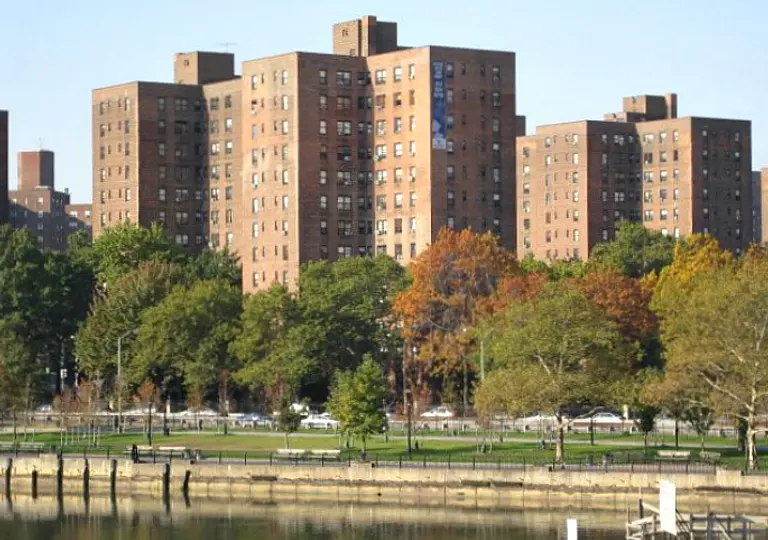
Like Stuyvesant Town, the Riverton Square residential development in Harlem opened in 1947 as an affordable complex for World War II veterans and was built by the Metropolitan Life Insurance Company. But unlike Stuy Town (and Met Life's Parkchester in the Bronx), black and Hispanic tenants weren't barred from renting in Riverton. According to the Times, over the years the seven-building site was a sought-after address for the middle-class and was home to such notables as jazz pianist Billy Taylor, former Mayor David Dinkins, and former vice president of Motwon Records Suzanne de Passe. But in 2005, again similar to its downtown counterpart, Riverton was sold to Stellar Management, who tried to swiftly remove long-term tenants and replace them with higher-paying residents. Unable to convert the rent-stabilized units to market-rate and saddled with debt, Stellar lost Riverton to its lenders in 2008. This past December, after nearly a decade in limbo, the 12-acre site was sold to A&E Real Estate Holdings for $201 million in a deal with the city which, like the recent terms at Stuy Town, dictated that 975 of the complex's 1,229 units be reserved for working- and middle-class families for 30 years. In return, the buyer will receive about $100 million worth of tax breaks and incentives. The waitlist is now open for these affordable units, and 7,500 randomly selected applicants will earn themselves a spot.
Find out if you qualify here
May 11, 2016

Skyline Wars: Accounting for New York’s Stray Supertalls

Carter Uncut brings New York City’s latest development news under the critical eye of resident architecture critic Carter B. Horsley. Ahead, Carter brings us his eighth installment of “Skyline Wars,” a series that examines the explosive and unprecedented supertall phenomenon that is transforming the city’s silhouette. In this post Carter looks at the "stray" supertalls rising in low slung neighborhoods. Most of the city’s recent supertall developments have occurred in traditional high-rise commercial districts such as the Financial District, the Plaza District, downtown Brooklyn and Long Island City. Some are also sprouting in new districts such as the Hudson Yards in far West Midtown. There are, however, some isolated "stray" supertalls that are rising up in relatively virgin tall territories, such as next to the Manhattan Bridge on the Lower East Side and Sutton Place.
read more from carter here
May 10, 2016

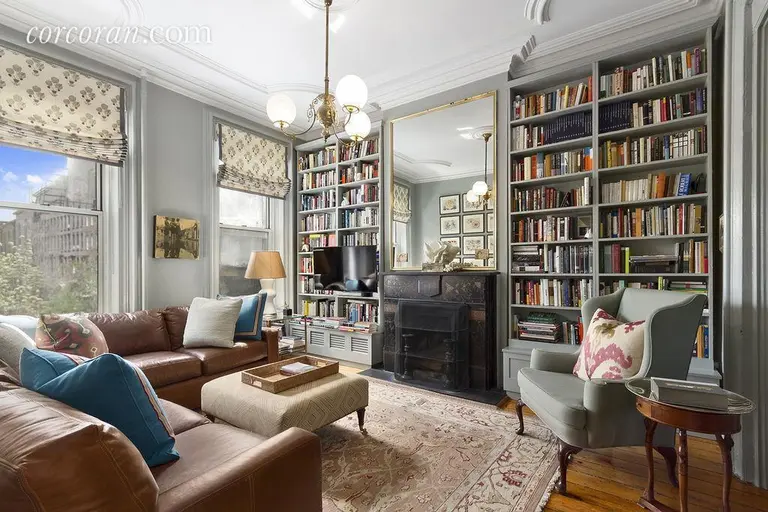
The Elegantly Designed Interiors at This Carroll Gardens Brownstone Can Be Yours For $3M

The location of this lovely Brooklyn townhouse at 357 Hoyt Street is a dream combination of breezy, funky Gowanus and quaint, historic and classic Carroll Gardens. Everything surrounding it is either pretty or cool (or both), and on top of being subway adjacent, the borough's flagship Whole Foods market is within just a few blocks. This enviable home is about as perfect as you can get if you’re a brownstone buff and you're not looking for four stories or a big yard. At three stories and 2,360 square feet, it's not huge, but space is used efficiently and it's still more spacious than many apartments at its asking price of $2.9 million. Renovated to perfection, the home’s interiors - designed by mother-daughter design team McGrath II - have been featured in both the New York Times home and garden section (according to the listing) and recently on 6sqft.
READ MORE
May 4, 2016

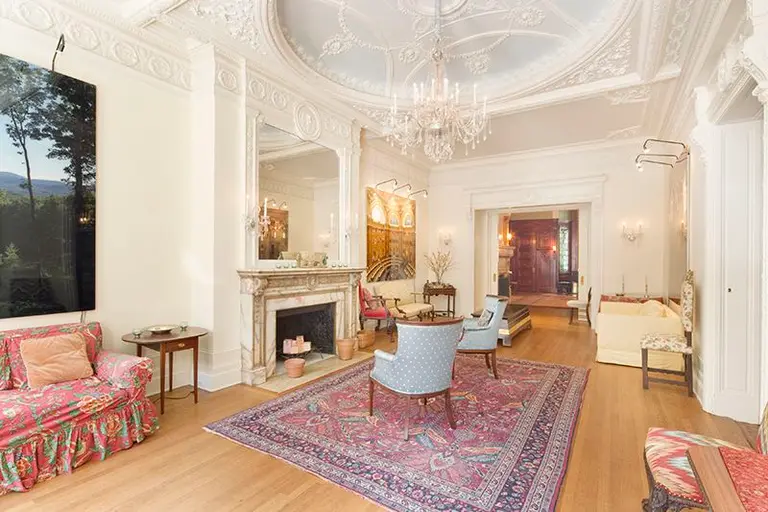
$14M Gilded Age Mansion in Murray Hill Was the Home of J.P. Morgan’s Attorney

Most of New York City's grand and historic homes have been altered for modern-day use as apartments, libraries, hotels, diplomatic buildings and the like. And when it comes to those that have remained as opulent single- or multi-family homes, most have changed hands so many times that we don't know much about their history. That is not the case for this massive 9,300-square-foot townhouse across the street from the Morgan Library. The home was originally the residence of J.P. Morgan's attorney John Trevor, Sr. and is currently in use as a 10-unit apartment building–albeit a rather special one with some unique spaces like a private office and a gorgeous rear parlor with symphony-ready acoustics and 13-foot ceilings. Whoever purchases the home, on the market for $14 million, could create a vast five-story mansion (there's already an elevator), or any number of alternate configurations–but they'll still have great sound in that back parlor.
The neighborhood blows up, then the lawyers move in
May 3, 2016

Extell Files to Demolish Two More Fifth Avenue Buildings For Its Mega-Midtown Assemblage

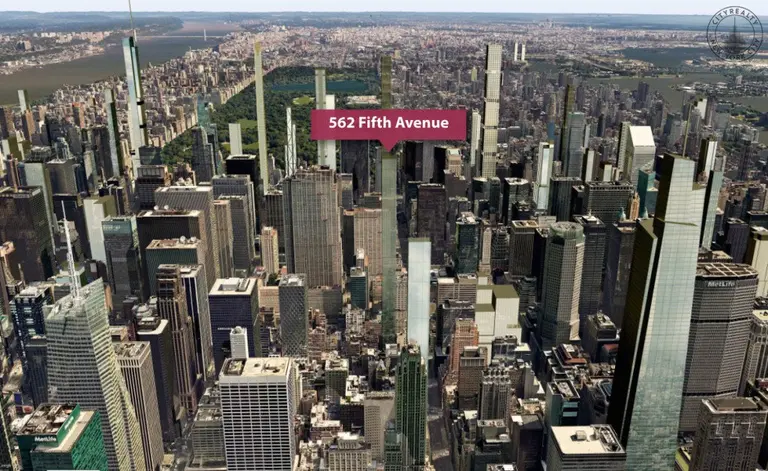
Back in January, 6sqft reported that the busybodies at Extell Development filed permits to demolish a string of six tumble-turned walk-up buildings between 3 and 13 West 46th Street in Midtown. Now, as expected, the Gary Barnett-led firm has filed permits to demolish the Warren & Wetmore-designed corner building at 562 Fifth Avenue and a somewhat incongruous Tudor-style building at 564 Fifth Avenue. While none of the condemned buildings are extraordinary in design, 562 Fifth Avenue is perhaps a more tasteful affair than much of the schlock going up these days. Designed by the same architects as Grand Central Terminal, the slivery 13-story commercial building was once known as the I. Miller Building and features intricately ornamented spandrel areas, a pedimented roofline, and an unoriginal albeit charming Fifth Avenue storefront.
More on Extell's plans and the history of the soon-to-be-razed buildings
May 3, 2016

Skyline Wars: New Jersey’s Waterfront Transforms With a Tall Tower Boom

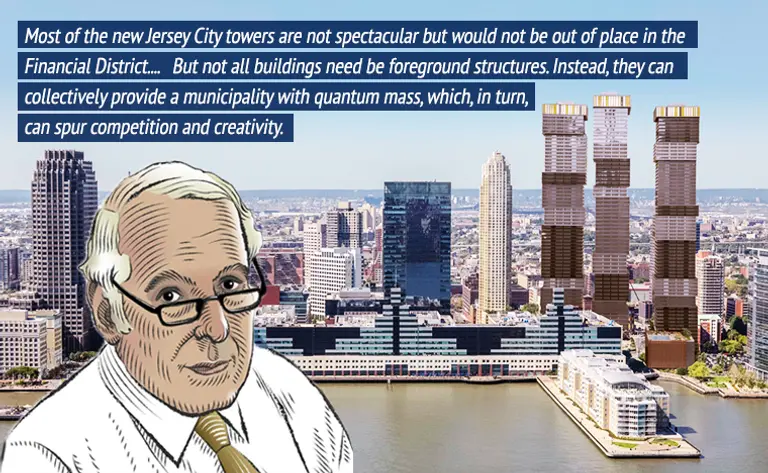
Carter Uncut brings New York City’s latest development news under the critical eye of resident architecture critic Carter B. Horsley. Here, Carter brings us his seventh installment of “Skyline Wars,” a series that examines the explosive and unprecedented supertall phenomenon that is transforming the city’s silhouette. In this post Carter looks at the new New Jersey skyline. The hulking, 781-foot-high Goldman Sachs tower at 30 Hudson Street in Jersey City is like the Rock of Gilbraltar to Lower Manhattan’s famed skyline: massive and impressive. To some, perhaps, it conjures a Monty Python catapult or a very steep cliff on which to mount the Guns of Navarone for an assault on Lower Manhattan. It dominates the Jersey City skyline, which is a bit Spartan, especially in comparison with Brooklyn’s. Most of the skyscrapers in Brooklyn, however, are not directly on the waterfront and the Goldman tower is very much “in your face” on the water. Furthermore, all of a relative sudden, Jersey City is about to explode with three taller towers, which I can only describe as delirious, dancing, shimmy-shimmy-shake buildings with drop-dead vistas of Manhattan and the Hudson.
read more from carter here
April 28, 2016

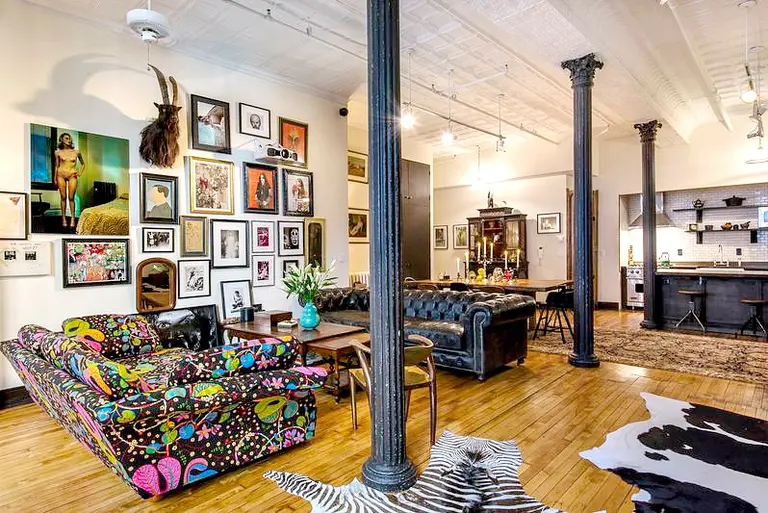
Ozzy Osbourne Meets Hansel and Gretel in Video Director Johan Renck’s $3M Tribeca Loft

With classic industrial loft bones and downtown shabby chic interiors, this big, bold loft at 79 Worth Street in Tribeca is asking $3.1 million. At 1,909 square feet, there's plenty of room to choose between shabby and chic, and to be fair, the decor is not only on-trend but fairly awesome. According to records, the current owner is noted Swedish video director Johan Renck (he's worked with everyone from David Bowie and Madonna to Karl Lagerfeld and directed episodes of "Breaking Bad"), who purchased the loft in 2009 for $1.5 million. We don't know if he's responsible for the apartment's current look, but we can definitely see both a creative and a Scandinavian influence.
Check out the rest of the loft this way
April 26, 2016

Trump’s Flubs: The Donald’s Failed Attempts to Erect the World’s Tallest Building in NYC

Presidential candidate Donald Trump's aggressive tone and occasional outlandish statements have dominated the conversation in the Republican primaries, and today is sure to be no different. Though his supporters feel that he's a shoo-in, his real estate track record hasn't always resulted in success. Take for example his fraught attempt to own the Empire State Building, which ended in lawsuits and public shaming, or his $80 million loss on the Plaza Hotel, which resulted from his near bankruptcy in the '90s. In addition to these public debacles, the developer-turned-showman-turned-politician has envisioned at least three of the world's tallest buildings in New York over the years, which makes sense for a man who glories in superlatives and for whom every project is a flamboyant gesture. In honor of the Donald's never-ending presence, 6sqft decided to take a look at these never-realized, sky-high proposals, which include the New York Stock Exchange Tower, Television City Tower, and 10 Columbus Circle.
Get the story behind all these failed attempts
April 26, 2016

Skyline Wars: As Queens Begins to Catch Up, A Look at the Towers Defining Its Silhouette

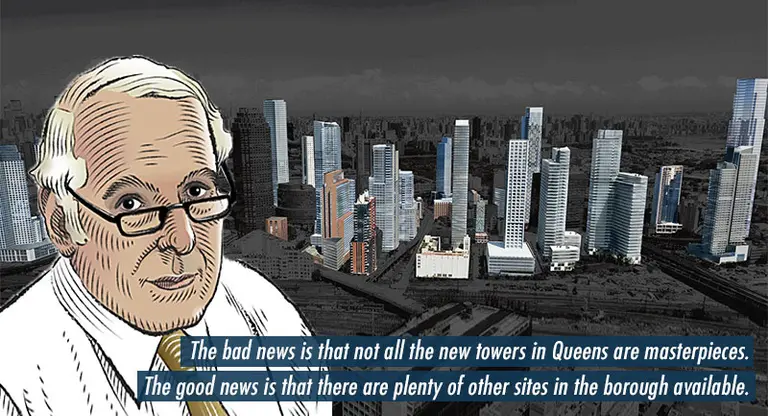
Carter Uncut brings New York City’s latest development news under the critical eye of resident architecture critic Carter B. Horsley. Here, Carter brings us his sixth installment of “Skyline Wars,” a series that examines the explosive and unprecedented supertall phenomenon that is transforming the city’s silhouette. In this post Carter looks at the new towers defining the Queens skyline. For a long time, the glass tower erected by Citibank was the lone skyscraper of note in Queens. Known initially as Citicorp at Court Square, it was built in 1989 and designed by Raul de Armas of SOM as a blue-green metal-panel-and-glass office tower with just a few setbacks at its 633-foot-high top—an extremely clean-cut, modern obelisk of fine proportions. In a 1988 article in The New York Times, Anthony DePalma wrote that the tower “dominates the Queens skyline like a sequoia in the desert” and Paul Goldberger, then the newspaper’s architecture critic, wrote the tower was “rapidly becoming one of the most conspicuous structures in the entire city.” He added, “It is a very unlikely thing, this building—no other skyscraper in New York is remotely like the Citicorp tower, not so much for its design as for the fact that it stands free, alone in this landscape of gas stations, warehouses and row houses,” The bank tower transformed “the landscape of New York” and “no longer does Manhattan virtually by itself control the skyline,” Mr. Goldberger continued. “Skyscrapers built at random all over New York would be devastating, but an occasional exclamation point, well designed and carefully placed, will do the skyline no grievous harm,” he concluded. This is a very important but also very controversial point as currently evidenced in Manhattan where traditional precincts are being pin-pricked to exhaustion and confusion by supertalls.
more on the queens skyline
April 25, 2016

An Architect’s Guide to ‘Game of Thrones;’ Biking in NYC for Nervous Nellies

Go on an architectural tour through “Game of Thrones” Seven Kingdoms and beyond. [Architizer] A nervous biker’s guide to cycling in NYC. [NYT] Here’s the first renderings of Rafael Viñoly’s new office building/car dealership in Hell’s Kitchen. [Curbed] Say goodbye to taxi cab partitions. [NYP] Gowanus’ Whole Foods-adjacent Coignet Building has finally shed its sidewalk shed and construction […]

April 22, 2016

Rendering, Details Revealed for Glassy Condos Replacing Streit’s Matzo Factory

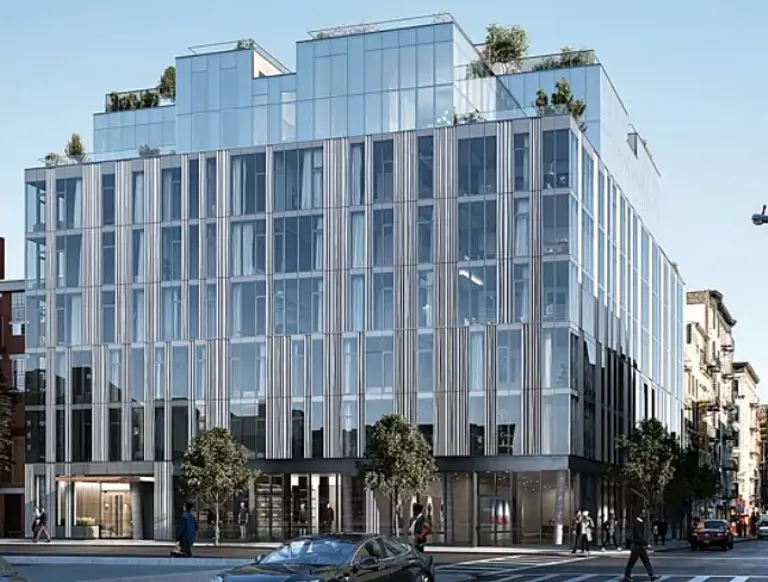
If you're getting ready for this evening's seder, you've likely picked up a box of matzo, and chances are pretty good that your unleavened bread comes from Streit's. For 90 years the company produced matzo at the rate of almost 900 pounds an hour at 150 Rivington Street, but in early 2015 news hit that the country's last family-owned matzo factory would be relocating to Rockland County. Developer Cogswell Realty bought the site for $31 million, embarking on plans for a condominium, and today, ironically timed with the first day of Passover, the first rendering of the project has been revealed. The image was published in a New York Times article about Lower East Side institutions being replaced by condos. Design-build firm Gluck+ are the architects, and they've created a fairly standard, seven-story, glass box with some planted terraces along the top-floor setbacks. Though the design lacks any reference to the iconic business, the developers have said they plan to include Streit's memorabilia in the lobby.
This way for pricing details
April 20, 2016

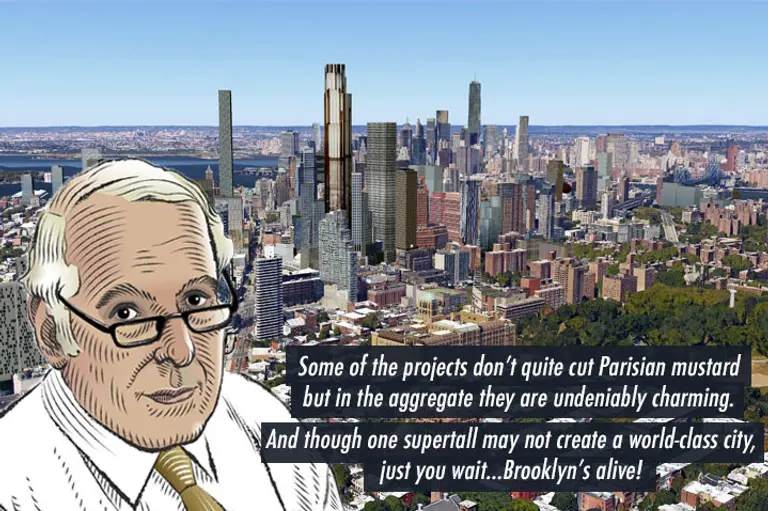
Skyline Wars: Brooklyn Enters the Supertall Race

Carter Uncut brings New York City’s latest development news under the critical eye of resident architecture critic Carter B. Horsley. Here, Carter brings us his fifth installment of “Skyline Wars,” a series that examines the explosive and unprecedented supertall phenomenon that is transforming the city’s silhouette. In this post Carter looks at Brooklyn's once demure skyline, soon to be Manhattan's rival. Downtown Brooklyn has had a modest but pleasant skyline highlighted by the 350-foot-high Court & Remsen Building and the 343-foot-high great ornate terraces of 75 Livingston Street, both erected in 1926, and the 462-foot-high flat top of the 1927 Montague Court Building. The borough’s tallest building, however, was the great 514-foot-high dome of the 1929 Williamsburg Savings Bank Tower, now known as One Hanson Place, a bit removed to the east from Downtown Brooklyn. It remained as the borough’s tallest for a very long time, from 1929 until 2009. A flurry of new towers in recent years has significantly enlarged Brooklyn’s skyline. Since 2008, nine new towers higher than 359 feet have sprouted there, in large part as a result of a rezoning by the city in 2007. A few other towers have also given its riverfront an impressive frontage. Whereas in the past the vast majority of towers were clustered about Borough Hall downtown, now there are several clusters with some around the Brooklyn Academy of Music and the former Williamsburg Savings Bank Tower and some around the Williamsburg riverfront.
more on Brooklyn's skyline here
April 18, 2016

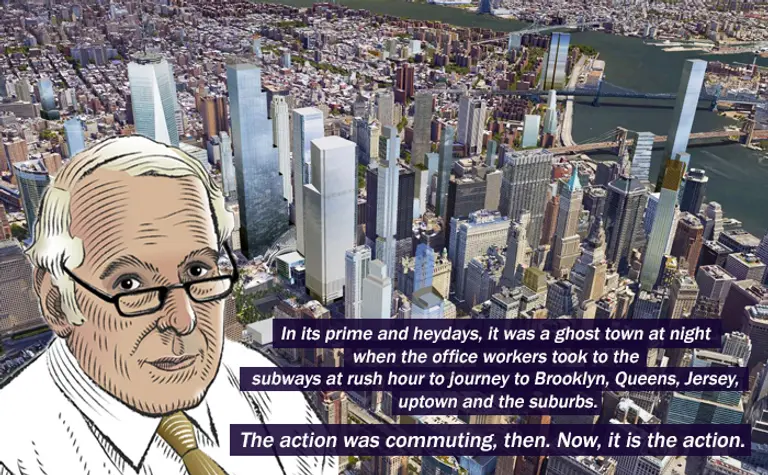
Skyline Wars: In Lower Manhattan, A New Downtown Is Emerging

Carter Uncut brings New York City’s latest development news under the critical eye of resident architecture critic Carter B. Horsley. This week Carter brings us his fourth installment of “Skyline Wars,” a series that examines the explosive and unprecedented supertall phenomenon that is transforming the city’s silhouette. In this post Carter looks at the evolution of the Lower Manhattan skyline. Lower Manhattan at the start of the Great Depression was the world’s most famous and influential skyline when 70 Pine, 20 Exchange Place, 1 and 40 Wall Street, and the Woolworth and Singer buildings inspired the world with their romantic silhouettes in a relatively balanced reach for the sky centered around the tip of Lower Manhattan. Midtown was not asleep at the switch and countered with the great Empire State, the spectacular Chrysler and 30 Rockefeller Plaza but they were scattered and could not topple the aggregate visual power and lure of Lower Manhattan and its proverbial “view from the 40th floor” as the hallowed precinct of corporate America until the end of World War II. The convenience and elegance of Midtown, however, became increasingly irresistible to many.
More on the the history of Lower Manhattan and what's in store
April 15, 2016

Find Your Neighborhood on This Interactive Map Made From Local Brooklyn Litter

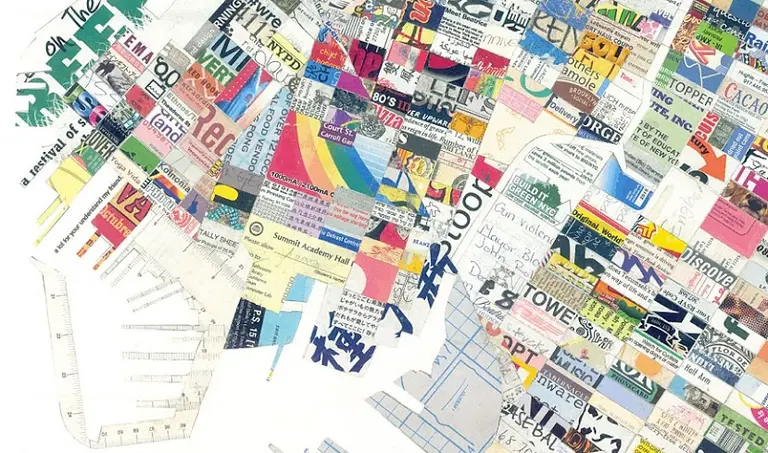
There's no shortage of trash in NYC–even better than seeing it picked up is when someone is doing something interesting with it. Atlas Obscura introduces us to artist-cartographer Jennifer Maravillas, who has transformed the litter found in neighborhoods throughout the 71 square miles (the map is called "71 Square Miles") of Brooklyn into a map of the borough. Each neighborhood on the map is made up of paper litter–like flyers, advertisements and notes–found in that same neighborhood. The result is a bright, multicolored collage on which each bit of litter corresponds the place Maravillas found it. You can enter your address and find it on the interactive map, along with the trash you might see every day.
Check out the trash on your block
April 14, 2016

Mayor’s Affordable Housing Push Brings Tough Questions on Racial Integration

Affordability vs. racial inclusion may sound like an odd battle to be having, yet it's one that often simmers below the surface in discussions of neighborhood change. The words "Nearly 50 years after the passage of the federal Fair Housing Act..." are, of course, no small part of the reason. And in a city known for its diversity–one that often feels more racially integrated than it is–the question of how housing policy might affect racial makeup tends to be carefully sidestepped, but the New York Times opens that worm-can in a subsection called "Race/Related."
Is there a tradeoff between integration and affordability?
April 13, 2016

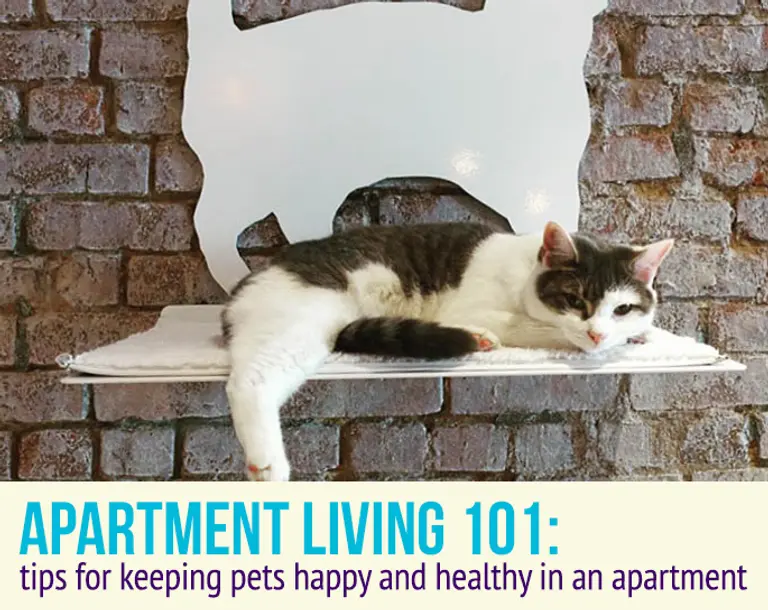
Tips for Keeping Pets Happy and Healthy in an Apartment

6sqft’s series Apartment Living 101 is aimed at helping New Yorkers navigate the challenges of creating a happy home in the big city. This week we offer up helpful tips on how to live with a furry family member (or members) from choosing the right furniture to actually getting your pet OK'd to move into a new place with you. Owning a dog or cat in the city is a decision that should not be taken lightly. Not only can small apartments and loud noises be stressful for humans, but animal anxiety can also be exacerbated by these external elements (and de-stressing for them isn't as easy for them as getting a massage or happy hour). On top of this, pet messes and their manic outbursts can seem exponentially larger when compacted into an home that's barely 500 square feet. Ahead, with the help of Erin McShane, owner of Manhattan's new cat cafe and teahouse Little Lions, we've rounded up a few tips and things to consider when it comes to making apartment living with dogs and cats comfortable for all—especially humans.
A happy home, happy pet and happy you this way
April 12, 2016

Brooklyn’s Sleeper Neighborhoods Outpricing Dumbo; What Hunger Looks Like in NYC Today

Though Dumbo usually comes in as Brooklyn’s most expensive area, median sale prices this quarter in the Columbia Street Waterfront District came in at number one, followed by Prospect Lefferts Gardens. [Brownstoner]  The MTA is testing out Flex-Gates, a sort of roll-up security gate, to prepare for another Superstorm Sandy. [Daily Intelligencer] This Brooklyn-based photojournalist is capturing […]

April 12, 2016

Luciano Pavarotti’s $10.5M Pied-à-Terre and Next Door Unit Listed as $20M Combo

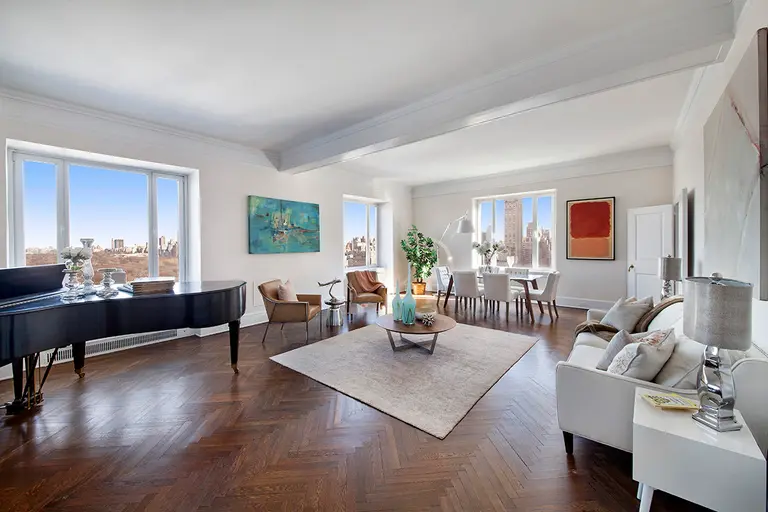
The 2,000-square-foot co-op at the Hampshire House at 150 Central Park South that was for three decades the favorite Manhattan pied-à-terre of the late operatic tenor Luciano Pavarotti, is for sale for $10.5M–or as part of a two-unit, $20.5 million option to create a 3,300 square-foot three-bedroom dream home with two balconies and iconic Central Park views. The neighboring two-bedroom apartment–listed in February for $10 million–is about half the size of Pavarotti's place, but has a 40-foot terrace with park views from every room. The resulting three-bedroom combo has 72 feet of park frontage and the kind of stunning views Central Park South is known for. The opera star, who passed away in 2007, had several apartments in the city but was particularly fond of this one, in part because of its proximity to the Met. The other two members of the "Three Tenors" opera supergroup, Plácido Domingo and José Carreras have lived at this building as well at various times.
Take in the view, this way
April 11, 2016

Uma Thurman’s Newly-Listed $6.25M Gramercy Duplex Comes With a Key to the Park

Actress Uma Thurman has just listed her Gramercy Park duplex co-op at 1 Lexington Avenue for $6.25M; a key to the private park is part of the deal. Thurman lived at the prewar co-op for nearly 15 years, buying several additional units and combining them—while keeping a hand in the real estate game all the while, including a four-bedroom co-op at the venerable River House at 435 East 52nd Street, purchased from romance author Barbara Taylor Bradford in 2013 for $10 million. She's finally parting ways with her Gramercy home to make that move uptown. The "Kill Bill" star reminisces in a NY Times interview about her family life in the building, "It was such a cozy place—it really was home for us."
Check out the gorgeous home that resulted
April 7, 2016

The Updated but Still-Funky UWS Penthouse Atop the 1920s Level Club Returns for $2.6M

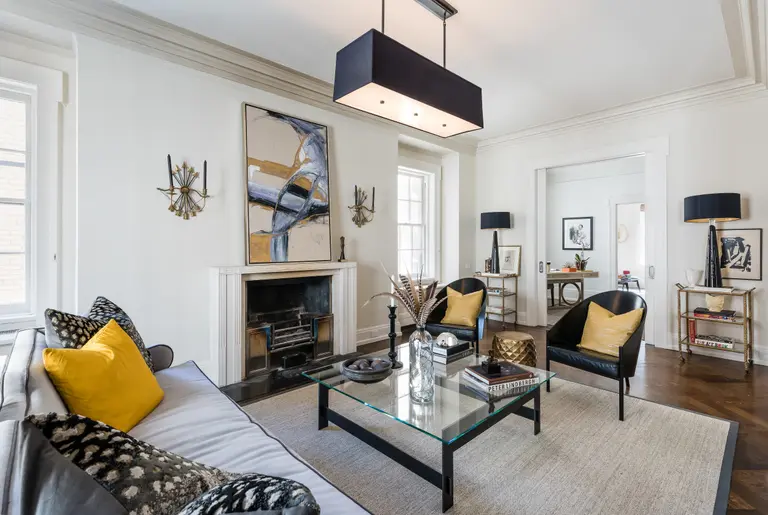
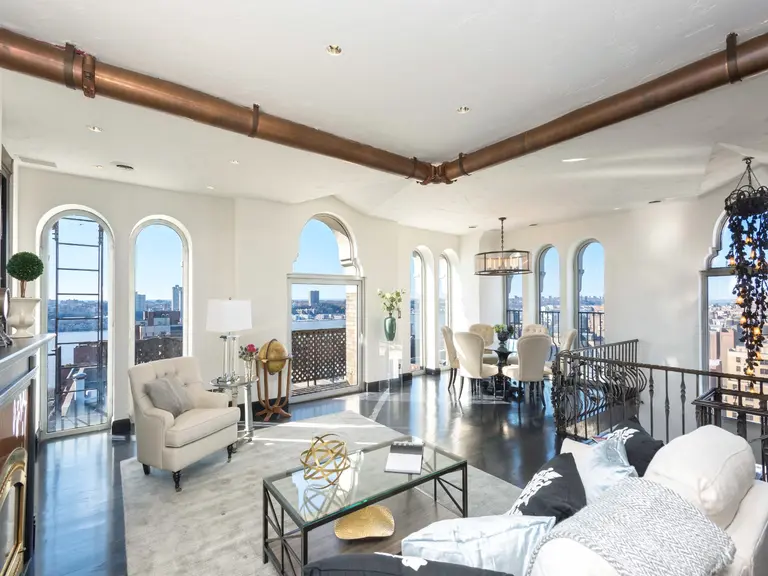
The crimson Venetian plaster-dappled interior walls are gone, done in minimalist white emulsion; the tiger-skinned boho pasha’s palazzo decor has been swapped for restrained, contemporary pasha’s pre-war. The interior's more impetuous elements have likely been pared down so it doesn’t scare the hell out of anyone, but also to show off the home's enormous 25-foot arched windows, 360 degree views, and stylized 1920s architecture. The overall effect is loft-meets-Palm-Beach-mansion, and though it doesn't exactly say Upper West Side, it no longer says magic carpet warehouse—and it's certainly still unique. This $2.6 million piece of New York City history sits atop a building that’s even more unique. Known as the Level Club, the building at 253 West 73rd Street served as the 1920s private social club of the Levelers, a group of Freemasons. The landmarked exterior is definitely a conversation starter, with a Romanesque-style facade designed in the image of King Solomon’s temple bearing carved Masonic symbols: the all-seeing eye, the hourglass, the level, the hexagram and the beehive.
Find out more about this fascinating penthouse
April 1, 2016

Spotlight: Gotham Greens Talks Rooftop Farming Against the New York Skyline

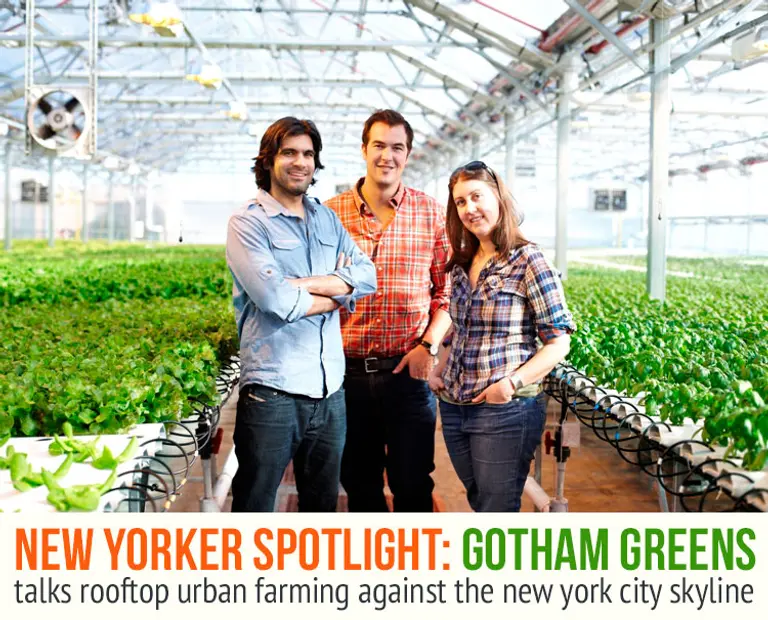
If you walk through the produce section at Whole Foods or scroll through Fresh Direct’s website, you likely have come across Gotham Greens’ Blooming Brooklyn Iceberg Lettuce or Queens Crisp. What make these lettuces different from others is that they’re local, urban greens, which are grown on rooftop greenhouses in Brooklyn and Queens with views of Gotham not too far in the distance. Gotham Greens was founded in 2009 with the goal of revolutionizing urban farming and providing a model for the future when cities are expected to be even more densely populated. One of the visionaries behind the company is co-founder and CEO Viraj Puri. Viraj and his partners started with one greenhouse in Greenpoint and now have four greenhouses between New York and Chicago that cover over 170,000 square feet and produce 20 million heads of lettuce every year. 6sqft recently asked Viraj some questions about what’s growing in Gotham.
read 6sqft's interview with Viraj
March 31, 2016

Demolition Begins for 50-Story Midtown East Skyscraper, New Rendering Released

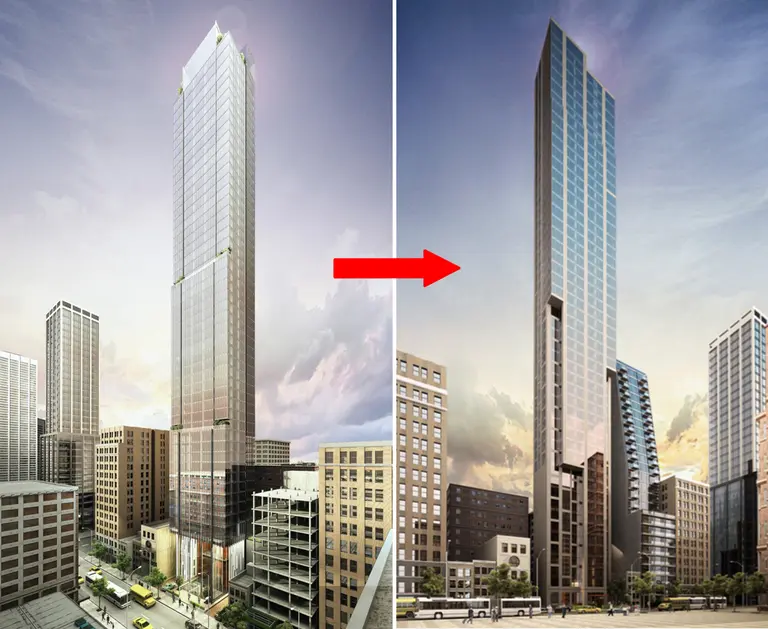
Just northeast of Grand Central Terminal at 141 East 47th Street, Brooklyn-based New Empire Real Estate (NERE) is moving ahead with plans to build a svelte 49-story condominium tower. New building permits were filed yesterday, an updated rendering has been released, and removal of the site's low-slung structures has commenced. NERE's skyscraper will rise mid-block along the northern blockfront of 47th Street between Lexington and Third Avenues. Up until the still-under-construction hotel rising at 147 East 47th Street, the block was one of the few remaining in Midtown East that had been spared the imposition of a post-war high-rises.
Get the scoop
March 24, 2016

Skyscraper Proposal Digs Out Central Park and Surrounds It With 1,000-Foot Glass Structure

Evolo has announced the winners of its 2016 Skyscraper Competition, and, somewhat ironically, the number-one spot goes to a proposal that doesn't build up at all, but rather digs down. New York Horizon was imagined by Yitan Sun and Jianshi Wu as a means to "reverse the traditional relationship between landscape and architecture, in a way that every occupiable space has direct connection to the nature." The idea is to dig down, exposing the bedrock beneath Central Park and thereby freeing up space to build a horizontal skyscraper around its entire perimeter. The resulting structure would rise 1,000 feet and create seven square miles of interior space, 80 times that of the Empire State Building.
The rest of the specifics, this way
March 23, 2016

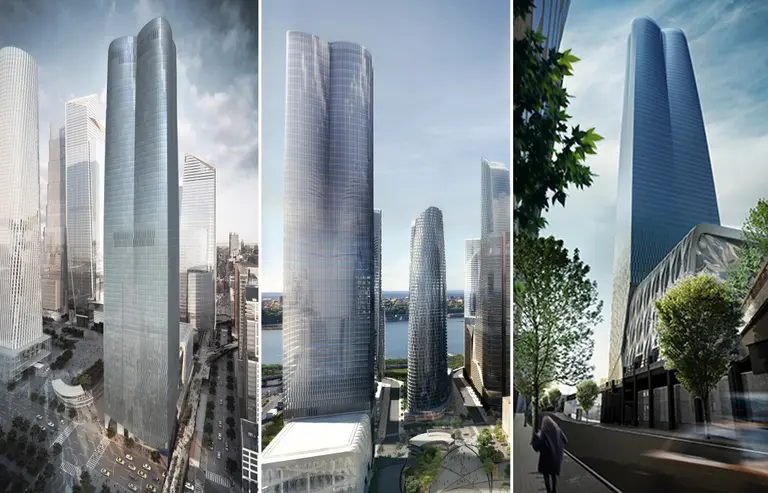
Curvaceous ‘Morph Tower’ Begins Its Rise at 15 Hudson Yards, Abutting the Culture Shed

The foundation mat has been poured, and Hudson Yards' first residential building, Tower D at 15 Hudson Yards, is beginning its climb into the burgeoning far west side skyline. Situated alongside the High Line, at the northeast corner of West 30th Street and Eleventh Avenue, 15 Hudson Yards will house nearly 400 apartments and soar more than 900 feet high upon completion. Discounting the enormous spire on the New York Times Building, the tower will be for a short while the tallest building in Manhattan west of Eighth Avenue. It will also abut the Culture Shed, likely to be the city's next great cultural venue. The skyscraper will be the first of two residential towers that Related Companies and the Oxford Properties have planned for eastern rail yards. The second will be the 1,000-foot-tall 35 Hudson Yards, and they will join the 900-foot Coach Tower at 10 Hudson Yards and the 1,296-foot 30 Hudson Yards.
More details and renderings ahead