Search Results for: gentrification

September 25, 2017

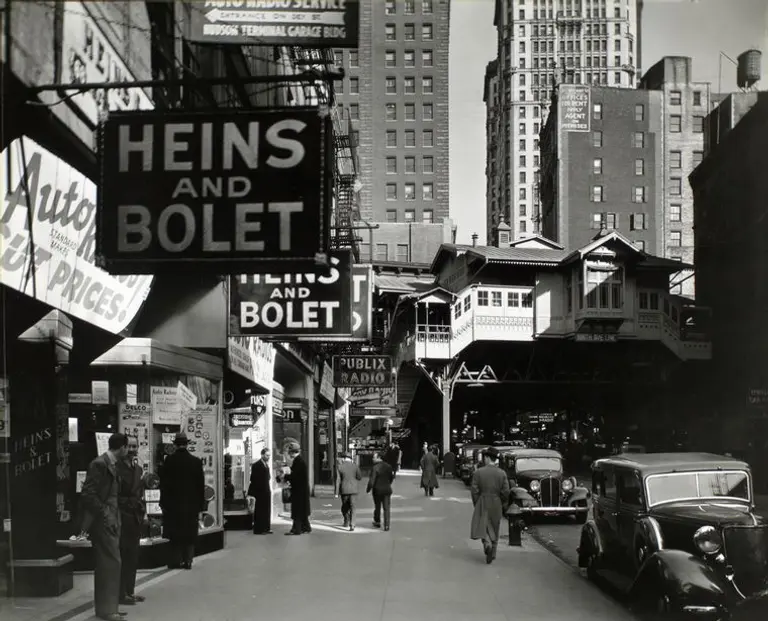
Radio Row: A tinkerer’s paradise and makerspace, lost to the World Trade Center

Before the internet and before television, there was radio broadcasting. The advent of radio at the turn of the 20th century had major repercussions on the reporting of wars along with its impact on popular culture, so it's not surprising that a business district emerged surrounding the sale and repair of radios in New York City. From 1921 to 1966, a roughly 13-block stretch going north-south from Barclay Street to Liberty Street, and east-west from Church Street to West Street, was a thriving small business stronghold known as Radio Row.
Read more about Radio Row here
September 12, 2017

The boarding house’s long history of hosting single New Yorkers

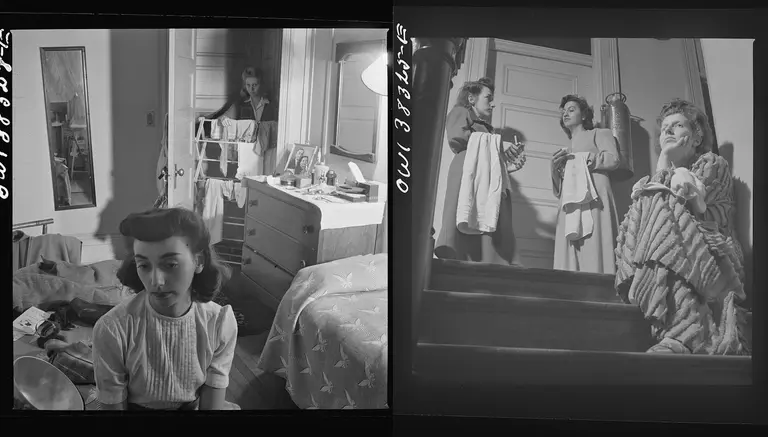
In the mid-19th century, as the city rapidly grew in area and population, many single New Yorkers faced difficult decisions on the housing market. Unlike the majority of today’s single New Yorkers, however, the decision was not whether to share an apartment with one or more roommates or squeeze into a studio apartment but rather which type of boarding house to inhabit. Ahead we'll go over the history of the New York City boarding house, as well as where you can still find the handful that remains.
read more here
September 12, 2017

From gallery to solarium, $5.2M West Side condo takes classic Manhattan into the 21st century

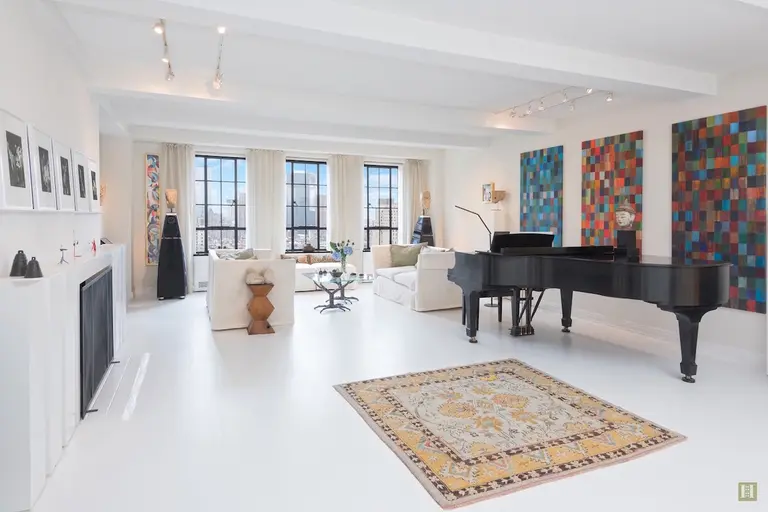
This Parc Vendome apartment at 350 West 57th Street embodied a certain classic New York style long before West Midtown became Billionaires’ Row, when nearby Hell’s Kitchen was still a colorful jumble of old and new. The bright, pristine space rivals any in 21st century Manhattan when it comes taking art collecting and entertaining seriously, with a 27-foot gallery and a solarium as just a sampling of its enviable features, making the 2,600-square-foot unit’s $5.2 million ask seems like a deal.
Tour this classic four-bedroom beauty
September 8, 2017

The Urban Lens: Ash Thayer’s poignant photographs of ’90s Lower East Side squatters

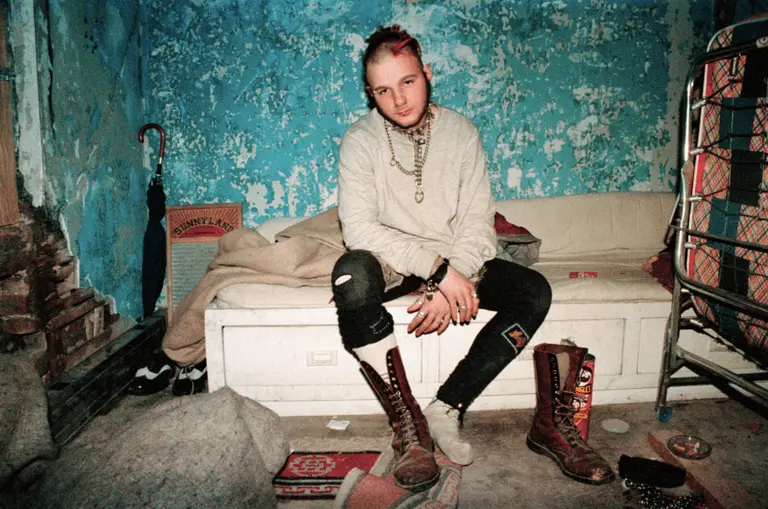
6sqft’s series The Urban Lens invites photographers to share work exploring a theme or a place within New York City. In this installment, Ash Thayer shares intimate punk portraits of Lower East Side squatters from the 1990s. The photos are part of her collection "KILL CITY," which was recently compiled into a book and published under the same name. These days it's difficult to think of the Lower East Side as much more than a destination for bar hopping, rapidly rising rents, and general raucousness, but not that long ago the neighborhood was a place pulsating with community, character, and openness to all walks: including squatters. One such squatter who found solace in this once distinct downtown enclave was photographer Ash Thayer who came to the city in the early '90s to enroll at the School of Visual Arts, but after a series of misfortunes (e.g. a shady landlord who stole her security deposit) found herself homeless. Thayer, however, had always had an affinity with the counterculture community and it didn't take long for the kids of NYC's punk scene to lend her a hand. In 1992, she joined the See Skwat, one of several squats she'd ultimately spend eight years living in and documenting. Ahead, Thayer shares some of her emotional photography from her time at See Skwat, and she speaks to 6sqft about her experience living in what she describes as an "important piece of the unknown history of New York."
more photos inside the squats and of those who lived in them
July 10, 2017

From NoLiTa to SoHa: The practice and controversy of rebranding NYC neighborhoods

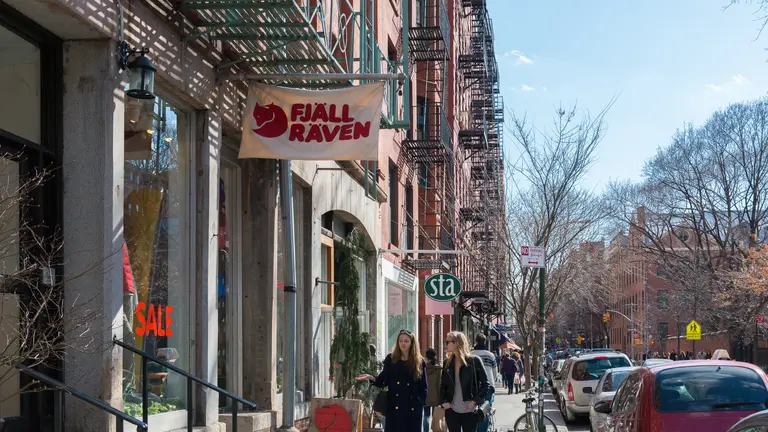
New York is home to dozens of distinct neighborhoods with their own names, identities, and histories. Some of these neighborhoods acquired their names by misfortune (Hell’s Kitchen gained its moniker due to its tough reputation), others by function (the Battery was once home to a series of artillery batteries), and some were coined by local artists playing with abbreviated combinations (SoHo is likely the most well-known example). However, at least some New York City neighborhoods, including the East Village and NoLita, were created by real estate agents in an attempt to “rebrand” areas that historically had a reputation for being either undesirable or simply boring places to live. Increasingly, this now well-established practice is coming under attack and if one local state senator is successful, the practice may even soon be illegal.
read more here
June 20, 2017

10 things you never knew about Prospect Park

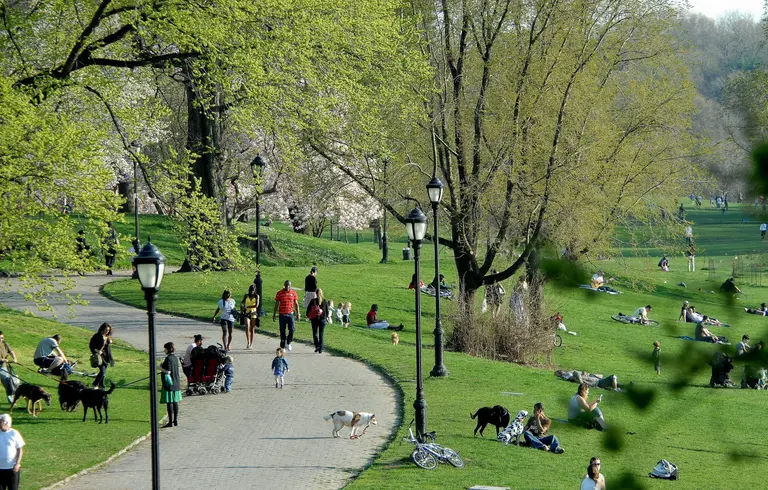
Frederick Law Olmsted and Calvert Vaux debuted Prospect Park to the Brooklyn masses in 1867. Though Olmsted and Vaux had already designed Central Park, they considered this their masterpiece, and much of the pair's innovative landscape design is still on display across all 585 acres. But it was the result of a lengthy, complicated construction process (Olmsted and Vaux weren't even the original designers!) as well as investment and dedication from the city and local preservationists throughout the years. After challenges like demolition, neglect, and crime, the Parks Department has spent the past few decades not only maintaining the park but restoring as much of Olmsted and Vaux's vision as possible. It's safe to say that these days, Prospect Park is just as impressive as when it first opened to the public. And of course, throughout its history the park has had no shortage of stories, secrets and little-known facts. 6sqft divulges the 10 things you might not have known.
All the juicy secrets ahead
June 14, 2017

Looking back at New York’s ‘Summer of Love’ and the birth of the East Village

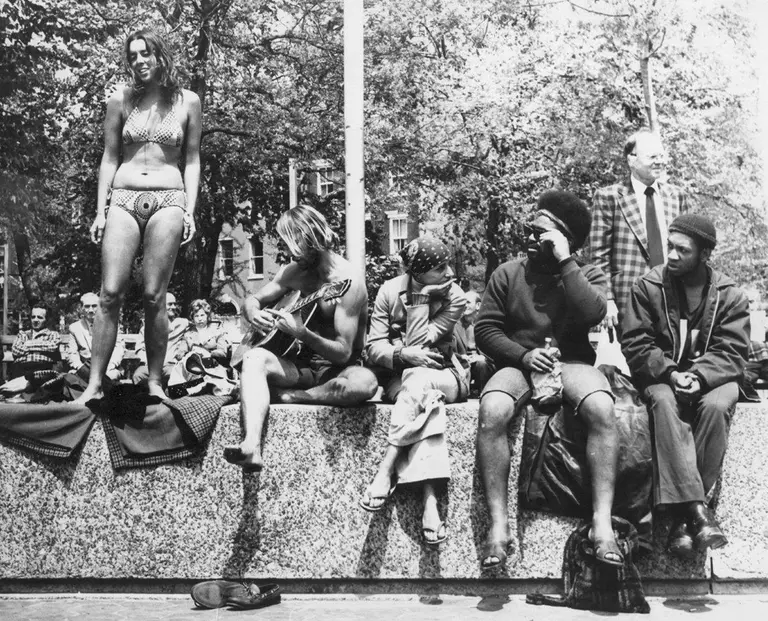
It has been 50 years since 1967’s “Summer of Love” when young people from around the world flocked to San Francisco’s Haight-Ashbury district and to other urban neighborhoods, including New York’s East Village, to trip out at psychedelic dance parties, sleep in city parks, and live and do whatever they pleased. While the hippie subculture was already flourishing prior to the Summer of Love, by mid 1967, hippies and their music, style, and communal way of life had caught the attention of the mainstream media and as a result, reached a critical mass of young people who were now eager to ditch their suburban homes to “turn on, tune in, and drop out.” Reactions to the Summer of Love in New York were predictably mixed. An estimated 50,000 young people descended on the city to join the movement, but many New Yorkers, including longstanding residents, police officers, and politicians, had little interest in spending the Summer of Love soaking up the good vibes. In the end, the city’s Summer of Love saw as much conflict and violence as peace and love, and debates about rental prices, real estate values, and the gentrification of the Lower East Side were all part of the conflict.
find out more here
May 30, 2017

Redeveloping NYC’s armories: When adaptive reuse and community building bring controversy

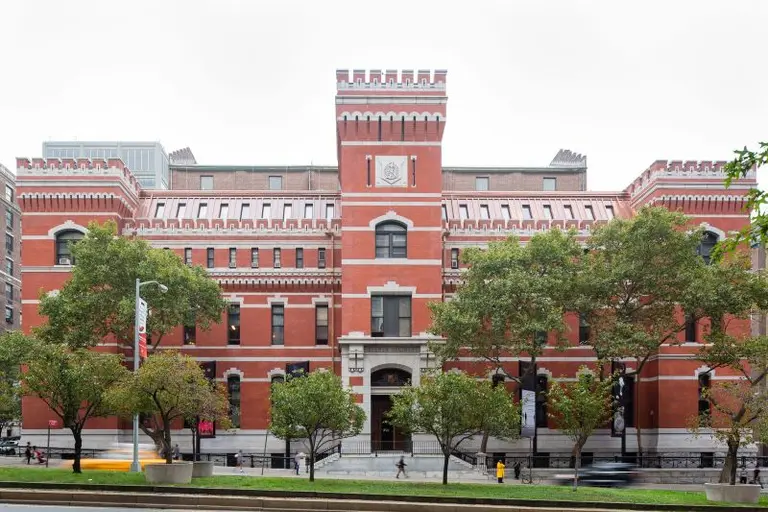
Constructed between the 18th and 20th centuries to resemble massive European fortresses and serve as headquarters, housing, and arms storage for state volunteer militia, most of America’s armories that stand today had shed their military affiliations by the later part of the 20th century. Though a number of them did not survive, many of New York City’s historic armories still stand. While some remain in a state of limbo–a recent setback in the redevelopment plans of Brooklyn's controversial Bedford-Union Armory in Crown Heights raises a familiar battle cry–the ways in which they've adapted to the city’s rollercoaster of change are as diverse as the neighborhoods that surround them.
Find out how the city's armories have fared
May 12, 2017

The Urban Lens: Travel back to the gritty Meatpacking District of the ’80s and ’90s

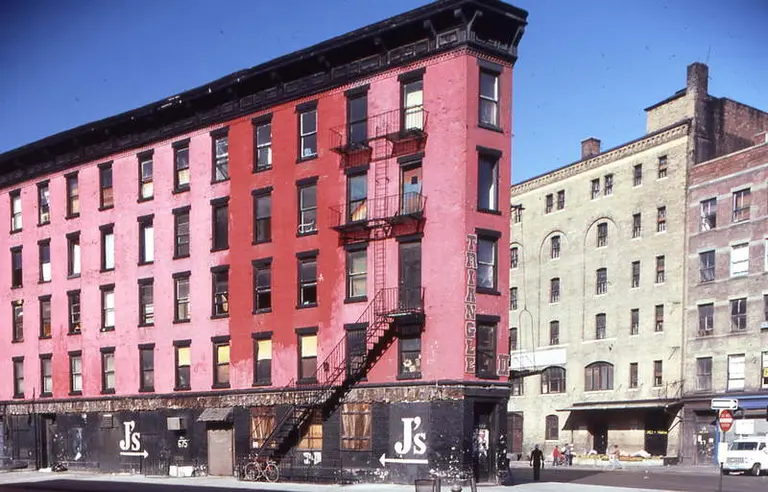
6sqft’s ongoing series The Urban Lens invites photographers to share work exploring a theme or a place within New York City. In this installment, the Greenwich Village Society for Historic Preservation shares archival images of the gritty Meatpacking District from the 1980s to early 2000s. Are you a photographer who’d like to see your work featured on The Urban Lens? Get in touch with us at [email protected]. "Few parts of New York City have transformed as dramatically in the last decade or so as the Meatpacking District. Changes in the area are physical as well as spiritual. What was once a deserted ghost town by day, nightlife, sex club, and prostitution hub by night, and bustling workaday center of the Meatpacking industry from early morning to noon is now a glitzy, glamorized center of shopping, dining, tourism, strolling, and arts consumption," says Andrew Berman, executive director of the Greenwich Village Society for Historic Preservation. The organization recently released a collection of archival photos of the neighborhood's post-industrial grit, "before the Whitney, before the High Line, before Apple and Diane von Furstenberg, even before Sex and the City discovered the neighborhood." Ahead, 6sqft shares these images, from the 1980s to the mid-2000s, which document the major transformation that's taken place in just the past decade.
See all the photos here
May 8, 2017

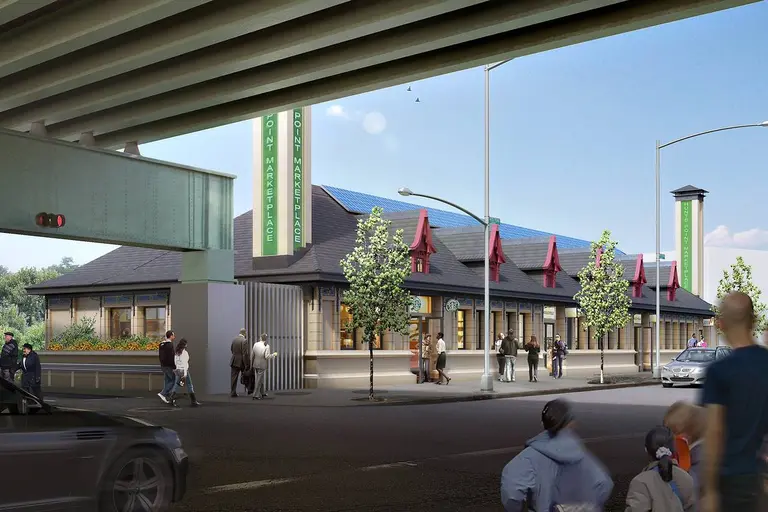
New food hall may arrive at an empty railway station in the South Bronx

While many residential and commercial projects are underway in the South Bronx, the neighborhood continues to lack diverse food choices for its residents. Hoping to bring more variety to the Hunts Point community, Majora Carter--a revitalization adviser and developer who's also behind the nearby transformation of the former Spofford Juvenile Detention Center into a $300 million mixed-use affordable housing complex--is partnering with Slayton Ventures to create a hip new dining spot in an empty railway station. As reported by the Wall Street Journal, the $2 million project will restore the former Amtrak-owned building, which was designed by Cass Gilbert, beginning this summer and is expected to be completed in the fall.
Find out more
May 5, 2017

The Urban Lens: ‘Zombie City’ exposes distracted New Yorkers in a gentrifying city

6sqft’s ongoing series The Urban Lens invites photographers to share work exploring a theme or a place within New York City. In this installment, fine art and portrait photographer James Maher exposes the changing face of NYC post 9/11. Are you a photographer who’d like to see your work featured on The Urban Lens? Get in touch with us at [email protected]. It all started at the University of Madison in Wisconsin with a surprisingly successful fake ID "business," which was James Maher's first introduction to portraiture and Photoshop. After moving back to his hometown of New York post-graduation, Maher studied at the International Center for Photography, assisted commercial photographers, and became a certified tour guide, exploring the architecture and streetscapes of the city. In 2006, he opened his own photography business, combining his varied interests, which also come through in his black-and-white series "Luxury for Lease," where New Yorkers are captured candidly against the background of New York. In it, Maher exposes how quickly things changed in the years after 9/11; instead of coming for "acceptance and freedom" and "a culture of creativity," wealthy persons from the suburbs and elsewhere began to move back "with an insatiable appetite." By snapping photos of distracted New Yorkers, many of whom are zombie-fied staring at their phones, Maher examines the "disconnection, hyper-gentrification, conformity, and consumerism" that's infiltrated our streets.
See the series here
May 3, 2017

VIDEO: Robert Moses talks about roads, parks and city traffic in 1953

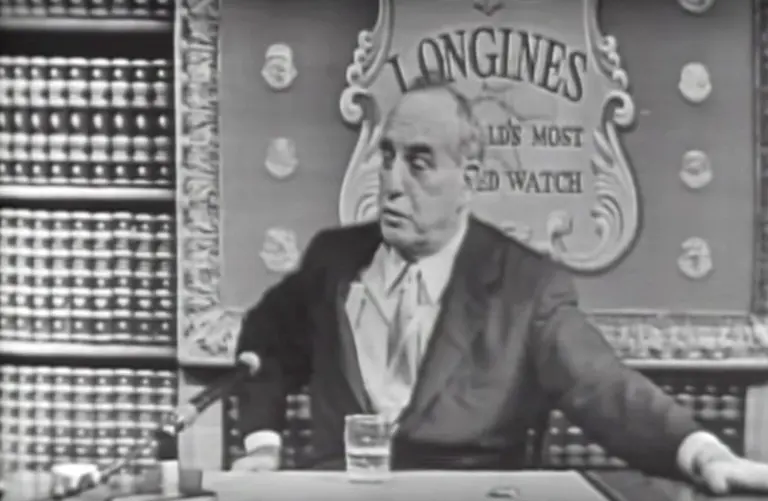
Robert Moses, the "master builder," was arguably the most influential individual in the development of New York City's politics and physical structure. He's widely known for his hand in creating New York State's massive parkway network (he built 13 expressways through NYC) and erecting large public housing complexes in low-scale neighborhoods (many of which were segregated), and has therefore been named as the source of many of the city's gentrification and urban decline issues still present today. Regardless of this criticism, his breath of knowledge and experience was unparalleled (we can also thank him for Lincoln Center, Jones Beach, and countless public swimming pools) and is the subject of this 15-minute television program called Longines Chronoscope that aired in 1953, at the height of his heyday.
Watch the video here
April 25, 2017

Score an affordable apartment near Yankee Stadium from $963/month

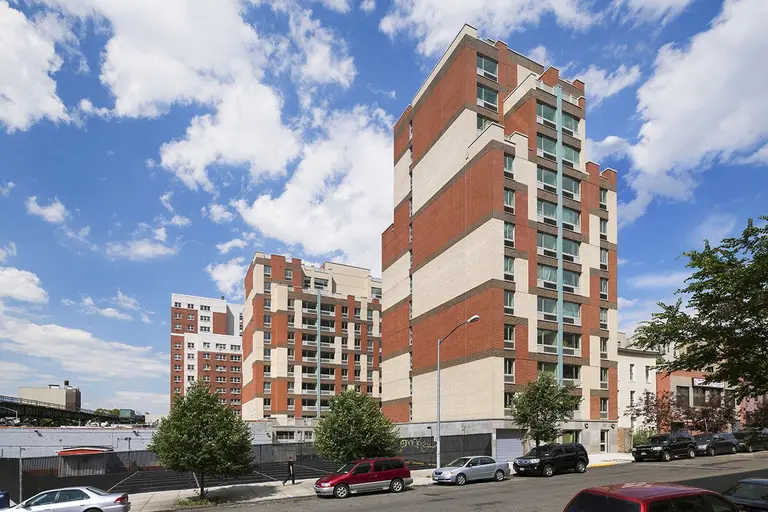
Located just a few blocks from Yankee Stadium, this affordable housing project with a beautiful shared courtyard is truly unique, as it was developed on one of the last vacant city-owned lots. Applications are now being accepted for one- and two-bedroom rentals at 12 East Clarke Place and 27 East 169 Street in the Highbridge section of the Bronx, including $963/month one-bedrooms and $1,166/month two-bedrooms. 
Find out if you qualify
April 19, 2017

This bold corner loft will remind you of Williamsburg’s early artist outpost days

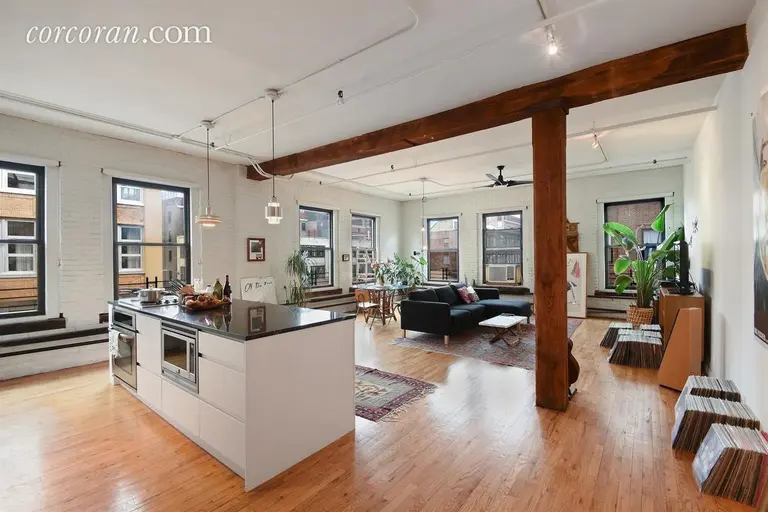
The 1,800-square-foot pre-war loft in the Northside Arts Industries Condominium is as classic as it gets, with impossibly high ceilings, exposed brick, wood beams and pipes and a flexible layout. The New York Times tells us that the building was developed back in 1983, when the neighborhood's north side was a burned-out jumble of factories, ethnic enclaves and a smattering of artists. The latter had come to escape Soho rents, taking over abandoned factories and warehouses and paying rents that averaged around $550 a month for a one-bedroom apartment. In 1986, a loft space in the building could be rented for $5 a square foot. Today, a sprawling home at 119 North 11th Street asks $8,500 a month ($57 a foot) and the trendy and amenity-packed neighborhood's artists have (mostly) escaped eastward once again.
Find out more about this totally 21st century loft
April 12, 2017

Astoria, Morningside Heights and Bay Ridge have highest turnover of rent-stabilized apartments

Scoring a rent-stabilized apartment is a big win in New York City, as these regulated pads usually offer rent at below-market rates and provide tenants more protections against landlords. While more than 925,000 rent-stabilized apartments still exist in the city, these units turn over at a faster rate in certain neighborhoods than others, and their availability continues to dwindle (h/t WYNC). According to a new report by the city’s Independent Budget Office (IBO), the neighborhoods of Astoria, Morningside Heights and Bay Ridge all have high concentrations of rent-regulated housing built prior to 1974 and therefore, higher rates of turnover compared to other parts of the city.
Find out more
April 4, 2017

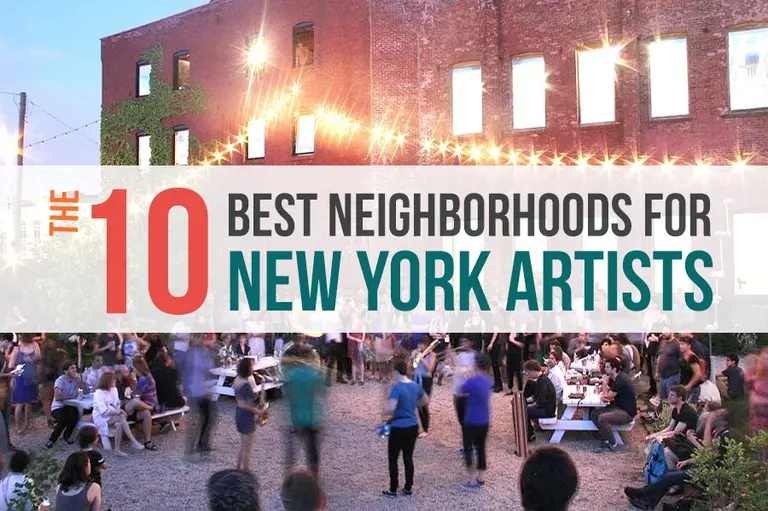
The 10 best neighborhoods for New York City artists

Like most things in New York, creative communities come and ago as new development and rising rents force artists to move on to the next best, or cheaper neighborhood. While 6sqft found 'hoods like the Upper East Side, Harlem and Long Island City to be the best places for artists a few years back, we've updated our top-10 list to reflect the changing times. Ahead you'll find some areas you may expect--Sunset Park and Bushwick, for example, along with more up-and-coming artsy enclaves like Newark, Washington Heights, and the South Bronx.
The full list right this way
March 29, 2017

Outer borough creatives earn significantly less than their Manhattan counterparts

Data shows the borough in which you work could decide what income you bring home. CityLab looked at the city’s divided class structure in three main classes of employment--creative, service, and working--and in which borough these workers reside. The data shows that the creative class, made up of tech workers, artists, designers, and educational professionals, cluster in Manhattan, which employs nearly 70 percent of the city’s entire creative class. On top of that, clear income discrepancies exist among boroughs with the average salary for a creative class worker iat $96, 970 in Manhattan, $79,248 in Queens, $77,875 in the Bronx, and $76,565 in Staten Island. Surpisingly, Brooklyn's creative class earns the least, with an average of $74,963.
Find out more here
March 20, 2017

Senior musicians may lose affordable housing at Bronx Commons

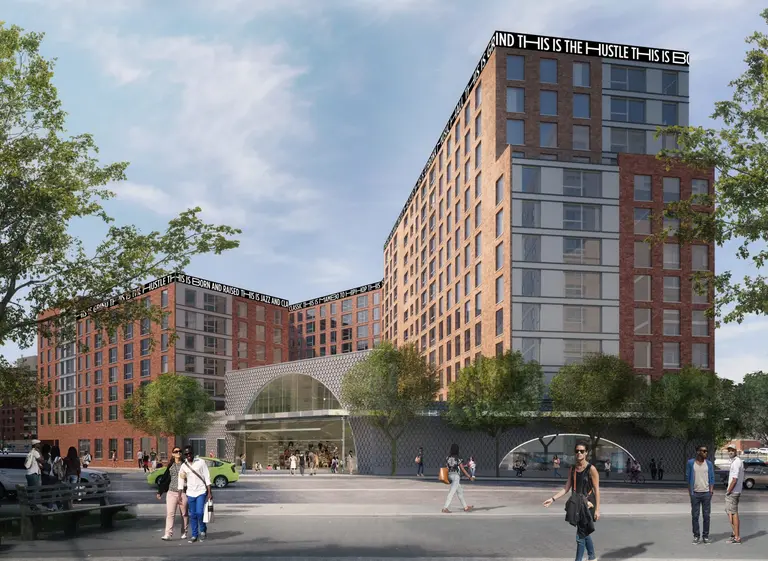
The $160 million Bronx Commons mixed-use development, located in the borough's Melrose neighborhood, broke ground in January. When complete, it will combine affordable housing, retail, landscaped public space, and a 300-seat music and arts venue known as Bronx Music Hall. As 6sqft previously reported, the Hall was envisioned as a way to celebrate and revitalize "the deeply rooted history of cutting edge Bronx music," which nonprofit developers WHEDco and BFC Partners also hoped to address by setting aside 15 percent of the 305 below-market rate apartments for older musicians. But as the Times explains, despite the South Bronx's past as a hub for jazz and doo-wop music venues and sidemen, the city says this may be in violation of fair housing laws that prohibit preferences based on age or race.
Find out more
March 8, 2017

Mapping America’s affordable housing shortage

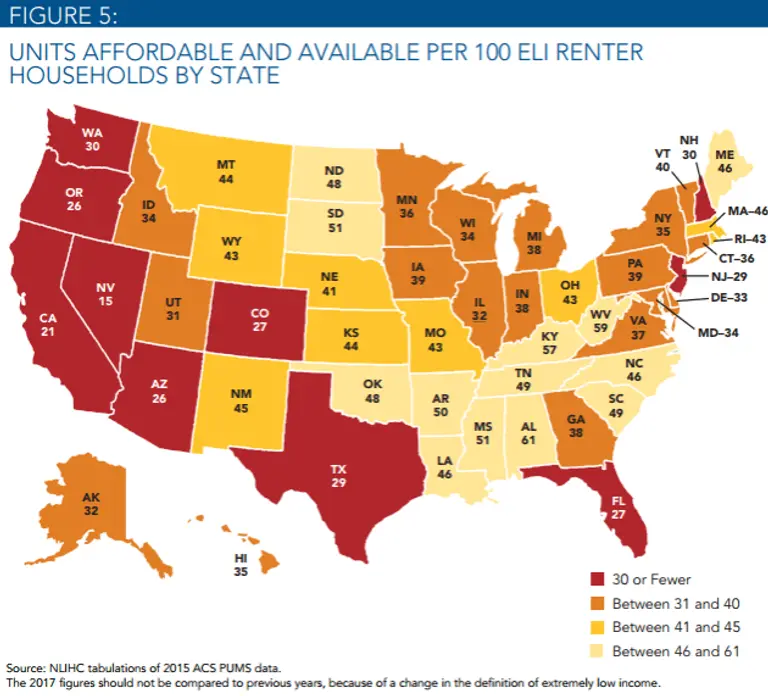
Extremely low-income renters face a shortage of affordable housing in every single state and major metropolitan area in the United States, a deficiency of 3.9 million units, according to a report (h/t CityLab) by the National Low Income Housing Coalition (NLIHC). Nationwide, only about 35 affordable housing units exist per 100 extremely low-income homes, labeled as ELI households, and in the New York metro area (as defined by New York-Newark-Jersey City) the results are just as grim with only 32 units available per 100 households at or above the ELI threshold.
find out more here
March 7, 2017

New rendering emerges for Keith Rubenstein’s ambitious South Bronx development

The massive South Bronx waterfront development planned by Somerset Partners and Chetrit Group is coming together--at least visually. CityRealty revealed a rendering of the second parcel of a two-parcel master plan that will eventually hold six residential towers and park space. Construction on the first three buildings within the first parcel at 2401 Third Avenue was approved last summer. This second parcel at 101 Lincoln Avenue will hold three more towers, 25 stories each, with a grand total of 826 apartments. The developers have long heralded this development as a game-changer for the South Bronx, but faced pushback after Somerset developer Keith Rubenstein attempted to rebrand the area as the “Piano District” and held a party that capitalized on the struggles of the Bronx in the 1970s, featuring burning trash cans and a bullet-ridden car.
See more images of the development site
March 1, 2017

In black neighborhoods, 74 percent of Airbnb hosts are white

Watchdog group Inside Airbnb released a new report, which shows that across 72 predominantly African-American neighborhoods in New York City, 74 percent of Airbnb hosts are white--a startling figure considering only 14 percent of the total population in these areas is white. As outlined in the Daily News, these white hosts earned $160 million from Airbnb rentals, compared to just $48 million for black hosts.
Which neighborhoods are most affected
February 24, 2017

South Harlem community board wants brokers to stop calling it ‘SoHa’

Harlem's gentrification and increasing real estate prices aren't news at this point, but a local community board thinks certain real estate brokers have crossed a line. As DNAinfo reports, Keller Williams created a separate office for "SoHa," their new branding for South Harlem. Following in the footsteps of NoLo (SoHo + Nolita + Lower East Side), DoBro (Downtown Brooklyn), and Hellsea (Hell's Kitchen + Chelsea), the moniker is seen as an attempt to make buyers and renters feel like they're cashing in on the next trendy 'hood. But residents of the Central Harlem area, roughly West 110th to 125th Streets, feel the marketing tactic is "arrogant" and "disrespectful," and so Community Board 10 has introduced a resolution that would prevent brokers from using the nickname.
READ MORE
February 23, 2017

Richard Meier’s mixed-use Teachers Village development is revitalizing downtown Newark

With Hoboken long gone and Jersey City well in the throes of gentrification, it makes sense that Newark is the next New Jersey city poised for a renaissance. Not only is it easily accessible via both NJ Transit and the PATH, but its wealth of former industrial buildings lend themselves to a DUMBO-esque revitalization. In the up-and-coming downtown area, Newark native Richard Meier is behind Teachers Village, a 23-acre, mixed-use complex that is well on its way to restoring a sense of community to the neighborhood. The $150 million project will encompass three charter schools, ground-level retail, and 204 residential units with a preference given to educators, all located in six new buildings designed in the starchitect's signature style of white materials and gridded facades.
All the renderings and details this way
February 21, 2017

New bill would calculate AMI for affordable housing based on zip code, not region

To set qualification guidelines for its affordable housing lotteries, the city turns to the set area median income (AMI), basing annual household income and rents off this figure. However, as The Real Deal explains, "the U.S. Department of Housing and Urban Development calculates AMI regionally, "using a formula that lumps the five boroughs together with Putnam, Westchester, and Rockland counties." For 2016, this equated to $65,200 for a single person and $90,600 for a family of four, but a new bill proposed by Democratic State Senator Michael Gianaris and Assemblymember Brian Barnwell would require developers of new 421-a projects to calculate AMI based on the specific zip code in which the building is going up.
More info ahead
February 10, 2017

Construction Update: Greenpoint’s first skyscraper tops off

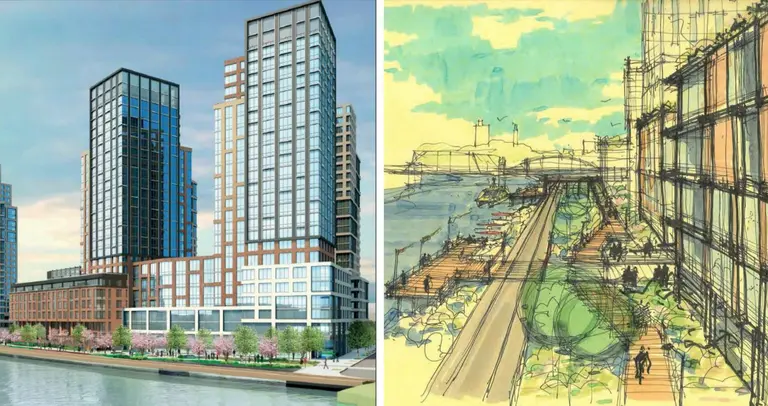
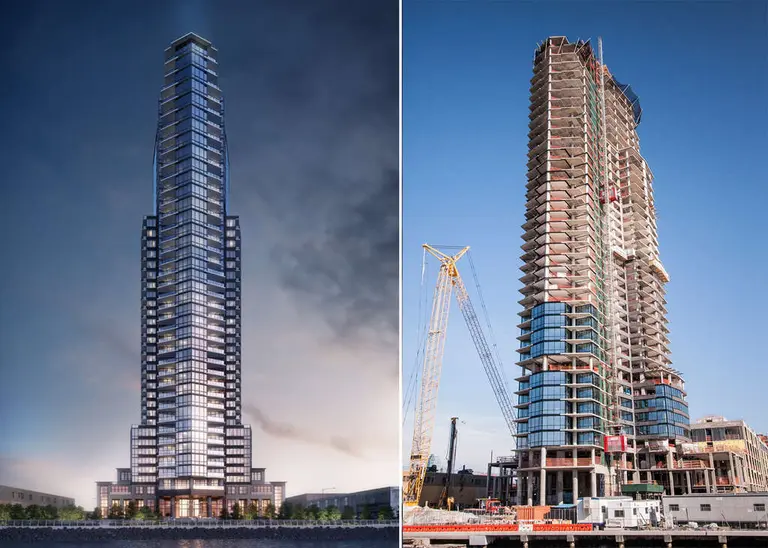
Greenpoint's new waterfront skyline is quickly taking shape, as CityRealty reports the neighborhood's first skyscraper has just topped off. The tower, measuring 400 feet, will be Greenpoint's tallest, stretching 39 stories above the characteristically low-slung neighborhood now dominated by squat residential buildings and warehouses. With a somewhat uninspired name, The Greenpoint (as it will be known) will bring 95 high-end condos and 287 rental apartments to a block-long stretch of the area.
more details here