History

November 10, 2017

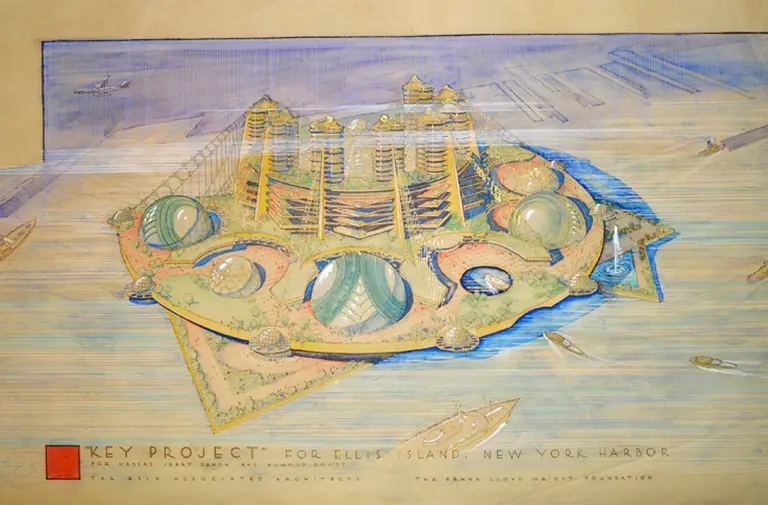
Frank Lloyd Wright had a plan to build a ‘city of the future’ on Ellis Island

Ellis Island, well known as the processing center for millions of American immigrants until 1954, has figured heavily in the nation's history; once the center was closed and neither of its current owners, the states of New York and New Jersey, knew of an alternative for its re-use, the island was offered for sale. Among the bidders for the 27-acre site were a pair of young NBC executives whose idea included breathtaking plans conceived by none other than Frank Lloyd Wright. According to Metropolis, Wright's idea supported the media execs' vision for “an entirely new, complete, and independent prototype city of the future."
So what happened?
November 9, 2017

Artist aeries: Touring downtown’s ‘studio windows’

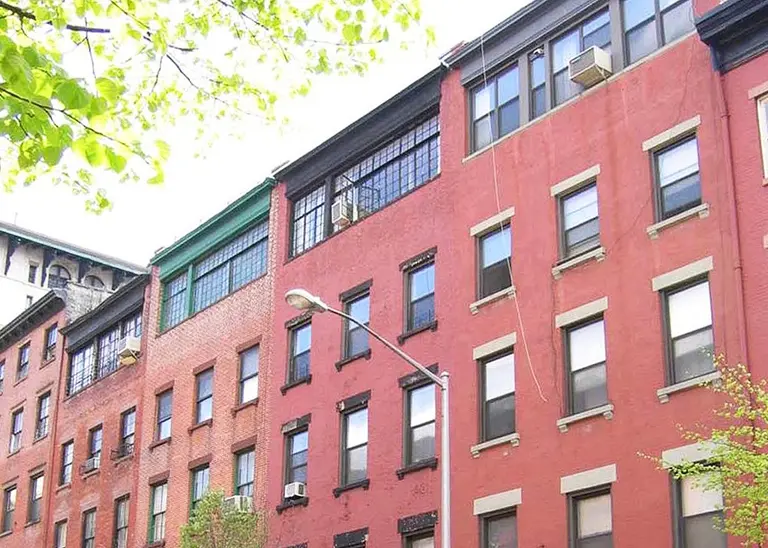
With fall’s arrival and the turning back of the clocks, sunlight becomes an ever more precious commodity. Perhaps no New York living space is more centered around capturing and maximizing that prized amenity than the artist’s studio, with its large casement windows and tall ceilings. So with sunlight at a premium, let’s conduct a brief survey of some of the most iconic artist’s studio windows in the Village and East Village.
But first, a little history
November 8, 2017

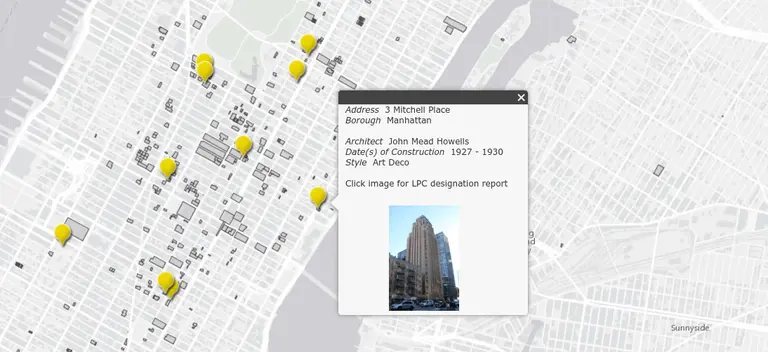
MAP: Explore the women’s suffrage movement through the lens of NYC landmarks

To commemorate the 100th anniversary of women gaining the right to vote in New York State, the city’s Landmarks Preservation Commission released an interactive story map that highlights places where suffragists lived and worked in New York City. The map, called NYC Landmarks and the Vote at 100, designates 43 sites associated with impactful activists, organizations, and institutions. Explore significant sites like the Cooper Union, the Panhellenic Tower, the New School for Social Research and much more, while learning about their role in the suffrage movement.
Explore the map here
November 8, 2017

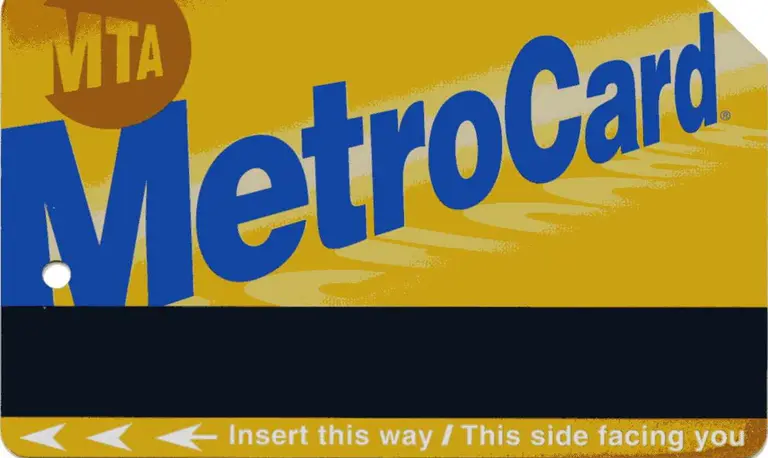
The history of the New York City MetroCard

No New Yorker's life is complete without a MetroCard slipped into their wallet. For $2.75, it'll get you from Brooklyn to the Bronx, and everywhere in between. But the lifespan of the MetroCard is perhaps shorter than you might think--the flimsy plastic card, complete with the Automated Fare Collection turnstiles, only became an everyday part of subway commuting in 1993. And in recent years, all signs point to the card becoming extinct. The testing phase of a mobile device scanning and payment system began this fall with plans to roll out a fully cardless system by 2020. And so in honor of the MetroCard's brief lifespan as an essential commuter tool, 6sqft is delving into its history, iconic design, and the frustrations that come when that swipe just doesn't go through.
READ MORE
November 7, 2017

The short life of NYC’s women-only subway cars

In dealing with the examples of ill-behaved humanity that still plague the city's subway today, the powers that be in 1909 thought they were doing the ladies a favor when they suggested the addition of women-only subway cars, according to Ephemeral New York. Called "suffragette" cars (though women didn't win the right to vote in New York until 1917) they were introduced on trains of the Hudson Tubes running from Manhattan to Hoboken (today's PATH line). In trial runs, the last car in each train was reserved for women. Officials of the five-year-old IRT line began considering the idea–thought to be a success in its earliest trials–for the New York City subway.
Find out more
November 6, 2017

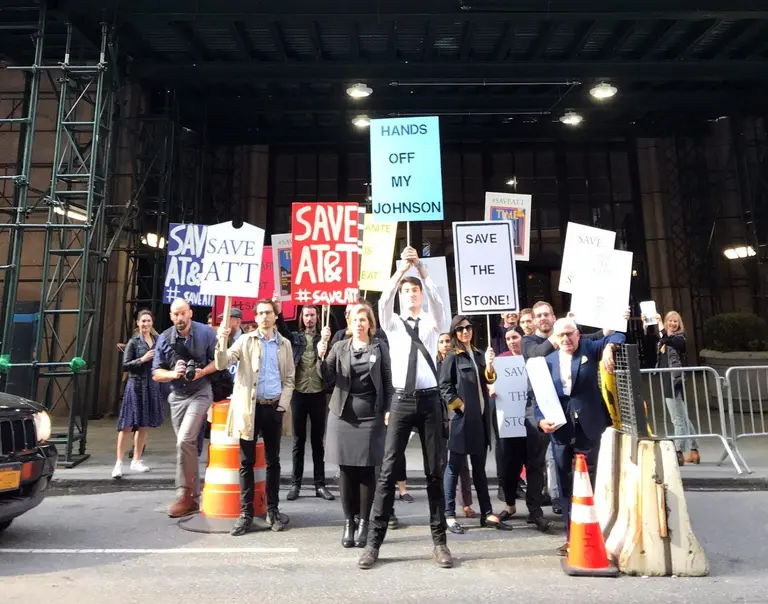
Robert A.M. Stern joins fight against Snøhetta’s plan to renovate Philip Johnson’s AT&T Building

After Olayan America and Chelsfield revealed plans last week for a $300 million renovation of the building at 550 Madison Avenue, known as the AT&T Building, criticism quickly followed. Members of the architecture community, including New York architect Robert A.M. Stern, rallied together last Friday at the base of the Philip Johnson-designed skyscraper, to protest Snøhetta's proposal to replace the building's base with a scalloped glass front (h/t Dezeen). Protestors held signs that read "Hands off my Johnson," "Save the Stone," and "Save AT&T." Plus, a petition is currently being circulated on Change.org in an attempt to preserve Johnson's iconic AT&T Building by having the New York City Landmarks Preservation Commission officially designate it as a city landmark.
Find out more
November 6, 2017

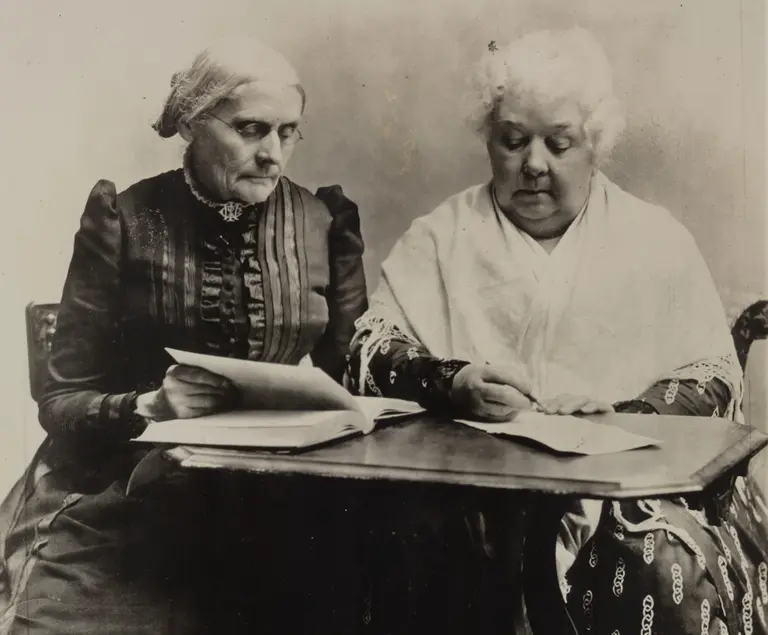
Parks Department approves Central Park’s first monument to historic females

On the 100th anniversary of women winning the right to vote in New York state, the NYC Department of Parks and Recreation will make an announcement today that it's moving ahead with a proposal to erect a monument to Elizabeth Cady Stanton and Susan B. Anthony in Central Park. First reported by West Side Rag, the statue of the two suffragists will be Central Park's first monument to historic women and only the sixth in the entire city. It will be placed on the mall, which runs from 66th to 72nd Streets in the middle of the park, and will be unveiled on another important date--the 100th anniversary of women winning the right to vote nationally on August 26, 2020.
Get the full story
November 2, 2017

‘The Alamo’ turns 50: A history of the Astor Place cube

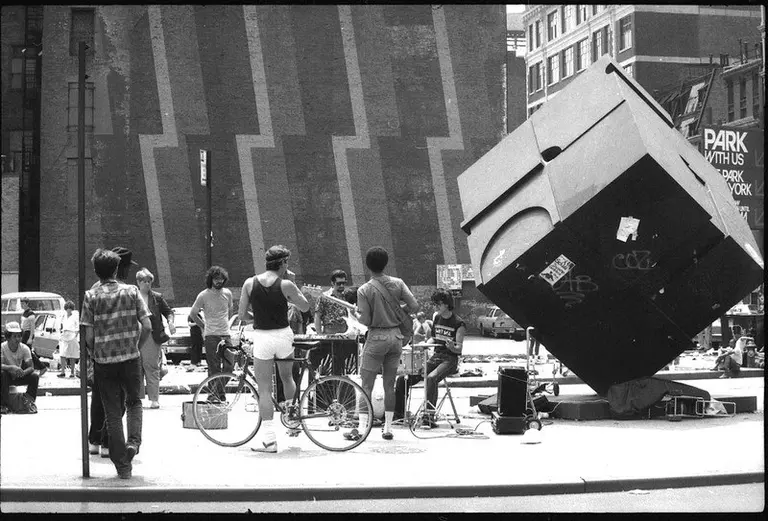
On November 1, 1967, an enigmatic 20-foot-tall cube first appeared on a lonely traffic island where Astor Place and 8th Street meet. Though several months before the release of "2001: A Space Odyssey," the one-ton Cor-Ten steel sculpture shared many qualities with the sci-fi classic’s inscrutable "black monolith," at once both opaque and impenetrable and yet strangely compelling, drawing passersby to touch or interact with it to unlock its mysteries. Fifty years later, Tony Rosenthal’s "Alamo" sculpture remains a beloved fixture in downtown New York. Like 2001’s monolith, it has witnessed a great deal of change, and yet continues to draw together the myriad people and communities which intersect at this location.
Learn about the cube's entire 50-year legacy
October 31, 2017

FDR’s beloved dog is said to haunt Grand Central Terminal’s secret train track

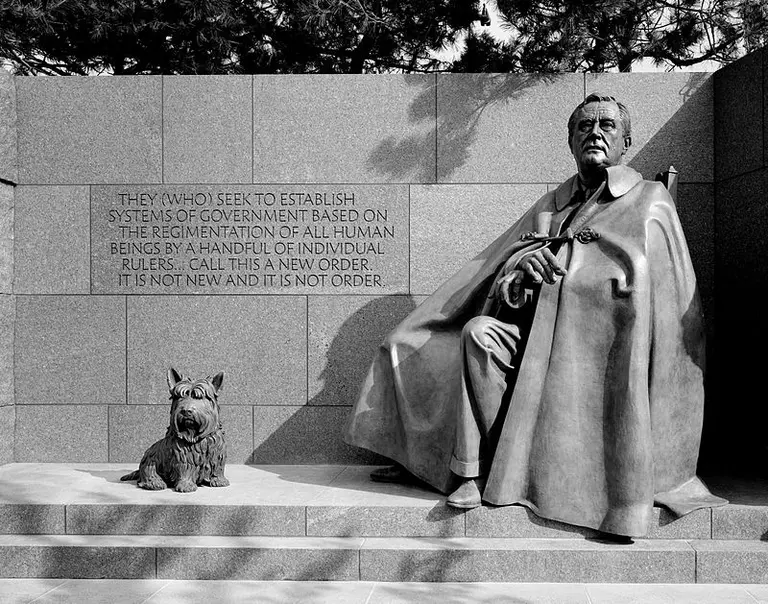
While the subway can always be a bit creepy, there might be more behind those spooky feelings when standing underground than just frighteningly bad service. Allegedly, a ghost haunts Track 61, the secret track hidden under Grand Central Terminal, according to Phil Schoenberg, a New York City historian and founder of Ghost Walks NYC. And not just any ghost, but the spirit of President Franklin Delano Roosevelt’s Scottish Terrier, Fala, who apparently roams the shuttered train track. The president famously used the private track as a way to escape the public eye, keeping his paralysis a secret (h/t WNYC).
Get the spooky scoop ahead
October 26, 2017

Rare photos of the High Line being demolished in the 1960s tell the story of a changing West Village

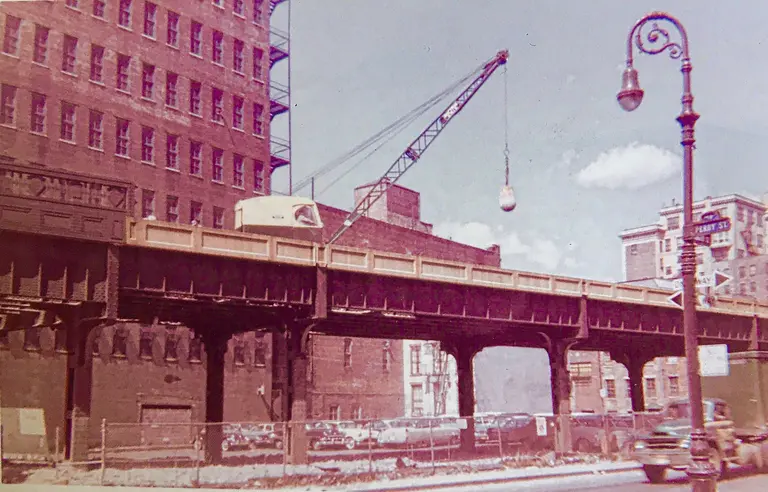
Few structures have had a more far-reaching impact upon the West Village and Chelsea than the High Line. Its construction in 1934, then partial demolition in the early '60s, and final preservation and conversion into a park a decade ago have profoundly shaped the way these neighborhoods have changed over the last 85 years. And while photos of its heyday and those of it today as an internationally recognized public space are plenty, few exist of those interim years. But GVSHP recently acquired some wonderful images of the High Line being demolished in 1962 at Perry Street, donated by the Fritsch Family who lived nearby at 141 Perry Street. The Fritschs’ photos say a lot about how the High Line, and its demolition, changed the West Village. It’s apparent from the images just how much more industrial, and gritty the Far West Village was in those days. But it also shows how the demolition of the High Line left a huge gap in this unpretentious neighborhood, which housed both disappearing industry and a diverse and vital residential community.
See the other photos and learn the whole history
October 25, 2017

In 1917, a German U-Boat submarine ended up in Central Park

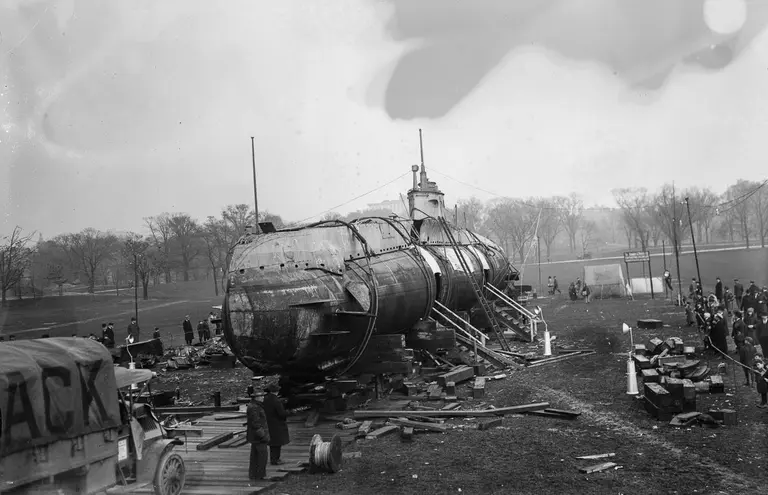
On October 25th, 1917, New Yorkers were celebrating "Liberty Day," a holiday invented by the federal government to finance the massive effort of entering World War I. One-third of the war's funding would come from the imposition of progressive new taxes, while two-thirds would come from selling "Liberty Bonds" to the American people. The holiday was part of an unprecedented publicity campaign to convince the public to buy the bonds. New Yorkers are notoriously hard to impress, so it's no surprise the government rolled out all the punches: a three-engine Caproni bomber plane flew low among the skyscrapers, a parade of military motorcycles traveled up 5th Avenue, and a captured German U-boat submarine lay festooned with American flags inside Central Park.
Read more about the day's events
October 24, 2017

The history of the United Nations in NYC

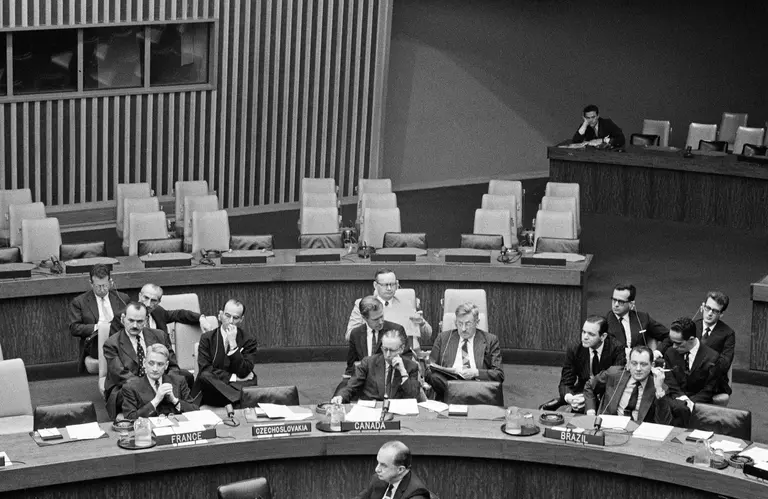
Every year on October 24th, 193 countries celebrate United Nations Day, the international holiday commemorating the anniversary of the ratification of the 1945 UN Charter. Beginning in 1948, the holiday is part of a broader United Nations Week, which runs from October 20th to 26th. While the day is a global holiday, the UN and UN Day continue to be unique to New York City, home to the peacekeeping organization’s headquarters since 1952.
More this way
October 20, 2017

A never-built transit plan would have shuttled New Yorkers through elevated tubes

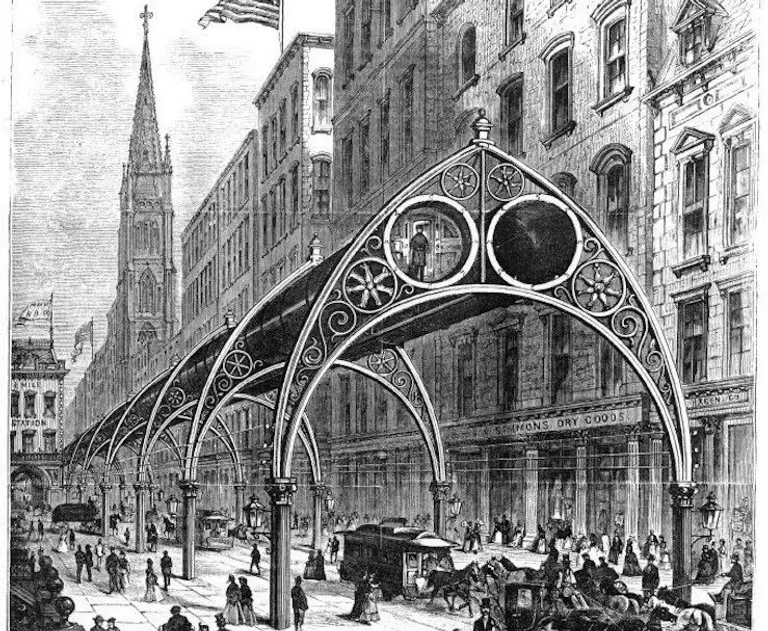
6sqft has marveled at the 1951 proposal by Goodyear Tires for a giant conveyor belt to carry people between Times Square and Grand Central and Alfred Ely Beach's underground pneumatic tube system. The New York Public Library's Science, Industry and Business Library (SIBL) fills in the blanks on an early idea for an elevated rail system that was ahead of its time. In 1870, Appleton's Journal of Literature, Science and Art introduced an article with a lament about the state of New York City public transportation that sounds uncannily familiar even in the 21st century: "the present means of travel are not only inadequate in extent, but are far too slow and cumbersome." The anonymous author then tells of the futuristic vision of one Rufus Henry Gilbert, a New York-born surgeon, Civil War veteran and inventor.
Find out more
October 20, 2017

How an 1894 Hangover Created an Eggs Benedict Controversy in New York City

Brunch is inarguably one of New Yorkers' favorite pastimes, and if there's one dish that represents the lazy, and perhaps boozy, Sunday afternoon meal it's Eggs Benedict -- poached eggs and Canadian bacon on an English muffin, topped with hollandaise sauce. Which is why it's not surprising to learn that the egg creation originated right in our fine city. There is however, a bit of controversy over just who gets the credit for inventing it. Was it the Wall Street bigwig who was looking for a hangover cure at the Waldorf Hotel? Or was it Charles Ranhofer, the legendary Delmonico’s chef who published a recipe for it in his cookbook "The Epicurean?"
The mysterious case of Eggs Benedict unfolds this way
October 19, 2017

Off the grid: The little Flatiron Buildings of the Village

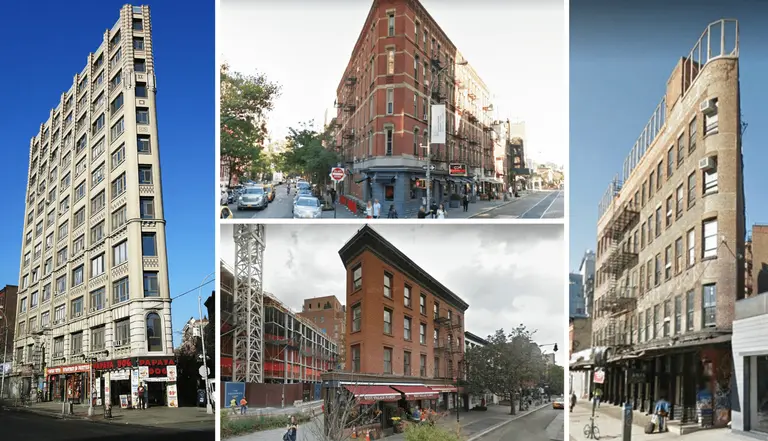
The Flatiron Building is one of the city’s most iconic and beloved landmarks. Since 1902 it’s been a symbol of New York, though ironically its acute angle formed by the intersection of Broadway and Fifth Avenue makes it an unusual sight in our otherwise orthogonal city on a grid. But while the Flatiron Building may be the most famous product of quirky street angles, it’s far from the only one. In fact, the "off-the-grid" streets of Greenwich Village and the East Village contain scores of them, most of which pre-date the 23rd Street landmark.
Take a tour of the little Flatirons
October 16, 2017

A short history of New York City’s foul air shafts

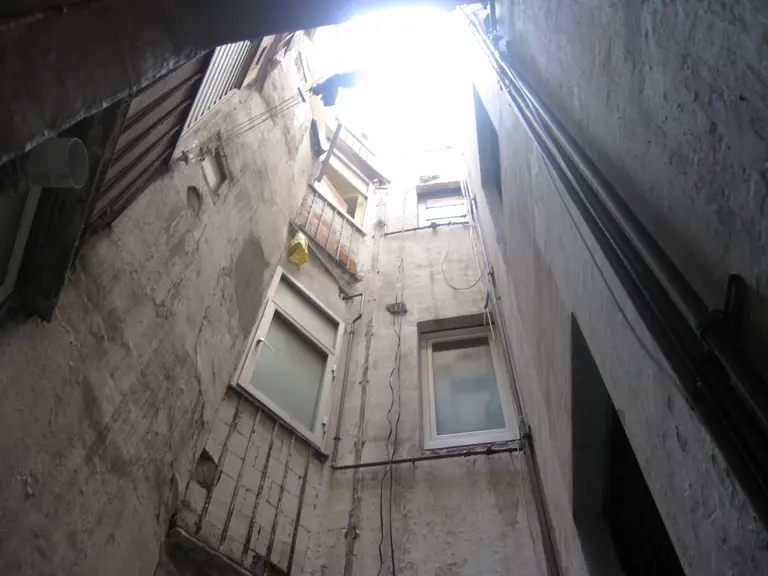
If you think there is nothing worse than renting an apartment with windows and no view, think again. At one point in the city’s history, where one may now enjoy a small sliver of daylight and at least some fresh air, there was no light or air at all. Indeed, at some points in the history tenants’ windows looked out onto slits—sometimes a mere 28 inches wide—that were teeming with waste, rancid smells, and noise.
on the history of NYC air shafts
October 13, 2017

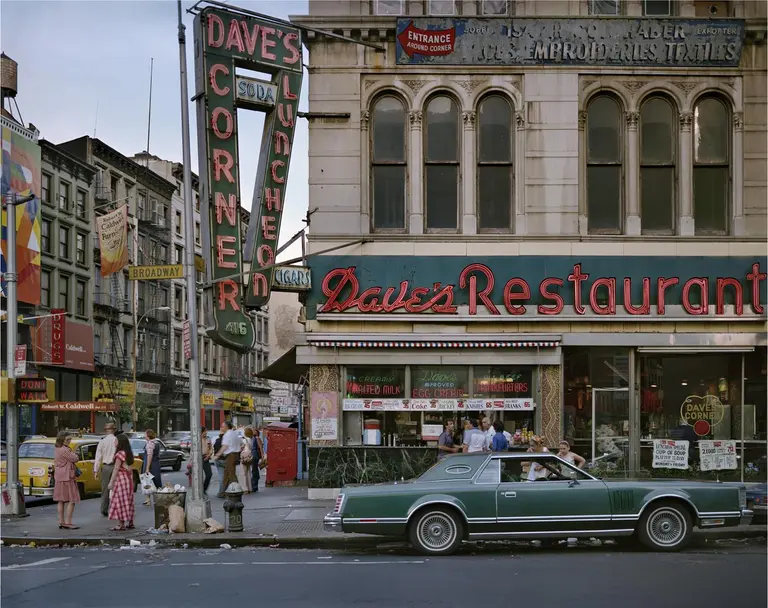
The Urban Lens: Go back to the ‘mean streets’ and urban decay of 1970s NYC

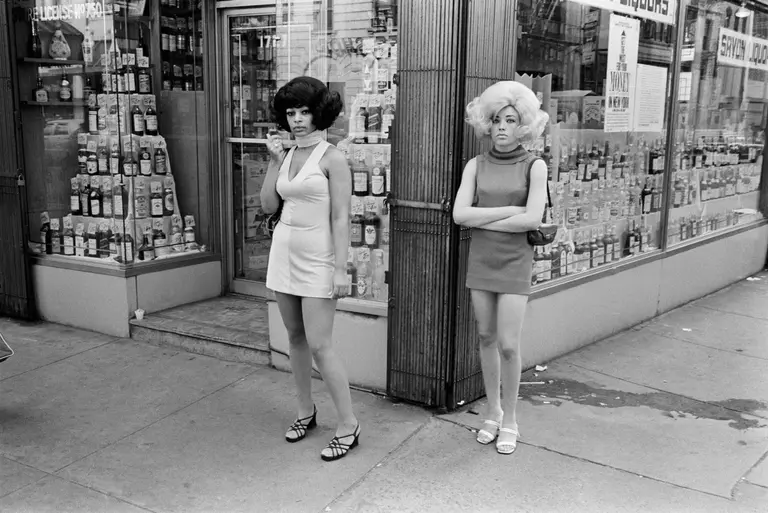
6sqft’s series The Urban Lens invites photographers to share work exploring a theme or a place within New York City. In this installment, Edward Grazda shares photos from the "mean streets" of 1970s and '80s NYC. Are you a photographer who’d like to see your work featured on The Urban Lens? Get in touch with us at [email protected]. When photographer Edward Grazda moved to New York in the early '70s, he was renting a loft on Bleecker Street for $250 a month during a time when the city was in a financial crisis, jobs were hard to come by, and places like the Bowery were facing a huge rise in homelessness. But it was also a time when a new generation of artists were beginning to move in. Instead of the tourist- and millionaire-filled streets we see today, 40 years ago they were teeming with energy. "I felt like there were many possibilities to be creative," Ed says. And with that in mind, he began shooting candids and random street scenes between personal projects in Latin American and Afghanistan. This work abroad taught him "how to make oneself invisible and blend in on the street." Just a few years ago, Ed rediscovered these black-and-white photos and noticed how different things are now, from the physical buildings to the absence of people reading newspapers. He decided to compile them into a book "Mean Streets: NYC 1970-1985," which was just released earlier this week and offers a rare look back "at that desolate era captured with the deliberate and elegant eye that propelled Grazda to further success."
See Edward's photos here
October 12, 2017

Lorraine Hansberry’s Greenwich Village: From ‘A Raisin in the Sun’ to civil rights

Lorraine Hansberry, the trailblazing playwright, activist, and Nina Simone song inspiration was perhaps most closely associated with Chicago. But in fact she lived, went to school, and spent much of her life in Greenwich Village, even writing her best known play "A Raisin in the Sun" while living on Bleecker Street. And shortly a historic plaque will mark the site of her home on Waverly Place.
Learn the full history here
October 10, 2017

In the 19th century, sailors prayed on floating churches in the East River

While New York City’s waterways have featured both floating pools and floating parks, they also once held floating churches. The Seamen’s Church Institute of New York and New Jersey (SCI) first built a floating house of worship in 1844, designed for sailors. According to Untapped Cities, the group’s first big project included building the Church of Our Savior, which floated in the East River off of Pike Street in downtown Manhattan.
Find out more
October 10, 2017

Stonewall Inn to get NYC’s first permanent LGBT pride flag

LGBT activists will unveil a rainbow flag outside the historic gay bar Stonewall Inn on Wednesday, marking the 30th anniversary of the 1987 March on Washington for Lesbian and Gay Rights. The Greenwich Village bar at 53 Christopher Street is often credited with launching the gay rights movement after multiple violent police raids in the summer of 1969. President Barack Obama designated Stonewall as a national monument last year, the first National Park Service unit dedicated to the gay rights movement (h/t DNA info).  Stonewall's rainbow flag will be the first permanent LGBT pride flag in New York City. 
More this way
October 5, 2017

Uncovering the sites of the South Village’s secret ‘Little Italy’

Many think of Little Italy’s Mulberry Street or the Bronx’s Arthur Avenue as the centers of Italian-American life and culture in New York. But some of the most historically significant sites relating to the Italian-American experience in New York can be found in the Greenwich Village blocks known as the South Village--from the first church in America built specifically for an Italian-American congregation to the cafe where cappuccino was first introduced to the country, to the birthplace of Fiorello LaGuardia, NYC's first Italian-American mayor.
All the historic sites right this way
October 3, 2017

MAP: Watch 1 million+ NYC buildings being constructed since 1880

A walk down any block in today's New York City feels like taking a tour of a giant, noisy, scaffolded construction site. But the map mavens at Esri show us that this is definitely not the only time in history when living in the city felt like occupying a giant beaver colony. Their fascinating New York construction map brings new life to the word "built environment" with time lapse coverage of over a million buildings being built in NYC starting in 1880.
Check out the map
October 2, 2017

A 1934 engineer’s plan fills in the Hudson River for traffic and housing

In mid-20th century America–particularly in New York City–a roaring economy emboldened by our ascendant international stature filled many a scholar of public infrastructure with eagerness to execute grand ideas. This proposal to drain the East River to alleviate traffic congestion, for example. Another ambitious but unrealized plan–one that would make it a lot easier to get to New Jersey–was championed in 1934 by one Norman Sper, "noted publicist and engineering scholar," as detailed in Modern Mechanix magazine. In order to address New York City’s traffic and housing problems, Sper proposed that if we were to "plug up the Hudson river at both ends of Manhattan,” and dam and fill the resulting space, the ten square miles gained would provide land to build thousands of additional buildings, as well as to add streets and twice the number of avenues to alleviate an increasingly menacing gridlock.
So how much would it cost?
September 28, 2017

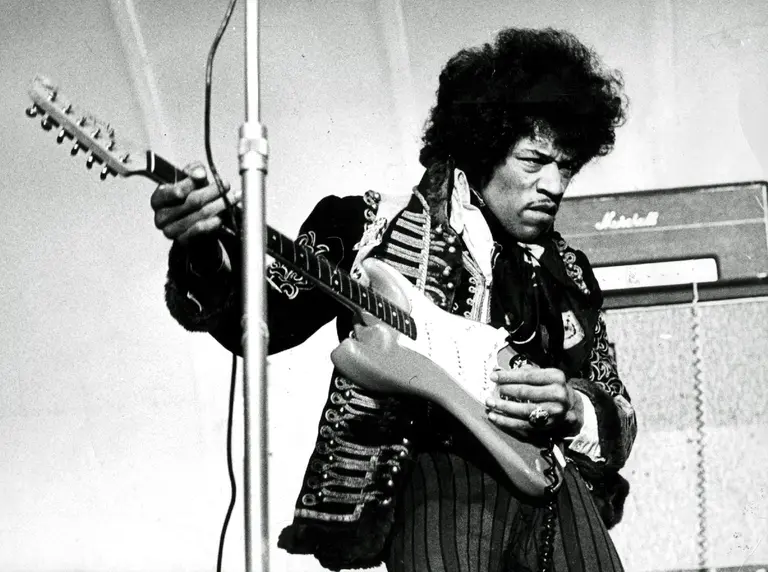
Iconic album covers of Greenwich Village and the East Village: Then and now

There’s no shortage of sites in the Village and East Village where great makers of popular music lived or performed. Less well known, however, are the multitude of sites that were the backdrop for iconic album covers, sometimes sources of inspiration for the artists or just familiar stomping grounds. Today, many are hiding in plain sight, waiting to perform an encore for any passersby discerning enough to notice. Ahead, we round up some of the most notable examples, from "The Freewheelin' Bob Dylan" to the Ramones' self-titled debut album.
Learn about the covers and see what the locations look like today
September 27, 2017

There’s a trolley car graveyard buried without a trace in Canarsie, Brooklyn

It may be hard to imagine today, but Brooklyn of the late-19th and mid-20th centuries was full of trolley cars. A number of different companies built out an expansive trolley system that connected residents to different neighborhoods and up to Queens—in fact, by 1930, nearly 1,800 trolleys were traveling along the streets of Brooklyn from Greenpoint to Gowanus to Bay Ridge and beyond. (The Brooklyn Dodgers were originally known as the “Trolley Dodgers,” for the practice of jumping out of the path of speeding electric streetcars.) But as automobiles began to take over the streets, trolley use diminished throughout New York. That, of course, meant that Brooklyn needed to figure out what to do with all those unneeded cars. According to Atlas Obscura, there were a few options, including sending cars to other cities as well as countries as far as South America, or selling them to museums. But the most fascinating—and forgotten—end to the Brooklyn trolley car can be found in Canarsie, where many were simply sunk into a pit about the size of a city block at the end of the Canarsie train line.
Learn more about this trolley graveyard