Search Results for: subway under bel air

April 5, 2017

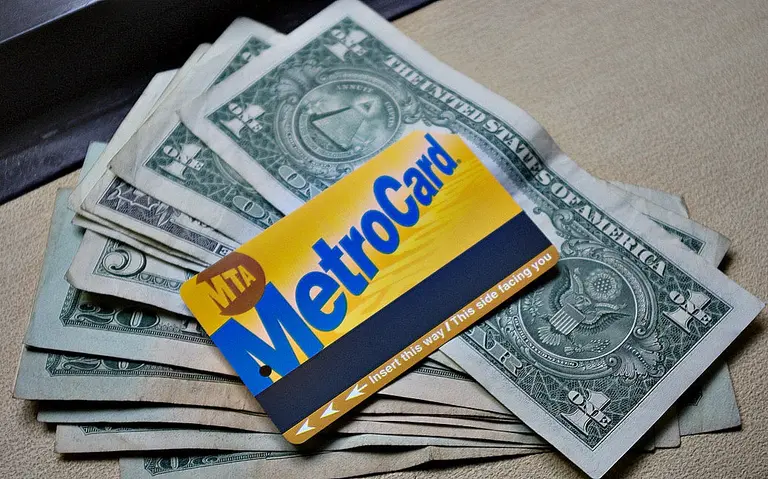
City Council proposes half-priced MetroCards for low-income New Yorkers

Although the recent subway and bus fare hike affects all New Yorkers, low-income residents are being especially hard hit by the jump in cost. As a way to ease this financial burden, the City Council has proposed a $50 million pilot program as part of the “Fair Fares” initiative which will provide half-fare MetroCards to New Yorkers living at or below the federal poverty line. As the Daily News learned, transit advocates say nearly 800,000 residents would be eligible for the discount under the full plan.
Find out more here
March 1, 2017

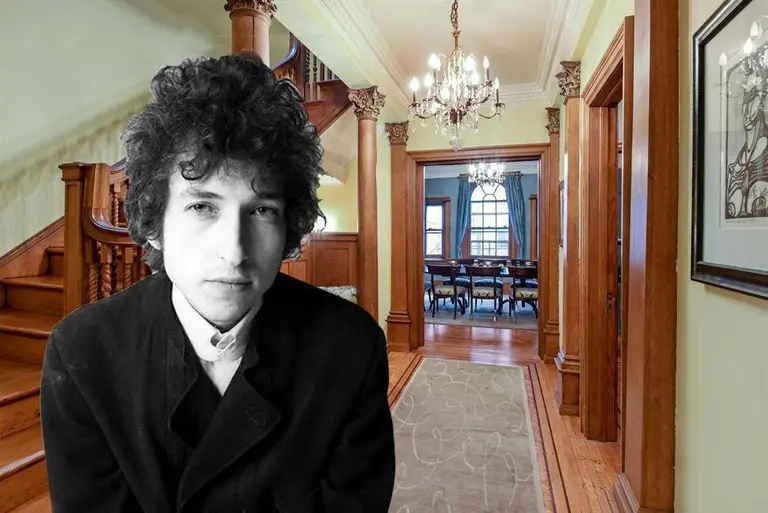
139th Street revisited: Bob Dylan’s former townhouse on Striver’s Row for sale for $3.7M

Not only has this landmarked four-story home standing among the rarely available townhouses in Harlem's Saint Nicholas Historic District–better known as Strivers' Row–been featured in district house tours–it used to belong to Bob Dylan. The early 1900s townhouse at 265 West 139th Street is one of a handsome row designed the firm of McKim Mead & White; the current owners purchased it from the enigmatic Pulitzer Prize-winning polymath for $560,000 in 2000. Times have been a-changin' in the central Harlem neighborhood, and it's now on the market for $3,689,000.
Take a closer look, this way
February 9, 2017

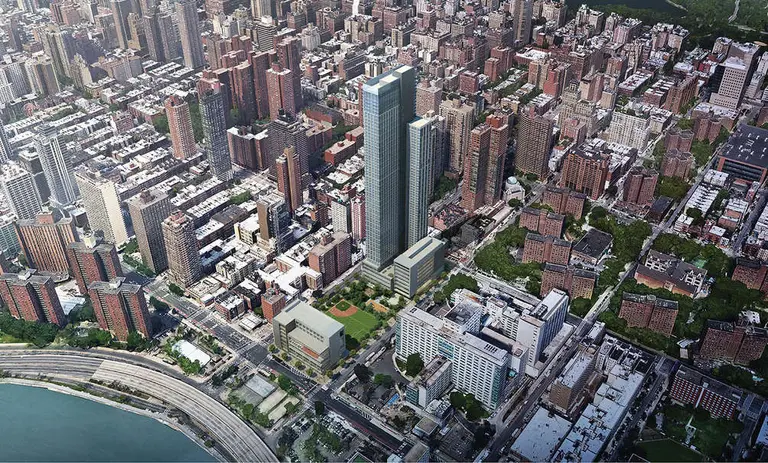
Proposed East Harlem mixed-use development may contain city’s tallest building with affordable housing

Looking to take advantage of the newly opened Second Avenue Subway stop at 96th Street, the New York City Educational Construction Fund and AvalonBay Communities are working their way through the city approval process to build a 1.14 million-square foot, full-block, mixed-use development in East Harlem. CityRealty tells us that the project located at 321 East 96th Street would hold two new school buildings for three different local schools, 20,000 square feet of retail space, a rebuilt playground, and a 68-story, 760-foot residential tower that would offer between 1,100 and 1,200 units and possibly become the city's tallest building to contain affordable housing (roughly 330 below-market rate units).
More details and renderings
February 9, 2017

‘Freedom Ticket’ will offer a transit discount to those in outer Queens and Brooklyn

New Yorkers living in the outer reaches of Brooklyn and Queens may soon find some relief when it comes to their daily commutes. The MTA’s New York City Transit Riders Council (NYCTRC) is looking to make travel more efficient and affordable for those residing in the city's transit deserts through a "Freedom Ticket" pilot initiative that will, says Gothamist, temporarily offer discounted flat-fee tickets for bus, subway and commuter rail travel with unlimited free transfers.
more details here
February 8, 2017

The city’s struggling garment industry finds a new home in Sunset Park

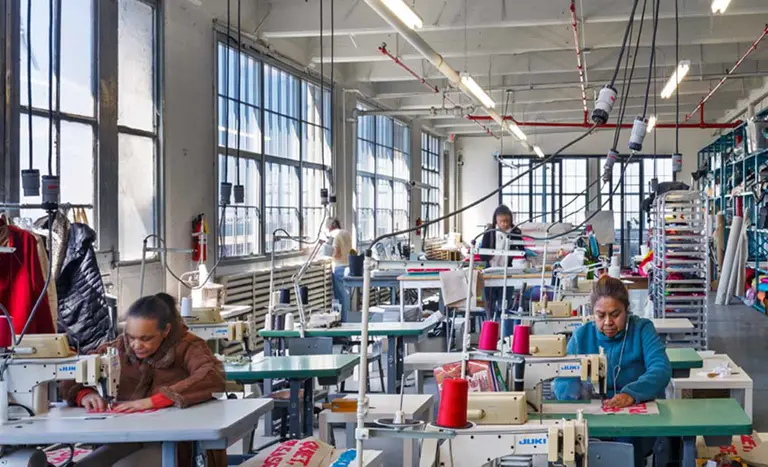
At its peak in 1950, the city's garment industry employed 323,669 New Yorkers. By 2000, this number had dropped to 59,049, and in 2015, it was less than half that with just 22,626 residents "making apparel, accessories, and finished textile products," reports the Times. The struggling trade, long centered in the area bound by 5th/9th Avenues and 35th/41st Streets, has fallen victim not only to national trends of work being shipped overseas, but local issues like rising rents, outdated facilities, and competition from tech and media companies. But thanks to a collaboration between the city and the Council of Fashion Designers of America, a "new, modern garment district" is taking hold in Sunset Park, Brooklyn, where several industrial conversions offer cheaper rents, better equipped real estate, and a creative, collaborative community
Much more on the shift
January 10, 2017

My 600sqft: Journalist Alexandra King turns a schlumpy Park Slope rental into a stunning boho-chic pad

If you needed any more proof that British women just have "it" when it comes to style, place your gaze no further than Alexandra King. The expat journalist, writer and one half of downtown gallery Lyles & King seems to have a knack for turning naught into something noteworthy—just look at her apartment. Alexandra came to NYC seven years ago, first living on her own and then moving into a grimy Chinatown pad with her then-boyfriend-now-husband, Isaac. Following a somewhat traumatic event at their old building, the pair decided to leave Manhattan and high-tail it to leafy Park Slope. While their new neighborhood offered a different kind of charm than Chinatown, their one-bedroom rental still left a lot to be desired; the accent walls for example were painted in what Alexandra describes as "a bizarre shade of poop brown." But leave it to an enterprising creative to transform a turd into a gem. Alexandra saw plenty of potential in the dank space and jumped on the lease. Despite having a few what have I done?! moments, Alexandra worked her magic and completely transformed the apartment. Ahead she gives 6sqft a tour of her bright boho-chic abode, and shares her fail-safe plan for creating an inspiring home.
go inside
December 29, 2016

6SQFT’S TOP STORIES OF 2016!

As we wrap up 2016, 6sqft is taking a look back at the top stories of the past 12 months in topics like apartment tours, celebrity real estate, new developments, transportation proposals, and history. From a look inside a Williamsburg loft filled with more than 500 plants to news of Brooklyn's first 1,000+ foot tower receiving approvals, these are the stories that readers couldn't get enough of.
See the full list here
October 31, 2016

12 experts suggest creative ways to handle 9 million future New Yorkers

With New York City's population on its way to nine million, the city's infrastructure may be impressive, but it has its limits–including red tape and resource shortages–that will make it difficult to withstand the projected surge. Reminding us of the transformative innovations of Robert Moses–he of the big ideas and ego to match–Crains invited 12 firms who make their living wrangling infrastructure to hit us with some big ideas. Ahead of the upcoming summit, "Getting Ready for 9 Million New Yorkers," they've shared these visions for future (bigger, better) New York from top architects, designers and real estate experts. Ideas include some that have already proven themselves (repurposing existing track beds) and some already in the works (Bushwick's Rheingold brewery project) to others that Robert Moses might not love (shrinking the city's highways).
Take a look at these futuristic ideas for moving the city forward.
September 30, 2016

Vishaan Chakrabarti reveals idea to repurpose Madison Square Garden as part of the Penn Station overhaul

Earlier this week, Governor Cuomo revealed plans to transform a revamped Penn Station-Moynihan Train Hall complex into a "world-class 21st century transportation hub." Despite the flashy new renderings and promise of a 2020 completion date, not everyone is sold on the plan, including Vishaan Chakrabarti, former principal of SHoP Architects and founder of the Practice for Architecture and Urbanism. As outlined in the Times, he feels that Cuomo's scheme has one glaring omission--Madison Square Garden. Instead of demolishing the arena, as earlier plans had called for, Chakrabarti proposes repurposing it and "using its stripped skeleton to make a glass pavilion, which becomes a neighborhood gathering spot, not just a station." The venue would then move to the west end of the Farley Building.
Lots more details and renderings ahead
September 27, 2016

Inside the mind of Ernest Burden, one of New York’s preeminent architectural renderers

The art of architectural illustration paints a window into the future and intends to portray a designer's vision or work in its purest, most ideal light. As the art form has progressed from hand mediums to digital, Ernest Burden III and his studio Acme Digital have straddled the industry's dramatic transformation using both computer and manual approaches to inform and improve what they produce. As a renderer with more than 30 years in the industry, Ernest's roster of clients include some of the country's biggest real estate heavyweights, such as the Trump Organization, Related Companies and Tishman-Speyer Properties; and renowned architectural clients like I.M. Pei, Robert A.M. Stern and Kohn Pedersen Fox. Recently, Ernest completed a collection of renderings and detailed vignettes for Toll Brothers' and Barry Rice Architects' 100 Barrow Street. In the series, he effortlessly juxtaposes the timeless intent of the new structure with the energy of the surrounding West Villlage. In fact, Ernest's renderings played a considerable role in the Landmarks Preservation Commission's vote to approve the project in 2014. To learn more about Ernest's unique style and his thoughts on the evolving business and craft of architectural rendering, 6sqft sat down with him for a chat.
read our interview with ernest here
September 13, 2016

My 860sqft: Ashley Davis of CITYROW opens up her mid century-meets-contemporary Yorkville pad

Ashley Davis moved to New York City after graduating from college in 2004. She thought it would just be for a couple years, but, like so many of us, she never left. She's been living on the Upper East Side since 2007 and has been in her current Yorkville apartment for three-and-a-half years. After making a career shift from the advertising/tech world to joining her friend and former colleague Helaine Knapp at CITYROW (Ashley is the fitness studio's chief operating officer), as well as very recently welcoming her boyfriend into her apartment, Ashley has created an inviting home that's a mix of mid-century-modern furniture, contemporary decor, lots of textures, and a sophisticated color palette.
Take the tour
August 11, 2016

The Success Story of Industry City as Told by Its Innovative Manufacturing Tenants

Industry City is a six million-square-foot, 30-acre industrial complex on the Sunset Park waterfront. Its 16 buildings made up the former Bush Terminal, a manufacturing, warehousing and distribution center that opened in 1895. After falling into disrepair over the past few decades, in 2013, a new ownership team led by Belvedere Capital and Jamestown began their $1 billion undertaking to update the complex while cultivating a diverse tenant mix that fuses today’s burgeoning innovation economy with traditional manufacturing and artisanal craft. Today, there are more than 4,500 people and 400 companies working in Industry City, and 6sqft recently paid a visit to four of them (a handbag designer, lighting designer, candle company, and chocolatier) to learn why the complex makes sense for their business and what unique opportunities it's afforded them. We also spoke with Industry City CEO Andrew Kimball about the unprecedented success of the complex and his visions for the future, as well as took a tour of the buildings and their wildly popular public amenity spaces such as the food hall, outdoor courtyards, and tenant lounge.
All this and more ahead
August 6, 2016

Brooklyn’s Tallest Tower Finishes Construction and Commences Leasing

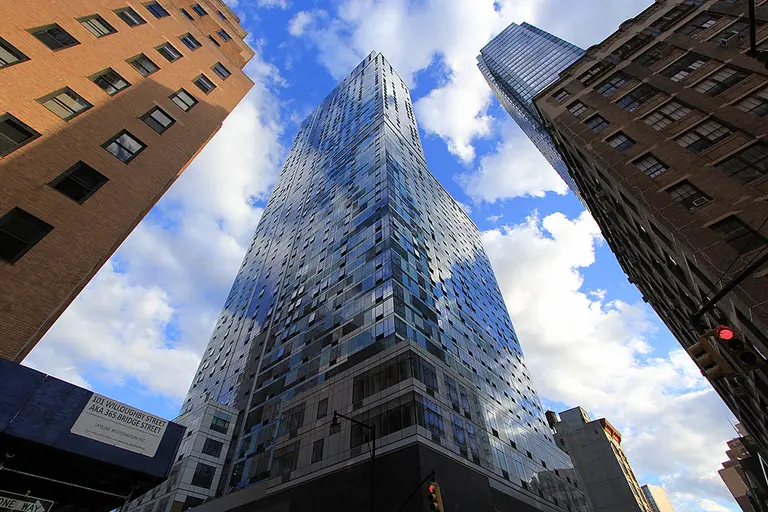
Back in 2007, a run-of-the-mill row of three- to four-story walk-up buildings bounded by Willoughby, Bridge and Duffield Streets was ordered to vacate to make way for a soaring mixed-use skyscraper developed by AvalonBay Communities. Without warning, shopkeepers were given between 30 and 120 days to clear out or face court eviction, evidence of the impact of gentrification on Downtown Brooklyn. The district's 2004 rezoning sparked the development of thousands of new apartments (6,400 in the pipeline according to our latest count) and is finally getting a dusting of office space too. Now, after an arduous, decade-long journey of assembling an 11-parcel site, clearing and excavating it, and throwing up nearly one million square feet into the air, Avalon has finally finished construction and has kicked off leasing of the building's upper collection of homes called Avalon Willoughby Square.
Get the scoop on Avalon's deals
August 5, 2016

Spotlight: Climate Scientist Radley Horton Discusses Extreme Weather in NYC

With increasing concerns about rising sea levels and the large quantity of greenhouse gas emitted into the atmosphere, Radley Horton's work is more important than ever. As a climate scientist at Columbia University, he's working on the applied end of climate change by examining data to make projections about the possibility of extreme weather events. Based on the data and ensuing models, he then considers the impacts these potential events and the overall changing climate might have in a variety of contexts that range from airports to the migration of pests. Radley is on the forefront of understanding what might happen and how cities, countries, and other entities can prepare even in the face of uncertainty. 6sqft recently spoke with Radley about his work, areas of climate concern in New York, and what we all can do to combat a changing planet.
Read the full interview here
July 15, 2016

The World’s First Escalator Was Installed in Coney Island 120 Years Ago

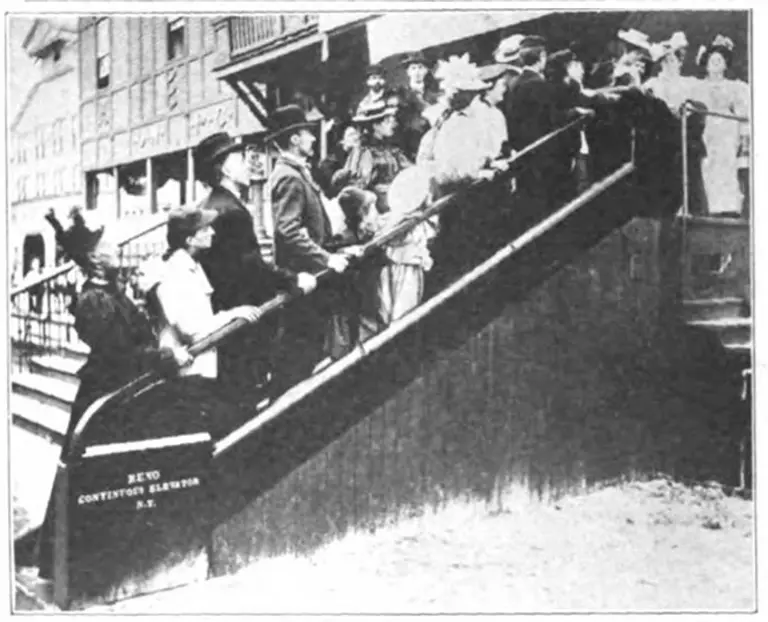
When you think of Coney Island, cutting edge technology probably doesn't come to mind. But more than a century ago, this little enclave of amusement and thrills was where the world's very first working escalator was installed. In 1896, engineer Jesse W. Reno brought his patented "Endless Conveyor Elevator" (though he called it the "inclined elevator") to the Old Iron Pier at Coney Island. Reno's invention stretched a mere seven feet angled at 25-degrees, and instead of steps, the escalator used a conveyor-like belt fashioned with cast-iron cleats for traction. The Coney Island installation is said to have carried over 75,000 patrons over its two-week residency.
FInd out more here
May 5, 2016

489 New Units of Affordable/Elderly Housing to Rise on Land in Brooklyn and the Bronx

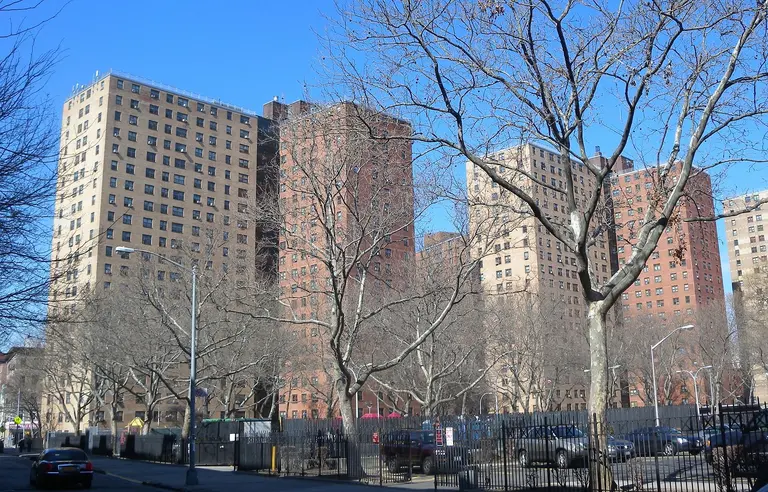
The de Blasio administration is expected to announce plans to lease New York City Housing Authority (NYCHA) land to build nearly 500 apartments for low-income and elderly tenants in three buildings of up to 16 stories within existing housing projects in Brooklyn and the Bronx, according to the New York Times. The sites, on parking lots and grasslands within the projects, were included in the housing authority's initiative to improve deteriorating public housing, as well as increase the number of new affordable units. More controversial plans are also in the works to add market-rate housing within public housing projects in prime real estate locations.
Find out more
May 4, 2016

Pinball Prohibition: The Arcade Game Was Illegal in New York for Over 30 Years

It's hard to believe, but between the 1940s and '70s pinball was actually banned in NYC, as well as other major cities like Chicago and Los Angeles, for its questionable ethics. While most of us consider the arcade game a wholesome activity, its first iteration was without the flippers and considered a form of gambling. From city raids to seedy backdoor operations, pinball prohibition lasted for more than 30 years, and efforts to get the beloved game legalized were equally dramatic.
Get the full scoop
April 26, 2016

Skyline Wars: As Queens Begins to Catch Up, A Look at the Towers Defining Its Silhouette

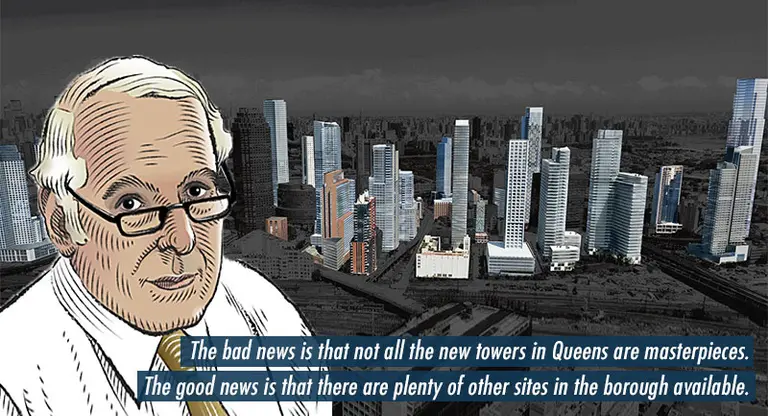
Carter Uncut brings New York City’s latest development news under the critical eye of resident architecture critic Carter B. Horsley. Here, Carter brings us his sixth installment of “Skyline Wars,” a series that examines the explosive and unprecedented supertall phenomenon that is transforming the city’s silhouette. In this post Carter looks at the new towers defining the Queens skyline. For a long time, the glass tower erected by Citibank was the lone skyscraper of note in Queens. Known initially as Citicorp at Court Square, it was built in 1989 and designed by Raul de Armas of SOM as a blue-green metal-panel-and-glass office tower with just a few setbacks at its 633-foot-high top—an extremely clean-cut, modern obelisk of fine proportions. In a 1988 article in The New York Times, Anthony DePalma wrote that the tower “dominates the Queens skyline like a sequoia in the desert” and Paul Goldberger, then the newspaper’s architecture critic, wrote the tower was “rapidly becoming one of the most conspicuous structures in the entire city.” He added, “It is a very unlikely thing, this building—no other skyscraper in New York is remotely like the Citicorp tower, not so much for its design as for the fact that it stands free, alone in this landscape of gas stations, warehouses and row houses,” The bank tower transformed “the landscape of New York” and “no longer does Manhattan virtually by itself control the skyline,” Mr. Goldberger continued. “Skyscrapers built at random all over New York would be devastating, but an occasional exclamation point, well designed and carefully placed, will do the skyline no grievous harm,” he concluded. This is a very important but also very controversial point as currently evidenced in Manhattan where traditional precincts are being pin-pricked to exhaustion and confusion by supertalls.
more on the queens skyline

April 22, 2016

Spotlight: The Wall Street Journal’s Jason Gay Talks Sports and Rules for Life in NYC

New Yorkers tend to have go-to writers who they read day in and day out -- with their morning coffee, on the subway, or winding down after a long day. For many, Jason Gay is on this team of journalists. As a sports columnist for The Wall Street Journal, he regularly provides sports coverage, insights, and opinions for the paper's readership. He writes extensively about specific players and teams, but also pens features that touch upon the human aspects and humor that can be found on and off the court. Jason has become known for his funny rule-centric columns, including the very popular "The 32 Rules of Thanksgiving Touch Football" and "The 27 Rules of Conquering the Gym." This passion for rules took shape as a book, "Little Victories: Perfect Rules for Imperfect Living," which takes seemingly banal topics -- parenthood, exercise, office life, travel, and the holidays -- and celebrates how the smallest accomplishments in life are often the most meaningful. 6sqft recently spoke to Jason about sports, writing for the Journal, and how "Yankees World Championships are like real estate closings."
Read the interview with Jason
April 20, 2016

Skyline Wars: Brooklyn Enters the Supertall Race

Carter Uncut brings New York City’s latest development news under the critical eye of resident architecture critic Carter B. Horsley. Here, Carter brings us his fifth installment of “Skyline Wars,” a series that examines the explosive and unprecedented supertall phenomenon that is transforming the city’s silhouette. In this post Carter looks at Brooklyn's once demure skyline, soon to be Manhattan's rival. Downtown Brooklyn has had a modest but pleasant skyline highlighted by the 350-foot-high Court & Remsen Building and the 343-foot-high great ornate terraces of 75 Livingston Street, both erected in 1926, and the 462-foot-high flat top of the 1927 Montague Court Building. The borough’s tallest building, however, was the great 514-foot-high dome of the 1929 Williamsburg Savings Bank Tower, now known as One Hanson Place, a bit removed to the east from Downtown Brooklyn. It remained as the borough’s tallest for a very long time, from 1929 until 2009. A flurry of new towers in recent years has significantly enlarged Brooklyn’s skyline. Since 2008, nine new towers higher than 359 feet have sprouted there, in large part as a result of a rezoning by the city in 2007. A few other towers have also given its riverfront an impressive frontage. Whereas in the past the vast majority of towers were clustered about Borough Hall downtown, now there are several clusters with some around the Brooklyn Academy of Music and the former Williamsburg Savings Bank Tower and some around the Williamsburg riverfront.
more on Brooklyn's skyline here

March 14, 2016

Former Headquarters of the Christian Brothers Is Now a $15M Hell’s Kitchen Mansion

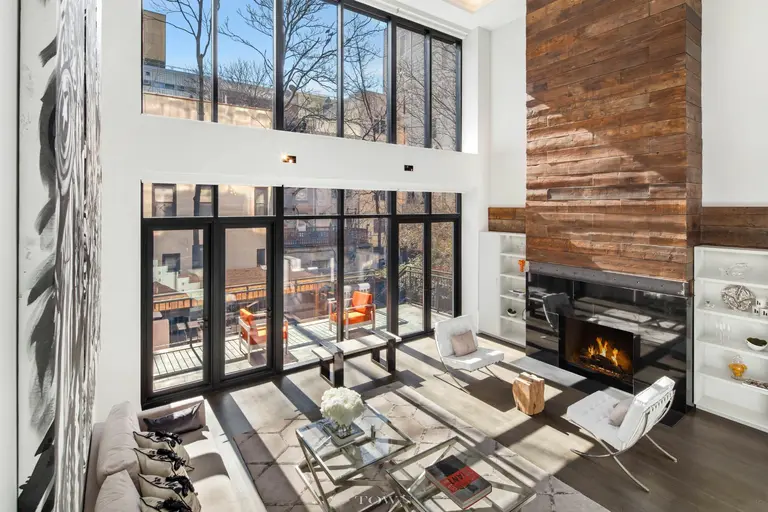
Spanning 7,000 square feet, with a two-story master bedroom that cantilevers out eight feet over the back garden, a back wall of glass and smart-everything, this single-family modern masterpiece may be mere blocks from the trophy towers of Billionaire's Row, but it outshines any of those eight-figure abodes by a midtown mile. Built in 1910, this six-story, 7,000 square-foot building at 416 West 51st Street was the headquarters of the Christian Brothers, whose main role was to keep neighborhood youth out of trouble, from 1953 until 2011. In the middle days of the 20th century through its end decade, there was trouble aplenty in the rough district known for tenements and street gangs. The neighborhood has come an almost unfathomly long way in recent years, and "the manse," as the listing calls it, is as good a parallel as we've seen. What's now being offered for $15 million is the result of the current owners' four year effort, in collaboration with Suk Design Group, to create a single family home fit more for a heavenly host than the Hell's Kitchen of history. Every inch of the building is wired for comfort and control, and there's a fully-stocked arcade and a "glass-wrapped floating staircase winding around the elevator like a helix," four enormous bedroom suites and that dramatic duplexed master suite.
Tour this unbelievable vertical mansion
February 19, 2016

Skyline Wars: What’s Rising in Hudson Yards, the Nation’s Largest Construction Site

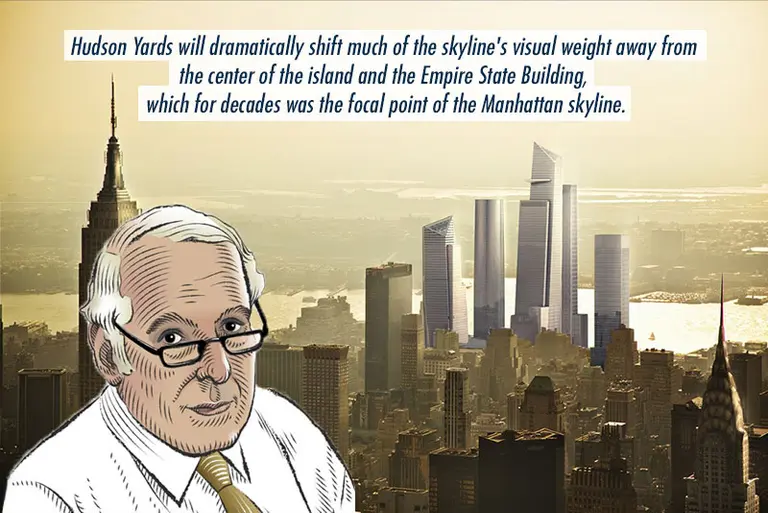
Carter Uncut brings New York City’s breaking development news under the critical eye of resident architecture critic Carter B. Horsley. This week Carter brings us the third installment of “Skyline Wars,” a series that examines the explosive and unprecedented supertall phenomenon that is transforming the city’s silhouette. In this post Carter zooms in on Hudson Yards. The Hudson Yards neighborhood in Far Midtown West is one of the country’s most active construction areas. Construction cranes dot its emerging skyline and dozens more are promised now with the district's improved connection to the rest of the city. Last fall, the 7-line subway station at Eleventh Avenue and 34th Street opened with one-stop access to Times Square. The newly-minted station features a lengthy diagonal escalator bringing commuters to the front-door of the huge mixed-use project being created over the rail yards west of Tenth Avenue between 30th and 33rd streets. Originally, a second station was contemplated on 41st Street and Tenth Avenue but transit officials claimed it could not afford the $500 million expenditure, despite the enormous amount of new residential construction occurring along the far West 42nd Street corridor. Nevertheless, the finished Hudson Yards station deposits straphangers into a new diagonal boulevard and park between 10th and 11th Avenues that will ultimately stretch from the Related Companies / Oxford Property Group's Hudson Yards master plan northward to 42nd Street.

read more from carter here
January 29, 2016

Interactive Graph Compares L Train Commute Times and Rents With Other NYC Neighborhoods

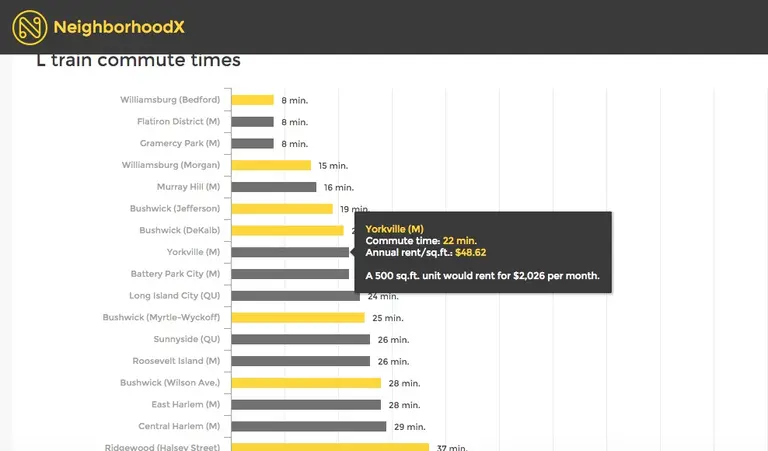
We're hearing lots of anguish and anxiety over the possibility of an L subway shutdown for repairs for as long as a year or more, and we've taken a look at some possible solutions. Now, we've asked the real estate data geeks at NeighborhoodX to go a little deeper beneath the grumbling to find out just how much convenience can be had along that thin grey line, and how it stacks up against other neighborhoods in Manhattan, Brooklyn and Queens. So which other neighborhoods offer commute times similar to the L train stops—and—just as important when choosing a neighborhood–how do their rents compare? And if you're living along the L, in light of the shutdown, what neighborhood alternatives do you have in the city that provide a similar commute?
Find out here
January 20, 2016

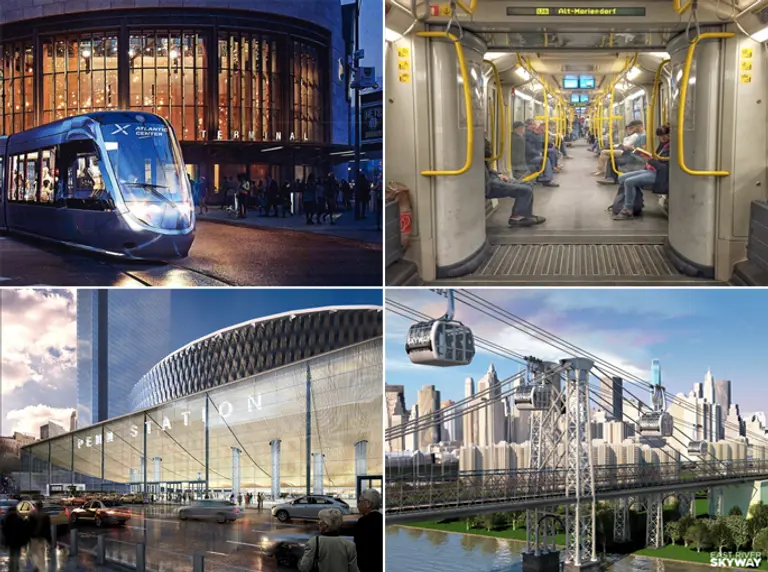
Top 10 Transportation Proposals That Would Transform New York City

Commuting in and around NYC can at times be a daunting task, and with the all of the pending subway closures, things are about to get a bit more complicated. However, all hope is not lost, and a trouble-free ride to work right be in the near future. From a city-wide ferry system to cell-phone friendly subway cars, both Governor Cuomo and Mayor de Blasio have several new initiatives in play to improve the city's infrastructure. In addition to these ambitious government-backed measures, there are also a slew of motivated residents looking to make some changes, including a 32-Mile Greenway in Brooklyn and Queens and a High Line-esque bridge spanning the Hudson River, just to name a few. To keep your spirits high when subway lines are down, we've put together this list of top 10 transportation proposals for NYC.
See all 10 here
January 20, 2016

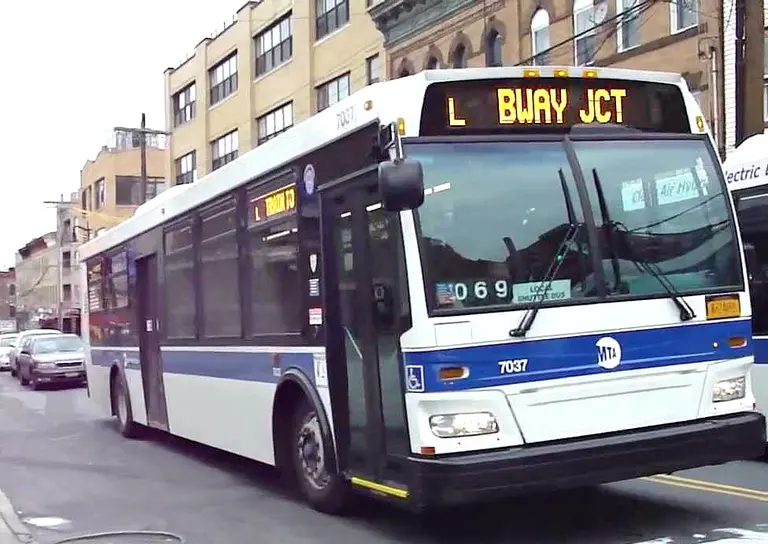
Are Shuttle Buses a Viable Alternative to the L Train During a Shutdown?

The MTA’s announcement of possible plans to close the L train for months or even years at a time to repair the Hurricane Sandy-damaged Canarsie Tunnel has businesses scrambling and commuters (the train has 300,000 riders on the average weekday) fearful. Data mapping company CartoDB offers a bit of “location intelligence” to better understand the consequences of a shutdown for people living in Brooklyn and, more importantly, what some realistic alternatives to the L train might be. For example, shuttle buses: "If the shuttle bus takes 20 minutes, we are able to calculate the best choices for riders along the L needing to get to Manhattan. Should they go all the way to Lorimer and take the shuttle bus or should they transfer earlier at Myrtle-Wyckoff to the M train or at Broadway Junction to the A?"
Will shuttle buses save the day?