
Search Results for: how to find student search

July 20, 2017

How to start an art collection: A guide for new buyers and investors on a budget

Our ongoing series Apartment Living 101 is aimed at helping New Yorkers navigate the challenges of creating a happy home in the big city. This week we have tips on how to start an art collection for both fun and future profit. In May 2017, Jean-Michel Basquiat’s 1982 painting of a skull sold for a mind-numbing $110.5 million at Sotheby's, becoming the sixth most expensive work in history to sell at auction. In fact, Sotheby's is known to record billions of dollars in art sales annually fed by wealthy art enthusiasts clamoring to hang the most rarefied of works. But for us plebeians who find the thought of buying fine art alluring but lack the finances needed to bid on a Pollock or a Picasso, what options are available to us? Ahead, Krista Scenna, an independent curator, gallerist and co-owner of Brooklyn's Ground Floor Gallery, gives 6sqft the low-down on how regular folks can begin to build a museum-worthy art collection on a budget. Addressing everything from how to vet emerging artists for value to the top three questions you need to ask yourself before you even begin your hunt to simply why you should invest in art in the first place, if you're new to the world of buying art, this guide is for you!
everything you need to know here
March 13, 2017

City’s new interactive Facilities Explorer map shows you which public resources are in your neighborhood

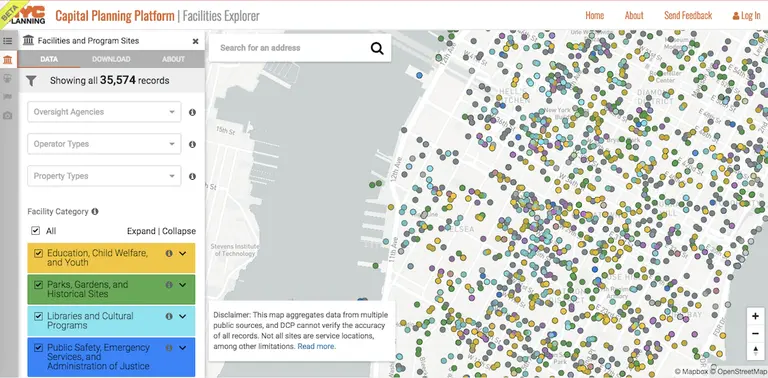
From parks and kids' camps to food pantries, a new map–just launched in Beta mode–from the Department of City Planning lets you visually explore a database of over 35,000 records from 43 different city, state and federal agency data sources, according to DNAinfo. You can see how your community stacks up when it comes to schools, police precincts, waste dumps, free legal help, ADA facilities, resources for children and seniors and much more, and find resources when you need them. The intention of the NYC Facilities Explorer is to give community boards, council members and agencies an easy way to locate services quickly when they're considering future projects in various parts of the city.
Find out more
February 22, 2017

Inside New York’s little-known graphic design gem, The Herb Lubalin Study Center

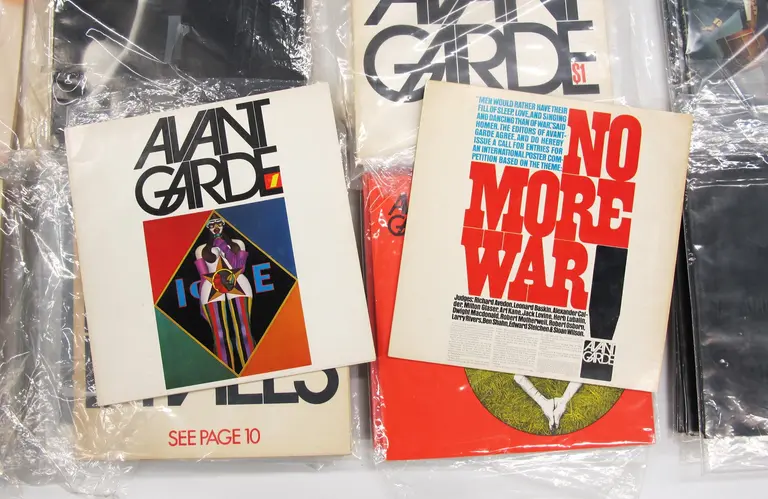
Icy, metallic, and unabashedly serious is how one might describe The Cooper Union for the Advancement of Science and Art building in the East Village. But deep within its mash of raw concrete, steel beams, and metal screens is an unlikely 800-square-foot treasure chest filled with tens of thousands of design and typographical ephemera spanning multiple decades. Known as The Herb Lubalin Study Center of Design and Typography, the quaint and cozy space opened in 1985 as an archive dedicated to the work of Herb Lubalin, an American graphic designer best known for his playful art direction at Avant Garde, Eros and Fact magazines, as well as his groundbreaking design work completed between 1950 and 1980 (including the original World Trade Center logo). As one would expect, the center is filled with one-of-a-kind Lubalin works that range from posters, journals, magazines, sketches, and packaging, most of which came from his studio, his employees, or via donation by Lubalin enthusiasts. However, what many will be surprised to know is that Lubalin's materials make up just 20 percent of the center’s entire collection. Indeed, about 80 percent of what's tucked away comes from other influential designers. And those flat files not dedicated to Lubalin are filled with rare works from icons that include Push Pin Studios, Seymour Chwast, Milton Glaser, Lou Dorfsman, and Massimo Vignelli.
go inside here
June 28, 2016

Tribeca Triplex With Original Keith Haring Mural Returns for $13M

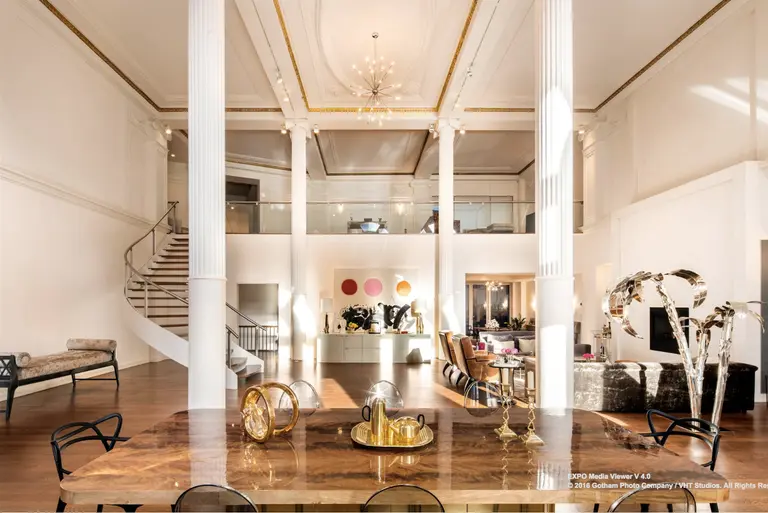
This Tribeca triplex is a treasure for many reasons. Its size, for one; it occupies an insane 8,000 square feet of the classic, landmarked American Thread Building (among the first of Tribeca's luxury condo conversions) at 260 West Broadway. Possibly the most memorable reason is an original Keith Haring mural, made in 1978 during the late artist's days at SVA when the space was a student gallery, painted on a curving wall of the apartment’s main-floor entry gallery. Priced at a treasure-worthy $13 million, it isn’t the property’s first time to this rodeo. As with downtown Manhattan, this amazing loft has seen quite a few changes in the new millennium. The three-story unit was previously listed as #mais and #1/2C; the three story “maisonette” is TH1 in its newest incarnation.
Tour this fabulous loft
February 19, 2016

Spotlight: Ron Ben-Israel on the Art and Architecture of Creating a Wedding Cake

If you're one of the many who just got engaged over Valentine's weekend, it's time to get into planning mode, and what better way to start than with a spectacular wedding cake. A New York wedding calls for a cake that tastes great, makes a statement about the newlyweds, but can also stand on its own amidst the glamour of the Plaza, the Art-Deco glitz of the Rainbow Room, and the skyline that twinkles all around at the Mandarin Oriental. For this, brides and grooms turn to cakemaker extraordinaire Ron Ben-Israel. Throughout the planning, baking, and cake delivery processes, Ron draws on a number of disciplines, including chemistry, architecture, art, and transportation science. His cakes are versatile in style, but have a common thread that comes from attention to detail and the pursuit of excellence. He's received high praise for his cakes, with the New York Times writing of him: "Mr. Ben-Israel is the Manolo Blahnik of wedding cakes, a high-priced craftsman who knows that just as beautiful shoes are useless if they are not comfortable, beautiful cakes are useless if they are not delicious." With the season for "I do" quickly approaching, 6sqft spoke with Ron to discuss his love for the baking process, the thinking and work behind every cake, and the joy he experiences each time one is completed.
Read the full interview here
October 21, 2015

INTERVIEW: Captain Jonathan Boulware Sets Sail as the South Street Seaport Museum’s Executive Director

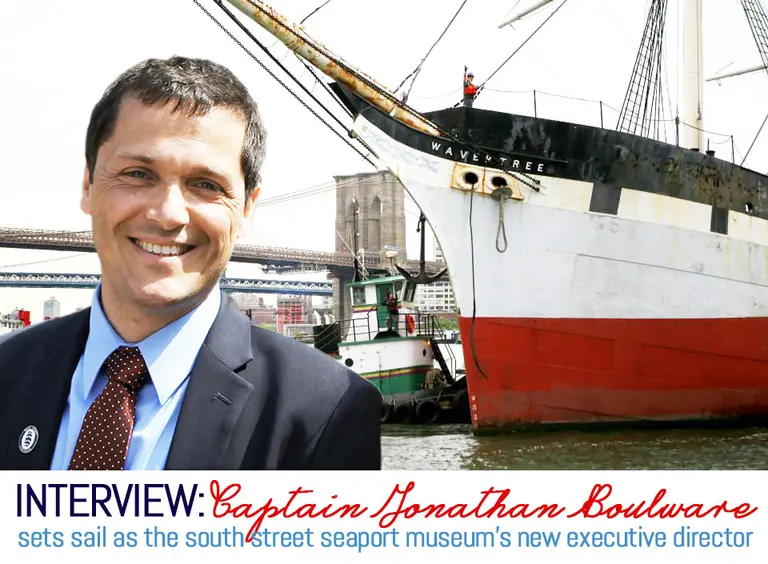
The South Street Seaport Museum may not be one of New York City's glitziest institutions, but it's certainly one of the most resilient and perhaps the one most closely tied to the founding of the city itself. Using actual historic buildings and ships to provide interactive exhibits and educational programs, the museum tells the story of New York's rise as a port city and how that led to the development of the entire country. But the seaport location became all too real in 2012 when Hurricane Sandy ravaged the entire historic district, leaving the museum with $20 million in damages and the loss of its institutional partner, the Museum of the City of New York. Now, three years later, the South Street Seaport Museum is sailing into new territory, thanks in large part to its recently appointed executive director Captain Jonathan Boulware, a lifelong sailor, marine educator, expert in historic ships, and all-around lover of maritime history and culture. In August, Boulware and his team landed a $10.4 million FEMA grant to repair the storm damage, and in May, the museum launched a $10.6 million city-funded project to restore Wavertree, one of the museum’s most significant historic ships. With these exciting developments underway, we caught up with Captain Boulware to learn a bit about his background, what visitors can expect at the museum, and where the institution is heading.
Read the interview
October 6, 2015

My 2,200sqft: A Couple Brings Serene California-Style Living to Their Park Slope Brownstone

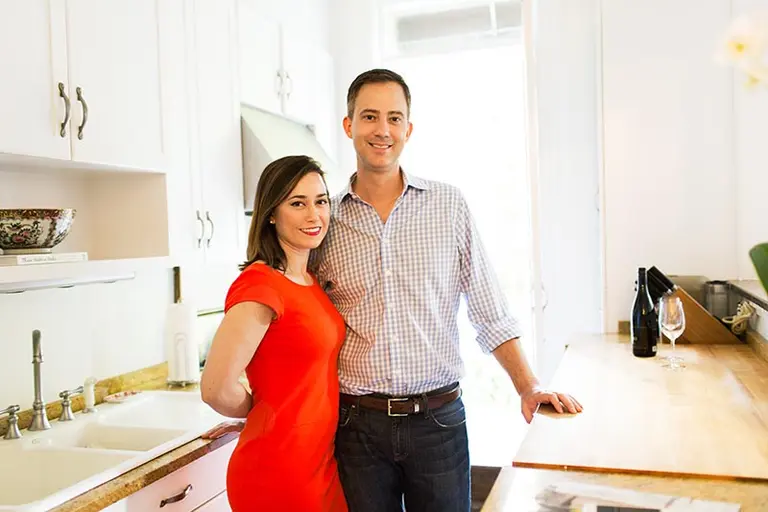
Our ongoing series “My sqft” checks out the homes of 6sqft’s friends, family and fellow New Yorkers across all the boroughs. Our latest interior adventure brings us to Park Slope. Want to see your home featured here? Get in touch! We've all been there: dreaming of leaving the city behind and heading out west for a new adventure. Some of us do it, but most of us continue dreaming. For financial services executive Bill Fellows and his graphic designer and nurse practitioner-in-training wife Kerr, change wasn't something to be feared, and more than six years ago the pair took a leap of faith and left for San Francisco. However, as anyone who's spent more than a year in the Big Apple can attest, once you've lived in a city as great New York, it's only a matter of time before you're sucked back in. And after a long stint on the other side of the country, Bill and Kerr came back to the city—this time in search of a calmer experience more akin to what they had on the west coast. Since August of last year, the pair have been cozying it up in the bottom two floors of a Park Slope brownstone. Originally an unkempt photography studio and living space, Bill signed for the house before Kerr even had a chance to see it (now that's trust, people). When Kerr did finally check out the place, her design-background kicked in. She saw the challenges and opportunities that steeped the 2,200 square feet, and she got to work. Keep reading to find out how Kerr and Bill turned a shamble into a tranquil, well-composed space.
Inside the home here
September 11, 2015

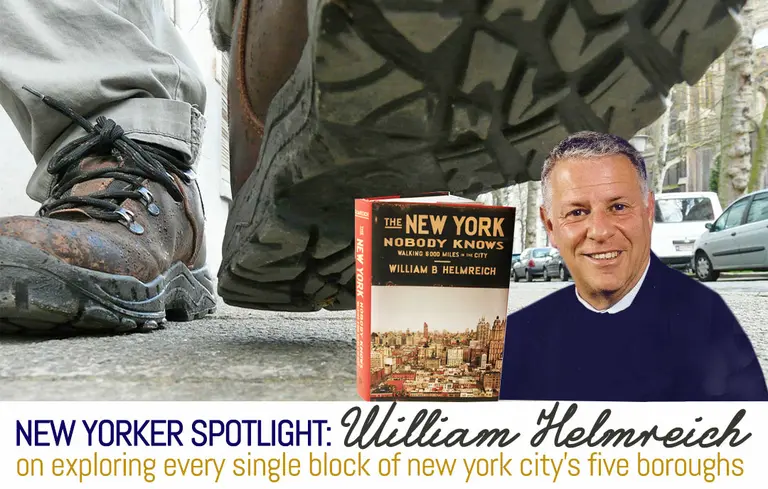
New Yorker Spotlight: William Helmreich Went on the Ultimate 6,000-Mile Walking Tour of NYC

New Yorkers are known for spending their free time taking leisurely strolls through the city's numerous neighborhoods. They even use their feet as a means to learn by going on weekend walking tours to discover the history, the mystery, as well as the evolution of their favorite places—and there are certainly plenty of tours out there to serve all sorts of curiosities. But when William Helmreich decided he wanted to learn more about New York on foot, he took walking tours to another level. In fact, he decided to walk the entire city. William is a sociology professor at The City College of New York and also teaches at the Graduate Center, City University of New York. Over the course of four years, he has walked just about every block in New York City. It was an adventure William was primed for as a lifelong New Yorker who possesses a research interest in urban studies; his background allowed him to be at ease while speaking with city residents in the five boroughs, and he had the eagerness necessary to uncover hidden gems in the lesser known nooks and crannies of our metropolis. The culmination of William's journey is his book, "The New York Nobody Knows: Walking 6,000 Miles in New York City," which was published in 2013 and released last month in paperback. We recently spoke with William about his long walk, and to find out what it taught him about New York.
Meet William here
September 4, 2015

New Yorker Spotlight: Ira Block Photographs World Treasures for National Geographic

When Ira Block leaves his New York City apartment for work, he might find himself on the way to Bhutan or Mongolia. As a photojournalist who has covered more than 30 stories for National Geographic magazine and National Geographic Traveler, Ira travels the world photographing some of its greatest marvels. He's captured everything from far-off landscapes to people and animals to discoveries made at archaeology sites. In between trips to Asia, Ira spends time photographing baseball in Cuba. The project has afforded him the opportunity to catch the country on the cusp of change. His first images showing Cuba's passion for the sport, mixed in with its beautiful but complex landscape, are on display at the Sports Center at Chelsea Piers. We recently spoke with Ira about traveling the globe for work and how his career and passion have shaped his relationship with New York.
Our interview with Ira right this way
August 31, 2015

Whimsical Map Colorfully Details 400+ New York Icons

A couple weeks ago we dug up a map from the 1950s that offered up a mind-boggling menagerie of all things New York. With over 300 points of interest hand-illustrated in painstaking detail, we found ourselves overtaken with with awe. Now, comes yet another marvelous map courtesy of Rafael Esquer, founder of Soho’s Alfalfa Studio. His stunning depiction—aptly named Iconic New York™— is made up of over 400 hand-drawn city icons. A labor of love, the piece took Esquer an incredible two-and-a-half years to complete.
more on iconic New York™ here
August 28, 2015

New Yorker Spotlight: Courtside at the Century-Old West Side Tennis Club With Roland Meier and Bob Ingersole

With the U.S. Open starting on Monday, tennis fever is once again sweeping across the city. Over the next two weeks, thousands of New Yorkers will hop on the 7 train or the Long Island Rail Road to watch the likes of Roger Federer and Serena Williams play in Flushing Meadows at the USTA Billie Jean King National Tennis Center. However, prior to 1978, tennis players and fans found themselves playing and cheering at a different venue: The West Side Tennis Club in Forest Hills. The West Side Tennis Club was the former home of the U.S. Open. Founded in 1892 in Manhattan, the club moved to Forest Hills in 1913, where it played host to many great moments in tennis history. Following the U.S. Open's relocation, The West Side Tennis Club faced a number of challenges and retreated from the spotlight. But after years under the radar, the club's president Roland Meier and tennis director Bob Ingersole are helping The West Side Tennis Club re-emerge as a major player on the tennis scene. We recently spoke with Roland and Bob to learn how history and modernity mix in Forest Hills.
Read our interview with the pair here
July 29, 2015

My 1,000sqft: Tour an Interior Designer’s Classic Greenwich Village Apartment and Terrace

Sylvia Jacobson used to walk around Greenwich Village's winding, leafy streets, admiring the old buildings and dreaming that one day she'd live in the picturesque neighborhood. And 38 years ago, she did just that. When she and her husband moved into their fifth-floor walkup they had a lot of work to do–from putting up shelves and drawers in the little kitchen, to creating a multi-purpose room that could serve as a den as well as a studio for Sylvia's writing and interior design careers, to creating a usable terrace on an empty rooftop space. Now, almost four decades later, the apartment has withstood the test of time, bringing together clever design ideas and classic decor. We were lucky enough to get a tour of this 1,000-square-foot home and its stunning 500-square-foot terrace, complete with views of neighboring buildings and even One World Trade Center. Join us to see how elegant, tasteful design never goes out of style.
Step inside Sylvia's home here
June 5, 2015

New Yorker Spotlight: Michael Schneider on Telling Tales of Immigration on Ellis Island Using Technology

Modern-day storytelling ranges from the age-old tradition of oration to the modern take of 140 characters. But what happens when the story is a mix of old and new and is intended for an audience that ranges from elementary school students to centenarians? That's where ESI Design, a firm dedicated to enriching the human experience, steps in. ESI was founded in 1977 by Edwin Schlossberg. Their unique focus on melding traditional techniques with modern technology made them the perfect fit to design the recently launched Peopling of America Center at the Ellis Island National Museum of Immigration. The center–conceived with the vision and support of the Statue of Liberty – Ellis Island Foundation and its president Stephen Briganti and the National Parks Service–highlights journeys undertaken before Ellis Island opened in 1892 with "Journeys: The Peopling of America - 1550s-1890," which opened in 2011. On May 20th, another wing called "The Journey: New Eras of Immigration" opened to give visitors the chance to look at immigration that took place after Ellis Island closed in 1954. One of the visionaries at ESI is senior designer of media and technology Michael Schneider. For the Peopling of America Center, he was responsible for figuring out which of the available technologies worked best for the new exhibits and their audience. We recently spoke with Michael to learn how ESI approaches storytelling and, specifically, how the firm designed the galleries for the Peopling of America Center.
Read our interview with Michael here
May 1, 2015

New Yorker Spotlight: Behind the Reference Desk at the New York Public Library with Philip Sutton

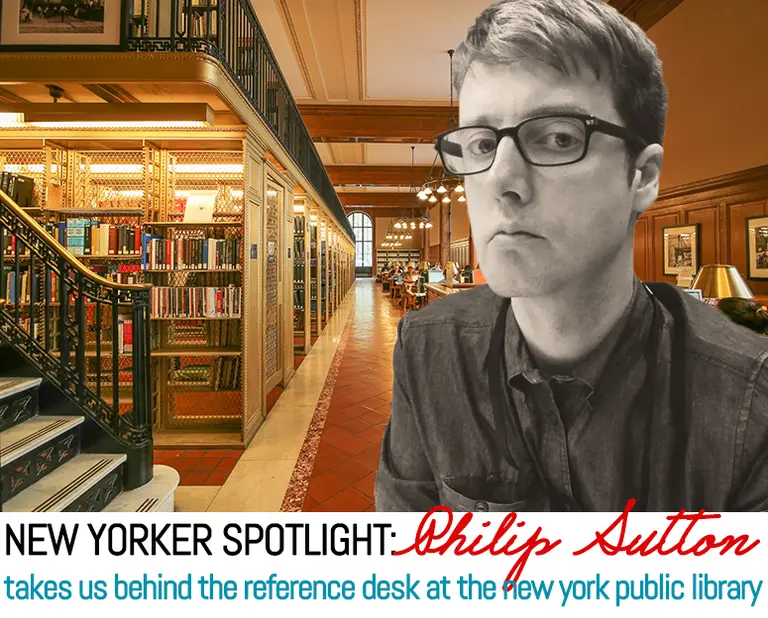
Though we're living in the digital age where we can do a tremendous amount of research online, sometimes we still need the library, and more importantly, the help of an actual person. If you happen to be researching your family or interested in learning the history of a particular building in New York, then perhaps you've stopped by the reference desk at the Irma and Paul Milstein Division of United States History, Local History and Genealogy of the New York Public Library and asked librarian Philip Sutton for help. Philip has worked in the Milstein Division for almost five years as a reference librarian. On a daily basis, he takes the journey with New Yorkers looking to learn more about their city and more often than not, to answer deeply personal questions about their families. It's a unique position to be in, and one that he takes very seriously. Originally from London, Philip has a particular expertise in helping people conduct research on building history in New York. He writes blog posts on the topic for the library and teaches a bi-monthly course aptly titled, “Who Lives in a House Like This? How to Research the History of Your New York City Home,” during which he instructs New Yorkers how to get started with their research. We recently spoke to Philip about his role at the library, and, as expected, he was full of helpful resources.
Read our full interview here
March 17, 2015

Interview: McSorley’s Historian Bill Wander Fills Us In on the Secrets of NYC’s Oldest Bar

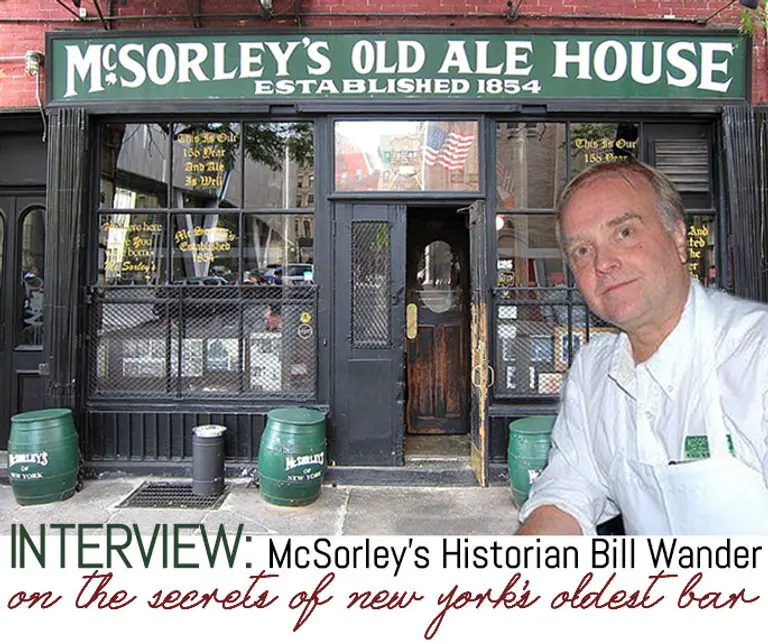
Undoubtedly, there are hundreds of New Yorkers and out-of-towners planning to stop by McSorley's Old Ale House today for a St. Patrick's Day round of beers. But beyond the brews and bros, there's a deep history rooted in this East Village institution, and we've found the man who knows it all. The official historian of McSorley's, Bill Wander can give you the full timeline that dates McSorley's to 1854, making it the oldest bar in the city. He can also fill you in on all the tchotchkes adorning the walls of this Irish tavern, none of which have been removed since 1910. But more important than the textbook facts related to McSorley's, Bill has an undeniable passion for this watering hole, for both its important cultural history and the unique social atmosphere that keeps the bar a neighborhood mainstay after all these years. We recently chatted with Bill to find out some of the lesser-known details about McSorley's and what the title of "official historian" entails.
Read our full interview with Bill Wander here
February 27, 2015

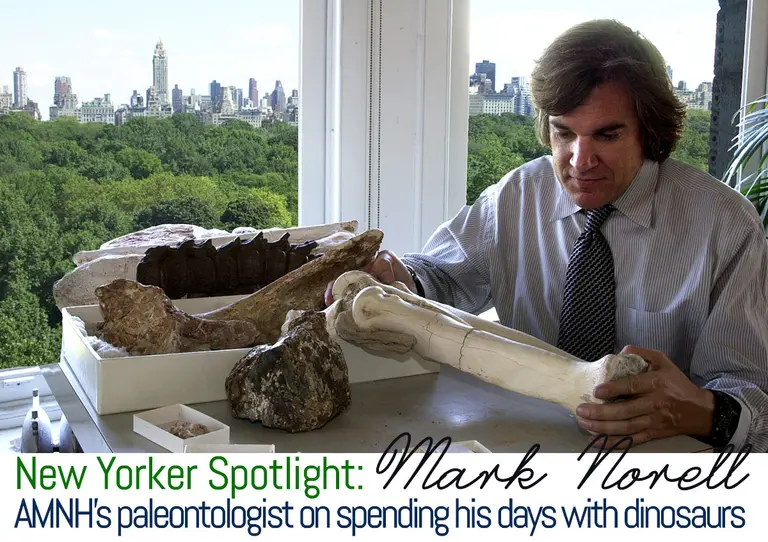
New Yorker Spotlight: Paleontologist Mark Norell Spends His Days with Dinosaurs at the Museum of Natural History

While the closest to dinosaurs most of us come is plastic toys and the occasional viewing of Jurassic Park, Mark Norell gets up close and personal with these prehistoric creatures on a daily basis, and it's fair to say he has one of the most interesting jobs in New York. As the division chair and curator-in-charge of the American Museum of Natural History’s Division of Paleontology and professor at Richard Gilder Graduate School, Mark's work is very exciting. He studies not just dinosaurs, but a wide range of fossils from various time periods, and conducts research that benefits our understanding of both the prehistoric and modern world. And an extra perk of the job is surely his office–he occupies the entire top floor of the museum's historic turret on the corner of 77th Street and Central Park West (we don't recall Ross Geller getting an office like that!). We recently spoke with Mark to learn more about paleontology and what it's like to work at the museum.
Read the full interview here
January 28, 2015

Living Breakwaters: An Award-Winning Project Brings ‘Oyster-tecture’ to the Shores of Staten Island

We know what you're thinking: what is oyster-tecture, anyway? Just ask Kate Orff, landscape architect and the founding principal of SCAPE Studio. SCAPE is a landscape architecture and urban design office based in Manhattan and specializing in urban ecology, site design, and strategic planning. Kate is also an associate professor of architecture and urban design at the Columbia University Graduate School of Architecture, Planning and Preservation, where she founded the Urban Landscape Lab, which is dedicated to affecting positive social and ecological change in the joint built-natural environment. But the Living Breakwaters project may be the SCAPE team’s most impactful yet. The “Oyster-tecture” concept was developed as part of the MoMA Rising Currents Exhibition in 2010, with the idea of an oyster hatchery/eco-park in the Gowanus interior that would eventually generate a wave-attenuating reef in the Gowanus Bay. Describing the project as, “a process for generating new cultural and environmental narratives,” Kate envisioned a new “reef culture” functioning both as ecological sanctuary and public recreation space.
Find out more about what oysters and other creatures can do for NYC
January 13, 2015

Making the Cut: Is NYC Still the World’s Fashion Capital?

Will 21st century New York City be able to retain its fashion capital status? How does an aspiring fashionista build a brilliant career? The answers come from a winning combination of education, innovation and inspiration, plus financial and media support. Though styles come and go with dizzying speed and designers fall in and out of favor, New York City has held the title of global fashion capital since the mid 20th century, when it rose to prominence with the unprecedented idea of developing sportswear as fashion. Today’s NYC is home to some of the world's top fashion schools whose famous graduates add to the city’s fashion culture and networks. Foreign designers choose to live and work here because of this status and creative energy, adding even more to the fabric. We may share this pedestal with quirky London–and trés chic Paris, the brainy Belgians, the stylish Scandinavians and the ascendant Aussies make things more interesting–but NYC is known as the place where style ideas and trends are born and exchanged.
But is NYC still the world's fashion capital?