LinkNYC kiosks share stories of New Yorkers who helped 9/11 rescue and recovery efforts
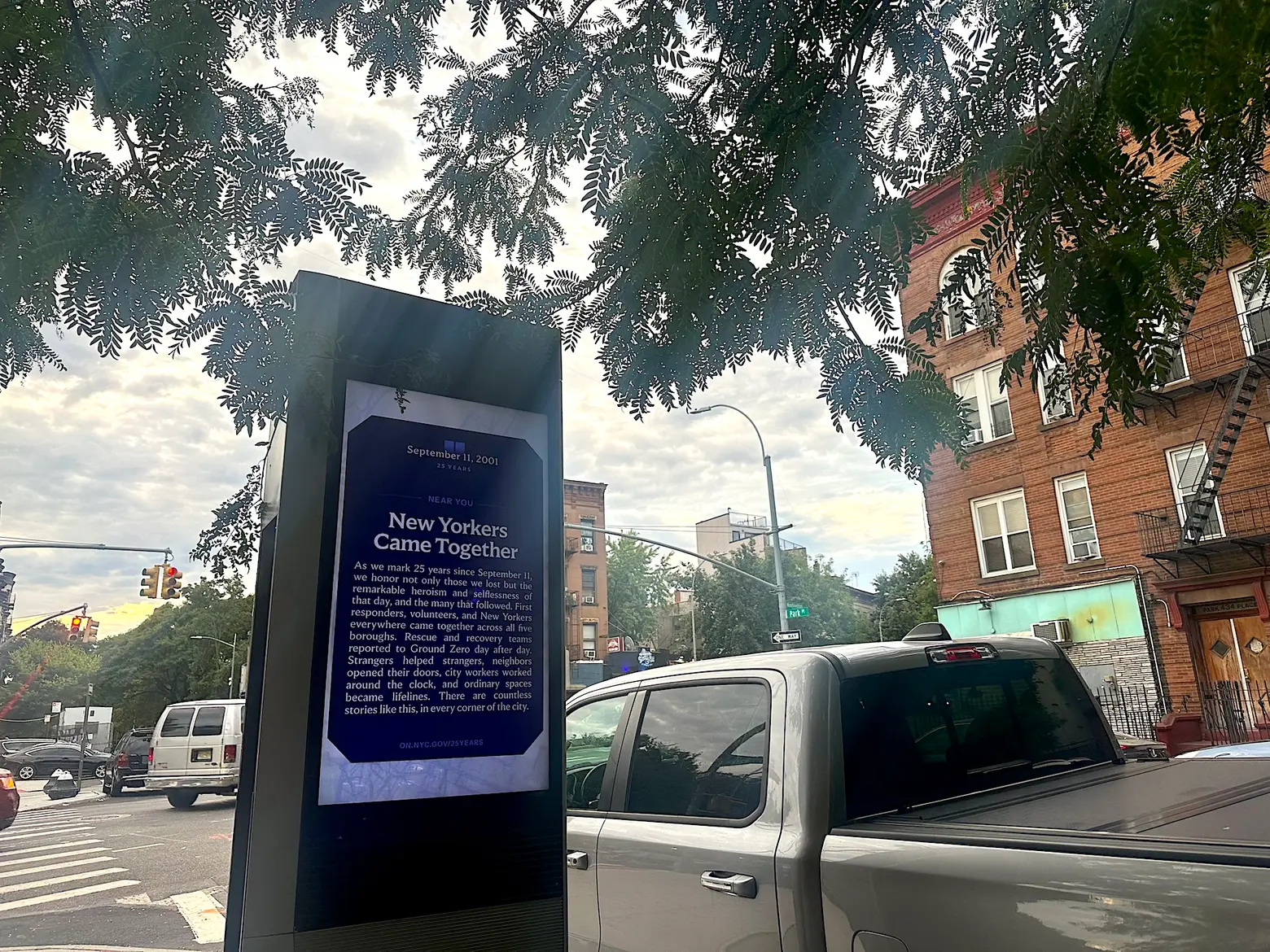
Photo © 6sqft
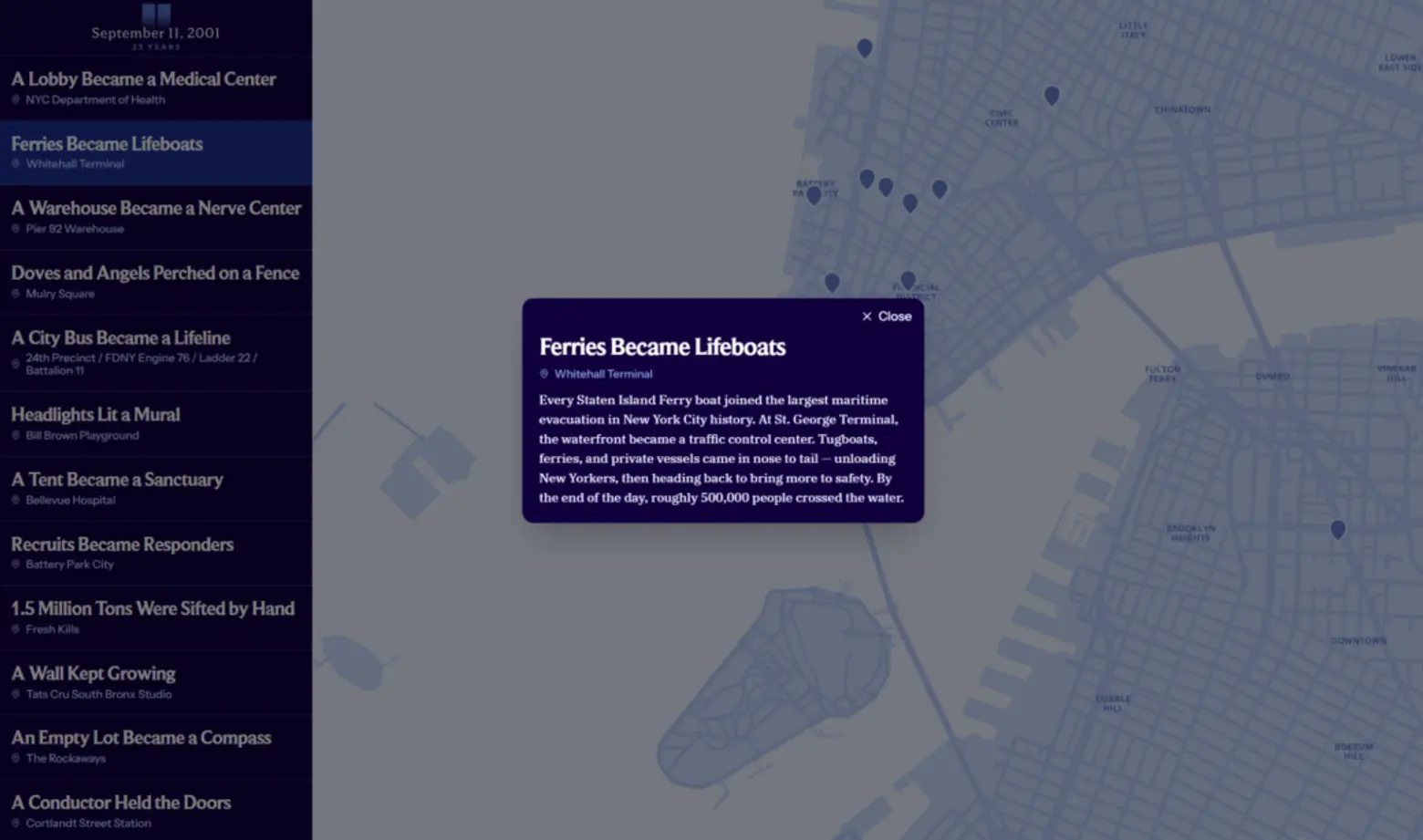
LinkNYC kiosks across New York City will share the inspiring stories of New Yorkers who aided in rescue and recovery efforts on September 11, right from the locations where they sprang into action. Mayor Zohran Mamdani on Wednesday announced “Memory Markers: 9/11,” a citywide initiative that turns streets into “walking tributes” with geolocated stories about people who helped on 9/11. The interactive map highlights sites including the Fresh Kills landfill, where 1.5 million tons of debris were sifted by hand, and an Upper West Side police precinct and fire station, where an MTA bus driver suddenly became a transporter for police officers, firefighters, and medical supplies headed to Ground Zero.
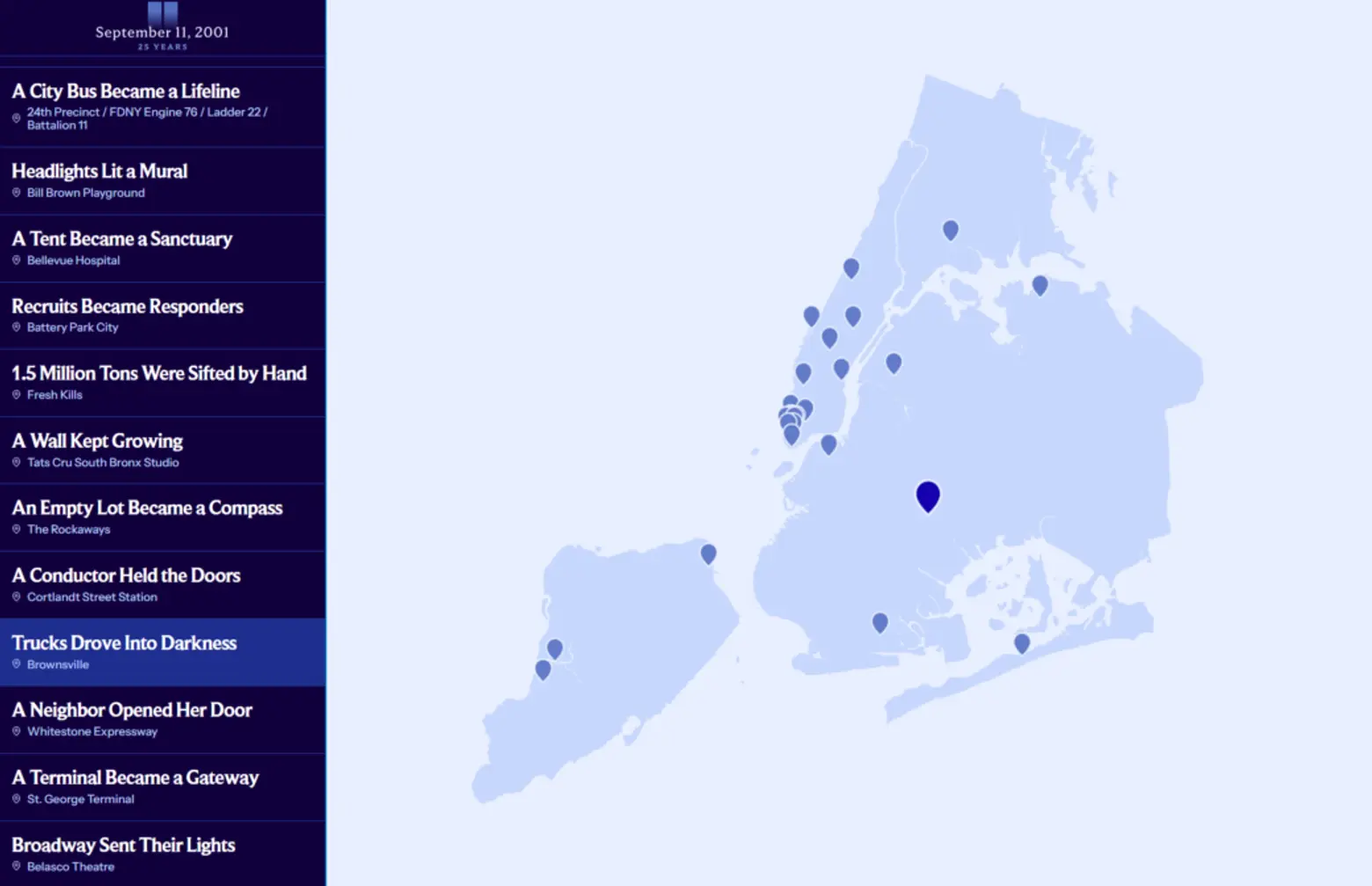
The campaign features 27 participating kiosks at locations across all five boroughs where the people featured in the stories took part in rescue and recovery efforts, not only on the day of the attacks but in the days, weeks, and months of uncertainty that followed.
Included in the tribute are health facilities such as the lobby of the NYC Department of Health, which became a makeshift medical center, and a makeshift tent outside Bellevue Hospital where survivors were treated.
In Murly Square in the West Village, a kiosk will tell the story of artist Lorrie Veasey, who hung painted tiles of doves, angels, and American flags outside St. Vincent’s Hospital, where patients could see them. Her display inspired ceramic artists from across the country to add to the tapestry.
At Bill Brown Playground in Sheepshead Bay, a kiosk will honor Ray Fiore, who painted a 22-foot American flag across a handball court at the park for six days and nights following the attacks. When darkness fell, a neighbor pointed his car toward the mural, allowing Fiore to keep working through the night. The mural still stands today.
In the South Bronx, a kiosk will similarly pay tribute to artist collective Tats Cru, which watched the towers fall from its studio. Months later, while painting a memorial mural on 207th Street, city workers stopped by, wanting to be a part of it. As they shared their stories, Tats Cru listened and painted each of them into the mural.
A road milling crew in Brownsville will be honored for its selfless act of driving through the dust-filled, pitch-black Brooklyn-Battery Tunnel toward Manhattan. For three months after the attacks, the crew rotated between clearing debris from Ground Zero and repairing the city’s streets.
“In the days, weeks, and months after the horrific terror attacks of September 11, 2001, New Yorkers came together in ways big and small to help our city recover,” Mamdani said. “A sanitation worker sang for first responders resting after a long day at Ground Zero. Environmental workers cleaned rooftops and building facades, block by block.”
“We recovered together then, and we will remember together now—by telling the stories of the everyday heroes we lost, honoring the heroes who remain and recognizing that 9/11 was a day that never ended, with consequences that continue to shape us today.”
The tribute is part of the Mamdani administration’s broader efforts to commemorate the 25th anniversary of 9/11, which the city will mark Friday.
Earlier this week, Mamdani secured the release of more than 170,000 pages of records, shedding new light on what government officials knew about the dangers posed by toxic air around Ground Zero and what information was withheld from the public.
The release settled two Freedom of Information Law requests over access to the records and includes the “Harding Memo,” a 2001 internal city document that warned the city could face as many as 35,000 potential liability claims related to the aftermath of 9/11.
First responders, elected officials, and victims’ families had urged the city for years to make the documents public as those affected by the attacks continue to face long-term health problems.
“For the FDNY, September 11 was a day that didn’t end,” Fire Commissioner Lillian Bonsignore said. “The heroism and courage displayed by our members that day continues to inform our Department, and teaching the public about that is critically important to our mission of Never Forgetting.”
RELATED: