
Morris Adjmi’s Soho tower could rise to 21 stories in exchange for Canal Street subway upgrades
All images courtesy of Morris Adjmi Architects
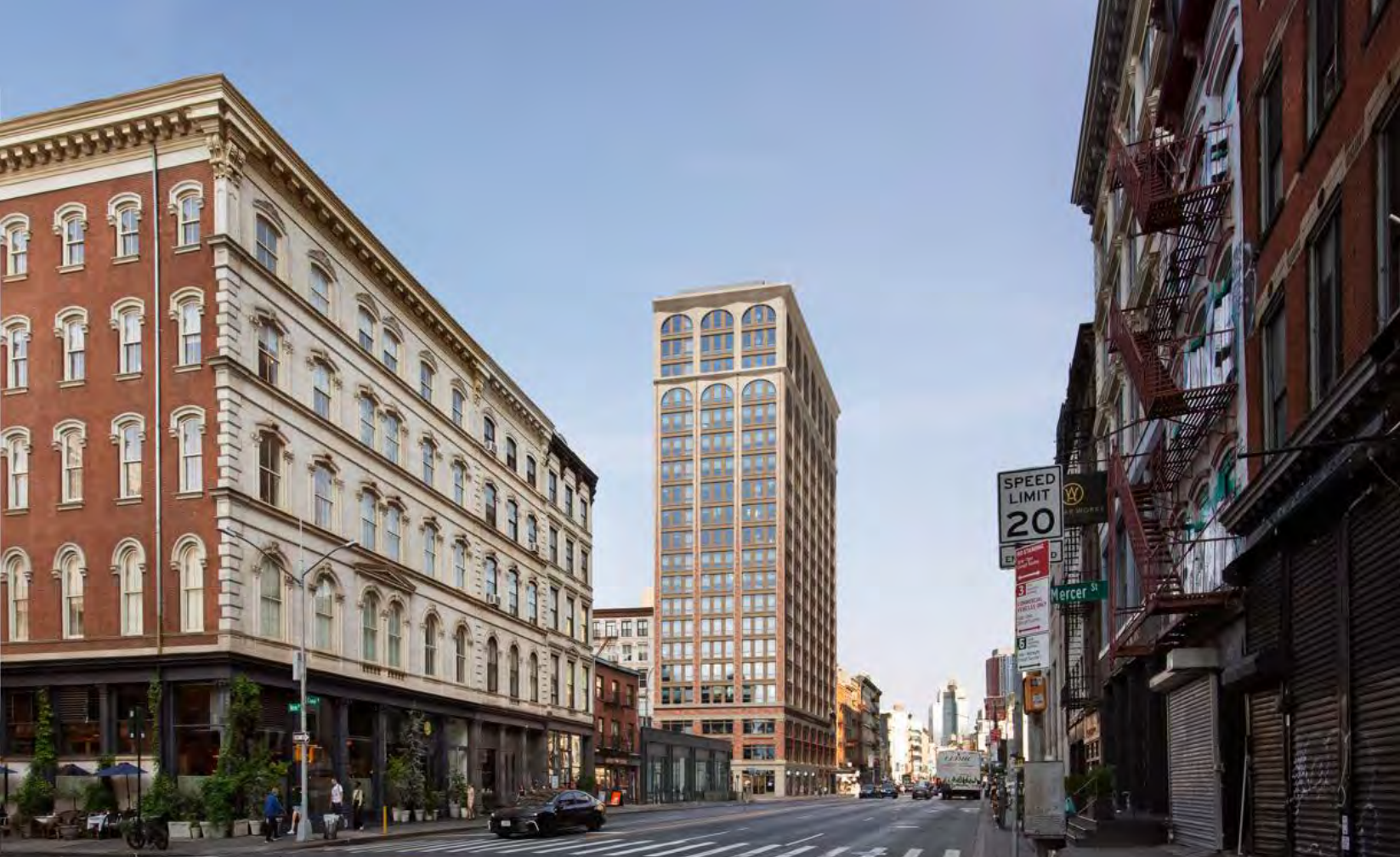
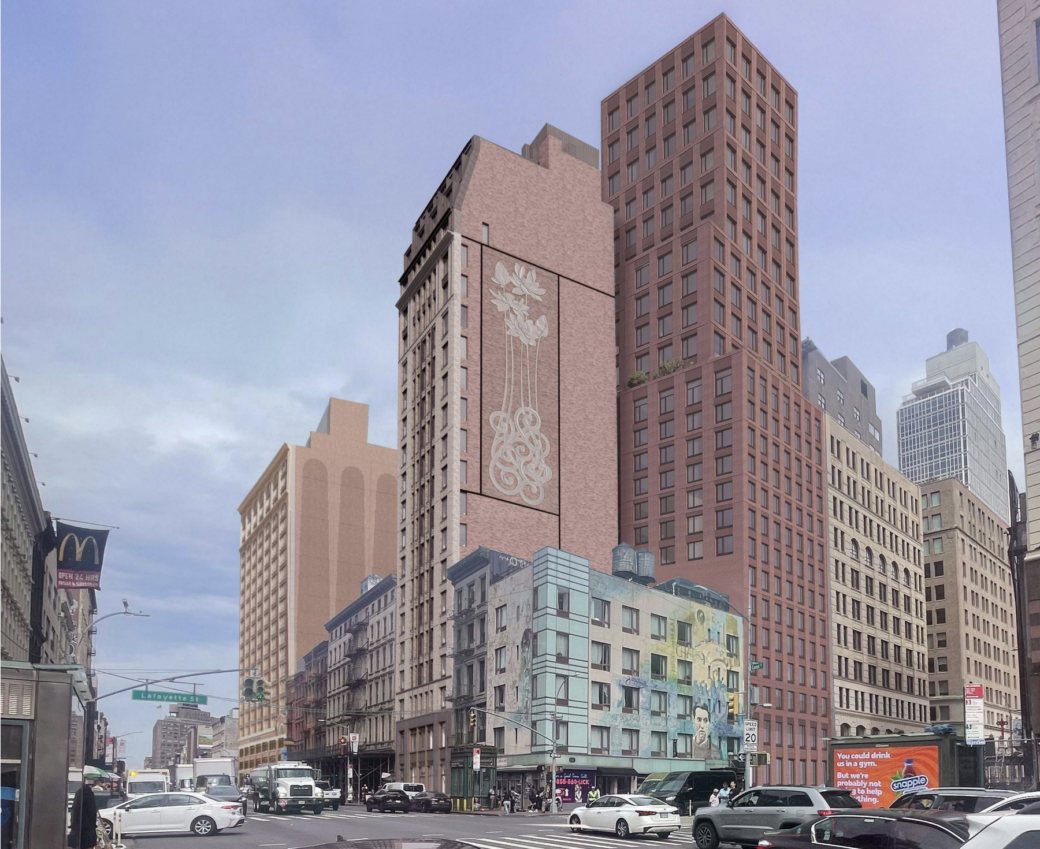
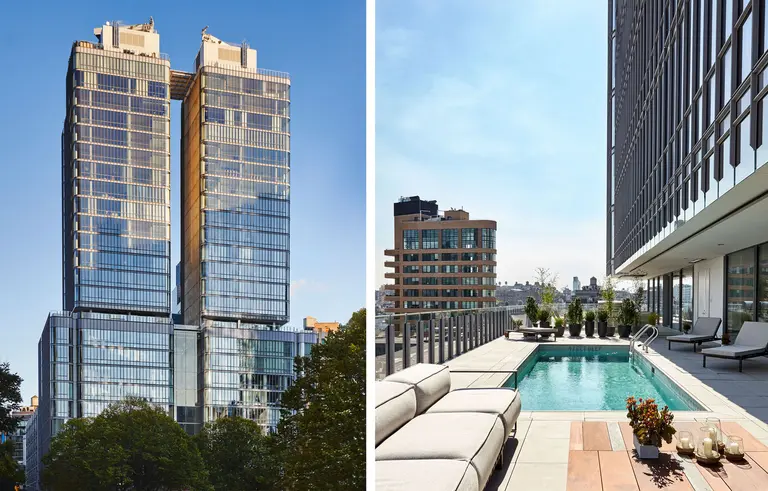
The Landmarks Preservation Commission on Tuesday reviewed a proposal to make a Morris Adjmi-designed Soho project larger in exchange for nearby subway station upgrades. United American Land released plans in 2023 to build a 13-story building with 100 apartments at 277 Canal Street, which the city’s Landmarks Preservation Commission approved that year. The revised plan presented to the LPC on Tuesday calls for a 21-story building with 159 units, made possible if granted a floor area bonus from the city in exchange for accessibility upgrades to the Canal Street subway station. The commission sent the 277 Canal team back to the drawing board after some commissioners took issue with the building’s increased height.
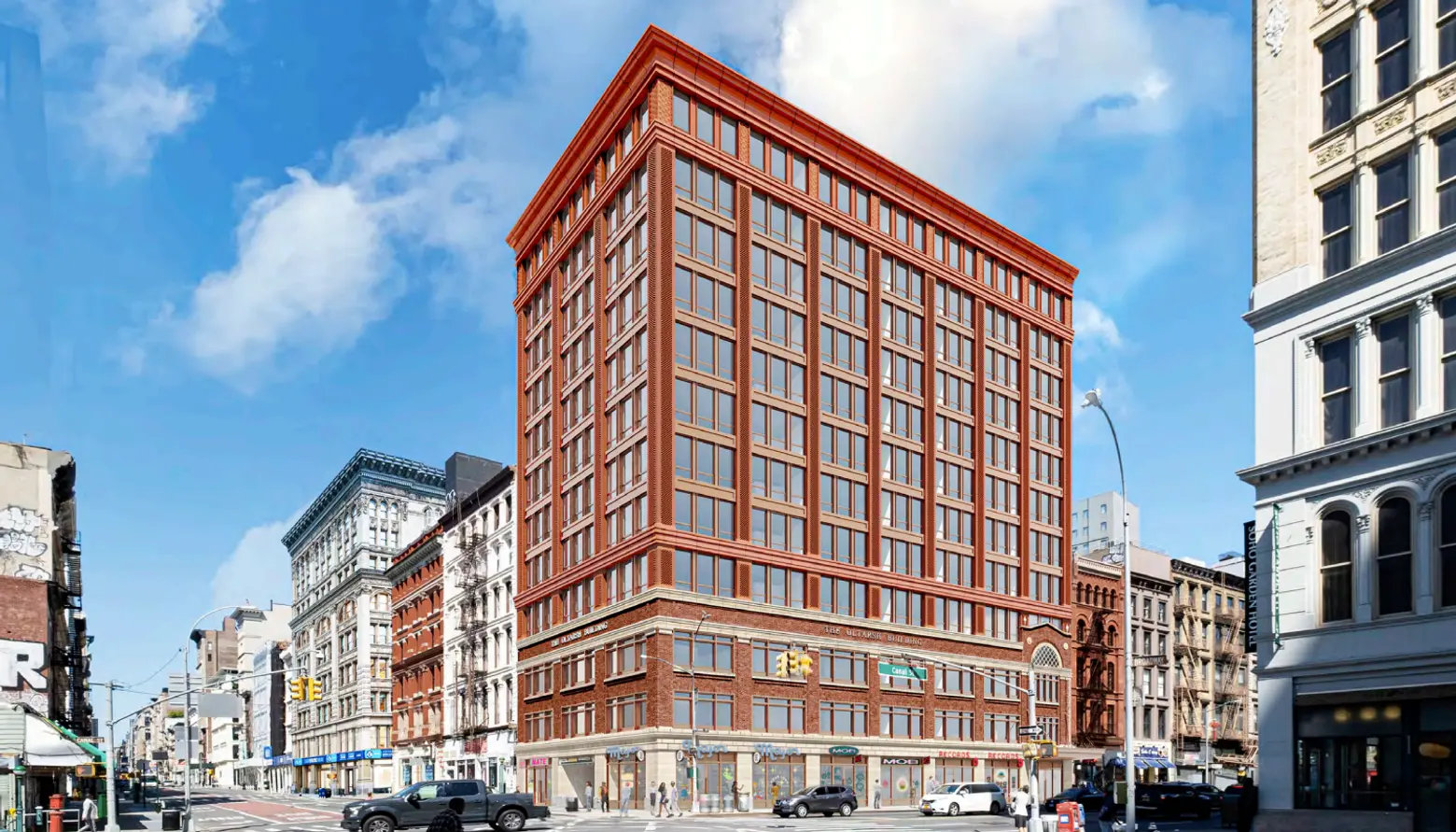
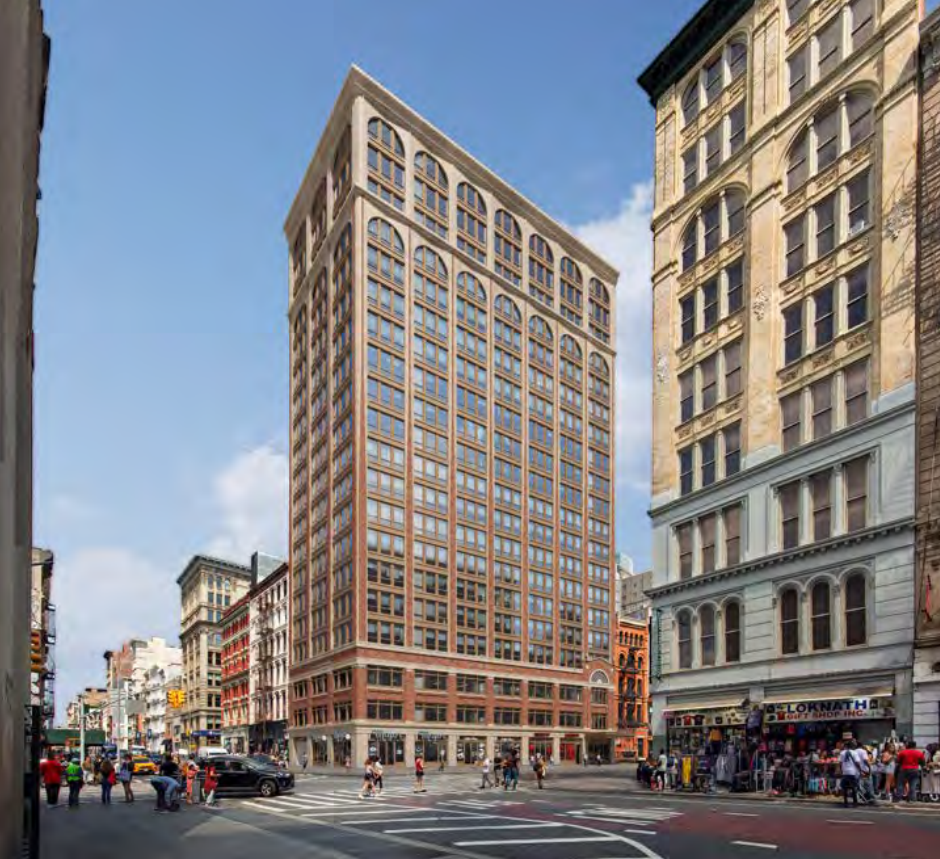
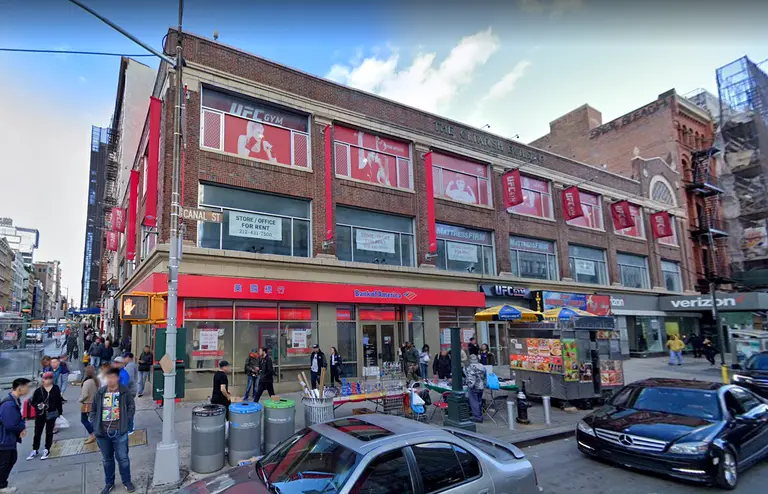
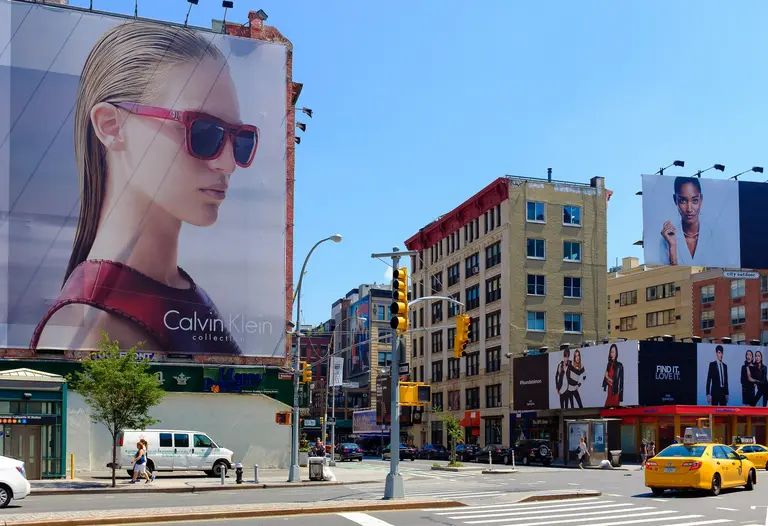
Also known as the Oltarsh Building and alternatively addressed as 422 Broadway, the three-story structure was built in 1927 as a theater and has since housed a variety of retailers. The building sits at the corner of Canal and Broadway in the Soho Cast Iron Historic District, directly above the Canal Street station.
UAL tapped Morris Adjmi to design the project for his reputation of taking a “respectful approach” to historic districts, as 6sqft previously reported.
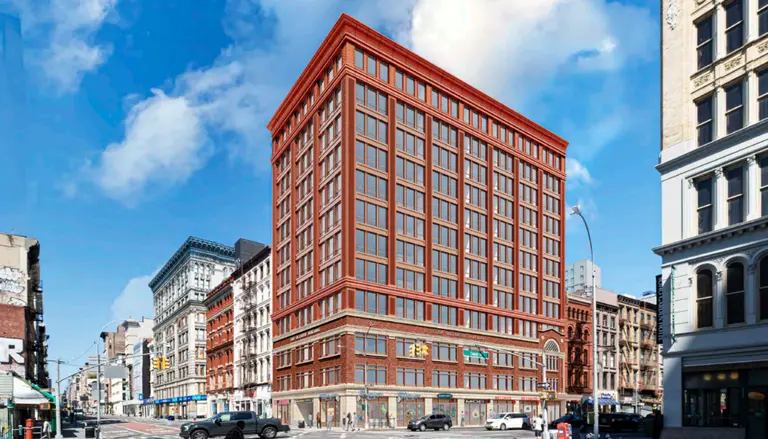
The project’s first iteration called for transforming the building into a 13-story mixed-use structure with 100 housing units, 25 percent of them designated as affordable under the city’s Mandatory Inclusionary Housing program.
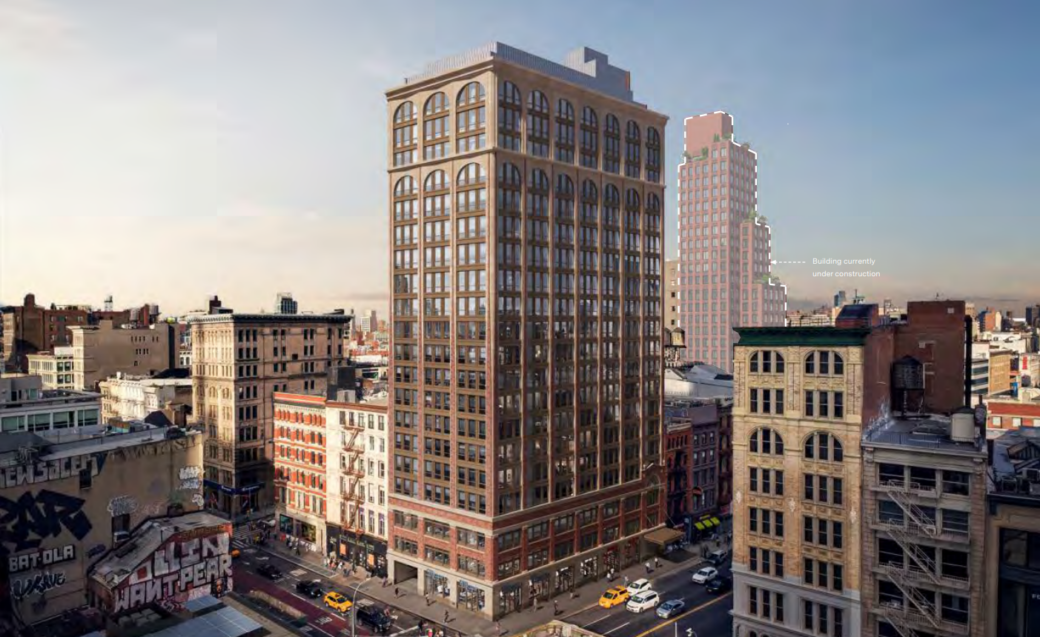
Adjmi retained the historic building’s existing red brick facade and ensured a “contextually designed” exterior using brick, metal, and terracotta materials.
Following a June LPC hearing in which the commission recommended a series of revisions, Adjmi increased the cornice depth and profile to emphasize the building’s crown, addressing feedback that also called for signage to be “more playful” and reflective of Canal Street.
Since its initial approval, UAL has proposed expanding the building using the city’s Zoning for Accessibility (ZFA) program. Created in 2021, the program offers developers density bonuses of up to 20 percent or easements that can increase project size in exchange for funding accessibility upgrades at nearby transit stations.
The developer now seeks to increase the project’s height, adding 18 stories atop the existing Oltarsh Building instead of 10. The proposal includes roughly 139,370 square feet of residential space and 6,510 square feet of retail.
The transit improvement bonus would allow the developer to build 159 total apartments, 31 of which would be made affordable.
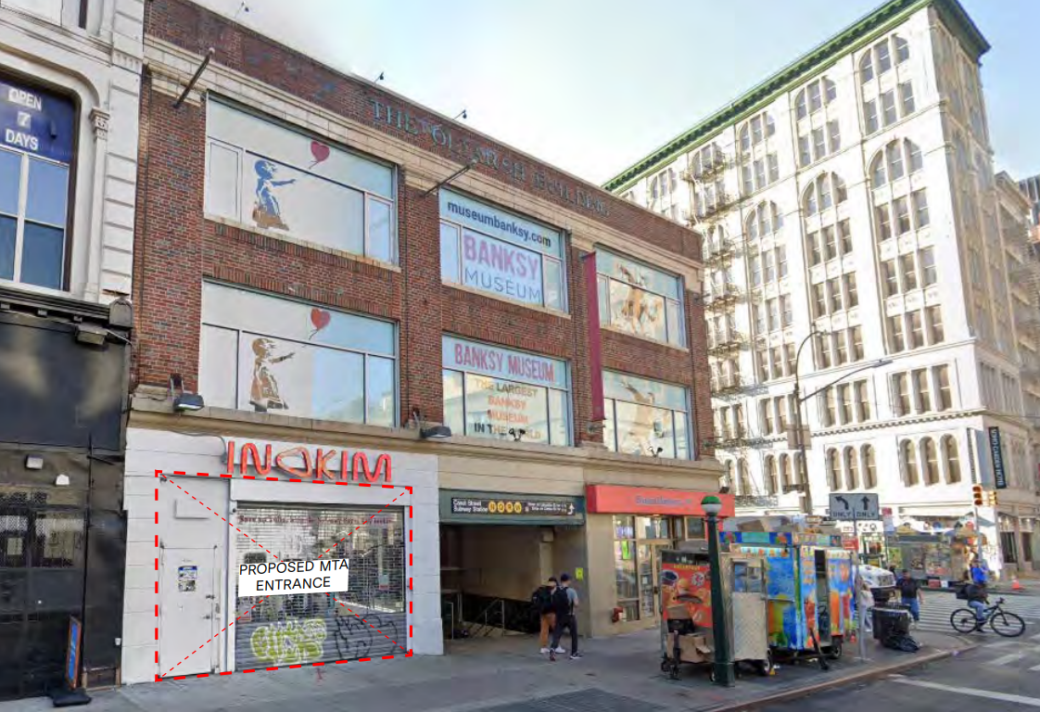
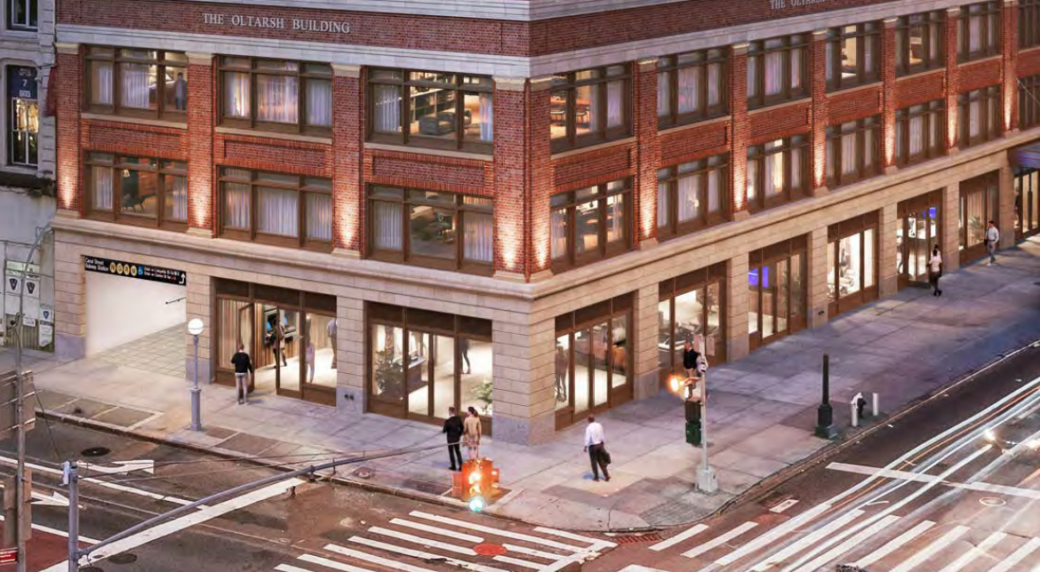
In exchange for the density bonus, UAL would upgrade the Canal Street station, served by the N, Q, R, and W trains. The proposed modifications would relocate the center bay entrance to the northern bay, making room for an elevator that provides direct access to the platform.
They would also create a new fare control area and mezzanine connecting to the platform, doubling the size of the current easement area.
In Tuesday’s LPC presentation, the applicants argued that the existing building is not representative of the key period of significance for the broader historic district, which is primarily characterized by 19th-century cast-iron storefront and loft buildings.
Defending the height increase, they said that because the structure was originally designed as a theater—a use that does not relate to the district’s commercial and manufacturing history—and because its height does not define its typology, a large vertical extension would not detract from the building’s architectural style or the character of the historic district.
Additionally, the team pointed to other projects in the district that set a precedent for vertical building extensions constructed “in plane” with the original building base.
Finally, they noted that Broadway and Canal Streets are wider than other corridors in the district and feature corner buildings that are significantly larger than those on side streets, allowing taller heights to fit within the scale of the surrounding streetscape.
However, the substantial increase in the project’s height proved to be a major sticking point for some LPC commissioners. Although many commissioners approved of the project in principle, the LPC ultimately took no action and said additional modifications to the building’s height would be required in order to gain approval.
Commissioner Michael Goldblum began discussion following the hearing, calling it a “really interesting project” that he could accept “nearly as it is,” except for a few alterations to its height and shaft continuity.
“The floor increase on the upper floors, except for the top three, is gratuitous and doesn’t add to the experience of the building,” Goldblum said.
“It wouldn’t hurt anybody to knock off those extra six or seven feet off the building. I would suggest that they regularize the floors. I think that you could keep the top three floors to have a different height, but I think the shaft should be continuous,” he added.
Vice Chair Angie Masters said that while she was “compelled” by previous arguments from the applicants to consider the need for additional affordable housing in the project’s expanded height, the presentation lacked enough information and detail to justify the vertical extension.
“The crux of this is the vertical height. That is what should’ve been emphasized in the design,” Masters said. “I know that it is on the boundary of a historic district and there are other buildings in the neighborhood that might be comparable, but for me, that really needs to be emphasized, given that, going through the public testimony, there were a lot of concerns about the height.”
“I think that a taller building here could certainly be justified, but I’m not sure that we have the story yet to justify it,” she added. “I’m willing to be flexible, even if it’s taller than anything else in this historic district, but I think we do need a little more justification here.”
LPC recommended the design return at a later date after considering recommendations regarding the building’s height.
RELATED:
Interested in similar content?
Leave a reply
Your email address will not be published.








[…] Morris Adjmi’s Soho tower could rise to 21 stories in exchange for Canal Street subway upgrade… […]