Work to begin on $1.6B life sciences hub in Kips Bay next year

All renderings courtesy of SOM / Miysis
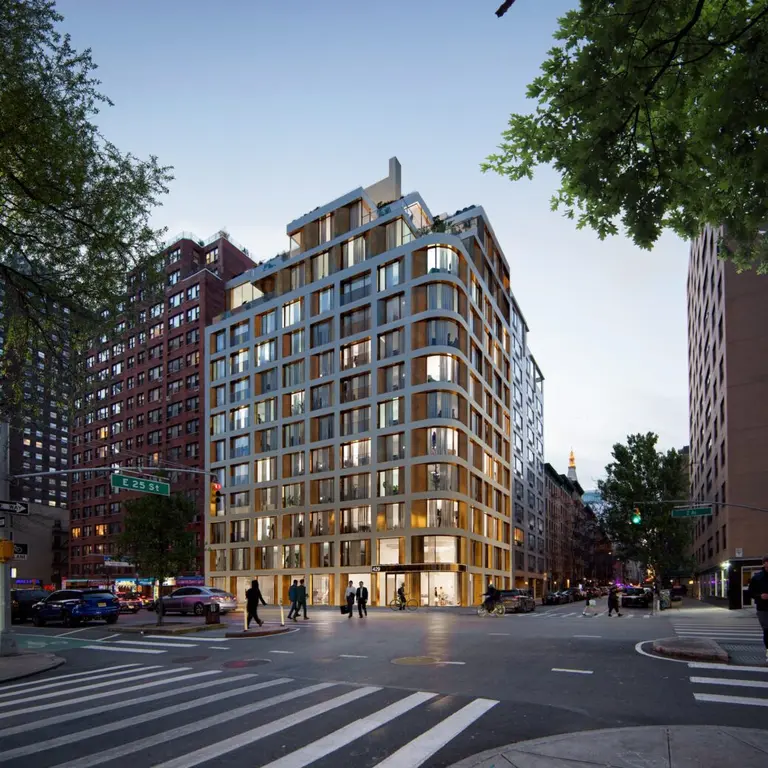
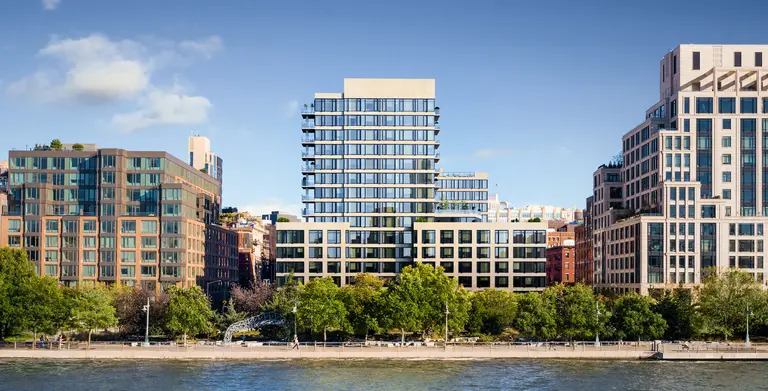
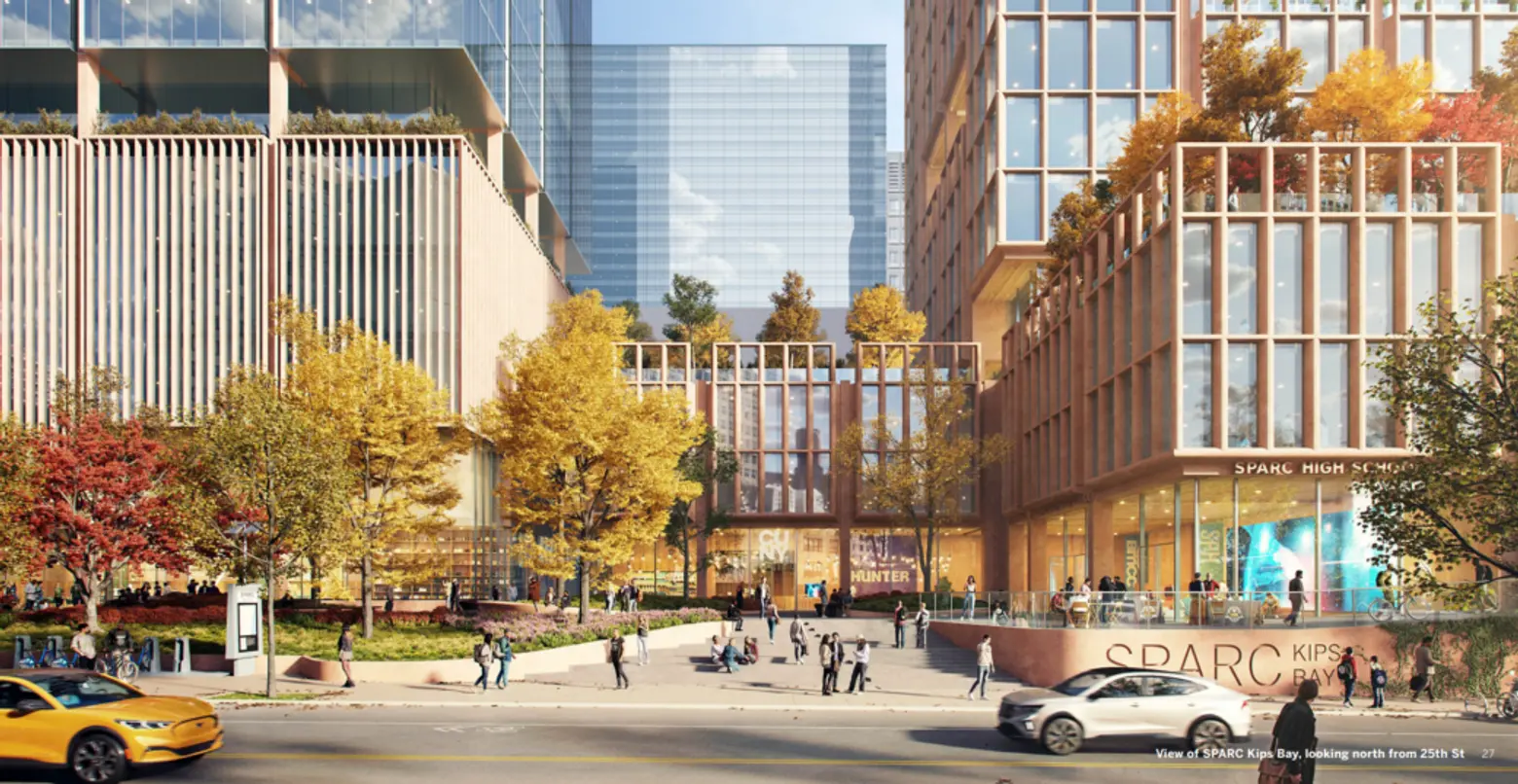
Work on a huge new life sciences campus in Kips Bay, aimed at cementing New York City as a national leader in the field, is getting ready to kick off. Gov. Kathy Hochul and Mayor Eric Adams on Tuesday announced a timeline for construction of the Science Park and Research Campus (SPARC) Kips Bay at East 25th Street and First Avenue, with deconstruction of the current campus planned for February 2026 and construction of the new campus the following year. The $1.6 billion project will provide modern facilities for 4,500 City University of New York students and create a clear pathway to careers in the life sciences sector. The campus will include an ambulatory care center, a Health + Hospitals training facility, a health sciences high school, and a training center for forensic pathologists.

“The new SPARC campus will drive innovation and research for New York’s nation-leading life sciences ecosystem, ensuring that groundbreaking medical advances are done right here in this city,” Hochul said.
“Over the past four years, Mayor Adams and I have made bold strides to uplift New York City’s economy, create good-paying jobs for New Yorkers, address the affordable housing crisis head-on, and forge ahead with critical infrastructure projects — showcasing what can be accomplished through state and city partnership.”
First announced by Hochul and Adams in October 2022, the sprawling facility will replace Hunter College’s Brookdale Campus, revitalizing an entire city block. The project will double the space dedicated to life sciences in Kips Bay, totaling more than 2 million square feet of academic facilities.
The project represents a major step in the city’s efforts to expand its life sciences sector. As of 2022, New York City employed more than 750,000 workers in life sciences-related roles, with 150,000 new jobs added in 2021 alone. SPARC Kips Bay is expected to drive further growth in the industry, as 6sqft previously reported.
Jobs that will be made available through the new complex include doctors, nurses, biochemists, engineers, as well as business managers, lawyers, and administrative assistants.

“The groundbreaking of SPARC Kips Bay marks a major step forward in strengthening our health care and life sciences infrastructure while creating thousands of good-paying jobs and long-term career opportunities for working-class people,” Gary LaBarbera, president of Building and Construction Trades Council of Greater New York, said.
“By transforming Kips Bay into a state-of-the-art public health and education hub, this project will help solidify New York City as a leader in life sciences and provide accessible middle-class career paths to hard-working New Yorkers.”
In total, the “Kips Bay Science District” will include 750 health care and life science businesses, five medical institutions, and 11 higher education institutions. The district will contain more than 44,000 health care and life science jobs and host more than 27,000 secondary students.
Another key component of the district is Innovation East at 455 First Avenue, the site of the former NYC Public Health Lab. The project will bring 460,000 square feet of modern life sciences laboratory space to the area. The Public Health Lab is relocating to a new facility in Harlem, scheduled for completion in 2026.

The project will also rebuild an accessible pedestrian bridge on East 25th Street, connecting the campus to the East River and the Manhattan Waterfront Greenway. Additionally, in October, the city’s Economic Development Corporation announced plans to convert a city-owned parking lot on East 34th Street along the East River into a temporary park, as part of SPARC’s public realm investments.
Funded in partnership with the City University of New York (CUNY), SPARC Kips Bay is projected to generate nearly $25 billion over the next 30 years and create 10,000 jobs, including 2,000 permanent positions.
SPARC Kips Bay is part of the state’s $620 million Life Science Initiative to expand the health care and life sciences fields. Deconstruction of the existing Brookdale Campus is scheduled to begin in February, with construction of the new SPARC facility expected to start in 2027.
While work is scheduled to begin in just two months, the city had yet to release a request for proposals for a developer as of October. Amid a broader slowdown in biotech leasing, the city’s Economic Development Corporation opted to delay issuing the RFP until market demand improves, as Crain’s reported.
RELATED: