Search Results for: how to get from brooklyn to manhattan

November 23, 2016

178 residential buildings may lose 421-a tax breaks if they don’t file as rent regulated

A recent report detailed how nearly two thirds of the city's 6,400 rental buildings where landlords received 421-a tax breaks didn't file properly as rent stabilized, meaning they could raise the rents as much as they chose. Now, 178 of these buildings may lose the coveted exemptions if they don't start complying with the regulations. The Post reports that the Department of Housing Preservation and Development sent out warning letters to these landlords, who altogether represent 1,400 apartments, telling them if they don't comply within 90 days their benefits will be "revoked retroactively."
Find out more
November 19, 2016

Weekly highlights: Top picks from the 6sqft staff

Trump hopes to spend weekends in NYC at Trump Tower during presidency A penthouse off Central Park on the Upper East Side for $190K? Believe it! See new photos inside the world’s tallest modular tower; leasing kicks off at 461 Dean Richard Meier, Rafael Viñoly, and KPF release designs for Upper West Side waterfront development […]

November 18, 2016

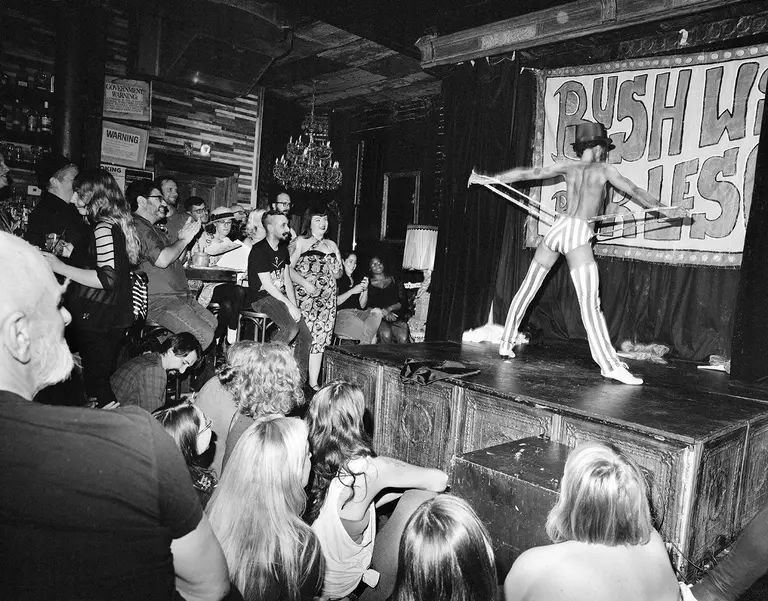
The Urban Lens: Bushwick’s ‘Bizarre’ world of burlesque, acrobats, and fire spinners

6sqft’s ongoing series The Urban Lens invites photographers to share work exploring a theme or a place within New York City. In this installment, Meryl Meisler captures the artists and performers of Bushwick's bar and event space Bizarre. Are you a photographer who’d like to see your work featured on The Urban Lens? Get in touch with us at [email protected]. When he moved to NYC, French filmmaker Jean-Stéphane Sauvaire squatted in a boarded up Bushwick building until he eventually owned it. Along with friend Gregory Baubeau, he decided to turn the building into a bar, performance space, and gallery inspired by the wild stories of Greenwich Village's underground, avant-garde Café Bizarre. Their own BIZARRE opened in 2013, and shortly thereafter they exhibited photographer Meryl Meisler's iconic shots of the neighborhood in the glam/gritty '70s and '80s. Now, Meisler has come together with Sauvaire and Baubeau for a new exhibition that showcases the "assorted madness and the unexpected" of present day BIZARRE. They've shared their energetic photos with 6sqft, capturing all those who make the venue special--the acrobats, artists, burlesque, circus, drag kings and queens, fire spinners, magicians, musicians, poets, patrons and more--and Meisler has given us the inside scoop on this unique scene.
See the collection here
November 11, 2016

Cuomo’s revised 421-a plan will move ahead as REBNY and construction trades come to agreement

Ever since the city's 421-a tax exemption program expired in January, the Building and Construction Trades Council of Greater New York and the Real Estate Board of New York (REBNY) have been negotiating under what terms to extend and/or modify the program. Both groups took part in what the city believes were "secret talks" with Governor Cuomo over the summer, after which he released his proposal to revise 421-a with wage subsidies for construction workers. REBNY was concerned about this stipulation, claiming it would increase construction costs by up to 30 percent, but a press release sent yesterday evening reports that they've reached an agreement with the Trades Council to move ahead with Cuomo's version of the plan, which, in addition to setting a $60 hourly wage for qualifying projects in Manhattan and $45 in Brooklyn and Queens, extends the tax breaks up to 35 years (up from de Blasio's proposed 25 years) and mandates newly created affordable units be kept in place for 40 years.
More details this way
November 10, 2016

East River Skyway endorsed by local politicians as L train alternative

It looks like the East River Skyway is getting a big boost from local elected officials. Three politicians have jumped on the idea, including U.S. Congresswoman Carolyn Maloney, City Councilman Stephen Levin, and State Assemblyman Joseph Lentol. The trio together drafted a letter to Mayor de Blasio, encouraging him to back the transit initiative as a solution to impending L train closure. "This is the coolest thing we could do for the neighborhood," Lentol, told DNA Info. "I don’t want to denigrate the BQX but this is even a greater plan to have a gondola going from Brooklyn to Manhattan forever."
find out more here
November 8, 2016

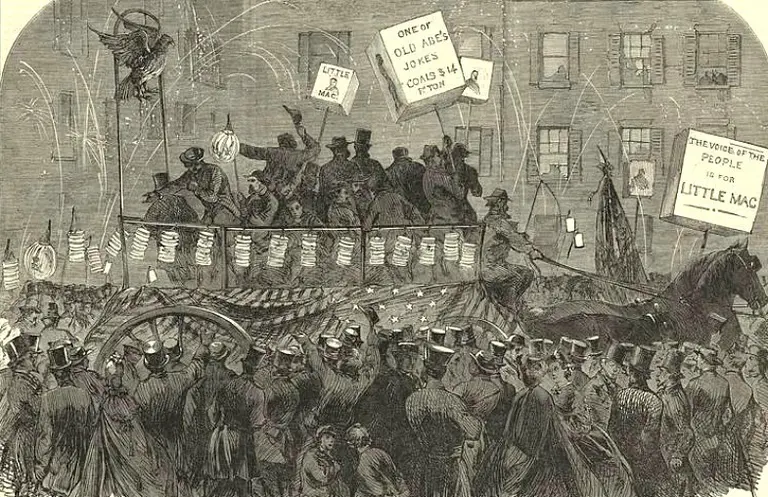
The 1864 presidential election and the thwarted plot to burn New York City

This election has been turbulent to say the least, erupting into contentious rhetoric, violence at rallies, and collective anxiety. But this isn’t the first time the U.S. has experienced such uproar from an election. In 1864, in the throws of the Civil War, incumbent Republican Abraham Lincoln was running for re-election against Democratic candidate George B. McClellan, his former top War general. Although both candidates wanted to bring the Civil War to an end, Lincoln wanted to also abolish slavery, while McClellan felt slavery was fundamental to economic stability and should be reinstated as a way to bring Confederate states back into the Union. Here in New York, this battle led to a plot to burn the city to the ground.
What led to this dramatic twist in the election?
November 7, 2016

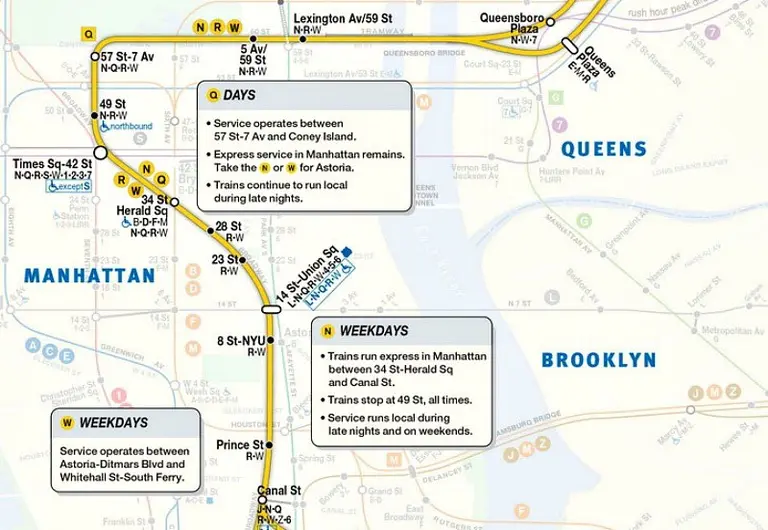
The W train returns today, see the MTA’s new service map

When it came to reviving the W train, the MTA surprisingly stuck to their timeline, with restored service from Astoria to lower Manhattan beginning at this morning. The train will now run from 6:30am to 11:30pm no weekdays, but this means changes on the N, R, and Q lines, which account for the Q train getting rerouted once the Second Avenue Subway opens next month. To make things a little simpler, the agency has created a handy map detailing the new service and changes, along with an infographic of station-specific information (h/t Gothamist).
See the full map here
November 4, 2016

The closing of neighborhood grocery stores is leaving local shoppers stranded

An important must-have when apartment hunting often involves the presence of a grocery store within a few blocks. A local food market, regardless of how harsh its fluorescent lighting or how narrow its aisles, is often the key to feeling part of civilization, especially when you've run out of milk for breakfast. The familiar branches of local chains–from Key Food to D'Agostino to the corner deli–are closing down across the city, in some cases leaving New Yorkers in something of a "grocery desert" surrounded by restaurants but without access to fresh ingredients and emergency baby supplies. According to the New York Times, the landscape is definitely shifting: Between 2005 and 2015, about 300, or eight percent, of the city's greengrocers–defined as "family-owned stores of less than about 7,000 square feet"–closed up shop and left the neighborhood.
What's causing the shift?
November 4, 2016

MAP: NYC has more than 666,000 street trees, up 12 percent since 2006

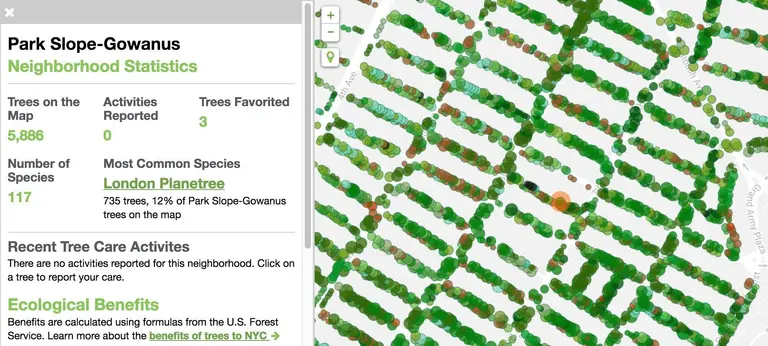
The last time the city catalogued its street trees was back in 2005-2006, when they found about 592,130 trees on public streets, including their species, trunk thickness, and condition (you can explore a map of all this info). In the summer of 2015, the Parks Department put out a call for volunteers to help with the next round of data collection, and they received help from 2,241 individuals who completed a third of the work. They've now released the results of the 2015-2016 census, which shows an increase of 12.5 percent to 666,134 trees covering 209 species, and compiled their findings into an interactive map.
Learn more about the city's street trees
November 3, 2016

My 4000sqft: Tour the 113-year-old Ditmas Park home of an architectural preservationist

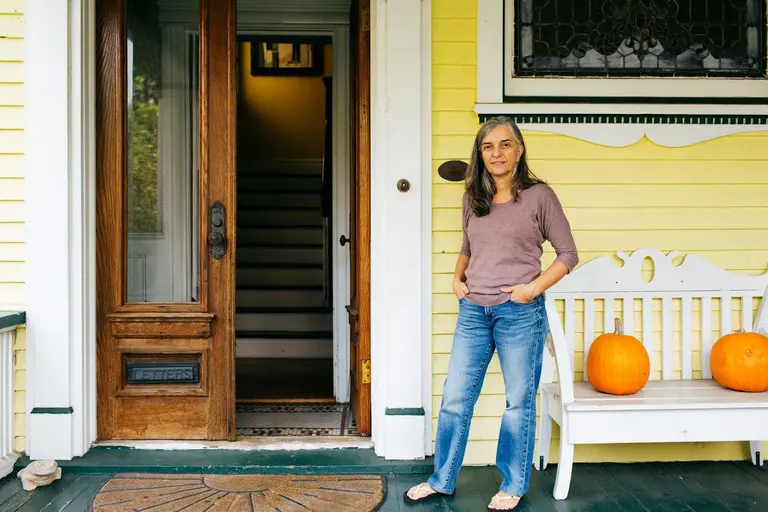
Michelle Williams' move to Ditmas Park may have put the neighborhood on the real estate map, but for those in the know, the area's history is far more profound than any of its celebrity residents. More than a century ago, Ditmas Park was not much more than farmland, but with the arrival of the subway also came interest from developers. One notable developer who descended upon the area was Dean Alvord. In 1899, Alvord initiated a new housing project that he envisioned as a “park in the city” for the rich. What followed was the construction of a range of large and stately suburban-style houses, built in an assortment of styles, from Tudors to Victorians. The development was a great success, and even drew in Manhattan's upper crust (among them Guggenheims and the Gillettes). However, as New York declined in the 70s and 80s, so did Ditmas Park. But fast-forward a few decades you'll come to seen an area that is experiencing a revival. Though it admittedly remains quite sleepy when compared to other burgeoning Brooklyn neighborhoods, Ditmas Park's suburban vibes make it the ideal destination for city-loving families—particularly when its architecturally grand proportions are taken into account. In this My sqft feature, we check out one urban family's lovely home, a landmarked wood construction owned by preservation architect Norma Barbacci and her husband, architectural conservator Glenn Boornazian. The pair purchased the house in 2004 and raised two children within its historic walls. Ahead Norma takes us through the space—which maintains most of its 1903 character—and introduces us to the Ditmas Park of 2016.
Go inside the home here
November 1, 2016

MAP: What languages New Yorkers speak at home, by neighborhood

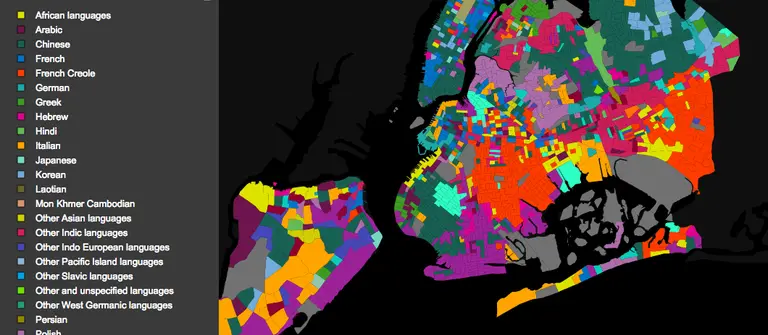
Life in New York City in all its diversity means hearing a colorful mix of languages spoken every day. Web developer and artist Jill Hubley's new census map (h/t Gothamist) shows us which languages are spoken by New Yorkers at home in their neighborhoods. Hubley intially created the Languages of NYC map for a GISMO exhibit at the Queens Museum entitled, "Map Mosaic: From Queens to the World" with data from the United States Census Bureau's American Community Survey. The result is a colorful tableau of native tongues, from Russian in Brighton Beach to Spanish in Sunset Park, with large swaths of French Creole in Brooklyn and Chinese in lower Manhattan–and those are the ones we already expected. The map allows you to view "islands" of one or more languages or to view them all.
Check out the map
October 31, 2016

12 experts suggest creative ways to handle 9 million future New Yorkers

With New York City's population on its way to nine million, the city's infrastructure may be impressive, but it has its limits–including red tape and resource shortages–that will make it difficult to withstand the projected surge. Reminding us of the transformative innovations of Robert Moses–he of the big ideas and ego to match–Crains invited 12 firms who make their living wrangling infrastructure to hit us with some big ideas. Ahead of the upcoming summit, "Getting Ready for 9 Million New Yorkers," they've shared these visions for future (bigger, better) New York from top architects, designers and real estate experts. Ideas include some that have already proven themselves (repurposing existing track beds) and some already in the works (Bushwick's Rheingold brewery project) to others that Robert Moses might not love (shrinking the city's highways).
Take a look at these futuristic ideas for moving the city forward.
October 31, 2016

MAP: East Williamsburg would be fined the most by new Airbnb law

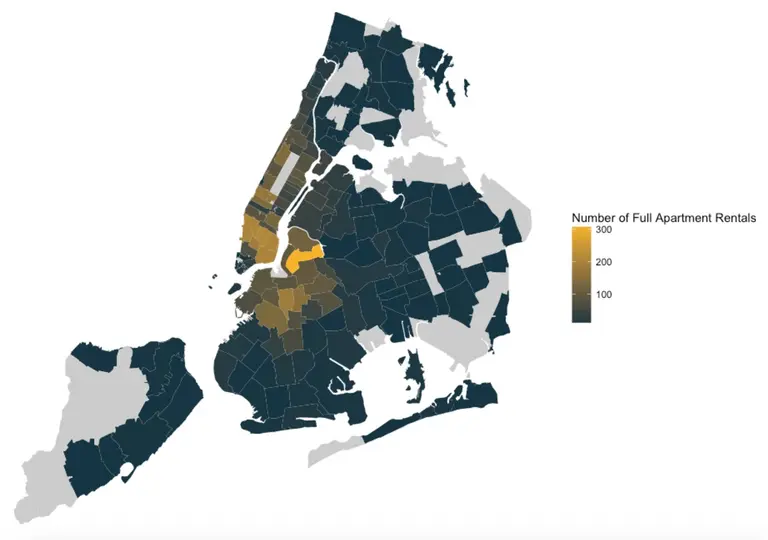
After Governor Cuomo recently signed into effect a bill that would impose fines of up to $7,500 on those offering illegal short-term Airbnb rentals, the company filed a federal lawsuit against the legislation, saying it would "impose significant immediate burdens and irreparable harm." And according to an analysis from ValuePenguin, shared by DNAinfo, it's East Williamsburg that would be hit the hardest by the new regulations. The personal finance website says that, as of October 1st, the neighborhood (zip code 11211) has 314 full apartment rental listings, which could result in $2,355,000 in fines. It's followed by zip code 10003, which covers parts of Greenwich Village, Gramercy, and the East Village, the Lower East Side (10002) and Chelsea (10011).
More data ahead
October 28, 2016

The Urban Lens: A walk through the wild and wonderful Village Halloween Parade

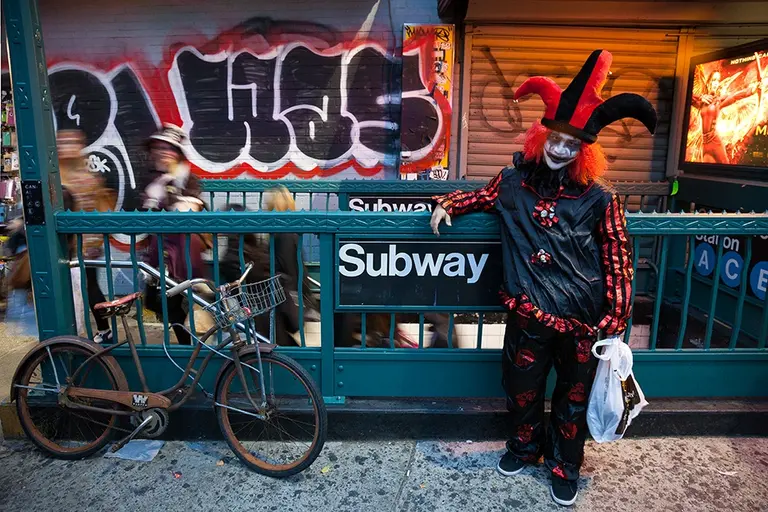
6sqft’s ongoing series The Urban Lens invites photographers to share work exploring a theme or a place within New York City. In this installment, award-winning photographers James and Karla Murray return with a series of snapshots from last year's debaucherous Village Halloween Parade. Are you a photographer who’d like to see your work featured on The Urban Lens? Get in touch with us at [email protected]. Started by Greenwich Village mask maker and puppeteer Ralph Lee in 1973, the Village Halloween Parade began as a “wandering neighborhood puppet show.” The event was a walk from house to house in Lee's neighborhood, created for his children and their friends to enjoy. In the three years that followed, the parade took on new shapes and sizes, propelled first by George Bartenieff and Crystal Field of the Theater for the New City, who staged the production in its second year as part of their City in the Streets program; and then two years later when the parade became a non-profit with its own resources to put on a major show. By 1985, the parade morphed into an extravaganza that marched down Sixth Avenue, attracting 250,000 participants and onlookers. Today, the Village Halloween Parade is the largest celebration of its kind, considered by Festivals International to be "The Best Event in the World" for October 31st.
see more here
October 27, 2016

‘Judgmental Maps’ unleash culture on the geography of modern cities

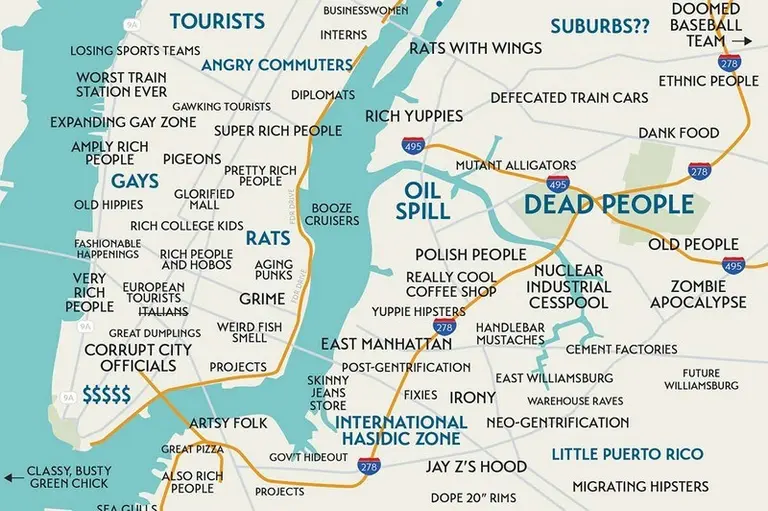
Residents of today's cities and neighborhoods are acutely aware of the cultural histories and social nuances that shape them almost as much as their streets and bridges, architecture and businesses. A few years ago Trent Gillaspie's "judgmental maps," from his site by the same name, hit a nerve and went viral; the totally unserious (but not necessarily inaccurate) maps pair geography with a snapshot of real life in modern cities, towns and neighborhoods. Gillaspie's "Judgmental New York City" was spot on in many ways with its Manhattan of "amply rich people," "super rich people," "aging punks" and the "worst train station ever" and a Brooklyn that went from Jay-Z to Zombies. Now, Gillaspie is releasing a book (h/t Untapped) of his signature reality-check maps, including an updated New York City map and the city's neighborhoods, decoded.
Your city, judged
October 26, 2016

My 630sqft: Inside ‘Store Front’ photographers Karla & James Murray’s East Village home of 22 years

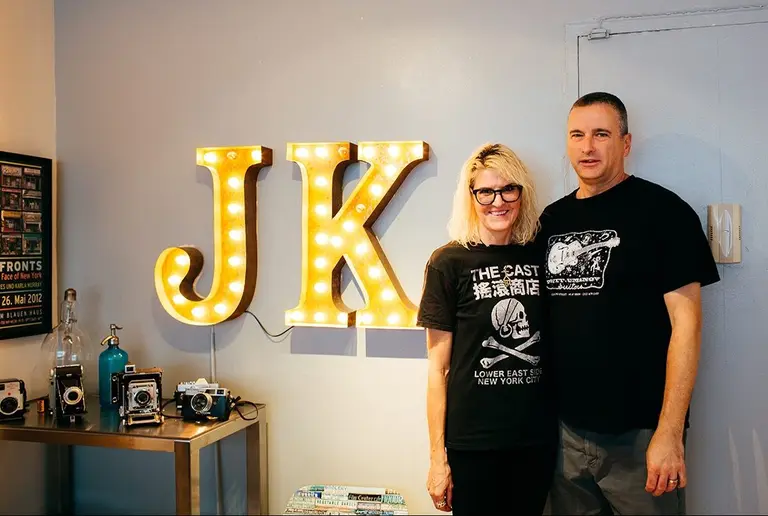
You might not immediately recognize their names, but there is no doubt you know their work. Photographers James and Karla Murray burst onto the scene back in 2008 with the release of their seminal book "Store Front: The Disappearing Face of New York," a work culling hundreds of images of the bygone retail graphics that once covered the city—and jointly, the mom and pop businesses that vanished alongside them. Since then, the Murrays have released two more tomes of the same vein, and collected countless awards and accolades for their documentary work along the way. In fact, their photographs can now be found in the permanent collections of major institutions around the world, including the Smithsonian Center for Folklife and Cultural Heritage and the New York Public Library. Their images also decorate the homes of countless celebrities, among them Sarah Jessica Parker, Ralph Lauren, Alicia Keys and Roseanne Barr. In this week's My sqft, 6sqft visits this warm and spunky husband-and-wife team in their East Village home to talk about their tenure in the city (they moved downtown in the 80s—though Karla is from the Bronx) and their ongoing efforts to chronicle what remains of "old New York." We also get a peek inside their studio apartment/workspace of 22 years, which as Karla and James share ahead, has some crazy stories of its own.
go inside their home here
October 25, 2016

Gowanus Canal cleanup yields sunken boats and a tree; ‘Naked Trump’ statue sells for $22K at auction

Using a 100,000-pound hydraulic excavator, crews started debris removal at the Gowanus Canal. So far they’ve uncovered two boats, a tree, and countless random objects like tires and bikes. [DNAinfo] What nine shoppers wore to the Williamsburg Whole Foods. [NYT] Remember that “Naked Trump” statue that appeared in Union Square and then near the Holland Tunnel? […]

October 25, 2016

5 striking skyline changes seen in NYC in the last 10 years

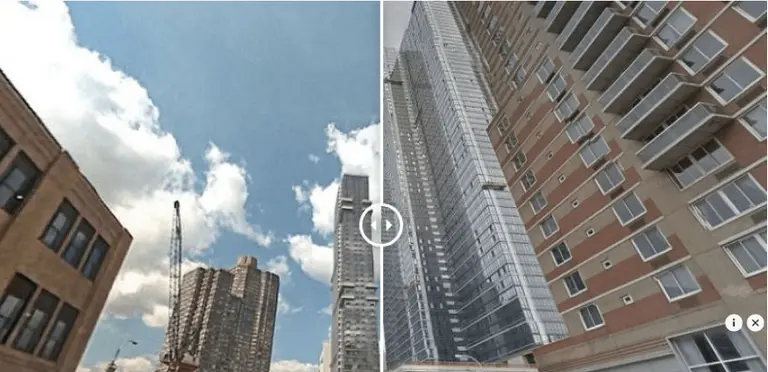
As New York City’s population continues to grow, so does its skyline. This change isn’t only going on in NYC, but also in other major cities across the country. Rentcafe.com wanted to show the shifting skylines of these urban centers in the last decade, selecting “the most striking skyline transformations to take place recently in America’s expanding […]

October 24, 2016

MTA puts up flyers touting the W train’s November 7th return

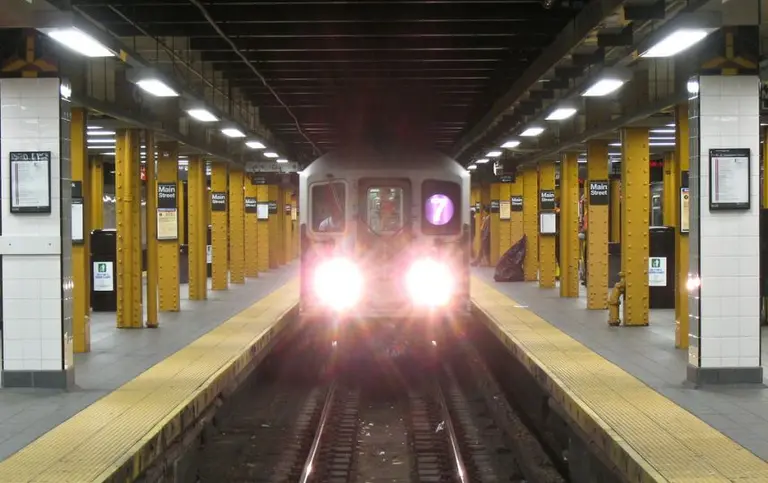
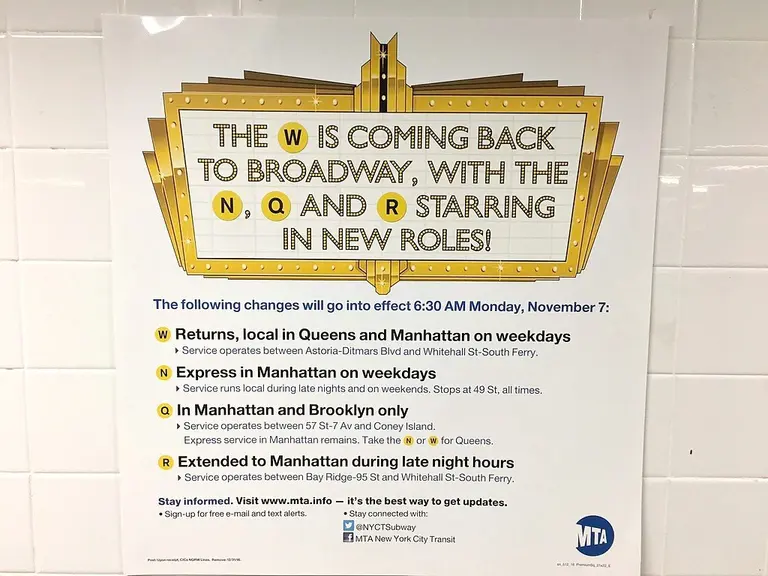
6sqft revealed last month that the W train would be making its triumphant return on Monday, November 7th, restoring service from Astoria to Lower Manhattan. Now that the date is only a couple weeks away, the MTA is putting up flyers touting the new re-instated line, reports Pix 11. Designed to look like a flashy Broadway marquee, the poster was spotted by a Reddit user over the weekend at the 34th Street-Penn Station platform of the A,C,E train.
Learn what this means for subway service
October 24, 2016

Life in New York City before indoor toilets  

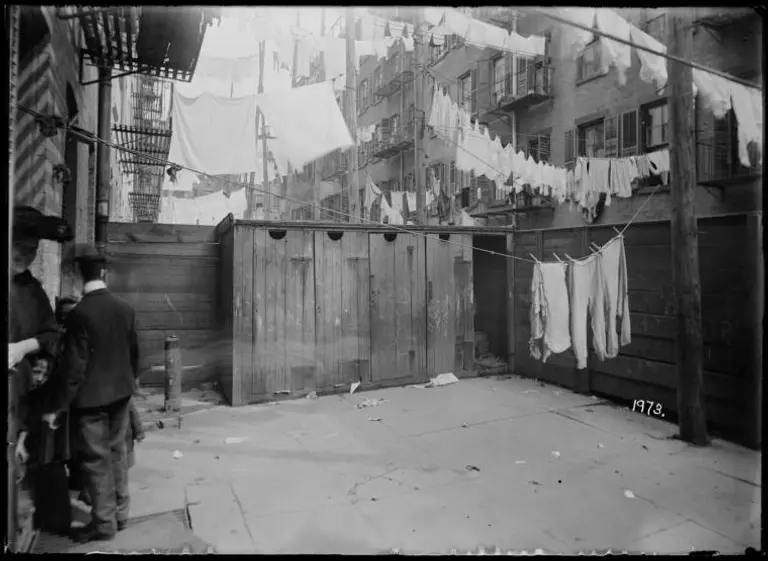
If you’ve ever bemoaned the fact that you share a bathroom with several family members or housemates, you’re not alone. Most New Yorkers live in apartments and most units have just a single bathroom. A hundred and fifty years ago, however, the situation was much worse. At the time, New Yorkers had just a few choices when it came to taking care of their lavatory needs and by modern standards, none of the options were appealing—visit an outhouse or use a chamber pot. Nevertheless, indoor toilets proved slow to gain popularity when they were first introduced in the second half of the nineteenth century. Initially, many residents feared the newfangled invention would bring poisonous gases into their homes, leading to illness and even death.
learn more here
October 21, 2016

Nomad real estate prices nearly double in five years as record-breaking listing hits the market

Prices in Nomad shot up a whopping 43 percent over the past five years, according to a new index from CityRealty, a marked increase that the developers of 212 Fifth Avenue may have been aware of when they put a $68.5 million price tag on their building’s triplex. If the sprawling apartment sells for anywhere near its asking price, it will set a record as the most expensive sale in the neighborhood, where other new developments have already raised the ceiling on the area’s sale records.
More Nomad data ahead
October 18, 2016

Knicks player Lance Thomas scores $3.56M Tribeca condo

Nets players might be gobbling up Brooklyn real estate, but when it comes to the Knicks it's all about staying near MSG in Manhattan. Recently, both Sasha Vujacic and Kristaps Porzingis rented units in Midtown West's fitness-centric Sky, and Joakim Noah picked up a $6 million Chelsea penthouse. Now, forward Lance Thomas is settling down a bit farther south, as LLNYC reports that he dropped $3.56 million on a sprawling Tribeca triplex at 52 Lispenard Street, which makes sense since he recently inked a four-year, $27 million deal with the team.
See his new home
October 16, 2016

A 14-foot, floor-to-ceiling library decorates this $1.7M Boerum Hill apartment

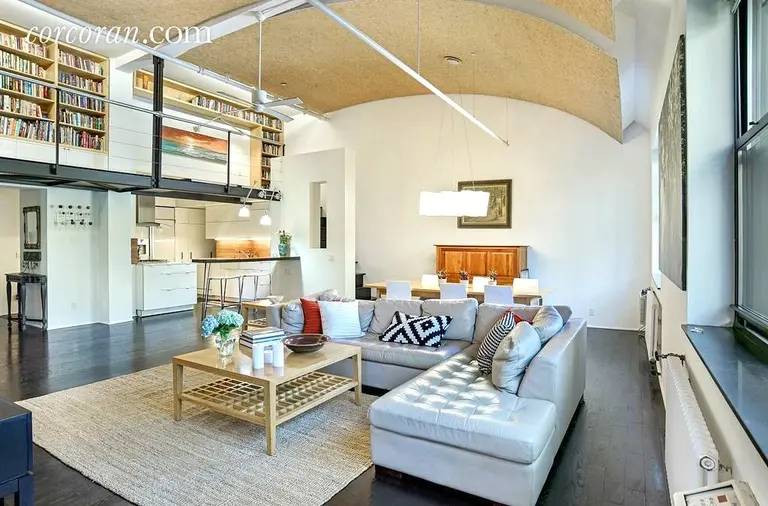
If you've got 14-foot-tall ceilings in your apartment, you may as well take advantage of them. This architect-designed co-op at 423 Atlantic Avenue, in Boerum Hill, utilized its soaring ceilings in unique ways. The apartment boasts a floor-to-ceiling library with custom shelves that span nearly 30 feet. It's accessed by a steel-construction mezzanine built into the space. If you're a fan of such quirky details (or at least own a lot of books), you'll be happy to know the one-of-a-kind pad has just hit the market for $1.695 million.
See more
October 15, 2016

Weekly highlights: Top picks from the 6sqft staff

Saddam Hussein had a secret torture chamber across from Mayor Bloomberg’s UES mansion Live in Brooklyn’s tallest tower for $833/month, lottery launching for 150 units at 333 Schermerhorn Emily Blunt and John Krasinski drop $6M on a historic Park Slope townhouse George and Amal Clooney snag high-floor condo in Norman Foster’s Midtown tower Bethenny Frankel […]