Search Results for: east ny brooklyn school

March 18, 2016

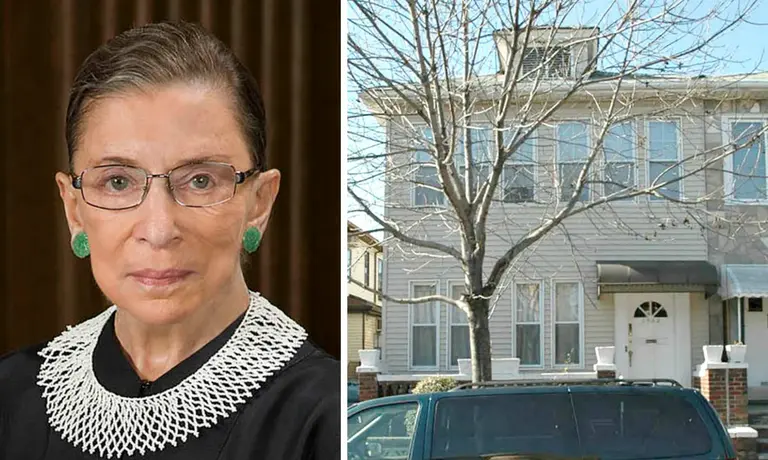
The Notorious RBG: Exploring Ruth Bader Ginsburg’s Brooklyn Roots

Though news this week has been focused on President Obama choosing Merrick Garland as the next Supreme Court justice, it's Ruth Bader Ginsburg who's been grabbing headlines for most of the recent past. And as Brownstoner recently pointed out, "the Notorious RBG, as Supreme Court Justice Ruth Bader Ginsburg is known to her fans, shares a home borough with the original Notorious title holder — the late rapper Biggie Smalls, aka the Notorious B.I.G."
Learn all about RBG's Brooklyn roots
February 25, 2016

City Planning Commission Approves Controversial East New York Rezoning Plan in 12-1 Vote

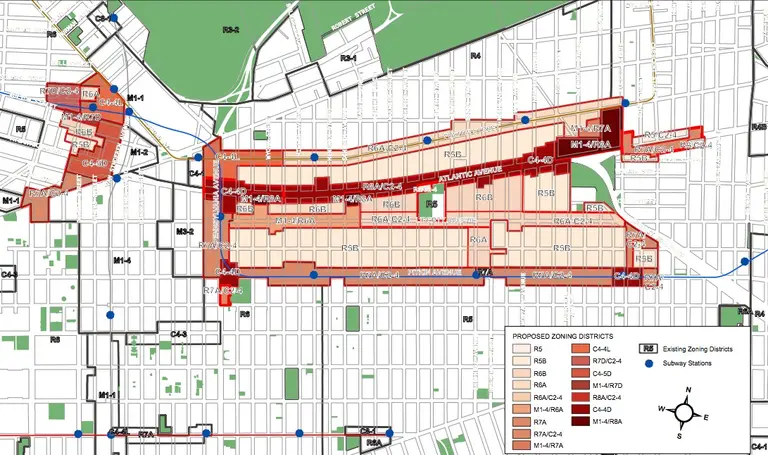
The New York City Planning Commission voted 12-1 in approval of Mayor de Blasio's controversial rezoning plan for East New York, Gothamist reports. It's the first of 15 low-income neighborhoods scheduled for rezoning as part of the Mayor's affordable housing plan, which promises to create or preserve 200,000 units of affordable housing. The City Council is scheduled to vote on the rezoning this spring. As part of what is known as Mandatory Inclusionary Housing (MIH), rezoning plans for East New York's Cypress Hills neighborhood and adjacent Ocean Hill in Bed-Stuy would have 7,000 new apartments built by 2030, 3,447 of which will be designated affordable, in addition to one million square feet of commercial space. Of those affordable units, 80 percent would be reserved for families (defined as a household of three, with any number of earners) making no more than 60 percent of the Area Median Income (AMI), or $46,000; 27 percent would go to families making 40 percent of the AMI or $31,000.
Find out more
February 17, 2016

INTERVIEW: Micro-Housing Architect Michael Chen Shares His Thoughts on the Tiny Trend

It's hard to flip through the home and garden television channels these days without seeing a program about tiny homes. But the trend has been gaining momentum for years, long before it made its way onto our TV screens. One of the creative forces behind this revolution is Michael Chen, firm principal of Michael K. Chen Architecture. With design offices in New York and San Francisco and 14 years of experience, Michael is considered a pioneer of innovative micro-housing. Not only does he share his "love of tinkering, of drawing, of discourse, and of making" with his clients, but he teaches at Pratt Institute School of Architecture in Brooklyn. Having recently finished the 5:1 Apartment–a compact, 390-square-foot space that fits all the functional and spatial elements for living, working, sleeping, dressing, entertaining, cooking, dining, and bathing–MKCA is taking the design world by storm with their thoughtful approach and clever product design. 6sqft decided to pick Michael's brain on just how he packs so much into such small footprints, where he thinks the micro-housing movement is headed, and the secrets behind some of his most spectacular spaces.
The interview, this way
December 22, 2015

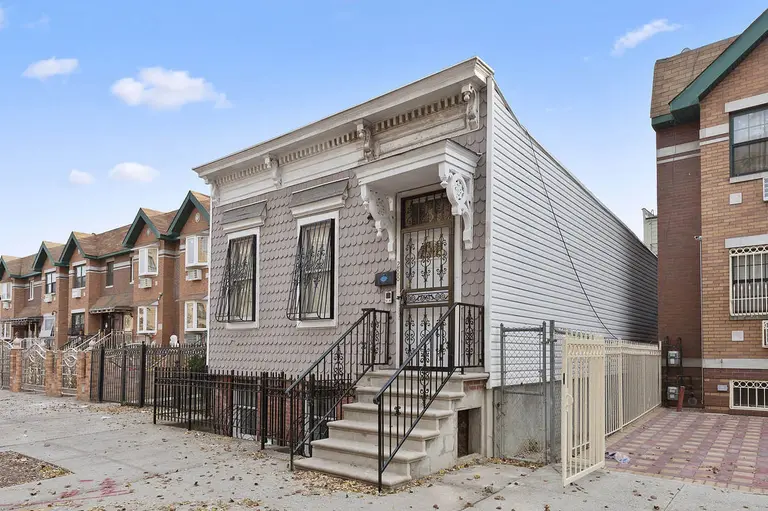
Stubby Shotgun-Style House Asks $775K in East Bed-Stuy

Bedford-Stuyvesant, Brooklyn is a neighborhood that's famed for its architecture: majestic Italianate, Neo-Grec, Romanesque Revival and Queen Anne townhouses, churches and schools line a majority of the side streets. But this little house, at 288 Chauncey Street in East Bed-Stuy, stands in a category all its own. It looks more "New Orleans shotgun house" than Brooklyn townhouse, although it does boast a classic, historic cornice. It's also rare to see a townhouse in the neighborhood that's so stubby, with a one-story front facade (The home is actually a compact two-story, but the lower level sits mostly underground). What's even the proper price tag for such an oddball home? A few years ago, it was asking $350,000, but now that the Bed-Stuy market is so hot it's aiming high with an ask of $775,000.
Check out the interior
December 9, 2015

Landmarks Approves Collegiate School Redevelopment: 66 Condos and Garden Planned

The development team involved in the rehabilitation and redevelopment of the Collegiate School academic buildings adjacent to West End Collegiate Church announced yesterday that their two-building scheme has been unanimously approved by the Landmarks Preservation Commission. Situated in the West End Collegiate Historic District on the Upper West Side, the residential development at 260 West 78th Street and 378 West End Avenue is being developed by the Collegiate Churches of New York and designed by Rick Cook of COOKFOX Architects. Funds generated by the development will be used to support the Collegiate Church's charitable and housing programs, as well as maintain its landmarked Dutch-Flemish Renaissance Revival campus.
READ MORE
October 20, 2015

Quirky East Williamsburg Artist’s Loft Offers a Bygone Authenticity for $3M

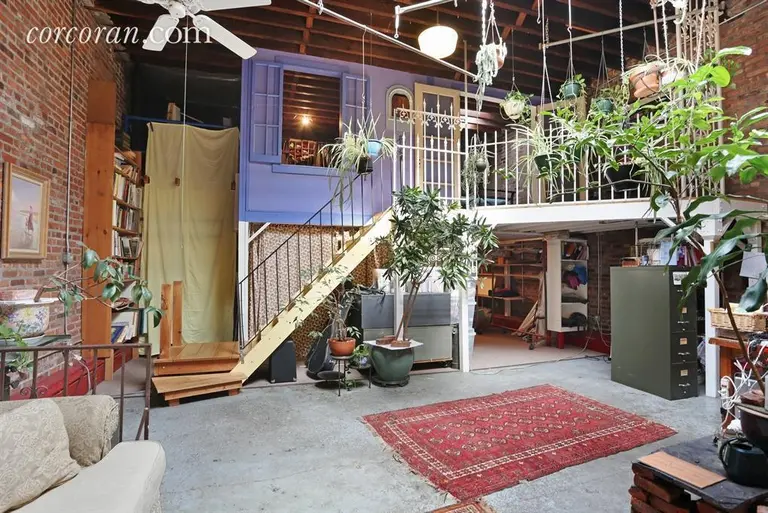
This converted East Williamsburg warehouse at 139 Powers Street is of the sort you don't come by too often anymore. It's one of those really cool-looking spaces you'd walk by maybe ten or twenty years ago and think, "hey, I'd like to live in this neighborhood" and wonder who lived there and what it looked like inside. As the listing says, it offers "authenticity that is difficult to find." The immediate neighborhood is that rare "unspoiled" old-school slice of what was once the 'burg's Italian enclave, and still has the vibe of being a mix of old, new, neighborhood-y and Vice-era cool. The two-story property, currently used as a single-family home, spans 3,600 interior square feet in a 25 x 100-foot building and is listed at $2.95 million; the loft currently belongs to local artist Joanne Ungar, and it definitely reflects the owner's creative tendencies–and green thumb.
Take a look around
October 9, 2015

New Yorker Spotlight: Lee Schrager Unites the Culinary World at the NYC Wine & Food Festival

Pumpkin everything may be the hot foodie topic of the moment, but for serious gourmands and winos, it's all about the year's biggest culinary event. From October 15-18th, the eighth annual Food Network & Cooking Channel New York City Wine & Food Festival (NYCWFF) presented by Food & Wine will bring together sommeliers with wine aficionados and chefs with foodies for four days of libation and food appreciation. Lee Schrager, a vice president at Southern Wine & Spirits of America, is the founder, director, and visionary behind NYCWFF; he launched the event in 2008 following the success of its sister festival, the South Beach Wine & Food Festival. Fast forward seven years, and the NYC festival’s dinners, master classes, and wine tastings are some of the hottest tickets in town. We recently spoke with Lee to find out why he brought NYCWFF to New York, how he approaches each year's programming, and what types of wining and dining New Yorkers can look forward to next week.
Read our interview here
July 31, 2015

New Yorker Spotlight: Author Julia Pierpont on Her Debut Novel and Coming of Age in NYC

One of the many books published this summer is Julia Pierpont's "Among the Ten Thousand Things." Her debut novel tells the story of an Upper West Side family–parents Jack and Deb and kids Simon and Kay–following the discovery of infidelity. Published earlier this month by Random House, it's received plenty of praise, including a rave review in the New York Times. Julia, who is in her late 20s, grew up on the Upper West Side and currently resides in Brooklyn. She went a few blocks north to attend Barnard College and then went downtown to to NYU's M.F.A. program, where she began writing the book. The story is peppered with lines New Yorkers will relate to, especially anyone who spent their childhood in Manhattan. "There were things you learned early, growing up in the city, and there things you learned late, or not at all," she writes, exploring the idea of what city kids gain, but also what they lack in comparison to their suburban counterparts. Then there are her descriptions. One line that seems particularly fitting given the temperature reads, "Central air seemed the greatest of suburban luxuries. It was like living inside a Duane Reade." Before she did a reading in Oxford, Mississippi, we spoke with Julia to find out about her life in New York and what role it played in "Among the Ten Thousand Things."
Get the scoop from Julia here
July 27, 2015

Flushing and the Upper East Side Top the List of Most Traffic Accidents in NYC

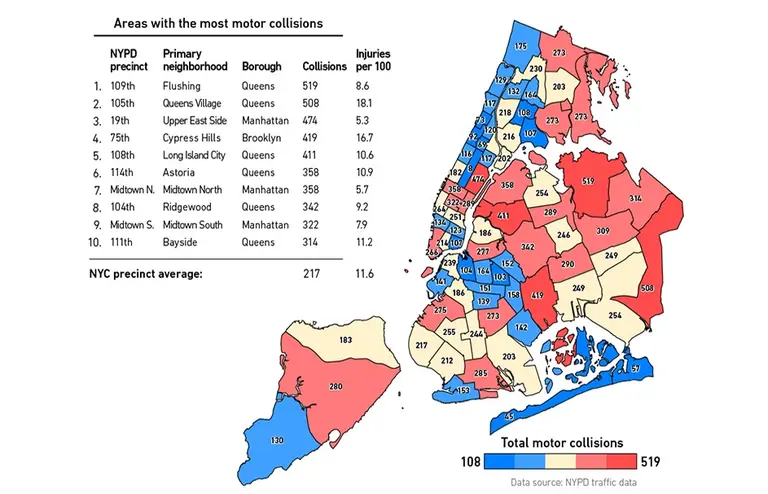
Between March 2014 and April 2015, the city reported 223,141 motor vehicle accidents, almost 25 percent of which resulted in injury or death. The Auto Insurance Center used this open-source data, which includes geographical coordinates for the accidents, to create maps and graphs examining where and when the collisions happened (h/t Brokelyn). Queens accounted for 29.5 percent of the total collisions, with Brooklyn coming in right behind at 28 percent. In terms of neighborhoods (broken down by police precincts), Flushing, Queens takes the top spot, followed by Queens Village, the Upper East Side, Cypress Hills, Brooklyn, and Long Island City, respectively.
More data and maps right here
June 22, 2015

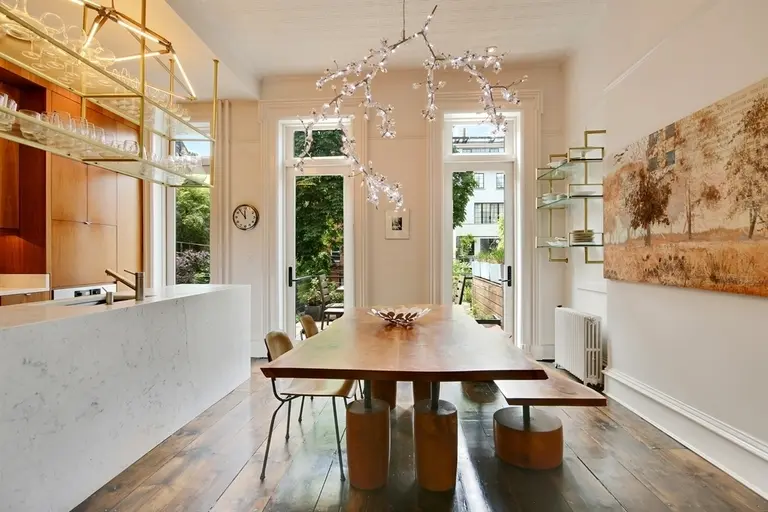
The High and Low: Architecturally Distinct Modern Townhouse in Brownstone Brooklyn

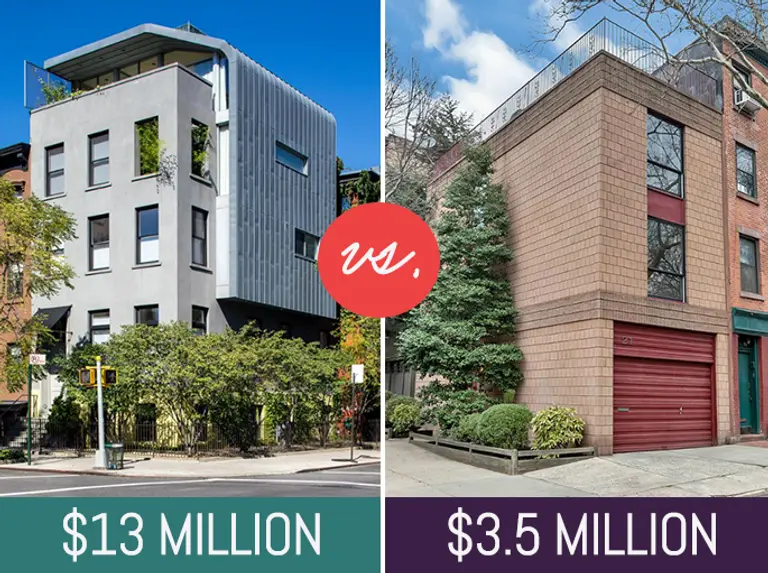
Townhouses are having a moment. Manhattan’s most lavish single-family homes are top-ticket trophies for the superwealthy. And families who've outgrown their apartments, investors banking on rising rents, and a celebrity or two, are snapping up brownstones on leafy Brooklyn blocks. But a handful of more adventurous buyers -- seeking space and privacy and possessed of some architectural vision -- chose the less-traveled road of creating modern-design homes on the decidedly un-trendy historic blocks of brownstone Brooklyn many decades ago. On the market now is the rare pair below. The first, more of a compound than merely a house, has a creative pedigree and architectural icon status (and a $13 million price tag). This combination of a 1892 school building and the townhouse next door sits among the impressively ornate 19th-century mansions of Fort Greene and boasts an un-missable modern extension and peerless minimalist interior, not to mention sheer size. The second is a more modest home–for a relatively more modest $3.5 million–but is also a unique modern dwelling with a laid-back and livable interior on a coveted tree-lined block of historic Brooklyn Heights.
See more of these unique modern homes this way
June 15, 2015

Beastie Boy Mike D’s Brilliant Brooklyn Townhouse Can Be Yours for $5.7M

Back in 2013, news that Michael Diamond—a.k.a. Beastie Boy Mike D—and his wife, Tamra Davis, had acquired a townhouse on a beautiful tree-lined Cobble Hill block and given it a creative and modern—yet totally livable—redesign led to a spate of articles showcasing the cool and quirky pad, including a New York Times house tour aptly titled "Licensed to Grill." All the attention likely led to Diamond's recent side project helping his architect friends design a new-construction townhouse in nearby Boerum Hill that recently sold for just under $5 million. Now the original Cobble Hill Beastie house at 148 Baltic Street is on the market for $5.65 million, funky custom toile wallpaper and all.
Tour the delightfully decorated townhouse, this way...
June 12, 2015

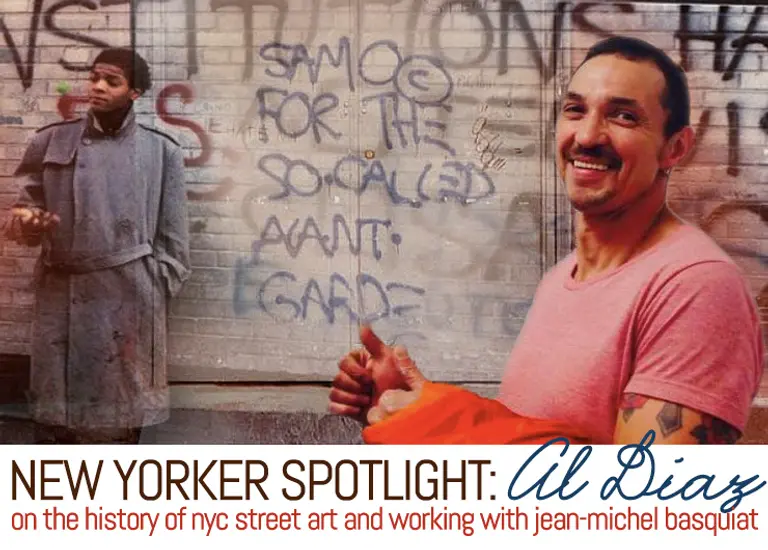
New Yorker Spotlight: Al Diaz on NYC Street Art and Working with Jean-Michel Basquiat

Artist Al Diaz is often asked to speak at panel discussions about Jean-Michel Basquiat or to lend his expertise for new exhibits about the world-famous artist. But Diaz was just as much a part of the downtown street art movement as his buddy Basquiat; in fact, the two got involved with the art form together. They met in high school and created the tag SAMO©, which appeared throughout lower Manhattan between 1977 and 1979 and put them on the map. They were first-generation NYC subway graffiti artists, and Diaz later became a text-oriented street artist. Today, you'll see his hand in the subway again with his WET PAINT series, which uses individually-cut-out letters to create "clever, surreal and sometimes poignant anagrams." We recently chatted with Al Diaz to get the inside scoop on street art history in New York City, what it was like to work with Basquiat, and how he and his art work are much more than a shadow of his famous friend.
Read the full interview here
June 2, 2015

INTERVIEW: noroof Architects on Tackling Tiny Apartment Design in NYC

The tiny house movement seems to be taking over the nation, but living in modest quarters has pretty much always been the norm for the average New Yorker. One architecture studio that's focused their energies on the challenges of designing the super small—versus the super tall—is Fort Greene-based noroof Architects. Led by the duo of Margarita McGrath and Scott Oliver, the studio has been developing ingenious ideas that address the space challenges that come with living in a dense city—and they often involve transforming furniture. Jump ahead to learn more about how the pair approach downsized living and designing for families, where they find inspiration, and then get some ideas on how you can make your cramped apartment feel far more capacious.
Meet Margarita and Scott
May 13, 2015

Move It Whole Foods, Brooklyn Is Getting a Wegmans!

Everyone rejoice! East Coast foodie favorite Wegmans is finally coming our way, inking a deal to open its first ever NYC location in the Brooklyn Navy Yard. The New York Times reports that the supermarket giant will take up a whopping 74,000 square feet, anchoring the new shopping complex slated to replace Admiral's Row. Wegmans beat out three other proposals vying to enter the scene but was ultimately chosen because of the lack of affordable grocers in the area, and the store's commitment to bring 600 jobs to the area, 200 of which will be full-time—double what other proposals promised to deliver.
More on Wegmans coming to Brooklyn here
May 9, 2015

May Design Agenda: 6sqft’s Guide to Navigating NYCxDesign Week

NYCxDESIGN, New York City’s official celebration of all things design, hits town from May 8–19, 2015. Home to more designers than any other US metro area, NYC is one of the world’s design capitals. Now in its third year, NYCxDESIGN spotlights the city’s diverse design community and its contributions to our economy and everyday life and increases awareness of and appreciation for design with a collaborative mix of cultural and commercial offerings. The seemingly endless program lineup offers exhibitions, installations, trade shows, talks, launches, open studios and receptions all across the city to celebrate the efforts of everyone from students to stars of the local and international design community. This year will see hundreds of events covering topics from graphic design to architecture, technology and urban design to fashion and product design, interiors to landscape, furniture to design thinking and more. It will be hard to head in any direction and not stumble into a design-related event, but we've compiled a guide to a few of the top collaborative efforts and highlighted some of our picks.
Check out our Design Week picks, this way
April 15, 2015

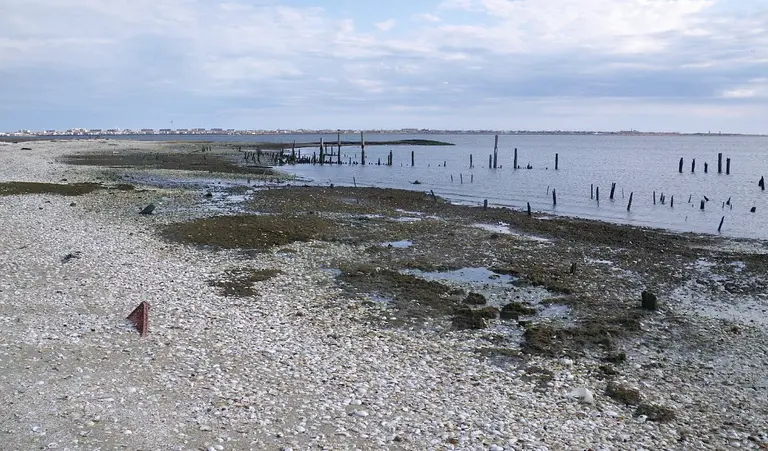
Ruffle Bar and Robbins Reef: NYC’s Forgotten Oyster Islands

Today, when most New Yorkers think of oysters it has to do with the latest happy hour offering the underwater delicacies for $1, but back in the 19th century oysters were big business in New York City, as residents ate about a million a year. In fact, oyster reefs once covered more than 220,000 acres of the Hudson River estuary and it was estimated that the New York Harbor was home to half of the world's oysters. Not only were they tasty treats, but they filtered water and provided shelter for other marine species. They were sold from street carts as well as restaurants, and even the poorest New Yorkers enjoyed them regularly. Though we know the shores of Manhattan, especially along today's Meatpacking District and in the Financial District near aptly named Pearl Street, were chock full of oysters, there were also a couple of islands that played a part in New York's oyster culture, namely Ruffle Bar, a sandbar in Jamaica Bay, and Robbins Reef, a reef off Staten Island marked with a lighthouse.
Find out about these two forgotten islands
April 9, 2015

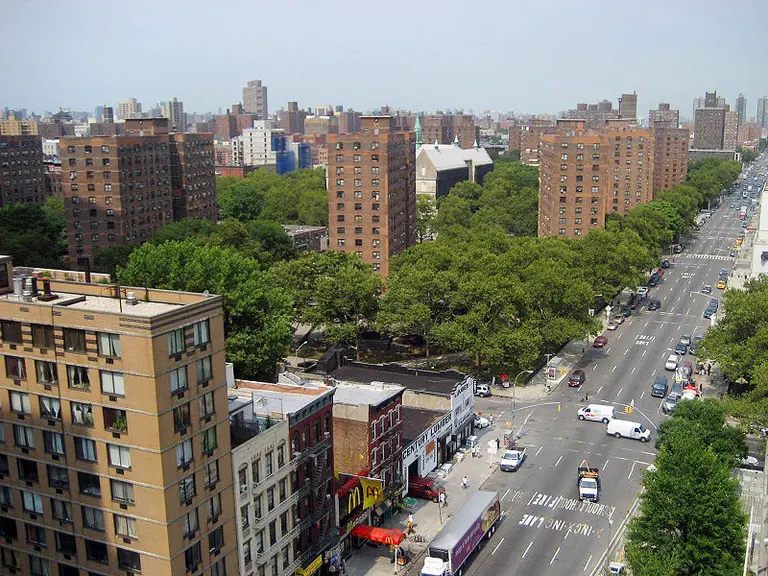
East Harlem: From Manhattan’s First Little Italy to El Barrio to a Neighborhood on the Cusp of Gentrification

A lot of attention is paid to West Harlem, or what many people traditionally consider THE Harlem, thanks to its rich history rooted in places like the Apollo and up-and-coming hot spots like the Studio Museum in Harlem and Marcus Samuelson's renowned restaurant, the Red Rooster. But east of Fifth Avenue, there's a history just as deep, and the neighborhood is at that fragile stage where it could easily be thrust into a wave of gentrification at any time. Defined as the area bound by Fifth Avenue and First Avenue from 96th to 125th Streets, East Harlem is commonly known as Spanish Harlem, or El Barrio by locals. What many people unfamiliar with the neighborhood don't know, though, is that this area got its start as Manhattan's first Little Italy. And if you're the type of New Yorker who doesn't venture above 86th Street, you're likely unaware of the slew of new developments sprouting up in East Harlem thanks to a 2003 57-block rezoning.
Learn about the neighborhood's transformation here
April 9, 2015

At Brooklyn’s Gateway, Woods Bagot Kicks Off Construction of the Jay Street Residences

AmTrust Realty has recently kicked off construction on a 250,000-square-foot, mixed-use project near Brooklyn's Manhattan Bridge approach. The development will be a step towards reconnecting Downtown Brooklyn to its waterfront, and, along with several other proposals, helps remedy a maelstrom of mid-century planning disasters between the two areas. Known as the Jay Street Residences by its designers Woods Bagot Architects, the project has previously gone by the addresses 120 Nassau, 199 Jay, 203 Jay, and 213 Jay Street. Its 38,000-square-foot lot, now under excavation, will give rise to an L-shaped complex composed of a 33-story tower anchoring Concord and Jay Streets, as well as an eight-story hotel and amenity wing along its western Jay Street frontage.
More details on the project here
April 3, 2015

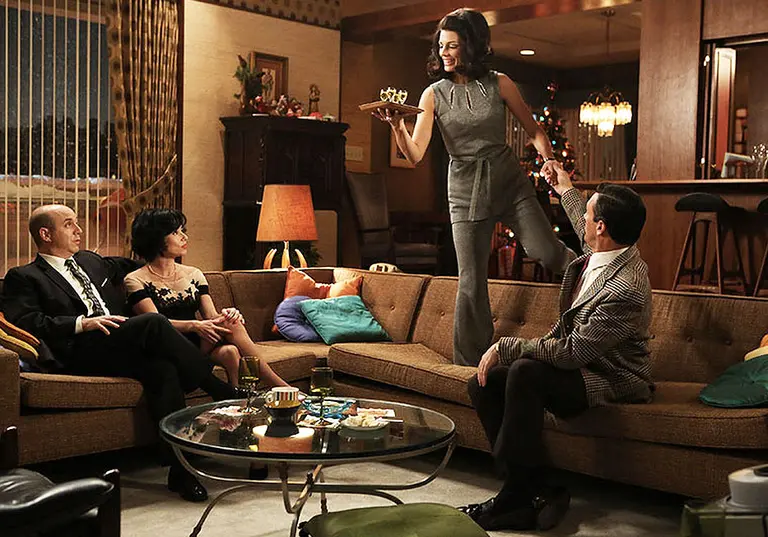
Mad for Modern: NYC Homes That Are Cooler Than Don Draper’s Park Avenue Pad

We admit it: We’re a bit obsessed with mid-20th century modern design–its architecturally and socially advanced concepts so often result in a perfect mix of aesthetic appeal and livability. Sometimes met with suspicion and derision in its earlier days, modernist architecture has endured the test of time and is having an enormous resurgence in popularity and appreciation. How else could you explain fans' obsession with the award-winning and pitch-perfect mid-mod sets on Matthew Weiner’s “Mad Men.” It’s often said that the best ideas in home design are the ones that make the home a great place to live; the origins of modernist design had that idea at their heart. We've rounded up a few of the city’s mid-century architectural treasures and a handful of homes that embody modernist style.
More on the 'Mad Men'sets and NYC's Mid-Century Modern gems this way
March 18, 2015

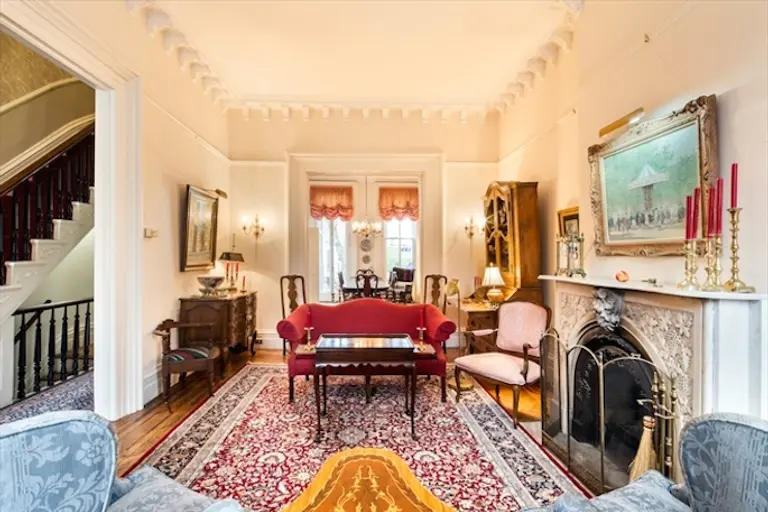
You’ll Instantly Warm Up to This $6.2M Brooklyn Heights Brownstone

It doesn’t take much to convince someone to head out to Brooklyn Heights, but this townhouse at 28 Garden Place (h/t Curbed) decided to pull out all the stops anyway. This $6.2 million, 3,360-square-foot brownstone features high ceilings, east and west exposures, original details and enough wood-burning fireplaces to make you forget all about this brutal winter we’ve endured.
More pics inside
February 9, 2015

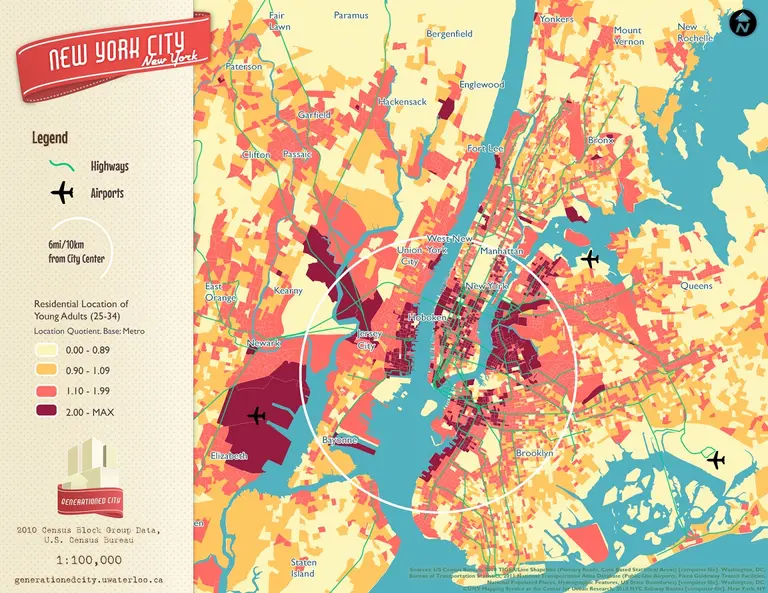
Mapping Where in NYC Millennials Live

The initial results may not surprise you–young adults living in New York City tend to set up shop in North Brooklyn, the Far West Side, the Upper East Side, the East Village and western Queens. This data is courtesy of a new mapping project from the University of Waterloo School of Planning in Ontario called Generationed City. Using census and crowd-sourced data, the project compares demographic patterns of millennials (typically defined as those born between 1980 and 2000) to that of older generations like baby boomers. It looks at North American cities with populations over 1 million where it's commonly accepted that millennials live in central parts of cities. While the largest chunk of NYC-based data is pretty on par with what we already knew, there are some other trends, both within the city and compared with other cities, that are a bit more curious.
More findings ahead
February 8, 2015

MADE IN BROOKLYN: A Rep for Authenticity and Excellence That’s Well-Earned–and Far from New

The story behind cheese-aging facility Crown Finish Caves in Crown Heights tells of an enormous amount of risk and dedication to making something on a small scale; to doing one thing well. It also once again stirs the hive of buzz around today’s Brooklyn. Article after article raises the idea that Brooklyn’s moment as the new hot spot for excellence in food, culture and authentic, hand-crafted goods, is in some quarters regarded as trite and trendy hype with little substance to it. For some, the underground cheese caves are just one more example: Cheese caves. How Brooklyn. Thirty feet below street level, in the lagering tunnels of a former brewery beneath the Monti Building in Crown Heights, Benton Brown and Susan Boyle spent several years renovating and creating “Brooklyn’s premier cheese-aging facility” complete with state-of-the-art humidity control and cooling systems. The couple created the 70-foot space with advice from the world’s top cheese experts; Crown Finish Caves opened in 2014. On an article in Cheese Notes, a commenter raves: “If I were a mouse, I would move to Crown Heights.”
More excellence and authenticity this way
February 6, 2015

New Yorker Spotlight: CurlNYC Has Brought Curling to New York and They Want You to Try It

Maybe it's the throwing, or the sweeping, or just the way the athletes yell down the ice, but something about curling intrigues us every four years during the Winter Olympics. And now, thanks to the efforts of CurlNYC, New Yorkers can try their hand at the game. Since 2013, CurlNYC has been on a mission to get the city hooked on the sport. The visionaries behind this start-up are Dean Roth, Dean Gemmell, a former U.S. Curling National Champion who competed at the 2012 World Championships, and Chad McMullan. Their eventual goal is to build the first ice facility in the five boroughs dedicated to the sport, and they're well on their way. Upsilon Ventures hired the group to manage the curling program at LeFrak Center at Lakeside in Brooklyn's Prospect Park and the South Street Seaport. CurlNYC has a roster of curling instructors, like husband-and-wife duo Luke Hansen and Kendall Speten-Hansen, to introduce the sport through demonstrations at both locations and during league play at Lakeside. We recently spoke with U.S. National Champion Dean Gemmell and curling instructors Kendall and Luke to find out why New York and curling are a winning combination.
Read the full interview here
January 13, 2015

Making the Cut: Is NYC Still the World’s Fashion Capital?

Will 21st century New York City be able to retain its fashion capital status? How does an aspiring fashionista build a brilliant career? The answers come from a winning combination of education, innovation and inspiration, plus financial and media support. Though styles come and go with dizzying speed and designers fall in and out of favor, New York City has held the title of global fashion capital since the mid 20th century, when it rose to prominence with the unprecedented idea of developing sportswear as fashion. Today’s NYC is home to some of the world's top fashion schools whose famous graduates add to the city’s fashion culture and networks. Foreign designers choose to live and work here because of this status and creative energy, adding even more to the fabric. We may share this pedestal with quirky London–and trés chic Paris, the brainy Belgians, the stylish Scandinavians and the ascendant Aussies make things more interesting–but NYC is known as the place where style ideas and trends are born and exchanged.
But is NYC still the world's fashion capital?
November 5, 2014

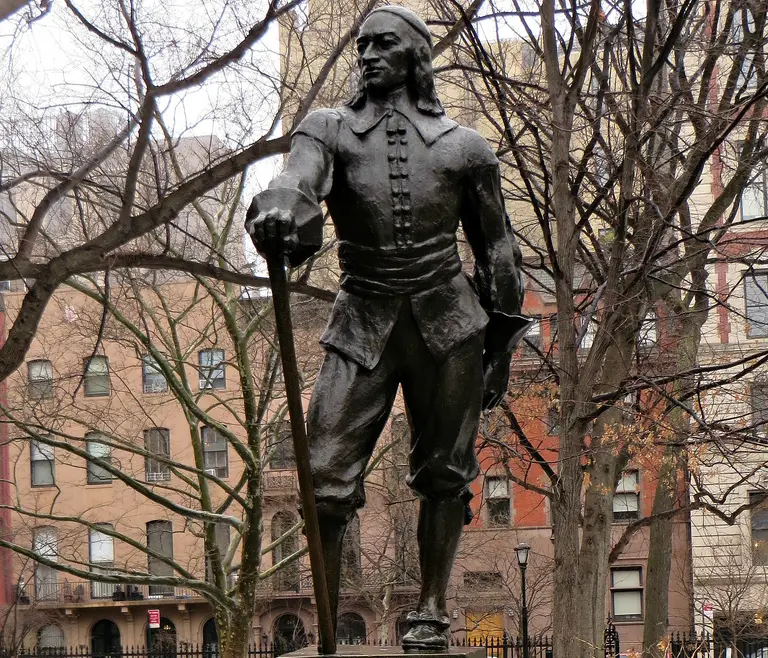
Peter Stuyvesant’s NYC: From the Bouwerie Farm to That Famous Pear Tree

A few quick facts from New York City history 101: The island of Manhattan was originally settled by the Dutch, and therefore officially named New Amsterdam in 1625. It was part of the larger settlement of New Netherland. Pieter, or Petrus, Stuyvesant (we know him today as Peter) was the last Dutch Director-General of the colony of New Netherland from 1647 until it was ceded to the English in 1664. His work greatly influenced the city's expansion northward from the southern tip, and he was responsible for many major historic events, such as the erection of a protective wall on what is today Wall Street and the creation of a canal on today's Broad Street and Broadway. Now that it's November–the month when the city celebrates its Dutch heritage through 5 Dutch Days–we decided to take a look at the old stomping ground of General Stuyvesant, as well as his lasting legacy in the city today.
Read about Peter Stuyvesant's NYC