Search Results for: brooklyn history

June 7, 2017

The lost plan to connect Brooklyn to Staten Island with a ‘boulevard under the sea’

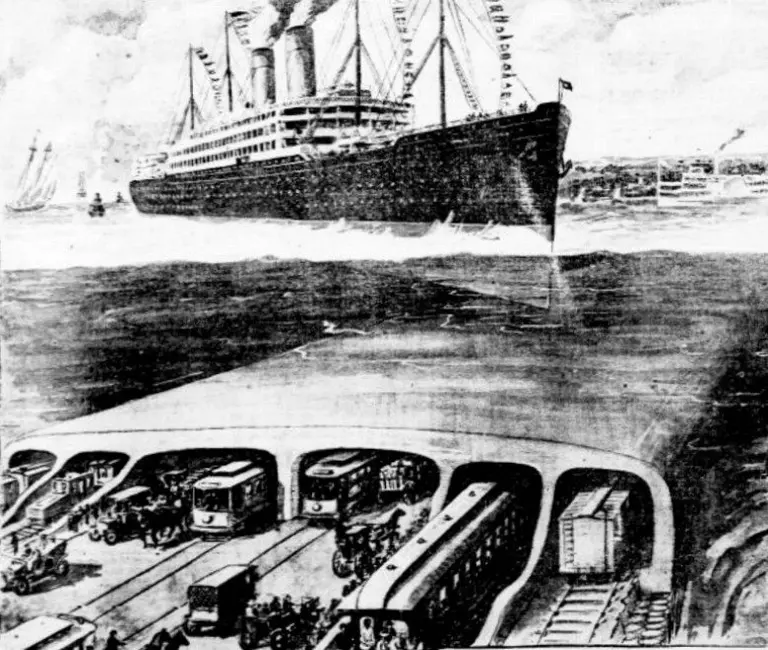
Back when New York City planners were dreaming of building new tunnels and bridges, they set their sights toward Staten Island. It was the turn of the 18th century and the city was in the midst of a Brooklyn boom following the debut of the Brooklyn Bridge in 1883. In 1909, the Manhattan Bridge opened to accommodate the growth of Brooklyn residents who needed ways to get in and out of the newly-developed borough. So the city started thinking about Staten Island. Today, of course, the two boroughs are connected by the Verrazano Bridge. But according to Brownstone Detectives, "Before talk of a bridge began... there was talk of a grand tunnel."
Learn more about the tunnel and why it never came to be
June 6, 2017

Roasteries and refineries: The history of sugar and coffee in NYC

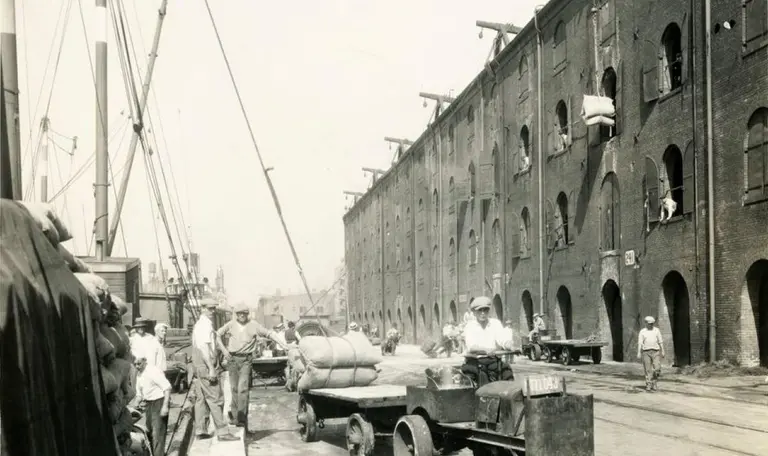
Brooklyn is properly known as Kings County. During New York’s Gilded Age, Sugar King Henry Osborne Havemeyer and Coffee King John Arbuckle made sure the borough lived up to its name, building their grand industrial empires on the shores of the East River. By the turn of the 20th century, more sugar was being refined in Williamsburg and more coffee roasted in DUMBO than anywhere else in the country, shaping the Brooklyn waterfront and NYC as a preeminent financial and cultural center. The history of coffee and sugar in this town is as rich and exciting as these two commodities are sweet and stimulating, so hang on to your homebrew and get ready for a New York Story.
The whole juicy history of sugar and coffee in NYC
May 10, 2017

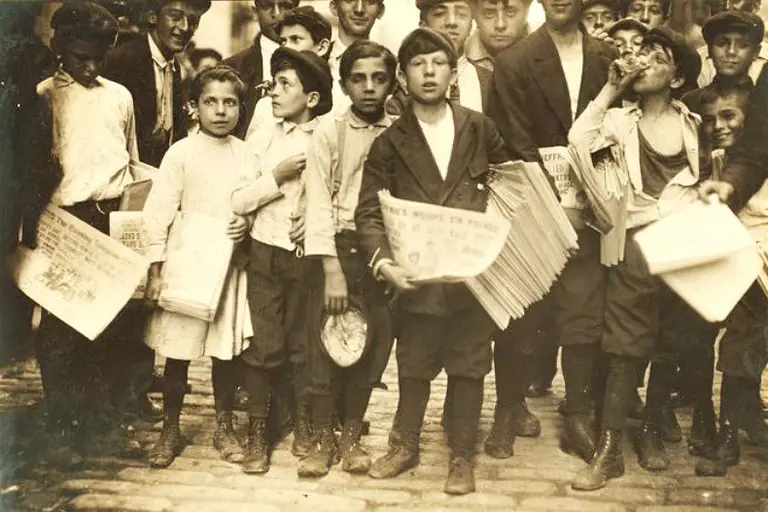
The history of New York’s Newspaper Row, the epicenter of 19th century news

While the news industry today continues to shift from bustling offices to laptops in coffee shops, it may be hard to imagine that the publishing industry was at the epicenter of some of the world's most important architectural feats. But this was the case in late 19th century New York City, when the daily newspaper industry was centered at Park Row, near City Hall. Such institutions included The New York Times, The New York Tribune and The New York World. 
Take a trip back in time with us and explore Newspaper Row
May 9, 2017

Did you know the idea for G.I. Joe was created in Brooklyn?

Did you know G.I. Joe, considered the world’s first action figure, was first conceptualized in Brooklyn? The famous toy was invented by NYC native Stanley Weston, who passed away this month at 84 years old. Weston, born in Brooklyn in 1933, sold his idea for a military-themed toy to Hasbro for $100,000 when he was just 30 years old. Hasbro later turned it into a $100 million success, with more generations of the dolls, comic books, a television series and movies following it.
Find out more
May 8, 2017

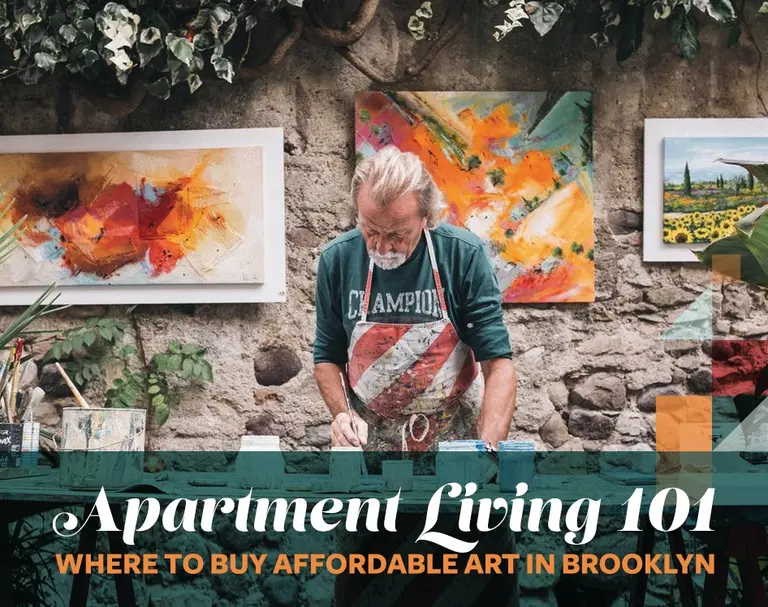
Where to buy affordable art in Brooklyn

Our ongoing series Apartment Living 101 is aimed at helping New Yorkers navigate the challenges of creating a happy home in the big city. This week, Art Nerd New York founder Lori Zimmer shares her top spots for scoring affordable art in Brooklyn. Brooklyn has become the place to be for creatives, especially as artists have migrated from Soho and the East Village to Williamsburg, Bushwick, and beyond. Now, blue-chip galleries are sprouting up Brooklyn locations, art fairs have Brooklyn outposts, and artists studios are thriving in neighborhoods all over the borough. Despite the rise of Brooklyn arts (and rents), there are still places to procure affordable art, all while supporting the artists struggling to survive in a very competitive market.
our list here
April 28, 2017

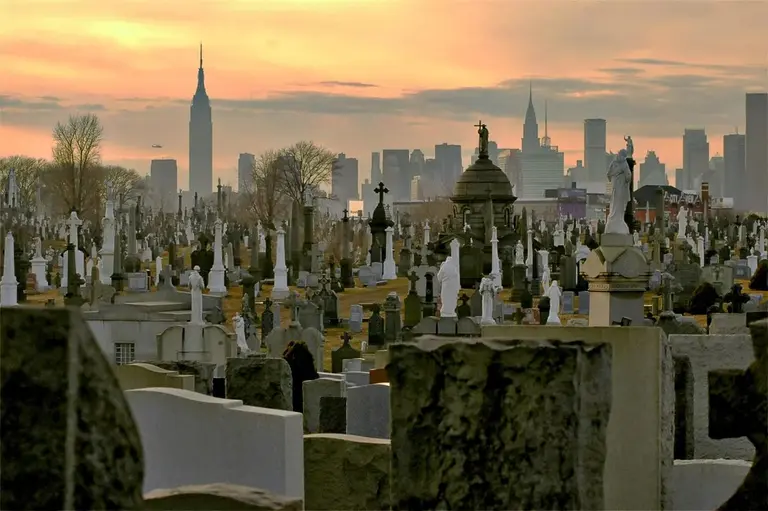
Five million dead in Queens: The history of New York City’s ‘cemetery belt’

You may have noticed when driving from Queens to Brooklyn that at some point you find yourself surrounded by a sea of headstones in every direction. The city's "cemetery belt"–reportedly visible from space–stretches for two and a half miles along the Queens/Brooklyn border and is so populous that there are more than twice as many dead people in Queens than living ones. What's up with this cemetery city?
Find out why the dead outnumber the living in Queens
April 25, 2017

+POOL may come to Brooklyn Bridge Park, scores a big-name backer

Seven years ago the team behind +POOL floated the fanciful–but completely fun–sounding idea of building a pool submerged in NYC's East River that would filter the polluted waterway in addition to being a cool-off spot for New Yorkers. Curbed reports that though the official line is that all options are still being looked at, project designers hope the city will allow +POOL to be located off a pier at Brooklyn Bridge Park.
More the floating pool's progress and new renderings this way
April 21, 2017

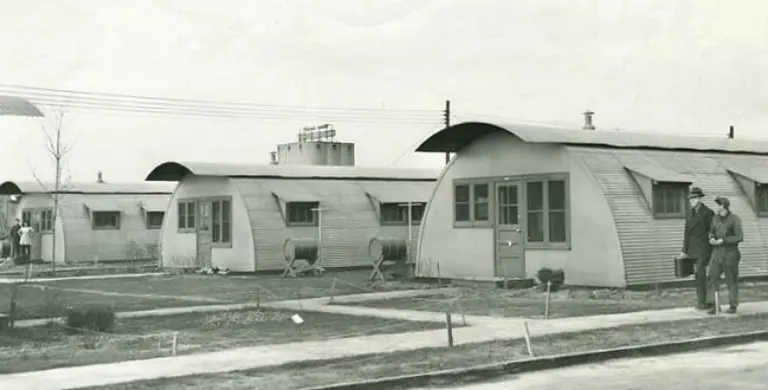
The history of NYC’s Quonset Huts, Robert Moses-era veterans housing

When veterans returned to NYC from WWII, they were met with a Depression-era housing shortage that resulted from a nearly 15-year lack of new development. To immediately address the issue, "master builder" Robert Moses (who by this time was reigning over the city's public housing projects) proposed erecting Quonset huts on vacant land in Brooklyn and Queens. These curved, corrugated steel "shacks" were used in the Pacific as barracks and offices, as they were lightweight and quick and easy to assemble. As the Brownstone Detectives tell us, after much debate, the city agreed to use more than 500 Federal surplus huts as temporary public housing on land along the Belt Parkway in the South Brooklyn neighborhoods of Canarsie and Jamaica Bay, as well as in Jackson Heights, Middle Village, and Corona in Queens.
Get the whole history
April 18, 2017

INTERVIEW: Co-founder of the Brooklyn Home Company, Bill Caleo

The Brooklyn Home Company (THBCo) is a family-run cooperative of artists and builders that develop unique residential spaces in booming Brooklyn. Best described as white and wood but never cookie cutter, their work is always light and airy, and blend modern style with historic elements. It's this signature style that's made THBCo a favorite amongst both renovators and Pinterest enthusiasts alike. But what inspires their designs and how do they decide where to develop projects? Ahead, 6sqft speaks to THBCo's co-founder and Head of Operations, Bill Caleo, about the business. Find out how this family-run establishment firmly roots itself in working with local makers, how they've grown their business model to include sustainability, and why they always add a custom piece of art to all their homes.
our interview with bill here
March 30, 2017

MAP: How old are the buildings in each Brooklyn neighborhood?

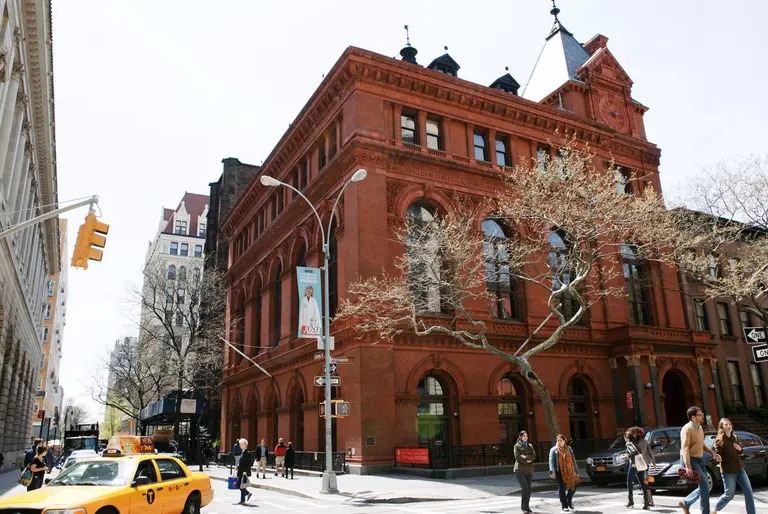
Photo via Brooklyn Historical Society One of the most exciting things about exploring Brooklyn is seeing the unique architecture of each neighborhood. Now, thanks to an interactive map from urban_calc, you can also learn the age of these structures in the borough with the oldest buildings in the city. Using the city’s OpenData project and Pluto dataset, urban_calc found the median age of buildings in each census tract. The oldest neighborhood is Ocean Hill at 1911, followed by Cypress Hill, Park Slope and Stuyvesant Heights, all with a median building year of 1920. On the other hand, the newest neighborhoods include Coney Island, West Brighton, East New York, Canarsie and Williamsburg.
Find out more here
February 1, 2017

The history of Little Syria and an immigrant community’s lasting legacy

In the light of Donald Trump's ban on Syrian refugees, 6sqft decided to take a look back at Little Syria. From the late 1880s to the 1940s, the area directly south of the World Trade Center centered along Washington Street held the nation's first and largest Arabic settlement. The bustling community was full of Turkish coffee houses, pastry shops, smoking parlors, dry goods merchants, and silk stores, but the Immigration Act of 1924 (which put limits on the number of immigrants allowed to enter the U.S. from a given country and altogether banned Asians and Arabs) followed by the start of construction on the Brooklyn-Battery Tunnel in 1940, caused this rich enclave to disappear. And though few vestiges remain today, there's currently an exhibit on Little Syria at the Metropolitan College of New York, and the Department of Parks and Recreation is building a new park to commemorate the literary figures associated with the historic immigrant community.
The full history and details on the new developments
January 19, 2017

$10.5M Federal-era house in Brooklyn Heights was Truman Capote’s muse

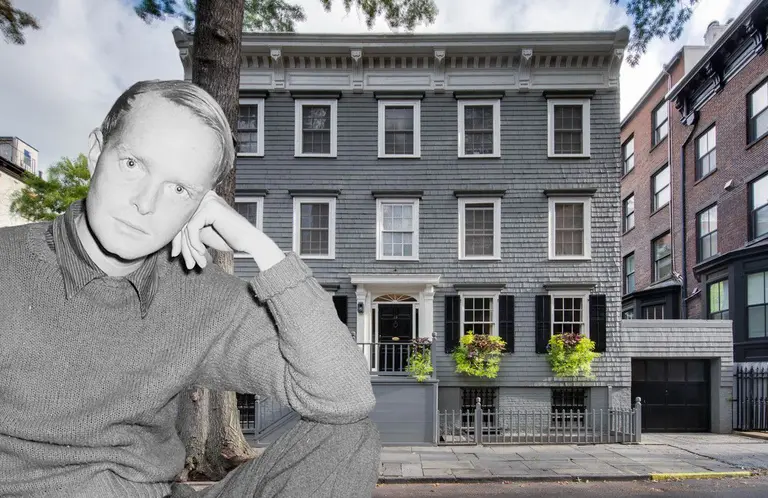
When he penned an essay about his neighborhood of Brooklyn Heights in 1959, it was this wood-frame house at 13 Pineapple Street that inspired Truman Capote. "Cheerfully austere, as elegant and other-era as formal calling cards, these houses bespeak an age of able servants and solid fireside ease; of horses in musical harness," he wrote, referencing the 1830 Federal-era home that was around the corner from his personal house. The Wall Street Journal reports that, for the past 26 years, the residence has been preserved by a couple who were drawn to its grey shingles as a reminder of the old houses in Nantucket they love. But now that their children are grown, they're looking to downsize and have listed the storied property for $10.5 million.
All the history right this way
December 6, 2016

Pretty Cobble Hill carriage house boasts history of circus zebras–and Norah Jones as neighbor

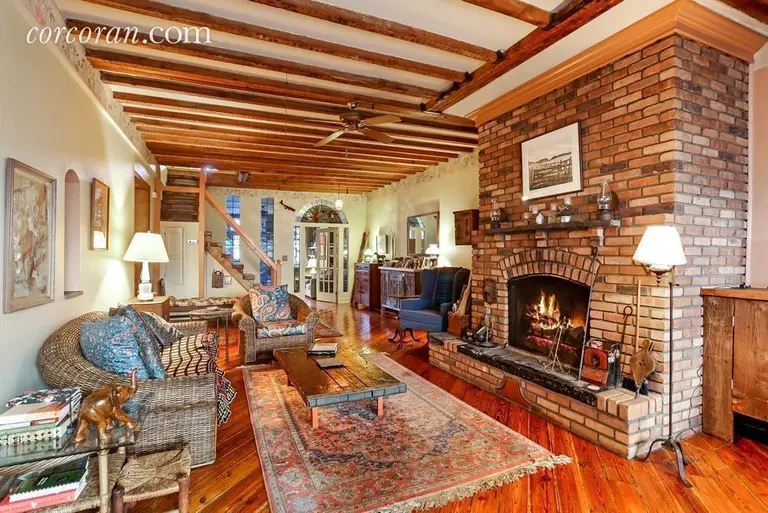
Though this 1830s livery stable on a picturesque Cobble Hill block offers seemingly endless charms on its own, the three-story, 4,300-square-foot home may have one of the more unique carriage house histories we've heard: It's believed that between 1915 and 1920 the stable was used to house zebras when what is now the Ringling Brothers and Barnum and Bailey Circus was in town—the building next door was used to hold the elephants. If that's not enough distinction, the adorable carriage house belonging to singer Norah Jones—it also appeared in the Julia Roberts film "Eat, Pray, Love,"—sits directly across the street. But this particular carriage house, on the market for $5.6 million, is eclectic enough without past-life zebras or celebrity neighbors, from its expansive owners' duplex to its cozy upper floor apartment. Two decks overlooking a gorgeous rear garden and parking at the front have already won us over, and that's before we've even gone inside.
Explore this eclectic former stable
August 8, 2016

Brooklyn Bridge May Get Expanded Promenade to Accommodate Growing Crowds

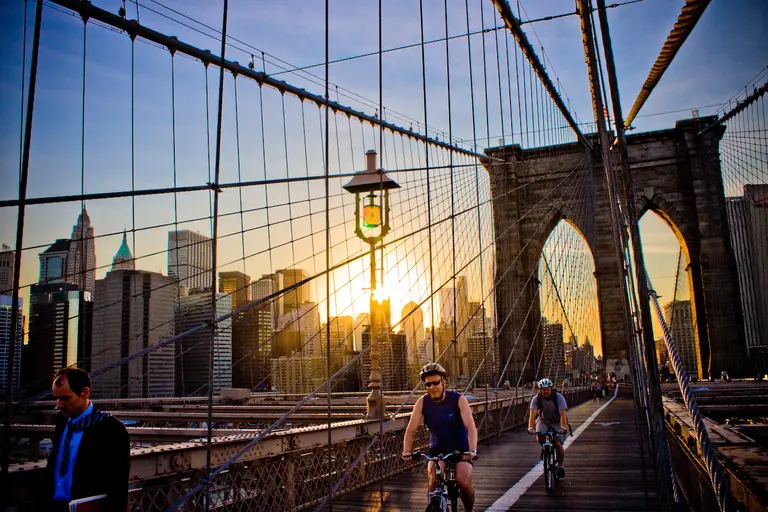
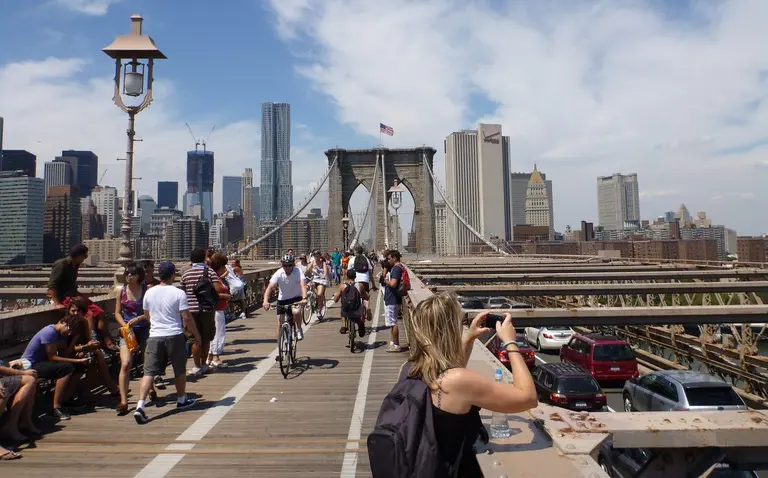
If you’ve ever had the experience of nearly being flattened by something on foot or wheels while walking or biking across the Brooklyn Bridge on a weekend afternoon, try to survive a little bit longer, help may be on the way. City transportation officials announced Monday that plans were in the works to alleviate the pedestrian and bike traffic that threatens to become “Times Square in the Sky.” The New York Times reports that among the possibilities for the aging bridge is a new path to help reduce some of the current congestion.
Find out more
July 8, 2016

Spotlight: Alex Gomberg Keeps Up the Tradition at 63-Year-Old Brooklyn Seltzer Boys

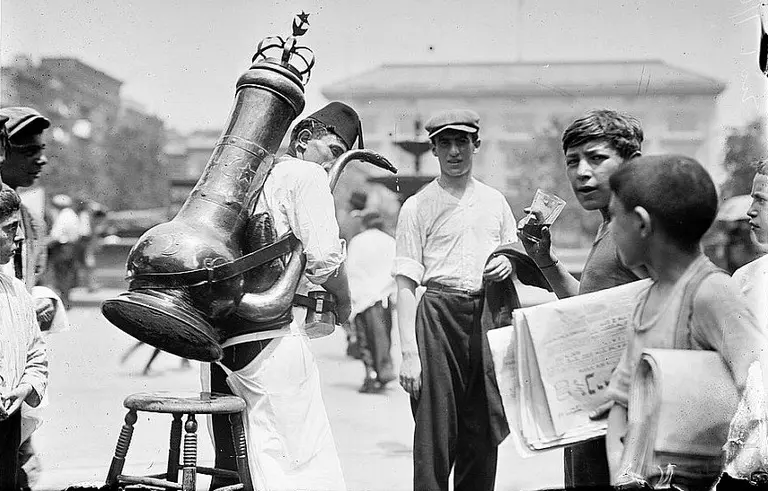
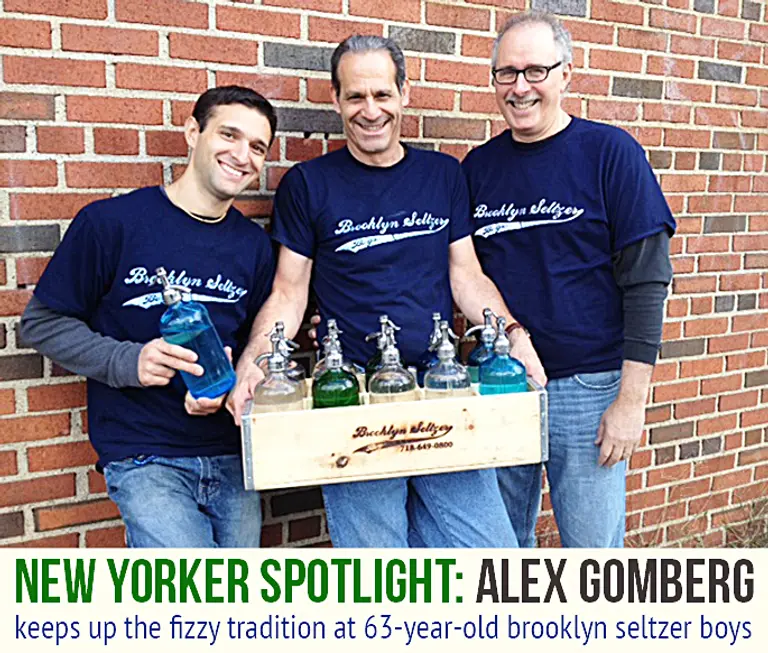
When Alex Gomberg says "I have seltzer in my blood,” he's not referring to the quantity of seltzer he drinks, but rather describing how deep the seltzer tradition runs in his family. It began in 1953 with his great-grandfather, Moe Gomberg, who opened up Gomberg Seltzer Works, a seltzer bottling plant in Brooklyn. The term seltzer man may be new to some, but it refers to someone who delivers seltzer in glass bottles right to your door; no supermarket needed. Over the years, seltzer delivery went out of favor and the family business, currently run by Alex’s father Kenny Gomberg and uncle Irv Resnick, continued to bottle for others, but was no longer doing delivery routes themselves. Four years ago, Alex joined Gomberg Seltzer Works and felt strongly that company should return to its delivery roots. He helped developed a delivery branch, aptly named Brooklyn Seltzer Boys, and today, Alex is well on his way to becoming many New Yorkers’ 21st century seltzer man. His idea of returning to delivery service was right on the mark as the company is benefitting from a myriad of factors including nostalgia, a focus on curated, well made items, and the popularity of home delivery. 6sqft recently spoke with Alex to find out about Gomberg’s seltzer, what it’s like to be a seltzer man, and how he's bringing seltzer delivery back to New York.
Read the full interview here
July 6, 2016

The History of Bowery Bay Beach, the ‘Coney Island of Queens’

This past holiday weekend, New Yorkers flocked to Coney Island for the annual Nathan's Hot Dog Eating Contest, the fireworks display, and to enjoy the beach and boardwalk. For some, though, traveling all the way out to the end of Brooklyn with beach chairs and coolers is daunting, which is why it's sad to learn that back in the 19th century, there was another amusement destination in the city, at the site of present-day LaGuardia Airport. Bowery Bay Beach (later named North Beach) opened in 1886 on the shores of Bowery and Flushing Bays. Built by noted piano manufacturer William Steinway in partnership with brewer George Ehret, it included beaches, swimming pavilions, a huge beer hall, zoo, and the Gala Amusement Park. At one time it was more popular than the parks in Brooklyn, earning it the moniker "the Coney Island of Queens."
So what happened?
June 21, 2016

21 Elephants Walked Across the Newly-Opened Brooklyn Bridge to Prove Its Safety

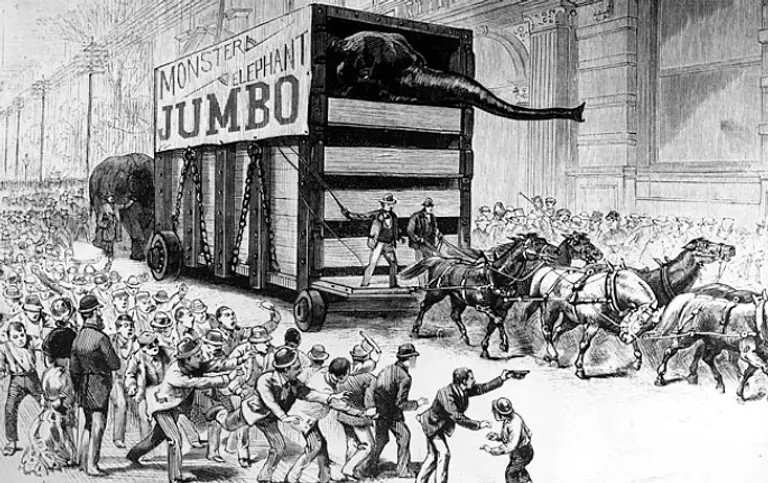
In May of 1883, the opening of the Brooklyn Bridge was big international news. The bridge had been under construction for 13 years, and its unveiling was a highly anticipated event. Showman P.T. Barnum, never one to turn down a PR opportunity, offered authorities a novel way to show–and show off–the safety of the new bridge: He’d walk his troupe of elephants across it. At first, his proposal was rejected. But in 1884, after a woman fell on the side stairs on the Manhattan side, causing a stampede that killed 12 people and making others wary that the bridge would collapse, Barnum’s “elephant walk” (the subject of a June, 2004 New Yorker cover) happened. It was to the amazement of New Yorkers who happened to catch the sight of 21 elephants, 7 camels, and 10 dromedaries (basically furry camels) trekking from the bottom of Cortlandt Street across the illuminated arches of the bridge, with Barnum’s celebrated seven-ton African elephant Jumbo bringing up the rear.
Read more
June 3, 2016

Spotlight: Adam Caslow Carries on ‘A Lox’ of History at Acme Smoked Fish

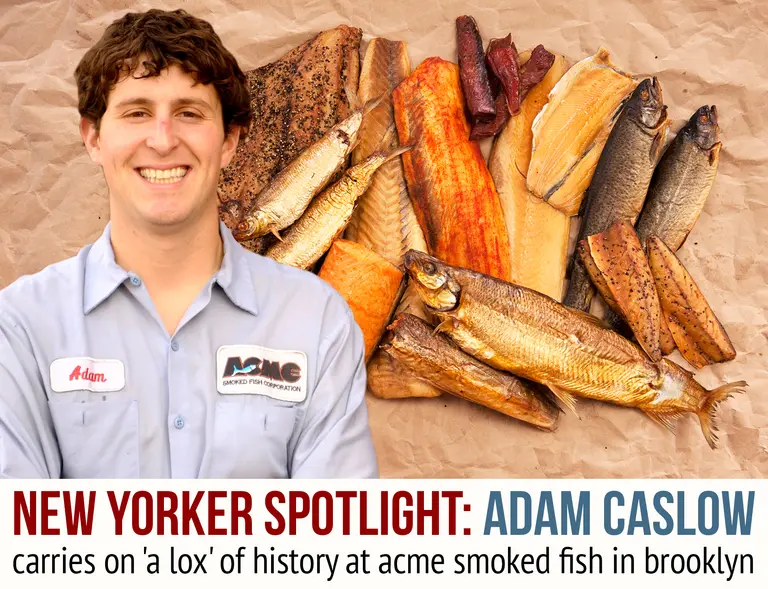
For many smear-loving New Yorkers, there's no better way to usher in the weekend than with a bagel and lox. And one of the companies keeping this culinary tradition alive is Brooklyn-based Acme Smoked Fish, a family business that traces its roots back to 1906 when Harry Brownstein started selling fish out of a wagon. For over 100 years, members of the Brownstein and Caslow families have been providing New York with smoked salmon, herring, fish salads, and other specialties. Adam Caslow and his cousin David Caslow are part of Acme’s fourth generation, continuing to grow the company and adapt to the city's current "Renaissance in appetizing." 6sqft recently spoke with Adam to learn more about Acme's rich history, smoked fish, and how he feels about carrying on a family tradition.
Read the full interview
May 17, 2016

The History of the Roosevelt Island Tramway

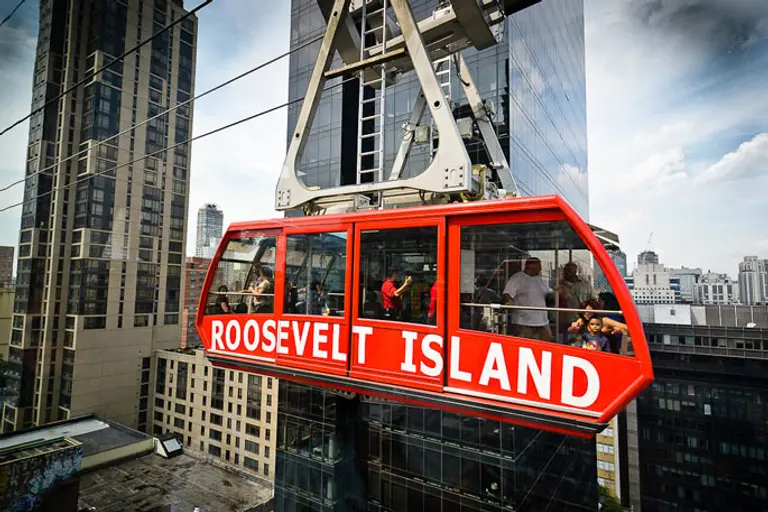
In honor of the Roosevelt Island Tramway's 40th anniversary today, we've pulled this wonderful piece on the history of the high-flying gondola system from our archives. Commuting in New York City, whether for work or pleasure, is rarely an enjoyable experience. However, for some tourists and lucky city dwellers, the Roosevelt Island Tramway provides a delightful, high-flying travel alternative to the standard, and sometimes miserable, modes of NYC public transport. Running across the East River, this aerial tramway brings commuters to and from Roosevelt Island and Manhattan’s Upper East Side, and has carried over 26 million passengers since opening in 1976. It is one of the few forms of mass transit in New York City not operated by the MTA, but it still costs the same as the bus or subway and can be paid for with your NYC metro card. Like most things in our historic port town, both the tramway and the commute between Manhattan and Roosevelt Island has a history, and this one includes bridge elevators, high-rise rescue missions and French ski lifts.
More on how the Roosevelt Island tramway came to be
May 10, 2016

The History of Herald Square: From Newspaper Headquarters to Retail Corridor

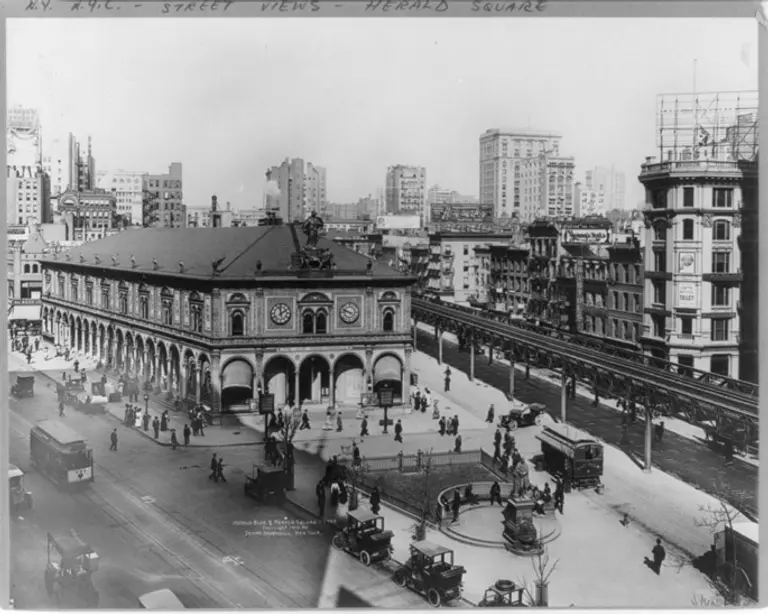
Herald Square is today known for many things. There's the flagship Macy's department store and the pedestrianized part of Broadway that extends to Times Square. And it serves as an epicenter of the retail corridor that now runs from 5th Avenue to 7th Avenue. Some may remember the song, "Give My Regards to Broadway," from the George M. Cohan musical "Little Johnny Jones"with the iconic line, "Remember me to Herald Square." But written in 1904, "Give My Regards to Broadway" references a very different Herald Square than the one we're familiar with today.
Learn about the evolution of Herald Square here
April 27, 2016

Subway-Style Poster Uses Infographics to Celebrate the History of the Yankees

Baseball's history in the Big Apple is as rich and turbulent as that of the city itself, and this super-sized canvas tells the story of the iconic New York Yankees. The stylish infographic from Pop Chart Lab plots out the player positions from 1975-2015, tracking the careers of long-standing baseball legends like Derek Jeter and Mariano Rivera, as well as short-lived superstars like Jack Clark and Cecil Fielder. Fittingly, its design is similar in style to the graphics of the NYC subway system and also includes stats, scorecards, and all of the sluggers from East 161st Street.
Find out where to get your own print
April 26, 2016

Brooklyn-Queens Streetcar Gets Closer to Reality; Nathan’s Hot Dogs Documentary

A city-commissioned study on the proposed Brooklyn-Queen streetcar says the plan is feasible. [Politico] The Four Seasons will move to 280 Park Avenue, and the restauranteurs are looking for an architect. [NYP] Peak cherry blossom season has officially arrived in Brooklyn! [DNAinfo] A new documentary, “Famous Nathan,” is about the Coney Island hot dog chain’s founder. […]

April 20, 2016

Skyline Wars: Brooklyn Enters the Supertall Race

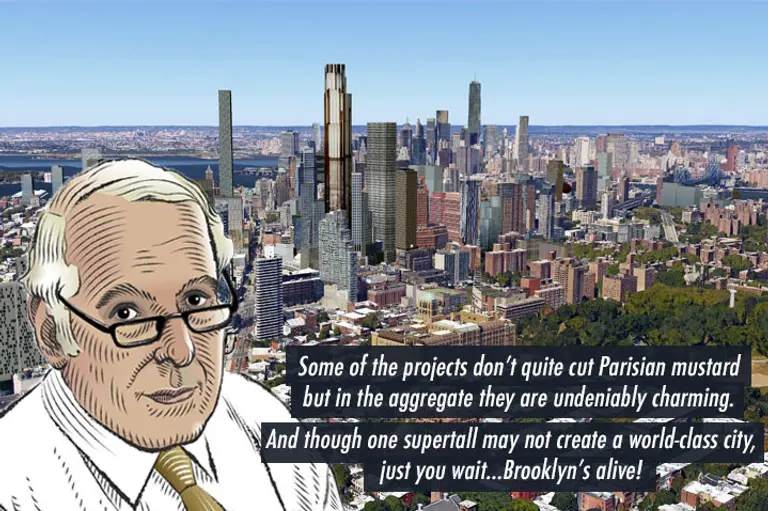
Carter Uncut brings New York City’s latest development news under the critical eye of resident architecture critic Carter B. Horsley. Here, Carter brings us his fifth installment of “Skyline Wars,” a series that examines the explosive and unprecedented supertall phenomenon that is transforming the city’s silhouette. In this post Carter looks at Brooklyn's once demure skyline, soon to be Manhattan's rival. Downtown Brooklyn has had a modest but pleasant skyline highlighted by the 350-foot-high Court & Remsen Building and the 343-foot-high great ornate terraces of 75 Livingston Street, both erected in 1926, and the 462-foot-high flat top of the 1927 Montague Court Building. The borough’s tallest building, however, was the great 514-foot-high dome of the 1929 Williamsburg Savings Bank Tower, now known as One Hanson Place, a bit removed to the east from Downtown Brooklyn. It remained as the borough’s tallest for a very long time, from 1929 until 2009. A flurry of new towers in recent years has significantly enlarged Brooklyn’s skyline. Since 2008, nine new towers higher than 359 feet have sprouted there, in large part as a result of a rezoning by the city in 2007. A few other towers have also given its riverfront an impressive frontage. Whereas in the past the vast majority of towers were clustered about Borough Hall downtown, now there are several clusters with some around the Brooklyn Academy of Music and the former Williamsburg Savings Bank Tower and some around the Williamsburg riverfront.
more on Brooklyn's skyline here