Search Results for: all zip codes in NYC

September 5, 2025

Flatbush Avenue redesign to begin this fall

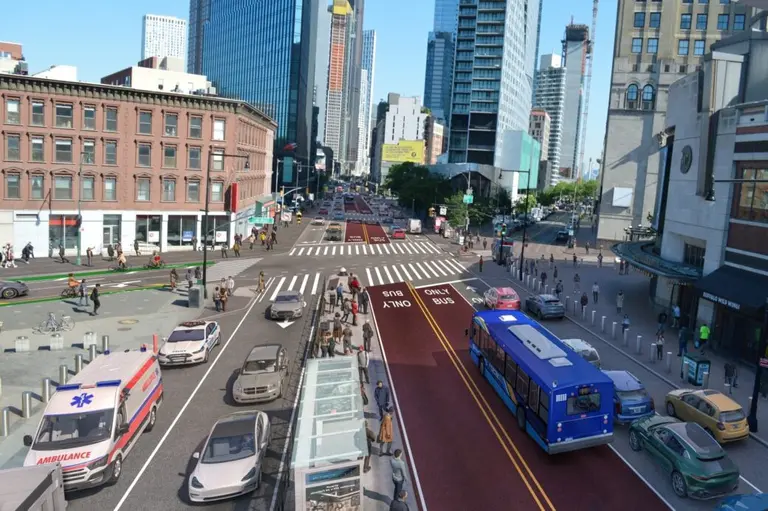
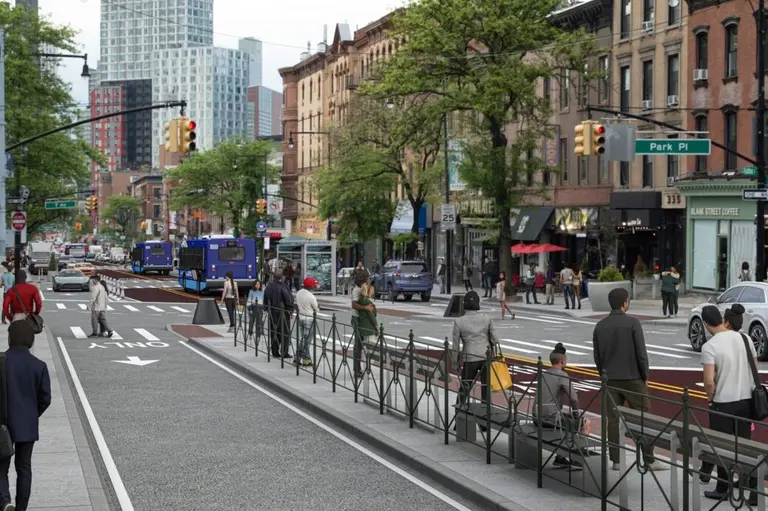
Flatbush Avenue is getting faster (and safer). Department of Transportation Commissioner Ydanis Rodriguez on Friday announced work will begin this fall on center-running bus lanes along the busy Brooklyn corridor, from Livingston Street to Grand Army Plaza. The overhaul aims to speed up trips for 132,000 daily riders, where buses now average less than 4 miles per hour. Slated for completion in 2026, the project also includes pedestrian islands with covered seating, shorter crossing times, and updated curb regulations to support local businesses.
Learn more

December 19, 2024

NYC’s largest chain stores continue to struggle

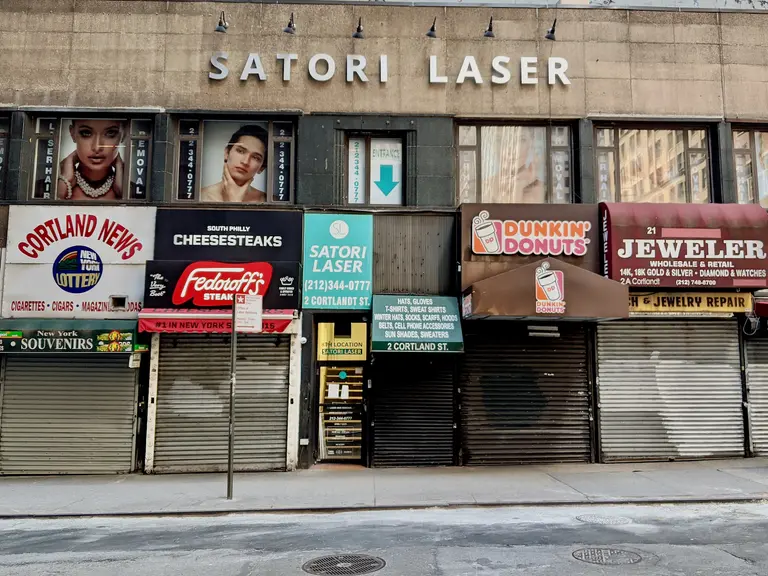
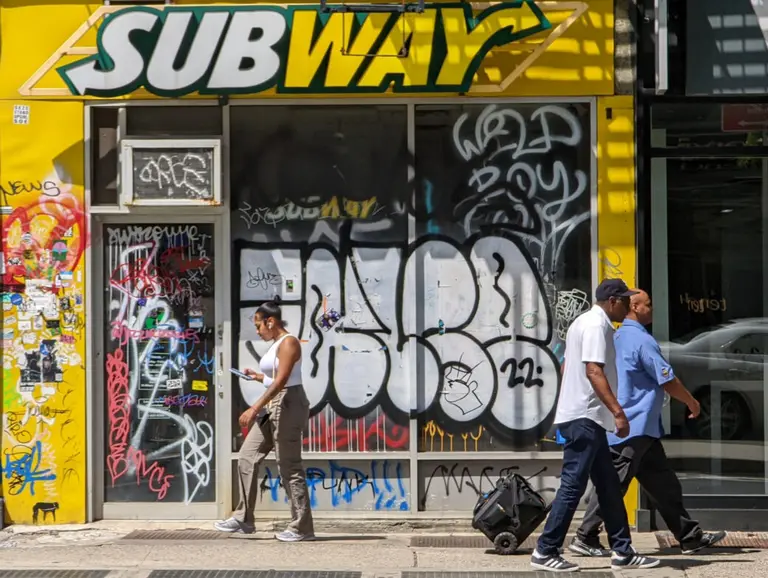
For the fifth time in the last seven years, the total number of chain stores in New York City has dropped. The Center for an Urban Future (CUF) on Wednesday released its annual "State of the Chains" report, which found a 1.3 percent decrease in the number of chain stores across the five boroughs over the last year. These findings indicate that, despite many of the city’s central commercial districts experiencing a strong recovery in storefronts, major national retailers continue to struggle.
discover more
December 12, 2023

Every NYC borough saw a decline in chain stores over the past year

Nearly 250 chain stores in New York City have closed in the last year, the second-largest decrease since the pandemic began in 2020. The Center for an Urban Future (CUF) on Tuesday released its annual "State of the Chains" report, which found a 3.1 percent decrease in the number of chain stores across the five boroughs over the past year. This year's decline breaks a two-year streak of moderate growth of NYC chain stores.
see more
July 13, 2021

NYC says unvaccinated young people are behind Staten Island’s uptick in Covid cases

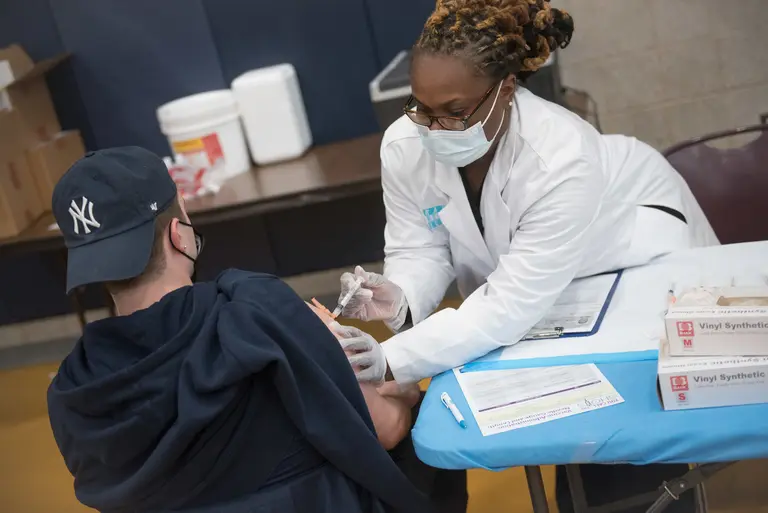
Some neighborhoods in New York City are seeing a slight increase in the number of coronavirus cases for the first time in weeks, as vaccinations slow and the Delta variant continues to spread. According to the city's Health Department, the city's seven-day average rate of positivity increased to 1.28 percent as of Monday, the highest rate in nearly two months, with 363 new cases on a seven-day rolling average. With a seven-day positivity of over 2.4 percent as of July 9, Staten Island has the highest test positivity rate of any borough. City officials point to those who remain unvaccinated, "particularly younger people," as the reason for this uptick.
Find out more
June 7, 2021

New York will lift all remaining Covid restrictions when vaccination rate hits 70%

New Yorkers can expect almost all Covid restrictions to be lifted very soon. The state's vaccination rate as of today is 68.6 percent; when it hits 70 percent, reopening guidance will be lifted across commercial and social settings. This includes capacity restrictions, social distancing, cleaning and disinfection, health screenings, and contact tracing information. Consistent with the CDC, current mask requirements will remain in place.
READ MORE
February 16, 2021

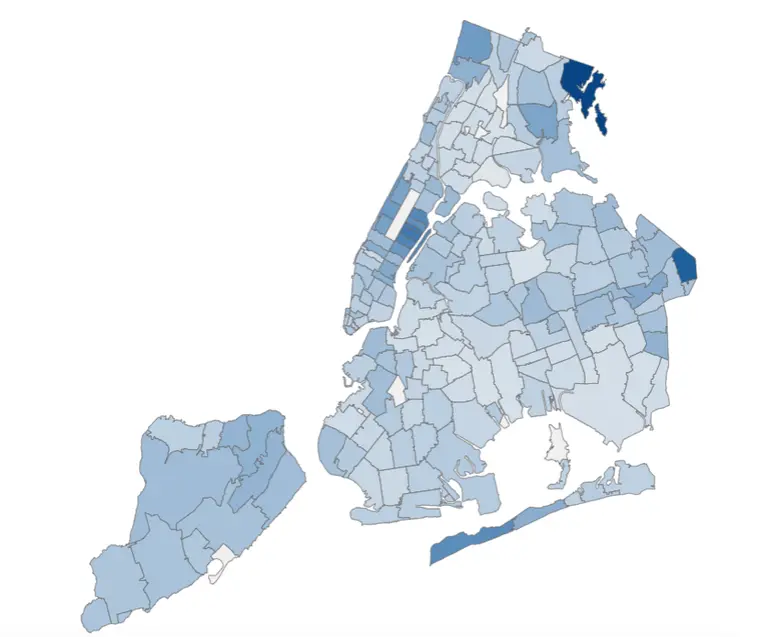
NYC releases vaccination data by ZIP code

New York City neighborhoods that have experienced the highest infection rates of COVID-19 are now seeing the lowest rates of vaccination, according to new data released by the city. For the first time, the city on Tuesday published a map of vaccination rates by ZIP code. According to the data, Staten Island and Manhattan have the highest vaccination rates, while "the South Bronx, parts of Central Queens, and Central Brooklyn lag behind," Dr. Torian Easterling, the city's First Deputy Health Commissioner, said.
Find out more
February 1, 2021

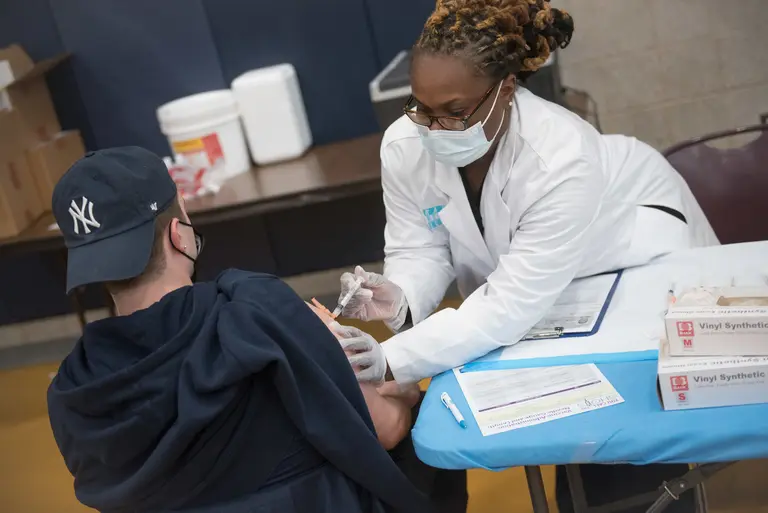
NYC vaccination data shows ‘profound’ racial gaps

Black and Latino residents in New York City have received far fewer doses of the coronavirus vaccine than white New Yorkers, according to preliminary data released by the city on Sunday. Of the roughly 300,000 city residents vaccinated with at least one dose, 48 percent of them were white, 15 percent Asian, 15 percent Latino, and 11 percent Black. Mayor Bill de Blasio called the racial disparities "profound," since Latino and Black residents make up 29 and 24 percent of the city's population, respectively.
Find out more
November 18, 2020

NYC schools will close tomorrow as Cuomo warns of a partial lockdown

In his press conference this afternoon, Governor Cuomo announced that all of New York City would become an orange zone if its city-wide positivity rate hits 3 percent. Under this micro-cluster strategy, indoor dining and high-risk non-essential businesses like gyms and personal care services would close. Schools would also close, but during the governor's press conference, New York City Chancellor Richard A. Carranza sent an email to principals that schools would close and go to virtual learning as of tomorrow, as the New York Times first reported.
READ MORE
November 13, 2020

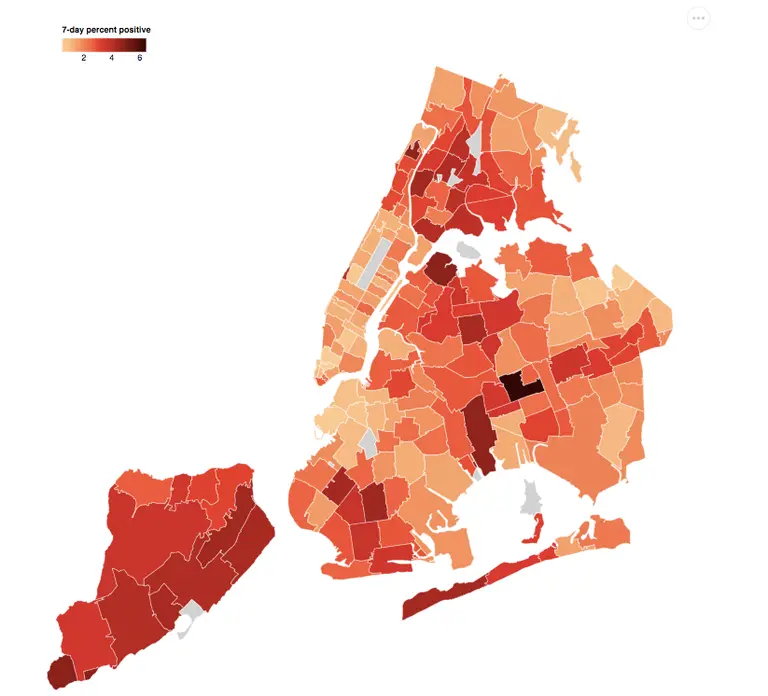
NYC releases map of positive COVID cases by ZIP code

New York City's health department this week released real-time data on new coronavirus cases by ZIP code and borough for the first time. An interactive map and a table show the percent of people who tested positive by ZIP code for the most recent seven days of available data and the rate of people tested during the last week. The detailed data comes as the city faces a surge of new cases of the virus in every borough, with an 89 percent increase in cases citywide compared to two weeks prior.
Learn more here
November 10, 2020

Can NYC stave off a second COVID wave? Positivity rate nears 3%

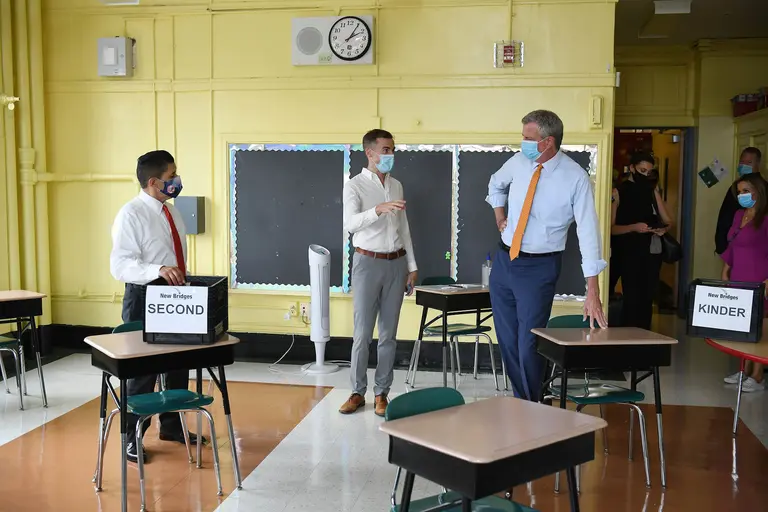
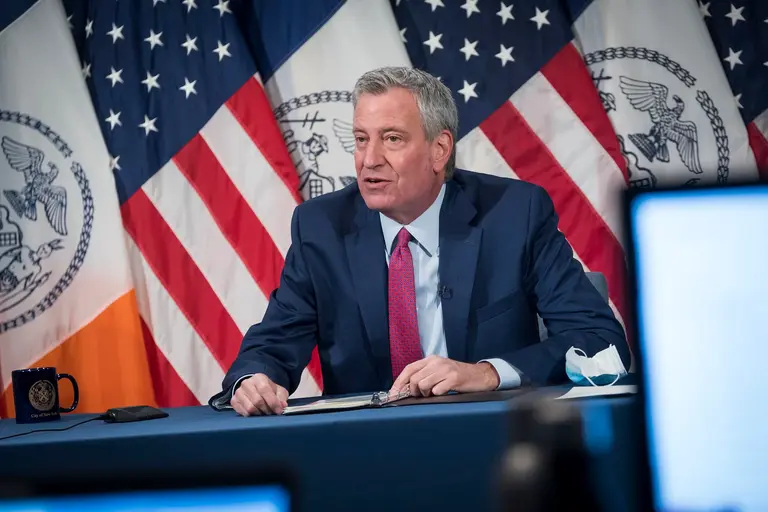
Credit: Ed Reed/Mayoral Photography Office. For the sixth straight day, New York City's COVID positivity rate has been above 2 percent, today hitting 2.88 percent. Though this is lower than surrounding states (New Jersey has recently hit 8 percent), Mayor de Blasio's education plan has set a threshold of 3 percent for keeping schools open. And according to the city's data, the number of new daily infections has nearly doubled since August from roughly 300 to a whopping 976 last Wednesday. Yesterday, Mayor de Blasio said the city was "getting dangerously close" to a second wave, setting off an alarm among New Yorkers, and today he said, "this is our last chance to stop [it]."
READ MORE
May 20, 2020

Antibody testing shows coronavirus is still spreading in NYC’s minority communities

The coronavirus continues to spread in lower-income communities and communities of color in New York City, according to antibody test results released by the state on Wednesday. New York earlier this month partnered with Northwell Health and city churches to test residents of low-income neighborhoods, with 8,000 antibody tests conducted to date. According to preliminary data from those tests, 27 percent tested positive for COVID-19 antibodies, compared to the city's overall antibody rate of 19.9 percent.
More here
May 20, 2020

Majority of NYC workers in hard-hit retail, restaurant industry live in low-income neighborhoods: report

Nearly every industry in New York City taken a hit financially as a result of the coronavirus pandemic. But the businesses forced to close their doors, or switch to delivery only, because of the state's"pause" order, including restaurants, retail, hotels, and personal care services, have been especially affected by the current crisis. According to a new report from the think tank Center for an Urban Future, the workers from these hard-hit sectors, where layoffs have been most common, also live in the city's low-income neighborhoods. And while more than half of the jobs in these industries are located in Manhattan, 81 percent of the workers live in the outer boroughs.
More details here
May 18, 2020

NYC releases map with COVID deaths broken down by ZIP code

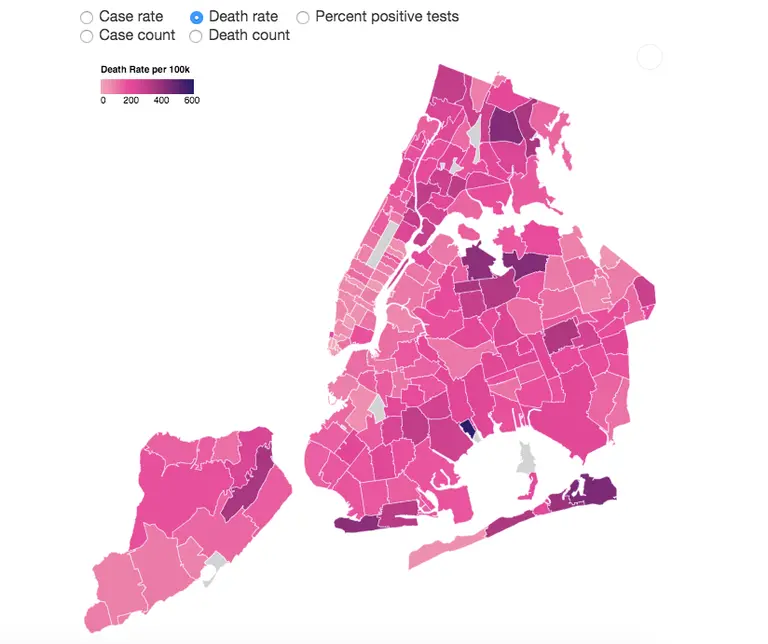
The city's health department on Monday released for the first time the coronavirus death rate by ZIP code. A table and interactive map reveal the death rate per 100,000 residents in each neighborhood, along with the number of confirmed cases, case counts, death counts, and the percent of people who tested positive. The new information confirms earlier data that found a disparity in deaths caused by the virus among people of color and those who live in low-income neighborhoods.
See the data
April 1, 2020

Could Mount Sinai’s new self-reporting app help map coronavirus in NYC?

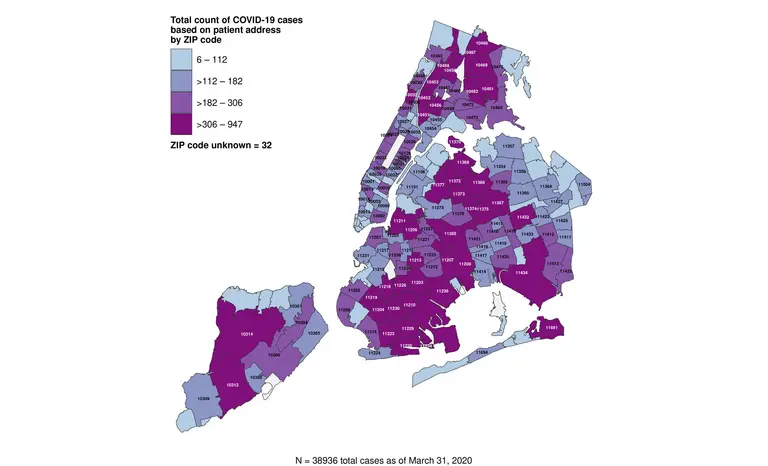
It makes sense that New Yorkers would want to know many positive cases of COVID-19 are in their neighborhoods, but can you really provide the information accurately? Yesterday, the Department of Health released a zip code-based map that shows the number of patients testing positive for coronavirus, which, as the Post first reported, alarmingly points to the fact that wealthier zip codes have far fewer positives. However, this does not take into account the rate of testing or population of a given area, leading many experts to say the map actually paints a picture of testing behavior, not positive cases. This is why the Mount Sinai Health System today launched an app where New Yorkers can self-report their symptoms and test results.
More details ahead
March 5, 2019

City will expand Fair Fares program to all eligible New Yorkers by 2020

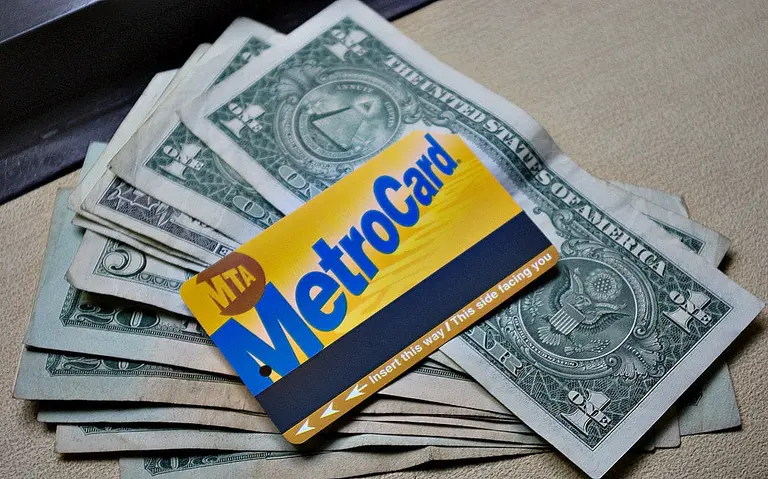
After facing criticism for the delayed and limited roll-out of Fair Fares, Mayor de Blasio and City Council Speaker Johnson have announced plans to expand the program. Starting this fall, eligible New Yorkers in NYCHA, enrolled students at CUNY, and military veterans below the poverty line will have access to the program, which provides half-priced MetroCards for low-income New Yorkers. By January 2020, open enrollment will expand to all New Yorkers at or below the federal poverty line (a household income of $25,750 for a family of four). The program has also been criticized for its reversal on reduced fares for single trips, but Monday's announcement came with the good news that a pay-per-ride option will be available by mid-March.
READ MORE
August 24, 2018

Despite drop in average rent, Battery Park City is still the most expensive zip code in the U.S.

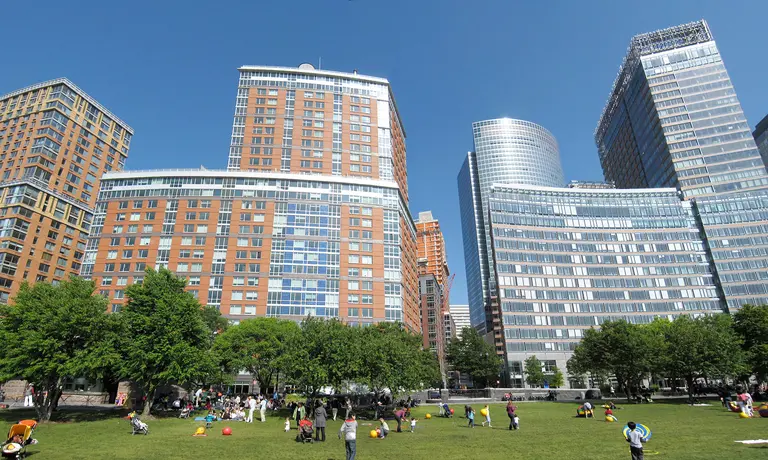
Despite a year-over-year decrease in its average rent, Battery Park City ranks as the most expensive zip code for renters in the United States, according to a RentCafe report. In 2017, the average rent in this downtown neighborhood was roughly $6,000/month. And while it experienced a nearly two percent decrease this year, with average rent falling to $5,657/month, Battery Park City is still the not-so-winning winner. Not surprising but still bleak, 26 out of the 50 zip codes with the most expensive average rents in the U.S. are located in Manhattan.
See the list
April 16, 2018

Despite a 30 percent drop in sales prices, Tribeca remains NYC’s most expensive neighborhood

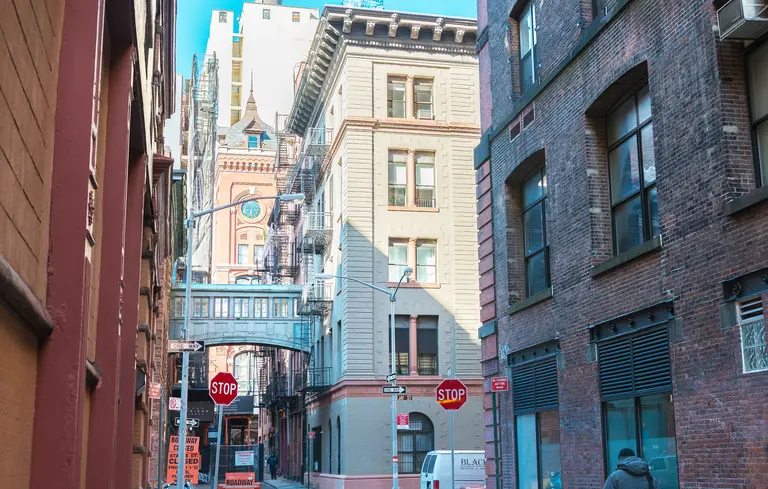
Despite suffering from a 30 percent drop year-over-year in median sale prices, Tribeca still managed to rank first as New York City's most expensive neighborhood, followed closely by Soho. Property Shark released this week its list of the 50 priciest areas in the city in Q1 2018 and unsurprisingly, nine out of the top ten are located in Manhattan. Notably, the West Village witnessed an 88 percent year-over-year increase with a median sale price hovering $2.1 million. And the Flatiron District, which ranked as the most expensive neighborhood in the third quarter of 2017, fell to sixth place, with a median sale price of $1.85 million.
See the list
February 21, 2017

New bill would calculate AMI for affordable housing based on zip code, not region

To set qualification guidelines for its affordable housing lotteries, the city turns to the set area median income (AMI), basing annual household income and rents off this figure. However, as The Real Deal explains, "the U.S. Department of Housing and Urban Development calculates AMI regionally, "using a formula that lumps the five boroughs together with Putnam, Westchester, and Rockland counties." For 2016, this equated to $65,200 for a single person and $90,600 for a family of four, but a new bill proposed by Democratic State Senator Michael Gianaris and Assemblymember Brian Barnwell would require developers of new 421-a projects to calculate AMI based on the specific zip code in which the building is going up.
More info ahead
February 10, 2017

NYC’s top 10 wealthiest ZIP codes will surprise you

There's no argument that Tribeca is home to the priciest real estate in all of New York City, but when it comes to wealth as measured by median net worth and household income, its residents don't even register in the top 10. A new study by ESRI conducted for the NY Business Journal reveals that 11363—or Little Neck, Queens (where Governor Cuomo once owned a mansion, to give you and idea)—is, in fact, New York's richest ZIP code. Here, the median household income clocks in at an impressive $94,192 with median net worth reaching $326,104.
the surprising results here
January 31, 2017

Sagaponack, Tribeca among nation’s priciest zip codes; Trump transfers NYC properties into trust

The Hamptons’ Sagaponack community is the most expensive zip code in the country. Tribeca zip codes take spots 3, 6, and 12. [Business Insider] From the Studio Museum’s “Black Cowboys” exhibit to a Green-Wood Cemetery trolley tour, here are 14 ways to celebrate Black History Month in NYC. [Untapped] Donald Trump has transferred 71 NYC properties, […]

November 13, 2015

10012 and 10013 Are NYC’s Most Prized Zip Codes

212 Fifth Avenue may be the considered the ultimate New York address, but zip codes 10012 and 10013 are the city's most coveted. Forbes has just released their annual list of the 500 Most Expensive ZIP Codes in the nation, and amongst the top zips were the two that make up parts of the West Village, Soho, Tribeca and the Lower East Side. However, 10012 and 10013 were the only New York City digits to break the top 10. California actually counted the most spots on the list this year, including #1. Is NYC passé?
check out the top 20 zip codes here
January 5, 2015

New Study Reveals It’s More Important to Have a MetroCard Than a College Degree in NYC

A new study conducted by NYU's Rudin Center for Transportation Policy and Management shows just how much impact proximity to public transit–in this case to Manhattan–can have on one's earning power. The Rudin Center examined 177 NYC zip codes and found that those living closest to transit have the highest median income and the lowest unemployment rate. “In New York, mass transit is the path to economic mobility, not education,” Mitchell Moss, the center’s director, told the WSJ. “It’s far more important to have a MetroCard than a college degree.”
Find out the startling figures here
June 9, 2025

Flatbush Avenue overhaul includes center-running bus lanes and pedestrian islands

New York City has proposed new center-running bus lanes along parts of Flatbush Avenue to improve safety and speed up service on one of the city’s most dangerous corridors. Unveiled Friday by the Department of Transportation (DOT), the project would convert two center car lanes into bus lanes from Livingston Street to Grand Army Plaza, better serving the nearly 70,000 daily bus riders who currently face average speeds of under 4 miles per hour—about the same speed as walking. The plan also includes pedestrian islands with covered public seating, shorter crossing times, and updated curb regulations to support local businesses.
Find out more