Policy

May 25, 2016

$40 Million Overhaul Will Make 8 Parks More Neighborhood-Friendly

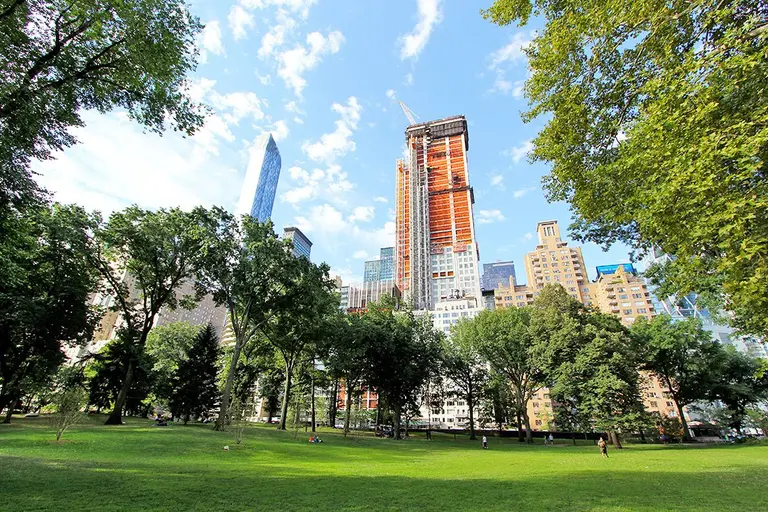
The city has announced plans to make eight of the city's parks more welcoming and integrated into their surrounding neighborhoods, the New York Times reports. According to officials, the green-space face-lifts are part of a plan to improve city parks and part of the larger goal of having 85 percent of New Yorkers living within walking distance of a park. The parks, chosen by a nomination process that used feedback from residents, include Seward Park on the Lower East Side of Manhattan, Faber Pool and Park on the North Shore of Staten Island, Jackie Robinson Park in northern Manhattan, Van Cortlandt Park and Hugh Grant Circle and Virginia Park in the Bronx, Flushing Meadows-Corona Park in Queens, and Fort Greene and Prospect Parks in Brooklyn. According to parks commissioner Mitchell J. Silver, the many improvement suggestions the city received were "proof positive of how excited New Yorkers are to increase accessibility and openness in their favorite parks.”
Find out more about the park plans
May 25, 2016

Governor Cuomo Finally Approves MTA’s $27B Capital Plan

Governor Cuomo and Mayor de Blasio, notorious for their icy relationship, have been squabbling for well over a year about the MTA's $27 billion, five-year capital plan. Last October, they reached an agreement where the state would contribute $8.3 billion and the city $2.5 billion, neither of which would come from increasing taxes. Seven months later, the Daily News reports that Albany has finally approved the plan, which covers track and station repairs, new train cars, new high-tech buses, a MetroCard replacement, the Long Island Rail Road's East Side Access project, and, of course, the beginning of the Second Avenue Subway's phase two into East Harlem.
More details ahead
May 24, 2016

Landmarks Rejects Skinny Fort Greene House Because It ‘Looks Like Sing Sing Prison’

When talking townhouses, width matters. Aside from location and condition, width is usually the salient factor determining a home's desirability and pricing. While a 20-foot wide house is the coveted standard, the adored building type comes in an assortment of sizes, ranging from this narrow 12-foot wide townhouse in Park Slope upwards to the enviable 30-foot wide homes dotting Brooklyn Heights. On the tighter end of the spectrum, along a tree- and brownstone-lined block in the Fort Greene Historic District, R.A.Max Studio is seeking to secure the Landmarks Preservation Commission's approval to build a 12-foot wide, environmentally-conscious, two-family house at 39 South Elliott Place. Hemmed in on a vacant lot measuring just 1,200 square feet in area, the developer, Fort Greene Properties LLC, envisions building a four-story, 3,200-square-foot structure similar in scale to a previous house that stood at the site some sixty years ago, but with a more modern exterior. But this scheme did not go over so well at today's LPC hearing.
The full story, right this way
May 24, 2016

This Lamp Only Turns On If You Turn Your Phone Off

If you don't posses the willpower to put your smart phone down once and for all, this lamp will give you that extra nudge -- that is, if you don't want to walk around in the dark. Tranquillo, created by industrial designer Avid Kadam, is "an interactive piece of lighting where the user’s phone acts like a switch." Basically, if you want to see, you'll need to put your phone on the dock, where it'll go into do-not-disturb mode.
READ MORE
May 23, 2016

Developers Used a Four-Foot-Wide Lot to Build a Taller Upper East Side Tower

The go-to move for building taller than zoning allows is snatching up some air rights, but at 180 East 88th Street in Yorkville, developer DDG Partners found an obscure loophole to increase their building's height. Back in 2014, as the Times explains, DDG received approvals to slice off a four-foot-wide lot from the 30-foot-deep site. This became an official taxable lot, but because it provided a buffer between the building and the street, it allowed the building to avoid typical zoning for structures touching the street, rising to its 521-foot height (60 feet taller than would have been permitted otherwise) and having its entrance on Third Avenue. Now that the motive has become clear, local residents and elected officials are not happy, and adding fuel to the fire is the fact that DDG contributed at least $19,900 to Mayor Bill de Blasio.
The full story ahead
May 20, 2016

40 Percent of Manhattan’s Buildings Would Be Unbuildable Today

Many feel that the city's current construction boom is unprecedented, but while towers may be reaching new heights, according to a new report by architecture firm KPF, nearly three-quarters of the city's existing square footage was actually built between the 1900s and 1930s. More interestingly, The Times points out that forty percent of the buildings that currently make up Manhattan could not be built today because they break at least one zoning code violation—among which include being too tall, having too many residential units, or having too much commercial space.
find out more here
May 18, 2016

Study: Is NYC ‘Youthful’ Enough to Keep Millennials From Leaving?

Yet another survey on the fascinating habits of millennials comes to us via Gothamist, this time taking a closer look at where that generation’s critical masses are migrating en masse, and why. The Youthful Cities Global Millenial Survey by the data jocks at Decode interviewed 15,000 millennials in 34 cities throughout the world, then divided the results by continent. The study focused on the idea that millennials were more likely to be satisfied enough to remain in their current city if it's perceived as a "youthful city." Some criteria for this magical metric include a government that listens to the concerns of young people, access to fulfilling jobs, safety, healthy residents and access to health services, good post-secondary education programs and clean green space. North American respondents saw affordability as the top concern, followed by employment, safety, and decent public transportation. The survey shows that millennials see "a direct link between having a youthful city–a dynamic, curious, open, inventive, connected and playful city–and economic and financial benefits, including higher employment rates, more jobs, a stronger economy and a thriving environment for small business and entrepreneurship."
We're happier, but less employed
May 16, 2016

New Studies Show Historic Preservation Doesn’t Cause Gentrification Woes

The city's preservation groups have reported that the results of a series of studies, prompted by the 50th anniversary of the city's Landmarks Law, have put some numbers behind the claim that landmarking doesn't harm, and may actually improve, the economic balance of neighborhood development and growth. According to Simeon Bankoff, executive director of the Historic Districts Council, "This is the first time which preservationists–who tend to be from the humanities and subsequently math-averse–have put real data behind anecdotes." The combined reports represent the most comprehensive study to date of the impacts of historic preservation in New York City.
Find out what the numbers say
May 16, 2016

Safer and Smaller Crane Could Cut Building Costs by Millions, But the City Doesn’t Allow Use

Crane safety has made major headlines in recent months, after a crane collapse in February killed a passerby in Tribeca and reports surfaced about an uptick in construction site deaths. But at the start of the city's current building boom, there was a man and a crane who sought to make skyscraper construction safer, not to mention quicker and cheaper. Crain's introduces Dan Mooney, president of crane leasing company Vertikal Solutions and designer of the Skypicker, a lightweight mobile crane. It's only 10-feet tall with a 30-foot boom (compared with tower cranes that rise hundreds of feet), but Mooney says that's the point, that it "can fit in small spaces and is ideal for midsize buildings where tower cranes are overkill and mobile cranes or derricks are not big enough." When it was employed in 2012 for Midtown's Hilton Garden Inn, the 34-story building went up in just six months. After that, Mooney's phone was ringing off the hook with developers looking to save time and money on smaller projects, and he had four more Skypickers built. So why are they now sitting idle in a warehouse in Astoria?
Find out here
May 11, 2016

Grow Vegetables in Your Apartment Effortlessly With Foop and Your Smartphone

Caring for plants at home is a nice idea, but growing food inside your city apartment is an even better one. Now with Foop, a hydroponic pod from Japan, you can grow vegetables and herbs, like lettuce, parsley, basil, and mesclun with almost no effort. The process couldn't be easier; The first step is to purchase of your desired vegetable seeds, and the second to place the seeds into Foop's "cultivation cup." After the seeds are in place, you set a time frame for them to grow using Foop's app. When the vegetables are ripe for picking, you'll get a notification on your phone!
READ MORE
May 4, 2016

Stuff You Should Know: How Eminent Domain Works

It has been called the most coercive public policy after the draft. It has also been said that without it, construction in major cities would come to a shuddering stop. What is this powerful, controversial tool? Can both statements be true? Eminent domain is the policy by which a governmental agency can acquire or "take" property from an owner unwilling to sell in order to build something else there, and it has been around for centuries. Some say it derives from the medieval concept of the divine right of kings, empowered by God the Almighty to be sovereign over all. And by inference, that includes the land, which individual owners occupy and trade at the king's sufferance. When he wants it back, it is his right to take it. So under eminent domain, all land theoretically belongs to the state, which can assume control at any time.
more on eminent domain here
April 29, 2016

Don’t Look Up: Would Traffic Signals in the Pavement Protect NYC Phone Gazers?

We've already seen the creation of texting lanes for smartphone addicts (in Antwerp, Belgium and Chongqing, China) so pedestrians don't have to be stuck behind someone hunting for the perfect emoji. Recently the German city of Augsburg has taken the step of actually installing traffic lights in the pavement so text-walkers could be made aware of when it's unsafe to walk–by which we mean they're about to walk into the path of a 50-ton train. The idea came about after a 15-year-old girl was fatally hit by an oncoming tram while wearing headphones and looking down at her smartphone. As reported in The Telegraph, the lights look like ordinary road markers, but flat to the ground. Bavarian public-works/transportation provider Stadtwerke Augsburg has installed the experimental earthbound traffic signals in two rail stations. The LED lights blink green when it's safe to walk and red when a train is approaching. They're visible from a distance, so they might even give pedestrians some lead time to realize an intersection is up ahead.
Find out more
April 28, 2016

Stuff You Should Know: How NYC School Zones and Districts Work

It’s a longstanding New York City tradition—families relocating to live in a desirable school district or zone. Currently, all five of the city’s boroughs are divided into districts and zones and both come with their own currency. Districts, which usually cover large swaths of a borough, impact students’ middle school and in some cases, high school choices. Zones, by contrast, can run just a few blocks and are usually the sole criteria for assigning students to schools at the elementary level. Like many things in New York City, however, a block can make a world of difference.
more on School Zones and Districts here
April 27, 2016

Transit Think Tank Says MSG Move Could Be a $5B Example of ‘Architects Run Wild’

Moving MSG to make room for a bigger, better Penn Station train hub would be really expensive and probably not a good idea, according to a new report by transit think tank Rudin Center for Transportation Policy. Commercial Observer reports that the just-released study outlines the concern that moving the arena would come with a price tag of over $5 billion, take, like, forever, and would generally "become an urban planner’s worst nightmare." The study refers to the proposed overhaul of Pennsylvania Station and the idea of extending it to the post office off Eighth Avenue as well as suggestions by urban planners for relocating MSG.
So what's going to cost so much?
April 19, 2016

LPC Approves Brooklyn’s First 1,000+ Foot Tower; New Renderings and Details

Brooklyn is finally getting a new skyscraper development worthy of its 2.6 million populace. Today, the Landmarks Preservation Commission approved SHoP Architects' vision for 9 DeKalb Avenue, a rehabilitation of the landmarked Dime Saving Bank that will marry it with a dramatic, supertall skyscraper behind, the first 1,000+ foot building to arrive in the borough. The Beaux-Arts banking hall, which is both an interior and exterior landmark, hosted a J.P. Morgan Chase branch up until last year. Now, its new owners, Michael Stern's JDS Development and the Chetrit Group, plan to transform the hall into a public and retail space that will complement their new tower. To bring back more of the building's grandeur, its exterior and interior spaces will be restored, and to accommodate the tower behind, the team is calling for the demolition of two nondescript one- and five-story rear annexes, which will then allow for a grand entrance to the skyscraper and a public through-space. The LPC was enamored with the project, calling it "flawless" and "enlightened urbanism at its best," as well as touting that it "improved the vision of this historic landmark." One commissioner even went so far as to say "It's similar to the Parthenon sitting on the Acropolis." The LPC had only a few minor modifications, the most notable being that the teller cages be retained until the team can show a plan detailing how the retail tenant (there will only be one) will use the space.
Get a look at all the presentation materials
April 14, 2016

Mayor’s Affordable Housing Push Brings Tough Questions on Racial Integration

Affordability vs. racial inclusion may sound like an odd battle to be having, yet it's one that often simmers below the surface in discussions of neighborhood change. The words "Nearly 50 years after the passage of the federal Fair Housing Act..." are, of course, no small part of the reason. And in a city known for its diversity–one that often feels more racially integrated than it is–the question of how housing policy might affect racial makeup tends to be carefully sidestepped, but the New York Times opens that worm-can in a subsection called "Race/Related."
Is there a tradeoff between integration and affordability?
April 12, 2016

The Port Authority Paid $47.6M in 2015 to Cover Condé Nast’s Move to One WTC

Though the Port Authority of New York and New Jersey would like you to think it's been smooth sailing finding tenants for One World Trade Center, their spending habits say otherwise. As Crain's reported, more than a year after Condé Nast made the big move from 4 Times Square to One World Trade, the agency is still dropping $3 million a month to pay for the old lease. This deal came about in 2011 when the Port Authority offered the incentive to entice the media company to relocate amid floundering activity at the downtown tower. In 2015 alone, they spent $47.6 million, and the payments are expected to continue into 2019 (when the lease ends) unless building owner the Durst Organization can find a new tenant.
More details ahead
April 11, 2016

Do Poor New Yorkers Live Longer? Study Says Yes, Despite the Income Gap

The New York Times recently took a look at the results of a study published in the Journal of the American Medical Association (JAMA). Using data compiled from anonymous earnings records and death certificates, the results offer some provocative insights into the importance of geography to how long people live–poor people in particular. There is, as we've already assumed, a longevity gap between the rich (in this study, people with household incomes of over $100,000 per year) and poor (those with incomes less than $28,000). In Manhattan, for example, the average poor person will die about six years before the average rich one. But that gap is about a year and a half smaller than the same income/longevity gap for the United States as a whole. Tulsa and Detroit, for example, were two cities with the lowest levels of life expectancy among the low-income population, with the results already adjusted for differences based on race.
Find out what the numbers look like where you live
April 7, 2016

New Looks Inside Tribeca’s $50M Mega-Mansion With 18 Toilets and a Rooftop Farm

Tribeca's 30,000-square-foot, potential mega-mansion is still up for grabs for $50 million. As reported by the Journal last year, the 52-foot-wide, landmarked building at 71-73 Franklin Street would be delivered vacant by its longtime owners to a suitor who could transform the property into a single, seven-story mansion. The project has launched a website with a handful of renderings prepared by Turett Collaborative to give us a better idea of of what the enormous abode could look like. Last year, Curbed gave us a 43-point rundown of the ridiculous amenities and spaces provided in the plan, which includes more than seven bedrooms, 18 toilets, a nearly 60-foot-long swimming pool, climbing wall, rooftop farm, half basketball court, 20-seat home theater, and a two-floor walk-in closet for the missus of the house.
Get a look at all the renderings
April 5, 2016

First Look at $45M Single-Family Mansion Replacing New York Foundling in Greenwich Village

In September 2014, the foster and child-care agency New York Foundling, one of the city's oldest charities, sold its Greenwich Village building for a staggering $45 million to an unknown buyer with the intention of converting it into a single-family mansion. It will be among the most expensive single-family residences ever purchased in Manhattan. The four-story, limestone and brick property on the northeast corner of Christopher Street and Waverly Place sits within the beloved Greenwich Village Historic District, and currently the owner is seeking approvals from the Landmarks Preservation Commission to add a pergola, mechanical equipment and an elevator bulkhead to the roof. Yet-to-be-approved permits were filed in November by HS Jessup Architecture, detailing a sprawling home of five floors and 15,000 square feet of floor area. Plans on Jessup's website show the mansion will have six bedrooms, two kitchens, its own elevator, a dressing room and walk-in closet larger than most apartments, a 50-foot lap pool, and more than 4,000 square-feet of outdoor space that will include a rooftop terrace. The architect also handled the neo-traditional penthouse addition atop 345 West 13th Street in the Meatpacking District.
More details right this way
April 5, 2016

City Council May Bring Back Mansion Tax to Fund Social Programs

The idea of a mansion tax -- an increased tax on those who buy seven-figure residential properties -- has been floated around for the past couple years. Last year, Mayor de Blasio put forth a proposal that would add a one percent tax for sales over $1.75 million and a 1.5 percent tax for sales over $5 million. As 6sqft reported, he estimated the plan could have brought in "an extra $200 million a year in tax revenue, money that would be allocated to affordable housing programs," but it was ultimately rejected by lawmakers in Albany. In response to the Mayor's preliminary 2017 budget, the City Council is now looking to revive this proposal, but use the increased revenue to fund programs for youth, immigrants, and women, reports the Wall Street Journal. Coupled with a tax on carried interest for some investment managers, they predict the taxes could create an additional $410 million for the city.
More details here
March 31, 2016

NYC Water 101: From the Catskill Aqueduct and Robotic Measurements to Your Tap

New York City is the nation’s largest municipal water supplier. While many locals happily choose tap water at restaurants and extol the virtues of New York’s wettest, we sometimes wonder how and where the magic happens–even more so recently, in light of some other cities’ far less stellar experiences with the local water supply. This recent New York Times article clears things up, so to speak, on how 9.5 million people (and growing, apparently) can keep the good stuff flowing. The source: More than 90 percent of the city's water supply comes from the Catskill/Delaware watershed, about 125 miles north of NYC; the other 10 percent comes from the Croton watershed. The watershed sits on over a million acres, both publicly and privately owned, but highly regulated to make sure contaminants stay out of the water.
Robots, radiation and more of the journey
March 31, 2016

Take a Virtual Tour of Don Draper’s Mod Park Avenue Apartment from ‘Mad Men’

It's been almost a year since "Mad Men" ended its seven-season run, but if you're jonesing for a fix of mid-century nostalgia, it's your lucky day. ArchDaily, in collaboration with Archilogic, has created a virtual tour of Don Draper's swanky Upper East Side apartment that he moved into in season five with his new wife Megan. From the sunken living room and orange kitchen cabinets to the white carpet and retro window treatments, set designer Claudette Didul didn't miss a beat when designing an authentic 1966 residence. But as ArchDaily points out, she also managed to create "a psychogram of a man who is about to fall apart at the seams."
See and learn more about Don Draper's pad
March 30, 2016

Controversial Zoning Change Would Fill Lower Manhattan Public Plazas With Retail

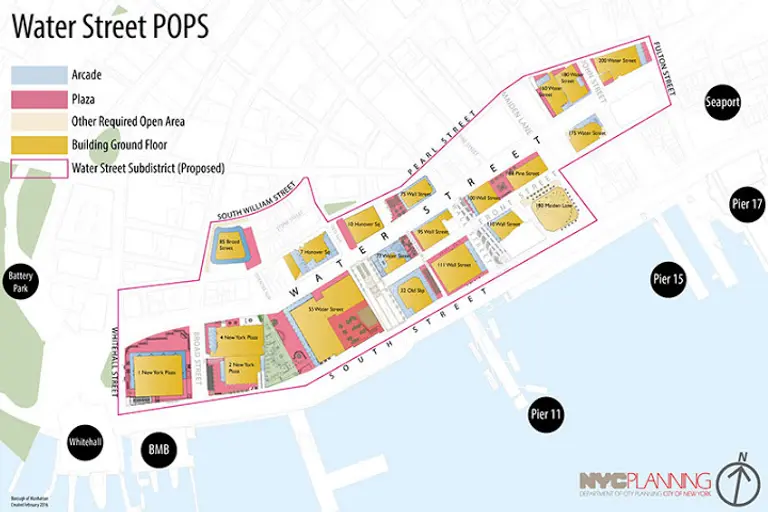
Whether you consider them "dead-end" corridors devoid of street life or nifty urban shortcuts (or just convenient rain shelters), the city's covered public walkways and arcades are finding themselves in something of a spotlight, reports the Wall Street Journal. This recent focus is on the covered walkways that run alongside skyscrapers in the Water Street corridor in lower Manhattan. A proposed zoning change, which would affect property owners in the Water Street Subdistrict, would allow retail to open up shop in these arcades.
Find out why some object to new retail additions