History

September 19, 2014

Mapping the Evolution of the Lower East Side Through a Jewish Lens, 1880-2014

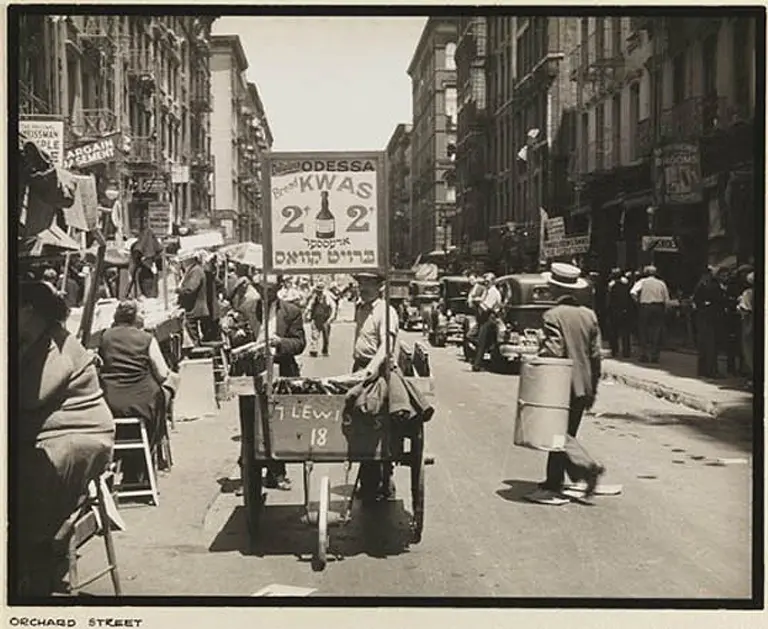
Long considered the capital of Jewish America, this overpoweringly cramped neighborhood was considered by many to be the greatest concentration of Jewish life in nearly 2,000 years. Between 1880 and 1924, 2.5 million mostly-impoverished Ashkenazi Jews came to the US and nearly 75 percent took up residence on the Lower East Side. According to the Library of Congress, by 1900, more than 700 people per acre were settling in a neighborhood lined with tenements and factories. And as quickly as they descended on the streets, all sharing a common language (mostly Yiddish) and most certainly, similar backgrounds, they quickly established synagogues as early as 1865 (the landmarked Bialystoker Synagogue, whose congregants were mostly Polish immigrants from Bailystok), small shops, pushcarts teeming with goods, social clubs and even financial-aid societies. By 1910, the Lower East Side’s population was well over the five million mark, but sadly, such congestion habitually caused havoc.
Learn more about the history of the LES here
September 18, 2014

A La Sagrada Familia in Manhattan? See the Unbuilt NYC Gaudí

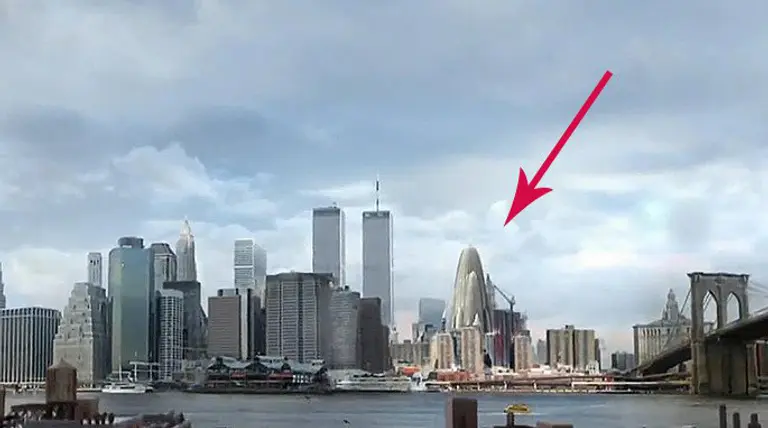
Atoni Gaudí was a brilliant and polarizing architect. Whereas most architects will see their works compared and contrasted against others in their field, even the most knowledgeable architectural critics will look at Gaudí's work and throw up their hands and say it must be something alien. The organic curves and mounds of Gaudí's designs look hundreds of years ahead of their time. But Gaudí worked mostly around his home region of Catalonia, and the businesslike skyscrapers of Manhattan have never looked anything like the the architect's designs. However, there was a time when a Gaudí NYC skyscraper almost came to be.
See the proposed Gaudí building here
September 12, 2014

There’s a Cold War Bomb Shelter Hidden Under the Brooklyn Bridge

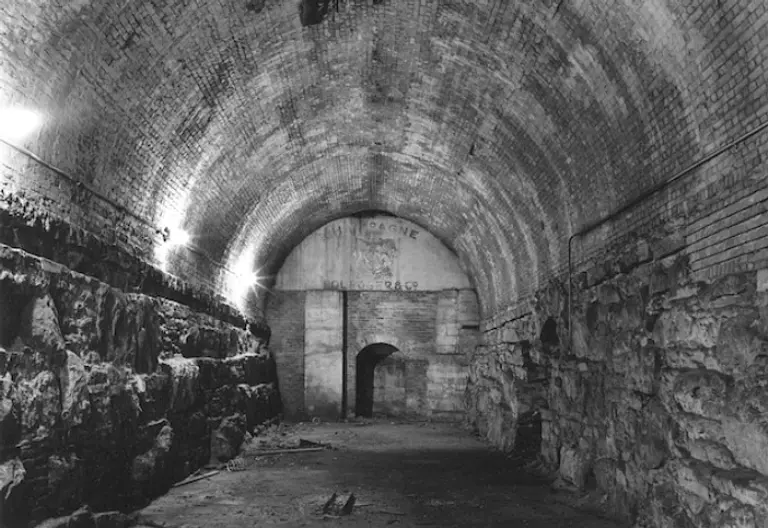
Just when we thought we'd seen it all, we get word that there's a Cold War-era bomb shelter hidden under the Brooklyn Bridge, amid the landmark's many secret passageways and forgotten rooms. The nuclear bunker is inside one of the massive stone arches below the bridge's main entrance on the Manhattan side, and it's chock full of supplies, including medication like Dextran (used to treat shock), water drums, paper blankets, and 352,000 calorie-packed crackers (that may be still be edible, in fact).
Find out what else lies beneath and how this hidden shelter was discovered
September 8, 2014

Cliffs Notes on New York’s Most Famous Storied Residential Buildings

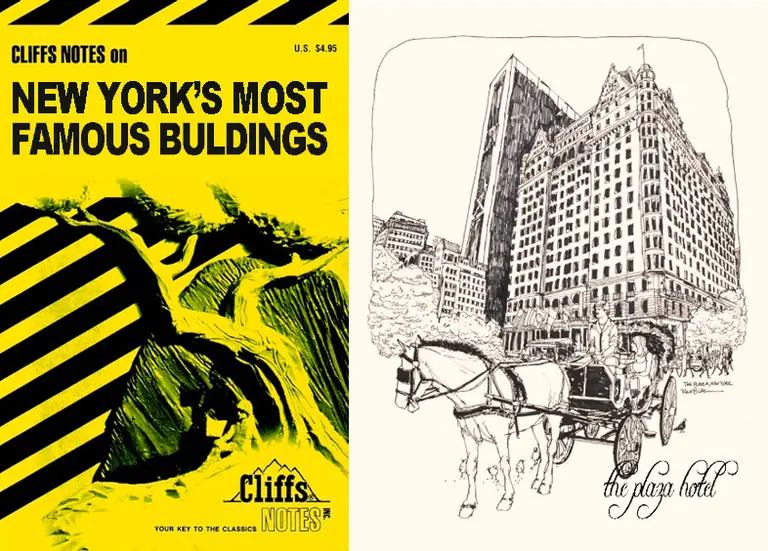
The newest apartment houses, be it now or some 150 years ago has always been of great interest to New York buyers and renters. And like today, their appeal make sell-outs as easy as pie. From Manhattan's very first apartment building to those that followed a decade or so later, those initial projects continue to remain the city's most coveted digs—not to mention the city’s most expensive. But what stands out among these famous buildings as the years passed was the introduction of not-yet-available services—ranging from running water and elevators to electricity and communal amenities. Whether we are talking about the Dakota or the luxurious the Osborne Flats, learn why these century-plus-old buildings continue to enchant the rich, the famous, and the rest of us.
Click here for Cliffs Notes on NYC's most historic homes
September 2, 2014

Frank Lloyd Wright Designs Destined for NYC But Never Built

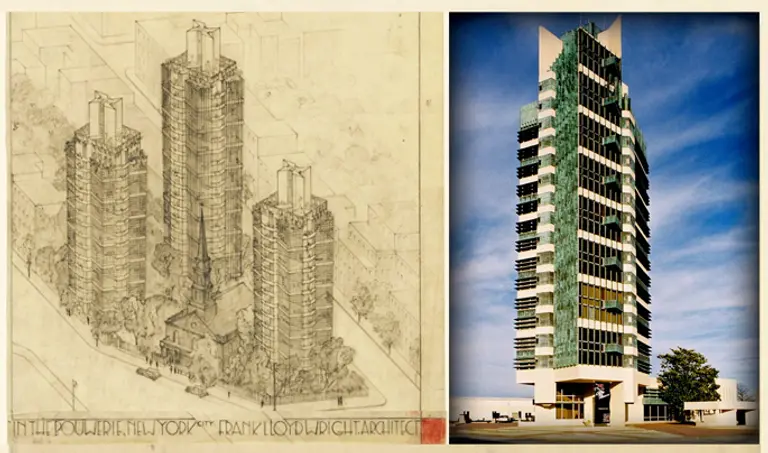
Many wonder why such a prolific and famous architect as Frank Lloyd Wright didn't have more buildings in New York City. It's safe to say he wasn't a huge fan of urban density, but how could one possibly create something as iconic as the Guggenheim's spirals without getting any other work in the city? As we showed in a previous post, two Wright designs have actually been demolished. Now, we will look at the two buildings Wright intended for the New York area which were never fully realized—at least, not in Manhattan.
See the Frank Lloyd Wright designs here
August 29, 2014

What It Takes to Maintain the Fraunces Tavern Museum

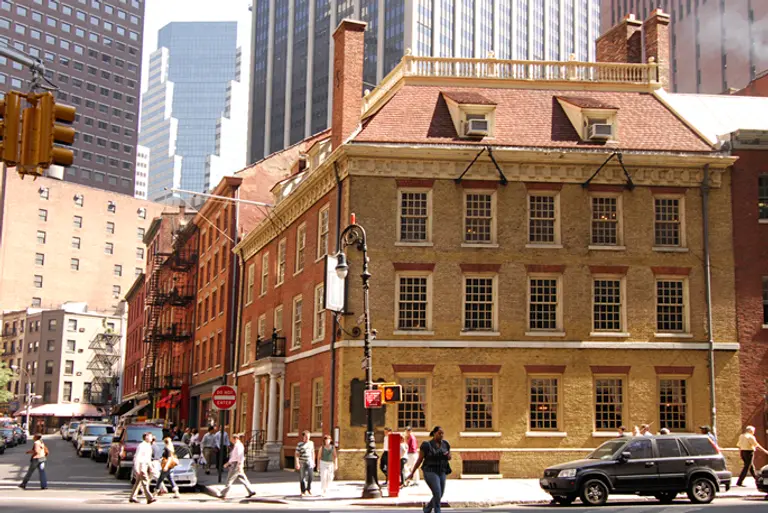
The Fraunces Tavern Museum at 54 Pearl Street in FiDi has a long history of use, changing hands and purpose countless times since it was constructed back in the 18th century. What started as a simple rental home was later turned into a dance studio, eventually finding itself as a popular tavern-slash-boarding-home-slash-community center throughout and after the Revolutionary War. The […]

August 26, 2014

Everything Old Is New Again: The Rise, Fall, and Eventual Rise Again of Co-Op Living

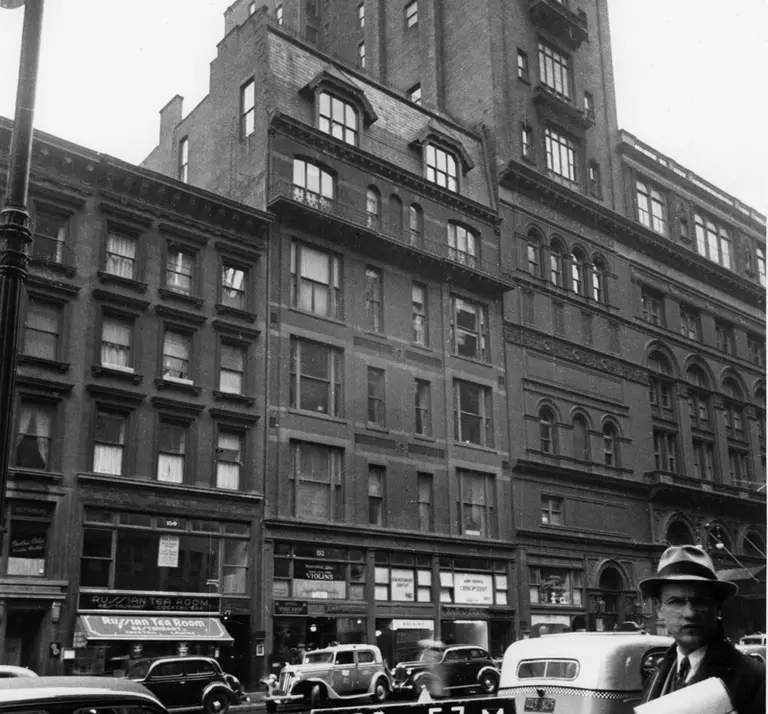
The Rembrandt at 152 West 57th Street between Sixth and Seventh Avenues was built as Manhattan’s first co-op in 1881. Apartment ownership was already in fashion across the pond, particularly in France and Britain, but the concept of a resident-owned building was still an unknown to most of us. Developed by a syndicate led by Jared B. Flagg, a clergyman with an avid interest in real estate, and built by the notable architectural firm of Hubert & Pirsson, the group had come to the conclusion that potential buyers would be drawn to a building where they would have control over expenses. For instance, buying coal and ice in bulk in order to keep prices down, and hiring a full-time communal staff to take care of the owners’ laundry, cooking and the running the elevators. Built as a brick and brownstone building with terra-cotta trim and jerkin-head gable windows at the top, the unit mix—a result of an interlocking system of staggered floor heights to allow for very tall art studio spaces—included a few duplex apartments with as many as 12 rooms. Original brochure prices reportedly ranged between $4,000 and $5,000, with monthly maintenance as low as $50. Confident in the ultimate success of co-operative living, Mr. Flagg with Hubert & Pirsson continued to develop another six co-op projects that very same year.
The history of co-ops and their rise, fall, and rise again into popularity
August 25, 2014

Loew’s Kings Theatre Will Reopen in Flatbush With All of its 1920s Gilded Glamour

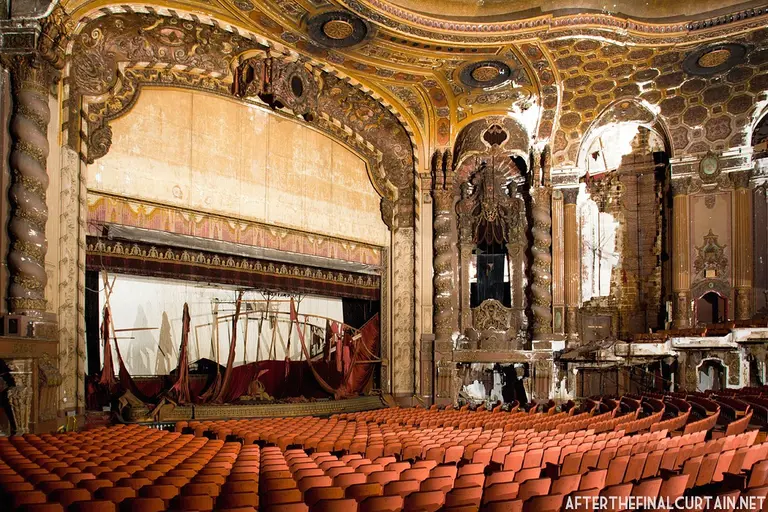
After nearly four decades of sitting vacant, the majestic Loew's Kings Theatre in Flatbush will reopen. It was announced in 2010 that the 1920s movie palace would be restored to its former gilded glory thanks to a $70 million renovation, and now it's been revealed that the reopening will take place in January 2015. The theatre closed in 1977, but according to a press release, the new Loew's Kings Theatre "will serve as both a cultural and economic cornerstone for the Brooklyn community, presenting more than 200 performances annually—including music, dance, theatre, and comedy—providing a resource to foster and support creativity in the area, creating jobs and attracting thousands of visitors to the neighborhood." It will also have 3,000 seats, making it the largest theatre in Brooklyn.
Take a look at the stunning, historic interiors
August 21, 2014

Mastering the Master Plan: A Look at NYC’s Planned Neighborhoods

We often think of the street grid as New York's greatest "master plan." Officially known as the Commissioners' Plan of 1811, this put in place the original, gridded street pattern that we still know today. But there have been several other master plans that took shape on a smaller scale within the linear configuration of Manhattan. These planned communities were largely conceived to transform blighted or underutilized areas into suburban enclaves or peaceful oases within the big city. And just like the neighborhoods that grew organically among the street grid, these master-planned areas each have a unique character. They've also influenced a new crop of developments, currently under construction on the West Side and in Brooklyn.
We take a look at planned communities that historically changed the fabric of the city, as well as those on the horizon
August 20, 2014

Watch Charles and Ray Eames Unveil Their Iconic Lounger on NBC’s ‘Home’ Show

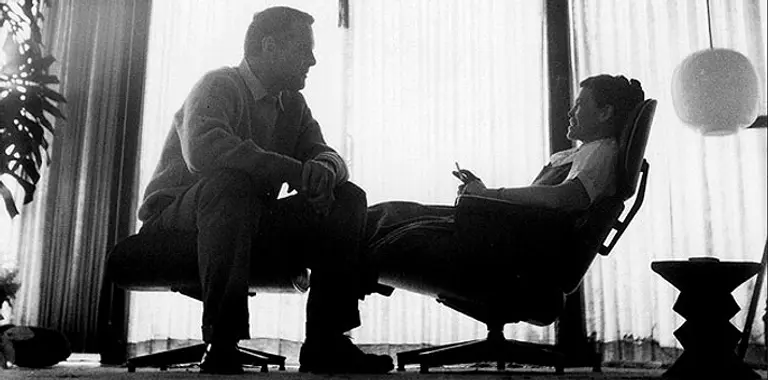
Few chairs are as recognizable as those designed by Charles and Ray Eames. And though Modernist duo were pioneers in the creation of quality furniture, both easily produced and sold at affordable prices (though you wouldn't exactly guess that now), did you know that their lounger was their first foray into the high-end furniture market? Officially titled Eames Lounge (670) and Ottoman (671), the chair was originally designed for Herman Miller back in 1956, and when it was released, Charles and Ray were already household names counting nearly 1 million chairs in homes across the country. To that end, when the pair were ready to debut this latest luxury creation, NBC's Home show invited them to come on and talk about their design. Anyone who admires the Eames will without question love this video featuring the adorable twosome modestly taking compliments from host Arlene Francis while discussing everything from their plywood chair, to their precedent home in Los Angeles, to their lounger, which in the segment gets a comically dramatic unveiling complete with curtains, lights and music.
Watch the video here
August 19, 2014

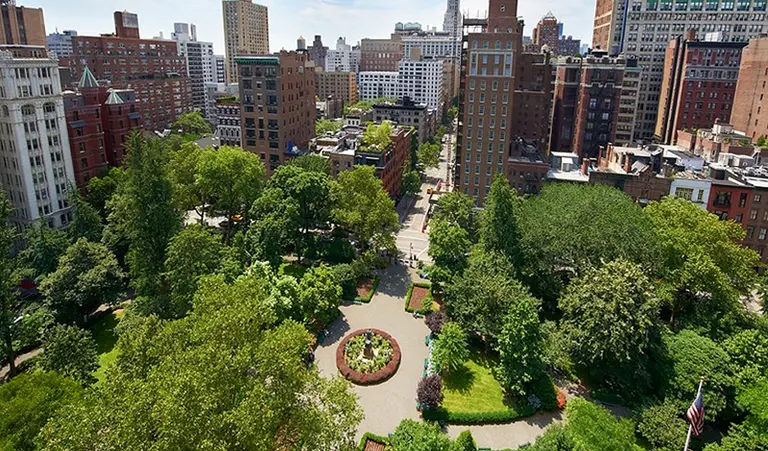
From Swamps to Swank: A Brief History of Gramercy Park Hotel and the Garden’s Highly Coveted Keys

With a prime location overlooking Gramercy Park, accessible solely to those with keys, the 183-year-old Renaissance revival Gramercy Park Hotel was built on the site of infamous architect Stanford White’s home (which had replaced the house where novelist Edith Wharton was born) nearly 90 years ago. The neighborhood, the park, and the hotel date as far back as the 1830s, when more than 60 swampy lots were allocated to developers looking to lure downtown city folks to a new “uptown” community. In time, those lots were transformed into what is now 39 dwellings surrounding a leafy park reserved for a select few lucky enough to live in luxurious homes framing the two-acre park between 20th and 21st Streets at Irving Place. But it wasn't until 1925 that the stately hotel opened its doors at 2 Lexington Avenue. By 1930, it was extended westward along the park frontage on 21st street, and today it is one of the city's most coveted quarters.
More on the history of Gramercy Park Hotel here
August 15, 2014

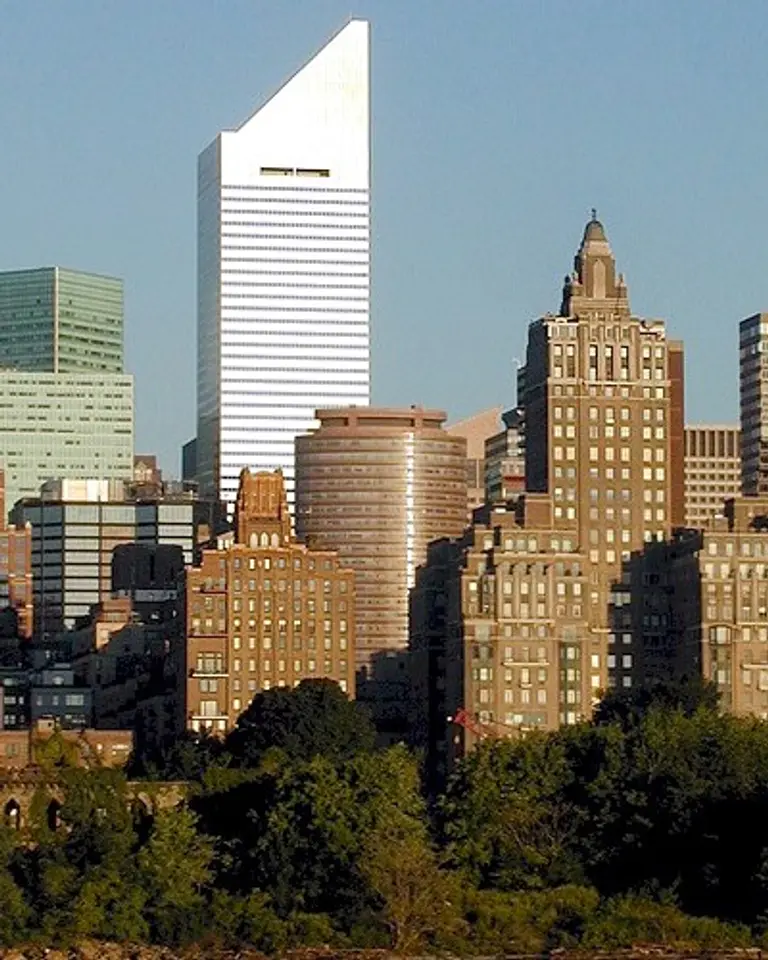
The Nearly Fatal Design Flaw That Could Have Sent the Citigroup Center Skyscraper Crumbling

When it comes to skyscrapers, we put a lot of trust in architects. We have to trust that they know what they're doing, and these seemingly impossible buildings are safe to be in and around. It's even harder to trust what used to be known as the Citicorp or Citigroup Center, now 601 Lexington Avenue, whose bottom floors are like four stilts, holding 50 stories of building above them. It looks like a strong wind would blow the whole structure over. And when the building was constructed in 1977, before some emergency repairs, that was true.
The dangerous details after the break
August 15, 2014

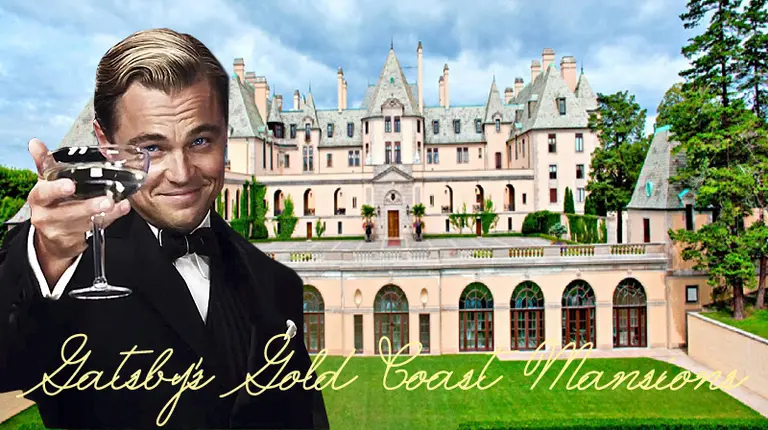
Architecture Day Trip: Visit the Mansions of Gatsby’s “Gold Coast”

F. Scott Fitzgerald's The Great Gatsby is an immortal novel about Long Island millionaires in the Roaring Twenties, inspired by actual parties Fitzgerald attended at the time. The Jazz Age mansions of Long Island's "Gold Coast" certainly represent a bygone era, but you can still visit several of these Gatsby-esque architectural relics today.
Plan your architecture day trip here
August 14, 2014

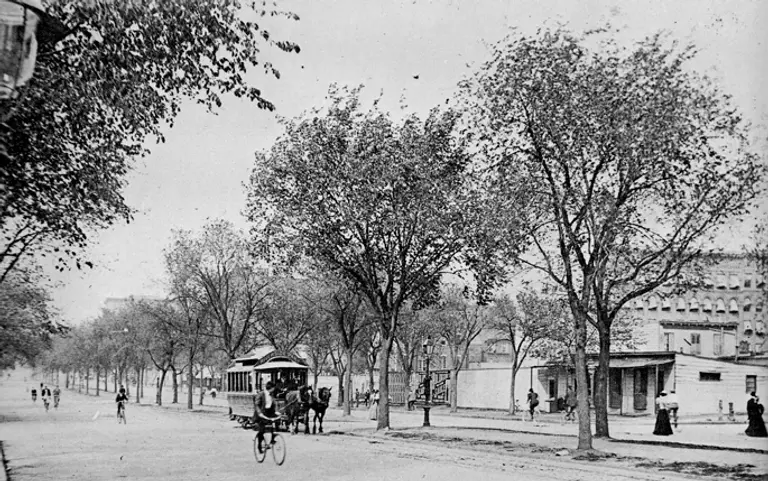
Morningside Heights: From Revolutionary Battle to Columbia University Campus

Today, it's hard to imagine Morningside Heights without the flurry of students hurrying to class at Columbia University. It may be even harder to imagine it without some of its signature architecture: the gothic Cathedral of St. John the Divine, the largest cathedral in the world, Riverside Church, with its former bowling alley, or Grant's Tomb along the Hudson River. But Morningside Heights got an exciting start in the history of New York City (and America, as it turns out)!
The incredible story of Morningside Heights, from past to present, this way
August 12, 2014

Billionaire Peter Brant Buys an Incredible Converted Con-Ed Substation for $27M

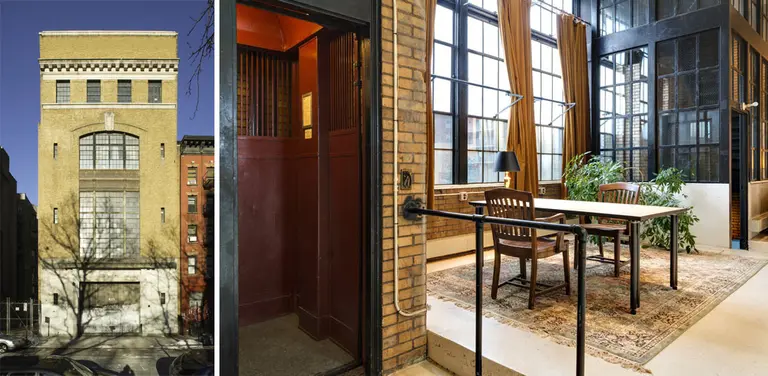
It's a common saying that money can't buy good taste, but Peter Brant proves that old adage doesn't apply to billionaires. According to city records, the American industrialist and businessman just closed on a former Con-Ed substation located at 421 East 6th Street for $27 million—$2 million above asking. Constructed in 1920 to serve the city's power needs, the building was altered in the 60s and again in the 80s to accommodate a live-work space for a famed sculptor Walter de Maria. Even with more than a century of history behind it, today the structure still keeps many of its original relics and the overall gritty aesthetic of its industrial past. As a lover of art himself, we're curious to know how Brant will go about redesigning the space—if he does. Brant, who also happens to be married to supermodel Stephanie Seymour, is the publisher of both Interview and Art in America magazines and has been previously been called a "Donald Trump with taste" by the New York Times.
learn more about the building here
August 7, 2014

The Wilson Hunt House: The History of a Rare 19th Century House Towed to Tribeca by Truck

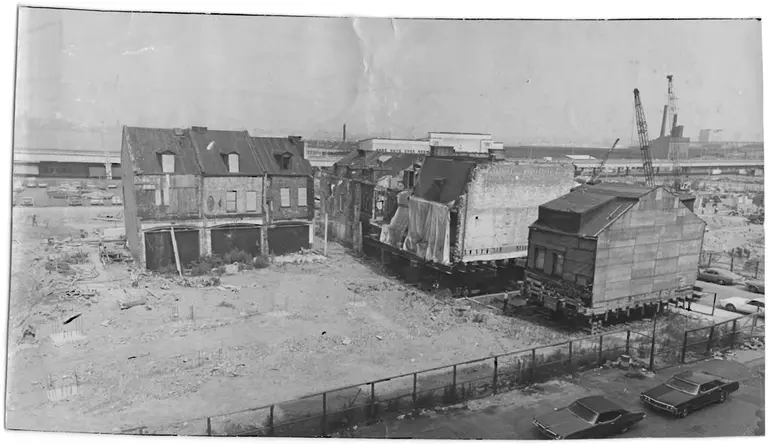
In the 1970s, after obtaining landmark status in 1969, three 19th century houses were actually towed by truck from a no-longer-existing stretch of Washington Street to avoid demolition in the Washington Market Urban Renewal area (a 38-acre site planned by the city’s Housing and Development Administration during the 1960s and 1970s, 10 blocks north of what would become the World Trade Center). Their final destination? Next to three already existing townhouses on Harrison Street, a quiet site that was once the well-known farm of alleged skirt lifter, and one of NYC's first settlers, Annetje Jans. In 1976, New York City put them up for sale (from $35,000 to $75,000) following a restoration by Oppenheimer, Brady & Vogelstein the year before. And more recently, nearly four decades after the sale, CORE brokers Tom Postilio and Mickey Conlon exclusively listed 37 Harrison Street with surprising results.
Fast forward to present day to find out what happened to The Wilson Hunt House
July 30, 2014

A 19th Century Candy Store and WWI Fighter Plane Liven Up a Financial District Office Building

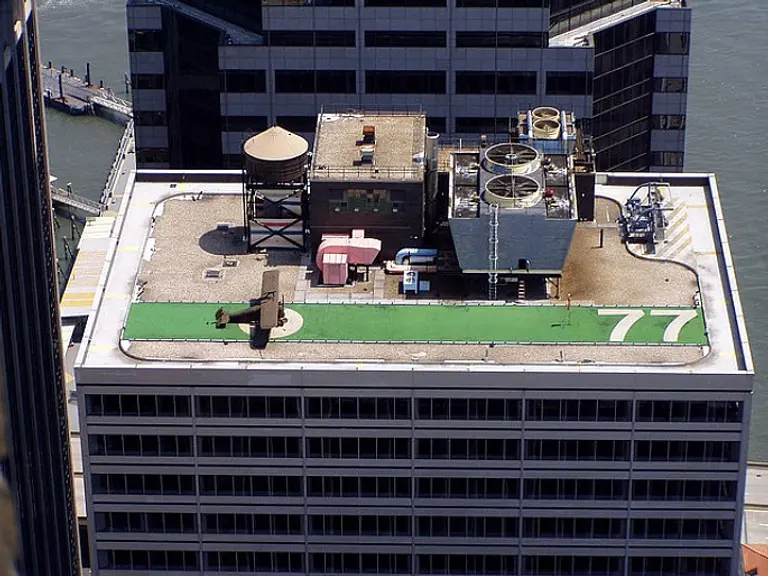
Take a step back in time at 77 Water Street, a 26-story office tower designed by Emery Roth & Sons and built by the William Kaufman Organization. The Financial District building features a WWI fighter plane on its roof and a turn-of-the-century penny candy store in its lobby. Thinking that this tower looks too modern for these curiosities? You're right; it was erected in 1970. The William Kaufman Organization wanted to humanize the building and make workers forget they were in an office tower, and to accomplish this they had historic replicas of the plane and candy shop installed. They also added a variety of public art projects throughout the plaza and lobby.
More fun facts about 77 Water Street right this way
July 22, 2014

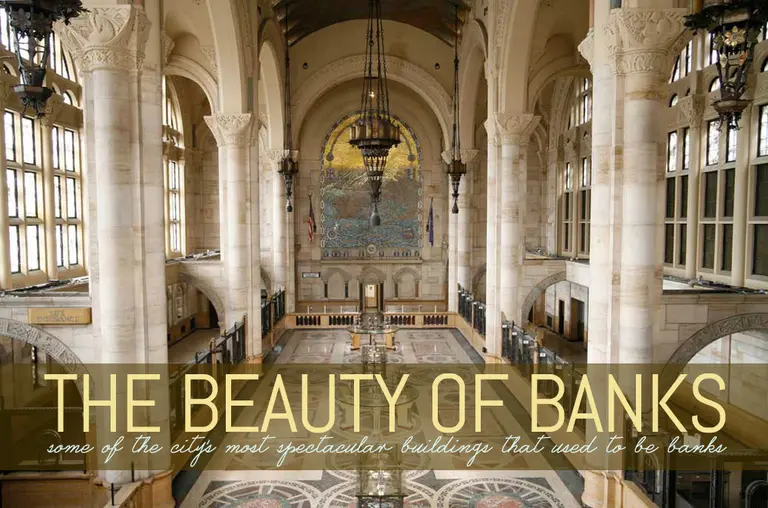
Explore Some of NYC’s Most Beautiful Buildings That Used to be Banks

Banking made this town, and the bank buildings of the 19th and early 20th centuries continue to house some of New York's most classic architecture and design. Greek, Roman, and even Byzantine Revival architectures were the style of choice for bank buildings, and those great stone pillars are still worth visiting today. Ahead are some of the most beautiful former bank buildings in New York City.
See these beautiful bank buildings here
July 22, 2014

Map Enthusiast Creates a More Geographically Correct Version of Vignelli’s Old Subway Map

For anyone in the world who's ridden the New York City subway, they've undoubtedly taken a curious gander at the system map, full of its rainbow-colored, crisscrossing lines. But what many riders may not know is that in 1972, a man named Massimo Vignelli was commissioned by the city to create a very different version of this map, immediately sparking controversy for its geometric simplicity and geographical inaccuracy. In 1979, Vignelli's map was replaced with a more organic, curving version like we see underground today. In 2008, the MTA commissioned Vignelli's firm to update their map, and a new version was put online to serve as the Weekender, highlighting weekend service changes. But now, underground map enthusiast Max Roberts has gone one step further, and claims he's come up with a perfect compromise between the Vignelli work and the MTA's signature map.
See what Mr. Roberts has come up with
July 20, 2014

The New York Architecture Day Trip: From Colonial to Deconstructivism in Manhattan

New York has a long history of great architecture. From the very beginnings in the colonial period to today, there are more great buildings to see in New York than anywhere else on the planet. Thankfully, with this guide, you can see them all in one simple south-north trip across Manhattan. Many great buildings are too tall or difficult to see up close, so we've chosen an example of each style of New York architecture that can also be appreciated from the ground level, rather than forcing you to gawk straight up at a skyscraper. Check out our New York architecture day trip.
Get your itinerary here
July 12, 2014

The Cartier Mansion Shines Again with the Help of Andre Tchelistcheff Architects

Restoring historic landmarks is never an easy task, but a careful, attention-driven job can help a former gem shine again. That's the case behind the renewal of this Upper East Side townhouse, also known as the Cartier Mansion. Together, Andre Tchelistcheff Architects and interior designer David Anthony Easton worked to restore the gorgeous Beaux-Arts building to its former glory.
More pictures of the grand townhouse straight ahead
July 12, 2014

Flashback: See The New York Skyline Change Over 150 Years

The New York skyline is made up of twelve different decades of buildings, but when you look at them today, they all form a single beautiful picture. Over the last century and a half, that picture has changed dramatically. From the original skyscraper boom to the modern glass towers of today, the New York skyline has grown more and more impressive every year, and these pictures show the process step-by-step, as well as the impending future.
See our historic New York skyline photos here
July 9, 2014

Was Louis Kahn’s Four Freedoms Park inspired by the Masonic Pyramid on the $1 bill?

The Franklin D. Roosevelt Four Freedom's Park may have opened relatively recently in 2012, but architect Louis Kahn was brewing up the design for the memorial park nearly 40 years earlier. Kahn's death in 1974 (a somewhat tragic one which left him dead and alone in a Penn Station bathroom after a heart attack) was unfortunately accented by a dwindling reputation — Kahn's sordid multi-family affairs had come to light upon his passing and his fading architecture practice was loaded with debt. But beyond all the scandal, Kahn also left behind a number of sketchbooks packed with complete sets of unrealized projects. One of these projects was the Four Freedom's Park. While plenty of accolades have been given to successful realization of the project so far after Kahn's death, few have tracked where the architect may have pulled his inspiration for the design. That is until now. As a number of Kahn's sketches emerge for public viewing, some are asking: Was the the design of Louis Kahn's Four Freedom's Park inspired by the Eye of Providence found on the U.S. dollar bill?
What people are saying
July 2, 2014

Flashback: See Five Famous New York City Buildings and Bridges Under Construction

As the Freedom Tower is being completed, New Yorkers are losing a once-in-a-lifetime photo opportunity: The chance to snap pictures of a landmark while it is still being built. It is incredible to imagine getting to see a half-built Empire State Building, or a mess of wires that will soon be the Manhattan Bridge, or an excavated hole in the ground where Rockefeller Center will soon be placed. With old photos, we can see what these buildings looked like before they were finished, and what New York looked like before its landmarks were in place.
See what the landmarks of New York looked like in-construction here