History

November 6, 2014

BKSK Proposes an Undulating Glass Topper for the Landmarked Tammany Hall

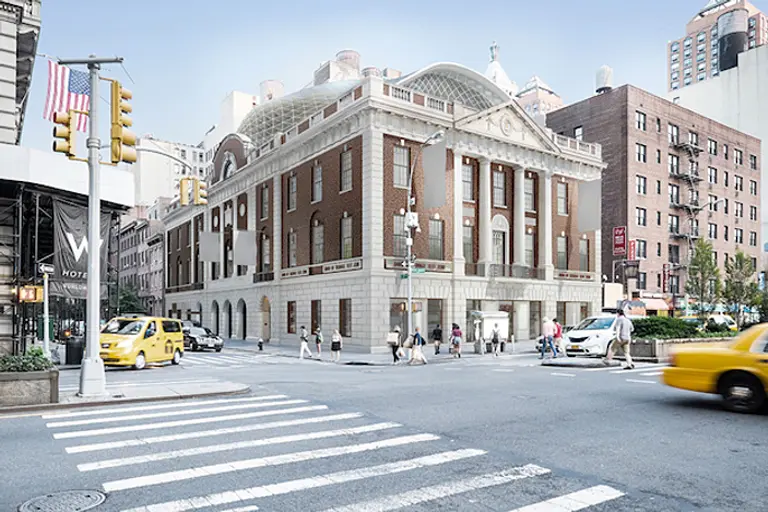
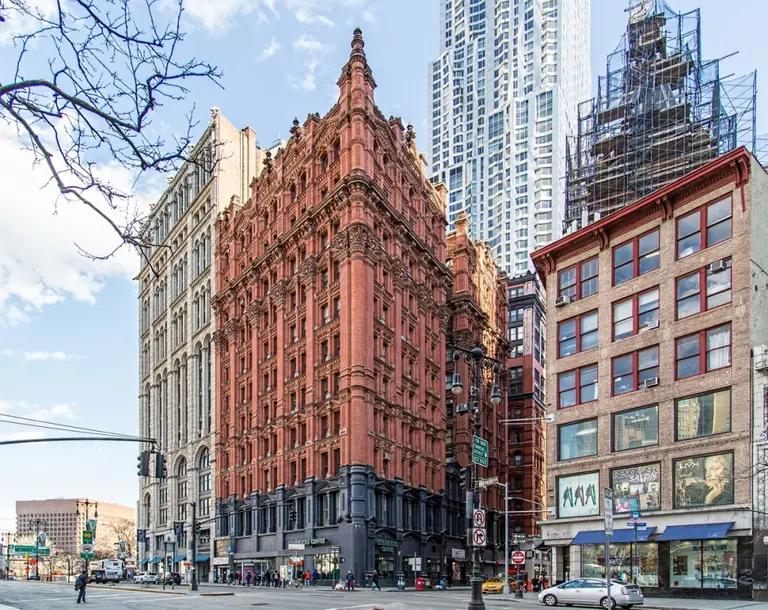
The landmarked Tammany Hall at 44 Union Square East could be getting a modern makeover in the form of a restored facade, brand new storefront, 27,000 square feet of office space, and, most notably, a two-story glass dome topper that would bring the height of the building up to 85 feet. BKSK Architects presented their plans to gut and revamp the historic building this week to the Community Board 5’s Landmarks Committee. And though no one could argue with the design's glassy allure, board members were otherwise not all that thrilled.
Find out more here
November 5, 2014

Peter Stuyvesant’s NYC: From the Bouwerie Farm to That Famous Pear Tree

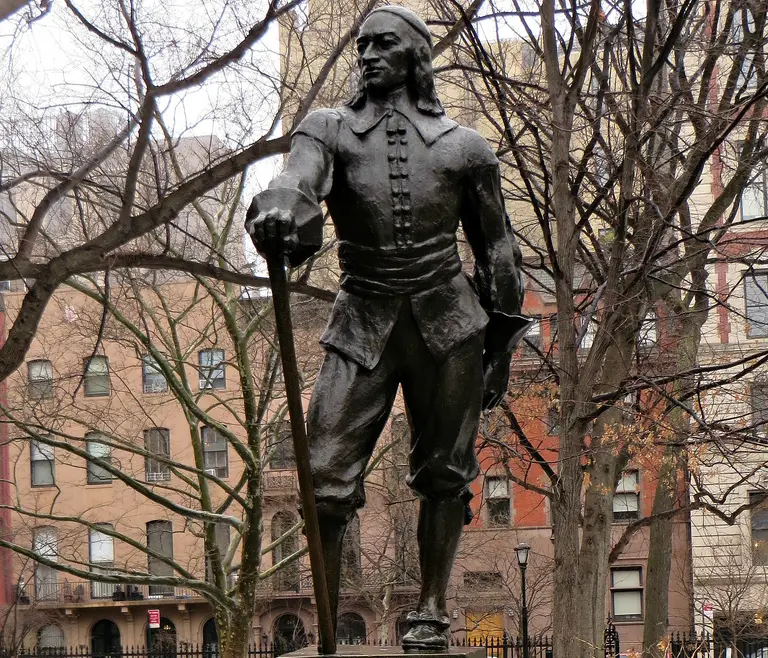
A few quick facts from New York City history 101: The island of Manhattan was originally settled by the Dutch, and therefore officially named New Amsterdam in 1625. It was part of the larger settlement of New Netherland. Pieter, or Petrus, Stuyvesant (we know him today as Peter) was the last Dutch Director-General of the colony of New Netherland from 1647 until it was ceded to the English in 1664. His work greatly influenced the city's expansion northward from the southern tip, and he was responsible for many major historic events, such as the erection of a protective wall on what is today Wall Street and the creation of a canal on today's Broad Street and Broadway. Now that it's November–the month when the city celebrates its Dutch heritage through 5 Dutch Days–we decided to take a look at the old stomping ground of General Stuyvesant, as well as his lasting legacy in the city today.
Read about Peter Stuyvesant's NYC
November 4, 2014

Midtown Site of the Iconic Lutèce Restaurant Sells for $17M – Will It Be Demolished?

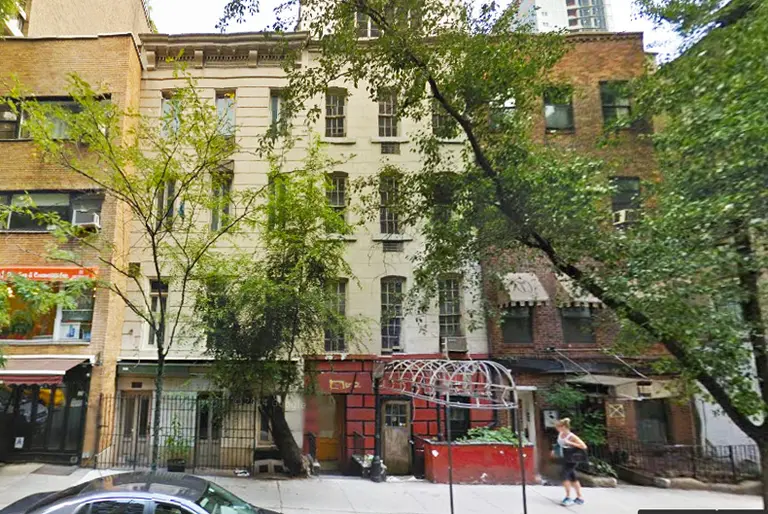
These three townhouses may not look like much to you, but they've for decades been making appearances in pop culture, from the penned to motion pictures, including The Prince of Tides, Wall Street, Crossing Delancey, and most recently, Mad Men. Located at 249-253 East 50th Street, this site once housed the world-renowned Lutèce restaurant. Though today the structures can be described as dilapidated at best, that hasn't stopped a group of Chinatown investors from scooping up the properties for $17 million from East 50th Development LLC. Now in new hands, what's up next for this famed locale?
More details here
November 2, 2014

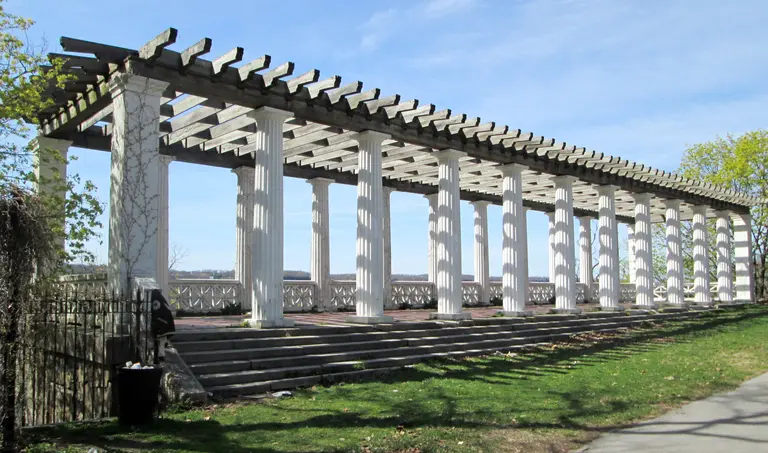
And About That Grecian Temple on the Henry Hudson Parkway…

New York City is filled with an abundance of structural treasures that are hard to miss. From the Brooklyn Bridge to the Chrysler Building to the soon-to-be-opened Freedom Tower, there is no shortage of architectural eye candy vying for your attention. Which means some pretty spectacular little gems get lost in the shuffle. Like the curious white, Doric-columned structure located off the Henry Hudson Parkway near West 190th Street. Part of Fort Washington Park, this scenic overlook perched over 100 feet above the Henry Hudson River is known as Inspiration Point – a perfect moniker given its breathtaking vistas of the river, George Washington Bridge, and the majestic Palisades in neighboring New Jersey.
Learn more here
October 30, 2014

6 of New York’s Spookiest, Scariest and Downright Strangest Homes

Every day at 6sqft we pretty much find ourselves in awe saying "We can't believe people live like this!" But every so often we come across a home that has us muttering "People live like this??" In celebration of All Hallow's Eve, we've rounded up six spooky and scary Manhattan and Brooklyn residences. One is filled to the brim with dead animals, another hides a secret underground portal, and another harbors an incredible tale of murder and deceit. Jump ahead to see all six them all—and if you'd ever dare live in one of these petrifying pads, you're in luck because several of these homes are for sale. Lucky you?
For these homes, it's Halloween year-round
October 30, 2014

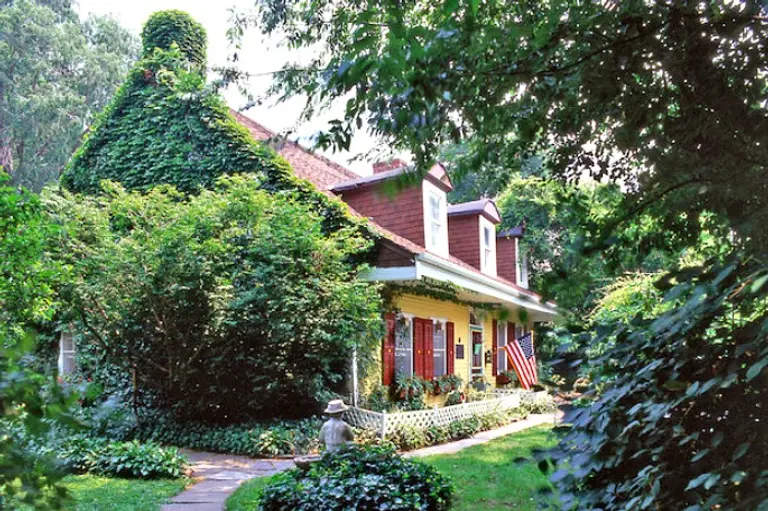
Tour the Lent-Riker-Smith Homestead and Cemetery, Queens’ Oldest Private Residence

In a world where you can virtually tour real estate listings, it's nice to know that the good, old-fashioned house tour hasn't gone out of style. And this Saturday, one of the oldest homes in Queens is opening its doors for a tour of its refurbished interior, exceptional gardens, and historic cemetery. The Lent-Riker-Smith Homestead in East Elmhurst was built circa 1656 by Abraham Riker, an early settler of New Amsterdam. Its current owner Marion Duckworth Smith still lives in the home, which makes the property the oldest private residence in the borough. She and her late husband Michael Smith began restoring the home in 1980, and since then Smith has offered the occasional tour, giving guests a glimpse into the Riker burial ground, which holds the remains of 132 descendants, the interior living areas, and the picturesque gardens, which include a gazebo and workshop designed to look like a gingerbread house.
More on the house's history and the upcoming tour
October 28, 2014

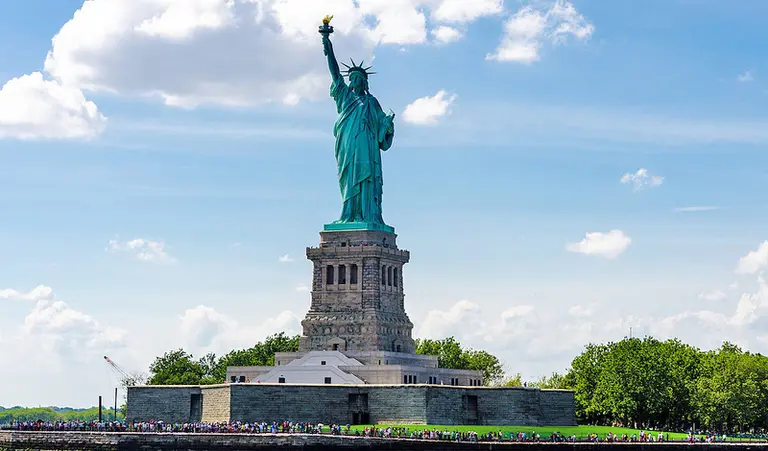
Happy Birthday Lady Liberty! She Turns 128 Today

Every day Lady Liberty stands tall holding high her torch in celebration of our nation's freedom. Since today is Miss Liberty's 128th birthday, we thought it would only be appropriate to take some time out of our busy schedules to return the favor. Join us for a brief look back at some of Miss Liberty's most notable moments throughout history. Happy birthday Lady Liberty, and here we go!
Fun facts on Miss Liberty here
October 24, 2014

Terra Cotta in New York City: Beautiful Buildings Adorned in Ceramic

Glazed terra cotta (a clay-based ceramic) became a popular architectural material in the United States between the late 1800's and 1930's thanks to being sturdy, relatively inexpensive, fireproof, and easily molded into ornamented detail. Plus, it was easy to make it look like granite or limestone, much more expensive materials. Terra cotta really took off when some of Chicago and New York's great architects, Cass Gilbert, Louis Sullivan, and Daniel H. Burnham, incorporated the material in to their most famous works such as the Woolworth Building, Bayard-Condict Building, and Flatiron Building, respectively. Additionally, Rafael Guastavino adorned many of the great Beaux-Arts masterpieces with his famous terra cotta tiled vaults. There are countless buildings in New York City that owe their elegance to glazed terra cotta, and we've put together a list of some of our favorites.
Explore terra cotta in NYC
October 23, 2014

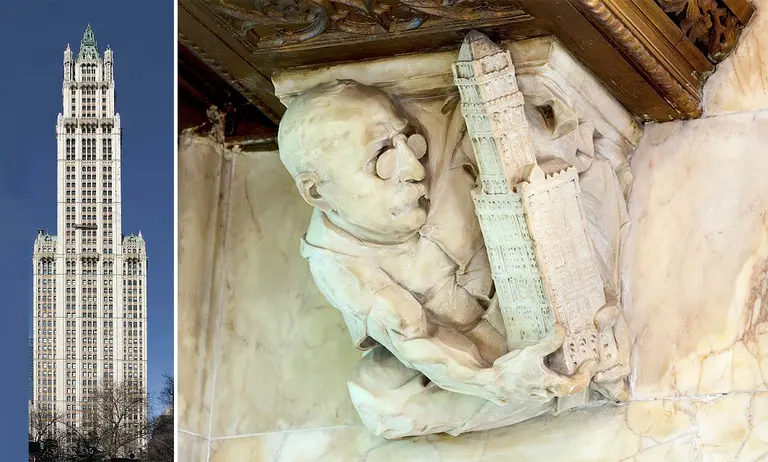
Accounting for the Strange Faces That Adorn the Woolworth Building (And Other Fun Facts)

The 101-year old Woolworth Building has been in the news quite a bit lately, especially since it was first announced that the top 30 floors would be turned into 34 apartments; one of which is a nine-story penthouse is expected to hit the market for a record $110 million. But the Woolworth has long been at the center of New York life with its storied past and lofty 792-foot height. It cost $13.5 million to erect the tower in 1913, and the building was the world's tallest when it first debuted. Though a number—50 to be exact—have surpassed it in height, the Woolworth Building has remained one of the world's most admired for its detailed and compelling ornamentation. Like other prestigious companies of its time, Frank W. Woolworth wanted something unforgettable and the building's architect, Cass Gilbert, certainly delivered. The tower is filled to the brim with mosaics, stained-glass, golden embellishments and of course tons of those carved faces and figures.
See the faces of the Woolworth building
October 22, 2014

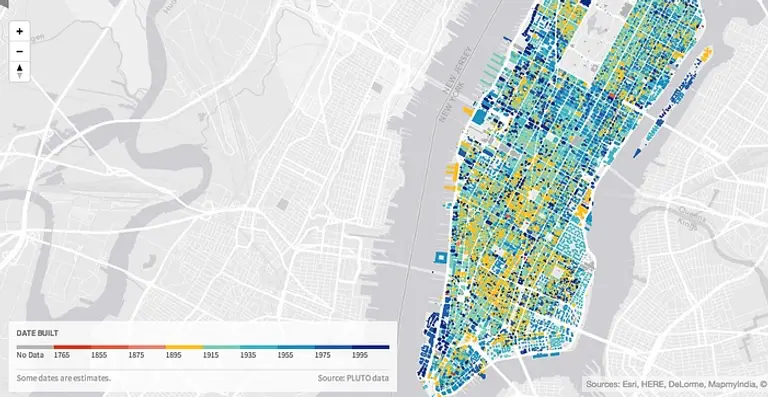
New Mapping Tool Urban Layers Tracks the Age of Every Building in Manhattan

A new mapping tool called Urban Layers lets users see almost every building still standing in Manhattan today and reveals exactly when it was built. The data goes back as far as 1765. The interactive map by Morphocode provides insight not only into the history of a specific building, but into the evolution of entire neighborhoods, too. And for New York City history fanatics like us, this user-friendly tool is definitely going to come in handy.
More on the mapping tool here
October 22, 2014

POLL: What Object Best Defines NYC’s History?

If you read 6sqft’s version of “A History of New York in 101 Objects” you know that we received quite a diverse mix of responses. But there were a few items that proved to be most popular. So we want to know which of these three you think is THE object that defines New York City.

October 22, 2014

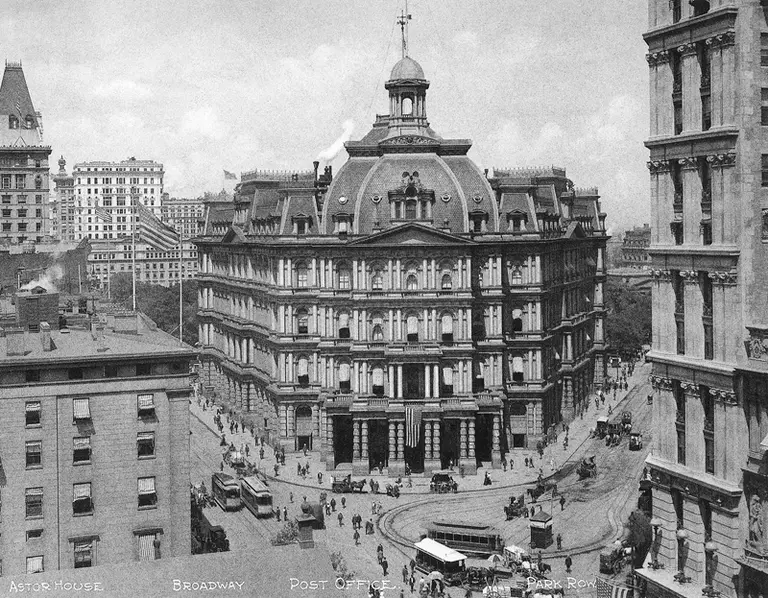
Historic Post Offices: Architectural Masterpieces That Are More than Just Places to Drop Mail

The Federal government has dabbled in several architectural styles over the years when designing New York City post offices. From outdated baroque in the late 1800's to New Deal-era Art Moderne, all of these historic buildings seem to share two characteristics: grandiose and massive. We've rounded up here some of the greatest architectural stunners, which also showcase the evolution of historic post office architecture in the city (and almost make waiting an hour in line to mail one letter bearable).
See more of NYC's historic post offices here
October 21, 2014

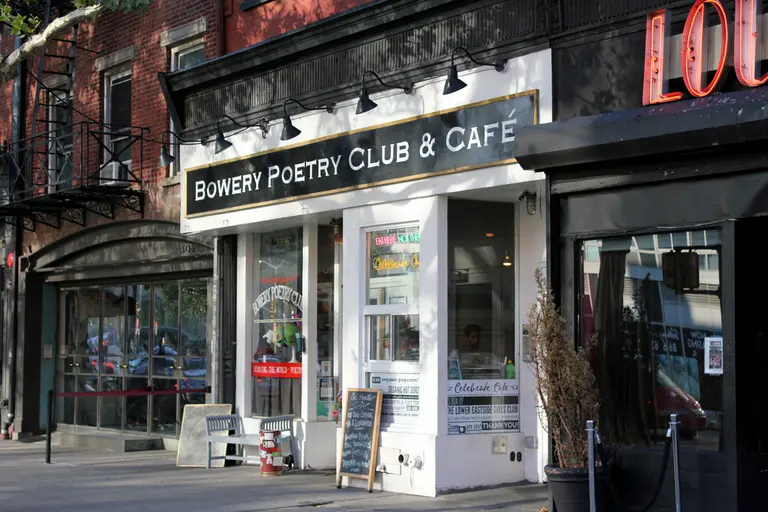
Explore the East Village Through Poetry and Poets of the 1950s to Present

Jam-packed full of boutiques, bars, and a booming frat scene, the East Village's past as a haven for artists and other creatives is quickly being forgotten. But from the 1950s through the 60s, the Village was the epicenter of beat poetry and was once the stomping grounds of lit's most prolific. For more than sixty years there has been an intense poetry scene happening in the East Village. Passing Stranger, a project by WNYC's Pejk Malinovski and The Poetry Foundation, is an interactive documentary experience that brings listeners through two miles of the East Village via the poetry and poets of the 1950s up to the present. If you love podcasts such as This American Life and 99% Invisible, you'll love this sound-rich audio tour which will get you out and about on a beautiful fall day, and enlighten you on one of the most important bohemian communities to exist.
More on the project and podcast
October 17, 2014

Peeking into the East Village’s Marble Cemeteries

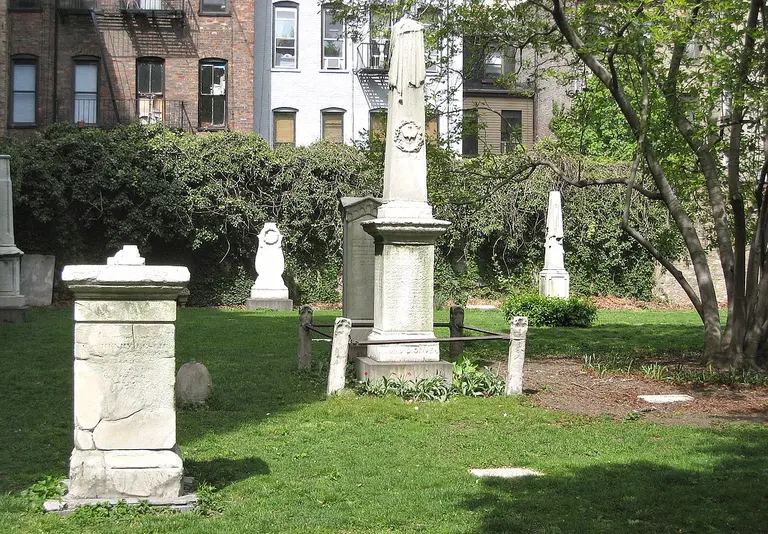
Today we think of cemeteries as spooky, haunted places that we avoid, or as sad, depressing spots reserved for funerals. But they were once quite the opposite--in fact, they were the earliest incarnations of public parks. In New York City, burials took place on private or church property up until the mid-1800's when commercial cemeteries began popping up. And in the East Village there are two such early burial grounds hidden among the townhouses and tenements--the New York Marble Cemetery (on the west side of Second Avenue just above Second Street) and the New York City Marble Cemetery (on the north side of Second Street between First and Second Avenues). Though their titles are extremely similar and they're located less than a block apart, the two cemeteries are operated separately and have their own unique history. And during openhousenewyork weekend, we were lucky enough to take a peek beyond the cast iron gates and into these important pieces of the East Village's past.
Explore the Marble Cemeteries
October 16, 2014

A History of New York in 101 Objects: 6sqft Edition

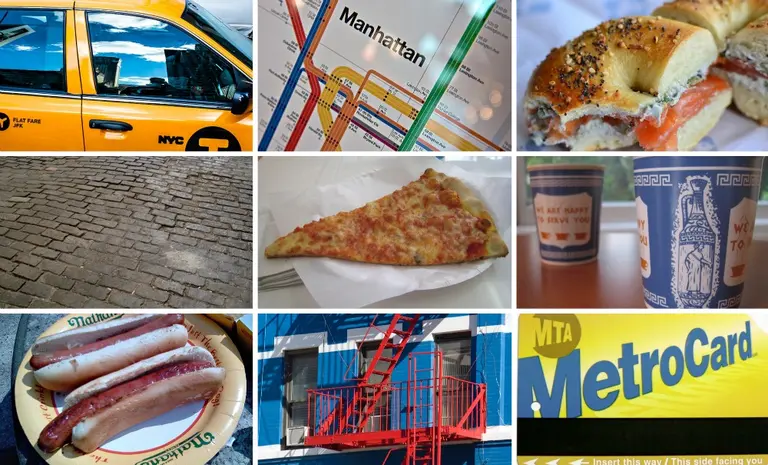
As urbanists we tend to define the city by locations and the historic events that unfolded at them. But what about getting even more specific and looking at New York's past through tangible objects? That's exactly what New York Times urban affairs correspondent Sam Roberts has assembled in a new book, A History of New York in 101 Objects. And a corresponding exhibit at the New York Historical Society puts Roberts' choices, along with objects from the Society's collection, on view. We were so intrigued by this idea that we decided to put together a 6sqft version of the list. From preservationists to architects to real estate brokers, we've asked ten people to give us the ten objects that they feel best define New York City's history. There are definitely some favorites that emerged like cobblestones, Metrocards, and pizza, as well as an eclectic mix of items that speak to our participants' personal connections to New York.
See the lists here
October 15, 2014

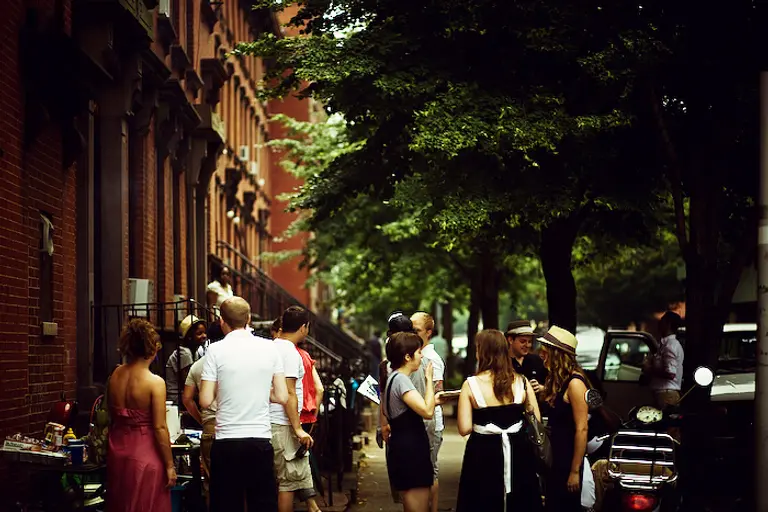
Bed-Stuy: From Harlem and Hip-Hop to Hipsters, Hassids and High Rents

Brooklyn is changing fast and at the forefront of this is Bedford-Stuyvesant—or as it's more commonly known, Bed-Stuy. Like most New York neighborhoods, Bed-Stuy has had its ups and downs, its most notable down being the 80s and 90s when crime and drugs were at a record high. But as hard as the times may have gotten, the neighborhood has maintained itself as one of the city's most culturally significant. Bed-Stuy has long been home to one of the largest concentrations of African-Americans in New York, it boasts beautiful well-preserved architecture spanning countless styles and centuries, and of course, there is the neighborhood's central role in the hip-hop movement.
More on the history and future of Bed-Stuy
October 15, 2014

An Abridged History of New York City’s Most Popular Bridges

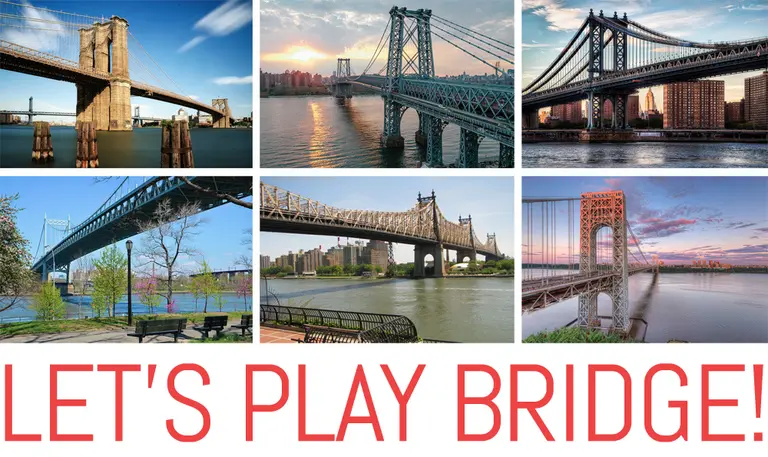
According to the Department of Transportation (DOT), Manhattan boasts about 20 bridges that connect the Big Apple to neighboring areas—many of which have various degrees of landmark status, including the Brooklyn Bridge, the George Washington Bridge, the Manhattan Bridge, the High Bridge, the University Heights Bridge and the Ed Koch Queensboro Bridge. We often use these marvels without giving them much thought beyond the grandiose size and maybe their engineering, so to give you a little trivia to impress your friends with the next time you cross one these storied bridges, we're offering up a handy primer on seven of the city's most famous.
A quick primer on the city's top bridges
October 13, 2014

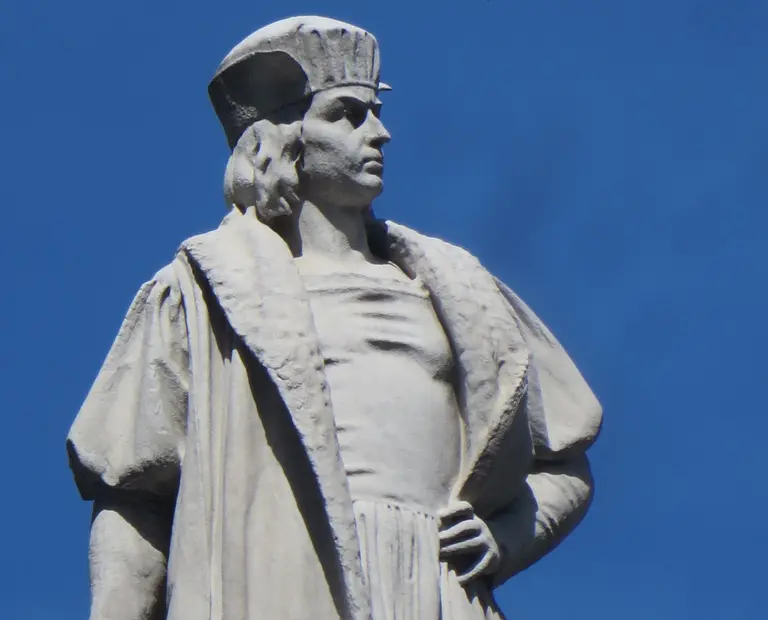
Holiday Field Trip: Where to Find Christopher Columbus in NYC

It's easy to forget that Columbus Day is more than just a day off from work (which we're not complaining about), but rather a holiday celebrating Christopher Columbus' arrival in the Americas on October 12, 1942. But if you need reminding, look no further than these memorials scattered around New York City.
Take a tour of where to find Christopher Columbus monuments in NYC
October 11, 2014

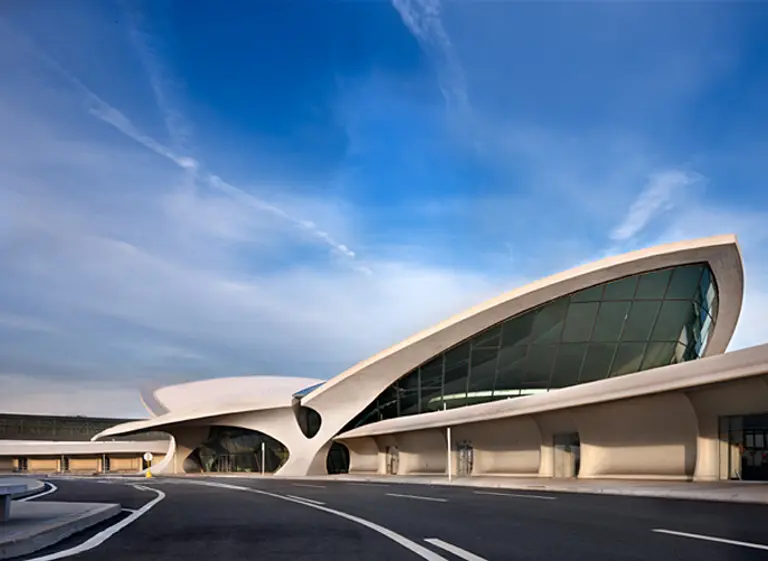
An Architect’s Gift from the Jet Age: The TWA Flight Center at JFK International Airport

The TWA Flight Center at what is today John F. Kennedy International airport represents both the ephemeral and the ageless; our vulnerability at the end of the "American century" and the enduring beauty of inspired modern design. The work of mid-20th century Finnish-American architect Eero Saarinen, the historic terminal is among the city’s most beloved architectural treasures. It first opened in 1962, a year after the architect’s death, and Saarinen posthumously received the AIA Gold Medal award for the design in 1962. Despite its storied past and widespread reverence, since the demise of TWA and its subsequent purchase by American Airlines in 2001, the terminal’s iconic “head house” has remained eerily vacant, and its future continues to be a point of contention.
More on the terminal's past and uncertain future
October 8, 2014

New App Lets Users Send 20th Century Postcards with a Then-and-Now Feature

Perusing those bins of vintage postcards at flea markets is always a treat, but who wants to mail and part ways with such fun pieces of nostalgia? A new app called ScenePast: Americana Road Trip, however, lets users send 20th century postcards digitally, so you can share your favorite scenes without tapping into your personal collection. If that wasn't enough, ScenePast also has a feature that provides the current-day view of the streetscape depicted on the postcard--a fun tool that is sure to prove addictive for history buffs.
More on the app here
October 2, 2014

Kleindeutschland: The History of the East Village’s Little Germany

Before there were sports bars and college dorms, there were bratwurst and shooting clubs. In 1855, New York had the third largest German-speaking population in the world, outside of Vienna and Berlin, and the majority of these immigrants settled in what is today the heart of the East Village. Known as "Little Germany" or Kleindeutschland (or Dutchtown by the Irish), the area comprised roughly 400 blocks, with Tompkins Square Park at the center. Avenue B was called German Broadway and was the main commercial artery of the neighborhood. Every building along the avenue followed a similar pattern--workshop in the basement, retail store on the first floor, and markets along the partly roofed sidewalk. Thousands of beer halls, oyster saloons, and grocery stores lined Avenue A, and the Bowery, the western terminus of Little Germany, was filled with theaters. The bustling neighborhood began to lose its German residents in the late nineteenth century when Jewish immigrants from Eastern Europe move in, and a horrific disaster in 1904 sealed the community's fate.
Read our full history of Kleindeutschland
October 2, 2014

Iconic Rainbow Room Reopens with All Its Former Glitz and Glamour

The Rainbow Room served its first guests on October 3, 1934, and now, almost 80 years later to the day, the historic restaurant and event space has reopened after a restoration by Gabellini Sheppard Architects. Located on the 65th floor of the Raymond Hood-designed 30 Rockefeller Plaza (30 Rock), it was the first restaurant located in a high-rise building and for decades was the highest restaurant in the country. Suffering from a decline in business, the fine-dining establishment closed its doors in 2009. But in 2012, the Rainbow Room was declared an official interior landmark by the Landmarks Preservation Commission (LPC), and a year later it was announced that the storied space would reopen this fall. Right on schedule, the new incarnation of the venue opened last night for a preview by the Sir John Soanes Museum Foundation.
Ogle the landmarked restaurant here
October 1, 2014

Strivers’ Row Home Tour & Exhibit at Macy’s Showcase Harlem’s Elegant Enclave

This weekend, all you old-house lovers will have two opportunities to step back in time and explore the elite Harlem enclave known as Strivers' Row. Located on West 138th to West 139th Streets, between Adam Clayton Powell and Frederick Douglass Boulevards, the area was once home to prominent, wealthy African-American performers, artists, and professionals who lived in the harmonious row of stately brick dwellings. Running until Sunday, October 5th is an exhibit at Macy's called “Strivers’ Row Style: Uptown Comes Downtown,” which will feature vignettes by various designers of what the interiors of these historic homes would have looked like during the heyday. Also on the 5th is the Strivers' Rome Home Tour, which lets participants inside eight of the distinctive residences and four historic churches.
More on Striver's Row and the upcoming events
September 26, 2014

Before There was ‘Ruin Porn’ There was ‘Ruin Value’

In the internet hierarchy of "things the internets like", we'd argue that ruin porn sits wedged somewhere between Buzzfeed quizzes and cats. Images of decaying architecture conjure up unsettling feelings of tragedy and loss, but somehow manage to grip us with its intangible beauty. Whatever the cause for this may be, the thrill and enjoyment we get from looking ruin porn is palpable. The term 'ruin porn' is said to have been coined by blogger James Griffioen during a 2009 interview with Vice magazine in which he criticized photographers who scouted down-trodden Detroit for provocative photos. While ruin porn is the trend at hand, decades before its arrival there was something called 'ruin value'.
learn more about ruin value