Balloon Museum announces opening of NYC flagship at the Tin Building
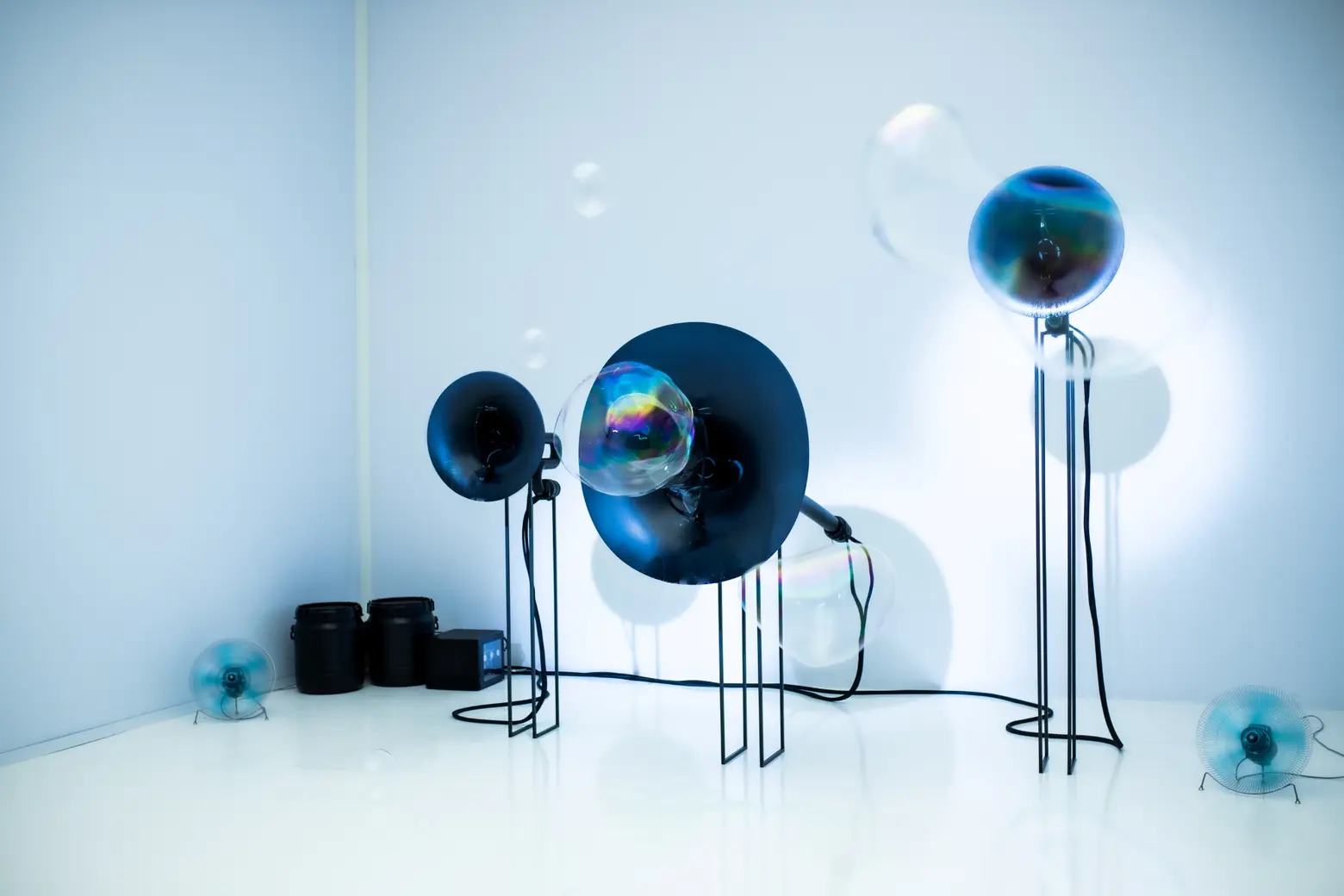
“Black Hole Horizon” by Thom Kubli. Credit: The Balloon Museum
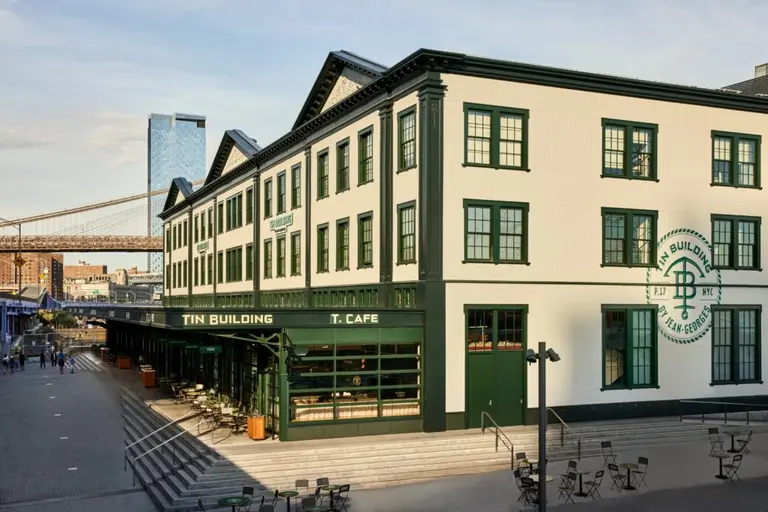
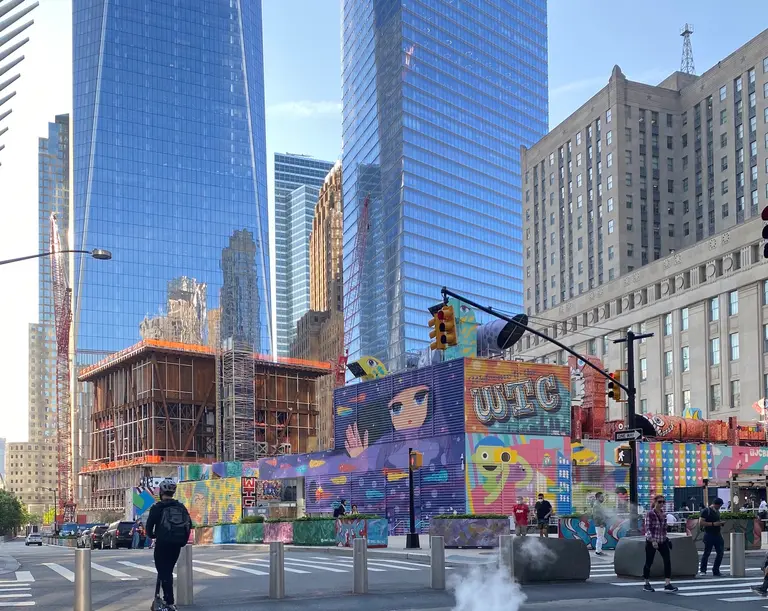
The world’s first traveling inflatable art exhibition is opening a permanent location in New York City. The Balloon Museum will open at the historic Tin Building in the Seaport District on July 15, bringing its unique large-scale installations to a 58,000-square-foot space that formerly housed Jean-Georges Vongerichten’s food hall. Its inaugural exhibition, “Daydream: Air Becomes Art,” will bring together experimental, site-specific works that use air as a “unifying medium,” featuring artists including Marina Abramović and Martin Creed.
Created by the Italian company Lux Entertainment, the Balloon Museum debuted in 2021 and has since staged exhibitions in 23 major cities across Europe, North America, and Asia, as 6sqft previously reported.
“Balloon Museum was founded on the idea that air and inflatables could become a powerful contemporary language,” Roberto Fantauzzi, founder and CEO of Lux Entertainment and president of Balloon Museum LLC, said.
“Establishing a permanent home in New York is an extraordinary milestone for our organization and a reflection of how far this vision has grown.”
Taking its name from moments when, during daily life, our thoughts slip away from the mundane into a “dreamlike reality,” the inaugural exhibition delivers a sensory journey that encourages new perspectives and active engagement, turning air and inflatables into a powerful “contemporary language.”
Unfolding in a sequence of surreal spaces, the exhibition features works that play with color, light, sound, reflection, volume, and air, offering new forms of interaction and redefining the relationship between body, movement, and space.
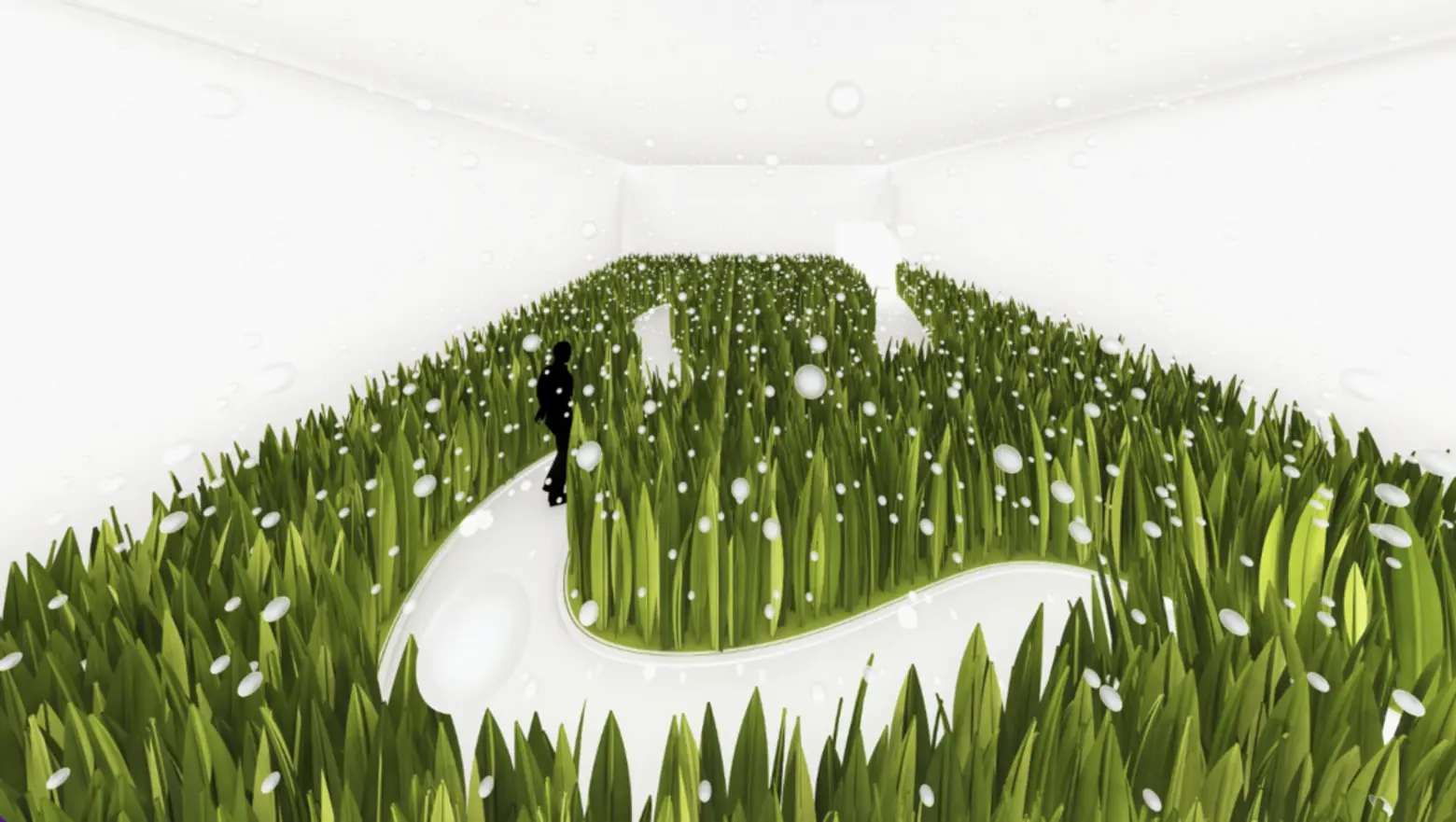
At the center of the exhibition is Marina Abramović’s work, “Snowy/Windy/Spring on Planet Z,” inspired by childhood imagination and the nature of breath. It marks the artist’s first exploration of light, air, and the environment as an immersive installation.
Visitors move through a field of shoulder-high inflatable grass and swirling artificial snow in a white environment reminiscent of a “wintry extraterrestrial meadow.”
Turner Prize-winner Martin Creed’s “Work No. 3883: Half the air in a given space” fills a transparent room with hundreds of blue balloons that contain half of the air in the space, creating a playful dialogue around volume, density, and absence.
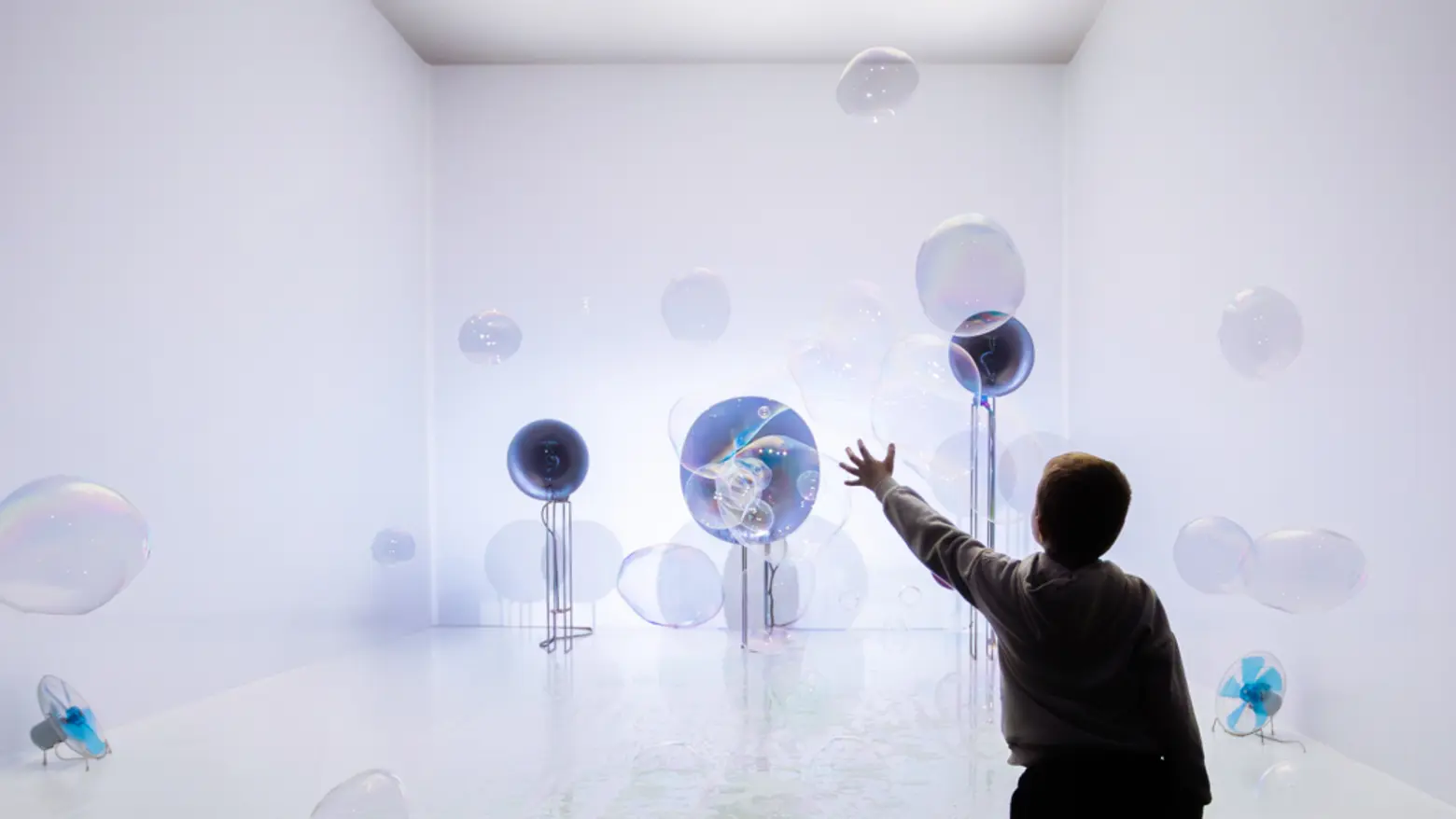
Alex Schweder’s “Our Breath, Her Joy” features a giant mirrored ball that turns air and light into an architectural medium through fabric-covered “lungs” that rise and fall as it “breathes.” In “Black Hole Horizon,” artist Thom Kubli turns sound into matter, using compressed air to release soap bubbles that drift through the room in captivating choreography.
In Boris Acket’s “There, Where I am Absent,” participation takes a central role, as visitors lie beneath an overhead mirror and their reflections morph into a kinetic sculpture featuring a single mechanical wing suspended from the ceiling.
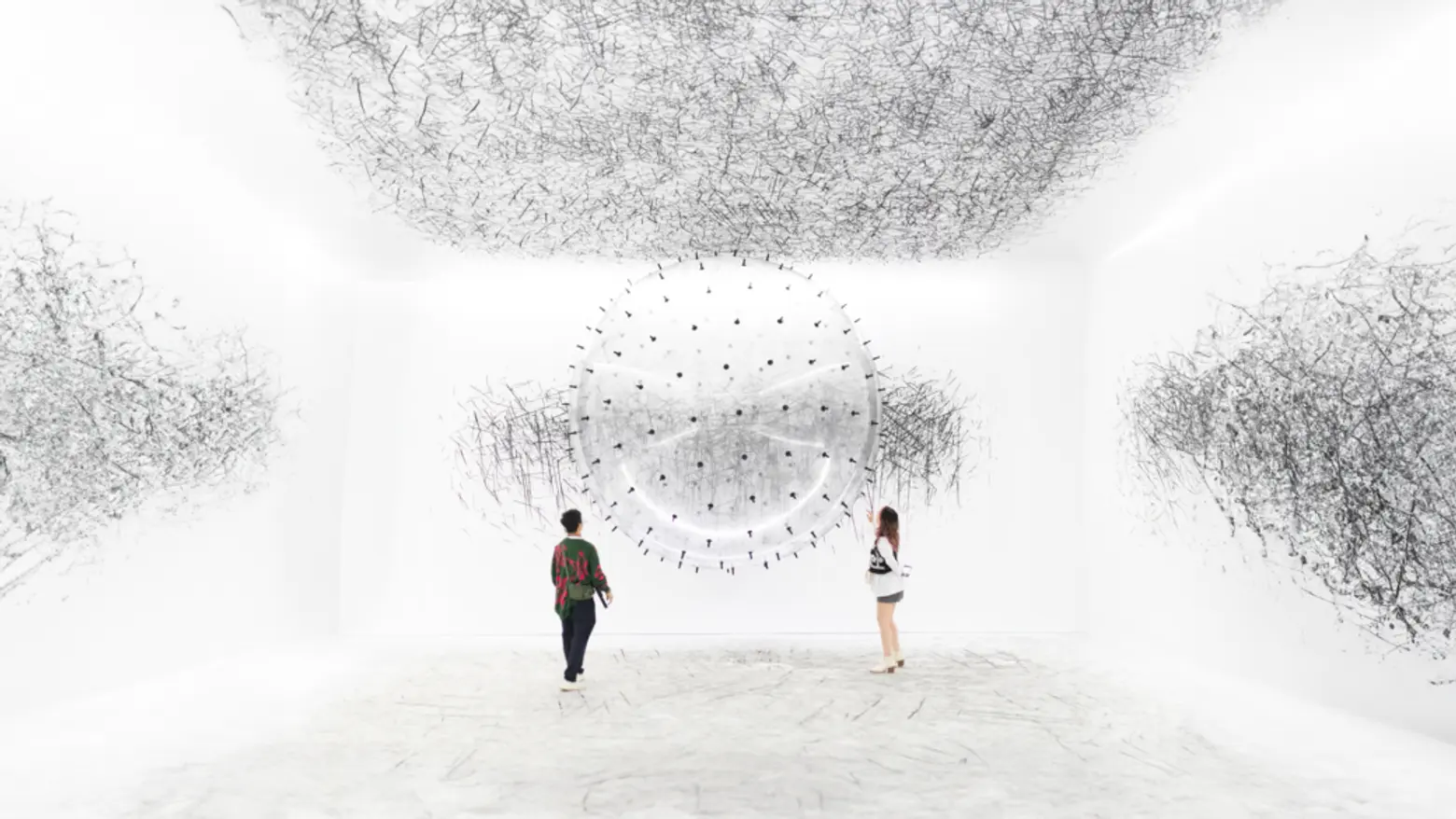
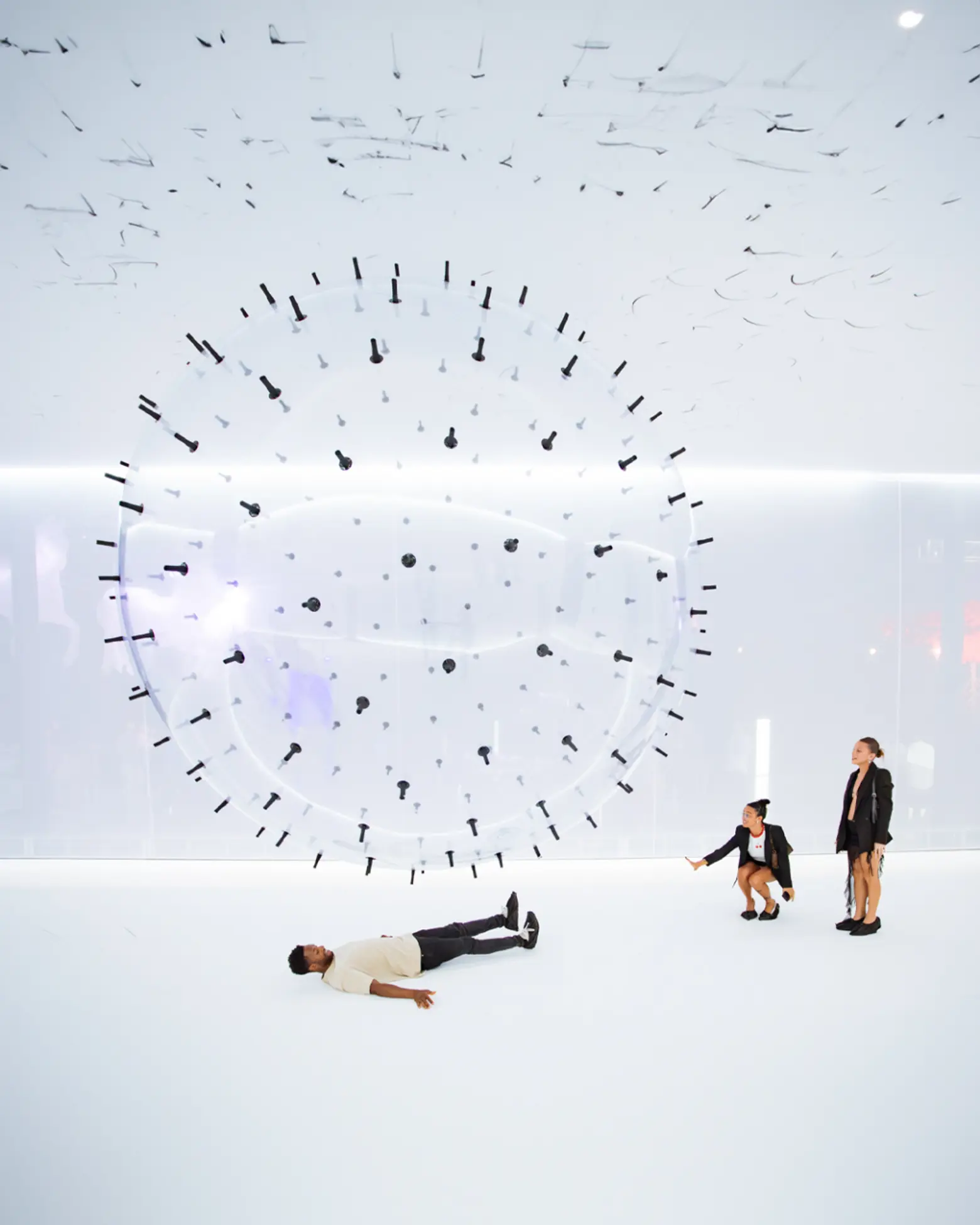
Karina Smigla-Bobinski’s “ADA” features a helium-filled, charcoal-spiked sphere that floats freely around the room, moved by visitors and leaving continuously evolving traces across the walls, ceiling, and floor.
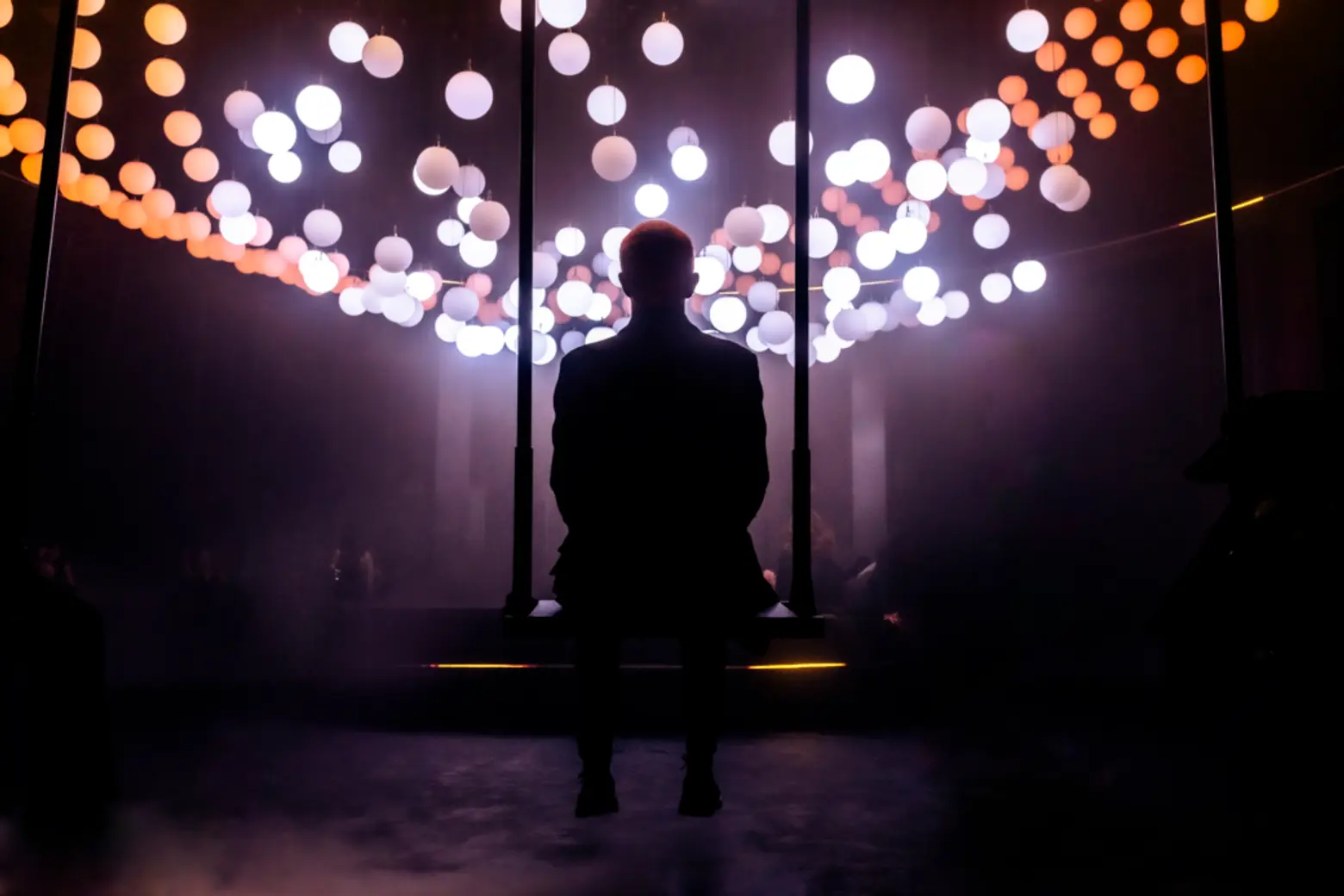
The exhibition continues through uncanny landscapes that heighten the senses. “10 Agosto” by Hyperstudio features a suspended array of swings, shimmering lights, and glowing orbs, inspired by the Night of San Lorenzo, an Italian tradition on the feast day of Saint Lawrence, when revelers watch for shooting stars.
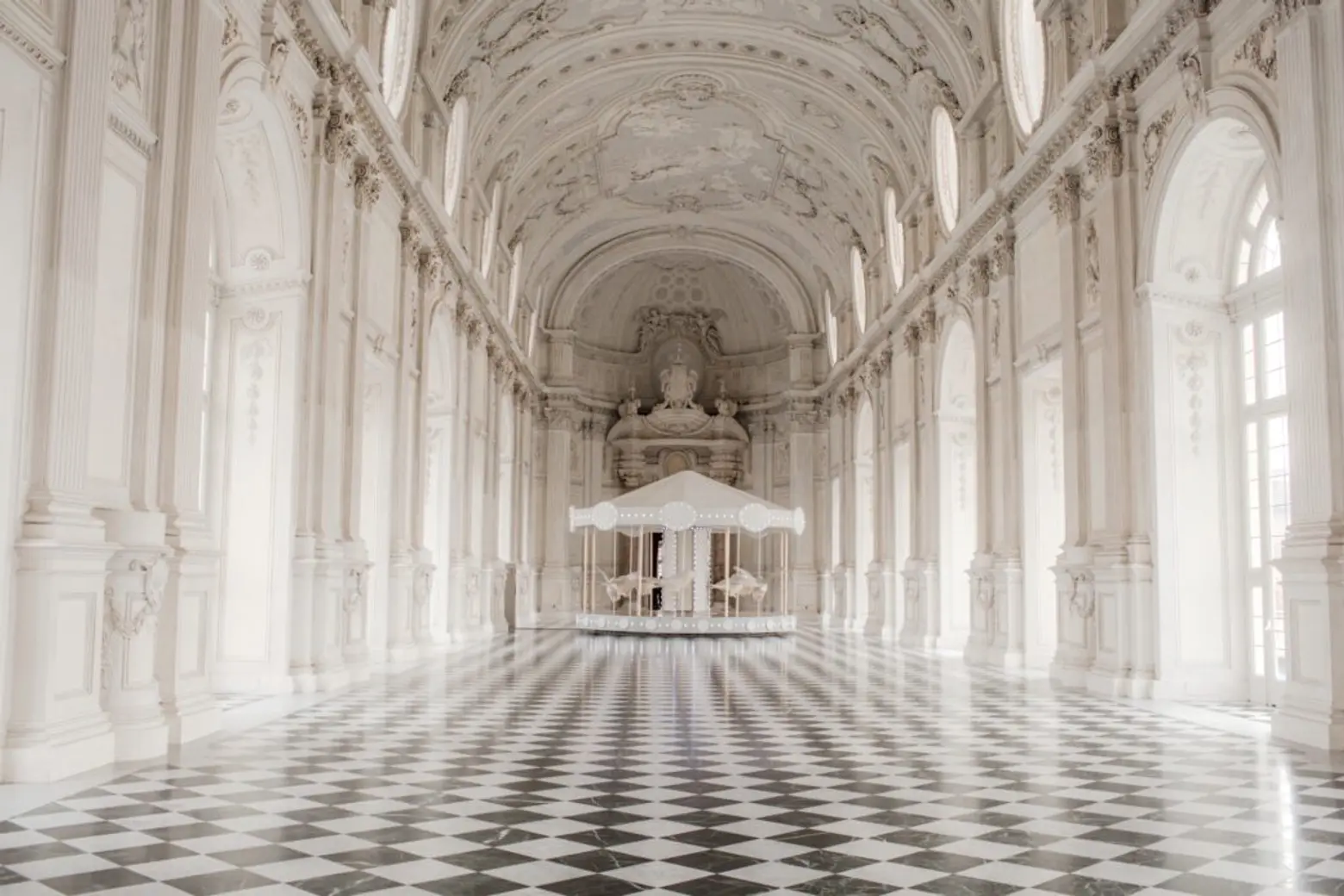
“Invisible Ballet” presents an unstable choreography of airborne spherical chrome balloons, transforming the space into a constantly shifting environment, while Valerio Berruti’s “The Carousel” reimagines the popular carnival ride as a collection of larger-than-life fiberglass birds, reflecting on themes of childhood, time, and freedom.
“Daydream speaks to a culture that has made escape and emotional intensity part of everyday life,” Valentino Catricalà, the exhibition’s curator, said. “Through the ephemeral monumentality of air, the featured voices create spaces that loosen us from the ordinary and hold us, if only for a moment, in a state of wonder.”
“Bringing this debut to New York allows us to explore how creative expression can open new horizons for emotion and reflection,” he added.
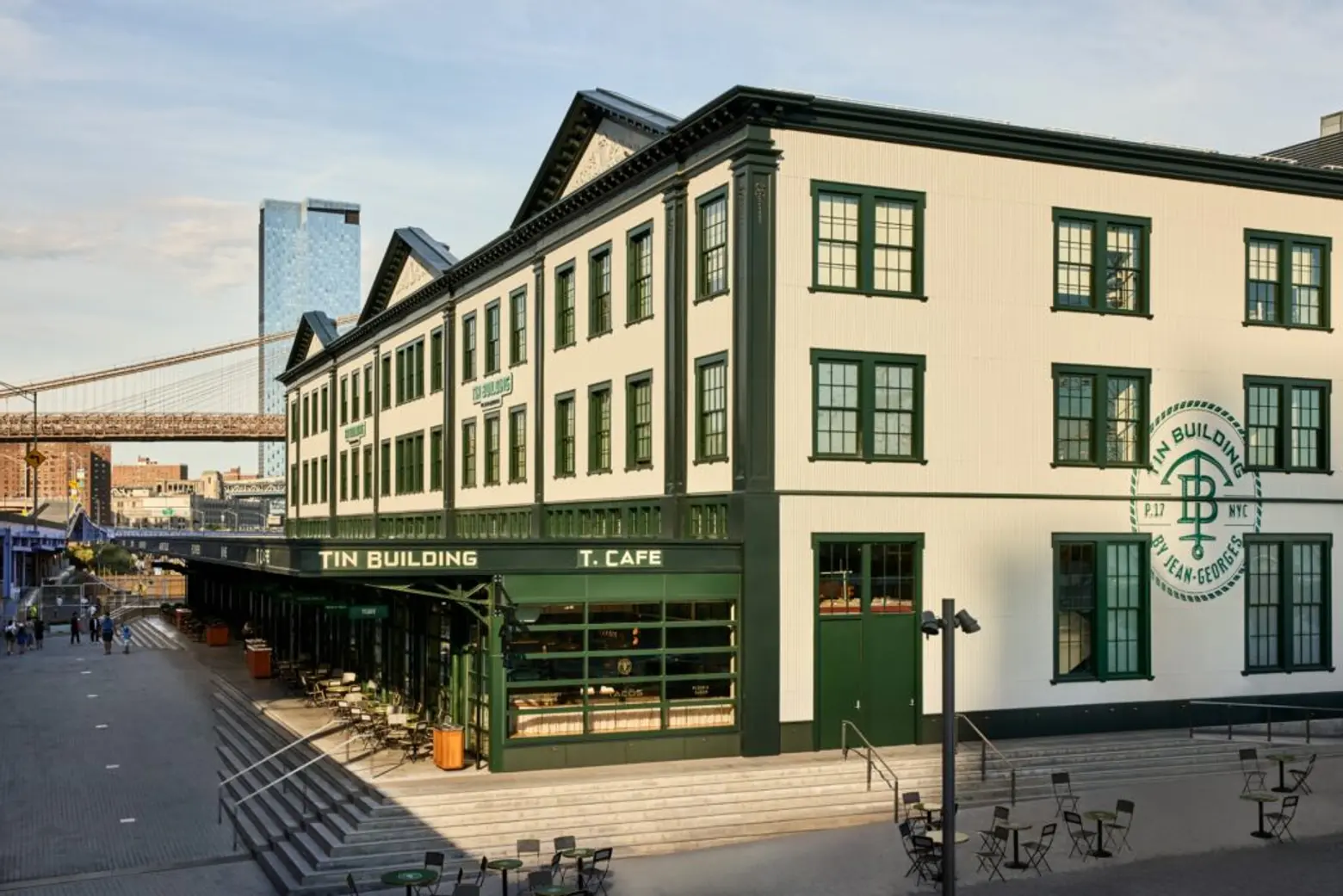
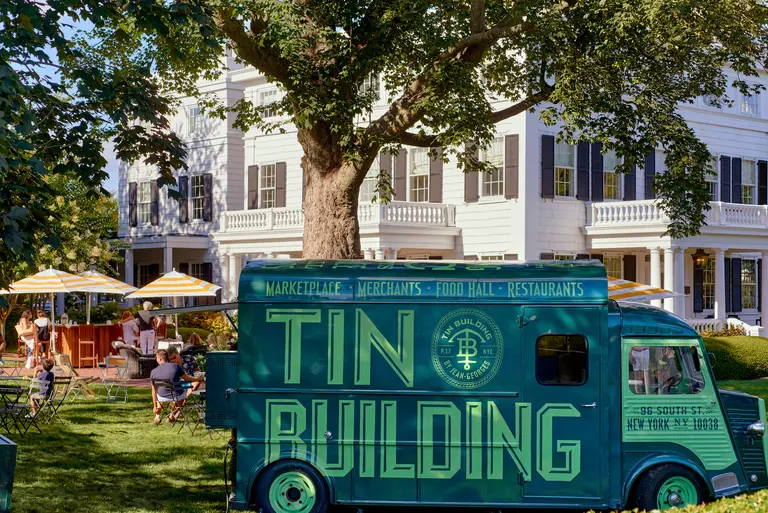
The museum replaces Vongerichten’s food hall, which opened in fall 2022 inside the landmarked building. One of the two remaining structures from the former Fulton Fish Market, the building closed in 2005 when the market relocated to Hunts Point, according to Yimby.
In 2018, SHoP Architects carefully disassembled and reconstructed the structure, raising it six feet and moving it 30 feet from its original location. The project was part of the Howard Hughes Corporation’s broader redevelopment of Pier 17 and the Seaport District, as 6sqft previously reported.
It originally featured grocery vendors, six full-service restaurants, six quick-service counters, four bars, and additional retail and private dining concepts. However, the market struggled financially amid competition in an oversaturated upscale dining market and a location considered relatively remote.
In 2025, the Seaport Entertainment Group (SEG) reported a $33 million loss tied to its stake in the Tin Building. The company holds a 25 percent stake in Vongerichten’s company. Following those losses, SEG removed Vongerichten’s Creative Culinary Management Company from its operating role at the building and shifted to a licensing agreement.
SEG announced in February that the Balloon Museum would replace the food hall, marking the end of the $200 million venture less than four years after its opening.
Tickets go on sale June 8, with additional details on opening dates and public programming to be announced in the coming weeks. Pricing for guests ages 18 and older starts at $40, and $26 for guests ages 4 to 12.
The exhibition will be on view from 10 a.m. to 8 p.m. Mondays through Thursdays, and from 10 a.m. to 10 p.m. Fridays through Sundays.
RELATED: