Search Results for: who owns 30 Hudson Yards, New York, NY

August 22, 2016

Off the avenue: Is Park Avenue losing its edge in the office market?

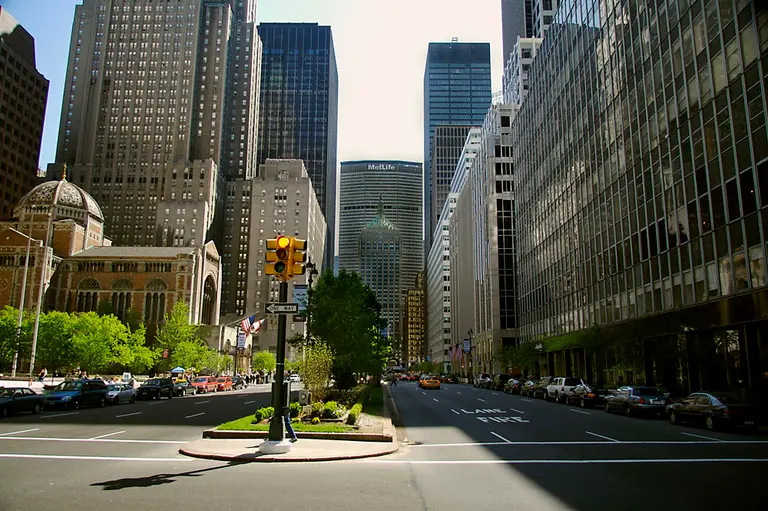
Park Avenue has for decades been the office district of choice for many of the city's high-profile–and high-rent–corporations. But a recent Crain's article points to impending departures–such as the decision of investment firm Black Rock to decamp for new space in Hudson Yards or the World Trade Center, raising the question of whether the avenue's biggest office zone, from East 45th to East 59th streets, is falling out of favor with big-ticket business tenants. The city's office market is, without a doubt, changing. Industries like tech are growing and the financial industry is consolidating and in some cases downsizing its office space. The neighborhood, which charges the city's highest average rents, has been slow to catch up with the needs of new office tenants.
People moving out, people moving in
May 27, 2016

All Engines SHVO at Three New Manhattan Condo Developments

Earlier this month, the Wall Street Journal profiled broker-turned-developer Michael Shvo and revealed his development company SHVO now has more than $4 billion dollars worth of projects in the works for the city. While many are still in planning stages and have yet to be released to the public, construction is moving ahead on a trio of condominium developments along Manhattan's western spine -- the Getty, 125 Greenwich Street, and 565 Broome SoHo (as a development partner). While varied in neighborhood and scale, they all enlist high-caliber architects and will bring Shvo's characteristic high level of attention to detail and "pursuit of perfection."
Get the rundown on all three developments
May 24, 2016

Great Game Changers: One Worldwide Plaza, A Classy Attraction for Sleazy 1980s Midtown

What does it take to jump-start an unglamorous neighborhood? A huge development? A mixed-use project? New transit facilities? When this full-block, mixed-use development project was conceived in the mid-1980s the area in and around Times Square was one of the city’s worst. It was riddled with crime and pornography and was run-down, especially along Eighth Avenue. The proposition to add a building that was the scale of the full-block One Worldwide Plaza development, therefore, was not only surprising, but shocking and downright unthinkable. The legendary Madison Square Garden designed by Thomas W. Lamb had occupied its site from 1925 to 1966, but its second incarnation here was rather ramshackle especially in comparison to its previous glorious building on Madison Avenue at 26th Street. When it moved south next to the “new” Penn Station 16 blocks to the south, this site became the city’s largest parking lot and it took about a decade and a half for it to find a new life. The site was finally developed and completed in 1989 by a syndicate headed by William Zeckendorf Jr. that included Arthur Cohen and Worldwide Realty partners Frank Stanton and Victor Elmaleh.
more on the rise of worldwide plaza and how it revived midtown manhattan
May 11, 2016

Skyline Wars: Accounting for New York’s Stray Supertalls

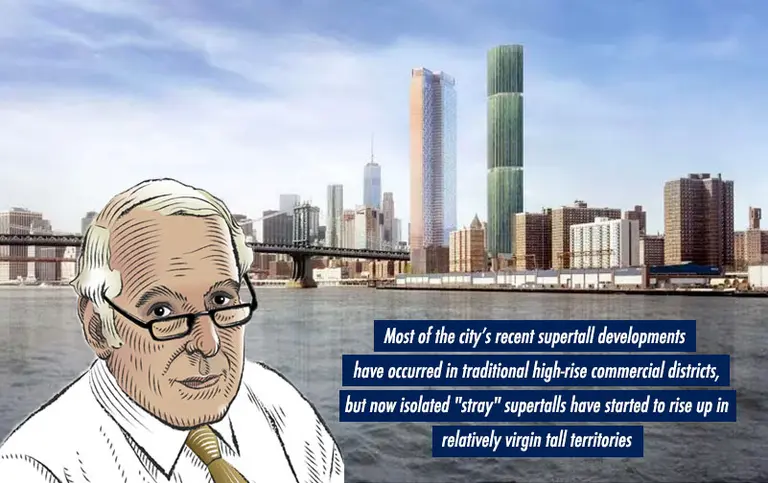
Carter Uncut brings New York City’s latest development news under the critical eye of resident architecture critic Carter B. Horsley. Ahead, Carter brings us his eighth installment of “Skyline Wars,” a series that examines the explosive and unprecedented supertall phenomenon that is transforming the city’s silhouette. In this post Carter looks at the "stray" supertalls rising in low slung neighborhoods. Most of the city’s recent supertall developments have occurred in traditional high-rise commercial districts such as the Financial District, the Plaza District, downtown Brooklyn and Long Island City. Some are also sprouting in new districts such as the Hudson Yards in far West Midtown. There are, however, some isolated "stray" supertalls that are rising up in relatively virgin tall territories, such as next to the Manhattan Bridge on the Lower East Side and Sutton Place.
read more from carter here
May 2, 2016

Study: Hudson Yards Will Add $18.9 Billion to the City’s GDP

According to a recent study, economic activity at the $20 billion Hudson Yards West Side development–the nation's largest construction site–will contribute $18.9 billion to the city–more than the gross domestic product of Iceland ($15.3 billion), Crains reports. The study, commissioned by the project's developer, Related Cos., predicts that the companies projected to occupy the massive project that will stretch between West 30th Street and West 34th Street along the Hudson River will generate economic activty in the form of, among other things, salaries for new jobs and money paid to the MTA by the developer both during the 14-year construction period and once the development is complete in 2025.
Read more
April 26, 2016

Skyline Wars: As Queens Begins to Catch Up, A Look at the Towers Defining Its Silhouette

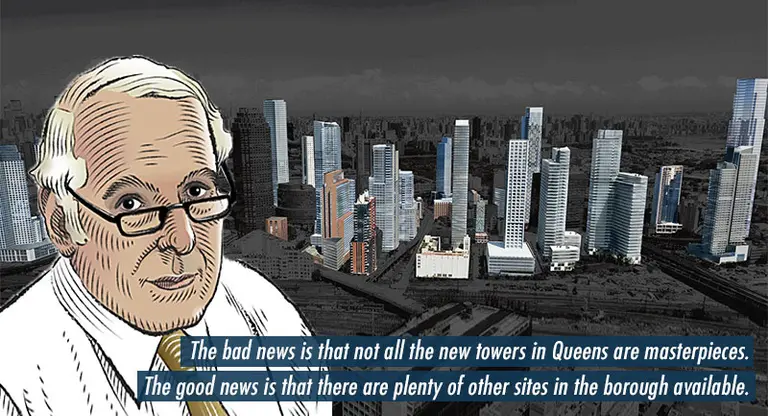
Carter Uncut brings New York City’s latest development news under the critical eye of resident architecture critic Carter B. Horsley. Here, Carter brings us his sixth installment of “Skyline Wars,” a series that examines the explosive and unprecedented supertall phenomenon that is transforming the city’s silhouette. In this post Carter looks at the new towers defining the Queens skyline. For a long time, the glass tower erected by Citibank was the lone skyscraper of note in Queens. Known initially as Citicorp at Court Square, it was built in 1989 and designed by Raul de Armas of SOM as a blue-green metal-panel-and-glass office tower with just a few setbacks at its 633-foot-high top—an extremely clean-cut, modern obelisk of fine proportions. In a 1988 article in The New York Times, Anthony DePalma wrote that the tower “dominates the Queens skyline like a sequoia in the desert” and Paul Goldberger, then the newspaper’s architecture critic, wrote the tower was “rapidly becoming one of the most conspicuous structures in the entire city.” He added, “It is a very unlikely thing, this building—no other skyscraper in New York is remotely like the Citicorp tower, not so much for its design as for the fact that it stands free, alone in this landscape of gas stations, warehouses and row houses,” The bank tower transformed “the landscape of New York” and “no longer does Manhattan virtually by itself control the skyline,” Mr. Goldberger continued. “Skyscrapers built at random all over New York would be devastating, but an occasional exclamation point, well designed and carefully placed, will do the skyline no grievous harm,” he concluded. This is a very important but also very controversial point as currently evidenced in Manhattan where traditional precincts are being pin-pricked to exhaustion and confusion by supertalls.
more on the queens skyline
April 20, 2016

Skyline Wars: Brooklyn Enters the Supertall Race

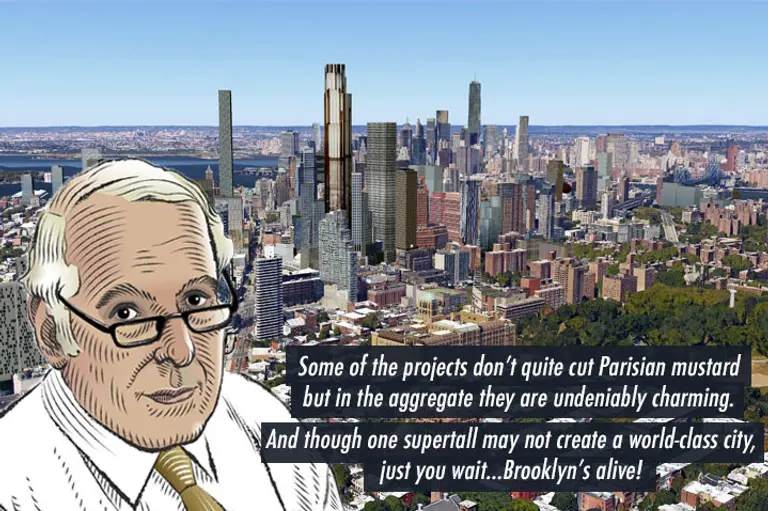
Carter Uncut brings New York City’s latest development news under the critical eye of resident architecture critic Carter B. Horsley. Here, Carter brings us his fifth installment of “Skyline Wars,” a series that examines the explosive and unprecedented supertall phenomenon that is transforming the city’s silhouette. In this post Carter looks at Brooklyn's once demure skyline, soon to be Manhattan's rival. Downtown Brooklyn has had a modest but pleasant skyline highlighted by the 350-foot-high Court & Remsen Building and the 343-foot-high great ornate terraces of 75 Livingston Street, both erected in 1926, and the 462-foot-high flat top of the 1927 Montague Court Building. The borough’s tallest building, however, was the great 514-foot-high dome of the 1929 Williamsburg Savings Bank Tower, now known as One Hanson Place, a bit removed to the east from Downtown Brooklyn. It remained as the borough’s tallest for a very long time, from 1929 until 2009. A flurry of new towers in recent years has significantly enlarged Brooklyn’s skyline. Since 2008, nine new towers higher than 359 feet have sprouted there, in large part as a result of a rezoning by the city in 2007. A few other towers have also given its riverfront an impressive frontage. Whereas in the past the vast majority of towers were clustered about Borough Hall downtown, now there are several clusters with some around the Brooklyn Academy of Music and the former Williamsburg Savings Bank Tower and some around the Williamsburg riverfront.
more on Brooklyn's skyline here
April 18, 2016

Skyline Wars: In Lower Manhattan, A New Downtown Is Emerging

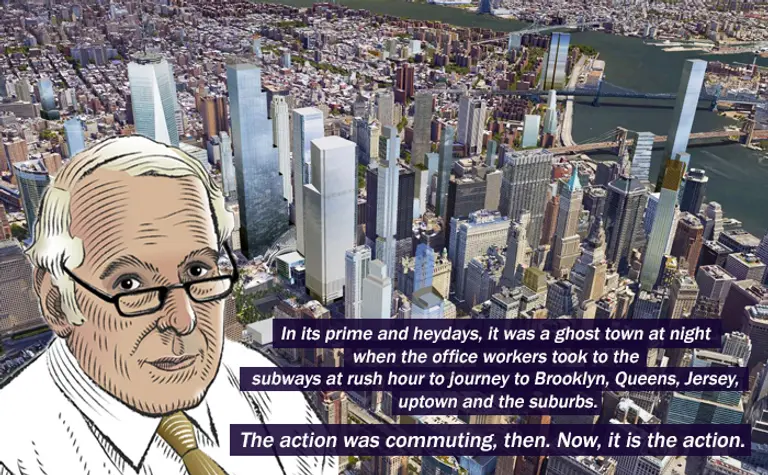
Carter Uncut brings New York City’s latest development news under the critical eye of resident architecture critic Carter B. Horsley. This week Carter brings us his fourth installment of “Skyline Wars,” a series that examines the explosive and unprecedented supertall phenomenon that is transforming the city’s silhouette. In this post Carter looks at the evolution of the Lower Manhattan skyline. Lower Manhattan at the start of the Great Depression was the world’s most famous and influential skyline when 70 Pine, 20 Exchange Place, 1 and 40 Wall Street, and the Woolworth and Singer buildings inspired the world with their romantic silhouettes in a relatively balanced reach for the sky centered around the tip of Lower Manhattan. Midtown was not asleep at the switch and countered with the great Empire State, the spectacular Chrysler and 30 Rockefeller Plaza but they were scattered and could not topple the aggregate visual power and lure of Lower Manhattan and its proverbial “view from the 40th floor” as the hallowed precinct of corporate America until the end of World War II. The convenience and elegance of Midtown, however, became increasingly irresistible to many.
More on the the history of Lower Manhattan and what's in store
March 4, 2016

VOA Architects Design 70-Story Mixed-Use Supertall for the Far West Side

Here's a first idea of what may be coming to a valuable far west side corner owned by former governor Elliot Spitzer. First spotted by the eagle-eyed SkyscraperPage, the scheme was prepared by VOA Architects for Highgate Hotels and shows an approximately 70-story, mixed-use tower stacked with a 1,000-key hotel with condominiums above. The site at 451 Tenth Avenue at 35th Street was picked up by Spitzer for $62 million in 2014 through a 99-year lease from Madd Equities. VOA's blog page states, "the project would have been the first new convention hotel in NY since the Marriott Marquis opened in 1985." Judging by the past-tense nature of the description, it seems this exact vision will not come to fruition.
More renderings ahead
February 19, 2016

Skyline Wars: What’s Rising in Hudson Yards, the Nation’s Largest Construction Site

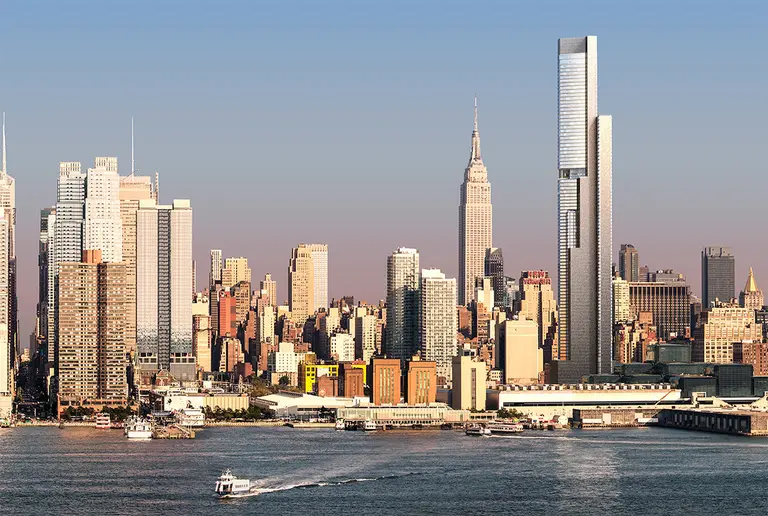
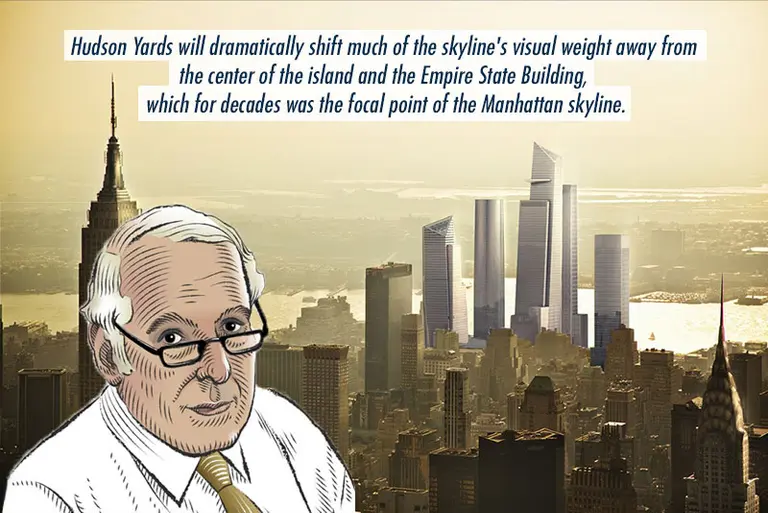
Carter Uncut brings New York City’s breaking development news under the critical eye of resident architecture critic Carter B. Horsley. This week Carter brings us the third installment of “Skyline Wars,” a series that examines the explosive and unprecedented supertall phenomenon that is transforming the city’s silhouette. In this post Carter zooms in on Hudson Yards. The Hudson Yards neighborhood in Far Midtown West is one of the country’s most active construction areas. Construction cranes dot its emerging skyline and dozens more are promised now with the district's improved connection to the rest of the city. Last fall, the 7-line subway station at Eleventh Avenue and 34th Street opened with one-stop access to Times Square. The newly-minted station features a lengthy diagonal escalator bringing commuters to the front-door of the huge mixed-use project being created over the rail yards west of Tenth Avenue between 30th and 33rd streets. Originally, a second station was contemplated on 41st Street and Tenth Avenue but transit officials claimed it could not afford the $500 million expenditure, despite the enormous amount of new residential construction occurring along the far West 42nd Street corridor. Nevertheless, the finished Hudson Yards station deposits straphangers into a new diagonal boulevard and park between 10th and 11th Avenues that will ultimately stretch from the Related Companies / Oxford Property Group's Hudson Yards master plan northward to 42nd Street.
read more from carter here
October 28, 2015

Surreal Estate: NYC Listings That Are Scary, Hairy, and Totally Hideous

As if New York City home prices, monthly rents and apartment sizes weren’t scary enough. Between the horrors of Airbnb, overpriced dorm-style “co-living,” super-expensive micro-apartments, and Donald Trump, it’s hard to imagine we'd need Halloween to scare ourselves silly. But scare we do. Because of listings like these that know no season. Because sometimes real estate gets a little too real. From spookily dilapidated to eerily obscure to downright hideous, 6sqft has rounded up some of the most horrifying listings out there.
Be very afraid
April 30, 2015

Hell’s Kitchen, Once the ‘Wild West,’ Now Undergoing Rapid Gentrification

There's yet to be an exact agreed-upon theory as to where the name Hell's Kitchen came from, but most historians agree that it had something to do with the poor tenement conditions and general filth of the neighborhood in the 19th century. Its reputation didn't get any better in the 20th century, though. After the repeal of prohibition, the area became overrun with organized crime, and until the 1980s it was known as a home base for several gangs. Today, Hell's Kitchen is no longer the "Wild West," but rather a rapidly gentrifying community ripe for new development. A neighborhood profile today in the Times looks at the transformation of the neighborhood, also called Clinton or Midtown West, which is generally defined as the area from Eighth Avenue to the Hudson River between 34th to 59th Streets. Summed up, "New buildings are going up, and older ones are being converted to high-end residences. The development of Hudson Yards and the High Line just to its south and the addition of the Time Warner Center on its northeast border have spurred growth. Prices have gone up but are still generally lower than in surrounding neighborhoods."
Find out more ahead
March 26, 2015

Mayor’s Affordable Housing Plan Flawed, More Likely to Harm Brooklyn’s Most Expensive Nabes

The revitalization of East New York is at the center of Mayor Bill de Blasio's affordable housing plan, but like his ambitious Sunnyside Yards project, his ideas for the fallen areas of Brooklyn are apparently also filled with holes. According to a piece published by the Wall Street Journal yesterday, de Blasio's plan to re-zone 15 neighborhoods to allow for taller and denser housing won't do much good for affordable housing. The main reason? The rents are too low. In fact, housing experts believe that his plan is more likely to hurt the character of Brooklyn's most tony areas, including Park Slope, Fort Greene, and Crown Heights, amongst many others.
More on their findings here
December 18, 2014

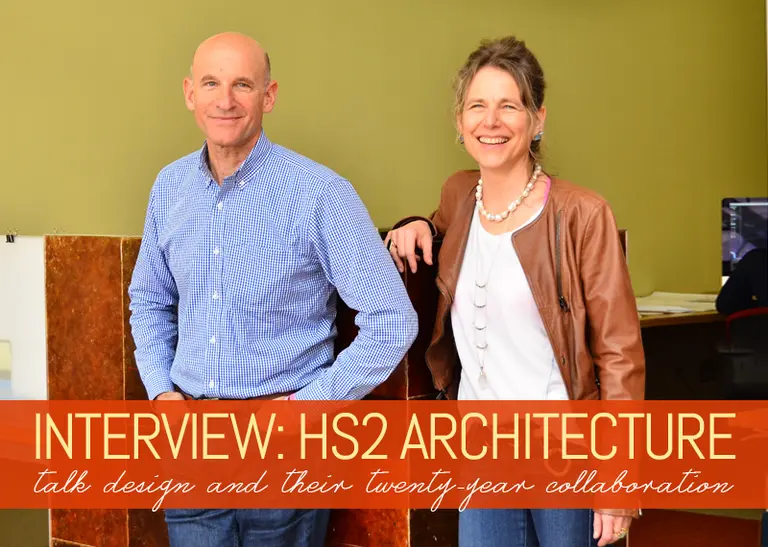
INTERVIEW: HS2 Architecture’s Tom and Jane Talk Residential Design and Their 20-Year Collaboration

HS2 Architecture's name may not ring all that familiar, but you've certainly come across their projects before—and we're not just talking on 6sqft. HS2's power pair, Tom Hut and Jane Sachs, have been working together since 1994, enduring the ups and downs of the NYC market and putting some spectacular and very recognizable designs out there while at it. Does the Gramercy Park Hotel ring a bell? Maybe the Palazzo Chupi? Or maybe you've shopped at the Ralph Lauren Store on Madison and 72nd. Easily one of the most underrated architecture firms working today, HS2 is really a force to be reckoned with when it comes to the built environment. In celebration of their 20th anniversary, we recently sat down with founders Tom and Jane to talk about their studio, their work, and the roller coaster ride that has been New York City architecture over the past two decades.
Read the interview with HS2's principals here
December 6, 2014

Weekly Highlights: Top Picks from the 6sqft Staff

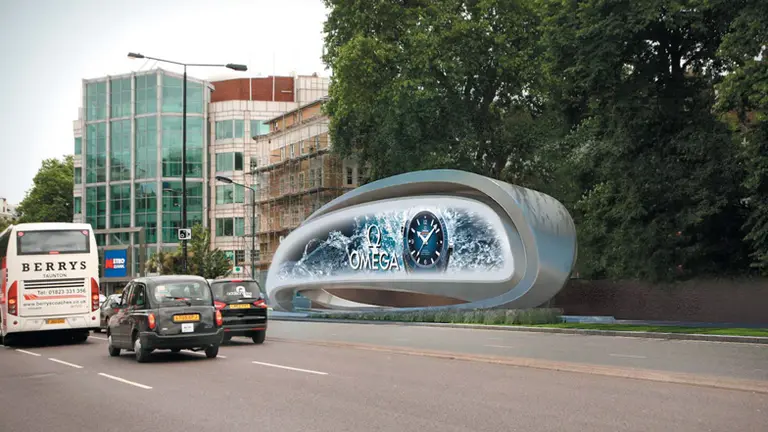
Hudson Yards Observation Deck Will Offer a Death-Defying Way to Experience City Views Roman and Williams-Designed Brooklyn Brownstone Is an Eclectic Mix of Curiosities ThyssenKrupp’s New Elevator Could Revolutionize Skyscraper Design with Its Horizontal Capabilities Zaha Hadid Wants to Change Billboard Advertising with Her Signature Curves REVEALED: New Renderings for Christian de Portzamparc’s Riverside Center […]

September 29, 2014

Real Estate Wire: Robert A.M. Stern’s “Scaled-Down” Luxury; Controversial Astoria Cove Project Approved

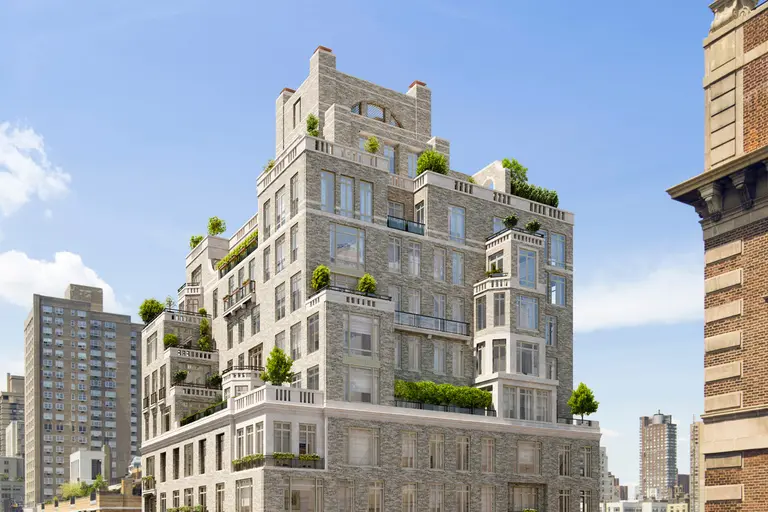
Robert A.M. Stern, the architect behind 15 Central Park West, is bringing a new 17-story tower to 20 East End Avenue. The building—said to be less pricey than Stern’s others—will have 43 units starting at $4.5M. Penthouses will go for $20M. [NYT] New renderings and listings appear for One John Street. [Brownstoner] East New York’s rapidly rising […]

July 8, 2014

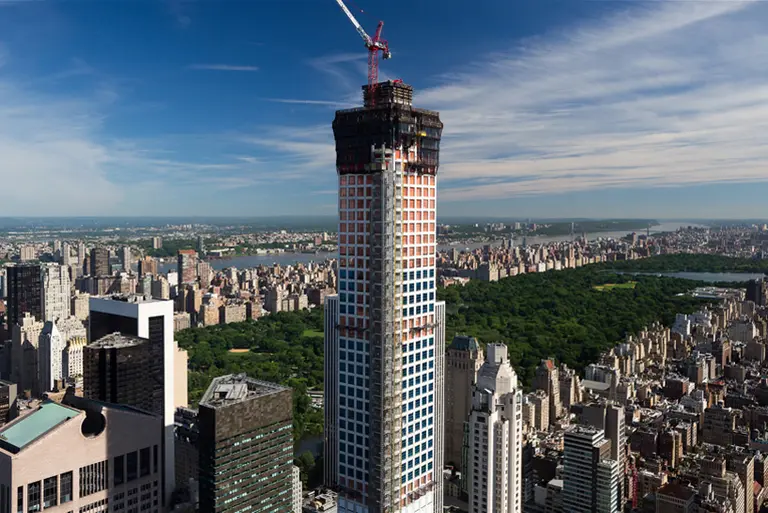
Real Estate Wire: New Images of 432 Park Ave Under Construction; Battle of the Penthouses

To power up the vast $18 billion Related Companies project at Hudson Yards, the developers are looking to off-grid electrical systems. However, being green may also mean having to pay out more green. ConEd’s standby tariffs are canceling out any benefits for both big and small buildings alike. [Crain’s] The managers of the Empire State Building have asked a judge to dismiss a […]