Search Results for: waterfront

June 10, 2015

Trolley Map from the 1930s Shows How Easy It Was to Get Around Brooklyn

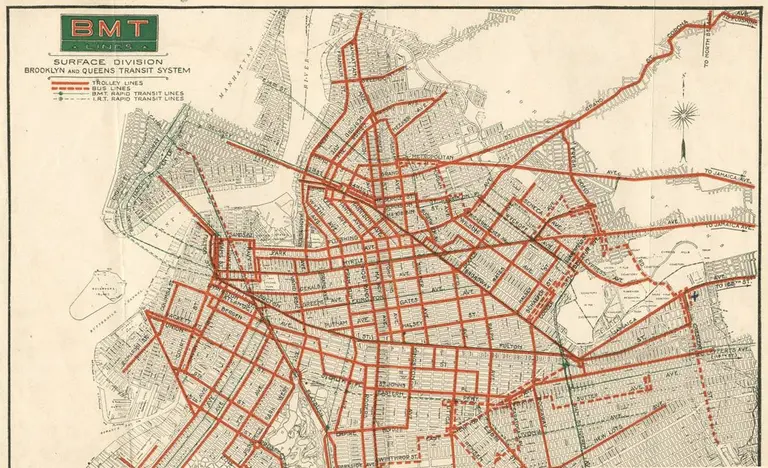
Long before there was a subway packed full of angry crowds and unidentifiable organisms, New Yorkers in Brooklyn enjoyed above-ground commutes serviced by a streetcar system. This map posted recently by a Redditor is a blast from the past, showing just how complete and comprehensive this network was. In fact, by 1930, nearly 1,800 trolleys were traveling along the streets of BK from Greenpoint to Gowanus to Bay Ridge and beyond. Though the system proved to be profitable (yes, NYC once ran a transit system that actually made them money), the streetcars were eventually forced out of the city by none other than the auto industry.
find out more and see the complete map here

June 10, 2015

An Apple Tree Grows in Brooklyn, and It Could Be in Your Own Backyard

Want to live in the city without giving up your greenery? This $1.45 million two-bedroom garden apartment in Cobble Hill might be the perfect solution. It offers 1,020 square feet of space in a 25-foot-wide brownstone co-op, with a beautifully manicured backyard and a gorgeous patio. We're talking enough green space to entertain you, friends and family, Fido, and your weedwhacker. Now that sounds promising.
More pics inside
June 6, 2015

Weekly Highlights: Top Picks from the 6sqft Staff

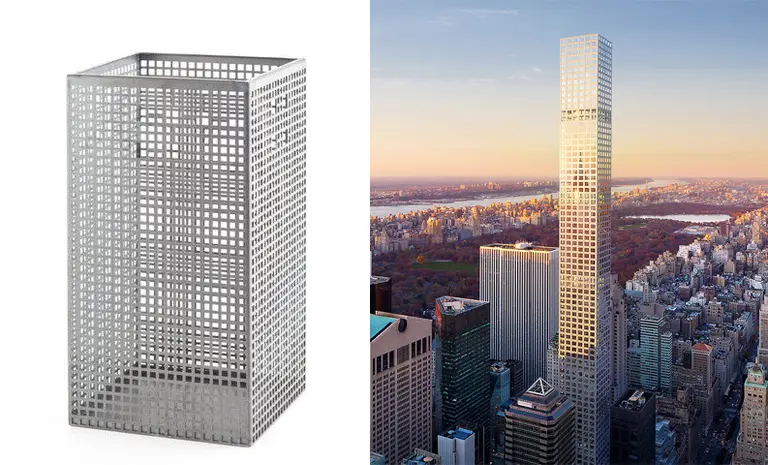
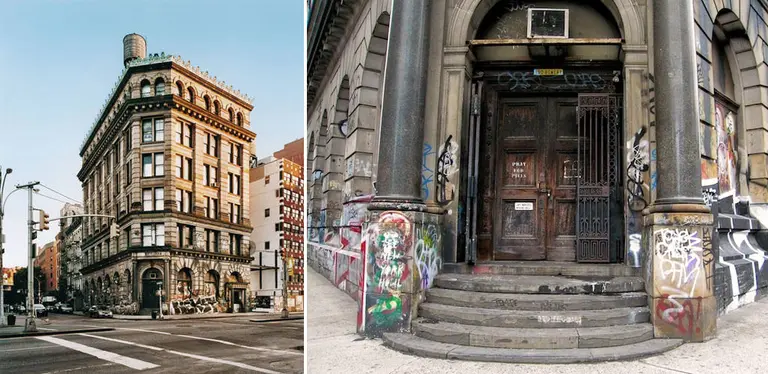
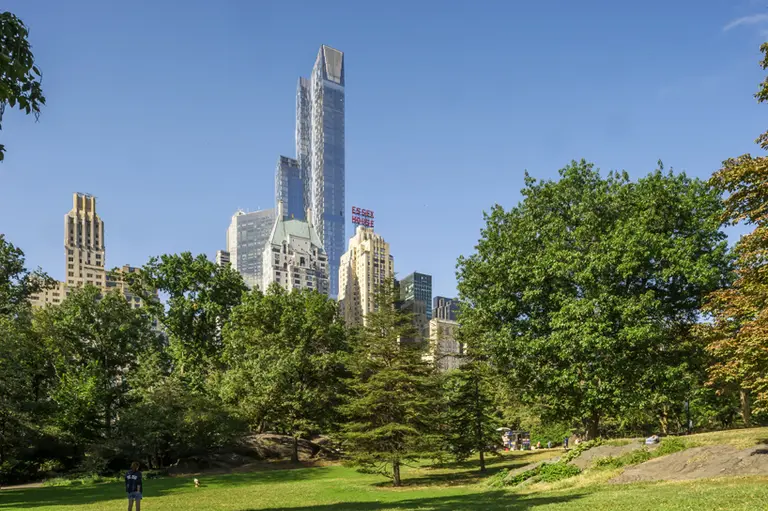
A Trashcan Inspired the Design of Rafael Viñoly’s 432 Park Avenue $18 Million Townhouse in Greenwich Village Will Speak to Your Inner Historian and Artist Interior Renderings Revealed for Central Park South’s Brand New 1,210-Foot Supertall Bjarke Ingels Confirmed to Replace Norman Foster in the Design of 2 World Trade Center Elizabeth Roberts Brings Light […]

May 28, 2015

How the Whitney Installed an Invisible Flood Barrier After Hurricane Sandy

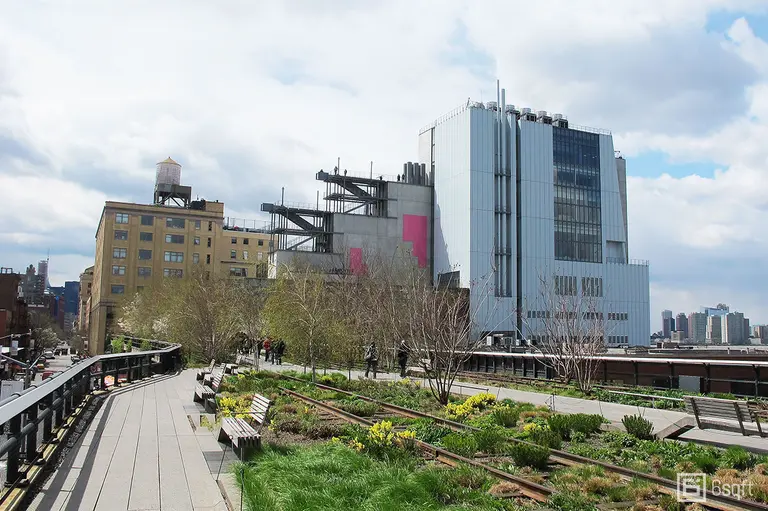
For the past few months, all eyes have been on the new Whitney. From architecture reviews of Renzo Piano's modern museum to insider looks at the galleries, New Yorkers can't stop talking about the design of this game-changing structure. It wasn't all sunshine and roses for the building, though. In 2012, halfway through construction, Hurricane Sandy flooded the museum with more than five million gallons of water, causing the architects to rethink the site. The Whitney now boasts a custom flood-mitigation system that was "designed like a submarine," according to engineer Kevin Schorn, one of Piano's assistants. As The Atlantic reports, the system has a 15,500-pound water-tight door that was designed by engineers who work on the U.S. Navy's Destroyers and can protect against a flood level of 16.5 feet (seven feet higher than the waters during Sandy) and withstand an impact from 6,750 pounds of debris. But what's just as amazing as these figures is the fact that this huge system is invisible to the average person.
Find out more here
May 28, 2015

EVENT: Hear Five Brilliant Ideas Vying to Improve Urban Life at ‘Pitching the City’

New urban development and redevelopment proposals get thrown around on a daily basis, but very few ever come to fruition. With an overload of ideas floating around, it's hard to keep track of what's worth giving a second thought to—let alone cash. Enter Pitching the City, a biennial gathering that pits the creators of five genius plans to improve the contemporary city against one another. This year's summit will bring an array of innovative urban strategies from across the globe under one roof for a high-octane pitching session happening in Nolita on Friday, May 29th (that's tomorrow!), and you're invited.
Find out how to attend here
May 18, 2015

Developer Scott Resnick Takes Us Inside Norman Foster’s 551W21

How do you follow up managing the building of the city’s newest and most exciting museum, the Whitney Museum of American Art on the Hudson River waterfront in the West Village, that kicks off the city’s most popular architectural extravaganza, the High Line elevated park? You commission Sir Norman Foster, one of the world’s master architects to rise to the starchitect challenge of the High Line, the city’s seemingly overnight sensation that is a phenomenal explosion of really interesting designs in a city too long mired in architectural mediocrity and bogged down mightily by the burden of rampant NIMBYism, the well-intentioned but dreaded Not In My Back Yard syndrome. Scott Resnick, the head of SR Capital, has asked Foster to design a 19-story residential condominium building at 551 West 21st Street, half a block west of the High Line. “We’ve got the Hudson River,” Resnick retorts, casually destroying the real estate myth of “location, location, location.” This, of course, is the back story to the supertall onslaught of the south end of Central Park. How can mere 250-footers at best compete with the 1,000-foot-plus stompin’ boots of oligarchs in and around the city’s platinum core of double-height retailing, grand hoteling and horse-and-buggy bashing? Talk about 76 trombones! Still, in a metropolis of more than eight-million yarns, there is eternal hope for the spunky “little guys,” “da bums.”
Inside Foster's new building in progress this way
May 18, 2015

VIDEO: Preview the Interiors of Jean Nouvel’s MoMA Tower Ahead of This Week’s Sales Launch

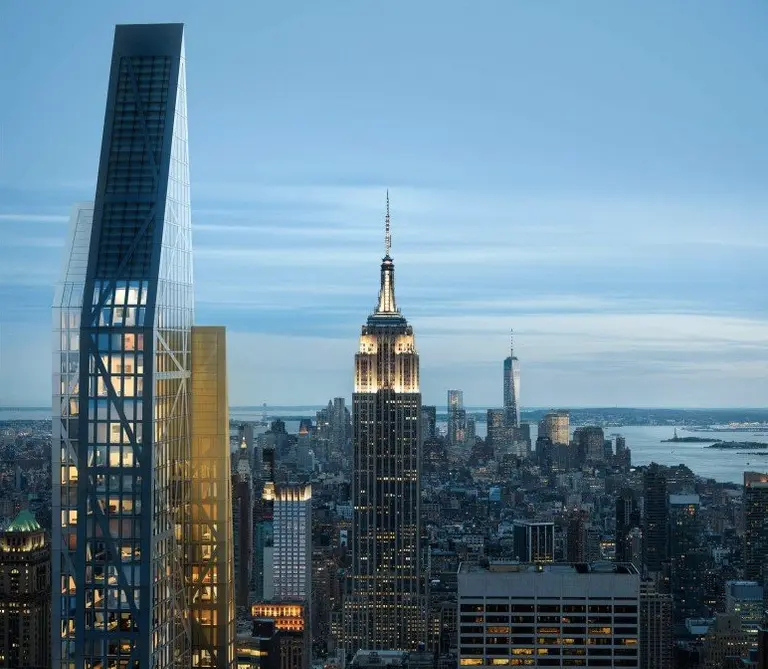
Since it started making news in 2006, the starchitect-designed condominium tower at 53 West 53rd Street, officially known as 53W53 along Manhattan's "Billionaire's Row," has progressed slowly, stalled until last September when developers were able to obtain 240,000 square feet of development rights from MoMA and the St. Thomas Episcopal Church for $85.3 million and secure a $860 million construction loan. The Jean Nouvel-designed 1,050-foot asymmetrical tower, often called MoMA Tower, is adjacent to the museum and will occupy three of its lower floors. Now Bloomberg brings us a video interview with Nouvel and interior designer Thierry Despont from the building's sales gallery that opens the door on the building's interiors–or at least those of the building's furnished model unit, which is more than we've gotten so far. We also get to behold a sleek model of the tower's facade surrounded by its neighbors. The architect says that there are "...almost no two similar apartments in the building because on every floor the shape and the layouts are different."
Check out the interiors and the video this way
May 15, 2015

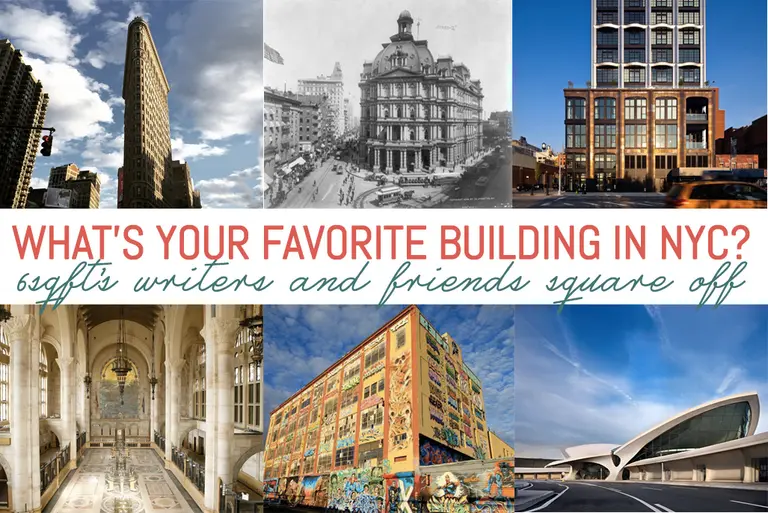
What’s Your Favorite Building in NYC? 6sqft’s Writers and Friends Square Off

Once upon a time, when 6sqft was not yet launched, a group of writers were asked for their thoughts on their favorite building in New York City. Their choices, some easily recognizable and others a little further from the beaten path, were mixed together with those of a few folks a lot like our readers—interested in and passionate about all things New York. The result? A wonderful blend of what makes this city great: its diversity, not simply demographically but also in the opinions of those eight million souls who weave together the fabric of all five boroughs to create the most interesting city in the world. And it stands to reason the most interesting city in the world is home to quite a few interesting buildings. As one might expect, there was barely a duplicate in the bunch. Some weren't even on our radar! Is your favorite on the list? If not, we’d love to know what you think in the comments.
Read on to see if you agree with our selections
May 9, 2015

May Design Agenda: 6sqft’s Guide to Navigating NYCxDesign Week

NYCxDESIGN, New York City’s official celebration of all things design, hits town from May 8–19, 2015. Home to more designers than any other US metro area, NYC is one of the world’s design capitals. Now in its third year, NYCxDESIGN spotlights the city’s diverse design community and its contributions to our economy and everyday life and increases awareness of and appreciation for design with a collaborative mix of cultural and commercial offerings. The seemingly endless program lineup offers exhibitions, installations, trade shows, talks, launches, open studios and receptions all across the city to celebrate the efforts of everyone from students to stars of the local and international design community. This year will see hundreds of events covering topics from graphic design to architecture, technology and urban design to fashion and product design, interiors to landscape, furniture to design thinking and more. It will be hard to head in any direction and not stumble into a design-related event, but we've compiled a guide to a few of the top collaborative efforts and highlighted some of our picks.
Check out our Design Week picks, this way
May 7, 2015

To Increase Affordability, Mayor de Blasio Wants to End 421-a for Condos and Up the Mansion Tax

From the onset, Mayor de Blasio has been extremely vocal about his plan to add 200,000 units of affordable housing over 10 years, 80,000 of which will be new construction. Though many feel this is an arbitrary number, backed up by no data as to where the units will be, the Mayor seems committed to reforming current policies to reach his goal. And after months of speculation, he has revealed his planned changes to the city's 421-a tax incentive program, which is set to expire in June. According to the Times, under his proposal, the controversial tax would no longer apply to condo projects (to understand the logic behind this decision just look at the $100 million sale at One57 that received the tax abatement). But it would apply to new rental projects, which would have to have apartments for poor and working-class residents make up 20 to 30 percent of the building in order to qualify for city tax breaks. It would also extend the abatement from 25 years to 35 years. Another part of the overhaul is to eliminate so-called poor doors. De Blasio also wants to up the city's mansion tax. Currently, home sales over $1 million are subject to a 1 percent tax, but de Blasio proposes adding an additional 1 percent tax for sales over $1.75 million, as well as a third 1.5 percent tax for sales over $5 million. He estimates this will bring in an extra $200 million a year in tax revenue, money that would be allocated to affordable housing programs.
More details ahead
May 7, 2015

This Williamsburg Townhouse Is Giving Off Hipster Vibes

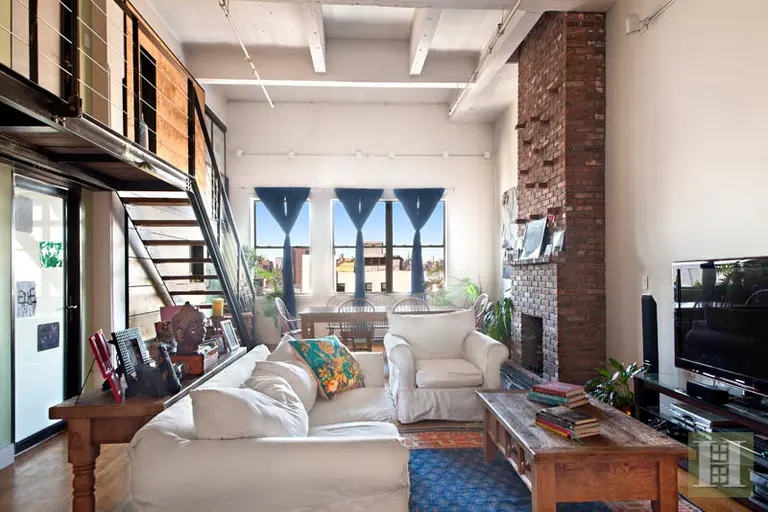
A townhouse on the market is pretty rare in Williamsburg—this is the neighborhood better known for loft apartments and waterfront condos. But this single-family townhouse at 296 Manhattan Avenue is now on the rental market for $13,995 a month. It has been designed with the hipster in mind, with plenty of exposed brick, wooden ceiling beams, and even "locally sourced" hardwood floors.
Check out the rest of the cool interior after the jump
April 30, 2015

$100M Homes on the Rise All Over the World; Will NYC Look as Good with a Dimmer Skyline?

New York is not alone, a record number of properties around the world are commanding prices topping $100 million. [Bloomberg] The city’s first crowd-funded condo project has just launched sales. [NYDN] LES community activists are calling Extell’s new tower planned for 250 South Street “racist.” [DNA Info] New York’s plan to save energy may mean a […]

April 28, 2015

The Multi-Million Dollar Real Estate of Brooklyn’s… Gravesend?

When people talk about expensive Brooklyn real estate, the conversation often revolves around the well-kept townhouses in Brownstone Brooklyn, the waterfront condos of Williamsburg, the freestanding mansions of Prospect Park South. Gravesend is not a neighborhood that’s on most New Yorkers' minds. But this South Brooklyn enclave, bordered by Sheepshead Bay, Midwood, Bensonhurst and the waterfront, sees some of the highest home sales in all of Kings County. Here, it’s not uncommon for selling prices to break the $10 million mark. Two years ago, a home hit the market for $14 million. So what’s happening in Gravesend? Simply put, this is not your average New York City real estate market. This neighborhood is home to the largest Sephardic Jewish community in the United States, and real estate is dominated by proximity to synagogues and Jewish Community Centers. That pressure for proximity has driven real estate prices into the multi-millions.
Learn more about the unique Gravesend real estate market…
April 27, 2015

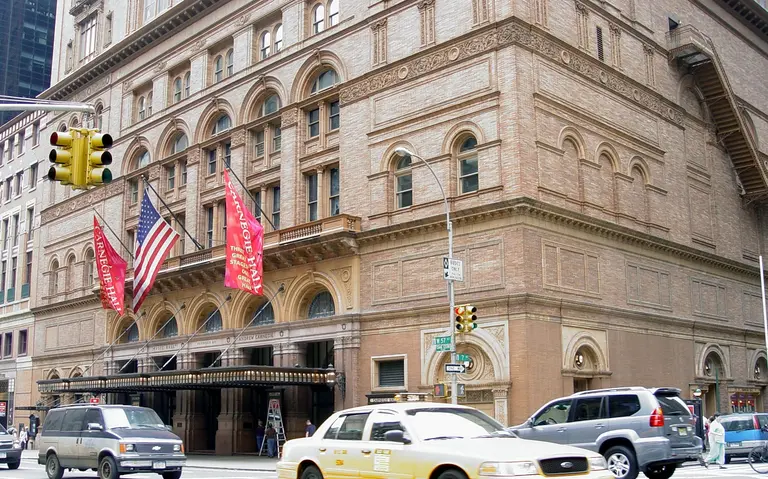
Secrets of Carnegie Hall; Bronx Residents Call 911 to Report UFO

Friday night’s VIP grand opening of the new Whitney was so packed with 3,000 people that the museum was worried about the art. [NYP] Inside the World Trade Center showroom. [Tribeca Citizen] Rats take at least 2,800 steps a day, but rarely go more than 600 feet from their birthplace. Find out how NYC’s rats get where they’re […]

April 20, 2015

Going Green and Curbing Gentrification: How the Bronx Is Doing It Differently

“Ladies and gentlemen, the Bronx is burning." The infamous phrase, uttered in a 1977 broadcast of a Bronx fire, has stuck in the mind of many New Yorkers even today. Indeed, the Bronx saw a sharp decline in population and quality of life in the late 1960s and 1970s, which culminated in a wave of arson. By the early 1980s, the South Bronx was considered one of the most blighted neighborhoods in the country, with a 60 percent decline in population and 40 percent decline of housing units. Although revitalization picked up by the '90s, the Bronx never quite took off like its outer-borough counterparts Brooklyn and Queens. While media hype, quickly rising prices and a rush of development has come to characterize those two boroughs, the Bronx has flourished more quietly. The borough, nevertheless, has become home to growth and development distinct from the rest of New York City. Innovative affordable housing, adaptive reuse projects, green development and strong community involvement are redefining the area. As Bronx Borough President Ruben Diaz Jr. said during this Municipal Arts Society discussion in 2014, this is "The New Bronx."
Keep Reading About What's Going on in the Bronx
April 17, 2015

New Yorker Spotlight: Getting the Scoop with Jennie Dundas of Brooklyn’s Blue Marble Ice Cream

Spring may have taken its time this year, but the sun is shining, the trees are finally starting to bloom, and this means one thing–it's officially ice cream season. If you're looking for the perfect local scoop, which also happens to be consciously sourced and organic, then you might just stop by Blue Marble Ice Cream's Cobble Hill or Prospect Heights shops or pick up one of their pints on your next grocery store trip. Blue Marble Ice Cream was co-founded in 2007 by former roommates turned entrepreneurs Jennie Dundas and Alexis Gallivan. For Jennie and Alexis, who originally connected on Craiglist, a love of ice cream inspired them to open a scoop shop. And while neither had a business background, they were determined and opened up in Brooklyn. Fast forward several years, and Blue Marble is ready to expand nationwide after being picked up by a number of major supermarket chains. On a local scale, they're part of a wave of businesses helping to transform Industry City in Sunset Park, Brooklyn, something of which the company is extremely proud. We recently spoke with Jennie to get the scoop on Blue Marble's founding, its headquarters in Industry City, and of course, to find out why ice cream is everyone's favorite warm-weather (or year-round!) treat.
Read our interview with Jennie here
April 17, 2015

Staten Island’s Revival Offers Brooklyn Cool Alongside $600,000 Six-Bedroom Homes

It's only a matter of time before Staten Island gets pinned as the next Brooklyn. As new developments pop up along the northern tip, the oft-forgotten borough is seeing the tides turn in its favor. Today the Times ran a piece on some of the biggest projects coming to the island, and unlike those popping up in Manhattan, this bunch is far more focused on livability and community building. Moreover, with rooftop beehives, shared vegetable gardens, small-batch espresso, pet spas, artisanal shops shilling specialty olive oils, and cheese caves in the pipeline, Staten Island is also starting to sound a lot like some of the city's most hipster-run areas. In fact, in casting its net for local testimonials, the Times was able to find Ridgewood and Bushwick refugees that have already high-tailed it southwest. And it's no wonder, with real estate being offered at just a fraction of the price—one couple in the story closed on a house with "numerous porches and six bedrooms, for $620,000"—it's only a matter of time before we turn to our significant others and say, "Let's move to Staten Island!"
More on Staten Island's next steps here
April 17, 2015

Long Island City’s Hot New Park-Front Project Liv@ Murray Park North Set to Begin Sales

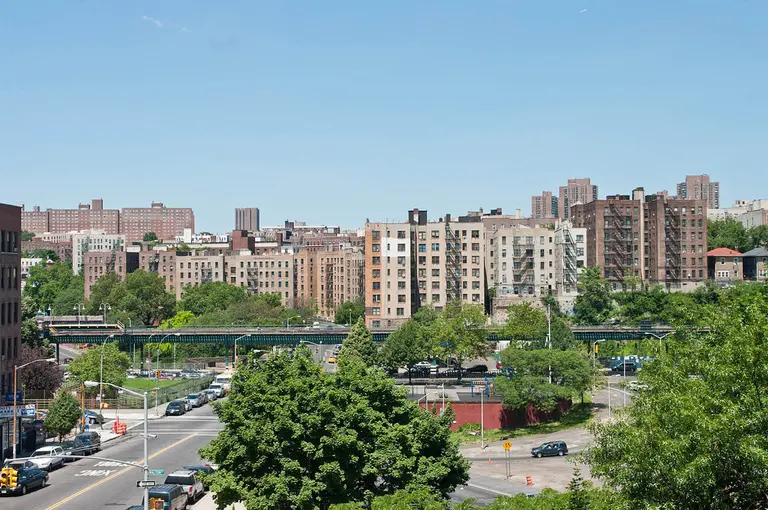
While Manhattan buyers typically pay a great premium for a park-front address, a single subway stop away in Long Island City, a new condominium aptly named Liv@ Murray Park North will begin sales with homes starting around $400,000. Developed by George Xu and Century Development Group, the six-story, 39-unit building will house a mix of studio, one- and two-bedroom apartments designed by Queens' own Raymond Chan Architects. Liv@ Murray Park North is located at 11-35 45th Avenue along the northern frontage of the 2.5 acre Murray Park/Murray Playground. Similar in size to downtown's Gramercy Park, the community jewel is LIC's largest green space not situated along the East River. The park is also across from the neighborhood's sole historic district and is positioned centrally between the area's two booming high-rise nodes–the master-planned Hunter's Point waterfront community and the Court Square-Queens Plaza business district.
More on the project ahead
April 15, 2015

In the 1700s NYC Had an Official Location for Buying, Selling, and Renting Slaves

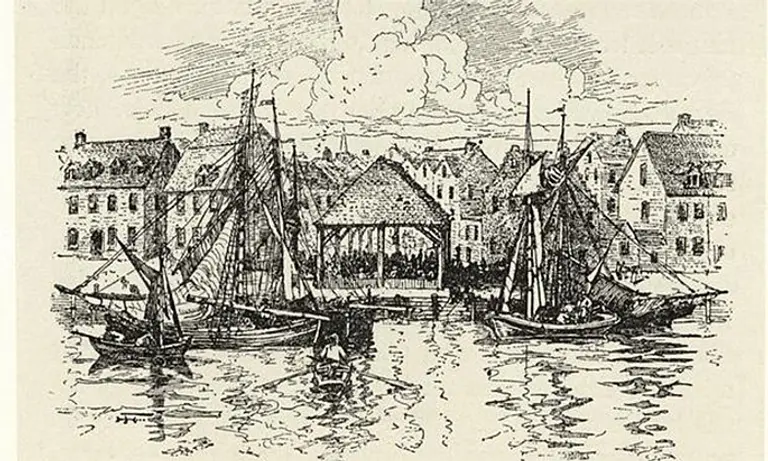
Behind all the banks, tall towers and tourists filling up FiDi is a dark past most of us know nothing about. Back in the 1700s, a corner of Wall Street at Pearl Street played host to the city's official slave market. Though no real recognition has been given to those that suffered in the construction of Manhattan in its earliest days—rather, the area's sordid past has for the better part been swept under the rug—WNYC reports that the city will finally pay tribute to these forgotten slaves, adding a historical marker to the site where the slave market once operated.
Find out more about the slave market here
April 9, 2015

At Brooklyn’s Gateway, Woods Bagot Kicks Off Construction of the Jay Street Residences

AmTrust Realty has recently kicked off construction on a 250,000-square-foot, mixed-use project near Brooklyn's Manhattan Bridge approach. The development will be a step towards reconnecting Downtown Brooklyn to its waterfront, and, along with several other proposals, helps remedy a maelstrom of mid-century planning disasters between the two areas. Known as the Jay Street Residences by its designers Woods Bagot Architects, the project has previously gone by the addresses 120 Nassau, 199 Jay, 203 Jay, and 213 Jay Street. Its 38,000-square-foot lot, now under excavation, will give rise to an L-shaped complex composed of a 33-story tower anchoring Concord and Jay Streets, as well as an eight-story hotel and amenity wing along its western Jay Street frontage.
More details on the project here
April 7, 2015

Brooklyn’s Most Expensive Condo Relists for $32M, Is So Large Owners Can’t Find Each Other

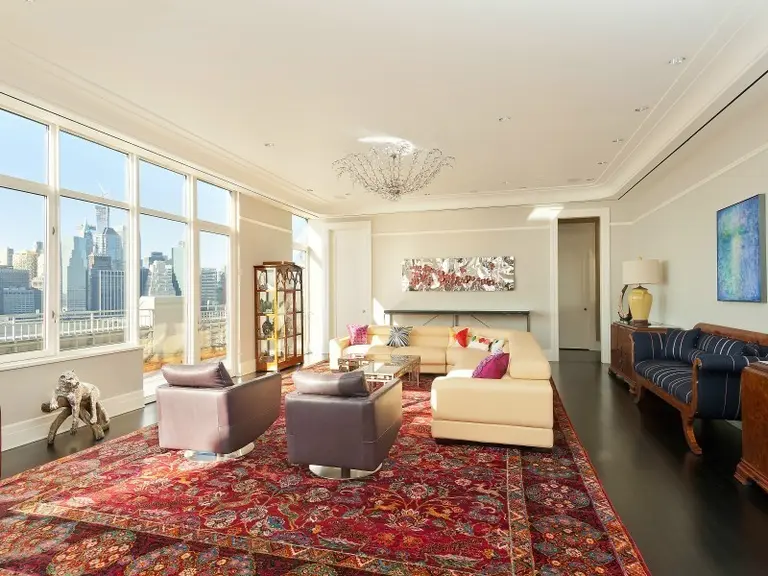
Imagine this: You and your spouse have both been home for three hours, but neither one of you knows the other is there because your home is that big. It's a "problem" most New Yorkers can't fathom, but for one Brooklyn couple it's encouraged them to relist their 11,000-square-foot triplex for $32 million, making it the borough's most expensive condo listing ever. Stuart and Claire Leaf originally listed their home in May, but then took it off the market in February after getting cold feet about moving. As the Wall Street Journal reports, "The apartment is a combination of no less than nine units spanning the 10th, 11th and 12th floors of the waterfront condo One Brooklyn Bridge Park." It includes six bedrooms, two deeded parking spaces, a 3,500-bottle wine room, a gym with a rock-climbing wall, a screening room, and a 75-foot-long terrace.
Take a look around the mega-home here
March 31, 2015

Chinatown, Once Unchanged, Now Attracting Hipsters–and Real Estate Developers

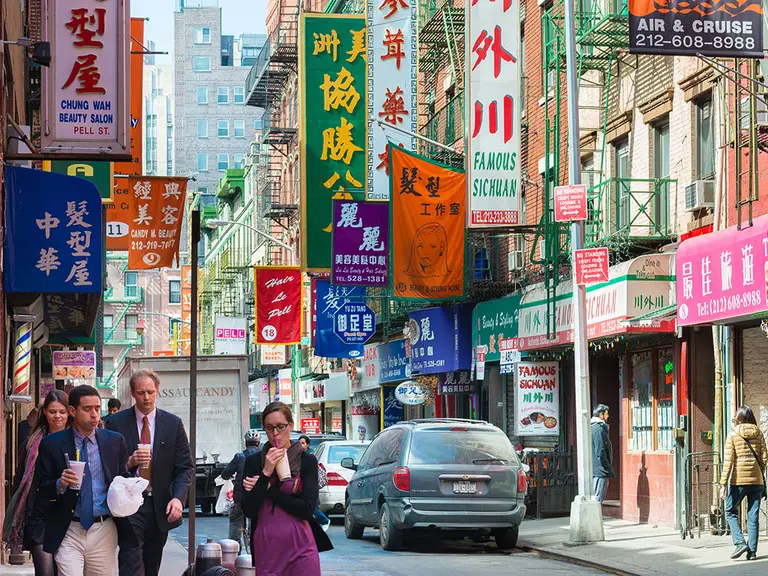
"Canal Street is a gantlet of billboards and signs; Courvoisier, Pearl Paint, Bally's Grand Hotel, Salem Cigarettes, Lincoln Savings Bank, Mc Donald's, and signs in Chinese impend on traffic, which is the covered with signs and graffiti itself." A New Yorker article published in 1990 paints a picture of Chinatown that isn’t all that different from the one we know today. Despite its prime location, few developers have eyed Chinatown as a destination for luxury living. As a largely self-sustaining community—many stores don’t even bother with English—it has preserved its cultural fabric even as the city has gone through transformation after transformation just streets away. But all of this is changing. A new crop of shops, galleries and condos is starting to find its way into the neighborhood's depths, the Wall Street Journal reports, and brokers are predicting rapid change for Chinatown over the next decade.
more on changes in chinatown
March 27, 2015

New Yorker Spotlight: Gil Shapiro of Urban Archaeology Re-Imagines Beautiful Old Things

Native New Yorker Gil Shapiro founded Urban Archaeology in the early 1970s, when the salvaging movement was just catching on. With a collector’s–and creator's–eye and an entrepreneurial spirit, he began re-imagining architectural remnants as treasured additions to the home environment. This month the company has been preparing for an auction taking place on March 27th and 28th, handled by Guernsey’s auction house, when nearly 1,000 of their long-treasured pieces of history will be sold to prepare for a move to a new location. First opened in Soho in 1978, the store's early customers–including Andy Warhol and other denizens of what was undisputedly the epicenter of the art world–adored the unique and time-treasured aspects of Shapiro's restored architectural salvage pieces, yet they would always find ways they wished they could customize their favorite items. Finding that he excelled at bringing a fresh perspective to pieces of historical and architectural importance, he started reproducing individual pieces as well as creating new lines of bath fixtures and lighting, many of which originated in places like the Plaza Hotel, New York’s Yale Club and the St. Regis Hotel.
Read our interview with Gil here