Search Results for: architecture firm

June 24, 2015

Looking at NYC’s 10 Scenic Landmarks and What Sets Them Apart from Other Public Parks

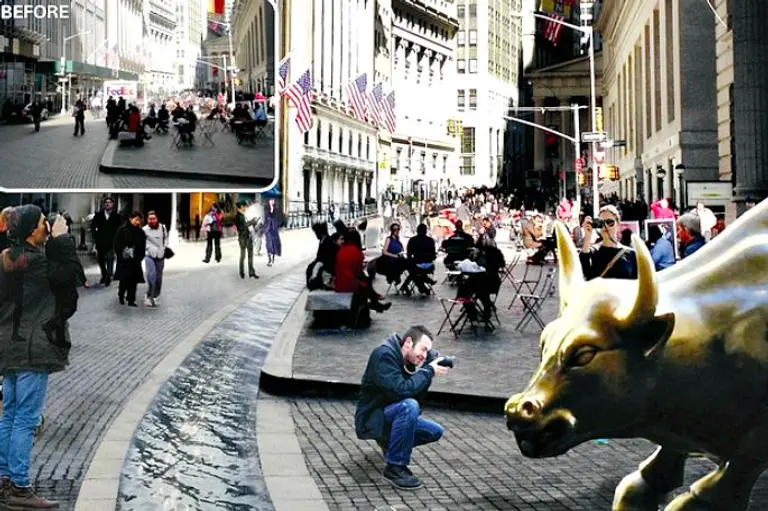
Since 2015 marks the 50th anniversary of the New York City landmarks law, we've been talking a lot about historic buildings–those that have been saved, those that were destroyed, secrets of some of the city's most famous spots. We even discovered that there are two landmarked individual trees. And starting tomorrow, the New York City Parks Department is hosting a new exhibit at the Arsenal in Central Park called Living Landmarks, which takes a look at nine of the city's ten scenic landmarks, showcasing "their contributions to landscape design and to the dynamism of the city through historical and contemporary photography, renderings, maps, artifacts, and memorabilia." Many of these, like Central Park, Prospect Park, and Bryant Park, are no brainers, while others like Verdi Square, Fort Tryon, and Ocean Parkway, are a little more under-the-radar.
See the rest and find out what makes these public spaces landmark-worthy
June 23, 2015

INTERVIEW: Fōz Design’s Fauzia Khanani, a Young Architect Goes Solo in NYC

Apart from Zaha Hadid, Jeanne Gang and Annabelle Selldorf, very few women in architecture manage to grab headlines like their male counterparts. But a relative newcomer named Fauzia Khanani is hoping to help change all of that. Fauzia started her practice, Fōz Design, back in 2011 with a single project in upstate New York. Since then, she's grown what was then a huge leap of faith into a full-fledged design studio working on residential, commercial office and public spaces from New York to California. We recently caught up with Fauzia to learn more about what it's been like to go out on her own in such competitive city, the challenges of being a female minority architect in world being designed by men, and how taking a "reflective design" approach can really improve a space.
Read our interview with Fauzia here
June 23, 2015

3 World Trade Center Gets Update to Better Complement Its Bjarke Ingels-Designed Neighbor

Ever since starchitect Bjarke Ingels revealed renderings for 2 World Trade Center (after taking over the design from Norman Foster), the building has been the talk of the architecture world, especially since Ingels has been so generous about giving interviews to the press. The tower has now even influenced the architects of 3 World Trade Center (a.k.a. 175 Greenwich Street) to rethink their design. As Yimby reports, Rogers Stirk Harbour + Partners have amended their plan for the third-tallest building on the site to have a more streamlined roof, now void of its spires, to better complement 2 World Trade.
READ MORE
June 11, 2015

Bjarke Ingels Talks About His Design for 2 World Trade Center

If you were still itching for more after Tuesday's reveal of Bjarke Ingels' design for Two World Trade Center, you're in luck. The starchitect himself chatted with NY Yimby about his design process and inspirations behind the tower. He also revealed an interesting tidbit of information when asked when asked when he started the design process. "Let's say in December," he responded. Keep in mind, though, that word only broke about him replacing Norman Foster in April. Controversy aside, Ingels has a lot to say about this world-famous project, including why he thinks Foster's plan was scrapped for his.
More revealing details right this way
June 9, 2015

REVEALED: Bjarke Ingels Design for 2 World Trade Center

Last week it was made official that starchitect Bjarke Ingels would replace Norman Foster as the designer of 2 World Trade Center, as News Corp. and 21st Century Fox closed in on a decision to move into the downtown tower. Now, without delay, Wired has revealed exclusive renderings of the Ingels redesign for the site, which will top out at 1,340 feet, just 28 feet shy of One World Trade Center. The glass tower is defined by its striking setbacks that retract from the spot of the 9/11 attacks. Bjarke said in a statement, "To complete this urban reunification (the) tower will feel equally at home in Tribeca and the World Trade Center. From Tribeca, the home of lofts and roof gardens, it will appear like a vertical village of singular buildings stacked on top of each other...From the World Trade Center, the individual towers will appear unified, completing the colonnade of towers framing the 9/11 Memorial. Horizontal meets vertical. Diversity becomes unity."
Watch a video of the architect discussing his new design
June 6, 2015

Weekly Highlights: Top Picks from the 6sqft Staff

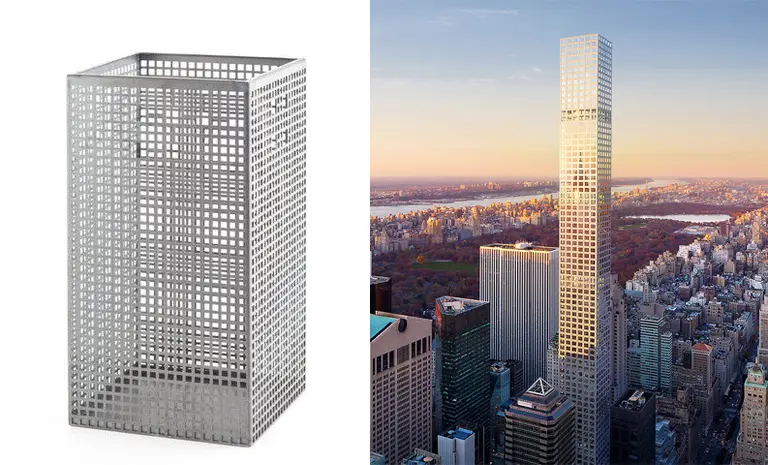
A Trashcan Inspired the Design of Rafael Viñoly’s 432 Park Avenue $18 Million Townhouse in Greenwich Village Will Speak to Your Inner Historian and Artist Interior Renderings Revealed for Central Park South’s Brand New 1,210-Foot Supertall Bjarke Ingels Confirmed to Replace Norman Foster in the Design of 2 World Trade Center Elizabeth Roberts Brings Light […]

June 5, 2015

New Yorker Spotlight: Michael Schneider on Telling Tales of Immigration on Ellis Island Using Technology

Modern-day storytelling ranges from the age-old tradition of oration to the modern take of 140 characters. But what happens when the story is a mix of old and new and is intended for an audience that ranges from elementary school students to centenarians? That's where ESI Design, a firm dedicated to enriching the human experience, steps in. ESI was founded in 1977 by Edwin Schlossberg. Their unique focus on melding traditional techniques with modern technology made them the perfect fit to design the recently launched Peopling of America Center at the Ellis Island National Museum of Immigration. The center–conceived with the vision and support of the Statue of Liberty – Ellis Island Foundation and its president Stephen Briganti and the National Parks Service–highlights journeys undertaken before Ellis Island opened in 1892 with "Journeys: The Peopling of America - 1550s-1890," which opened in 2011. On May 20th, another wing called "The Journey: New Eras of Immigration" opened to give visitors the chance to look at immigration that took place after Ellis Island closed in 1954. One of the visionaries at ESI is senior designer of media and technology Michael Schneider. For the Peopling of America Center, he was responsible for figuring out which of the available technologies worked best for the new exhibits and their audience. We recently spoke with Michael to learn how ESI approaches storytelling and, specifically, how the firm designed the galleries for the Peopling of America Center.
Read our interview with Michael here
June 1, 2015

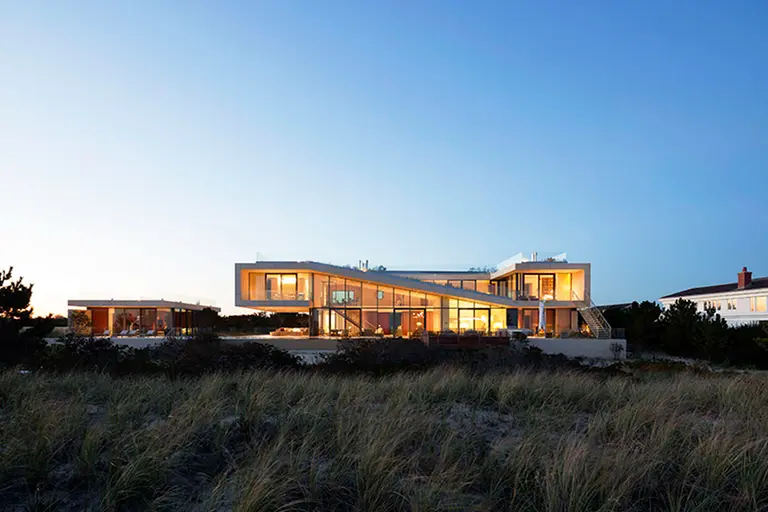
1100 Architect’s Long Island House Features Grassy Sand Dunes on Its Roof

1100 Architect is an architectural firm based in New York City responsible for building luxurious yet curious homes all over the globe. Their stunning Long Island House is located on the eastern shore of the outpost and is one of the finest examples of their work. In addition to big and bright interiors that let the outdoors in, its spectacular exteriors host a deck for sunbathing, an infinity pool for cooling off seaside, and a sloped green roof that mimics the surrounding dunes.
Learn more about this seaside retreat in disguise
May 21, 2015

studioMET Architects Turn a Brooklyn Parking Garage into a LEGO Art Studio

For most creatives, waking up and building things with LEGOs every day sounds like a dream. For artist Sean Kenney, it's a reality. Self-described as a "professional kid" who builds everything from lamps to portraits to entire rooms with the colorful bricks, Kenney needed a studio where he and his team could construct the fanciful works. He employed studioMET Architects to transform an old Brooklyn parking garage into his dream work space. With a project budget of less than $250,000, the firm designed a 4,000-square-foot artist studio with just as much personality as its owner's sculptures. The bright white, open space allows the fun creations and bins of colorful bricks (4 tons of them to be exact!) to stand out while still maintaining a logical, functional layout.
Find out more about this fun and functional artist studio
May 5, 2015

Greenwich Village Townhouse from Infamous 1970 Explosion Gets a Price Cut and New Look

Justin Korsant's unique Greenwich Village townhouse that so famously suffered from an accidental explosion in 1970 has lowered its price from $13.5 million to $12.95 million. All eyes have been on the unique split level home with a slanted facade since word got out that Korsant had plans to overhaul the local landmark, which was redesigned by Hugh Hardy post-explosion. Instead, Korsant tabbed Hardy's own modern-day firm, H3 Hardy Collaboration Architecture, to come up with Landmarks-approved plans, which include six floors, a penthouse, and an elevator. Now all you have to do is grab your contractor and make it happen.
More pics inside
May 1, 2015

VIDEO: Watch a 57-Story Skyscraper Go Up in Just 19 Days

While New York City developers have been laser-focused on bringing us the world's tallest residential towers, the Chinese are in pursuit of another marker: building them the fastest. A 57-story skyscraper was recently completed in Changsha, Hunan Province in just 19 working days, erected at an incredible rate of three floors a day. Called "Mini Sky City," the construction is an assembly of 2,736 glass-and-steel modules fabricated off-site over the course of roughly five months. Though the tower may have come quickly, the offerings within don't fall short: the new high-rise boasts 19 atriums, office space for 4,000 people, 800 apartments, and is reportedly earthquake-resistant.
Watch the incredible video here
April 29, 2015

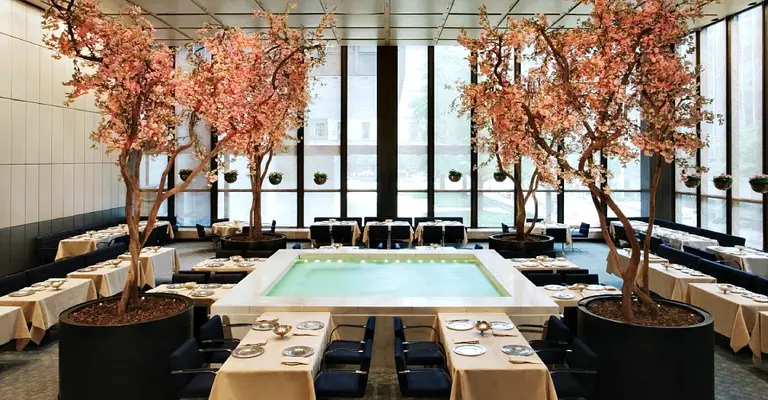
The Four Seasons: An Iconic Interior Landmark Faces an Uncertain Future

As you probably already know, 2015 marks the 50th anniversary of the NYC landmarks law. And one of the ways the city is marking the historic event is with an exhibit at the New York School of Interior Design called Rescued, Restored, Reimagined: New York’s Landmark Interiors, which focuses on some of the 117 public spaces throughout the five boroughs that have been designated interior landmarks. In conjunction with this exhibit, Open House New York recently hosted an interior landmark scavenger hunt (for which 6sqft took eighth place out of 40 teams!), which brought participants to designated interior spaces in Manhattan, the Bronx, and Brooklyn over the course of seven hours. One of the spots we visited was the Four Seasons restaurant inside the famed Seagram Building. Through our scavenger hunt challenges here, we learned just how groundbreaking this restaurant was for its innovative design and role as the quintessential Midtown "power lunch" spot. But the Four Seasons, despite its landmark status, is facing an uncertain future.
Learn about the past, present, and future of the Four Seasons here
April 29, 2015

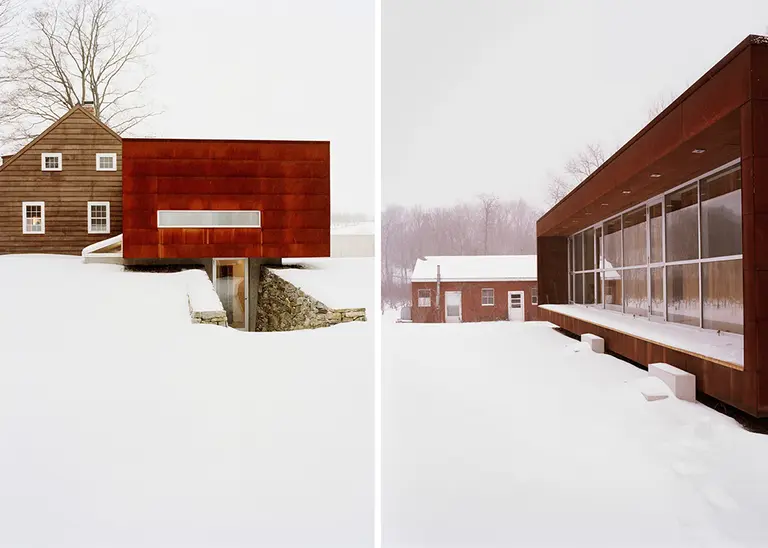
18th Century Cottage in Columbia County Is Turned into a Modern Dutch-Style Family Home

Today's dose of simplicity comes via a house extension upstate in Columbia County. This striking copper home was designed by architects Messana O’Rorke, who reimagined an eighteenth century wood cottage and integrated it into their modern design. Although the original property was neglected for a couple of years, the firm managed to turn the shelter, now dubbed Ten Broeck Cottage, into a stunning place to live, work, and play.
Learn more about this modernized 1734 cottage
April 15, 2015

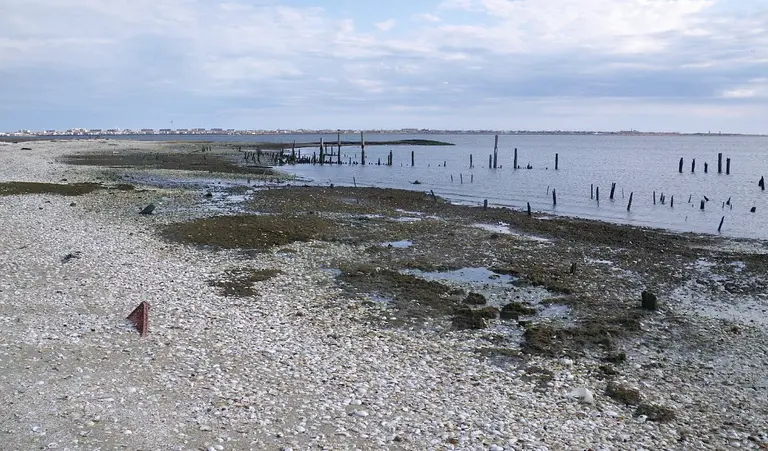
Ruffle Bar and Robbins Reef: NYC’s Forgotten Oyster Islands

Today, when most New Yorkers think of oysters it has to do with the latest happy hour offering the underwater delicacies for $1, but back in the 19th century oysters were big business in New York City, as residents ate about a million a year. In fact, oyster reefs once covered more than 220,000 acres of the Hudson River estuary and it was estimated that the New York Harbor was home to half of the world's oysters. Not only were they tasty treats, but they filtered water and provided shelter for other marine species. They were sold from street carts as well as restaurants, and even the poorest New Yorkers enjoyed them regularly. Though we know the shores of Manhattan, especially along today's Meatpacking District and in the Financial District near aptly named Pearl Street, were chock full of oysters, there were also a couple of islands that played a part in New York's oyster culture, namely Ruffle Bar, a sandbar in Jamaica Bay, and Robbins Reef, a reef off Staten Island marked with a lighthouse.
Find out about these two forgotten islands
March 27, 2015

REVEALED: ODA Architects Design Cantilevering Ziggurats for Gowanus Site

Another eye- and volume-popping mega-project by ODA Architects may be coming to Brooklyn, and this week's chosen neighborhood is Gowanus. A recently posted video by ODA delves into the thought process of Eran Chen's burgeoning firm and provides some shots of their recent work, including the provocative rendering shown here. We recognized the location only by the "Stop & Frisk Hands Off the Kids" text scrawled across the defunct Brooklyn Rapid Transit Powerhouse building (the "Bat Cave") and pinpointed the project for the full-block parcel at 175-225 Third Street purchased by Kushner Companies and LIVWRK last year. Update via LIVWRK/Kushner’s reps: "The developers are not working with ODA on this project and these designs do not represent our vision for this site or the Gowanus. We are committed to putting forth an outstanding plan that respects the context of the neighborhood and responds to the voices of local stakeholders.” As it turns out, ODA is one of many firms that pitched, and the design was ultimately turned down because it was out of touch with the direction of the neighborhood. Though it won't come to fruition, it does give some scale of what's to come—which will indeed be transformative for the area.
More information here
March 26, 2015

The Knickerbocker: Times Square’s First Luxury Hotel Is Reborn as a Modern Landmark

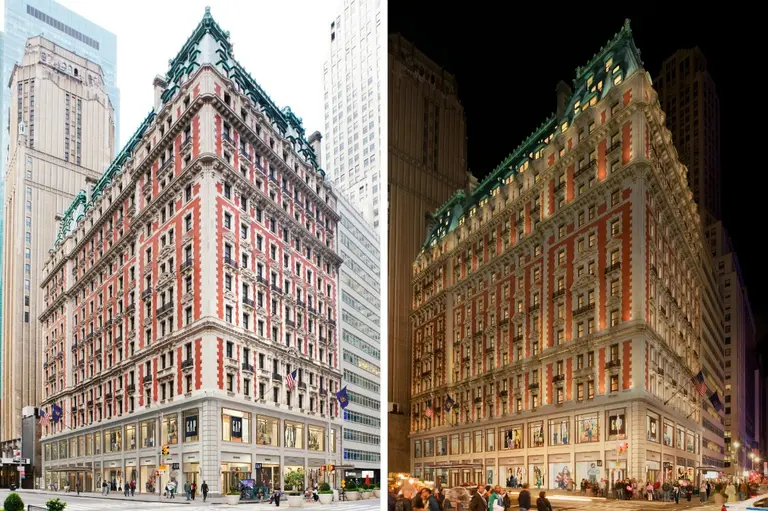
When John Jacob Astor IV built the Knickerbocker Hotel in 1906, he launched a generation of luxury Times Square hotels. The Beaux Arts masterpiece attracted the likes of F. Scott Fitzgerald, John D. Rockefeller, and Italian tenor Enrico Caruso. It was the birthplace of the martini and the site where the sale of Babe Ruth from the Red Sox to the Yankees took place. But after just 15 years, the hotel's success declined just as fast as it emerged and it was repurposed as an office space, later becoming the Newsweek Building. Today, though, the landmark is reclaiming its title of ultimate luxury hotel under its original moniker. After a two-year, $240 million modern renovation, the Knickerbocker offers 330 guest rooms, a rooftop bar and lounge with the ultimate view of the Times Square ball drop, and a foodie destination restaurant from chef Charlie Palmer.
Uncover the history and future of the Knickerbocker
March 26, 2015

Construction Update: ODA Architects’ 155W 18th Gets Its Skin

Flying under the radar, an 11-story, 30-unit condominium at 155 West 18th Street has topped off and is applying a dignified bluestone facade to its concrete structural frame. Developed by Eldad Blaustein's Izaki Group and designed by ODA Architects, 155W 18th joins a list of recent and upcoming downtown residential buildings sensitive to the rhythms and proportions of their neighbors, while still introducing fresh forms and rich materials to excite our senses and enhance our surroundings. With young design firms such as ODA, SHoP, and DDG leading the way, a cool and confident downtown vernacular has emerged, trading cookie-cutter layouts, flat glass skins, and pastiche styling for spacious light-filled floor plans and exteriors composed of sumptuous materials that provide a kind of weight and timelessness to the structures.
More details on 155 West 18th Street's progress
March 24, 2015

VIDEO: The Fascinating History of the Manhattan Municipal Building

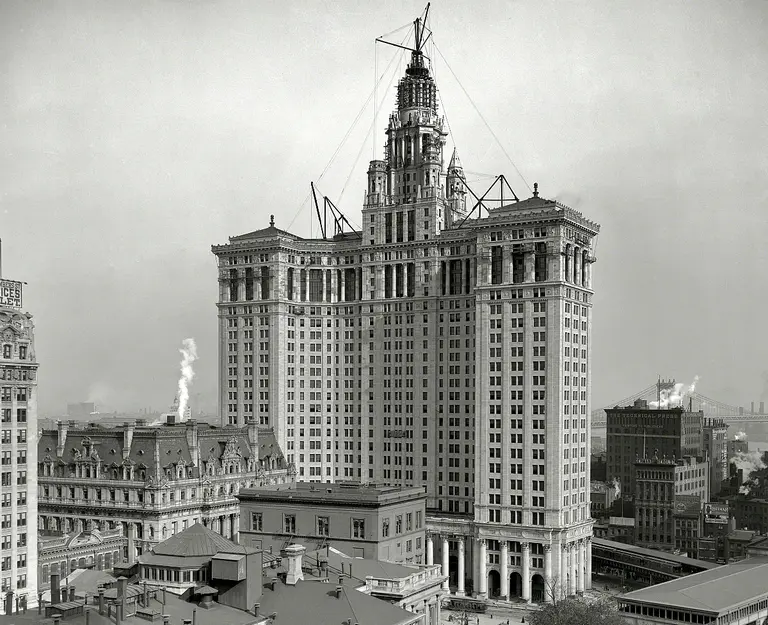
When we think of the city's early skyscrapers, landmarks like the Woolworth Building and Flatiron Building usually come to mind. But there's an equally fascinating and beautiful icon that often gets overlooked–the 1914 Manhattan Municipal Building. One of New York's first skyscrapers, the 580-foot Beaux Arts masterpiece influenced civic construction throughout the country and served as the prototype for Chicago's Wrigley Building and Cleveland's Terminal Tower, among others. A new video from Blueprint NYC (produced by the Office of NYCMedia) takes us into this historic structure, discussing everything from the reason for construction (after the 1898 consolidation of the five boroughs, there was a need for increased governmental office space) to interesting factoids (the building was designed from a rejected sketch of Grand Central Terminal Station) to the turn-of-the-century innovations that made this unique structure possible.
Watch the video
March 22, 2015

Navy Road Guest House by Robert Young Puts a Rustic Twist on Simple Hamptons Living

Forget the fact that there's snow on the ground, the calendar says it's spring, so we think it's fair game to start planning some warm weather weekend retreats. And since the Hamptons Jitney runs all year, why not start by ogling this charming Montauk home by Robert Young Architects. The Navy Road Guest House mixes the best of traditional, clean Hamptons living with upstate-like rustic charm. Outside, perfectly landscaped, winding grounds complement the stone and wooden-shingled façade. Inside, whitewashed rooms are perfectly balanced with earthy wooden walls.
Take a look around the property
March 20, 2015

REVEALED: ODA’s New Bushwick Rental Project Looks a Lot Like BIG’s 8 Tallet in Copenhagen

If imitation is the sincerest form of flattery, then Bjarke Ingels should give himself a big pat on the back. A newly revealed residential design by architectural firm ODA for the Rheingold Brewery site in Bushwick looks a lot like Bjark Ingels Group's (BIG) 8 Tallet in Copenhagen. The Denmark building takes the shape of a figure 8 with a sloping ramp that runs from the base of the building to its roof, creating a large interior courtyard. Similarly, the 400-unit rental building planned for Bushwick at 10 Montieth Street has a subtle bow-tie shape with a sloping, zig-zagging green roof and amenity-laden courtyard. And just as 8 Tallet is the largest private development ever undertaken in Denmark, ODA's 400,000-square-foot building would be the largest residential building ever built in the area if completed.
More details on the proposed project
February 25, 2015

The Only Two Living Things in NYC to Have Been Landmarked Are Trees

Last week we looked at the city's oldest and tallest tree in Alley Pond, Queens, which got us thinking about one of the questions at the Preservation Trivia night we recently attended. What are the only two living things in NYC to have ever been landmarked? We'll admit, we were stumped. We guessed Peter Stuyvesant's pear tree and the World Trade Center Survivor Tree, which were both wrong. But they are trees: the Weeping Beech Tree in Flushing, Queens and the Magnolia Grandiflora in Bed Stuy, Brooklyn. And to make it even more exclusive, only the latter still survives; the Beech Tree died and was cut down in 1999.
Find out the history of how these landmarks came to be
February 17, 2015

Chinatown Loft by Buro Koray Duman Architects Mixes Tenement Details with Bright, Modern Geometry

If you take a look at the exterior of this Chinatown tenement building located across the street from Sarah Roosevelt Park, you might imagine that the apartments inside are typical cramped railroad-style units with the token exposed brick wall as a selling point. But this unit, renovated by Buro Koray Duman Architects, looks like it could be in a swanky Miami hotel or sunny LA condo. When Turkish-born architect Koray Duman bought the residence in 2011, the 750-square-foot corner apartment was a dark, three-bedroom renovation from the 1980s. He and his firm transformed it into a bright, open one-bedroom loft with bold, sculptural architecture and décor.
Tour the home here
February 15, 2015

Check Out Studio Benjamin Dillenburger’s Wild ‘Phenomena’ Submission for MoMA’s 2015 YAP

Last week, MoMA PS1 announced the winning design for this year’s Young Architects Program (YAP), which will be featured this summer in the Long Island City museum’s outdoor courtyard. The top spot went to Andrés Jaque of the Office for Political Innovation for COSMO, a moveable environmental artifact made out of customized irrigation components. And while this interactive water purification sculpture is highly deserving, the runners-up shouldn't be ignored. Among the short list of finalists was Phenomena by Benjamin Dillenburger and Michael Hansmeyer of Studio Benjamin Dillenburger, which "addressed the idea of phenomenology in design, creating an experiential space that stimulates all the senses and hosts multiple programs." It combines a performance space, a highly articulated projection screen, and an ornate fountain, challenging how people experience live events by making the viewer part of the production.
READ MORE
February 13, 2015

Tiny Brooklyn Apartment Is Covered with 25,000 Ping Pong Balls

From afar, the walls of this tiny Brooklyn apartment look they're covered in geometric wallpaper, but get up close and you're in for quite the surprise. Daniel Arsham, partner and co-founder of Snarkitecture, a cross-disciplinary firm that blends art and architecture, used 25,000 ping pong balls that had lost their bounce to create this incredible wall mosaic as part of an accelerated design experiment.
More on this incredible design
February 6, 2015

ArchDaily Announces Winners of Its Building of the Year 2015 Contest

The votes are in, and the people of the architecture and design community have spoken. ArchDaily has announced the winners of its Building of the Year 2015 contest. The winners of the 14 categories included NYC-based firm WORKac’s Wieden+Kennedy NY headquarters for Interiors (which have been featured on 6sqft before), Herzog & de Meuron’s Arena do Morro for […]