Nyc Subway

January 26, 2016

Mapping World Cities That Already Have Open Gangway Subway Trains

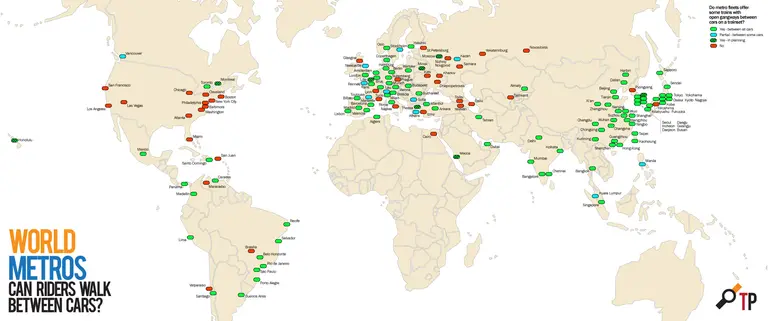
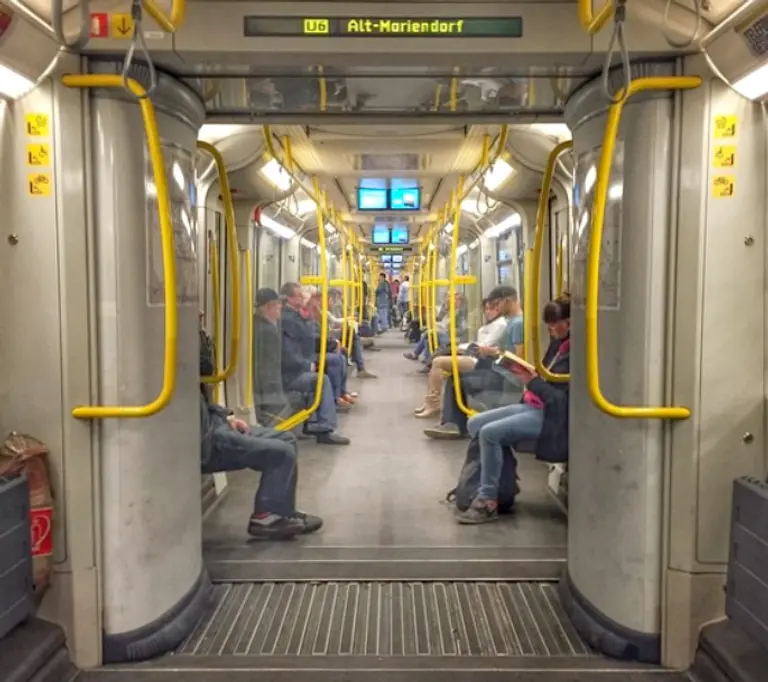
Click here to enlarge map >> Just yesterday, the MTA revealed renderings of what their open gangway subway prototypes will look like. As 6sqft previsouly reported, when it was announced that the new trains got a $52.4 million piece of the MTA's capital plan, "This type of train, basically one long subway car with no doors in between, is popular all over the world, in most cities in China and Japan, in Berlin, Paris, and London, to name a few." So just how far behind the times is New York City? An informative new map from The Transport Politic, which plots the cities in which riders can walk between cars, says pretty far.
Find out more
January 20, 2016

Top 10 Transportation Proposals That Would Transform New York City

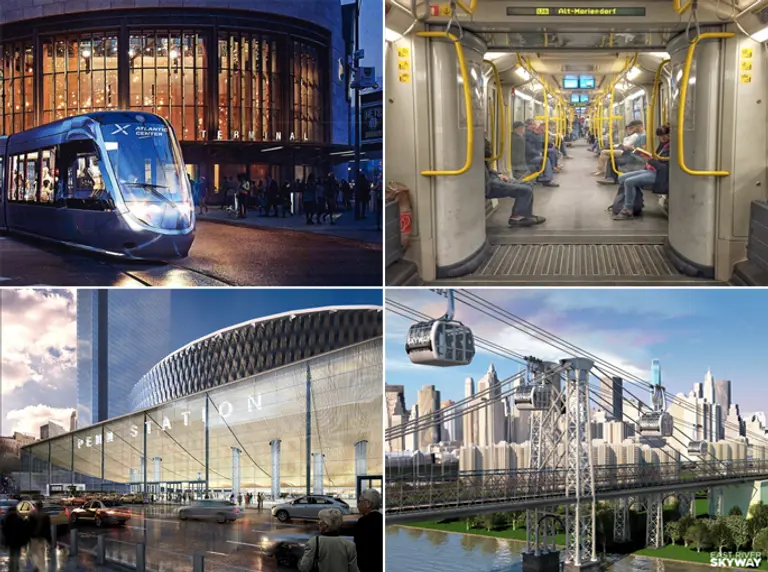
Commuting in and around NYC can at times be a daunting task, and with the all of the pending subway closures, things are about to get a bit more complicated. However, all hope is not lost, and a trouble-free ride to work right be in the near future. From a city-wide ferry system to cell-phone friendly subway cars, both Governor Cuomo and Mayor de Blasio have several new initiatives in play to improve the city's infrastructure. In addition to these ambitious government-backed measures, there are also a slew of motivated residents looking to make some changes, including a 32-Mile Greenway in Brooklyn and Queens and a High Line-esque bridge spanning the Hudson River, just to name a few. To keep your spirits high when subway lines are down, we've put together this list of top 10 transportation proposals for NYC.
See all 10 here
January 20, 2016

Are Shuttle Buses a Viable Alternative to the L Train During a Shutdown?

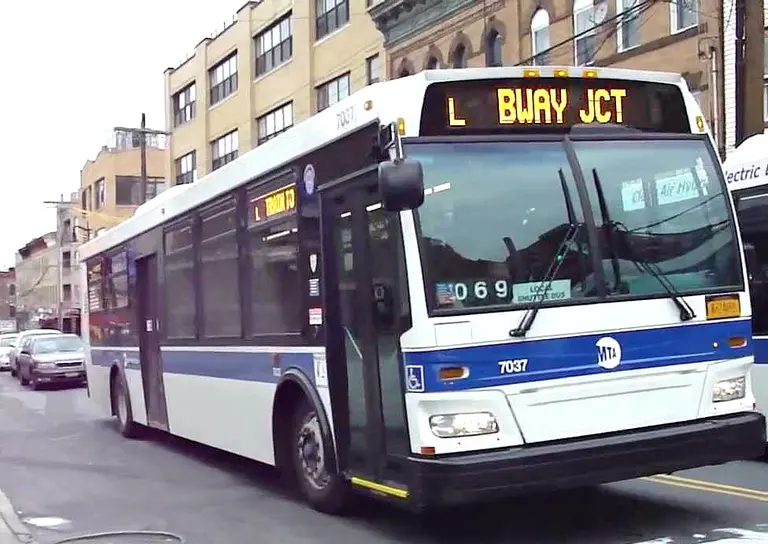
The MTA’s announcement of possible plans to close the L train for months or even years at a time to repair the Hurricane Sandy-damaged Canarsie Tunnel has businesses scrambling and commuters (the train has 300,000 riders on the average weekday) fearful. Data mapping company CartoDB offers a bit of “location intelligence” to better understand the consequences of a shutdown for people living in Brooklyn and, more importantly, what some realistic alternatives to the L train might be. For example, shuttle buses: "If the shuttle bus takes 20 minutes, we are able to calculate the best choices for riders along the L needing to get to Manhattan. Should they go all the way to Lorimer and take the shuttle bus or should they transfer earlier at Myrtle-Wyckoff to the M train or at Broadway Junction to the A?"
Will shuttle buses save the day?
January 11, 2016

Governor Cuomo to Transform the Subway With Free Wi-Fi, USB Chargers, and Mobile Payment

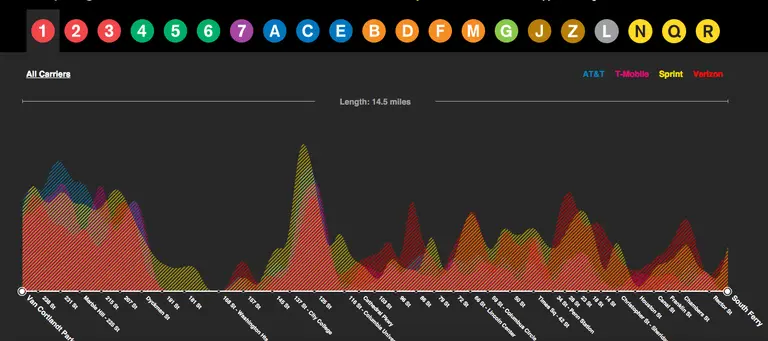
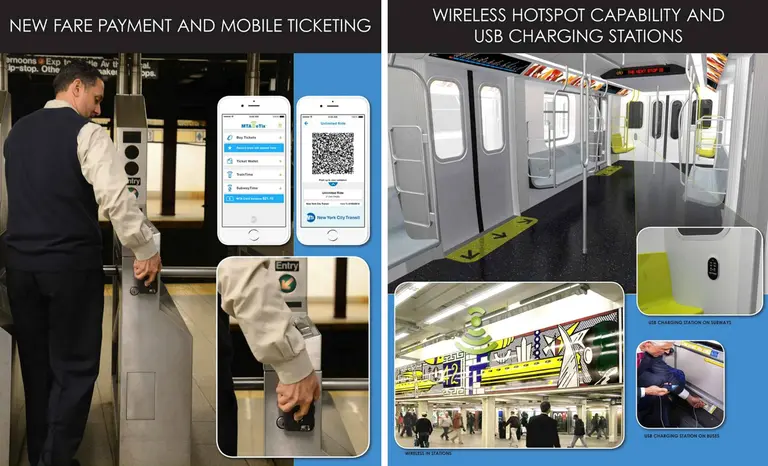
Is there anything in NYC that Governor Cuomo does like? He started his crusade to overhaul our infrastructure back in July when he revealed renderings for a $4 billion update to LaGuardia Airport. But this past week he pulled out all the stops, starting with a $3 billion redevelopment of Penn Station, a $1 billion expansion of the Javits Center, and now, a massive undertaking to "modernize and fundamentally transform" the MTA and the subway. Curbed reports that the Governor's latest plan includes expediting the addition of more countdown clocks, adding contactless payment by 2018, equipping all stations with Wi-Fi by the end of this year and cell phone service by the end of 2017, and outfitting both subways and buses with USB chargers.
More details right this way
December 14, 2015

VIDEO: 10 Days and 120 Subway Stations in Two Minutes

Most New Yorkers would be overjoyed if they only had to witness their subway station for a hot second. But since we can't teleport, this video from Snowday is the next best way to live out our fantasies (h/t Fast Co. Design). Titled "Stations: A Quick Scan Through NYC," this two-minute video was shot over ten days at 120 subway stations throughout the five boroughs, compiling footage as if the viewer were changing television channels. The quick scan, which features a somewhat odd blend of scripted scenes and documentary footage, is meant to evoke the "unique texture of New York...in a new and compelling way."
Watch the full video this way
December 11, 2015

Subway Breaks One-Day Ridership Record With 6,217,621 Passengers

For reasons unknown, the third Thursday in October is traditionally one of the busiest days for the NYC subway. Last year, on October 30th, a record was set with 6,167,165 passengers, and now, the MTA has put out a press release announcing that this past October 29th, this record was smashed when 6,217,621 customers swiped their MetroCards. "The new record day was one of five days in October when ridership exceeded the prior year’s record, and was one of 15 weekdays with ridership above 6 million. Daily subway ridership records have been kept since 1985, but the new record is believed to be the highest since the late 1940s," the agency reports.
READ MORE
December 7, 2015

Transit Museum Brings Back Its Vintage Subways and Buses for the Holidays

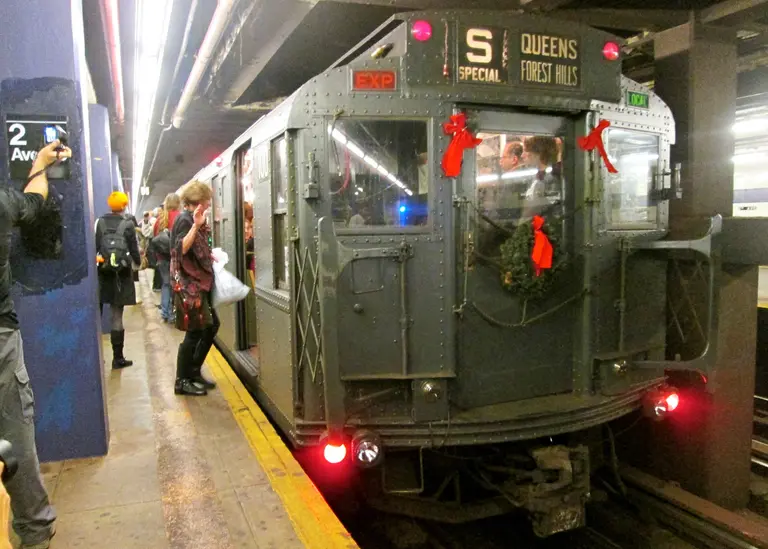
Regardless of your faith, the holidays in New York City are a one-of-a-kind experience that many of us look forward to all year. For die-hard New Yorkers, it's not so much about the big attractions, but the smaller festivities that show the spirit of the city. Here at 6sqft, one of our favorites is the MTA's and New York Transit Museum's Nostalgia Trains. According to Gothamist, this year, they're rolling out eight subway cars from the 1930s to '70s and vintage buses from the 1940s to '80s, so holiday shoppers and history enthusiasts alike can revel in a little old-school charm.
Get the details
December 3, 2015

‘Open Gangway’ Subway Trains Getting a Trial Run in NYC

Despite the improved service that the MTA has been promising, most New Yorkers still find themselves crammed into subway cars like floundering sardines. But a newfangled, more spacious train could increase capacity by 8-10 percent. Second Avenue Sagas explores part of the MTA's 2015-2019 capital plan, released earlier this fall, that calls for the purchase of "10 open-gangway prototype cars with the $52.4 million expenditure allocated for 2016." This type of train, basically one long subway car with no doors in between, is popular all over the world, in most cities in China and Japan, in Berlin, Paris, and London, to name a few. It's not known yet when exactly they'll make their debut, how they'll be designed, or on what subway line they'll run, but of course the new idea comes with some concerns.
More details this way
November 23, 2015

The Story Behind Those Infamous ‘Sick Passenger’ Subway Announcements

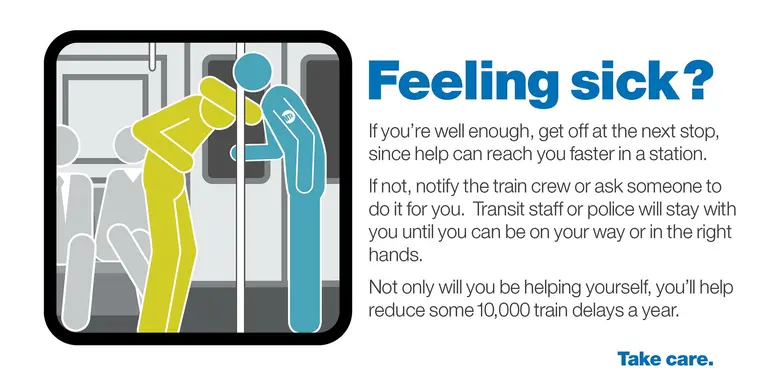
Admit it–despite your general concern for the well-being of your fellow New Yorkers, you can't help roll your eyes when that dreaded "sick passenger" announcement comes over the subway intercom. "Why get on the train if you're not feeling well?" or "Can't they just move the person to the platform?" are common moans heard during these all-too-common delays. But, it turns out, it's a lot more complicated than that. The New York Times took a look at the rise in sick passengers, up to 3,000 a month this year as compared with 1,800 each month in 2012. Every time this happens, the train crew has to notify the rail control center, who then will call an ambulance. It depends on the specific station and time of day how long it will take emergency medical workers to locate the sick patient. Then, if it's deemed the passenger cannot safely walk, he or she must remain on the train to be assessed. Further, if the passenger has no one to wait with them and there's no police officer available, it falls on the train conductor to stay with the patient until help arrives. This can lead to the train being pulled out of service altogether. And of course, the delays start a ripple effect throughout the line.
More this way
November 19, 2015

Think You Can Design a Better NYC Subway System? Try It With Mini Metro

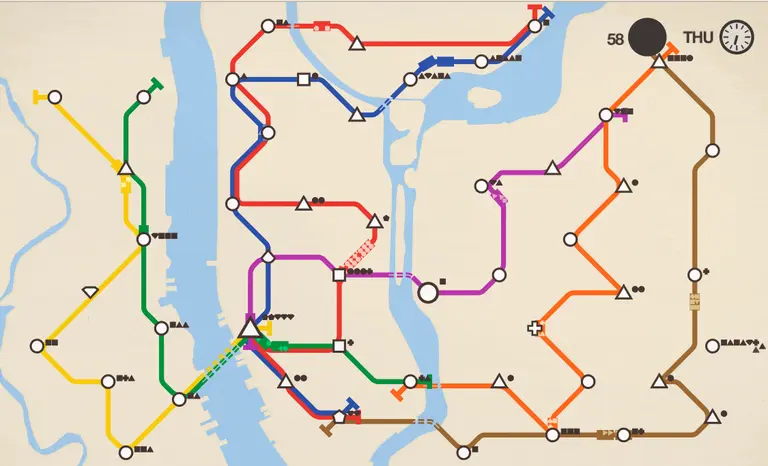
The New York subway system is a complex but pretty efficient network that (for the most part) gets us to where we need to get when we need to get there. But that's not to say there aren't some neighborhoods that wouldn't benefit from a few more stations—and better connections from one line to another. Well, if you're a savvy straphanger that thinks that you can engineer a far more efficient system than the MTA, the game Mini Metro is the perfect place to flex your dormant urban planning skills.
Where to try out the game here
November 2, 2015

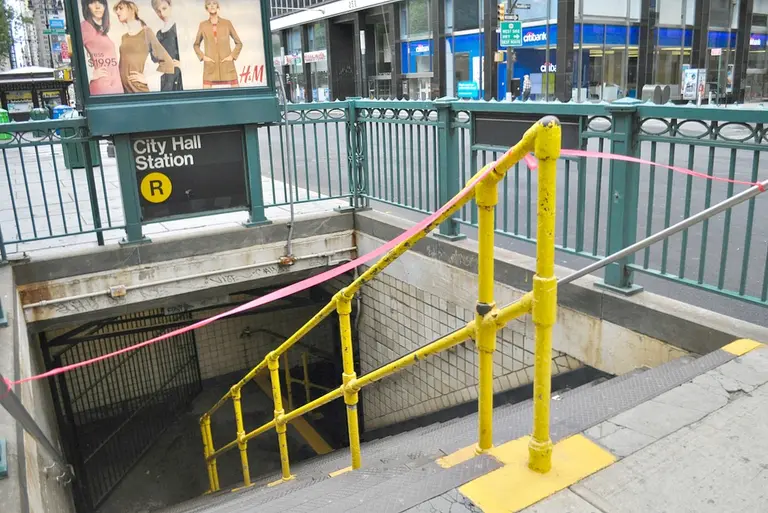
25 Percent of Subway Station Entrances Are Closed, Worsening Congestion

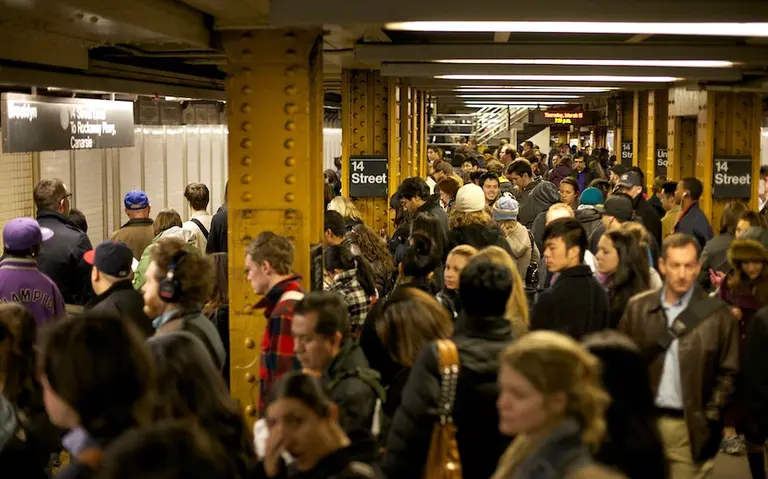
There's so much to kvetch about when it comes to the MTA and poor subway service: unprecedented debt, increased ridership that hasn't been matched with increased service and outdated technology to name a few. But here's another to add to the laundry list: closed station entrances. amNY reports today that one out of four subway entrances are closed at a total of 119 stations, which "create bottlenecks that make it difficult to get in and out of increasingly jam-packed stations, while stores miss out on the foot traffic." In total, a whopping 298 staircases are inaccessible, and some closures have been in effect for so many decades that the MTA doesn't even know why they're not in use.
Find out more
October 29, 2015

POLL: Would You Like to See the MTA Use This Modern Subway Map?

Yesterday, 6sqft brought you this modern subway map redesign by Tommi Moilanen. His version keeps the current map’s basic structure, but infuses it with a bit of Massimo Vignelli‘s famous graphic style. Geographically and systemically accurate, Moilanen’s map also uses thick and thin lines to represent express and local service; tints skipped stops a lighter shade; more clearly […]

October 28, 2015

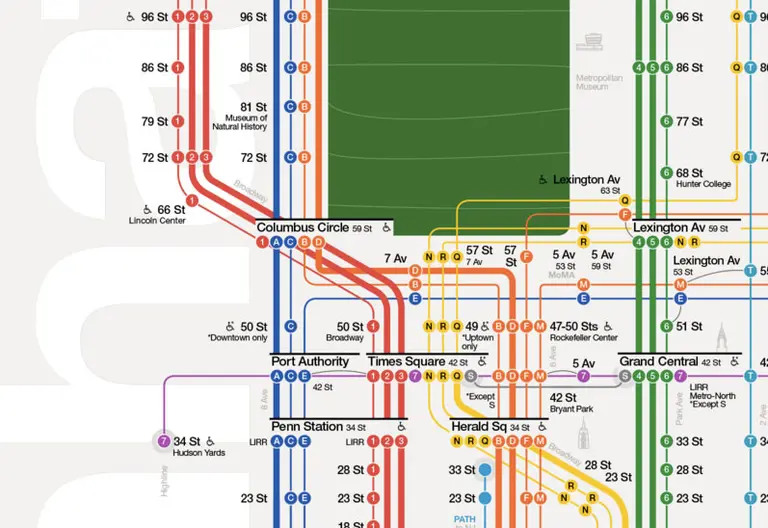
Tommi Moilanen’s New Subway Map Design Makes It Easier to Navigate the City

The subway is one of New York City's greatest assets, but this only holds true if you can actually navigate through the various tunnels and platforms. And despite the countless transportation apps out there today, the good 'ole subway map is still the best way to find your way around. There's certainly been no shortage of map redesigns, but 6sqft is particularly impressed with the stylings of this new map by Tommi Moilanen, a Finnish industrial and interactive designer. His version uses the system's existing design language, but incorporates a fresh, modern aesthetic.
More details and the full map
October 23, 2015

PHOTOS: Go Inside the NYC Subway Cars Dumped in the Atlantic Over a Decade Ago

By now, you've probably seen Stephen Mallon's insane photo series showing thousands of subway cars being tossed into the ocean. The unlikely MTA initiative was undertaken more than ten years ago with the goal of creating artificial reefs that would support sea life along the Eastern seabed. Now fast forward a decade plus, and the fruits of the agency's environmental efforts can finally be seen in these incredible underwater images from Express Water Sports.
See them all here
October 12, 2015

State and City Finally Agree on Funding Plan for the Debt-Ridden MTA

After months of squabbling over who's responsible for funding repairs and expansions of NYC's transit system, Governor Cuomo and Mayor de Blasio reached an agreement on Saturday to keep the MTA's $26.1 billion, five-year capital plan on track. The state will put in $8.3 billion and the city $2.5 billion (much more than de Blasio's original $657 million planned contribution). However, Cuomo was clear that their commitment won't come from increasing taxes and that he's confident the money can be found in the existing state budget. The city, too, said it would not raise taxes, but rather take $1.9 billion from city funds and the rest from sources that could include development rights or rezoning. The agreement still leaves the MTA $700 million short of its total, but the agency hopes to close the gap by finding "further efficiencies."
READ MORE
October 7, 2015

Cities Would Take Up 37 Percent More Space if It Were Not for Public Transit

The major benefits of public transportation are clear: riding the subway or bus is way cheaper than maintaing a car, and more often than not, it's a much faster means of getting from point A to point B. But as Streetsblog points out in this recent study by the Transportation Research Board, transit is a major of driver of density within a city, and it's something that incentivizes developers and city planners to put things closer together. While this may not be an earth-shattering revelation to you, if you quantify the effect, you just might be surprised. According to the report, U.S. cities on average would take up 37 percent more space to house current populations if it were not for public transit.
Find out more here
September 3, 2015

Here’s How Many Calories You’ll Burn if You Walk, Jog, or Cycle Instead of Taking the Subway

Looking to shed a few pounds after all the summer cookouts and outdoor happy hours? Perhaps you should consider ditching the old Metrocard and traveling by foot or bicycle instead. To put into perspective just how fit this will get you, the folks over at Treated have calculated how many calories you'll burn by walking, jogging, and cycling between subway stops. As Curbed notes, the analysis provides calorie info for every single subway stop and also charts the longest stops, which unsurprisingly are mostly over bridges, and the shortest stops, mostly located in lower Manhattan.
See the full map and calorie charts here
September 2, 2015

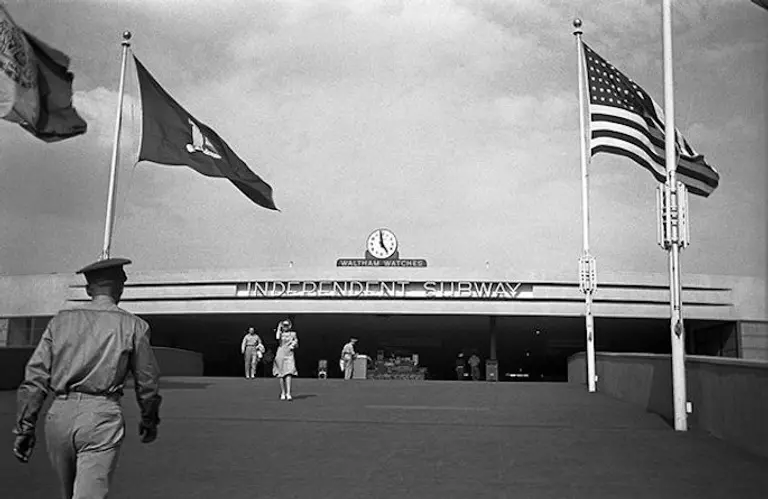
VIDEO: Riding the Subway in the 1940s Wasn’t Much Different From Today

Here's a picture of the New York City subway–mobs of commuters crowding the platforms; train cars filled to the brim; passengers blocking the train doors; people walking while reading the paper, oblivious to their surroundings. Sounds like your commute this morning, right? But believe it or not, we're describing the subway from the 1940s. Unearthed today by Gothamist, this video from the New York Transit Museum archives shows just how little things have changed in the past 75 years.
Watch the video here
August 28, 2015

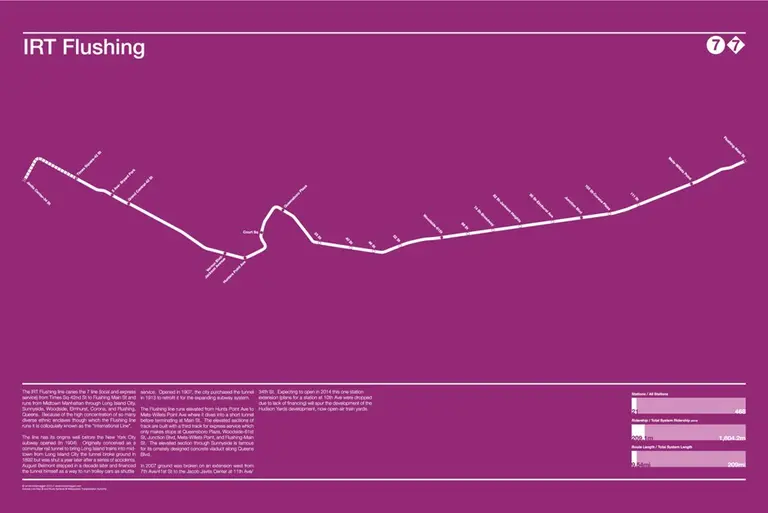
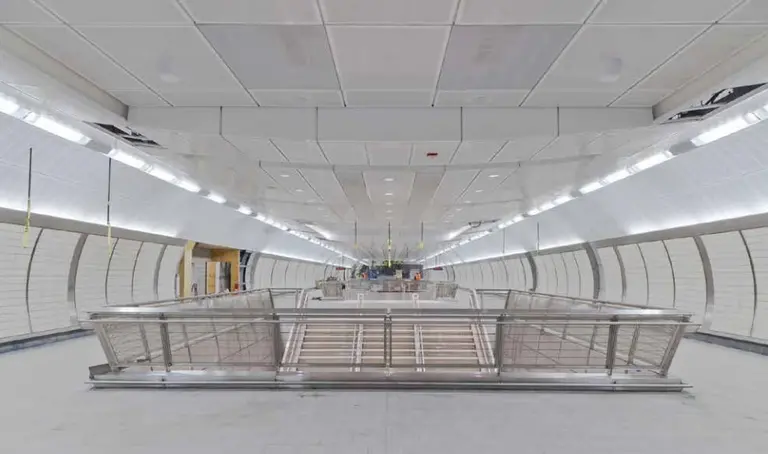
Hudson Yards 7 Train Station Will Officially Open on September 13th

We once had a friend who lived in midtown all the way over on 12th Avenue...and let's just say we rarely visited. But what was once a subway wasteland is finally getting its very own subway station. After years of delays, the new 7 train stop at 34th Street-Hudson Yards will officially open on September 13th, at 1:00pm to be exact. The extension from its current endpoint at Times Square has cost the city $2.4 billion since construction commenced in 2007.
More details
August 26, 2015

See NYC’s Subway Lines Superimposed Over an Aerial Photo of the City

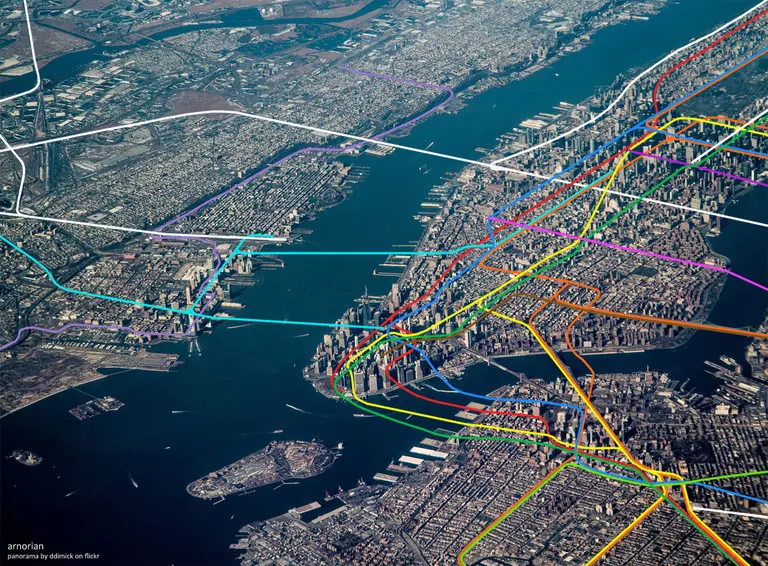
When we head underground and board the subway, most of us don't give much thought to all the streets and landmarks we'll be zipping past as we move along to our destination. But here’s an incredible mash-up from map enthusiast Anorian that offers a much different perspective on exactly where the subway travels. An amalgamation of digital photos taken from a commercial plane and the expert mapping of each line, this beautiful image is far more captivating and insightful than any printed or online map out there.
See more views here
August 21, 2015

Amazing Detailed Map from the 1950s Shows 300+ ‘Wonders of New York’

Click to expand >> One of a growing collection of transit maps, this cool detailed New York City map, designed by graphic designer/sailing enthusiast/IBM employee Nils Hansell sometime around 1953-1955, offers a mind boggling tableau of (mostly) Manhattan's points of interest, numbered, with a corresponding key. There's also a color-coded schematic to the subway system, which was at the time divided up by its operators, BMT, IND and IRT; the map also shows a remaining few of the city's elevated railway systems, the last of which was ended in 1955.
Check it out here
August 14, 2015

What’s Your Subway Cred? New Game Judges You Based on the Number of Stations You’ve Visited

Akin to pinning all of the cities you've visited on a world map, "What's your Subway Number?" allows you to visually quantify your worldliness—or in this case your "New Yorkness"—by accounting for every subway stop you've stepped foot in. The game is the clever creation of digital designer Mike Solomon, and breaks straphangers down into four categories: Rich Tourist, Junior Commuter, Official Resident, and NYC Lifer.
Find out more here
August 13, 2015

Study Says: The 4 Train Is the Worst Performing, the L Train the Best

The L train may be painfully packed during rush hour, but at least it can tout the title of being the best performing of all of NYC's subway lines—which appear only to be getting worse. The Journal reports that an audit recently conducted by the state comptroller’s office revealed that, on average, the subway system's on-time performance (how frequently a train reaches its last stop within five minutes of the scheduled time) is on the decline, falling to 74 percent on weekdays and 81 percent on weekends in 2014, from 81 percent and 85 percent in 2013. But the worst performing train of all? The 4 train.
More on the best and worst trains here
August 6, 2015

Map of ‘Subway Deserts’ Shows Outer Boroughs Left High and Dry

Though we may already know there are places in NYC that we can't easily get to, transit data junkie Chris Whong lays it all out on a map that points out the city's lesser-served regions, at least by underground means. The interactive map shows all NYC land areas more than 500 meters (about .3 miles) from one of the city’s 468 subway stations–that’s about two avenue blocks or six or seven shorter street blocks (around a seven-minute walk) according to Google maps. A big blue dot blots out this radius surrounding the station; everything outside the dot, well, you’re hoofing it (or taking a bus, car or rickshaw).
Find out more
July 27, 2015

VIDEO: Go Behind the Super Antiquated Switchboard of Today’s NYC Subway

The MTA is showing its age in a new video put forth by the public benefit corporation. "People know the system is old," the narrator of MTA's video opens, "but I don't think they realize just how old it is." The New York City subway system has been running since 1904, and as we previously reported in December, it's been running on the same technology used in the 1930s. In the video, computers are noticeably absent from the West 4th Street Supervisory Tower, which is in control of all of the train movements around the area. Instead there are plenty of pens and papers, as well as old, lever-operated machinery that the railroad industry has long stopped manufacturing. It's no wonder that the MTA has put out this video promoting their Communications-Based Train Control (CBTC) system, a project that aims to modernize the subway.
Watch the incredible video here