Transit

February 23, 2016

There Will Be No Ribbon Cutting for the WTC Transportation Hub Opening

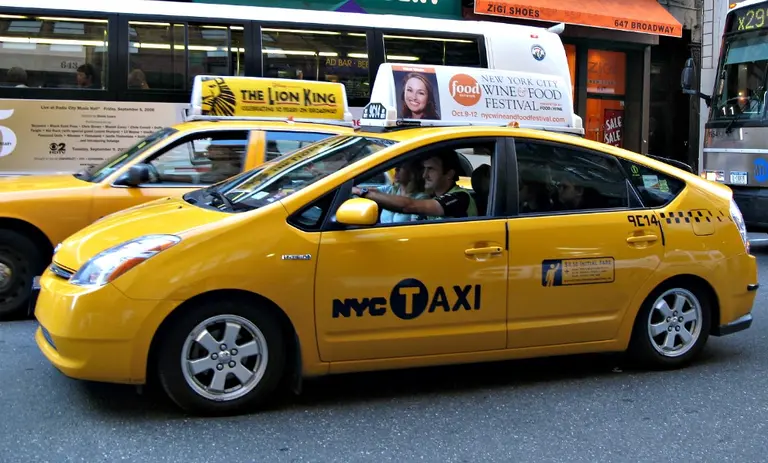
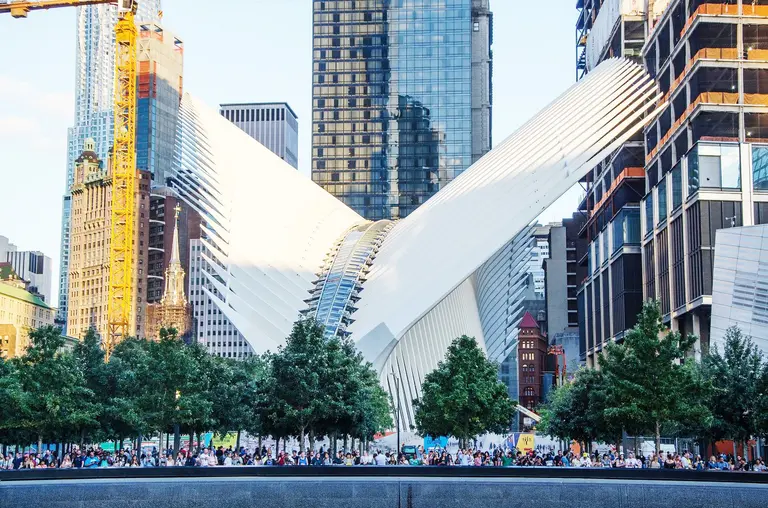
When the subject of Santiago Calatrava's World Trade Center Transportation Hub comes up, what's most likely to come to mind is not the flying-bird-looking architecture, but the fact that it was so incredibly delayed (it’s six years off schedule) and over-budget (final construction costs ring in around $4 billion in taxpayer dollars, twice what was projected, making it the world’s most expensive train station). The latter is not sitting well with the Port Authority of New York and New Jersey, who oversee the hub, as they've announced that they will not host an event to mark the opening during the first week of March, calling it "a symbol of excess," according to Politico. Similarly, Governors Christie and Cuomo, who control the agency, have declined to commemorate the opening.
Get the scoop

February 23, 2016

Minimalist Subway Map Posters Are More About Beautiful Design Than Finding Your Way

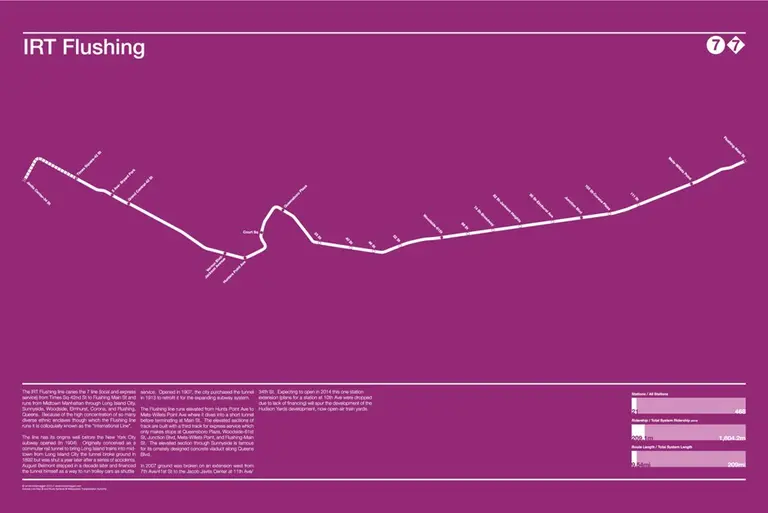
Cartographer Andrew Lynch has spent a lot of time looking at the NYC subway system. The CUNY Hunter alum recently perfected the entire system in a series of hypothetical but geographically accurate "Future NYC Subway" maps. But while studying the paths of the city's most important people mover, Lynch noticed they looked rather lovely, but just too, well, cluttered. From this thought came a series of colorful minimalist subway line posters (h/t CityLab) that Lynch calls "totally accurate, totally useless," but nice to look at nonetheless.
Get your own, this way
February 22, 2016

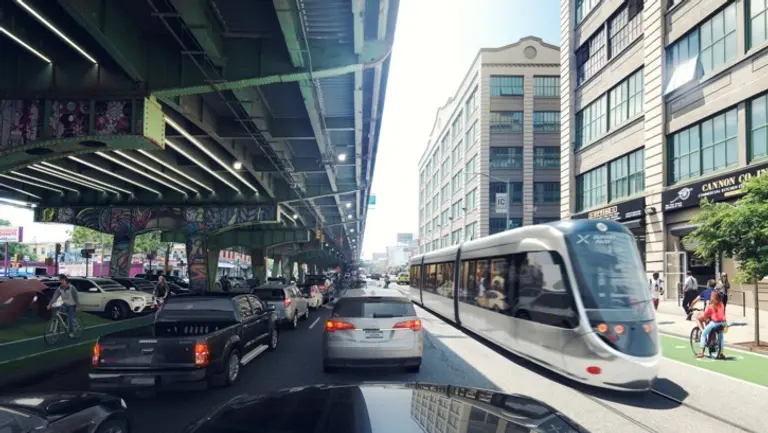
‘Fatal Flaw Analysis’ Says Brooklyn-Queens Streetcar Could Require Two New Bridges

The proposed Brooklyn-Queens Connector (BQX) streetcar may require the construction of two new bridges, one over Newtown Creek and another over the Gowanus Canal. The New York Times reported that the potential need for the new bridges–the Pulaski Bridge and the bridge across the Gowanus Canal at Hamilton Avenue might not be able to accommodate streetcars–was one of the more substantial details released by Deputy Mayor Alicia Glen and other top officials Friday. In a "fatal-flaw analysis," it was found that that though there would be "major challenges" to creating the system, it was feasible, Ms. Glen said. Like all things New York City, the proposed BQX proposal "would dwarf other recent streetcar systems in the United States." The cost involved in constructing the new bridges is already included in the project's $2.5 billion cost estimate. They would include bicycle and pedestrian paths.
Find out more
February 19, 2016

Dream Subway Map Includes a 10th Avenue Subway and a PATH to Staten Island

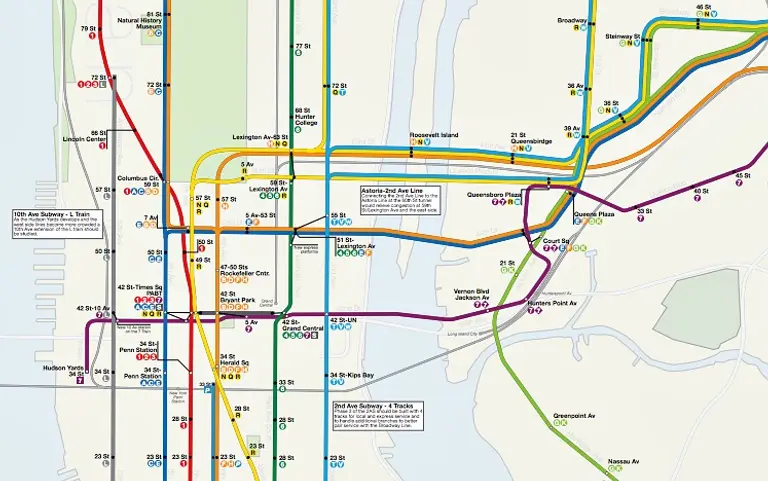
For most New Yorkers, subway dreams are simple things like trains arriving on time and getting a seat, but cartographer Andrew Lynch has big visions for what could become of NYC's transit system (h/t Gothamist). In his most recent iteration of the Future NYC Subway map, he "sought to plan out a system expansion which would be as cost effective as possible by addressing current service bottlenecks, train car issues, current ridership and population growth." This includes: a PATH train to Staten Island: a K line to connect the Brighton Beach Line (B/Q) to the Crosstown (G) at Bedford-Nostrand Avenues; a 10th Avenue L train extension; a majorly enhanced Second Avenue subway; and a Bushwick-Queens line.
The details on all these ideas
February 18, 2016

The Brooklyn-Queens Streetcar Would Run Entirely Through Flood Zones

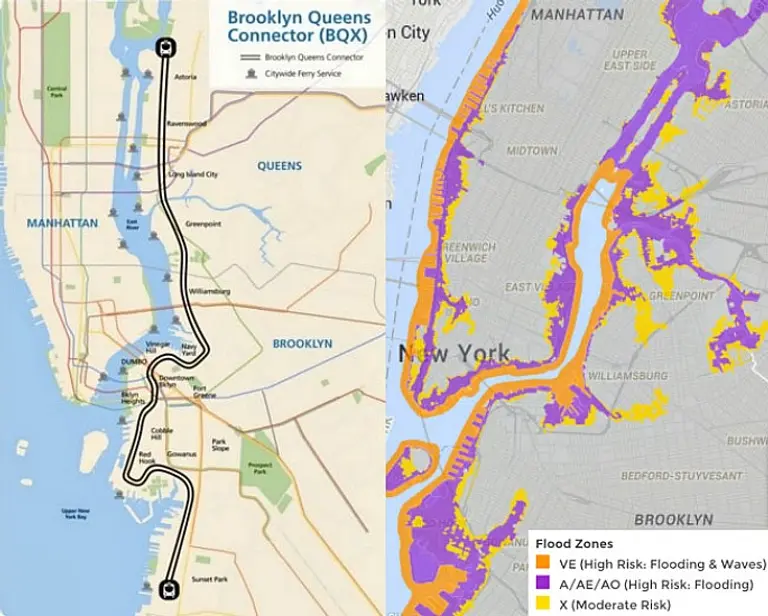
Leading up to Mayor de Blasio's press conference on Tuesday about his proposed Brooklyn-Queens streetcar plan, the internet has been abuzz with criticism and concerns, including whether or not it will accept MetroCard transfers, how it won't really connect to existing subway lines, funding matters, and the issue that the system may favor "tourists and yuppies." But Streetsblog makes another very interesting point–the fact that the proposed route will run almost entirely through city- and FEMA-designated high-risk flood zones, which "raises questions about how the streetcar infrastructure and vehicles would be protected from storm surges, as well as the general wisdom of siting a project that’s supposed to spur development in a flood-prone area."
What does the Mayor have to say about this?
February 17, 2016

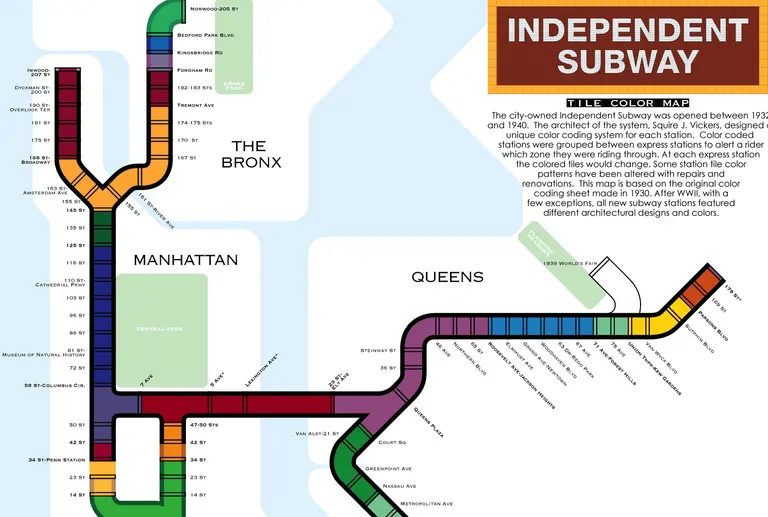
This Map Explains the Historic Tile Color System Used in NYC Subway Stations

We know the crowds that pack into our city’s subway cars each day are more than colorful enough, but the system also has a super-geeky color-coded navigation system that exists even outside of the main map’s primary colored lines. The city-owned Independent Subway was opened between 1932 and 1940. Up until 1967, it was the last of three former competing subway systems, and contributed six major lines to what is now the unified New York Subway: A, B, C, D, E, F, G, Q (partial). Squire J. Vickers, the system’s architect, designed a special color coding system for each station. Color coded stations were then grouped between express stations to make riders aware of the zone they were passing through. At each express station, the color of the tiles would change. Some station tile color patterns have been altered with subsequent renovations. The system map is based on the original color coding sheet from 1930. After WWII, almost all new subway stations featured their own unique architectural designs and colors
Find out what color your stop is
February 16, 2016

Waterfront Neighborhoods Fear Proposed BQX Streetcar Would Favor ‘Tourists and Yuppies’

Recent news has focused on plans announced by Mayor De Blasio for a streetcar line, dubbed the Brooklyn Queens Connector (BQX), to connect “underserved, but booming” areas of the boroughs. The city’s plan would run for 16 miles along the East River, from Astoria to Sunset Park, at a projected cost of $2.5 billion, serving bustling commercial hubs like the Brooklyn Navy Yard and Long Island City, as well as providing access for about 45,000 public housing residents. With concerns from local businesses and residents growing, the Times looks to the Hudson-Bergen Light Rail, an already-existing streetcar line in New Jersey that travels from Bayonne through Jersey City and Hoboken to Weehawken. It's been moving passengers for over a decade and today serves 46,800 passengers on a typical weekday. By most accounts it's been a success, helping employees get to work (with a skyline view, no less) and encouraging development in areas along the waterfront that had suffered from blight and neglect. Two rivers over, it's the areas through which the proposed "BQX" would travel that are the subject of some concern.
Find out more
February 9, 2016

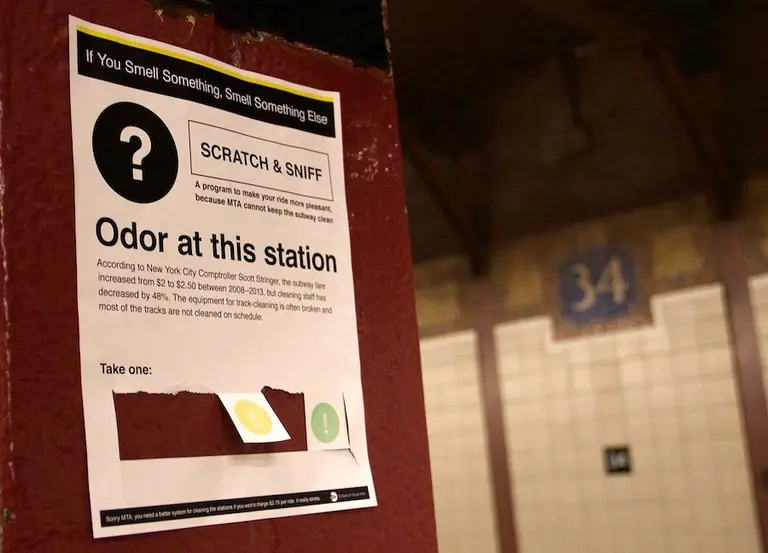
Student Project Gets Subway Riders to Scratch and Sniff

"If You Smell Something, Smell Something Else." Those words introduce a handful of signs that have been popping up at a few subway stations around the city, including Canal Street, Herald Square and Union Square. And most people, quite frankly, would rather do just that, if they had a choice...and now they do. School of Visual Arts graphic design student Angela Kim was acutely aware of this fact, and she decided to add a few more to the collection.
What's that smell?
February 9, 2016

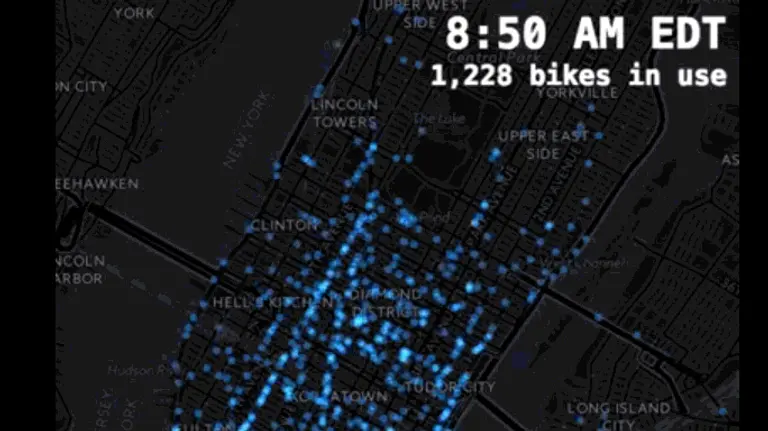
Mapping 22 Million Citi Bike Rides Across NYC

Software Engineer Todd W. Schneider is a super data geek in his spare time, analyzing New York City’s publicly available stats on topics like the transportation system. Recently, he took a closer look at the Citi Bike system (h/t Untapped), which clocked over 10 million rides in 2015–22.2 million rides from July 2013 through November 2015–making it one of the world's largest bike share systems. Schneider's findings spotlight general trends in Citi Bike usage and give us the big picture, via charts, maps and some fascinating animation, on the migrations and tendencies of our busy population of blue and white bikes.
See where all those bikes are going
February 5, 2016

Does the City’s Brooklyn-Queens Streetcar Plan Actually Make Sense?

Like most grand, government-backed plans, yesterday's announcement by Mayor de Blasio that he'd be supporting a proposed Brooklyn-Queens streetcar was met with flashy renderings and promises of how underserved areas and populations would finally get the access they deserve, as would booming commercial hubs like the Brooklyn Navy Yard and Sunset Park. But Streetsblog dug a little deeper and came up with several reasons why the $2.5 billion project doesn't quite add up.
Find out why
February 4, 2016

De Blasio to Announce $2.5B Brooklyn-Queens Streetcar Line

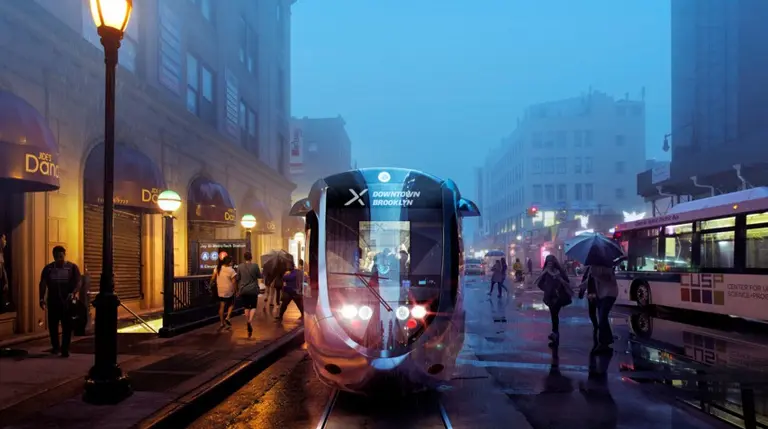
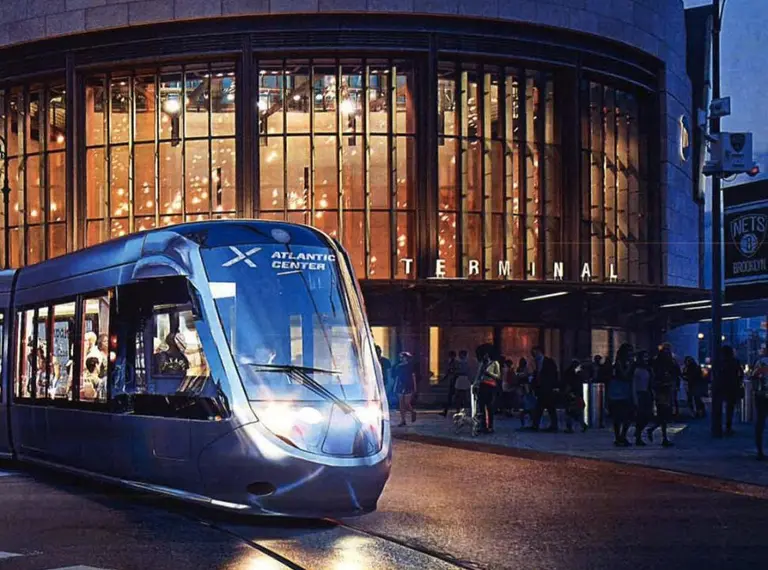
Earlier in the month, 6sqft shared news of a detailed proposal from non-profit advocacy group Friends of the Brooklyn Queens Connector that called for a Brooklyn-Queens streetcar line to connect "underserved, but booming" areas of the boroughs. The city must've been listening, because Mayor de Blasio is expected to announce today in his State of the City speech that he'll be backing such a proposal. Like the original scheme, the city's plan will run 16 miles along the East River, from Astoria to Sunset Park, but at a projected cost of $2.5 billion, it will be significantly more expensive than the previous estimate of $1.7 billion, but significantly less than a new underground subway. Not only would the streetcars serve bustling commercial hubs like the Brooklyn Navy Yard and Long Island City, but they'd provide access for about 45,000 public-housing residents.
More details
February 1, 2016

Why Is There a Sixth-and-a-Half Avenue in Midtown?

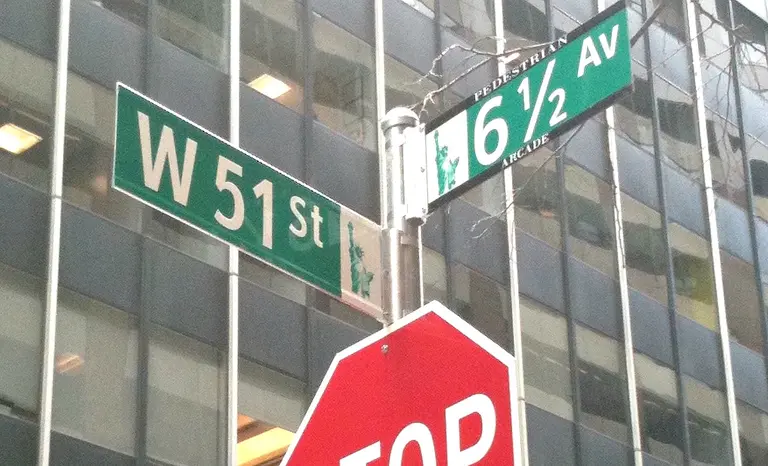
If you've never heard of it, that may be because this quarter-mile, pedestrian-only street is nearly hidden among the office towers of Midtown. Sixth-and-a-Half Avenue was the first fractional street in the city’s grid system, created in 2012 by the Department of Transportation to encourage people to use the public plazas and covered areas that form a path between 51st Street to 57th Street.
So where is it?
January 29, 2016

Interactive Graph Compares L Train Commute Times and Rents With Other NYC Neighborhoods

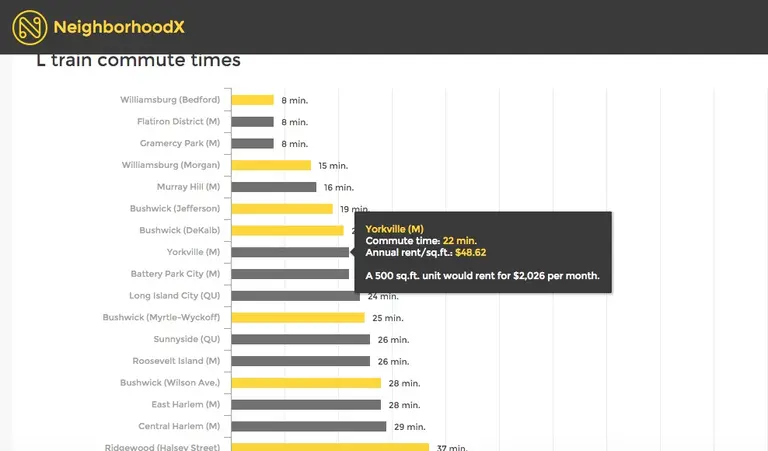
We're hearing lots of anguish and anxiety over the possibility of an L subway shutdown for repairs for as long as a year or more, and we've taken a look at some possible solutions. Now, we've asked the real estate data geeks at NeighborhoodX to go a little deeper beneath the grumbling to find out just how much convenience can be had along that thin grey line, and how it stacks up against other neighborhoods in Manhattan, Brooklyn and Queens. So which other neighborhoods offer commute times similar to the L train stops—and—just as important when choosing a neighborhood–how do their rents compare? And if you're living along the L, in light of the shutdown, what neighborhood alternatives do you have in the city that provide a similar commute?
Find out here
January 27, 2016

POLL: Will Open Gangway Subway Trains Be a Success in NYC?

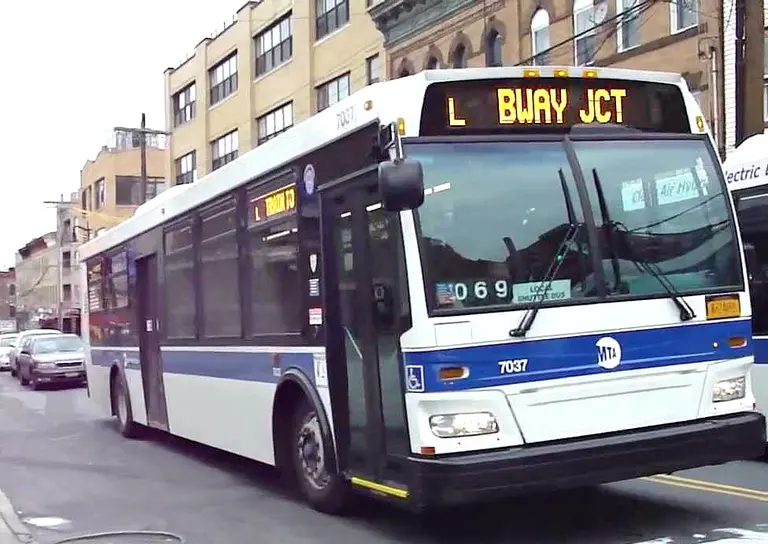
New Yorkers are notoriously hard to impress, so it’s not surprising that some are finding fault with the MTA’s proposed open gangway subway trains, which are pretty much the norm everywhere else in the world. Despite the fact that they’ll reduce congestion and platform pileups, as well as reportedly increase safety, jaded city dwellers fear […]

January 26, 2016

Mapping World Cities That Already Have Open Gangway Subway Trains

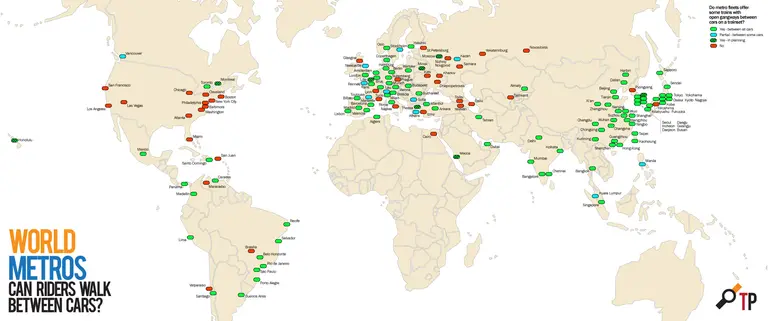
Click here to enlarge map >> Just yesterday, the MTA revealed renderings of what their open gangway subway prototypes will look like. As 6sqft previsouly reported, when it was announced that the new trains got a $52.4 million piece of the MTA's capital plan, "This type of train, basically one long subway car with no doors in between, is popular all over the world, in most cities in China and Japan, in Berlin, Paris, and London, to name a few." So just how far behind the times is New York City? An informative new map from The Transport Politic, which plots the cities in which riders can walk between cars, says pretty far.
Find out more
January 21, 2016

Amtrak Estimates Penn Station and Hudson River Tunnel Projects Will Cost $24B

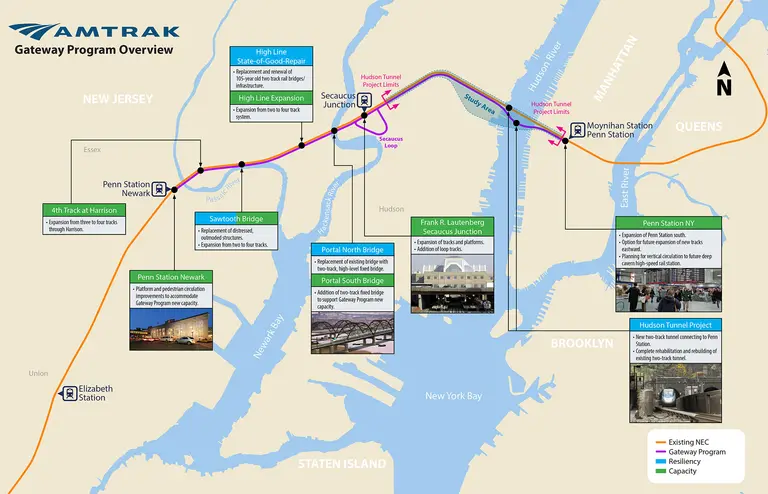
When Governor Cuomo announced his $3 billion revamp of Penn Station earlier this month, skeptics were quick to point out that all the glassy new structures and reconfiguration of waiting rooms won't do anything to help the fact that the Hudson River rail tunnels are crumbling. Clearly on the same page, Amtrak announced yesterday a detailed overview of the entire infrastructure project, and it comes in at a whopping $23.9 billion. According to the Times, "the largest share of about $7.7 billion [will go towards] building the new Hudson tunnel and repairing the existing tunnel. The project includes a host of other elements, including expanding Pennsylvania Station in Manhattan at an estimated cost of $5.9 billion, and replacing rail bridges in New Jersey."
Find out more
January 20, 2016

Top 10 Transportation Proposals That Would Transform New York City

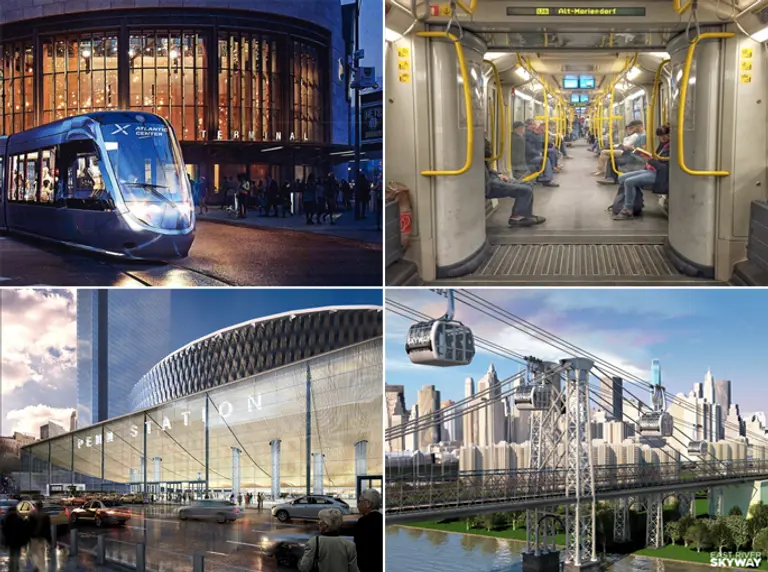
Commuting in and around NYC can at times be a daunting task, and with the all of the pending subway closures, things are about to get a bit more complicated. However, all hope is not lost, and a trouble-free ride to work right be in the near future. From a city-wide ferry system to cell-phone friendly subway cars, both Governor Cuomo and Mayor de Blasio have several new initiatives in play to improve the city's infrastructure. In addition to these ambitious government-backed measures, there are also a slew of motivated residents looking to make some changes, including a 32-Mile Greenway in Brooklyn and Queens and a High Line-esque bridge spanning the Hudson River, just to name a few. To keep your spirits high when subway lines are down, we've put together this list of top 10 transportation proposals for NYC.
See all 10 here
January 20, 2016

Are Shuttle Buses a Viable Alternative to the L Train During a Shutdown?

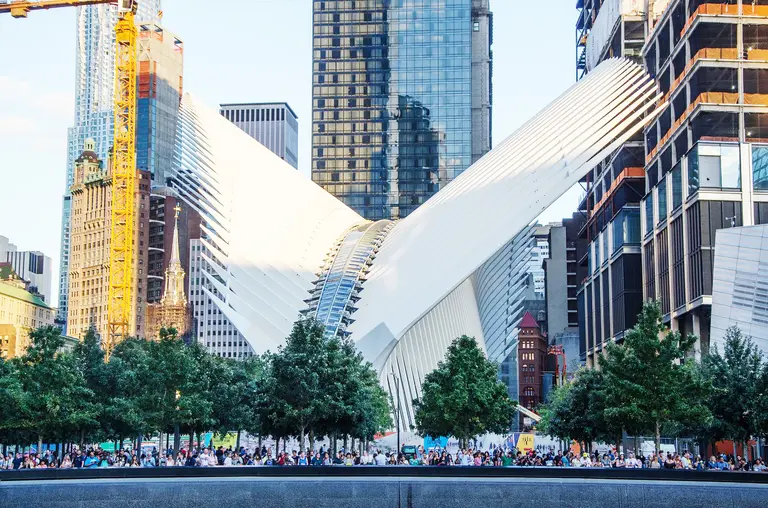
The MTA’s announcement of possible plans to close the L train for months or even years at a time to repair the Hurricane Sandy-damaged Canarsie Tunnel has businesses scrambling and commuters (the train has 300,000 riders on the average weekday) fearful. Data mapping company CartoDB offers a bit of “location intelligence” to better understand the consequences of a shutdown for people living in Brooklyn and, more importantly, what some realistic alternatives to the L train might be. For example, shuttle buses: "If the shuttle bus takes 20 minutes, we are able to calculate the best choices for riders along the L needing to get to Manhattan. Should they go all the way to Lorimer and take the shuttle bus or should they transfer earlier at Myrtle-Wyckoff to the M train or at Broadway Junction to the A?"
Will shuttle buses save the day?
January 19, 2016

Confirmed: Calatrava’s WTC Transportation Hub Will Open First Week of March!

The Port Authority has announced today in a press release that the World Trade Center Transportation Hub—anchored by architect Santiago Calatrava's Oculus–will open the first week of March. The hub will link the World Trade Center PATH station and "enable travelers to have a seamless connection with 11 New York City subway lines and the East River ferries in addition to access to PATH trains."
What about the mall?
January 15, 2016

Study Suggests Competition From Uber May Curb Cabbie Rudeness

Is the rise of car share services like Uber and Lyft making taxi drivers nicer? The Washington Post reports that according to research presented this week by the Technology Policy Institute's Scott Wallsten, complaints are down in New York and Chicago, including those about general rudeness, busted A/C, and that bit about the credit card machine not working. The drop in complaints corresponds with the rise of availability of Uber and Lyft in those cities, they claim.
What are New Yorkers complaining about less
January 14, 2016

The World Metro Map Mashes Up 214 Subway Systems

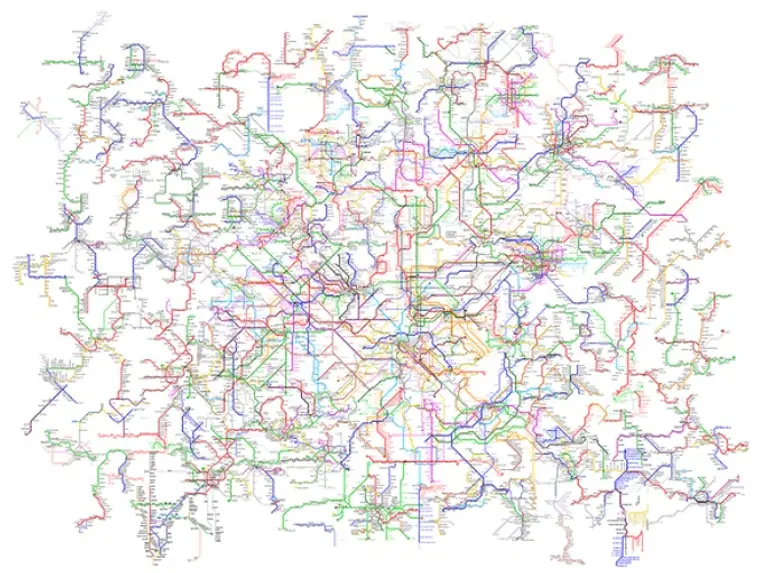
At first glance, it might look like a metro for some city you're not familiar with, perhaps Berlin or Beijing, but this map is actually a combination of almost all those cities that might come to mind. Titled The World Metro Map, it's a mashup of 214 subway systems, totaling 791 lines and 11,924 stations (h/t Cool Hunting). New York-based collective ArtCodeData teamed up with non-profit Open Access to create the map as a representation of "human mobility" explored through the unifying element of subways. The result is a "digital collage" that's colorful, geometric, and provides a new view of world transportation.
Learn more
January 11, 2016

Governor Cuomo to Transform the Subway With Free Wi-Fi, USB Chargers, and Mobile Payment

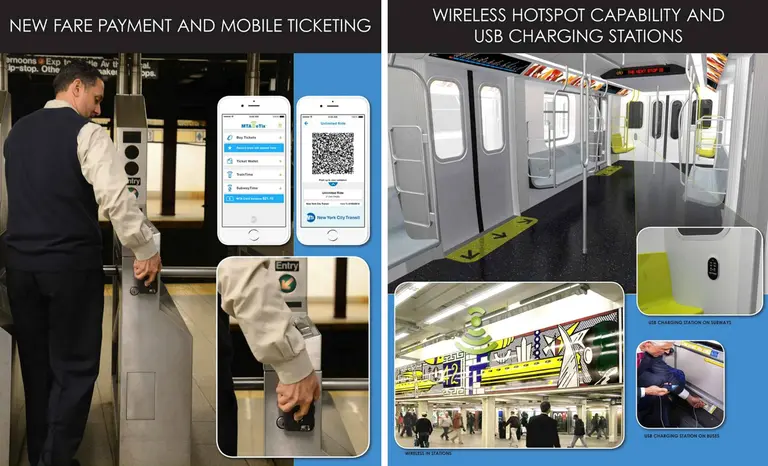
Is there anything in NYC that Governor Cuomo does like? He started his crusade to overhaul our infrastructure back in July when he revealed renderings for a $4 billion update to LaGuardia Airport. But this past week he pulled out all the stops, starting with a $3 billion redevelopment of Penn Station, a $1 billion expansion of the Javits Center, and now, a massive undertaking to "modernize and fundamentally transform" the MTA and the subway. Curbed reports that the Governor's latest plan includes expediting the addition of more countdown clocks, adding contactless payment by 2018, equipping all stations with Wi-Fi by the end of this year and cell phone service by the end of 2017, and outfitting both subways and buses with USB chargers.
More details right this way
January 6, 2016

$1.7B Light Rail Connecting the Brooklyn-Queens Waterfront Proposed

The dream of a Brooklyn-Queens light rail is moving further into the realm of reality. Back in July last year, 6sqft reported that an advisory committee comprised of developers, transportation experts and civic organizers was in the midst of forming to address the need for a more robust transportation system that could connect underserved, but booming, areas of Brooklyn and Queens. Now as the Daily News tells us, a non-profit advocacy group called Friends of the Brooklyn Queens Connector has officially materialized to tackle the issue, and they've just released a detailed proposal revealing the route and the potential design the modern streetcars could take on.
Find out more about the proposal here
January 4, 2016

94 Years Ago Today, NYC Debuted the World’s First Three-Colored Traffic Lights

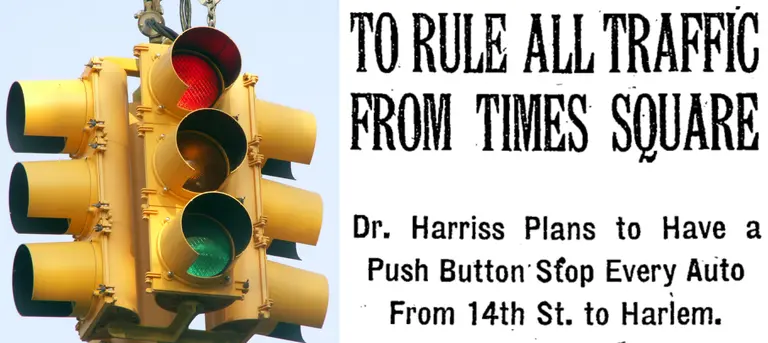
Did you know the three-colored traffic light, now a staple in most of the world, was invented right here in NYC? The year was 1922, and special deputy police commissioner Dr. John F. Harriss tested his system of lights to save time for "both the pedestrian and the motorist." Today, on the 94th anniversary of the lights' installation, the Times took a look back at a historic article the paper published at the time. It described how Harriss "began experimenting yesterday with powerful signal lights which will be installed from week to week until traffic in most of Manhattan will be simultaneously started and stopped by red, green and yellow lights all operated by a single switch in Times Square."
The rest of the history this way