Transit

January 25, 2017

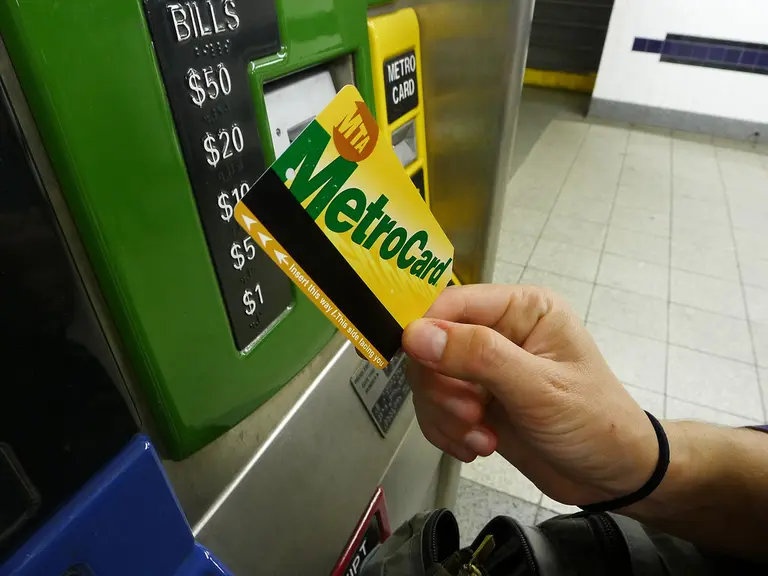
MTA approves fare hike, monthly MetroCard will increase to $121

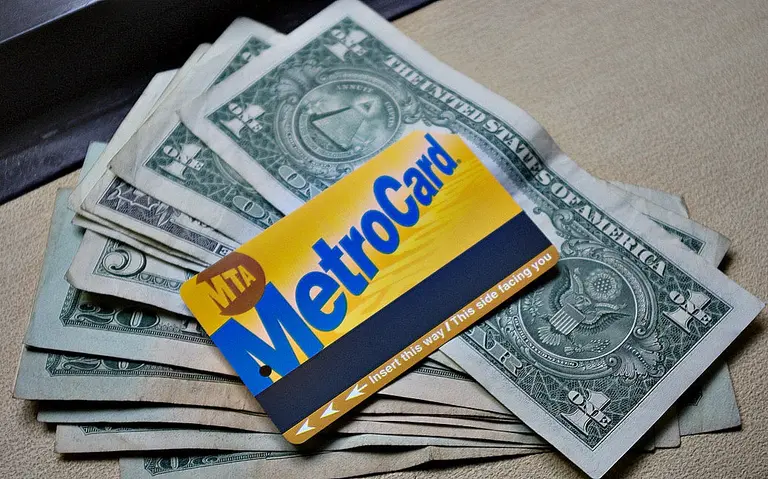
This morning MTA officials voted in favor of a subway and bus fare hike, which will go into effect March 19, writes The Times. The transit agency opted not to increase per-ride costs to $3, as previously floated, but to instead up monthly and weekly MetroCard prices from $116.50 and $31 to $121 and $32, respectively. Moreover, although the base price of a ride will not see an increase, there will be a decrease in the "bonus" riders get when they add money to their cards. This will drop from 11 percent to just 5 percent.
find out more here

January 25, 2017

Trump’s infrastructure plan may include $26B+ for NYC’s Gateway Project and Second Avenue Subway

Reporters at McClatchy obtained documents that the Trump transition team provided to the National Governor’s Association detailing 50 projects across the country that would take priority under the President's proposed $1 trillion infrastructure plan, and among them are two NYC-based projects. The Gateway Project, which would repair the aging and Sandy-damaged Hudson River rail tunnels and build a new one, would cost $12 billion and create 34,000 jobs. Phases two and three of the Second Avenue Subway would cost $14.2 billion and create 16,000 direct jobs.
Get more details this way
January 24, 2017

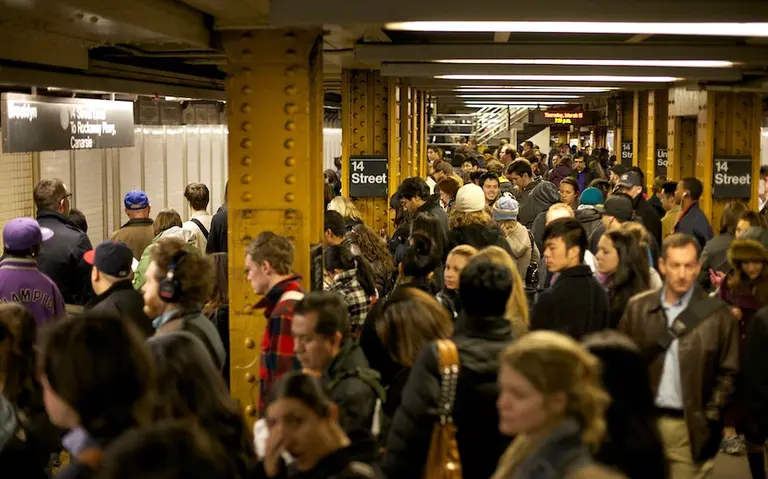
MTA board members admit subway service is terrible

On Monday, numbers released by the MTA served to confirm something we've all known for quite some time now: NYC subway service sucks. More than 60,000 delays plagued weekday service in November 2016, an increase of nearly 10,000 delays over the previous November. The less than favorable figures are a major sore spot for the agency, which is hoping to approve a 25 cent fare hike this week that would bring the cost of a single swipe to $3.
more details here
January 20, 2017

VIDEO: Watch the MTA clean subway tracks with their new Mobile Vacs

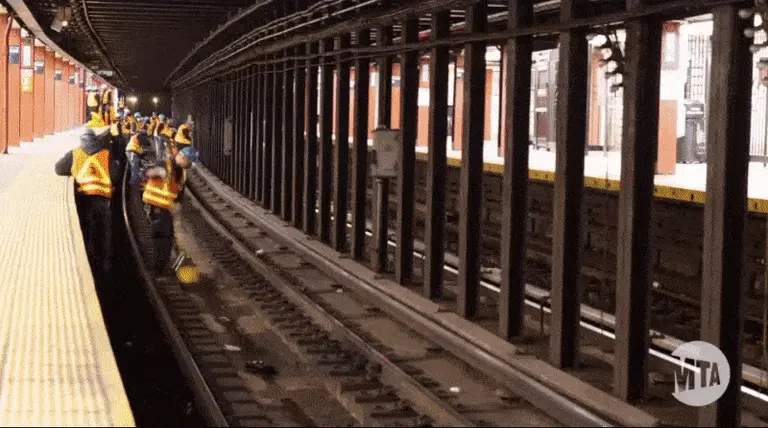
This past May the MTA recorded 50,436 subway delays, 697 of which were caused by track fires that could have been ignited by the 40 tons of trash that are removed from the system every day. To curb this ongoing issue, the agency announced in August "Operation Trash Sweep," an initiative that upped the frequency by which the 622 miles of tracks get cleaned. At the time, the MTA said it would also employ individually-operated Mobile Vacs that workers can use to quickly suck up trash. Yesterday, the agency released a video of the Vacs being tested, which not only shows their incredible force, but gives an overview of how the Operation is shaping up.
Watch the full video here
January 20, 2017

MTA backs plan to raise subway and bus fare to $3 come March

At a board meeting over the summer, the MTA began discussions about increasing subway and bus fare to $3 by 2017 "in an effort to raise more than $300 million annually," as 6sqft reported at the time. The Daily News has now learned that the agency will officially recommend the four-percent increase at their board meeting next week. Though they'll be passing on another option that would've kept fares at $2.75, the hike will increase the bonuses that come with re-loading one's MetroCard from 11 to 16 percent, "an extra 96 cents for every $6 purchase."
Find out more
January 18, 2017

POLL: Will construction begin on a new Port Authority bus terminal by 2021?

After stalling repeatedly over design disagreements, budget woes, and funding squabbles, NJ.com reports that The Port Authority said it hopes to have a new midtown Manhattan bus terminal built in New York by 2030, shovels in the ground by 2021 and be "well underway" by 2026. Though some lawmakers expressed doubt about the ambitious schedule, Steven P. Plate, Port Authority chief of major projects, said at a Legislative Oversight Committee joint hearing about the agency's $32 billion revised capital plan, "We will have full environmental approval, permits in place and construction well underway" according to that timeline.
Think it will happen?
January 16, 2017

Contract expires for 44,000 NYC subway and bus workers

After the Transport Workers Union and the MTA failed to reach a deal last night, the contracts expired for 44,000 subway and bus workers who are demanding a higher pay raise than the two percent rate of inflation that the MTA is offering. In a statement, TWU Local 100 president John Samuelson said, “Our position will not […]

January 16, 2017

With the rise of ride-hailing apps, daily yellow cab trips fell 27 percent since 2010

6sqft recently shared analysis that 3,000 ridesharing vehicles could replace the city's fleet of 13,587 taxis. And while this was more a comment on how carpooling can decrease congestion and emissions, it also points to a changing landscape for yellow cabs. In a piece this weekend, the Times looks at how taxis have fallen out of favor with New Yorkers since apps like Uber and Lyft came onto the scene; these vehicles now number more than 60,000. In 2010, for example, yellow cabs made an average of 463,701 trips, 27 percent more than the 336,737 trips this past November, which also resulted in a drop in fares from $5.17 million to $4.98 million. And just since 2014, the cost of a cab medallion was cut in less than half of its former $1.3 million price tag.
Read more on this trend
January 12, 2017

NYC records fewest traffic fatalities ever

Traffic fatalities in the city have dropped 23 percent since the start of the Vision Zero initiative in 2013, Mayor Bill de Blasio announced Wednesday. “Under Vision Zero, we have now seen traffic fatalities in our city decline for three straight years, strongly countering national trends,” he said in a news statement. The mayor asserted […]

January 11, 2017

Citi Bike to add ‘Laserlight’ projection feature to improve rider safety

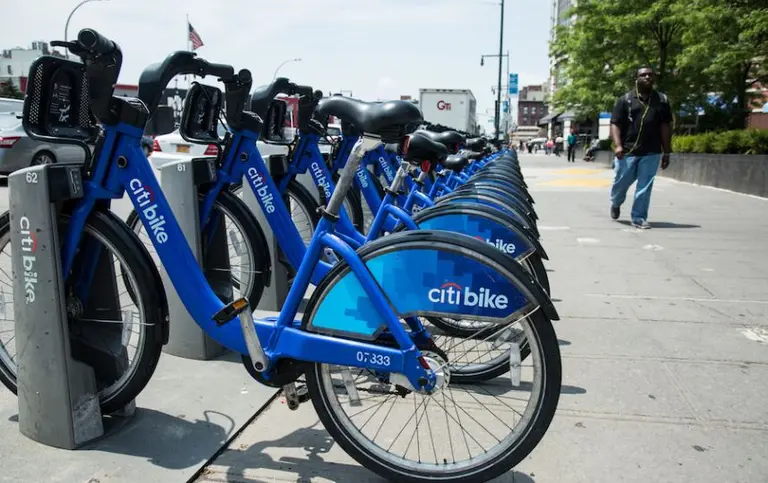
Citi Bike is gearing up for a high-tech upgrade this winter in the form of lasers, reports Metro. The bike share's operator, Motivate, and the designers at Blaze have teamed up to outfit 250 bikes with Laserlight, a safety light that combines a 300 lumen LED with a forward projecting laser that continuously beams an image to warn cars and pedestrians a bike is approaching.
find out more here

January 10, 2017

5th Avenue needs pedestrian lanes to accommodate Trump, says transit expert Janette Sadik-Khan

Reserving three of 5th Avenue's five traffic lanes for pedestrians will ease the traffic paralysis that President-elect Donald Trump's continued residence in his 56th Street tower has caused, former NYC Department of Transportation Commissioner Janette Sadik-Khan argues. In an op-ed for the New York Times yesterday Sadik-Khan, a principal with Bloomberg Associates and a key player in the introduction of the Times Square Pedestrian Plaza, angled 5th Avenue's traffic problem as a bipartisan issue that requires change to get better. With the President-elect saying he plans on visiting his Manhattan home frequently even once he has moved to the White House, it is clear New York will need to adapt or risk forever needing to budget an extra three hours to get through Midtown.
Without big changes, the chaos isn't going to improve
January 10, 2017

Study: Getting to work by public transit is easiest in NYC, San Francisco and D.C.

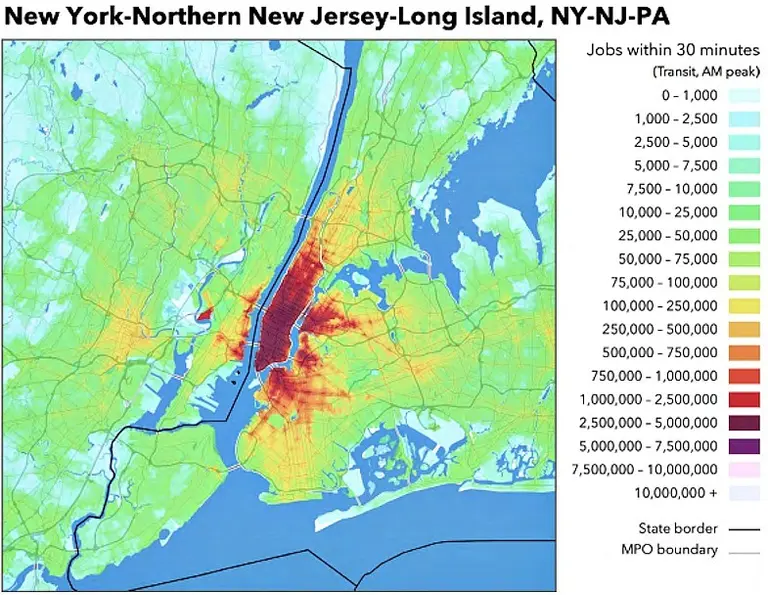
A recent report from the University of Minnesota takes a look at major U.S. cities in terms of the number of jobs that are accessible to city residents via transit; Streetsblog brings us the news that you'll find the best transit access to jobs in New York, San Francisco, Chicago, D.C., Los Angeles, Boston, Philadelphia, Seattle, San Jose and Denver. The study concludes that in those (top 10) cities, "accessibility ranks all exhibit a combination of high density land use and fast, frequent transit service." According to the report, public transit is used for about five percent of commuting trips in the U.S., making it the second most widely used commute mode after driving. But the commute mode share accorded to transit varies quite a bit from city to city: 31 percent in the New York metropolitan area; 11 percent in Chicago; 8 percent in Seattle.
Find out more and compare cities
January 6, 2017

Five ‘one-seat ride’ options to JFK Airport proposed by Regional Plan Association

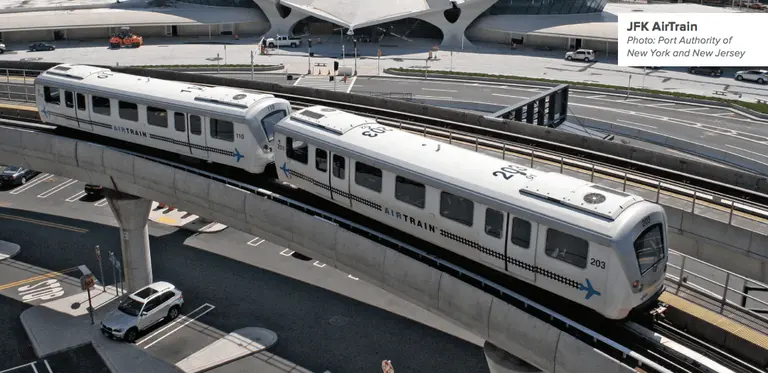
Earlier this week, Governor Cuomo unveiled his latest nine-figure infrastructure proposal, a $10 billion overhaul of JFK Airport. As 6sqft explained, the plan address three main issues: "unifying all the terminals with an interconnected layout so the airport is more easily navigable; improving road access to the airport; and expanding rail mass transit to meet projected passenger growth." This final point included a direct rail link so that passengers traveling to and from Manhattan wouldn't need to ride the subway to connect to the AirTrain. The Regional Plan Association decided to explore this idea further, and in a report out today they've detailed five different approaches for a "one-seat ride" to JFK, which includes an extension of the Second Avenue Subway and a new underground tunnel.
All the possibilities right this way
January 6, 2017

Before & After: 10 NYC blocks and enclaves transformed by pedestrian-friendly design

New York clocks in more steps on average than any other state in the country, and that number is most definitely skewed by New York City where more residents hit the pavement than the gas pedal. But in a town that's seemingly dominated by pedestrians, car culture maintains the right of way. According to Vision Zero, NYC's program to reduce traffic-related fatalities, being struck by a vehicle is the leading cause of injury-related death for children under 14, and the second leading cause for seniors. Providing more public space for pedestrians has become an increasing concern for the city over the last decade, and as such, a multitude of plans have been put forward to create sanctuaries from traffic or to reconfigure streets to keep people safe. But beyond preventing traffic accidents, by planting more trees, expanding sidewalks and bike paths, and installing seating, these urban renewal projects have also been key in promoting walking, biking, health and ultimately a more desirable and habitable New York City.
see more here
January 5, 2017

Port Authority’s ‘quid pro quo capital plan’ for NY and NJ stifles infrastructure improvements

Yesterday, 6sqft revealed Governor Cuomo's plan to give JFK Airport a long overdue overhaul, an endeavor that would cost nearly $10 billion, funded just over two-thirds in part by the private sector with another $2 billion provided by the government. Given that most of New York and New Jersey's regional transportation infrastructure (including bridges, tunnels and airports) falls within the joint jurisdiction of the Port Authority of New York and New Jersey, New Jersey will as a result receive similar funding for a project of their own—and that's a problem according to The Record reporter Paul Berger. Yesterday, Berger published a confidential document obtained from the Port Authority that details how $30 billion will be spent on infrastructure over the next 10 years. While the purpose of the Port Authority is to divvy up cash across the region based on need, as Berger writes, the document simply shows how "interstate jealousies over funding" have led to a "quid pro quo capital plan" that completely bucks this objective.
more details here
January 4, 2017

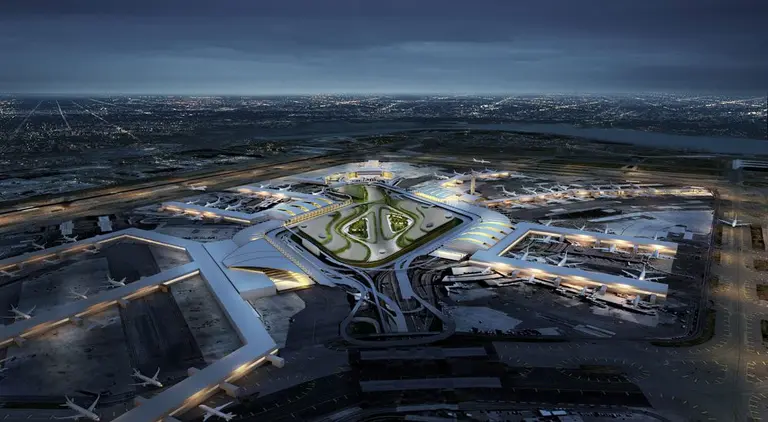
REVEALED: $10 billion overhaul announced for JFK Airport – see new renderings

"We shouldn’t settle for second best on anything,” Governor Cuomo proclaimed at the opening of the Second Avenue Subway this past weekend, and he was serious. This afternoon Cuomo announced that John F. Kennedy International Airport (JFK) will receive a massive overhaul that will transform the dated hub into a modern, state-of-the-art facility that can finally "meet the needs of a 21st century economy." As laid out by the governor's office, the revamp will address three main issues: unifying all the terminals with an interconnected layout so the airport is more easily navigable; improving road access to the airport; and expanding rail mass transit to meet projected passenger growth. In 2016 the airport served 60 million passengers, and this number is expected to increase to 75 million by 2030 and 100 million passengers by 2050.
more details and renderings this way
January 4, 2017

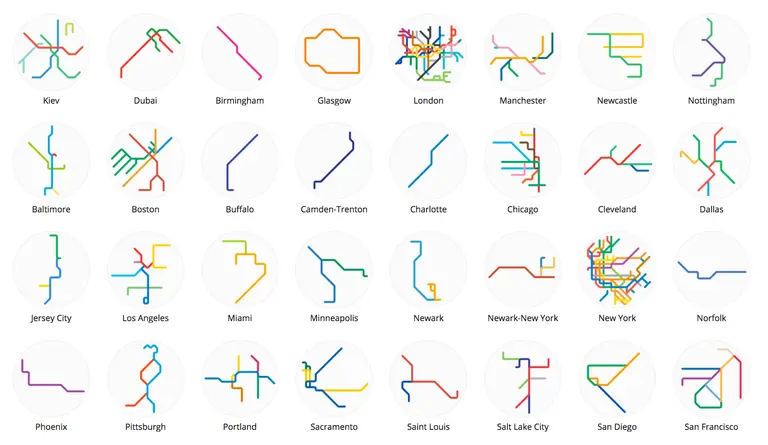
Mini Metros shrinks and simplifies 220 transit systems from around the world

When D.C.-based graphic designer and transit enthusiast Peter Dovak tried his hand at creating a transportation-based app, he was taken by the clean, simple appearance of the icons he'd made for the navigation bar--small circles containing shrunken versions of metro or light rail systems. He's now designed them for 220 cities as part of his ongoing Mini Metros series, and made the colorful maps available as prints, mugs, and magnets.
Get a closer look
January 4, 2017

3,000 Ubers could replace NYC’s fleet of 14,000 taxis

If the city is looking to cut down on emissions and reduce traffic, here is some food for thought courtesy of folks over at MIT. Researchers at the Computer Science and Artificial Intelligence Lab (CSAIL) have determined that 3,000 ridesharing vehicles have the potential to do the same amount of work as NYC's fleet of roughly 14,000 taxis—that is if New Yorkers are willing to use rideshare carpooling like Lyft Line and Uber POOL.
find out more here
January 3, 2017

MTA Chairman announces retirement following Second Avenue Subway opening

The opening of the Second Avenue subway was MTA Chairman Tom Prendergast’s final achievement in the 25 years he has worked for the organization. The chairman announced on Monday he is retiring from public service in a joint statement with Gov. Andrew Cuomo. Prendergast expressed special pride for the Herculean effort to secure a January ribbon […]

January 1, 2017

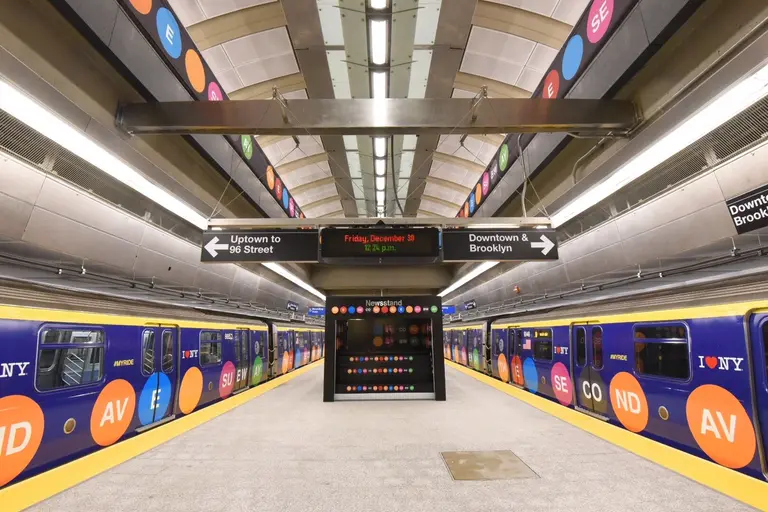
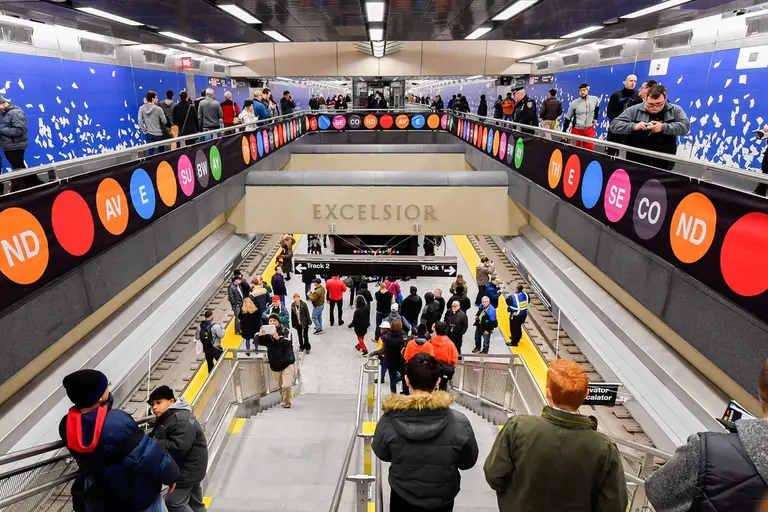
Nearly 100 years later, the Second Avenue Subway officially opens!

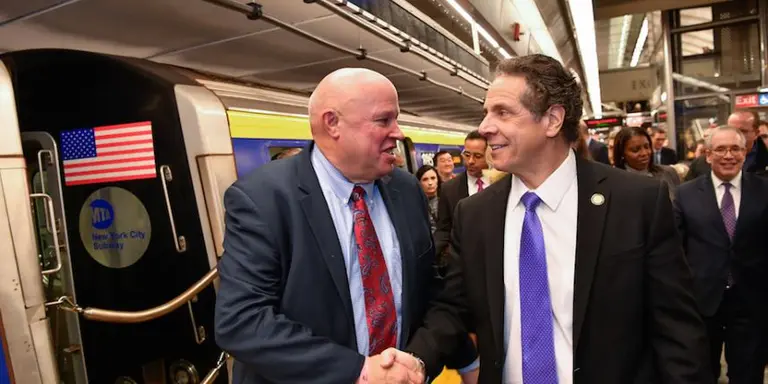
Today history is made, as January 1, 2017 marks the official public opening of the long-awaited Second Avenue Subway. The New York City transit endeavor has been in the works for nearly a century, and finally after countless delays and an eye-popping $4 billion bill, straphangers on the far Upper East Side will have access to three brand new stations at 72nd, 86th and 96th Streets. Just before midnight yesterday evening, Governor Cuomo, MTA CEO Thomas F. Prendergast, city and state pols, members of President Obama’s Cabinet, local community members, and many of the workers who helped build the new line’s massive underground tunnels and stations, took the line's inaugural ride.
photos this way
December 30, 2016

NYC’s best and worst subway lines of 2016

Despite the fact that its impending shutdown dominated negative subway headlines this year, the L train is tied for one of the three best-performing lines, along with the 1 and 7. The worst? The A and E. The rankings come from the Straphangers Campaign's 2016 State of the Subways Report Card (h/t Gothamist), which graded the system's 20 lines based on six indicators from MTA transit data--service regularity, breakdown rate, crowding, cleanliness, and in-car announcements.
More findings ahead
December 29, 2016

Nearly 14 million Citi Bike trips were taken in 2016

Bicyclists are as much a part of New York City as tourists in Times Square. Proof of that can be found in new data released Thursday by the mayor’s office. Ridership for New York’s bike-sharing program Citi Bike reached nearly 14 million trips in 2016, recording its third-straight year of growth. The number of trips was about 40 […]

December 27, 2016

Watch 24 hours of NYC subway activity in one hypnotizing map

Who knew watching the movements of the New York City subway could be such a relaxing activity. A new data visualization created by Will Geary shows a day's worth of subway routes in motion in one mesmerizing creation. To build the map, Geary used Processing and Carto software, as well as the framework of another tutorial from Juan Francisco Saldarriaga, pulling data from the MTA and Google Maps to determine the flux. And for some extra fun, the whole thing is set to "Rhapsody in Blue!"
Watch the subway map on the move