
Policy

November 10, 2014

Urban Reviewer: A New Map Tool Reveals NYC’s Vacant Lots Ready for Revitalization

New York City is home to some of the world's most spectacular parks, and though we may pride ourselves on these well-tended green spaces, more than a handful of neighborhoods don't see more than a single tree for every 60-foot stretch of concrete. Enter 596 Acres, a grassroots land access nonprofit looking to change all of this with the Urban Reviewer. Developed with the help of a team of volunteer researchers, urban planners and designers, this new online tool allows anyone to view the staggering amount of publicly-owned lots that once had an urban renewal plan in the pipeline but were scrapped due to bureaucracy. By mapping out all of the vacant spaces across the city, 596 hopes that we as a community can take a top-down approach to turning these urban blights into public gardens, play lots, and spaces where people can “co-create.”
Find out more here
October 31, 2014

$129 Billion Worth of NYC Real Estate Is Within New FEMA Flood Zones

Since FEMA (Federal Emergency Management Agency) updated its flood-zone maps after Superstorm Sandy, we learned that it could cost the city $5 billion to comply with the new regulations, as 60,000 additional buildings were identified as being within the flood zones. This brings the total to 84,000 buildings worth over $129 billion, according to a new report released by the Office of New York City Comptroller Scott Stringer on the two-year anniversary of Hurricane Sandy.
What does this mean for the city?
October 29, 2014

Forget Showrooms, Developers Turn to Oculus Rift to Virtually Immerse Buyers in Pricey Properties

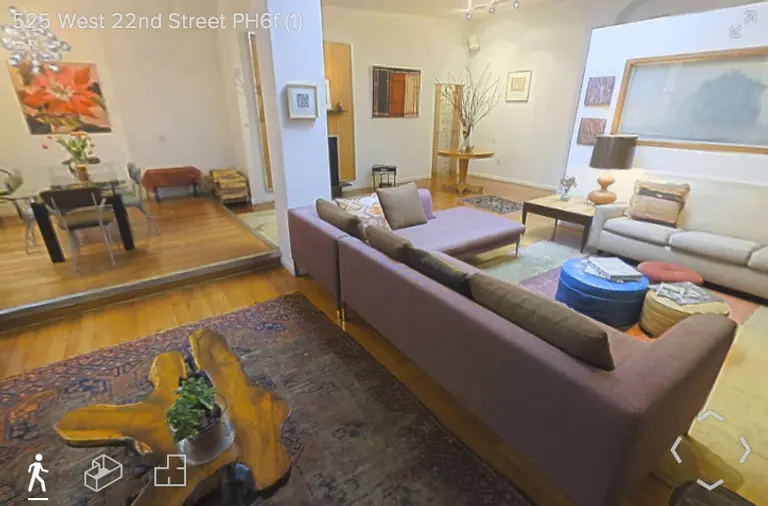
Though more and more house hunters are back to buying off of blueprint in this hot real estate market, that hasn't stopped developers from tricking out their sales offices with hopes of trumping the competition. Ultra-detailed scaled models line spaces, and the priciest of couches and countertops fill life-sized mockups blocks away from the actual address. More recently, buildings like 50 West have built out entire theaters wrapped with screens intent on showing buyers the panoramic city views their shelling out millions for. Clearly, cost is not a concern. But watch out, there's a new group on the scene ready to really shake things up. Architecture visualization firm ArX Solutions has turned to a piece of virtual reality tech that everyone seems to be talking about: Oculus Rift. With their specially designed virtual reality tours, clients can see exactly what its like to walk through a home with all their sensations engaged. Cool? Absolutely. But this tour doesn't come cheap. Like the lofty homes it features, a trip with Oculus Rift rings in at a jaw-dropping $95,000.
Find out more about taking an Oculus Rift real estate tour
October 29, 2014

Crowdfunded MAID Microwave Suggests Meals Based on Your Eating and Fitness Habits

That line about New Yorkers using their ovens as shoe storage is getting pretty old (thanks Sex and the City), but a new smart microwave may just make it viable to ditch the stove for good. Called MAID (Make All Incredible Dishes), the product is being crowdfunded on Kickstarter by creator SectorQube, and not only can it perfectly nuke your meals, but it can suggest what dishes you'll like based on your cooking habits and fitness. MAID is 1.3 cubic feet and provides access to a crowdsourced recipe store, gesture and voice commands, and a smartphone app that will alert you when dinner's up. The recommendation feature, definitely the highlight of the product, will offer meal options to complement your diet as well as suggest a run if you just indulged in a 2,000-calorie, carb-loaded pizza.
More details on the smart microwave
October 27, 2014

Lights, Camera, Annoyance: Why NYC Is the New Hollywood and Not Everyone’s Happy About It

Film crews on your block: Yet another thing New Yorkers love to hate, whether it’s a case of grumble-brag or a genuine inconvenience. Some people love the opportunity to watch their favorite shows being made (and maybe get a peek at their favorite stars) and argue that it boosts the local economy. Others give the whole gig a big two thumbs down.
Find out who’s filming, where and when–and how you can make the most of it.
October 22, 2014

New Mapping Tool Urban Layers Tracks the Age of Every Building in Manhattan

A new mapping tool called Urban Layers lets users see almost every building still standing in Manhattan today and reveals exactly when it was built. The data goes back as far as 1765. The interactive map by Morphocode provides insight not only into the history of a specific building, but into the evolution of entire neighborhoods, too. And for New York City history fanatics like us, this user-friendly tool is definitely going to come in handy.
More on the mapping tool here
October 20, 2014

Complying with Current FEMA Regulations Could Cost the City $5 Billion

Following Superstorm Sandy, FEMA (Federal Emergency Management Agency) updated its flood-zone maps for the first time since 1983, more than doubling the included buildings to 70,000. Therefore, many more property owners are facing the decision of whether to stormproof their homes or pay up for insurance premiums that would go up as much as 18%. But going with the former choice is not as easy as one may think. FEMA guidelines don't take into account the unique makeup of New York City with its rowhouses and high-rises, so to comply with the current regulations it would cost the city more than $5 billion, according to studies produces by Crain's. Those who would be absorbing the costs include middle-class homeowners; NYCHA, which owns more than 25% of rental units in the flood zone ;and owners of large apartment towers, which account for 61% of the 5.5 million properties in FEMA's National Flood Insurance Program. All of these entities must follow the same guidelines as the plan is laid out now, but the city and a group of nonprofits are asking the agency to make changes to the insurance program.
More about the issue ahead
October 16, 2014

GKilo and ClogG: Thin-gk’s Minimal Med-Tech Kitchen Devices

The Italian designer-dreamers at Thin-gk developed two minimal med-tech objects for the kitchen. Featuring wooden geometrical shapes and rows of LED lights, they interact with the user from a simple human touch. While GKilo is both a clock and a scale, ClogG is a modern version of a clock that brings a med-tech touch to the daily act of cooking.
Find out more about this med-tech cooking designs
October 15, 2014

NYU Gets Green Light for Village Expansion; Locals Vow to Appeal the Decision

The battle between New York University and local residents and community preservation groups just got a little fiercer, as just yesterday the appellate court overturned a previous decision by the New York Supreme Court that prohibited the university's $6 billion, 1.9 million-square-foot expansion plan. NYU now has the green light to move forward with their colossal project, which includes taking over "implied park land" that has been used by the public for years. Local community groups vow to appeal the decision. The Greenwich Village Society for Historic Preservation, Assemblywoman Deborah Glick, NYU Faculty Against the Sexton Plan, Community Board 2, and local residents, filed the lawsuit against the school in 2012.
More on the latest ruling and what it means for NYU and the Village
October 8, 2014

New App Lets Users Send 20th Century Postcards with a Then-and-Now Feature

Perusing those bins of vintage postcards at flea markets is always a treat, but who wants to mail and part ways with such fun pieces of nostalgia? A new app called ScenePast: Americana Road Trip, however, lets users send 20th century postcards digitally, so you can share your favorite scenes without tapping into your personal collection. If that wasn't enough, ScenePast also has a feature that provides the current-day view of the streetscape depicted on the postcard--a fun tool that is sure to prove addictive for history buffs.
More on the app here
October 7, 2014

openhousenewyork Weekend App Will Enhance Your Touring Experience

As if we weren't looking forward to openhousenewyork Weekend enough, a new app to help guide and organize tour goers has us even more excited. Created through a partnership with dsgnfix, the free, location-based iPhone app "enables users to search, discover, and share design destinations and experiences." During OHNY weekend (October 11-12) those with the app downloaded will be able to scroll through all of the 150 free Open Access sites, organized by the user's real-time location.
More on the OHNY Weekend App
October 1, 2014

Could Jet Taxis Make Waves in NYC?

New York is often criticized for being a city that doesn't take advantage of its waterfront location in the way that Chicago or Baltimore, for example, do. But with new developments like Brooklyn Bridge Park and ideas for floating pools, we are well on our way to becoming an aqua-fied metropolis. But are we ready for the newest water transportation model, the jet taxi? Luca Solla and Pierpaolo Lazzarini of Italian-based company Jet Capsule are launching their 8-12-passenger vehicle in their home country in 2015, but expect other major cities around the world will want to get in on the action. They envision the jet functioning in hybrid, electric, private, personal, diving, and ambulance versions.
More on the sleek vehicle here
September 30, 2014

NYC Buildings That Add Solar Panels Will Now Get an Even Bigger Tax Break

New York is serious about going green and Governor Cuomo just signed into law a bill to extend—and double—the possible tax breaks given to those who install solar panels on their properties. A press release notes that the break will offer a rebate of 5 percent on either the solar panel installation cost; property taxes the year panels are installed; or $62,500—whichever is less. The new bill is meant to offset the 25 percent higher cost of installing solar systems in the city due to stringent regulations and the complexity of building sites.
Find out more on here
September 24, 2014

Pressed Objects: Floris Wubben’s Brutally Tactile Designs for the Human Touch

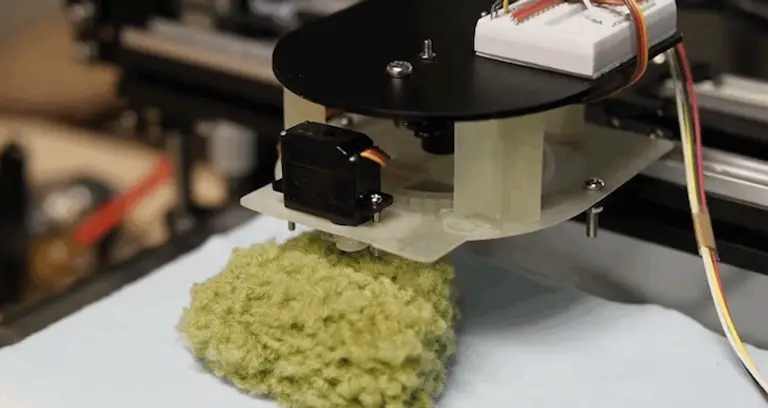
Tactility is especially important in today's day and age, as we're in constant competition with a world full of screens. That is the beauty of Floris Wubben's Pressed Objects; they aim to bring back textures to our day-to-day life. Made from pressed epoxy clay, the objects come in the shape of vases, flowerpots, and recipients, all created by a coalition between the hands and a machine.
Learn more about this textured design
September 19, 2014

INTERVIEW: Architect Adam Kushner on Building the World’s First 3D-Printed Estate

3D printing has been making the design and tech rounds lately, from ceramics and construction bricks to cars and mini castles. But there's one project in the works that's looking to blow the rest out of the water. New York City-based architect and contractor Adam Kushner of KUSHNER Studios plans to build the world's first 3D-printed estate in Gardiner, New York, which will include a pool, pool house, and 2,400-square-foot main house--all of which will be constructed using this new technology. Kushner has teamed up with Italian inventor and engineer Enrico Dini, who will ship a modified version of his D-Shape printer to New York in January. Dini's printer uses his patented magnesium-based binding process combined with a material like sand to render stone-like objects. Kushner also teamed up with Enrico's local contact James Wolff, co-founder of Deep Space Industries, which works with NASA on asteroid prospecting, mining, and processing. The three men, along with Nigel Woods, founded D-Shape Enterprises New York. Adam's construction company In House Group, Inc. will hire D-Shape Enterprises to build the estate.
Read our interview with Adam Kushner and get an inside take on the project
September 17, 2014

World’s First OLED Panel Will Bring Buildings 40,000+ Hours of Energy-Efficient Lighting

New York buildings racking up big energy bills may soon be able to breathe a sigh of relief. Thanks to new OLED (Organic Light Emitting Diode) technology, lighting will be getting greener, healthier and much more energy efficient. This November, LG Chem, Korea's largest chemical company, will bring their new OLED panels into production. The new panels will boast 100 lumens per watt, a life of 40,000+ hours (a world's best, outperforming Osram, Philips, and Panasonic; and almost on par with conventional LEDs), and be flexible enough to be used in everything from automotive to architecture. Currently plans are to focus distribution on markets in North America and Europe, and so far LG Chem has secured contracts with more than 50 lighting companies, including Atlanta-based Acuity Lighting.
More on the technology here
September 12, 2014

Moleskine’s New Livescribe Notebook Is Like an iPad Made From Paper

Moleskine, the legendary notebooks used by artists and writers including Ernest Hemingway and Pablo Picasso, just launched their new pad. Called Livescribe Notebook, it comes with a Livescribe pen and is, as always, made from acid-free paper. Much like an iPad, it lets you write, draw, and make notes, allowing the 'intelligent' pen to automatically back up and transfer your ideas from paper to screen.
Learn more about the new Livescribe Notebook
September 10, 2014

You May be Able to Print Your Own Solar Panels Soon

Are you one of the many eagerly awaiting the iPhone 6 and iWatch? Well, pretty soon, you may be able to print your very own solar panel to serve as an energy-generating skin or case for your new device. Scientists at CSIRO, Australia's national science agency, along with those at Melbourne and Monash universities, report that they hope to offer the printed solar panels for low-power applications within the next few years. Printed on plastic--and faster, cheaper, and easier to use than traditional silicon panels--they could mean big things for a gadget-obsessed world, as well as for simple building and design applications.
More on the technology here
September 9, 2014

New Adaptive Architecture Project Explores How Physical Spaces Can Morph Based on Heat

Generally, if a building starts moving, it's a very bad thing. But a new shape-shifting architecture concept from the students at Barcelona’s Institute for Advanced Architecture of Catalunya proves otherwise. Responding to the notion that as buildings become smarter and greener they should also be responsive to their external environments, the project, dubbed Translated Geometries, explores how physical spaces could someday morph based on various environmental inputs.
More on the new technology here
September 8, 2014

Frank Gehry Bounces Back from WTC Snub with New Construction Technology Endeavor

It was big news last week that Frank Gehry's designed plans for the Performing Arts Center at the World Trade Center were axed by execs of the site. Though he may have felt slightly snubbed, based on quotes he provided to the New York Times, Gehry seemed unaffected overall. His mellow reaction toward the dis is now further substantiated by news that his IT company Gehry Technologies has been acquired by American location technology firm Trimble (the owner of 3D drawing software SketchUp) in order to "transform the construction industry by further connecting the office to on-site construction technologies," according to Trimble.
More on the starchitect's new partnership here
September 3, 2014

Olivier Van Herpt Crafts Beautifully Functional 3D-Printed Ceramics

Dutch designer Olivier Van Herpt has been experimenting with 3D printing for many years. But it wasn't until he made his own machine that he managed to craft the imposing designs he imagined. Olivier created his own extruder and experimented with different types of clay before coming up with his stunning Functional 3D Printed Ceramics collection.
Learn more about this 3D-printed ceramics collection
September 2, 2014

INTERVIEW: Andrew Berman, Executive Director of the Greenwich Village Society for Historic Preservation

There's been a lot of controversy around preservation in New York City as of late, and through it all, the Greenwich Village Society for Historic Preservation (GVSHP) seems to always make its voice heard. From debunking myths about affordable housing and historic districts to advocating for the Village's next great landmark, GVSHP remains on the front lines of the field. Founded in 1980 to preserve the architectural heritage and cultural history of the Village, the organization now includes the East Village, South Village, Far West Village, Noho, and Meatpacking District in its purview. Part of the reason for GVSHP's expansion stems from the tireless efforts of its longtime Executive Director, Andrew Berman. Since 2002, he has overseen the research, educational programming, and advocacy of one of the city's leading preservation nonprofits. We recently sat down with Andrew to learn more about his views on the current state of preservation in the city and where he hopes to take GVSHP in the future.
Read our full interview here
September 2, 2014

Rudolf Stefanich’s SONO Could Help Block Out City Noise and Keep Your Home Quiet

If you're one of the many who love city living but constantly curse the stress-inducing sounds of construction, car horns, garbage trucks, and yelling children, SONO will restore your sanity and bring your home to the pin drop quiet, peaceful state only found in the suburbs. Designed by Rudolf Stefanich, this pebble-shaped device could be applied to all of your home's windows, turning them into a comprehensive noise canceling system.
Find out more here
August 29, 2014

Study Finds That Most People Who Live in Glass Buildings Keep the Shades Drawn

When we talk about apartments in glassy towers we always emphasize the stunning views, ample natural light, and cross ventilation. But according to a study from the Urban Green Council, most residents in these all-glass buildings are not taking advantage of those attributes. The "Seduced by the View" study surveyed 55 glassy buildings around New York City and found that on average, 59% of the window area was covered by blinds or shades. And over 75% of buildings had more than half of their window area covered. Results were similar regardless of time of day, direction the window faced, and whether the building was commercial or residential."
More on the study here