
City Living

July 30, 2015

NYC aka New Netherland: Mapping the 11 Different Cultural ‘Nations’ Within the U.S.

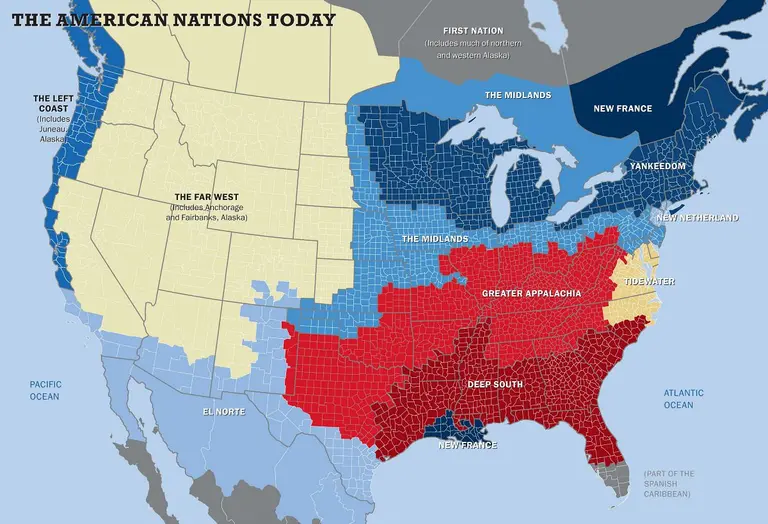
Those of us who live in the tri-state area tend to get accused of thinking the country is made up of the northeast, the west coast, and maybe Florida, and then forgetting about the entire rest of the country. A new map that is part funny, part culturally realistic takes a look at the "11 distinct cultures that have historically divided the U.S.," according to Business Insider. The spot-on map comes from award-winning author and journalist Colin Woodward's newest book American Nations: A History of the Eleven Rival Regional Cultures in North America. In Woodward's map, New York City and northern New Jersey is renamed New Netherland, as it was settled by the Dutch and is a very commercial area. The author describes this nation as "materialistic, with a profound tolerance for ethnic and religious diversity and an unflinching commitment to the freedom of inquiry and conscience."
Find out about the other nations of our nation
July 27, 2015

Should NYC Implement San Francisco’s ‘Pee-Proof’ Paint to Deter Public Urination?

Normally, urinating in public comes with a hefty fine, but in San Francisco, offenders might be spending their money instead on a new pair of clothes and shoes. The problem has apparently gotten so out of hand in the city that the Public Works Department is implementing "pee-proof" paint on walls that are hot spots for people to relieve themselves. The special superhydrophobic coating called Ultra-Ever Dry is liquid repellent, and therefore splashes the urine right back on the person.
More details and a video on the technology
July 27, 2015

VIDEO: Go Behind the Super Antiquated Switchboard of Today’s NYC Subway

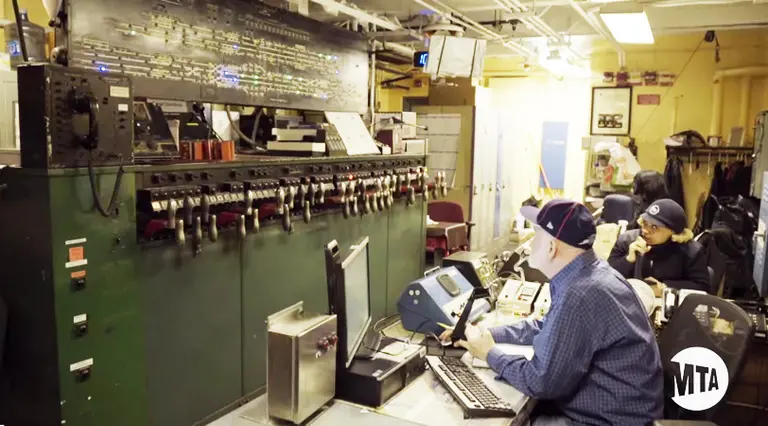
The MTA is showing its age in a new video put forth by the public benefit corporation. "People know the system is old," the narrator of MTA's video opens, "but I don't think they realize just how old it is." The New York City subway system has been running since 1904, and as we previously reported in December, it's been running on the same technology used in the 1930s. In the video, computers are noticeably absent from the West 4th Street Supervisory Tower, which is in control of all of the train movements around the area. Instead there are plenty of pens and papers, as well as old, lever-operated machinery that the railroad industry has long stopped manufacturing. It's no wonder that the MTA has put out this video promoting their Communications-Based Train Control (CBTC) system, a project that aims to modernize the subway.
Watch the incredible video here
July 27, 2015

IKEA Is Selling a Placemat with a Pocket for Your Phone

We're having a hard time deciding whether this design is brilliant or just plain depressing. These new placemats come courtesy of IKEA and are part of their upcoming SITTNING collection, a limited edition series made up of 40 pieces focused in on "the joys of sharing a meal with those you love." The new mats—which will reportedly be called "Logged Out"—will feature a convenient little pouch for you to tuck your smartphone away so you can finally enjoy a meal with your friends without checking Instagram, Facebook, Twitter, email...
More on IKEA's new design here
July 24, 2015

New Yorker Spotlight: Gabrielle Shubert Reflects on Her Ride at the New York Transit Museum

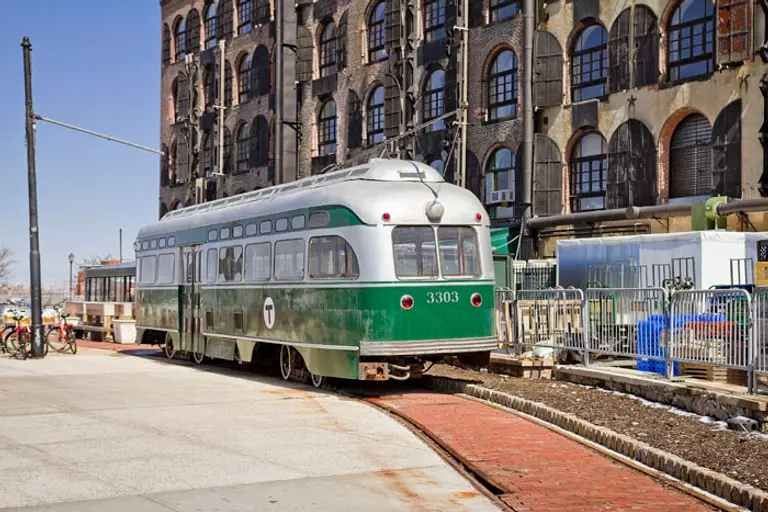
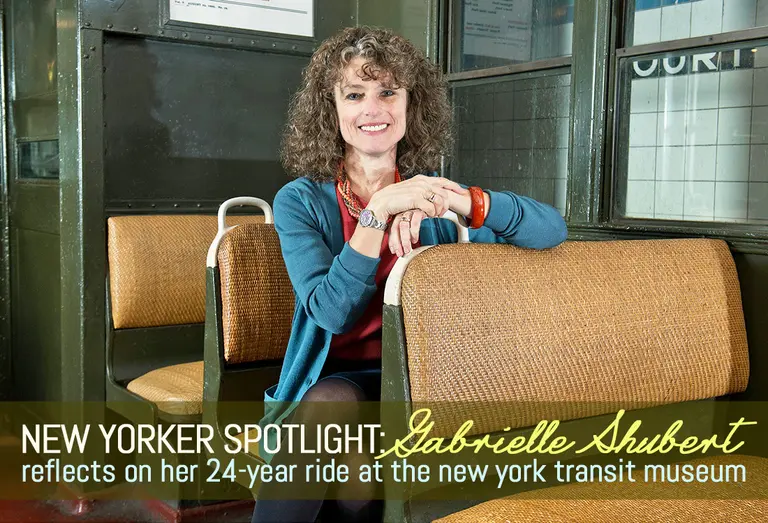
On the corner of Boerum Place and Schermerhorn Street in Downtown Brooklyn is what looks like a regular subway entrance. But upon further inspection, it becomes clear that there's no uptown and downtown platforms here. This is the New York Transit Museum, the largest museum dedicated to urban public transportation in the country. It's fittingly located inside a decommissioned–but still working–subway station. And over the last 40 years, it has told one of New York's most important stories–how mass transit and city development are intricately connected and how public transportation is one of the city's crowning achievements, in spite of its delays and crowded rides. Gabrielle Shubert has served as the museum's director for the past 24 years. She transformed a young institution into a go-to destination for learning about and engaging with urban history. From vintage cars to subway fares, Gabrielle has offered visitors a chance to go behind the scenes and marvel at the wonders of New York City's incredible public transportation system. On the eve of her retirement, we sat down with Gabrielle in one of the museum's vintage cars and found out about her early days as director, the range of exhibits and programming she has overseen, and the institution's bright future.
Read the interview here
July 22, 2015

How You Can Live in a Billionaire’s Row Condo for Free AND Make Six Figures

Get a job as one of their building managers. As DNA Info reports, if you're just a regular Joe or Jane looking to take up residence in one of the city's priciest towers, you don't need to be a billionaire—or even a millionaire for that matter. The resident managers at four headline-stealing, ultra-luxury towers will live rent-free, in very large apartments, while also earning respectable six-figure salaries for their services.
Find out more here
July 17, 2015

Why Are the Mean Streets of Queens Numbered the Way They Are?

It's easy to tell if you're dealing with a Queens address–there's the hyphenated street number and the variety of numbered thoroughfare names (Street, Place, Road, Avenue, Lane, Terrace). The really hard part, however, is actually getting to that address in Queens, especially if you're a resident from another borough to whom it feels like trying to maneuver your way in another country where you don't know the language. But instead of continuing to find ourselves lost, we decided to get to the bottom of this complicated system. Prior to the consolidation of New York City in 1898, what is now known as the borough of Queens was only a hodgepodge of unconnected towns, each of which had its own road system and addresses. Once the towns were combined into one borough, having multiple road systems was becoming a hindrance to fast-growing Queens. So by 1911, the borough hired engineer Charles U. Powell to replace the old systems with a carefully planned grid system.
The rest of the story is right this way
July 17, 2015

Grim Map Shows the Relationship Between Poverty and Pollution

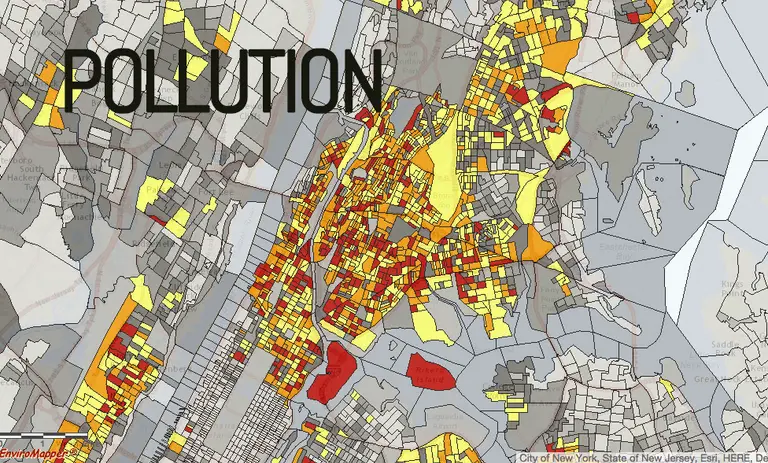
EJSCREEN is a new online mapping tool from the Environmental Protection Agency (EPA). What makes it different than other pollution maps, though, is that it also includes census data to show the relationship between negative environmental factors and demographic indicators like low-income and minority populations. As Gizmodo reports, "The maps are color-coded to show poverty, and pollution (as measured by fine particle density). Grey is in area that’s below the 50th percentile, with the colors going up to yellow then red as the poverty (and pollution) increases." And as is clear in the animated image above, high-poverty areas like East Harlem, Washington Heights, and much of the Bronx are among the most polluted in the city.
More on the map here
July 16, 2015

In New York City Your $100 Is Really Worth Just $81.77

Saying "NYC is expensive" is a pretty obvious statement, but have you considered what the spending power of your cash really is? The Bureau of Economic Analysis recently enlisted the help of economists at the Tax Foundation to create two maps that examine how much $100 can actually buy you in each state and various metro areas across the U.S. Unsurprisingly, your Benjamins wane in value significantly once you step into the NYC metro area.
Find out more here
July 16, 2015

New Initiative Rethinks Lower Manhattan Streetscape to Clear Tourists and Congestion

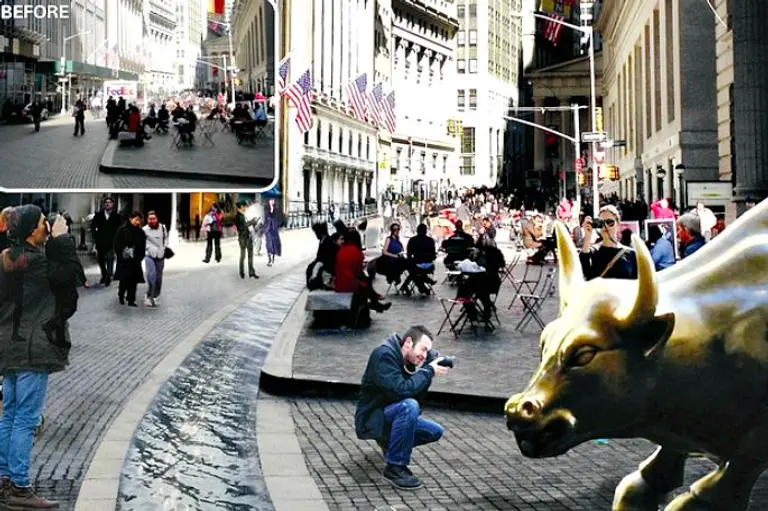
If you've ever attempted to go shopping at Century 21 on a weekend or take a selfie with the Charging Bull, you know very well the perils of tourist-laden lower Manhattan. The confusing street layout, lack of open gathering spaces, and non-pedestrian-and-cyclist-friendly thoroughfares make the historic neighborhood a bit of a jumble, especially as it's currently undergoing a huge development boom and both residential population and tourism have more than doubled since September 11th. But a new initiative called Make Way for Lower Manhattan hopes to change all this. As DNAinfo reports, the plan's goal is to "highlight tourist areas, like the Seaport, the 9/11 Memorial, The Battery, Wall Street, and connect the dots better for tourists — giving them a means to find their way, stay and spend money without completely congesting the neighborhood." The group presented at this week's Community Board 1 meeting, unveiling ideas like creating a more accessible entrance to the Brooklyn Bridge that also connects people to the nearby South Street Seaport and moving the bull across from the New York Stock Exchange, its original home and much less congested site.
Find out more right here
July 14, 2015

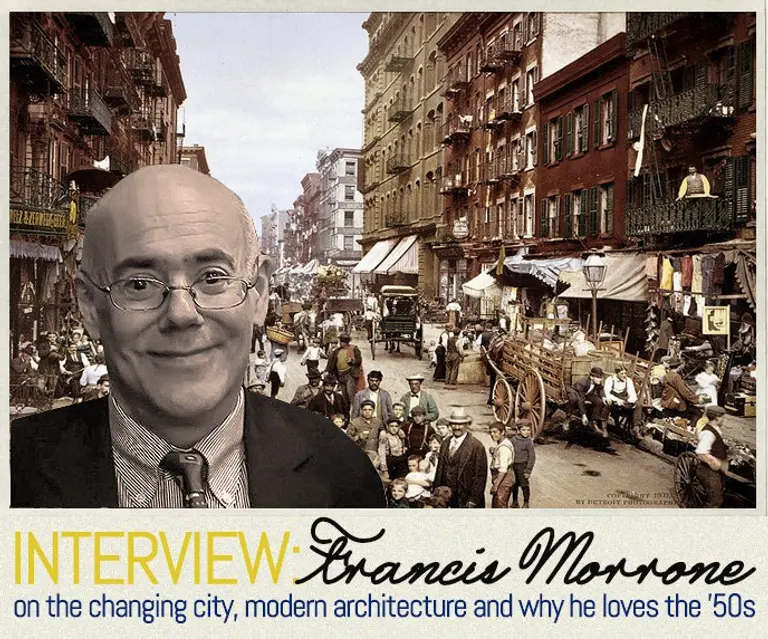
INTERVIEW: Historian Francis Morrone on the Changing City, Modern Architecture and Why He Loves the ’50s

For the man who knows seemingly everything about New York City history, look no further than Francis Morrone. Francis is an architectural historian best known for his writings and walking tours of New York. Of his 11 books, he wrote the actual guidebook to New York City architecture—aptly titled "The Architectural Guidebook to New York City"—as well as the "Guide to New York City Urban Landscapes," "An Architectural Guidebook to Brooklyn," and "10 Architectural Walks In Manhattan." For six and a half years, Francis served as an art and architecture critic for the New York Sun, and he now teaches architectural and urban history at the New York University School of Professional Studies. As for walking tours, Francis was named by Travel + Leisure magazine as one of the 13 best tour guides in the world. You can catch his various tours, which sell out quickly and cover everything from "Midtown Manhattan's Side Streets" to the "Architecture and Changing Lifestyles in Greenwich Village," through the Municipal Art Society. We caught up with Francis recently after he published a much buzzed-about article for the Daily News entitled, "No, New York City Is Not Losing Its Soul," to talk about his life and work in the city, his opinions on modern architecture and development, and his favorite time period of New York City history.
Our conversation with Francis this way
July 14, 2015

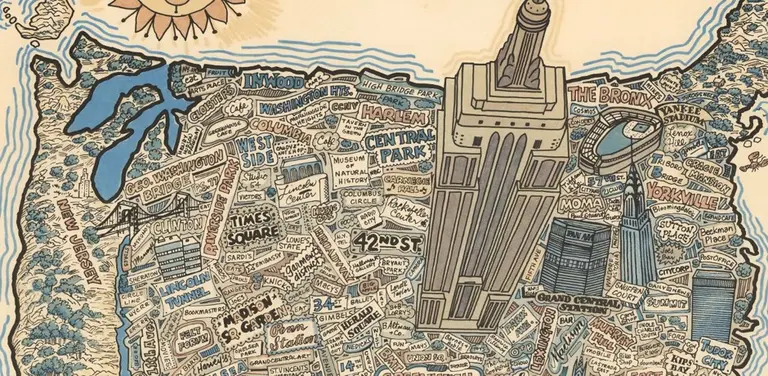
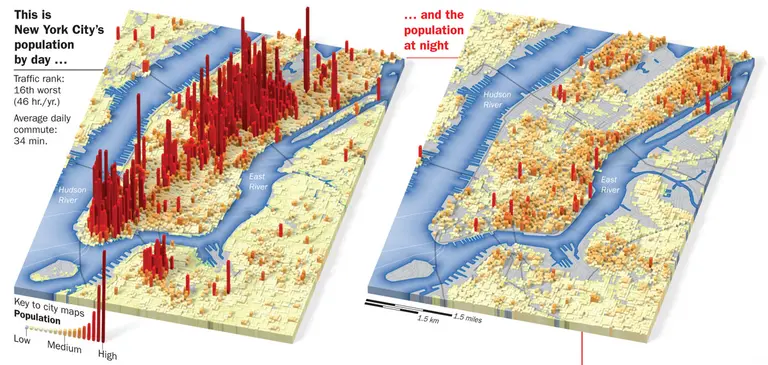
Day vs. Night: What NYC’s Population Looks Like

Click for expanded version >> New York may be the city that never sleeps, but it certainly pulsates far differently depending on what time of day it is. This fascinating map created by Joe Lertola gives us an idea of just how population-filled areas of Manhattan get during working hours, and how the city empties out at night when most workers head back to their homes in the suburbs.
More on how it was created here
July 13, 2015

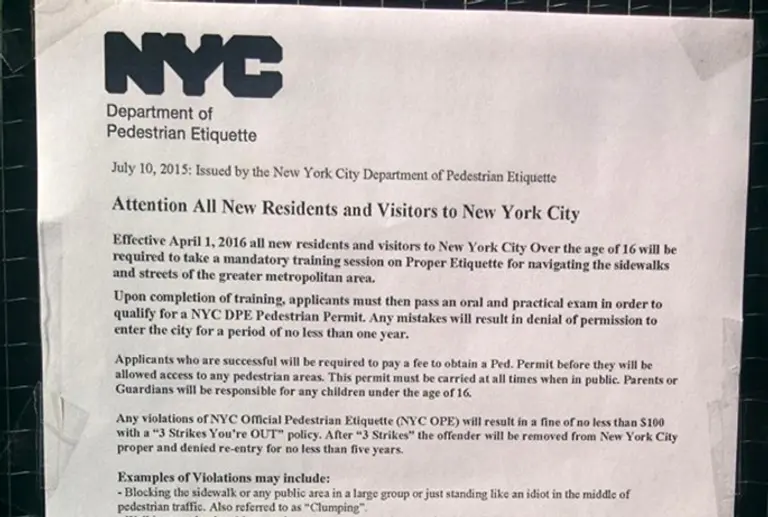
ATTENTION: Walk Faster or You’ll Be Banned from NYC for Five Years

If you're a resident of New York, you know that this is no city for strolling. We all have places to be and we can't be bothered trying to sidestep slow walkers—and we certainly don't have time for niceties like "excuse me." As such, the NYC Department of Pedestrian Etiquette has a new set of rules to keep slow pokes, sidewalk blockers and the entirely un-self-aware off the streets: "Effective April 1, 2016, all new residents and visitors to New York City [o]ver the age of 16 will be required to take a mandatory training session on Proper Etiquette for navigating the sidewalks and streets of the greater metropolitan area."
Click here to read the whole memo
July 10, 2015

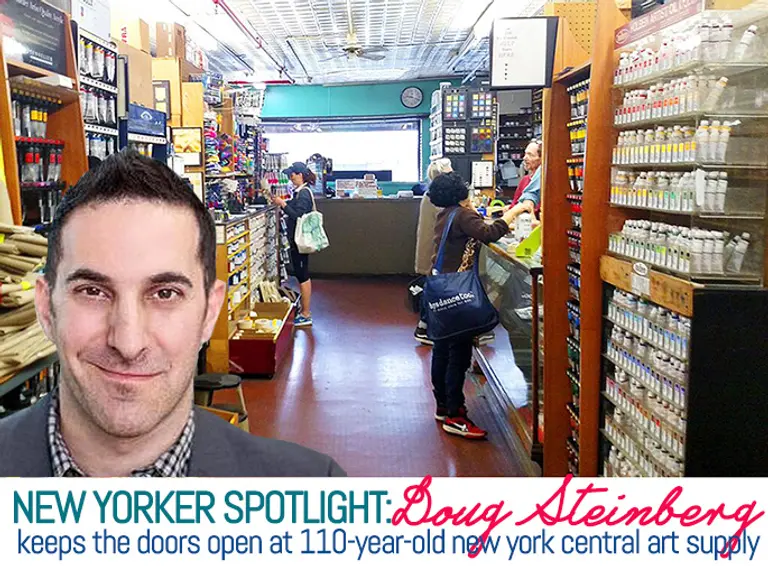
New Yorker Spotlight: Doug Steinberg Keeps the Doors Open at 110-Year-Old New York Central Art Supply

In 1905, Benjamin Steinberg opened up a store on Third Avenue between 10th and 11th Streets. Little did he know then that one day artists like Willem de Kooning would walk through its doors. For the last 110 years, New York Central Art Supply has served the needs of New York's amateur and professional artists. Three generations of the Steinberg family have supplied paper, paints, brushes, and canvases to everyone from first-year art students to Keith Haring. And over the last year, Doug Steinberg, Benjamin's great-grandson, has taken a more active role at New York Central, planning for the store's future. While Doug never formally joined the family business (he currently owns and runs his own company), New York Central has been a constant in his life. He says he's worked there "on and off since I was born," and has a deep appreciation for what his great-grandfather started and his father Steve grew in the '60s and '70s. We recently spoke with Doug to learn about New York Central's rich history, why so many well-known artists purchased and continue to purchase supplies here, and how the store is preparing for its 21st century evolution.
Read the interview right here
July 10, 2015

On the Grid Is a Neighborhood Guide Curated by Local Designers

These days when we travel we look for recommendations from real people, whether it be through friends or poring over online reviews. Brooklyn design firm Hyperakt recognized this trend and created a new platform that calls itself the "designer’s neighborhood guide." Dubbed On the Grid, the site is a place "where local design firms contribute personalized descriptions for their favorite places," according to Gizmodo. Along with the picks and reviews, Hyperakt adds sharp photos, maps, and fun illustrations of local landmarks. They also categorize the picks with icons like a wine glass for bars, paint palette for cultural spots, and dumbbell for fitness outposts. Though On the Grid wasn't designed as an app, it works just as nicely on a mobile device as it does on a regular computer screen.
See more features of this fun new guide
July 9, 2015

POSH City Club Aims to Upgrade Your Public Restroom Experience

At any given time there are well over one million people in Manhattan who aren't Manhattan residents. This figure, obtained from a report from NYU's Wagner School of Public Service, accounts for tourists and commuting workers from the suburbs and the outer boroughs. That being said, non-residents don't usually have the luxury of popping home to drop off a few things, using a clean restroom, or especially showering. POSH City Club, a luxury storage and bathroom facility, plans to change that.
Learn more about this innovative startup here
July 6, 2015

New Yorker Spotlight: Inhabitat’s Jill Fehrenbacher on Raising Two Kids on the Lower East Side

When you think about family-friendly neighborhoods, the last one to come to mind is probably the Lower East Side. But Inhabitat.com's Jill Fehrenbacher is here to tell you that this downtown stretch is more than just a breeding ground for bros and getting bombed. A LES resident for more than a decade, Jill moved into the area looking for cheap rents as a student but has stuck around to see it transform into both a cultural destination and a diverse community-driven neighborhood fueled by much more than just a bar scene. Ahead, Jill shares her thoughts on what makes this neighborhood such a special one for raising kids (she's got two boys of her own) and her NYC success story of hitting it big as the founder of one of the world's most visited design websites.
Our interview with Jill here
July 6, 2015

New York Was the First City to Dial 9-1-1 for Emergencies

Around the country, little children are taught to dial 9-1-1 in case of an emergency as soon as they know their ABCs and 123s. But, believe it or not, this universal number hasn't even been around for 50 years. It was first implemented right here in New York City in July of 1968. Before that, New Yorkers had to call the police department's main phone line at 440-1234. At first, it was only for police calls; it wasn't until 1970 that the three-digit number also reached the fire department and ambulance services.
READ MORE
June 26, 2015

New Yorker Spotlight: Patty Dolan Shares Stories of Running the Hampton Jitney for 16 Years

Memorial Day might be the unofficial start of summer, but the end of June marks a distinct shift in the city. With temperatures climbing, school finally out, and July 4th a week away, New Yorkers are ready to beat the heat by heading east. For many, that means booking a seat on Hampton Jitney, where they can enjoy the Long Island Expressway in style. Since 1974, Hampton Jitney has been a pioneer in Manhattan-to-East-End transportation. What began with one van has blossomed into a major transportation operation, and the company relies heavily on its experienced employees like Patty Dolan to keep service running smoothly. Patty has worked at Hampton Jitney for 16 years. She has held various positions, and in her own words, has done everything but drive and fix the buses. Today, Patty serves as both a reservations manager and dispatcher, which has turned her into a multitasking problem solver extraordinaire. In time for Hampton Jitney's peak season, we spoke with Patty to find out how she helps keep the wheels turning, as well as to pick up a few travel tips.
Read the full interview here
June 23, 2015

INTERVIEW: Fōz Design’s Fauzia Khanani, a Young Architect Goes Solo in NYC

Apart from Zaha Hadid, Jeanne Gang and Annabelle Selldorf, very few women in architecture manage to grab headlines like their male counterparts. But a relative newcomer named Fauzia Khanani is hoping to help change all of that. Fauzia started her practice, Fōz Design, back in 2011 with a single project in upstate New York. Since then, she's grown what was then a huge leap of faith into a full-fledged design studio working on residential, commercial office and public spaces from New York to California. We recently caught up with Fauzia to learn more about what it's been like to go out on her own in such competitive city, the challenges of being a female minority architect in world being designed by men, and how taking a "reflective design" approach can really improve a space.
Read our interview with Fauzia here
June 19, 2015

New Yorker Spotlight: Sarah Brasky of Foster Dogs NYC on Helping Pups Find Fur-Ever Homes

There are people who are born dog lovers and then those who become them. Sarah Brasky was definitely born a dog lover. From an early age, Sarah was passionate about man's best friend; she was drawn to dogs, had tons of dog stuffed animals, and began volunteering at a local animal shelter when she was old enough. As an adult, Sarah has transformed this deep love into a means to make a difference when she founded the nonprofit Foster Dogs NYC in 2009. Foster Dogs NYC is devoted to supporting and working with rescue groups and organizations looking to place dogs in fosters homes. For many dogs, this home is the first step on the road to finding a forever home. Individuals who foster dogs are able to help them become the dog he or she was always destined to be through their love and support. Foster caretakers give these dogs a tremendous gift, one that is rewarded with lots of love and licks. We recently spoke with Sarah to learn more about the incredible work her organization does, to discuss why fostering is so important, and why it is so rewarding to both human and dog.
Read our interview with Sarah here
June 18, 2015

Photographer Natan Dvir Captures Real Life Against NYC’s Larger-Than-Life Luxury Ads

When we think of bigger-than-life ads most of are quick to point out Times Square as the mecca of all things wrong with our consumer culture. But the tourist trap is just one piece Manhattan's puzzle, which, if you really take a second to look around, is dripping with advertisements hawking everything from coconut water to acne treatments to Louis Vuitton handbags. While most would say that they don't even notice the ads—a lot like how the Empire State Building eventually is just there after you've been living in the city for so long—Israeli photographer Natan Dvir argues that the reality is that these oversized billboards profoundly shape our urban landscape and the way we experience it. His series “Coming Soon” captures the phenomenon.
More from Dvir's series here
June 17, 2015

Help Count How Many Street Trees Are in NYC

Just a couple of months ago, we shared a fun map that lets users explore New York City's 592,130 street trees by species and trunk thickness. Brooklyn web developer Jill Hubley used data from the 2005-2006 Street Tree Census to create the map, but a lot of trees have come and gone in the past nine years. This time around, the Parks Department is crowdsourcing to count the city's street trees as part of its Trees Count! 2015 project. As Brooklyn Magazine reports, "Participants will be armed like park rangers, walking around different neighborhoods with tree identification guides and tape measures, recording data that will eventually trickle into an interactive map that encompasses all five boroughs."
Find out how you can get in on the action
June 17, 2015

VIDEO: What to Expect if You Were a Tourist Visiting NYC in the 1940s

Welcome to the "city of romance and excitement" in a time "where all roads lead to Gotham." This fascinating film produced by the city's PR arm back in the '40s is a total time warp that will transport you to the better days when everyone enjoyed travel by train, dapper suits were daily uniforms, and the New York skyline was downright demure with just the Empire State Building and Chrysler piercing the sky. Though all the landmarks featured are ones you'd expect to see (Grand Central, the Top of the Rock, The Statue of Liberty) and don't appear all that much different than they do now (kids were bathing in Washington Square Park's fountain back then too), a number of the shots and commentary provided by the film's narrator really highlight how much our city has changed (imagine a harbor full of Titanic-like ocean liners and no 432 Park). Watch the 22-minute video ahead.
Watch the video here
June 17, 2015

Let’s Introduce Text Walking Lanes for Smartphone Addicts

You've seen them. You've tried to get around them. You're probably one of them. In a world where there are more mobile phones than people, it's become commonplace to find folks paying more attention to what's on their phones than what's in front of them on the street. These so-called "text-walkers" are often a nuisance to other pedestrians as well as a danger to themselves (and their precious phones). A smart solution to this problem has appeared on the sidewalks of Antwerp, Belgium in the form of  "text walking lanes." These lanes, marked by simple white lines painted onto the sidewalk, designate a separate walking space for people who use their phones while walking.
More on text-walking lanes