City Living

April 29, 2016

Don’t Look Up: Would Traffic Signals in the Pavement Protect NYC Phone Gazers?

We've already seen the creation of texting lanes for smartphone addicts (in Antwerp, Belgium and Chongqing, China) so pedestrians don't have to be stuck behind someone hunting for the perfect emoji. Recently the German city of Augsburg has taken the step of actually installing traffic lights in the pavement so text-walkers could be made aware of when it's unsafe to walk–by which we mean they're about to walk into the path of a 50-ton train. The idea came about after a 15-year-old girl was fatally hit by an oncoming tram while wearing headphones and looking down at her smartphone. As reported in The Telegraph, the lights look like ordinary road markers, but flat to the ground. Bavarian public-works/transportation provider Stadtwerke Augsburg has installed the experimental earthbound traffic signals in two rail stations. The LED lights blink green when it's safe to walk and red when a train is approaching. They're visible from a distance, so they might even give pedestrians some lead time to realize an intersection is up ahead.
Find out more
April 28, 2016

Stuff You Should Know: How NYC School Zones and Districts Work

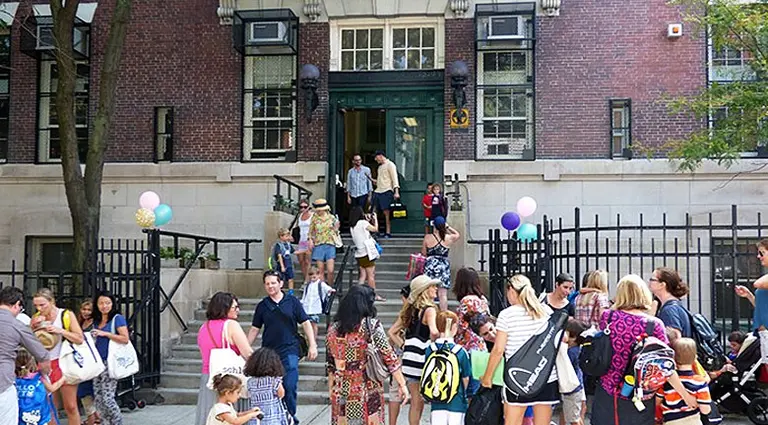
It’s a longstanding New York City tradition—families relocating to live in a desirable school district or zone. Currently, all five of the city’s boroughs are divided into districts and zones and both come with their own currency. Districts, which usually cover large swaths of a borough, impact students’ middle school and in some cases, high school choices. Zones, by contrast, can run just a few blocks and are usually the sole criteria for assigning students to schools at the elementary level. Like many things in New York City, however, a block can make a world of difference.
more on School Zones and Districts here
April 26, 2016

NYC Millennials Earn 20 Percent Less, Have More Debt Than Previous Generations

If you were born between 1985 and 1996 and live in New York City, there's a good chance you're struggling. The Wall Street Journal looked at a report from city Comptroller Scott Stringer that examined the effects of the recession on millennials, which found they earn about 20 percent less than previous generations of their counterparts. Furthermore, the report says the economy has left this group with "greater debt than their parents" and "fewer high-wage job opportunities even as the cost of housing in the city has risen."
More good news ahead
April 25, 2016

FiDi Residents Get the Largest Tax Returns in the City, According to the IRS

It's time for Uncle Sam to start writing tax refund checks, and according to the IRS he'll be shelling out the most in the Financial District. As the Post reports, "One-percenters living in the Financial District have the highest taxable income, the biggest tax bills and get the largest refunds in New York City."  Though zip codes 10012 and 10013 (which make up parts of the West Village, Soho, Tribeca and the Lower East Side) are the most expensive in terms of real estate, it's FiDi's 10005 that is the richest in terms of earnings. The average annual taxable income for residents here is $948,979, and they pay $254,835 in taxes and get refunded $74,079.
Which other neighborhoods topped the list?
April 22, 2016

Spotlight: The Wall Street Journal’s Jason Gay Talks Sports and Rules for Life in NYC

New Yorkers tend to have go-to writers who they read day in and day out -- with their morning coffee, on the subway, or winding down after a long day. For many, Jason Gay is on this team of journalists. As a sports columnist for The Wall Street Journal, he regularly provides sports coverage, insights, and opinions for the paper's readership. He writes extensively about specific players and teams, but also pens features that touch upon the human aspects and humor that can be found on and off the court. Jason has become known for his funny rule-centric columns, including the very popular "The 32 Rules of Thanksgiving Touch Football" and "The 27 Rules of Conquering the Gym." This passion for rules took shape as a book, "Little Victories: Perfect Rules for Imperfect Living," which takes seemingly banal topics -- parenthood, exercise, office life, travel, and the holidays -- and celebrates how the smallest accomplishments in life are often the most meaningful. 6sqft recently spoke to Jason about sports, writing for the Journal, and how "Yankees World Championships are like real estate closings."
Read the interview with Jason
April 20, 2016

How Long Should You Wait For the Subway Before Giving Up?

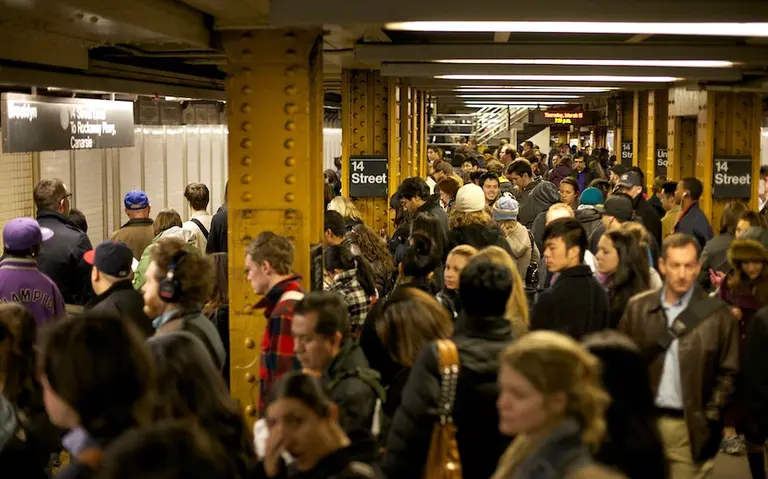
To wait or not to wait, that is the question that engineer Erik Bernhardsson answered in his recent analysis of the MTA's real-time API. In his post titled NY Subway Math he determined that if you're in a hurry, you should only wait for a train to arrive for 11 minutes (h/t Technically). At this point, the chance that there's a serious delay begins to rise. As he notes, "The interesting conclusion is that after about five minutes, the longer you wait, the longer you will have to wait. If you waited for 15 minutes, the median additional waiting time is another 8 minutes. But 8 minutes later if the train still hasn’t come, the median additional waiting time is now another 12 minutes.”
More on the conclusion
April 19, 2016

Annual Subway Ridership Hits 1.7 Billion, Highest Since 1948

The MTA has released its 2015 figures, which show the highest weekday subway ridership since 1948, reports the Daily News. Not only does this account for daily riders, which hit 5.7 million, but annual ridership as well, reaching 1.763 billion. Another interesting tidbit, especially considering the looming shutdown, is that L train usage decreased for the first time in about 20 years. This occurred from Third Avenue to Morgan Avenue in Brooklyn, resulting in a 4.2 percent increase along the J/Z and M lines.
More findings ahead
April 15, 2016

Spotlight: The Gefilteria’s Liz Alpern Is Making Gefilte Fish a Modern Passover Staple

As the co-founder and co-owner of The Gefilteria, a Brooklyn-based gefilte fish manufacturing business, Liz Alpern is hard at work making sure there's plenty of her product for her customers to serve at their Passover seders in just a week. Gefilte fish is a dish surrounded by lots of opinions; at seders, it's just as common for someone to ask for seconds as it is for others to kindly offer the dish to their neighbor. Liz understands this range of feelings, as she's found herself on both sides of it. When she was younger, she didn't partake in the course, but in adulthood, she was introduced to homemade gefilte fish-- instead of the pre-made variety found on store shelves--and a love affair began that developed into The Gefilteria, which she co-founded with Jeffrey Yoskowitz in 2012. 6sqft recently spoke with Liz to discuss the founding and evolution of The Gefilteria, how they're casting the Passover staple in a new light, and what it means to be part of her customers’ seders.
Read the full interview here
April 14, 2016

Mayor’s Affordable Housing Push Brings Tough Questions on Racial Integration

Affordability vs. racial inclusion may sound like an odd battle to be having, yet it's one that often simmers below the surface in discussions of neighborhood change. The words "Nearly 50 years after the passage of the federal Fair Housing Act..." are, of course, no small part of the reason. And in a city known for its diversity–one that often feels more racially integrated than it is–the question of how housing policy might affect racial makeup tends to be carefully sidestepped, but the New York Times opens that worm-can in a subsection called "Race/Related."
Is there a tradeoff between integration and affordability?
April 13, 2016

Tips for Keeping Pets Happy and Healthy in an Apartment

6sqft’s series Apartment Living 101 is aimed at helping New Yorkers navigate the challenges of creating a happy home in the big city. This week we offer up helpful tips on how to live with a furry family member (or members) from choosing the right furniture to actually getting your pet OK'd to move into a new place with you. Owning a dog or cat in the city is a decision that should not be taken lightly. Not only can small apartments and loud noises be stressful for humans, but animal anxiety can also be exacerbated by these external elements (and de-stressing for them isn't as easy for them as getting a massage or happy hour). On top of this, pet messes and their manic outbursts can seem exponentially larger when compacted into an home that's barely 500 square feet. Ahead, with the help of Erin McShane, owner of Manhattan's new cat cafe and teahouse Little Lions, we've rounded up a few tips and things to consider when it comes to making apartment living with dogs and cats comfortable for all—especially humans.
A happy home, happy pet and happy you this way
April 13, 2016

POLL: Will You Miss the MetroCard Swipe?

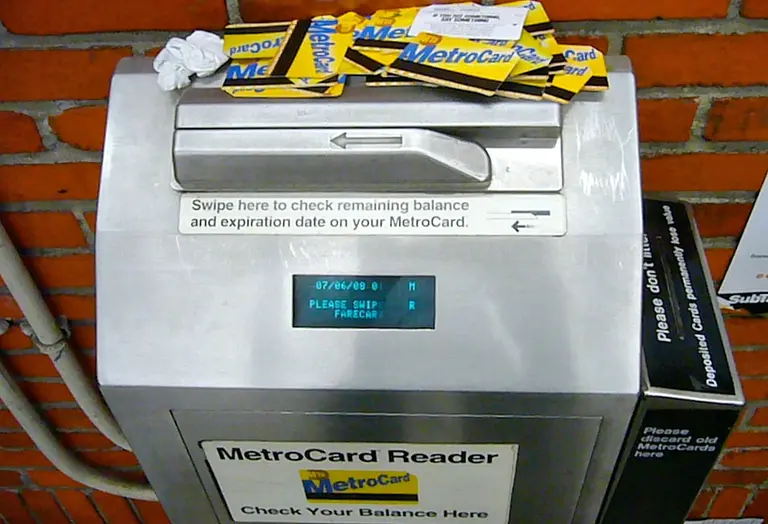
The ye-olde MetroCard swipe has made national headlines in recent weeks, thanks to Hilary Clinton’s inability to get through the turnstile and Bernie Sanders’ belief that we’re still in the dark ages using subway tokens. The fact that these snafus are so attention-grabbing goes to show how intrinsic the simple act of swiping a MetroCard is […]

April 12, 2016

Vinyl, Kale or Condos: It’s Your Move in the ‘Settlers of Brooklyn’ Board Game

In the Settlers of Brooklyn (pronounced inexplicably in the lost tongue of the High Middle Ages), an "award-winning game of entitlement, self-discovery and brunch," there are five resources available: coffee, vinyl, bicycles, skinny jeans, and kale. All of which sound like reasonably life-enhancing additions, but when combined with a tableful of flannel-wearing gits, such as those portrayed in the video below, set on engineering the perfect endless brunch, the whole picture begins to grate like the line outside Egg on a Sunday morning. So the best thing to do may be just to roll with it, which is the idea behind this quick video sendup from snarkmeisters Above Average.
Watch the full video here
April 11, 2016

Do Poor New Yorkers Live Longer? Study Says Yes, Despite the Income Gap

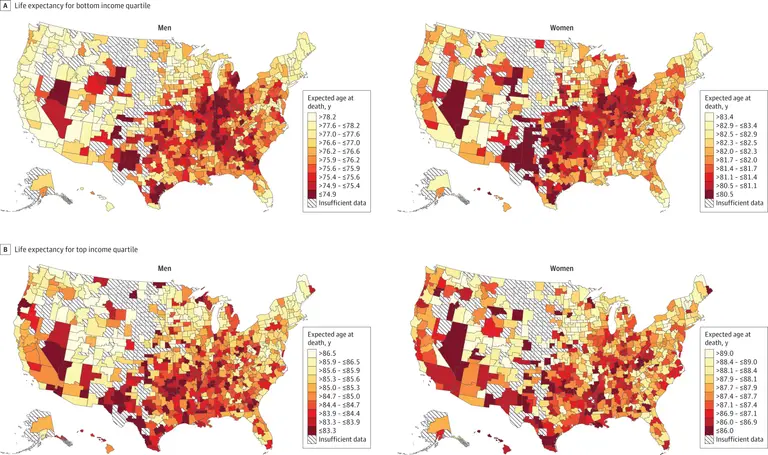
The New York Times recently took a look at the results of a study published in the Journal of the American Medical Association (JAMA). Using data compiled from anonymous earnings records and death certificates, the results offer some provocative insights into the importance of geography to how long people live–poor people in particular. There is, as we've already assumed, a longevity gap between the rich (in this study, people with household incomes of over $100,000 per year) and poor (those with incomes less than $28,000). In Manhattan, for example, the average poor person will die about six years before the average rich one. But that gap is about a year and a half smaller than the same income/longevity gap for the United States as a whole. Tulsa and Detroit, for example, were two cities with the lowest levels of life expectancy among the low-income population, with the results already adjusted for differences based on race.
Find out what the numbers look like where you live
April 8, 2016

Spotlight: Stepping Behind the Camera with FOX5 and Hot 97’s Lisa Evers

When it comes to reporting news in New York, Lisa Evers does not shy away from hard topics. As a reporter for FOX5, Lisa regularly covers breaking news, community issues, crime, and counter-terrorism. She also serves as the go-to interviewer for the likes of Derek Jeter and Alex Rodriguez. In addition to her work on television, Lisa is widely known for hosting radio station Hot 97’s popular news and community affairs program Street Soldiers. On the show, she addresses topics ranging from hip hop lyrics to gender to drug use, with a guest panel of music artists and community leaders. Earlier this year, FOX5 brought Street Soldiers to television, where viewers can now tune in to Lisa and her guests in the studio on Saturday nights. 6sqft recently spoke with Lisa to find out how she approaches her work, the experience of bringing Street Soldiers to FOX, and what she's learned about the city through her reporting.
The full interview ahead
April 7, 2016

This Map Tells You How Frequently NYC Subways Actually Run

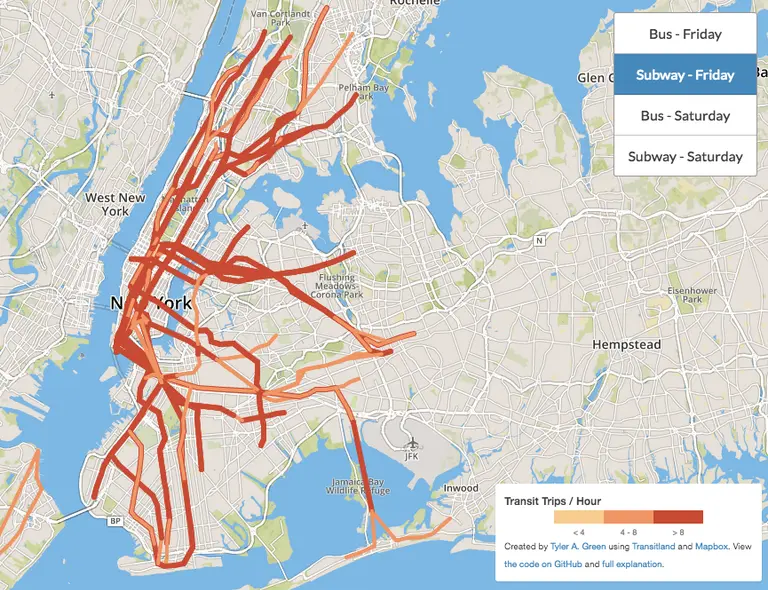
This New York City Transit Frequency map, from Ft. Collins, Colorado-based public transit enthusiast and urban adventurer Tyler A. Green, is a mapped visualization of how frequently the city’s subways and buses travel along each line. You can use it to see where—and on which days—trains and buses run most and least often. The darker the color of a transit line on the map the more frequent your prospects are going to be. Four viewable data layers on the map represent buses and trains on Fridays and Saturdays. Hover over lines to see exactly how many trains or buses run in an hour between any two stops.
Take a look at the map
April 7, 2016

POLL: Do You Prefer Starbucks Over the City’s New Cafes?

It was announced yesterday that Starbucks is opening its largest store in the world in the base of Rafael Viñoly’s forthcoming Meatpacking District building at 61 Ninth Avenue. The 20,000-square-foot facility will be a Roastery-branded store, “part of a push to bolster growth with larger locations that offer experiences to customers,” reports Crain’s. The decision may be due to the […]

April 6, 2016

Famed Tiny Apartment Architect Says He ‘Doesn’t Really Believe in Tiny Living’

By now you’ve surely seen Tim Seggerman‘s practically iconic 240-square-foot apartment on Pinterest and on design blogs across the web. But while the architect has made a name for himself creating innovative solutions for small living in the city, what might come as a surprise is that he doesn’t really advocate squeezing into a small space. […]

April 5, 2016

This 1970s East Village Windmill Was Decades Ahead of Its Time

If you want to build a windmill today, you can thank a handful of dedicated tenants in a building at 519 East 11th Street in the East Village of the 1970s. The story of the Alphabet City windmill is one of many stories, recounted in Gothamist, from the bad old days of Loisaida–as the East Village's far eastern avenues, also known as Alphabet City, were once called–the kind the neighborhood's elder statesmen regale you with, knowing well that you know nothing firsthand of a neighborhood of burned-out buildings and squatters who bought their homes for a buck. But this particular story isn’t one of riots or drug deals on the sidewalk; it’s one of redemption, no matter how brief in the context of time. The windmill was installed above an East Village building that was saved by the community, built and lifted to the roof by hand–or many hands. According to legend, the windmill kept the lights on during the chaos of the 1977 blackout.
Read all about it
April 1, 2016

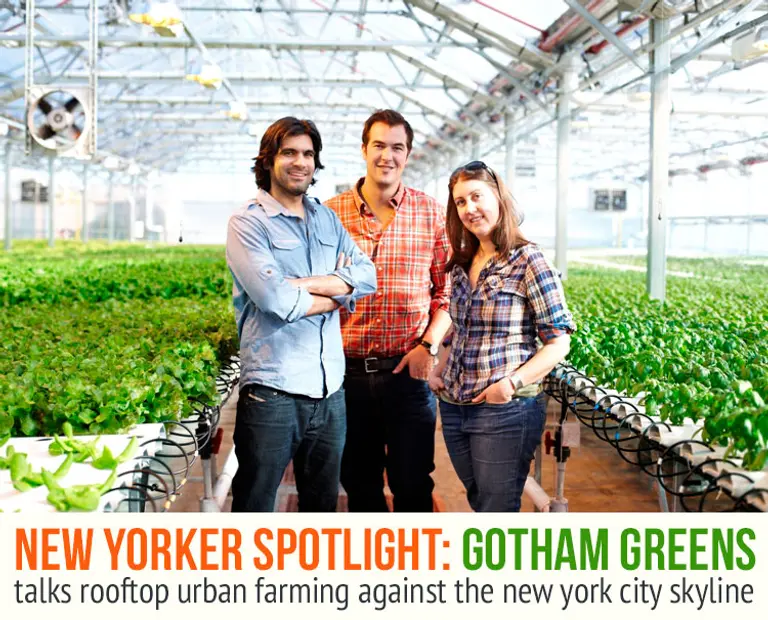
Spotlight: Gotham Greens Talks Rooftop Farming Against the New York Skyline

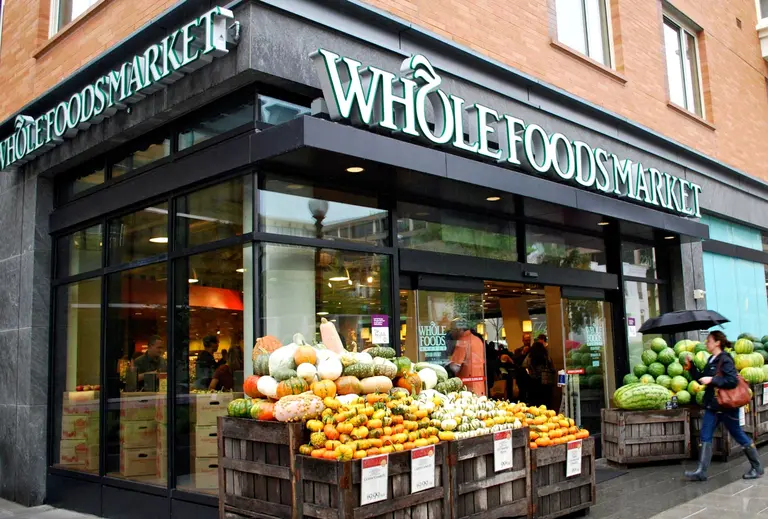
If you walk through the produce section at Whole Foods or scroll through Fresh Direct’s website, you likely have come across Gotham Greens’ Blooming Brooklyn Iceberg Lettuce or Queens Crisp. What make these lettuces different from others is that they’re local, urban greens, which are grown on rooftop greenhouses in Brooklyn and Queens with views of Gotham not too far in the distance. Gotham Greens was founded in 2009 with the goal of revolutionizing urban farming and providing a model for the future when cities are expected to be even more densely populated. One of the visionaries behind the company is co-founder and CEO Viraj Puri. Viraj and his partners started with one greenhouse in Greenpoint and now have four greenhouses between New York and Chicago that cover over 170,000 square feet and produce 20 million heads of lettuce every year. 6sqft recently asked Viraj some questions about what’s growing in Gotham.
read 6sqft's interview with Viraj
March 31, 2016

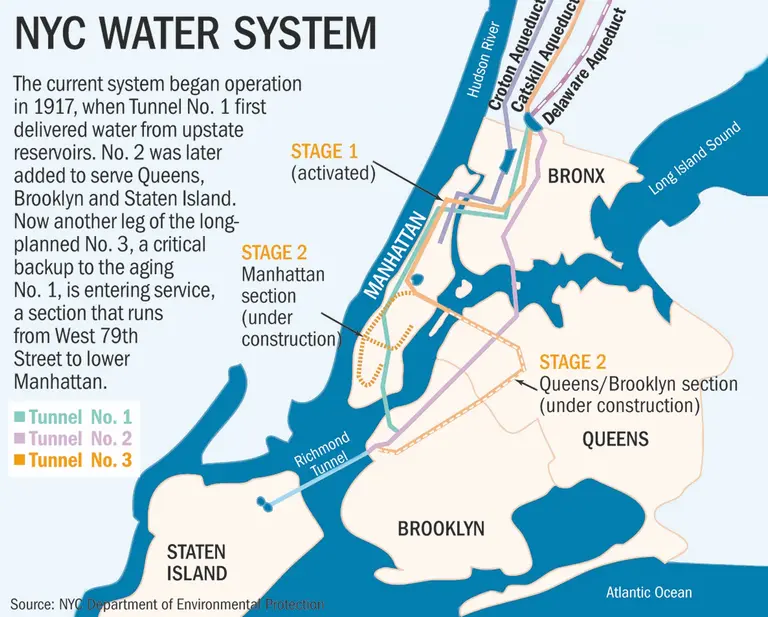
NYC Water 101: From the Catskill Aqueduct and Robotic Measurements to Your Tap

New York City is the nation’s largest municipal water supplier. While many locals happily choose tap water at restaurants and extol the virtues of New York’s wettest, we sometimes wonder how and where the magic happens–even more so recently, in light of some other cities’ far less stellar experiences with the local water supply. This recent New York Times article clears things up, so to speak, on how 9.5 million people (and growing, apparently) can keep the good stuff flowing. The source: More than 90 percent of the city's water supply comes from the Catskill/Delaware watershed, about 125 miles north of NYC; the other 10 percent comes from the Croton watershed. The watershed sits on over a million acres, both publicly and privately owned, but highly regulated to make sure contaminants stay out of the water.
Robots, radiation and more of the journey
March 30, 2016

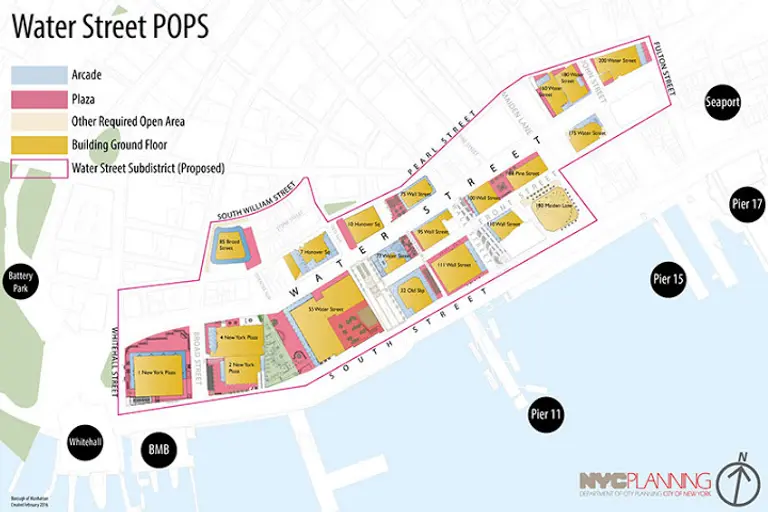
Controversial Zoning Change Would Fill Lower Manhattan Public Plazas With Retail

Whether you consider them "dead-end" corridors devoid of street life or nifty urban shortcuts (or just convenient rain shelters), the city's covered public walkways and arcades are finding themselves in something of a spotlight, reports the Wall Street Journal. This recent focus is on the covered walkways that run alongside skyscrapers in the Water Street corridor in lower Manhattan. A proposed zoning change, which would affect property owners in the Water Street Subdistrict, would allow retail to open up shop in these arcades.
Find out why some object to new retail additions
March 29, 2016

Three People Share What It’s Like to Live in Common’s Co-Living Concept in Brooklyn

What if your home was more than just a place to live? What if it took care of the tedious parts of everyday life (like cleaning, paying utility bills, and shopping for the basics) and there were always a bunch of interesting and like-minded people hanging out in your living room? Brad Hargreaves, CEO of Common, has structured his co-living housing company to be just that. While we've reported on Common before (as well as WeWork's similar new shared housing setup in FiDi), today we're going behind the scenes at Common's first outpost located in Crown Heights. We asked three residents why they chose to live at Common, if this catered style of co-living beats the standard New York roommate setup, and, of course, what we all really want to know—with 10 different personalities under one roof, just how "Real World" do things get?
Meet residents Jason, Kamilah and Adam here
March 29, 2016

The Official 2016 NYC Bike Map Has Arrived

The Department of Transportation just released the downloadable 2016 New York City Bike Map ahead of a paper version due next month. This year's map shows 70 miles of new or "upgraded" bike-specific lanes, twelve of which are protected (physically separated from auto traffic). Also on the map are seven miles of newly-created off-street bike lanes.
Check out the map
March 25, 2016

Spotlight: Mike Gansmoe Puts Macy’s in Bloom at the Annual Flower Show

In America, seasonal change is ushered in by Macy's and its productions, from the holiday season with the Thanksgiving Day Parade to summer with fireworks for America’s birthday. When it comes to welcoming spring, the department store puts on its annual Flower Show, a longstanding tradition that began 65 year ago and is now marking its 42nd year at the company's Herald Square location. This year’s show, America the Beautiful, celebrates the wonders of the nation's natural world at five stores around the country (NYC, Philadelphia, Chicago, Minneapolis, San Francisco). For New Yorkers who visit the show, it’s a chance to step out of the hustle and bustle and immerse themselves in gardens representing various regions of the United States. The executive producer behind the show is Mike Gansmoe, who is responsible for overseeing everything from conception to putting that last flower in place during overnight setups. 6sqft recently spoke with Mike to find out what's blooming at this year's show.
Read the full interview here