Food & Dining

June 19, 2017

Waterline Square mega-development to get first Cipriani ‘experiential food market’

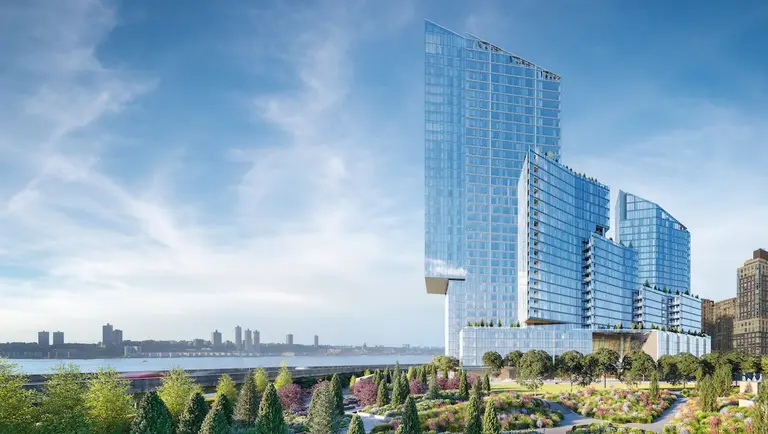
GID Development Group announced today that the Upper West Side's Waterline Square mega-development will be getting the first-ever experiential food market by the Cipriani family. Located within Two Waterline Square, the new Cipriani food hall will be designed by London-based interior designer Martin Brudnizki. Within the 28,000-square-foot space will be a large-format culinary experience with multiple food and beverage establishments including a market, restaurants, and casual outlets.
Find out more
May 17, 2017

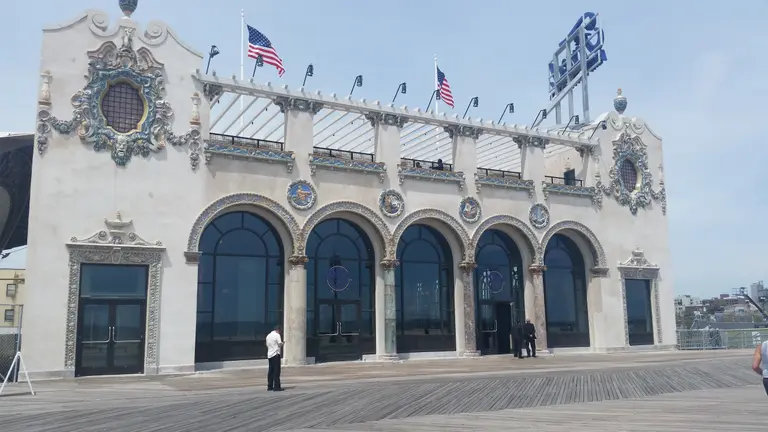
Coney Island’s landmarked Childs Restaurant reopening as huge food and drink space

It's been more than 60 years since Childs Restaurant left its historic home on the Coney Island boardwalk, but on Sunday the landmarked building will reopen as a massive new food and beverage concept called Kitchen 21 (h/t Eater). The formerly vacant and deteriorating space was redeveloped through a $60 million joint investment among the NYC Economic Development Corporation, Legends Hospitality (who run the dining programs at One World Trade Center and Yankee Stadium), and Cravable Hospitality Group (of David Burke Kitchen). It will hold five separate restaurants, all peddling "summer-friendly fare": casual take-out spot Coney Island Café; beer and seafood spot Community Clam Bar; gastropub Parachute Bar; rooftop wine bar Boardwalk & Vine; and a more formal restaurant called Test Kitchen.
All the details ahead
May 17, 2017

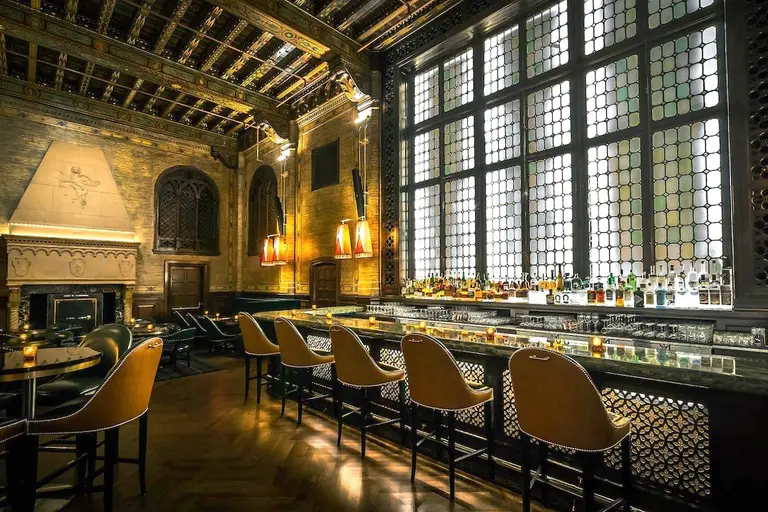
The Campbell Apartment: Grand Central Terminal’s historic ‘secret’ bar reopens

Though we're getting used to bidding farewell to our favorite vestiges of old New York, the May 17 reopening of historic and elegant cocktail establishment Campbell Apartment brings a rare reprieve to that familiar scenario, as The New York Times reports. Shuttered in July, the iconic lounge tucked away deep within Grand Central Terminal will reopen as an expanded version of the original. Both its slightly hidden nature and the establishment’s dress code will not be returning in its newest incarnation. The new, easier-to-find bar will be run by the Gerber Group, who says they want the bar to be less stuffy, hopefully without losing any of the historic and genteel appeal that made it a favorite grown-up rendezvous spot and a great way to impress a date.
Find out the story behind this unique NYC space
March 24, 2017

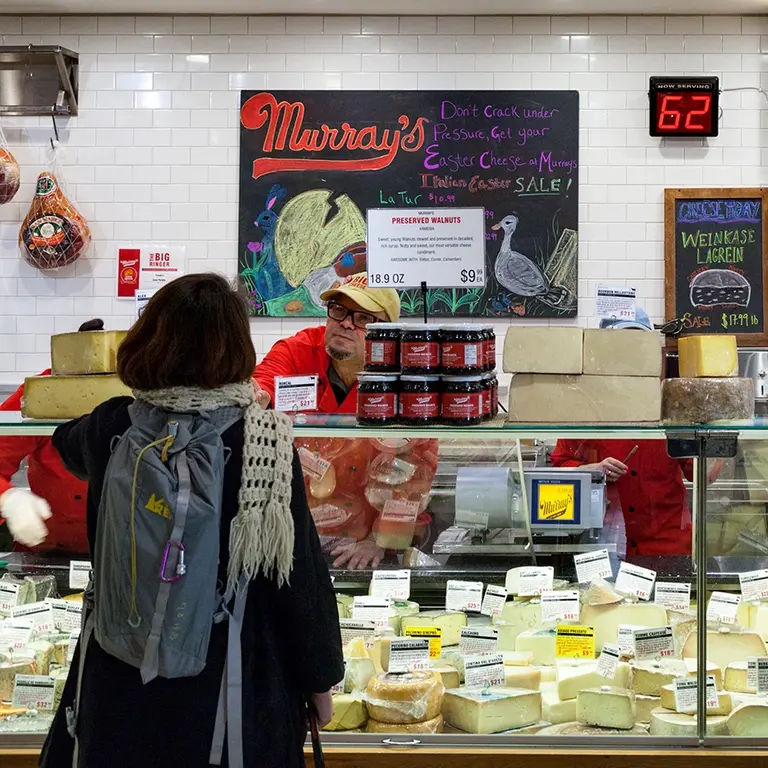
Behind the counter and into the caves at Murray’s Cheese

Murray's Cheese was founded in 1940 on Cornelia Street. When Rob Kaufelt bought the business in 1991, he grew the store into an internationally known food destination that now includes educational programs, a full-service restaurant, catering, and state-of-the-art cheese aging caves in Long Island City. Personally, our love affair with Murray’s Cheese began in 1994, when we were newlyweds on a budget, often buying cheese from the small Bleecker Street store to eat with some freshly baked bread purchased from the nearby Zito & Sons Bakery. Plus, with Murray’s being our namesake, we felt an immediate connection to the store. Just last month, the Kroger Company purchased the equity of Murray’s Cheese and its flagship Greenwich Village location to form a merger of the two companies. As this new era approaches, we decided to capture all the cheesy goodness of the store, restaurant, and caves, as well as chat with Rob, cavemaster PJ, and Murray's Cheese Bar's general manager Jake Goznikar to learn about Murray's history, unique contributions to local and world-wide food culture, and future.
Take the grand tour
June 15, 2016

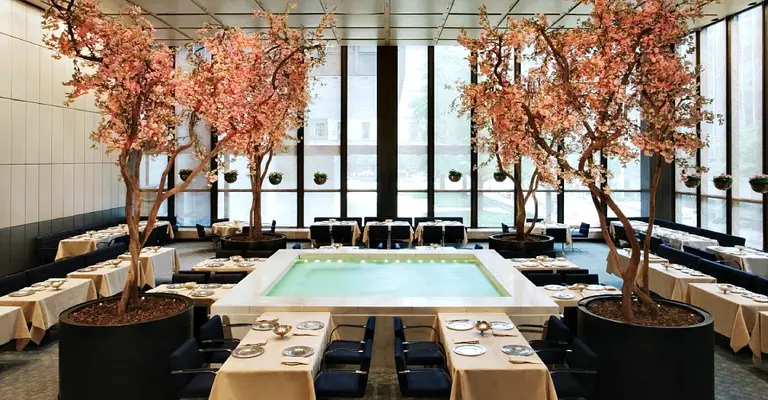
Modernist Treasures From Iconic Four Seasons Restaurant Headed for Auction

News of the iconic restaurant's impending demise surfaced last summer, as 6sqft previously reported, when Seagram Building owner Aby Rosen did not renew the lease for what has been seen as the quintessential Midtown “power lunch” spot for the last decades of the 20th century since it opened in 1959. The restaurant's interiors feature designs by Pritzker Prize-winner Philip Johnson, furniture, tableware and other items by Seagram Building designer Mies Van der Rohe, Hans J. Wegner and others and custom-made Knoll furniture. Those items will be included in the 500 lots headed for auction on July 26. Dezeen highlights critics' frustration at what Aaron Betsky, leading US architecture critic and dean of the Frank Lloyd Wright School of Architecture rues as the dispersal of  "one of the rarest phenomena in Modernism: a place where the architecture, the furniture, the table settings, the service, the food, and even the clientele was of a piece."
Find out more about why critics are so upset by the auction of the iconic restaurant's interiors
April 6, 2016

The Last Day to Dine at the Iconic Four Seasons Is July 16th

Despite its interior landmark status and role as the quintessential Midtown "power lunch" spot, the Four Seasons has been facing an uncertain future for the past year. In May, a small victory was had when the Landmarks Preservation Commission rejected Aby Rosen's plans to re-conceptualize the Philip Johnson-designed space, but it was short-lived, as Crain's now reports that the Four Seasons will close its doors on July 16th after serving New Yorkers since 1959. Rosen did not renew the lease and plans to replace the restaurant with what will be considered a more "hip" eatery. As the Post shares, of-the-moment restauranteurs Mario Carbone, Rich Torrisi, and Jeff Zalaznick (of the Major Food Group and trendy restaurants like Parm and Dirty French) signed to take over and partner with Rosen, who will increase the rent to $3 million a year.
The full story here
February 5, 2016

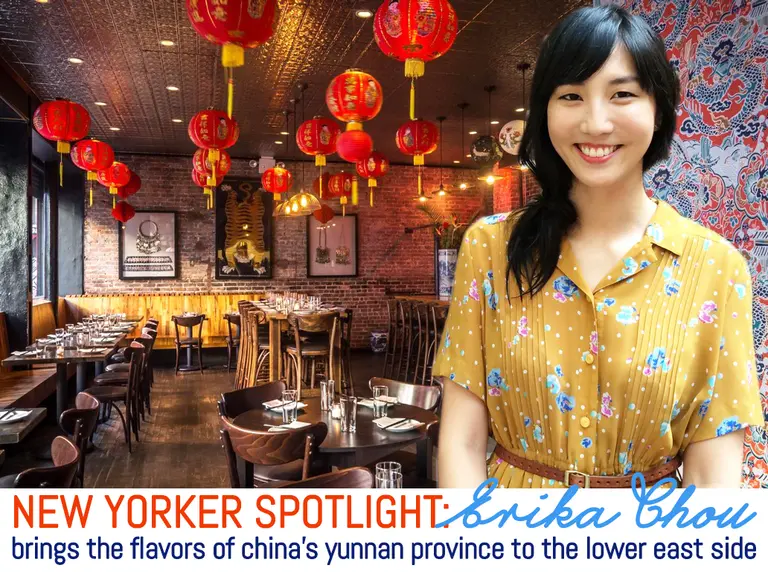
Spotlight: Erika Chou Brings the Flavors of China’s Yunnan Province to the Lower East Side

If you're looking to celebrate the Lunar New Year with Chinese food, you'll likely end up with Cantonese or Szechuan cuisine, those most popular in the city. But if Erika Chou has anything to do with it, New Yorkers will soon be adding to their repertoire the flavors of China’s Yunnan province. Erika, who studied art and formerly worked in fashion photography, was introduced to the Yunnan culture and flavors several years ago on a trip to China. By 2012, she made the decision to start a restaurant celebrating this province and opened Yunnan Kitchen on the Lower East Side with esteemed chef Doron Wong in the kitchen. This past fall, Erika reopened the restaurant as Yunnan BBQ and revamped the menu with Doron to offer small plates like a Chrysanthemum Salad made with asian pear and large, barbecue-focused plates such as Pecan-Smoked Chicken Wings and Yunnan Curry Beef Brisket. Earlier this week, Erika and Doron’s efforts were celebrated when the New York Times included Yunnan BBQ in an article discussing Chinese-American chefs and restaurants. On the eve of Chinese New Year, 6sqft spoke with Erika to find out what drew her to the Yunnan province, how her background in art helps as a restaurateur, and to find out about a misconception surrounding Chinese food.
The delicious interview right this way
January 27, 2016

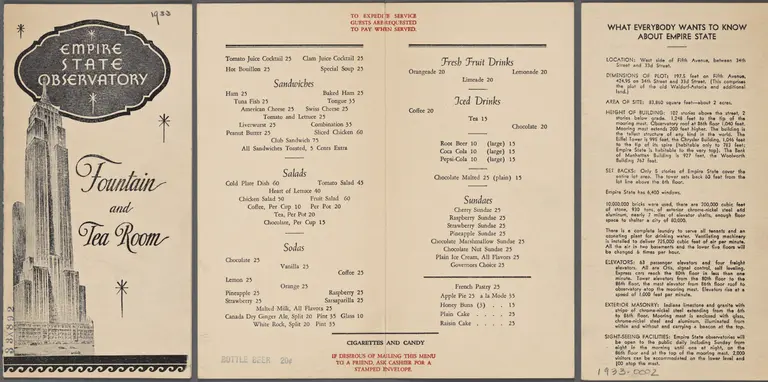
In 1933, a Ham Sandwich Cost 25 Cents at the Empire State Building Observatory

Today, the only thing you'll be spending money on when you travel to the 102nd floor of the Empire State Building is the $50+ Observation Deck ticket. But back in the '30s, it was a much more glamorous experience, complete with the Empire State Observatory Fountain and Tea Room. The New York Public Library recently digitized 18,000 of its 40,000 restaurant menus, which range from 1851 to 2008, including this one from the Empire State Building in 1933. As you'll see, sandwiches (ham, peanut butter, and tomato and lettuce, to name a few) were a mere 25 cents, the same price as their six types of ice cream sundaes and ten flavored sodas. In terms of actual food, your only choice other than a sandwich would've been a pretty blah-sounding salad, some pastries, or a selection of "candy and cigarettes."
More right this way
January 4, 2016

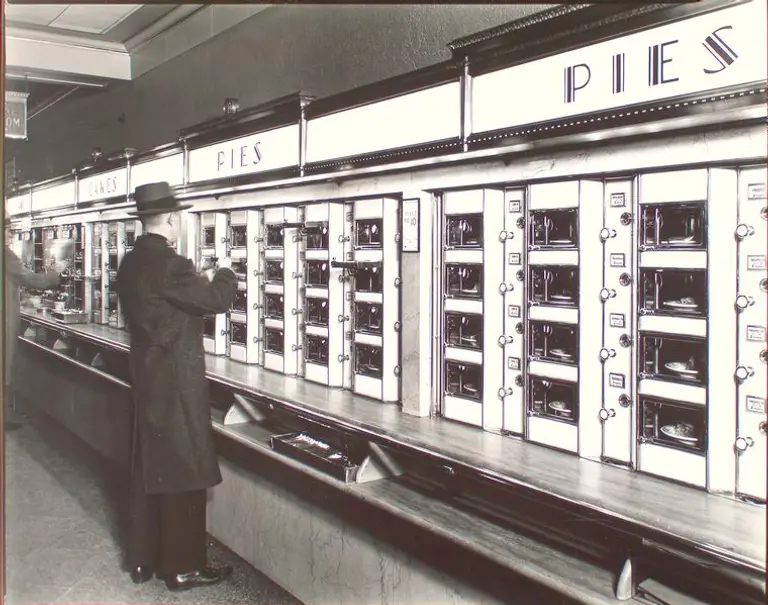
Horn & Hardart Automats: Redefining lunchtime, dining on a dime

In the 1930s, ‘40s, and ‘50s Automats were a New York City dining staple for a hard-working lunch crowd, a modernist icon for a boundless machine-age future. At their height there were over three dozen in the city, serving 800,000 people a day. And nearly everyone who actually experienced Automats in their heyday says the same thing: They never forgot the thrill of being a kid at the Automat. Created by Joseph Horn and Frank Hardart in Philadelphia in 1902, coin-operated Automats were lovingly-designed Art Deco temples to modern efficiency. Sleek steel and glass vending machine grids displayed sandwiches and main dishes as well as desserts and sides, each in their own little boxes, square and even, clean and well-lit. You put a coin in the slot, opened the door and removed your food—which was reportedly quite good, as the founders took terrific pride in their craft.
What was it about the experience that made for such a lasting memory?
September 13, 2015

Get to Know New NYC Neighborhoods Through Food With Like A Local

If you're like most New Yorkers, you probably keep within a ten block radius of your home when you have downtime, maybe venturing out on a Sunday afternoon for brunch. A tired routine? Well, here's the perfect opportunity to spread your wings a bit. Like A Local is a cool startup that invites folks to chow on some of the best eats a neighborhood has to offer, while also giving them a taste of a place's history—from the art to architecture to the origin of what they're biting down on. Basically if you love eating and you love learning, they've got four tours worth your time.
Find out more here
September 8, 2015

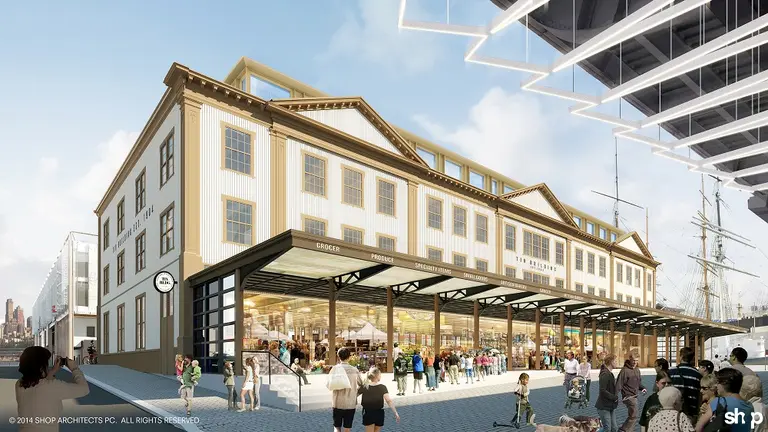
New South Street Seaport Will Be the City’s Next Foodie Destination by 2017

Perhaps spearheaded by the Smorgasburg foodie culture, putting multiple local food vendors in one place has become a recipe for success in NYC development projects. There's the Hudson Eats food hall at office-filled Brookfield Place, the forthcoming food court by Anthony Bourdain at Pier 57, Danny Meyer's possible giant food hall at Hudson Yards, the 55-vendor Dekalb Market Hall planned for Downtown Brooklyn's City Point, and the food hall at Sunset Park's Industry City, to name just a few. So it comes as no surprise that the South Street Seaport redevelopment will boast not one, but two massive food halls. The Post reports that none other than three Michelin-starred chef Jean-Georges Vongerichten (ABC Kitchen, the Mercer Kitchen, and JoJo are just a few of his famed restaurants) will be spearheading the foodie revolution at the Howard Hughes Corporation's $1.5 billion mega-development. According to the paper, "The great chef and his business partner Phil Suarez have signed a lease/partnership contract with NYSE-listed Hughes to launch two major Seaport projects — a 40,000 square-foot, seafood-themed marketplace inside the Tin Building and a 10,000 square-foot restaurant in a rebuilt Pier 17." Both are expected to open in 2017.
Find out more right here
September 3, 2015

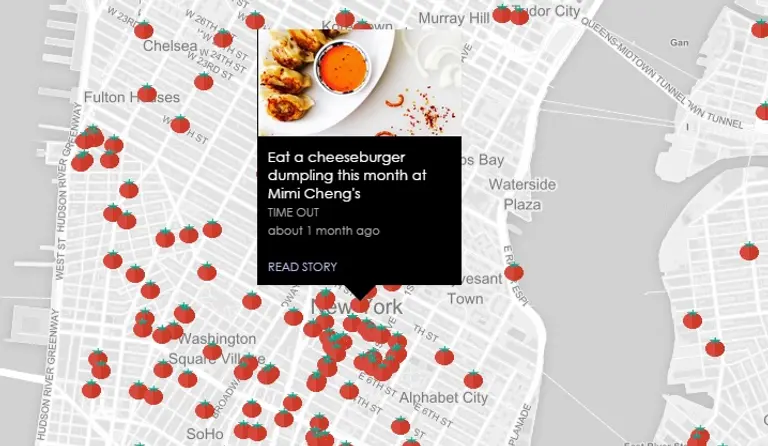
Get All Your Local Foodie News in This New Interactive Map

If you're a regular 6sqft reader you know that real estate and architecture news here in NYC moves at the speed of light. Projects change architects overnight; celebrities are constantly buying and selling their multi-million-dollar pads; and it seems like everyday there's a new development announcement. The gastronomy crowd can make the same claim, though, as restaurants constantly open and close, chefs come in and out, and the food of the moment goes from cronut to fried chicken sandwich in a matter of days. To help foodies stay up on their news, Blockfeed, a news app that uses geographic location to determine one's feed, has created the Food News in NYC map, a five-borough interactive platform that provides local food happenings (h/t DNAinfo). According to the site, "This map frees you to explore the last 60 days of food news in NYC, amounting to roughly 3,000 articles about new restaurants, festivals, pop-ups, nightlife, and more."
More on the map
August 28, 2015

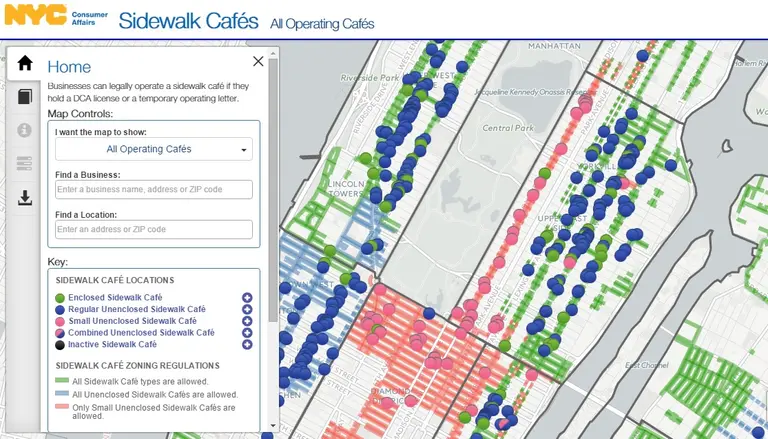
Want to Dine Al Fresco Tonight? This Interactive Map Shows All 1,357 Sidewalk Cafés in NYC

This time of year, who wants to eat inside? New Yorkers are constantly on the hunt for a great al fresco restaurant where they can snag a table and enjoy the warm weather and people watch. And with this handy new map from the city, picking a spot just got a whole lot easier. The interactive platform plots all 1,357 sidewalk cafés in the city, as well as how many outdoor tables and chairs are allowed, pending applications, license status, and health grades. But interestingly enough, the Department of Consumer Affairs didn't create the map to make life easier for foodies; they want to "boost transparency and reduce confusion surrounding the licensing process," according to Crain's.
Find out more
July 1, 2015

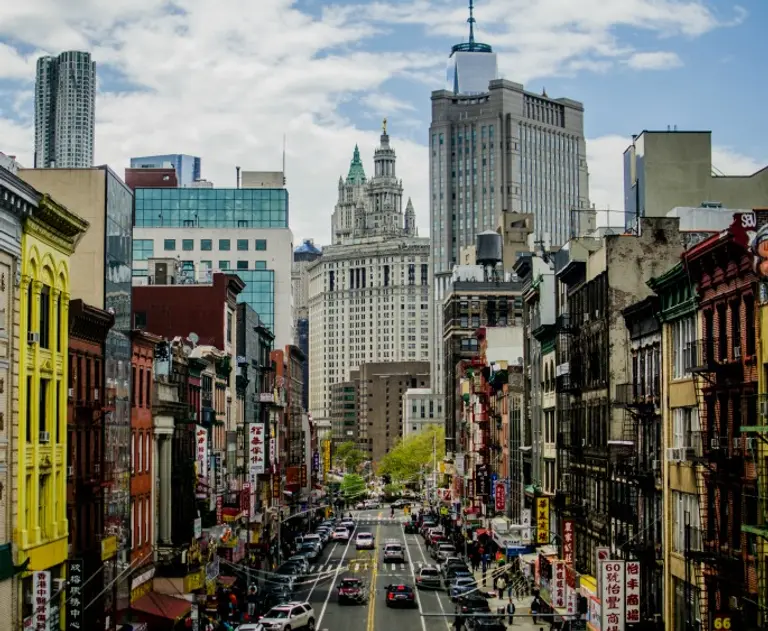
Get to Know Chinatown Through These Iconic Cultural, Gastronomic and Architectural Spots

Back in March, we took a look at how Chinatown is predicted to undergo rapid changes within the next decade, transforming it into another haven for hipsters and real estate developers. As of right now, these changes are hard to see–luxury condos like Hester Gardens stand alone among the array of colorful shops and signs covered in Chinese characters. In fact, a past poll shows that readers are equally divided on Chinatown's future. As with all gentrifying neighborhoods, one of residents' biggest fears is that the neighborhood will lose the cultural characteristics that make it unique. With this in mind, we're taking stock of the iconic places that make Chinatown what it is. We've highlighted some of the neighborhood's best restaurants and shops (think Economy Candy and Joe's Shanghai), along with a few standout structures (the largest Buddhist temple in New York City, to name just one) that make this neighborhood unlike any other in the city.
See which places made the list here
May 20, 2015

Four Seasons Renovation Plans Shot Down by Landmarks Preservation Commission

Aby Rosen's plans to update the Four Seasons has been squashed by the city's Landmarks Preservation Commission. According to Crain's, the only upgrade that received a nod from the commission was a request to change the carpet. Bigger renovations, like replacing a non-original fissured glass partition with planters and to replace a fixed walnut panel between the public and private dining rooms with a movable one, were all rejected. "There is no good reason why they should make these changes," said Meenakshi Srinivasan, the commission's chairwoman, Crain's reports. "There's no rationale. The space could function perfectly well without these changes, so why do it?"
Find out more
April 29, 2015

The Four Seasons: An Iconic Interior Landmark Faces an Uncertain Future

As you probably already know, 2015 marks the 50th anniversary of the NYC landmarks law. And one of the ways the city is marking the historic event is with an exhibit at the New York School of Interior Design called Rescued, Restored, Reimagined: New York’s Landmark Interiors, which focuses on some of the 117 public spaces throughout the five boroughs that have been designated interior landmarks. In conjunction with this exhibit, Open House New York recently hosted an interior landmark scavenger hunt (for which 6sqft took eighth place out of 40 teams!), which brought participants to designated interior spaces in Manhattan, the Bronx, and Brooklyn over the course of seven hours. One of the spots we visited was the Four Seasons restaurant inside the famed Seagram Building. Through our scavenger hunt challenges here, we learned just how groundbreaking this restaurant was for its innovative design and role as the quintessential Midtown "power lunch" spot. But the Four Seasons, despite its landmark status, is facing an uncertain future.
Learn about the past, present, and future of the Four Seasons here
February 3, 2015

Then and Now: From Luchow’s German Restaurant to NYU Dorm

For those of us who came to the city within the past decade, it's hard to imagine East 14th Street without its stretch of bulky NYU dorms, big-box supermarkets, and mini-chain restaurants. But of course this wasn't always what the area looked like. In the late 19th century, the area centered around Irving Place, was full of entertainment venues like the Academy of Music, the city's opera house, Steinway Hall, Tammany Hall, and the City Theatre movie house. And at the heart of it all was a restaurant that catered to both the theater crowd and the German population of the East Village–Luchow's. Luchow's was established in 1882 at 110 East 14th Street at Irving Place when German immigrant August Lüchow purchased the café/beer garden where he worked as a bartender and waiter. It remained in operation for a full century, becoming an unofficial neighborhood and city landmark, until it was replaced by NYU's University Hall dormitory.
Read the full history here
January 23, 2015

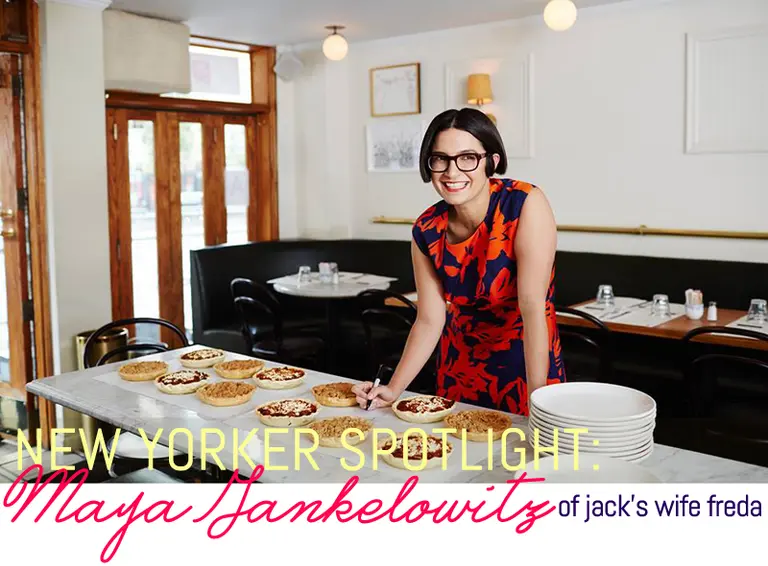
New Yorker Spotlight: Maya Jankelowitz of Jack’s Wife Freda on Creating Restaurants That Feel Like Home

If you're an Instagram-loving New Yorker, then you've likely seen, or maybe even posted, photos of the salads, egg dishes, and even the menus at the downtown restaurant Jack's Wife Freda. Through the app, diners at Jack's Wife Freda have been spreading the word about the establishment's food and polished-yet-relaxed atmosphere. These sepia-toned photos certainly caught our attention, especially the beautiful meals plated on crisp white dishes. The visionaries behind the restaurant are husband-and-wife team Dean and Maya Jankelowitz. The pair opened Jack's Wife Freda three years ago on Lafayette Street in Soho, and just opened a second location on Carmine Street in the West Village. Together, the two restaurants are designed for New Yorkers to sit down and enjoy simple dishes that remind Dean and Maya of their families and respective countries, South Africa and Israel. For the couple, it's only a perk that they are getting so much attention on social media, as their primary goal has always been the two H's: hospitality and happiness. We recently spoke with Maya at the new Carmine location to find out about running two restaurants in the city with her husband and what it means to give New Yorkers a restaurant to call "their spot."
Read the full interview here
January 20, 2015

Tour the Chefs Club Restaurant by ‘Food & Wine’ Magazine at the Landmark Puck Building

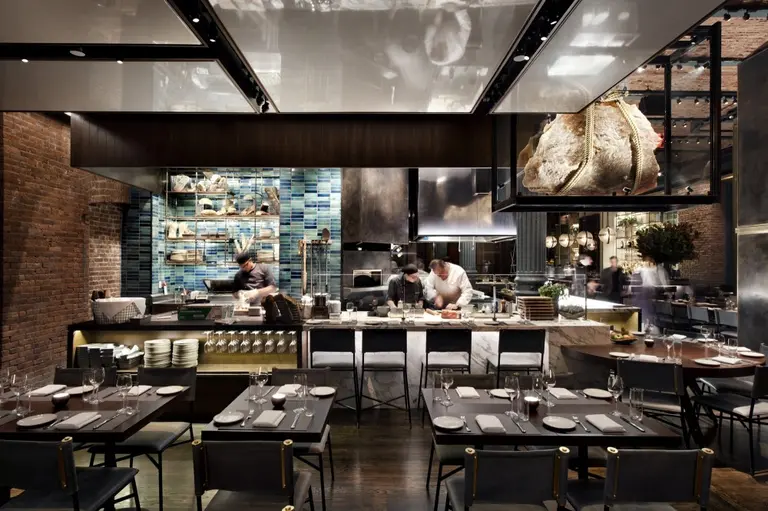
There's been plenty of talk about the luxurious penthouses that top off the historic Puck Building. But just below these spectacular homes is an equally stunning space that's sure to take your breath away—or at least get your stomach rumbling. Archdaily brings us on a tour of the Chefs Club, a brand new dining experience dreamt up by the folks over at Food & Wine magazine. The sleek eatery opened just last fall to rave reviews, and it's no surprise; the Chefs Club by Food & Wine is exactly what you'd hope it is: the magazine's "Best New Chefs" and an international roster of rockstar cooks whipping up meals unlike any you've had before.
Take a tour of the spectacular interiors here
December 24, 2014

Say Goodbye to Williamsburg’s Iconic Diner, New Six-Story Apartment Building Coming

Amongst Williamsburg's ever-growing, rapidly-rising new developments remains a neighborhood icon that has managed to stick around in the face of change. However, it looks like time has finally caught up to this tiny 1950s treasure, as Brownstoner reports that permits were filed today to replace the classic metal structure with a six-story, 10-unit apartment building. The replacement may not surprise too many given the transformation of the area, as well as the restaurants taking up space—from a diner in '52 to a beloved burger joint from '97 to 2010 to today providing a somewhat less fitting location for upscale La Esquina's satellite Mexican restaurant/cafe—but without a doubt it's still one that we're sad to see happen.
More details here
September 3, 2014

Coffee Culture: Are Neighborhood Cafes the First Sign of Gentrification?

From “coffices” to lab-like minimalist gourmet coffee meccas to cozy neighborhood hangouts, neighborhood cafes are a fine example of the essential “third place” mentioned in discussions of community dynamics: that place, neither work nor home, where regulars gather and everyone’s welcome. Along with yoga studios, art galleries, community gardens, vintage clothing shops, restaurants with pedigreed owners and adventurous menus and, some say, a change in the offerings on local grocery shelves, cafes are often the earliest sign of neighborhood change. The neighborhood cafe serves as a testing ground for community cohesiveness while adventurous entrepreneurs test the still-unfamiliar waters around them. Beyond the literal gesture of offering sustenance, cafes provide a place where you can actually see who your neighbors are and appreciate the fact that at least some of them are willing to make an investment locally.
Get a fleeting glimpse of old New York City cafe culture in the West Village, meet the future of coffee distribution in Red Hook.
August 24, 2014

Neon, Metal, and Patty Melts: A Look at Classic New York City Diner Design

American diners are neon-lit time capsules of architecture and design. They are the '57 Ford Thunderbird of restaurants, shaping post-war optimism and far too much metal into something beautiful and quintessentially American. Best of all, you can still find plenty of little diners doing what they have always done, among the rising skylines and property values of New York City.
See our diner photos here