New York moves to protect historic African burial ground in Elmhurst
Credit: Queens Borough President’s Office
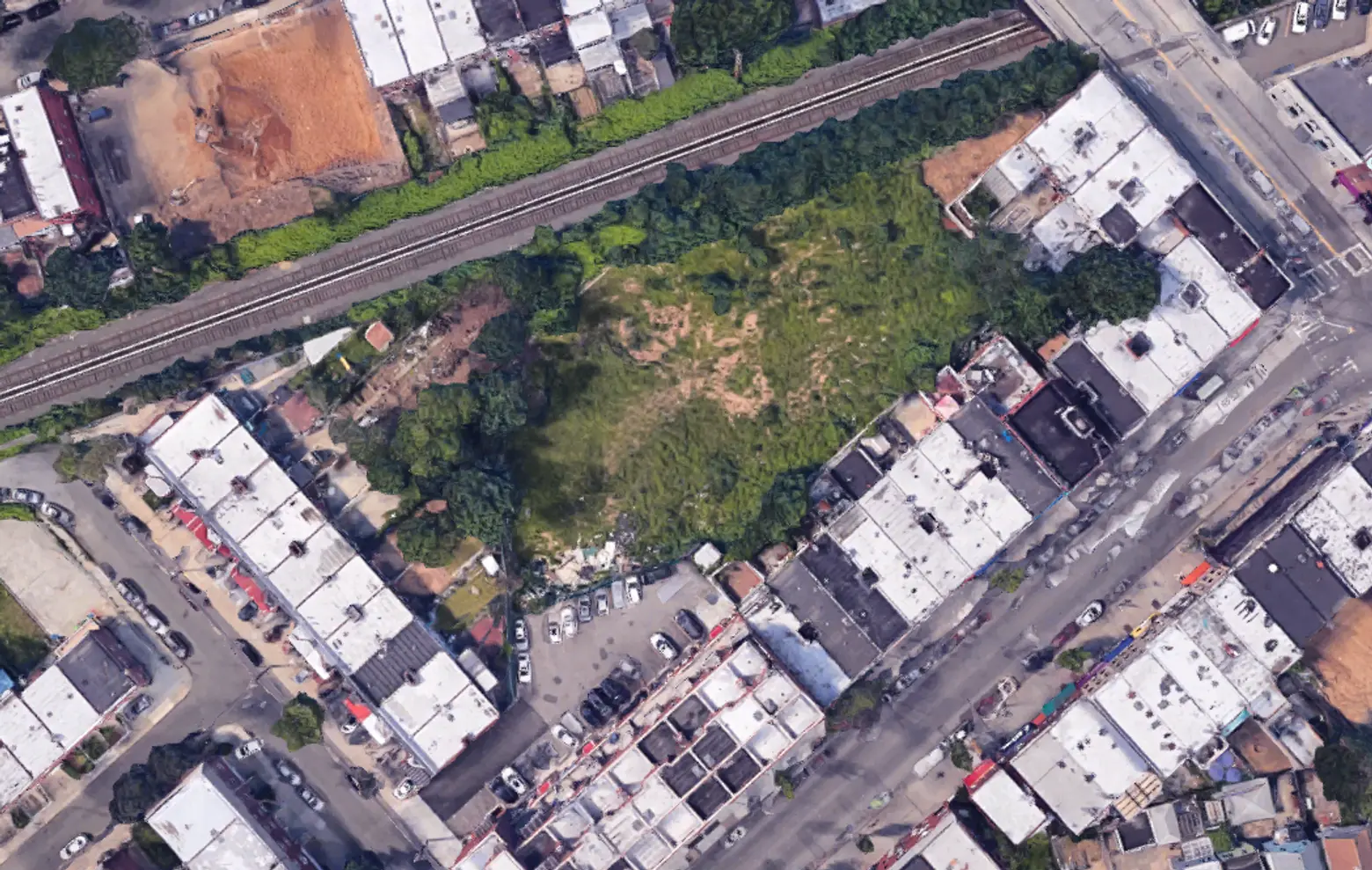
New York wants to ensure a historic burial ground of formerly enslaved people in Queens finally receives the protection and recognition it deserves. Attorney General Letitia James on Friday filed a motion to intervene in a pending foreclosure action involving 47-11 90th Street in Elmhurst, a site where nearly 300 freed African slaves were buried in the early 19th century, seeking a court order requiring any prospective buyer to be notified of the human remains on the property and their legal obligations to protect them. Dating back to 1818, the site was rediscovered in 2006 and has since been paved over and disturbed during subsequent development. Now that the property is once again up for sale, the state is seeking to ensure the burial ground is respected by its next owner.
After slavery was abolished in New York in 1827, communities of freed Black New Yorkers began to grow throughout the state. One of them was Newtown, located in present-day Elmhurst. A group of formerly enslaved people formed the United African Society of Newtown, constructing a church and an adjacent burial ground that had already been used informally for the previous decade.
The site is believed to have been established in 1818, nine years before the abolition of slavery, and at one point contained the remains of more than 300 New Yorkers, many of them formerly enslaved people.
The society later became the St. Mark African Methodist Episcopal (AME) Church, which owned the property until it was sold after the congregation relocated to Jackson Heights in the 1930s. The site remained largely forgotten until 2006, when the city placed restrictive declarations on the property to protect those buried there.
Despite those restrictions, the site has been disturbed repeatedly over the years. In 2011, workers beginning construction on a condo development at the property uncovered an iron casket containing the remains of a woman who died in the 1800s, halting the project.
Because the body was so well preserved, researchers were able to identify the woman as Martha Peterson, who was born decades before the Civil War and is believed to have worked for a local white man with abolitionist leanings, according to the New York Post.
That same year, developer Song Liu filed permits to construct a five-story building on the site, prompting a campaign led by the nonprofit Elmhurst History & Cemeteries Preservation Society to preserve it.
The society had asked the Landmarks Preservation Commission (LPC) to designate the site as a landmark, but it has yet to receive landmark status.
The next year, the site was listed for $13.8 million by real estate firm Cushman & Wakefield, which marketed it as offering “92,000 buildable square feet for residential development.” The listing made no mention of the burial ground underneath.
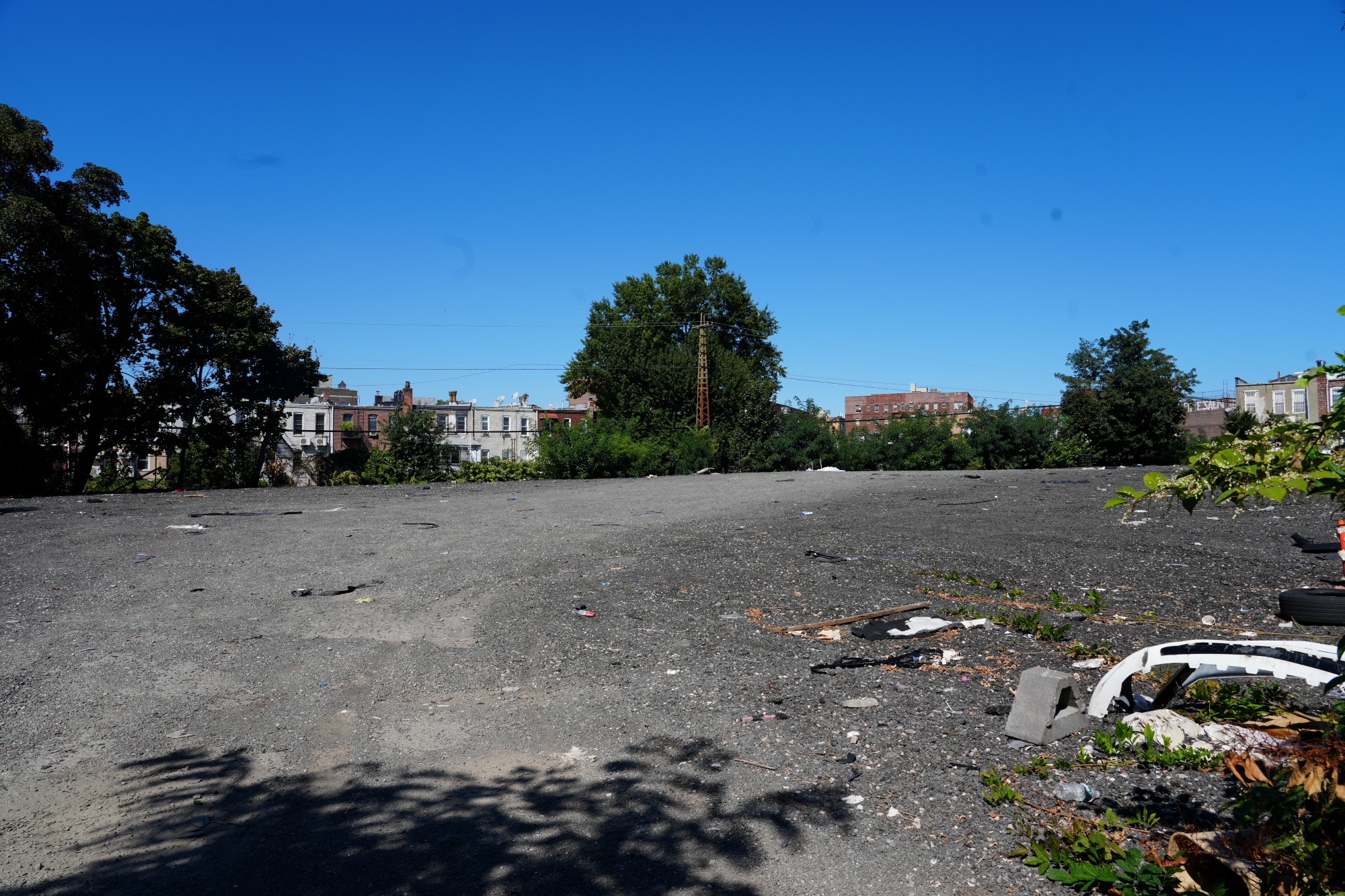
In 2025, the site’s current owner, 90 Queens Inc., paved over the property and began using it to store old cars and other debris. The city’s Department of Buildings deemed the use illegal and ordered the lot shut down, issuing multiple violations against the owner for its use as a parking and storage lot, unsafe conditions, and an excessive accumulation of tires. As The City Reporter noted, cars found abandoned on city streets by the NYPD were also left on the lot, until this past April, when the firm’s license expired.
After defaulting on its mortgage several years ago, 90 Queens Inc. surrendered the property to 90 Street Realty LLC, which is now pursuing a foreclosure action against the site. A court-appointed referee is expected to sell the property at public auction.
While some human remains have been removed from the site, many more have yet to be excavated and remain at risk of further disturbance.
In her filing, James is seeking to intervene in the foreclosure action to ensure the new owners comply with the state’s Unmarked Burial Site Protection Act, enacted in 2023.
The law prohibits anyone from moving, relocating, possessing, handling, or otherwise disturbing human remains discovered at a burial site, except as permitted under specific procedures for identifying and notifying descendants and culturally affiliated groups.
Considering the previous disturbances at the property, James is concerned that without legal intervention, its next owner could take over the site without being aware of their legal obligations to protect and properly handle the remains.
She has asked the court to require that, if the foreclosure sale proceeds, the referee overseeing it include a copy of the OAG’s motion and the text of the burial site law in the materials provided to every prospective buyer.
James believes the notice will ensure prospective buyers respect the human remains buried at the site and prevent the burial ground from being forgotten once more.
“Every New Yorker deserves to rest in peace, and that includes the people buried on this land generations ago,” James said. “My office will not allow a foreclosure sale to become yet another disrespectful event in this burial ground’s unjustly troubled history.”
“We are going to court to make sure whoever buys this property knows exactly who is buried there and is aware of their legal obligation to protect them,” she added.
James’ action follows a letter penned by the Newtown Historical Society to the LPC in August, in which it accused the city of not “honoring the history of all cultures equally.” In the letter, the group urged the LPC to protect the site, citing the commission’s previous efforts to protect the Brickerhoff Cemetery in Fresh Meadows.
“The site demands respect, recognition, and celebration, and that can only be achieved through designation,” the group wrote. “Our generation has been presented with a wonderful opportunity to preserve this site and use it to educate future generations on the African American history of Queens—an opportunity that should not be squandered.”
Earlier this month, the Elmhurst History and Cemeteries Preservation Society and the pastor of St. Mark AME filed a “request for evaluation,” formally asking LPC to designate the property as a landmark, according to The City Reporter.
LPC spokesperson Courtney Metakis told the website the commission will add the site to its survey list if the landmark ‘may merit’ consideration.
On Friday, Queens Borough President Donovan Richards called on the city to purchase the land and make it a memorial to those buried there.
“St. Mark AME Church, the stewards of these bodies, finally deserve their say in what happens here too,” Richards wrote in a post on X.
He added: “This lot is in foreclosure. But under no circumstances should we allow the former slaves buried here 200 years ago to be auctioned off in death, just as they were in life.”
RELATED: