Nyc Subway

May 24, 2017

Governor Cuomo and the MTA announce a competition to fix the NYC subway system

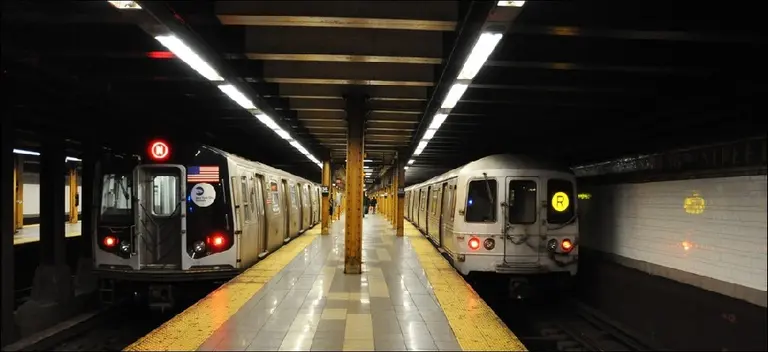
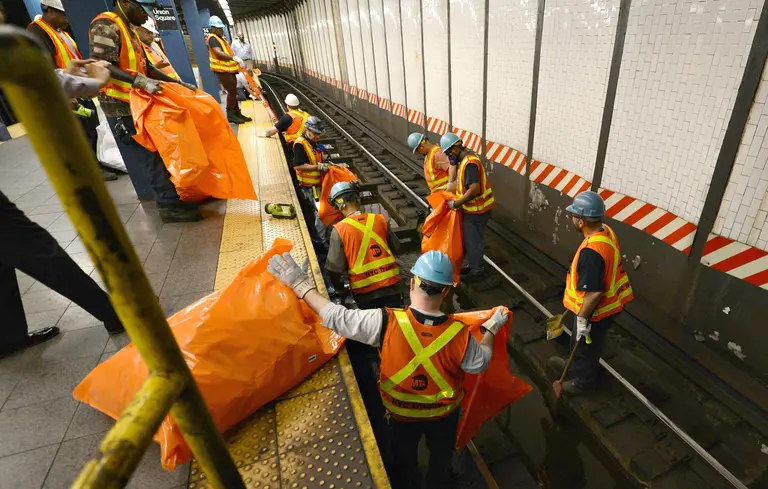
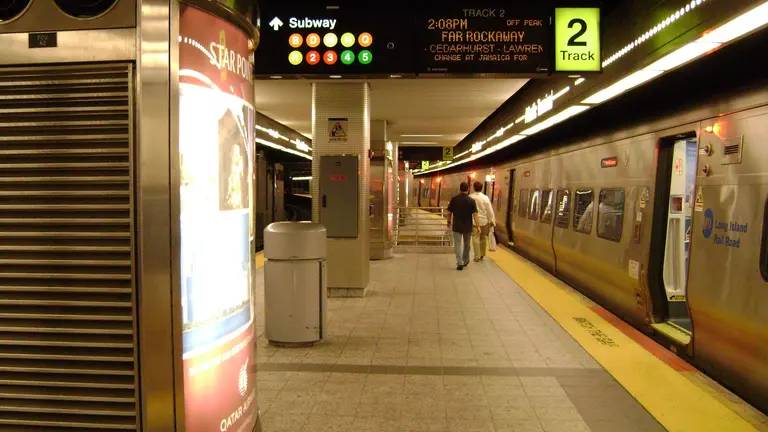
Image via Alan Bloom/Flickr Seeking innovative solutions to fix the mess that is the New York City transit system, Governor Cuomo on Tuesday launched a competition called the “MTA Genius Transit Challenge.” Just one of the governor’s recently proposed ideas to fix the subway, the international competition challenges participants to develop ideas for better signaling, new car designs, and WiFi throughout the system, including in tunnels. The winner of each category will receive $1 million and a possible contract deal with the state. In addition to the challenge, Cuomo announced he has created a Penn Station Task Force to devise alternative transportation solutions during Amtrak’s track work at the station this summer.
Find out more

May 23, 2017

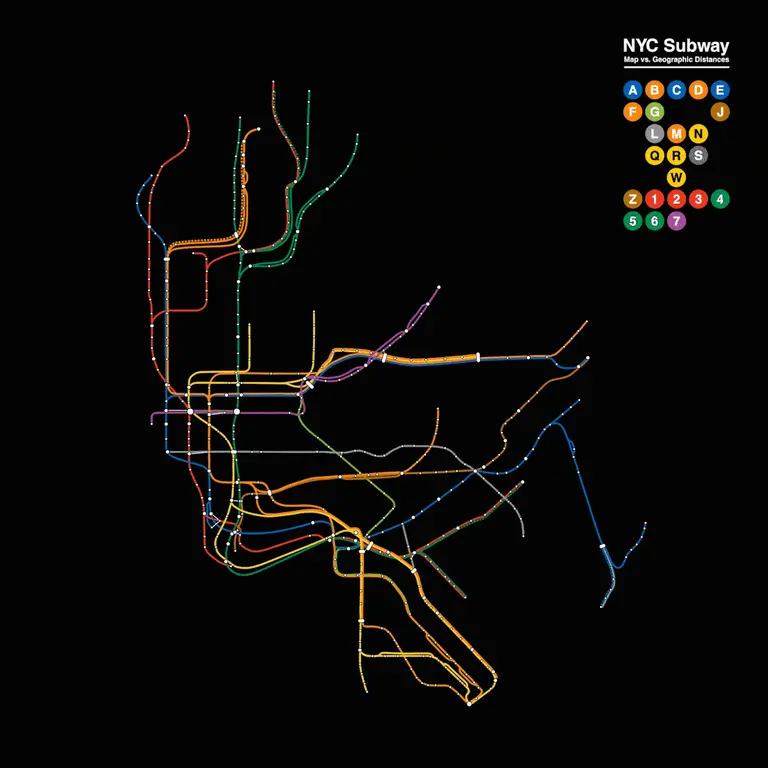
The ‘map distance’ vs. the ‘geographic distance’ of the NYC subway

The NYC subway map tidily lays out over 665 miles of track and 472 stations into a simple, easy-to-read design. While the map gives the impression that our fair city's transit system is orderly and evenly spaced, as any true straphanger will tell you, that's not the reality. Indeed, those colorful lines and nodes have been placed for maximum legibility, simply showing geographical approximations that often don't even kind of match up with real life (as this man will tell you). Now, one redditor brings us an entrancing new animation that removes the MTA's distortion, giving us a look at the real distance that exists between stations and lines.
mor here
May 23, 2017

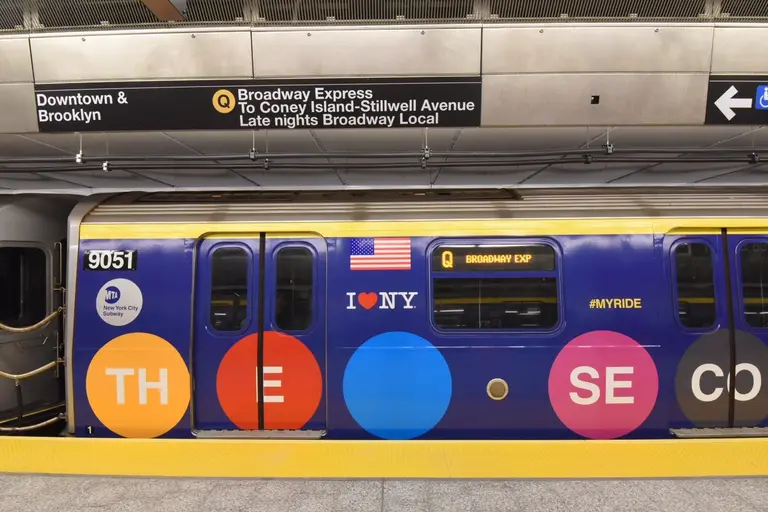
Second Avenue Subway ridership continues to grow; MTA to add more trains

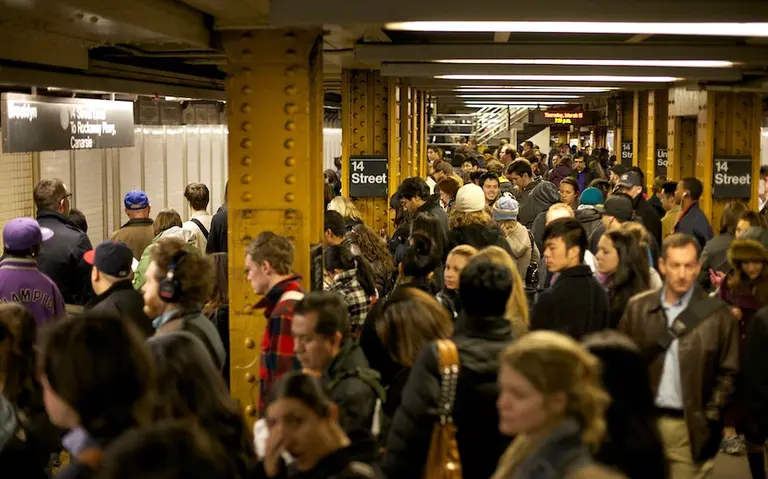
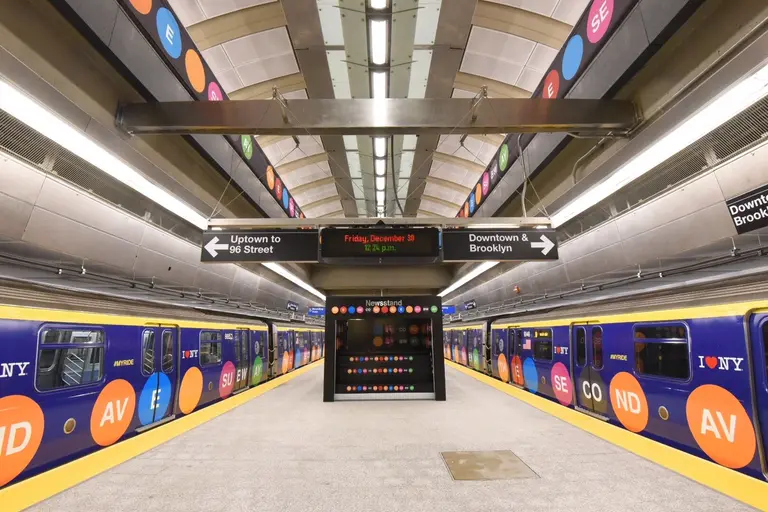
Just a month after opening on the first of the year, the Second Avenue Subway had eased congestion on the Lexington line by 11 percent. Now, nearly five months in, that figure has more than doubled, with ridership on the 4/5/6 decreased by 26 percent and a whopping 40 percent during peak morning hours. Moreover, Second Avenue's average weekday ridership is up from 140,000 to 176,000 passengers, an increase which has prompted the MTA to add two additional train trips during rush hour come this November.
Find out more

May 18, 2017

Costly and inefficient construction is causing NYC’s subway system to lag (STUDY)

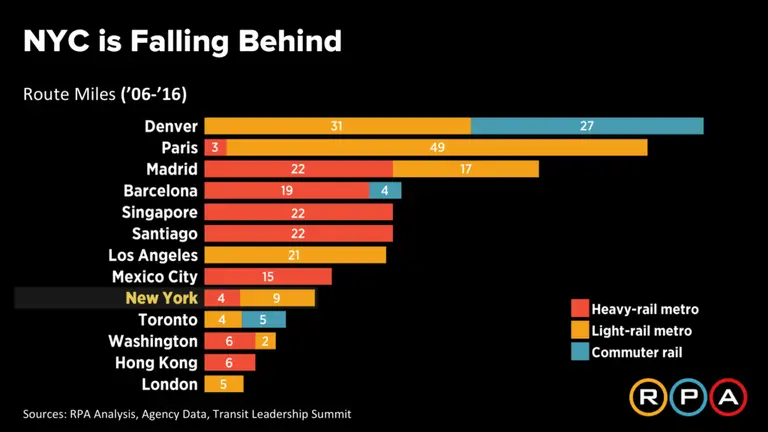
As the nation’s largest transit system, the New York City subway helps connect millions of people to its five far-reaching boroughs each day. While it has helped shaped the city’s indisputable wealth, density and culture, the cost of subway construction remains incredibly expensive, with the time of projects taking much longer than they should. According to a study, "Building Big for Less," by the Regional Plan Association Lab (RPA), with the exception of a few minor projects, New York’s subway system peak performance was in 1937. Since the 1930s, there has been little increase in system capacity and today there are fewer miles of track and commuter rail than in 1937. RPA’s study focused on NYC and other world capitals in order to compare transit data on a large scale.
Find out more
May 16, 2017

MTA announces six-point plan to combat subway delays and improve service

After a week full of delays and malfunctions, the MTA has announced a six-point plan to address the subway’s chronic service problems. The agency’s plan will increase testing of tracks and signals, place more emergency personnel and police officers in stations and add more cars into service at a faster rate. The first phase of the MTA’s plan focuses on the A, C and E lines from 125th Street to Fulton Street in Manhattan, and at the 149th Street-Grand Concourse and 3rd Avenue-138th Street in the Bronx. Bottlenecks frequently occur at these sites, which cause delays that spread throughout the entire system.
Find out more
May 2, 2017

Nearly 80 percent of subway escalators and elevators don’t receive necessary maintenance

The reason behind the incessant breakdown of the subway’s escalators and elevators? Nearly 80 percent of them do not receive the necessary maintenance by the MTA. After an 18-month audit, City Comptroller Scott Stringer’s office found that in a random sample of 65 out of the city’s 407 total escalators and elevators, about 50 had not undergone any preventative maintenance service. As reported by the Wall Street Journal, only 20 percent of machines sampled by the comptroller’s office received the scheduled maintenance on time.
Find out more
April 25, 2017

NYC will get 70 new subway cars before the end of the year

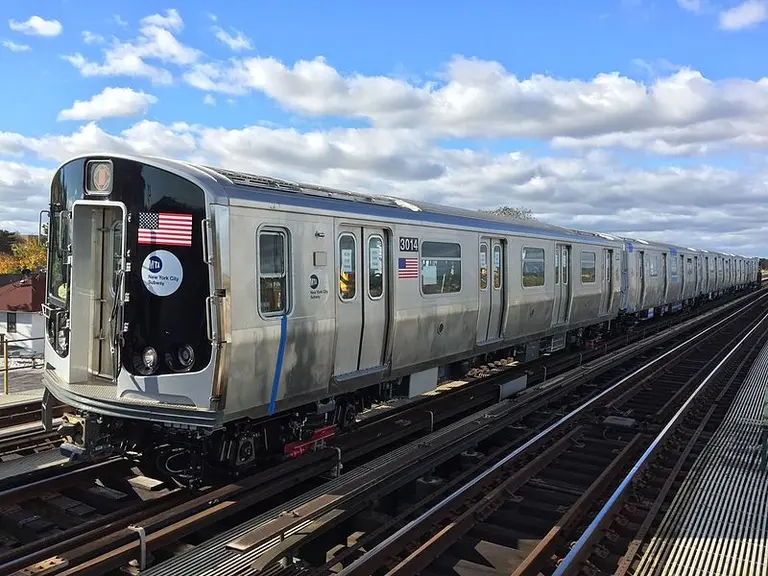
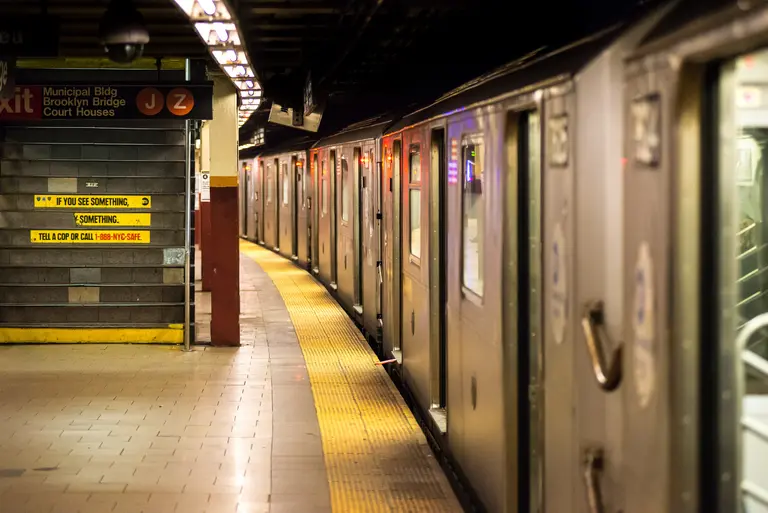
The long-anticipated–and long-delayed–batch of about 70 shiny new subway cars will roll into stations before the end of the year according to the MTA as reported by AM New York. The new cars will replace the system's oldest–and most breakdown-prone–cars on the J, Z and C lines. Another 230 more are scheduled to hit the MTA rails over the course of 2018. Steve Plochochi, the MTA’s vice president of procurement and material, called the cars' arrival "long-awaited good news,” and outlined MTA plans for a “major design change” in subway cars for future models.
What about those future models
April 20, 2017

50 years ago, computer expert Peter Samson started the ‘subway challenge’

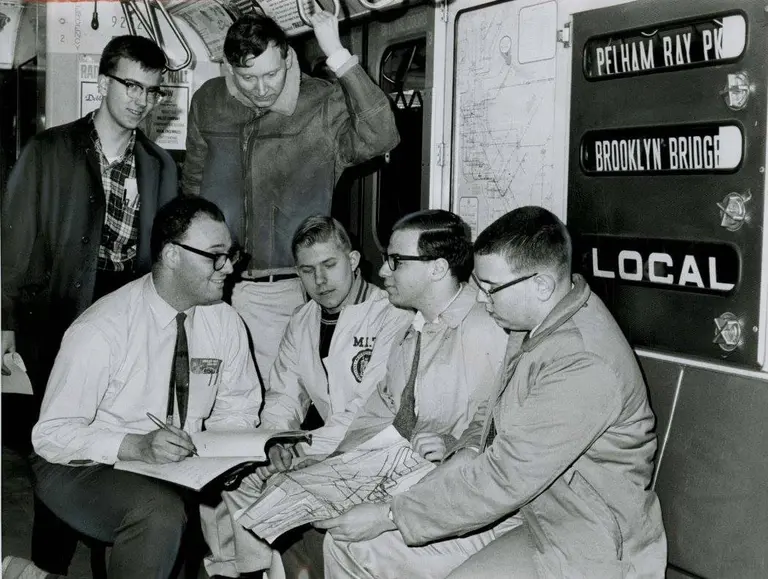
In May of 1940, electric railroad enthusiast Herman Rinke became the first person to tour the entire New York City subway system on a single token, putting in 25 some hours underground all for fun. After reading about Rinke’s journey, Peter Samson, a computer software engineer who later invented the world’s first video game Spacewar, decided to take a stab at making his own record. As the Times recounts, he formed the Amateur New York Subway Riding Committee (ANYSRC) to develop rules for the challenge. After one failed attempt in 1966, Samson, with the help of 15 volunteers and a computer program that tracked the fastest route, completed the trip in 25 hours, 50 minutes and 30 seconds on April 21, 1967. Since then, the subway challenge has taken off for puzzle and transit lovers worldwide.
Find out more
April 11, 2017

Contest winners suggest a car-free 14th Street with shuttles and bike lanes during L train shutdown

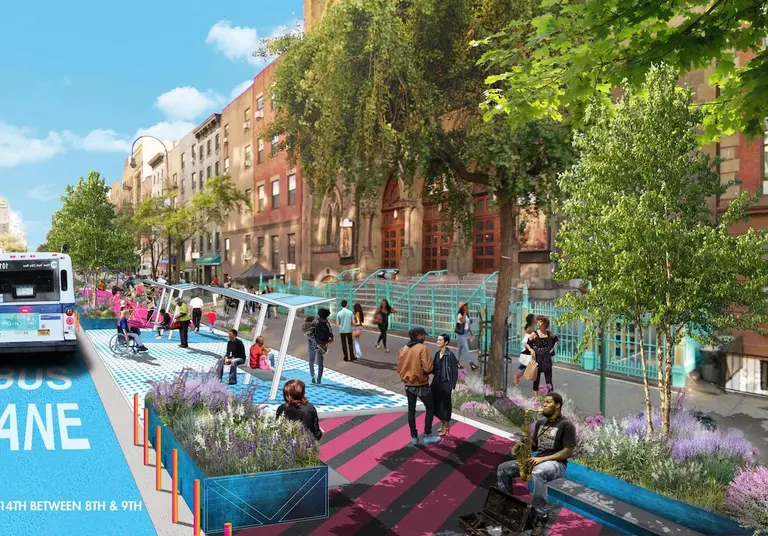
Advocacy group Transportation Alternatives has been trying to stay focused on grounded solutions–literally, as opposed to the tunnel and skyway ideas that are also being discussed–to mitigate the anticipated possible chaos when the dreaded 15-month L train shutdown hits. The organization is aiming for the ear of the Department of Transportation (DOT) and the MTA which control street design and bus expansion, respectively. The group recently held an "L-ternative" contest seeking pedestrian-centered proposals for main transit corridors along the L line, such as 14th street, Gothamist reports. The winning proposal, called 14TH ST.OPS, imagines a (car) traffic-free 14th Street with a six-stop shuttle bus using dedicated lanes, plus protected bike lanes.
Check out the winning post-L-Train vision
April 5, 2017

City Council proposes half-priced MetroCards for low-income New Yorkers

Although the recent subway and bus fare hike affects all New Yorkers, low-income residents are being especially hard hit by the jump in cost. As a way to ease this financial burden, the City Council has proposed a $50 million pilot program as part of the “Fair Fares” initiative which will provide half-fare MetroCards to New Yorkers living at or below the federal poverty line. As the Daily News learned, transit advocates say nearly 800,000 residents would be eligible for the discount under the full plan.
Find out more here
April 4, 2017

This graphic color codes major transit lines in North America

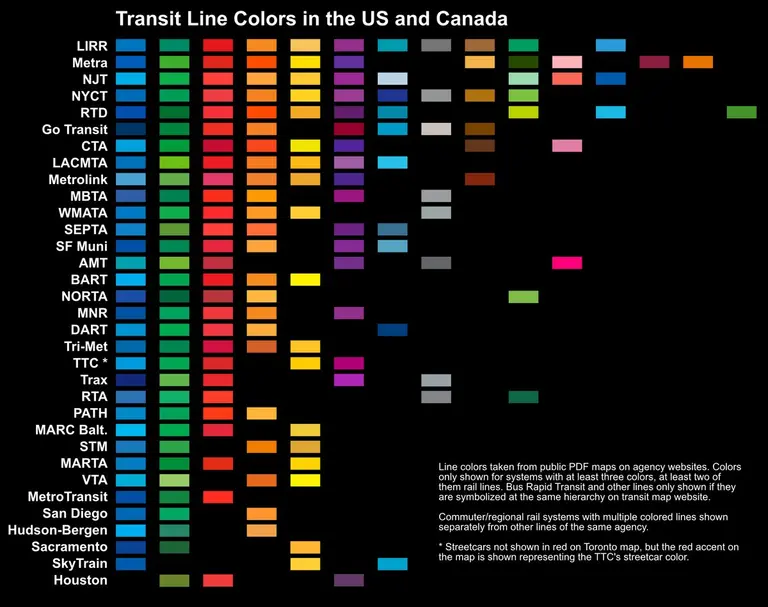
Like New York, Boston's subway system is organized with a different color for each route. Unlike NYC, however, there's no corresponding numbers, so the lines along the T are actually referred to by their respective hues. Which is why Boston resident Ari Ofsevit, a transportation engineering and urban planning graduate student at MIT, found it odd that the Massachusetts Bay Transit Authority didn't use the same colors on their Twitter alerts as were found on their maps and signs. As Next City reported, this inspired him to create a graphic comparing the various colors of 13 major transit lines across the U.S. and Canada.
Find out more
April 4, 2017

MTA Board officially approves 15-month shutdown of L train

It’s official. The Metropolitan Transit Authority board voted to approve a 15-month shutdown of the L train on Monday, instead of the originally proposed 18 months. The Board also awarded a $477 million contract to Judlau Contracting and TC Electric, who will responsible for repairing the train’s Canarsie Tunnel, which suffered severe flooding damage after Hurricane Sandy (h/t WSJ). The planned shutdown is set to begin in April 2019 and cuts all L train service between Bedford Avenue in Williamsburg and Eighth Avenue in Manhattan.
Find out more
March 23, 2017

Starting Monday, three Brooklyn R train stations will shut down for six months

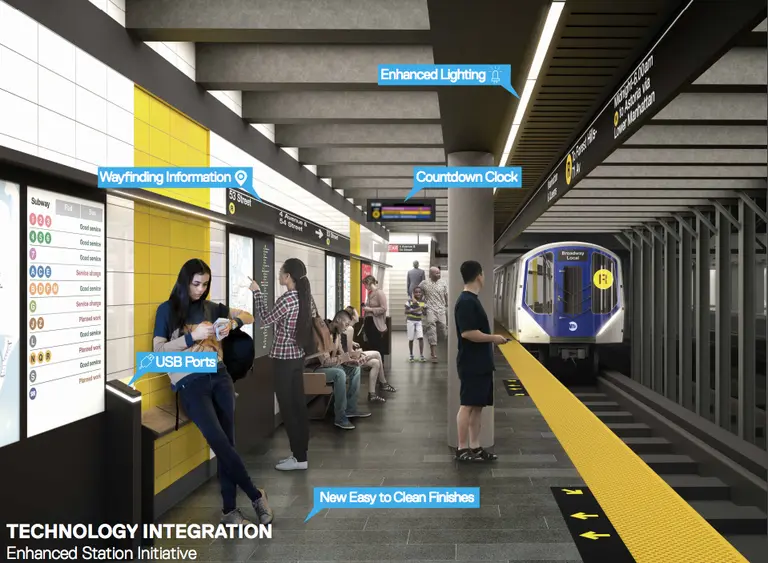
Last January, Governor Cuomo announced a massive undertaking to "modernize and fundamentally transform" the MTA and the subway by adding more countdown clocks, contactless payment by next year, Wi-Fi at all stations (mission accomplished, here), and other high-tech features. It also included news that 30 stations would be revamped, requiring them to shut down entirely for six to 12 months, instead of just on nights and weekends. As of Monday, as amNY tells us, the first three on this list-- the R train stations at 53rd Street in Sunset Park, Bay Ridge Avenue, and Prospect Avenue--will close for half a year for a combined $72 million renovation.
Get the full scoop
March 23, 2017

The least affordable U.S. city for public transit isn’t NYC (and more fun facts about the cost of commuting)

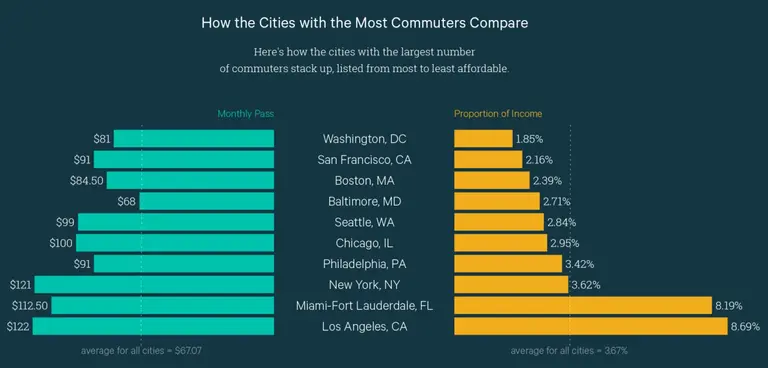
In light of NYC's recent subway fare hike that bumped the price of a monthly pass to $121, the data jocks at ValuePenguin took a look at public transportation systems throughout the U.S. and ranked them according to affordability, based on the cost of a pass as a percentage of income and the median income of the city's commuters. Among the findings: New York City's transit system isn't the most unaffordable; that honor goes to Los Angeles. Washington D.C. topped the most affordable list among large cities, followed by San Francisco and Boston.
Read on for more insight on the cost of a commute
March 21, 2017

Is it illegal to swipe someone through with your MetroCard?

Swiping a fellow New Yorker through the subway turnstile with your MetroCard is practically a New York pastime. But is it actually legal? As DNAinfo reports, the NYPD and MTA say it's completely lawful to help another rider gain access to the subway, as long as you’re not charging them for the swipe. And for those looking for a free ride? Last year, the city changed their policy on “fare-begging,” which lowered the consequence for riders asking for a swipe from an arrest to a ticket or summons.
Find out more here
March 20, 2017

L train shutdown will be 15 months instead of 18 months

Finally, there’s some good news for the nearly 225,000 daily L train riders commuting to Manhattan. This weekend the Metropolitan Transit Authority announced that the Canarsie tube, which carries the L train between Manhattan and Brooklyn, will be closed for 15 months instead of 18, three months ahead of schedule. As reported by the Daily News, the MTA plans to begin rehabilitating the tunnel in April of 2019.
Find out more here
March 17, 2017

‘Bach in the Subways’ brings classical music underground this weekend

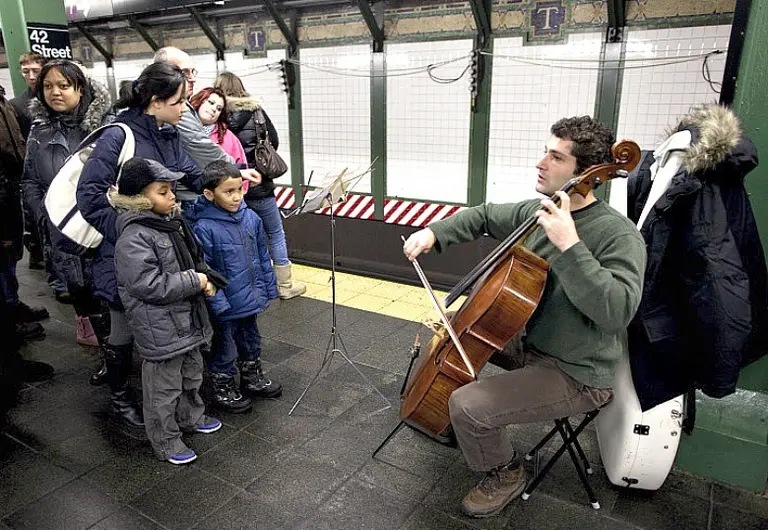
This weekend, celebrate Johann Sebastian Bach's 331st birthday by listening to musicians play all the Baroque hits in subway stations across the city. From Saturday to Monday, Bach in the Subways will bring hundreds of performers underground and above, sharing the German composer's work with New Yorkers for free as part of the MTA's Music Under New York program.
Find out how it all started
March 6, 2017

Hidden underground tunnel will take you from Rockefeller Center to Times Square

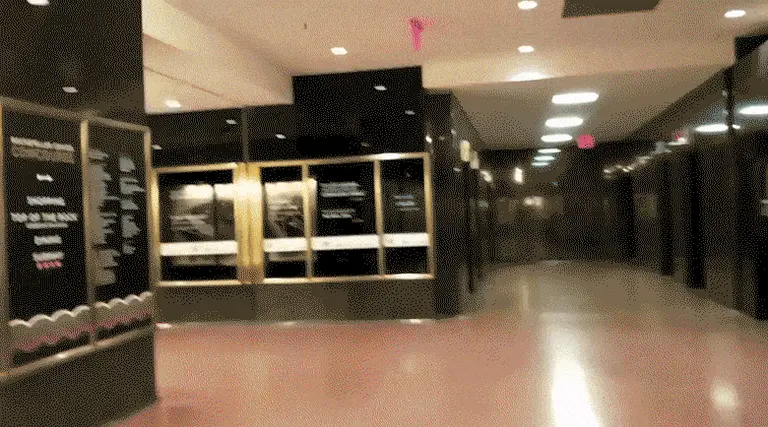
New York City's avenue blocks are long, as are its winters; getting from Rockefeller Center to Times Square can be an unpleasant, cold and crowded experience–unless you take the underground passageway, the city's largest, that spans the entire two-block-plus distance. Below, take a virtual stroll from avenue to avenue (and from the B/D/F/M to the N/R/W subways): Enter on the west side of Fifth Avenue between 50th and 51st Street and exit at Seventh Avenue and 49th Street–and buy yourself a few more minutes before you burrow into that parka.
Take a virtual trip through the tunnel
February 16, 2017

This 100-year-old subway sign can be yours for $150,000

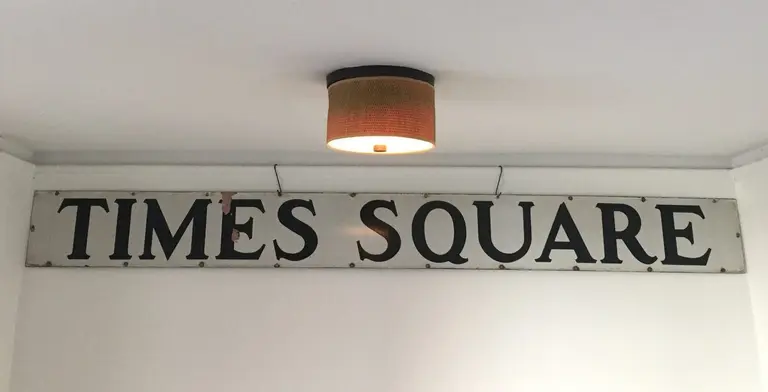
We already know that the MTA holds monthly online sales of ephemera--including everything from retired subway cars to vintage tokens--but apparently individuals with their own collections of transit collectibles can also make a pretty penny selling the goods. Take for example this 100-year-old subway sign that Gothamist spotted for sale on Etsy for $150,000. Sure, the price tag may seem fair for a century-old relic, but the 8' x 11" piece is a simple white sign with black letters that read "Times Square." And it's authenticity isn't actually confirmed...
READ MORE
February 15, 2017

Removing garbage cans in subway stations led to more trash and track fires

For those who thought removing subway station garbage cans as a means to decrease litter and rats seemed counterintuitive, you were right. The Post looks at how things have fared since the MTA took out cans in 39 stations in 2012, and since this tactic was nixed by the state Comptroller’s Office in 2015. Despite the latter attempt to course correct, a new state report shows that the situation is still just as bad in many stations, with the amount of litter on the upswing and an increased number of track fires.
What's the solution?
February 13, 2017

VIDEO: Watch the NYC subway move 7 million people in 1949

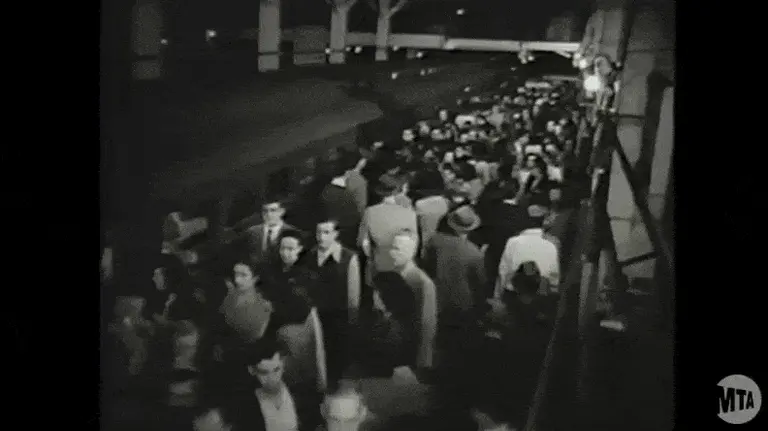
Despite the fact that NYC today has more than 8.5 million residents, the subway system had some of the highest ridership numbers back in the 1940s. In fact, a 1948 record was only recently beat in 2015 when 5.7 million rode the train daily, with annual ridership hitting 1.7 billion–another high not reached since the 1940s. To show just how packed the subway was 60 years ago, 6sqft has uncovered this 1949 film footage of daily subway operations from the New York Transit Museum Archives, which shows the crew working all the angles to keep trains running on time, while crowds jostle and shove to get to where they’re going.
Watch the video
February 13, 2017

As subway delays double, Cuomo may cut MTA funding by $65 million

Gov. Andrew Cuomo’s executive budget includes a "hidden" $65 million cut to state funding headed for the MTA, the Daily News reports. The $244 million in funding–compared to $309 million in 2016–represents a 21 percent drop in money from the state’s general fund intended to shore up the MTA after a drastic 2011 payroll tax cut on regional businesses the transit agency serves. The funding cut comes on the heels of data that show subway delays have more than doubled during that same time period according to the New York Times.
So much to look forward to on the morning commute
February 9, 2017

‘Freedom Ticket’ will offer a transit discount to those in outer Queens and Brooklyn

New Yorkers living in the outer reaches of Brooklyn and Queens may soon find some relief when it comes to their daily commutes. The MTA’s New York City Transit Riders Council (NYCTRC) is looking to make travel more efficient and affordable for those residing in the city's transit deserts through a "Freedom Ticket" pilot initiative that will, says Gothamist, temporarily offer discounted flat-fee tickets for bus, subway and commuter rail travel with unlimited free transfers.
more details here
February 1, 2017

In just a month, Second Avenue Subway eases congestion on the Lexington Avenue line by 11 percent

When the Second Avenue Subway opened on the first of the year, it changed the lives of many commuters, namely those living in Yorkville on the Upper East Side who had long walks to the 4/5/6 trains and then faced their notoriously tight cars and frequent delays. But those New Yorkers who still rely on the Lexington Avenue line have also gotten some relief: According to a New York Times analysis of MTA data, on an average January weekday, ridership fell by about 11 percent, or 88,000 trips, between 110th Street and Grand Central, undoubtedly a direct effect of the Second Avenue line's average ridership of 140,000.
More facts and figures
January 25, 2017

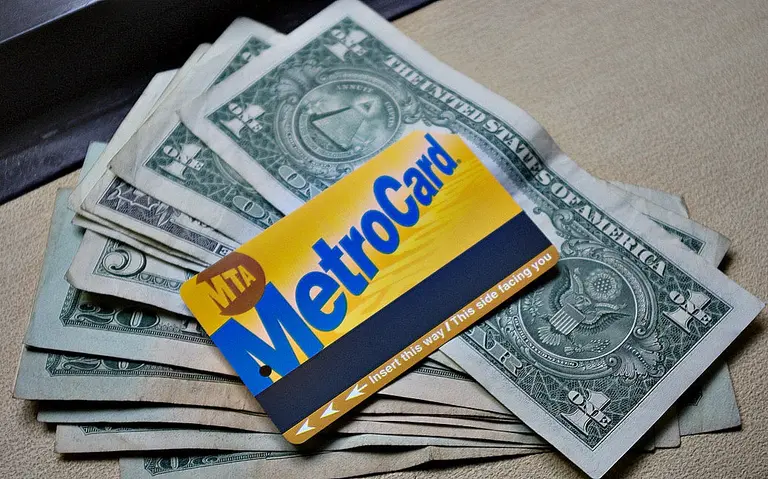
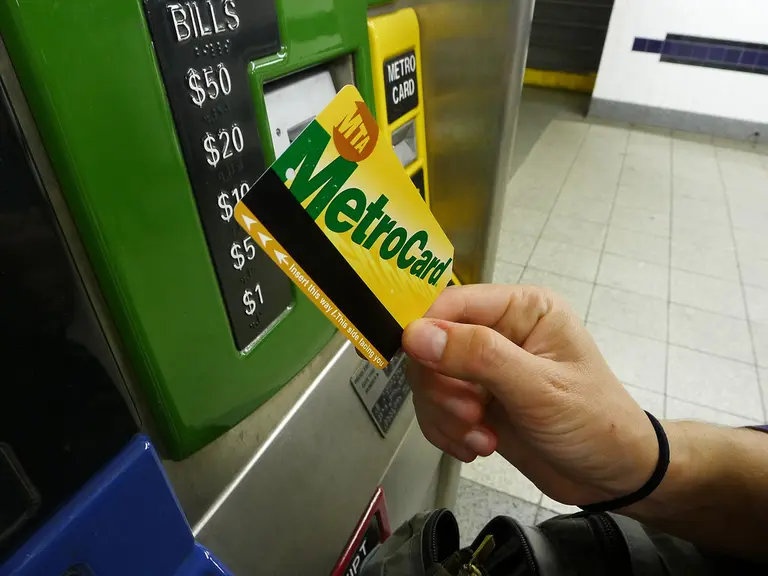
MTA approves fare hike, monthly MetroCard will increase to $121

This morning MTA officials voted in favor of a subway and bus fare hike, which will go into effect March 19, writes The Times. The transit agency opted not to increase per-ride costs to $3, as previously floated, but to instead up monthly and weekly MetroCard prices from $116.50 and $31 to $121 and $32, respectively. Moreover, although the base price of a ride will not see an increase, there will be a decrease in the "bonus" riders get when they add money to their cards. This will drop from 11 percent to just 5 percent.
find out more here