MTA

April 23, 2018

Cortlandt Street subway station, destroyed on 9/11, will reopen this fall

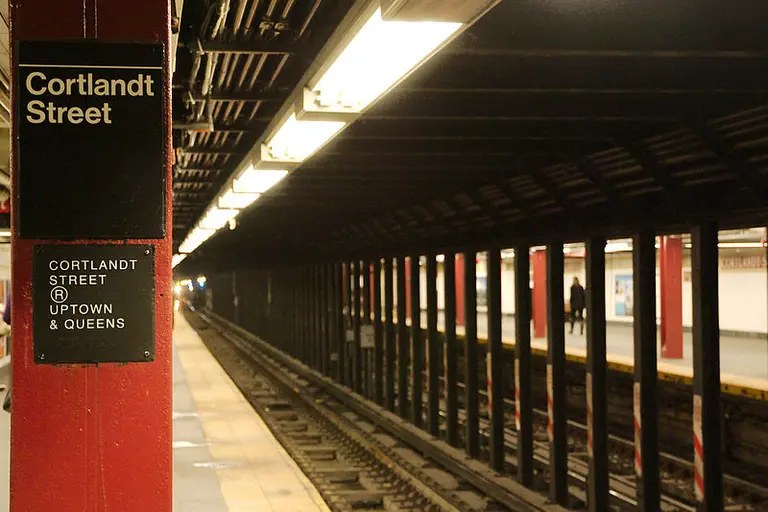
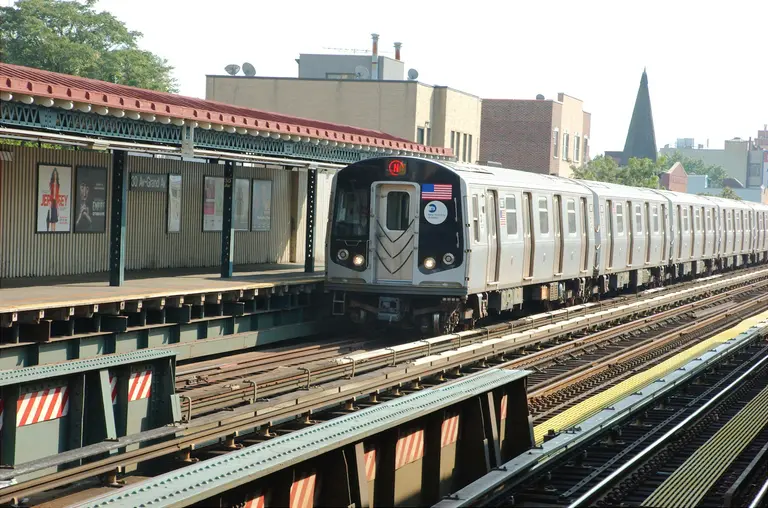
Also damaged in 9/11, the R-line at Cortlandt reopened in 2011; photo via Wikimedia Nearly 17 years after it was severely damaged in the terror attacks on September 11, 2001, and then temporarily shuttered, the Cortlandt Street station is set to open this October. Running on the 1-line, the new station, expected to serve thousands of workers and tourists visiting the site, will boast Ann Hamilton's artwork, featuring words from the United Nation's Universal Declaration of Human Rights and the Declaration of Independence (h/t Daily News). Cortlandt Street station was meant to open in 2014, but funding disputes between the Port Authority and the MTA delayed its completion until this year.
More this way
April 13, 2018

MTA will use ‘magnetic wands’ to clean pounds of steel dust from NYC subway tracks

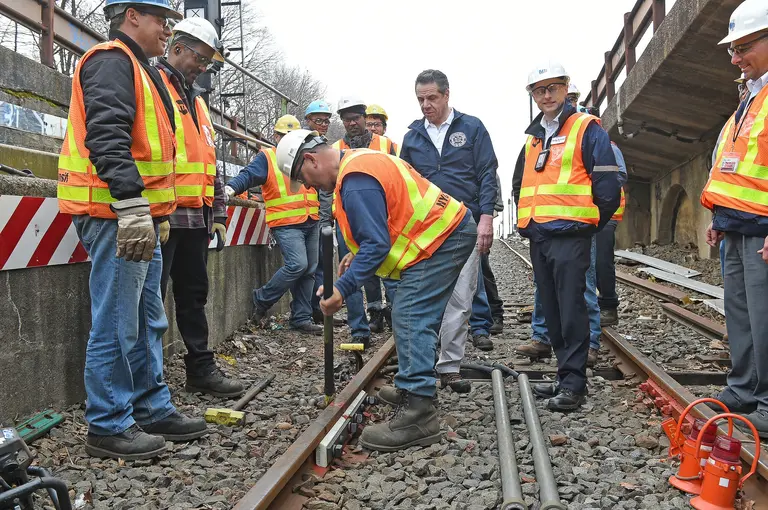
The Metropolitan Transporation Authority will deploy 700 additional "magnetic wands" to clean hundreds of pounds of steel dust from insulated joints on tracks, which accumulates when the brakes are applied. When dust builds up on joints, it can trip the circuit on the joint and cause red signals, sending a ripple of delays throughout the system. Gov. Andrew Cuomo on Thursday tested out the wands at a Sunset Park subway station and announced a plan to buy additional wands to clean all 11,000 insulated joints deemed a priority, using funds from the recently funded-in-full emergency subway action plan.
Find out more
April 4, 2018

MTA sued over L train shutdown plan to transform 14th Street into an all-bus corridor

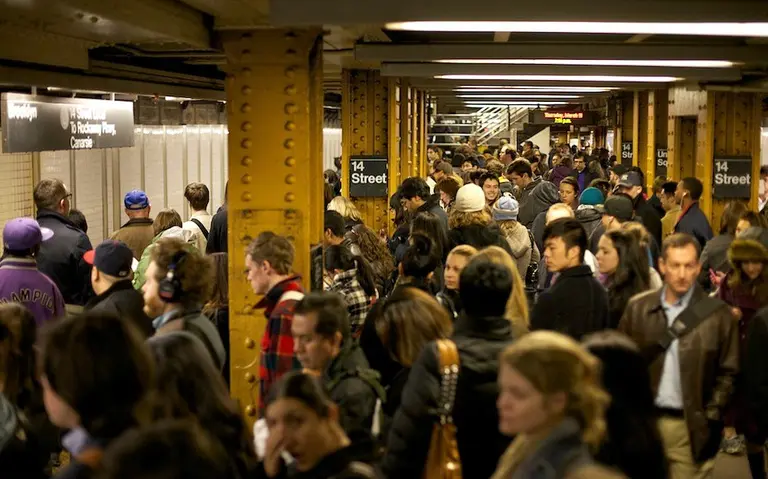
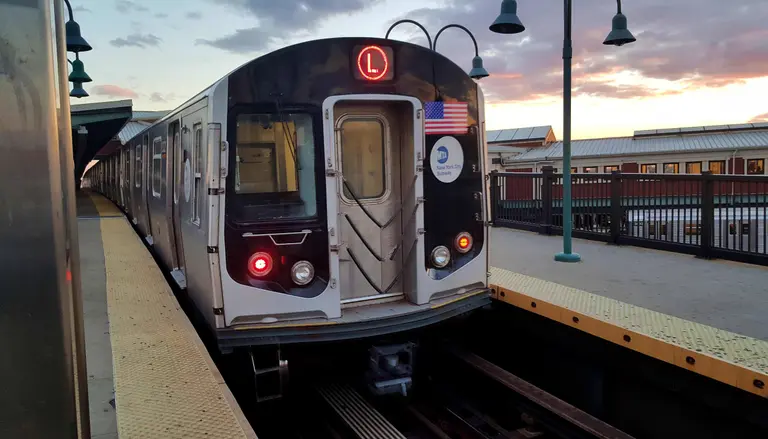
The Metropolitan Transportation Authority released late last year its mitigation plan for the 15-month shutdown of the L train, set to begin in April of next year, calling for an all-bus, no-car corridor on 14th Street between Third and Ninth Avenues. The city says the MTA will have to run 70 buses every hour across the Williamsburg Bridge in order to accommodate the projected 84,000 daily bus riders. According to the New York Times, this would make 14th Street the busiest bus route in the country. In response, a coalition of Lower Manhattan neighborhood groups on Tuesday filed a federal lawsuit against the MTA and the city's Department of Transportation in attempt to stop repairs of the L train, claiming the agencies failed to conduct an environmental review before releasing its plan.
More here
April 2, 2018

De Blasio agrees to fund half of the MTA’s $836M emergency subway rescue plan

After months of refusal, Mayor Bill de Blasio said on Saturday the city will pay for half of the emergency rescue plan for the subway, which was announced by the Metropolitan Transportation Authority in July. The mayor's decision to fork over $418 million for subway repairs came after the state lawmakers passed on Friday Gov. Andrew Cuomo's $168.3 billion budget. The approved budget includes giving the state power to take funding from the city if it did not pay for its share, as the Daily News reported. The state has already paid its half of the $836 emergency plan, aimed at repairing, upgrading and stabilizing the beleaguered transit system.
More details here

March 22, 2018

Despite declining service, MTA will most likely raise fares in 2019

Without another option to bring in revenue to the cash-strapped Metropolitan Transportation Authority, straphangers will most likely have to pay higher fares next year. The fare hike would be the sixth since 2009 when the state legislature approved a financial rescue plan that included increasing fares every other year. While funding for the financially-troubled authority continues to be negotiated among lawmakers before the state's budget deadline next month, MTA Chairman Joe Lhota told the Daily News he did not see a scenario where the fares could remain the same.
More this way
March 20, 2018

MTA releases new bus performance dashboard

Is "eternity" really a viable measuring unit when describing how long it takes to get to your destination via New York City bus? The MTA has created a new and unique bus performance dashboard that details customer-focused performance metrics for the city's bus routes, which, as 6sqft recently reported, are considered among the country's slowest. This new method of compiling and viewing data is part of the MTA’s plan to improve bus service across the city, and according to the MTA, no other transit system in the world offers the same level of detail in an online dashboard.
Find out more
March 15, 2018

MTA considers raising subway speed limits to reduce delays

New Yorkers love to complain about the slowness of the subway, but what sometimes seems like a snail's pace is as likely due to speed limits imposed to keep the system safe as it is to crumbling infrastructure and antiquated signals, according to new info released by the MTA. The New York Post reports that after a series of tragic accidents in the 1990s and 2000s, speed limits were lowered throughout the system. Now, a new initiative is investigating ways of keeping subways safe as well as picking up speed.
Find out more
March 14, 2018

MTA hit with federal lawsuit over lack of wheelchair accessibility

The MTA has found itself on the wrong end of a lawsuit by the feds for failing to make its subway stations wheelchair-accessible. On Tuesday, U.S. Attorney  Geoffrey Berman joined a lawsuit accusing the agency of not adding assistance for disabled riders when renovating stations, the New York Post reports. The suit began in 2016 when a civic agency in the Bronx accused the MTA of violating the Americans with Disabilities Act by not creating wheelchair access at the Middletown Road station. The suit should come as no surprise; as 6sqft previously reported, fewer than 1/4 of New York City's subway stations are fully wheelchair-accessible–only 117 out of 472. In fact, NYC ranks the least accessible out of the country’s ten largest metro systems–all of LA’s 93 stations and DC’s 91, for example, are fully accessible.
Find out more
March 12, 2018

MTA $1M Genius Transit Challenge winners suggest faster trains and robot workers to fix subway hell

The Metropolitan Transportation Authority (MTA) has announced the winners of the agency's MTA Genius Transit Challenge; eight winners will split a $1 million prize for their ideas and concepts on how to upgrade the city's creaky and complaint-riddled subway system. The contest is part of an effort to bring the subway's capacity and reliability up to speed. The challenge is a joint venture between the MTA and Partnership for New York City. The challenge received over 400 submissions from around the world.
Check out these genius ideas
February 28, 2018

The end of the MetroCard could mean fare capping, better bus boarding, and real-time data

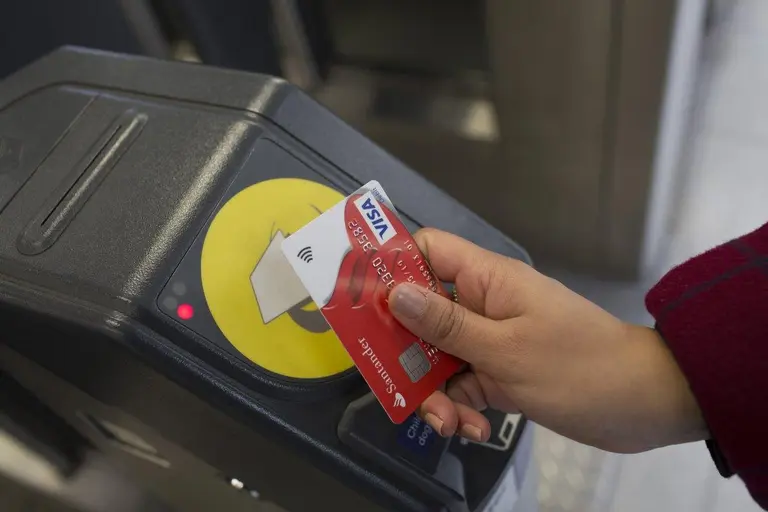
The MTA’s new cardless fare system will completely phase out the MetroCard by 2023, and transit advocates from the TransitCenter and the Tri-State Transportation Campaign believe there's more to gain here than strictly streamlining the swiping process. In a report released this week titled "A New Way to Ride," the groups outline three main policy opportunities available through the new fare system--seamless bus boarding, fare capping, and enhanced service information--all of which have been implemented in other cities with similar payment technology.
All the details ahead
February 28, 2018

7 train extension to NJ is among long-term solutions being studied to address commuter hell

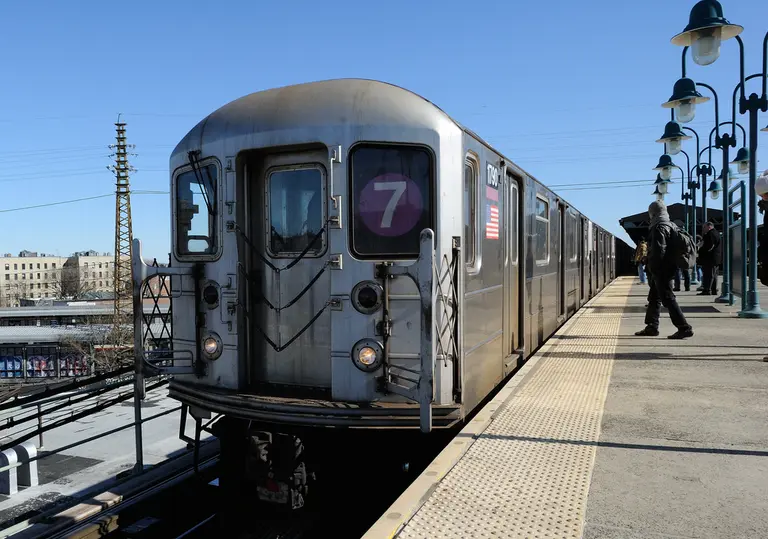
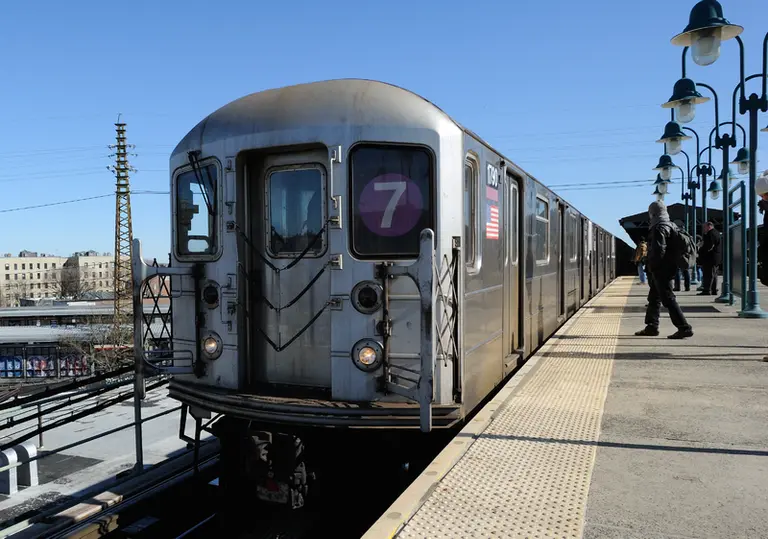
How long does it take to get to New Jersey by subway? The answer might be "about 22 years." That's if the round of attention focused on extending the New York City subway system across the Hudson makes it a reality. According to AM New York, Transit officials have said they'll be exploring the extension of the 7 line into New Jersey as part of a study involving a cross-Hudson rail link. The link is one of several solutions being studied in an effort to alleviate a commuter crunch between the two metro areas that's expected to grow continuously over the next 20 years.
Find out more
February 23, 2018

The NYC subway saw 30 million fewer trips last year

For the second straight year, subway ridership has fallen, reports Time Out New York. Data presented in an MTA Transit Committee meeting this week shows a drop of nearly 30 million trips between 2016 and 2017, or a decrease to 1.727 billion trips last year from 1.756 billion the previous year (though it should be noted this is less than two percent of the total trips taken). Newly appointed transit president Andy Byford attributes the dip to low gas prices and the rise of ride-sharing services like Uber and Lyft. He also told NY1 that poor service may be turning riders away, certainly possible considering that weekdays delays more than tripled between 2012 and 2017.
READ MORE
February 23, 2018

MTA approves more than $200M in cosmetic improvements for eight subway stations

The board of the Metropolitan Transportation Authority approved on Thursday a $213 million plan to rehabilitate eight subway stations, despite objections from the authority's city representatives. Under Gov. Andrew Cuomo's $1 billion Enhanced Station Initiative, the stations--six in Manhattan and two in the Bronx-- will get outfitted with USB ports, LED lighting, digital countdown clocks and artwork (h/t New York Times). The board first delayed the vote on the construction contracts in January after board members, appointed by Mayor de Blasio, questioned the necessity of these cosmetic improvements when the system's infrastructure remains in desperate need of repair.
More this way
February 20, 2018

Subway stations on the Upper West Side and Astoria to temporarily close this spring

Thousands of straphangers on the Upper West Side and Astoria will have to rethink their daily commutes come spring, as the Metropolitan Transportation Authority plans on closing some stations for up to six months for repairs and upgrades. The station makeovers fall under the MTA's Enhanced Station Initiative, a plan to improve the reliability and customer experience inside the subway system. Planned enhancements include installing digital countdown clocks at subway entrances, glass barriers, LED lighting and adorning station walls with artwork.
Find out more
February 13, 2018

New York City’s subway system has a water problem- a 13 million gallon one

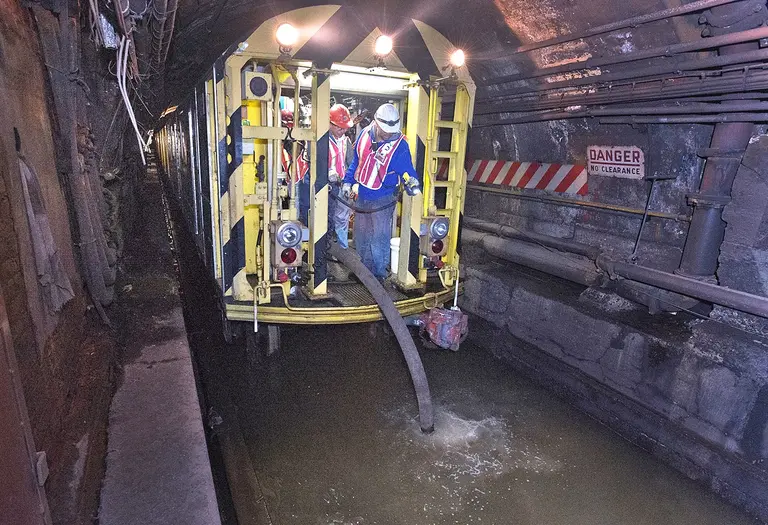
The subway's crippling, century-old infrastructure is not the only reason behind the system's constant delays and disruptions. The other problem involves about 13 million gallons of water, or more depending on the rainfall, that gets pumped out from underground on a nearly daily basis. A perpetual hazard, water can drip onto electrified equipment, cause a short and create chaos, as the New York Times reported. After ineffectively using only sandbags and plywood to fight flooding in the past, the Metropolitan Transportation Authority has turned to more high-tech solutions, like flood-proof doors and inflatable gaskets, which will be a part of its $800 million emergency action plan to fix the subway.
Find out more
February 6, 2018

As New York struggles with basic maintenance, global cities build cheaper, better infrastructure

The exorbitant construction costs of building transit projects, coupled with project delays, could make the New York region lose jobs and businesses to other global cities that are completing transit projects in a more timely, and economical, fashion. A report released on Tuesday from the Regional Plan Association (RPA) says high-costs and delays are ingrained in every part of the public-project delivery, including too-long environmental reviews, inaccurate project budgets and timelines and a lack of communication with labor unions. In their report, the RPA analyzed three projects and their costs and delivery issues: the Second Avenue Subway, East Side Access and the extension of the 7-train.
More this way
January 29, 2018

To fund MTA projects, Cuomo calls for a tax increase on properties near the subway

Gov. Andrew Cuomo's proposed FY 2019 budget, released earlier this month, calls on New York City to increase its funding to the cash-strapped Metropolitan Transportation Authority, forcing the city to pay half of the authority's $836 million emergency action plan. Another provision in the governor's proposal allows the MTA to create special "transit improvement" districts and impose higher taxes on property owners in these areas in order to raise money for subway repairs and projects. According to the New York Times, the governor's plan, known as "value capture," would apply to future projects that would cost over $100 million. Like most issues involving both state and city cooperation, this proposal has continued the rift over MTA funding between the governor and Mayor Bill de Blasio, who has already expressed disapproval of the plan.
Find out more
January 26, 2018

MTA plans wonky routes for D and 4 trains, and more weekend service updates

Photo by Giuseppe Milo / Flickr This weekend, 1, G, Q, and L riders are in luck: trains will operate as usual (so, expect issues, but no scheduled ones). All other straphangers, especially those on the D and 4 trains: brace for service changes. Prepare both mind and schedules by debriefing with the below:
Subway foresight makes for a better weekend
January 25, 2018

MTA funding dispute postpones $200M of Cuomo’s subway stations renovations

The board of the Metropolitan Transportation Authority on Wednesday delayed a vote on construction contracts to renovate two stations in the Bronx and six in Manhattan after MTA members, appointed by Mayor Bill de Blasio, objected. The contracts fall under Gov. Andrew Cuomo's $1 billion plan to outfit 33 subway stations with countdown clocks, LED lighting, USB ports and other amenities. The board's city representatives questioned why so much money was being put towards unnecessary, cosmetic improvements at stations that are in decent condition already, instead of funding signal and track repairs. As the New York Times reported, the decision to postpone the vote has ramped up the public dispute between de Blasio and Cuomo over MTA funding.
More this way
January 22, 2018

MTA will spend $4 billion to buy 1,600+ new subway cars

Following a very rough year for the city's subway system, the MTA announced it'll spend close to $4 billion to buy over a thousand new train cars to modernize the aging fleet. The New York Times calls it "a major investment meant to help remedy the delays and breakdowns that plague the system." The MTA has set up a three-phase contract with the Japanese company Kawasaki in which the first new cars should be delivered July 2020. Known as the R211, the cars will have brighter lighting, 58-inch-wide doors, rather than the current 50 inches, and eight digital screens displaying information and advertisements. An initial batch of 20 trains will feature the open-gangway cars, pictured above and on display to New Yorkers late last year.
The cars will also perform
January 17, 2018

Cuomo’s proposed MTA budget requires more funding from New York City

Gov. Andrew Cuomo unveiled on Tuesday his proposed $168 billion FY 2019 executive budget, aimed mostly at raising revenue and protecting New York taxpayers from future federal cuts with a possible restructuring of the state's tax code. “Washington hit a button and launched an economic missile and it says ‘New York’ on it, and it’s headed our way,” Cuomo said. “You know what my recommendation is? Get out of the way.” While the governor's budget clearly targets President Trump and his administration, it appears to impose more financial responsibility on Mayor Bill de Blasio as well, according to Politico New York. The budget includes three provisions that require the city to increase their funding of the Metropolitan Transportation Authority, including making City Hall pay half of the authority's $836 million emergency action plan. So far, de Blasio has refused to provide any additional funds to the MTA.
Find out more
January 3, 2018

Cuomo asks MTA to study possible subway extension from Manhattan to Red Hook

Gov. Andrew Cuomo called on the Metropolitan Transportation Authority on Tuesday to study a possible extension of subway service from Lower Manhattan to a new station in the Brooklyn neighborhood of Red Hook. In addition to expanding transit options, the governor is also asking the Port Authority of New York and New Jersey to consolidate maritime operations by relocating them to Sunset Park, as a way to free up space for community activities. The revitalization of Red Hook is Cuomo's 21st proposal expected to be delivered in his 2018 State of the State address on Wednesday.
Find out more
December 29, 2017

Why do transit projects in NYC cost more than anywhere else in the world?

Even as the Metropolitan Transportation Authority has cut costs on basic maintenance, they have allowed trade unions, construction companies and consulting firms to negotiate exorbitant deals on transit projects, with little intervention from officials.  According to an investigation by the New York Times,  labor unions have secured deals requiring construction sites be staffed as many as four times more workers than anywhere else in the world. Construction companies have increased their projected costs by up to 50 percent when bidding for work from the MTA and consulting firms have convinced the authority to spend an excessive amount on design and management. Caught up in the bureaucracy of the industry, neither public officials nor the authority have attempted to contain the spending.
Find out more
December 27, 2017

Should Uber and Lyft riders pay a fee for clogging Manhattan’s busiest streets?

As New York City’s failure-prone subway system continues to disappoint, some commuters are turning to ride-hailing services like Uber or Lyft to reach their destinations instead. While getting picked up by a car is easy, especially in the busiest areas of Manhattan, the bumper-to-bumper traffic makes getting anywhere actually more difficult. A report released by Bruce Schaller, a former deputy city transportation commissioner, found that one-third of ride-hailing cars and yellow cabs are often driving on the city's most congested blocks without any passengers, creating unnecessary traffic (h/t New York Times). As a way to reduce car congestion, officials are considering a new fee on for-hire vehicles, possibly a way to raise money for the strapped-for-cash MTA.
Find out more
December 21, 2017

MTA testing technology to fix 100-year-old signals, let riders use cell phones in tunnels

While removing subway seats and employing customer service ambassadors in stations will slightly improve the commuting experience, these upgrades probably won't make the trains arrive at their destinations any faster. One of the biggest problems causing subway delays continues to be the 100-year-old infrastructure still used. The Metropolitan Transportation Authority is finally addressing the failing, antiquated signals by testing technology known as Ultra-Wideband radio. As the Daily News reported, the MTA hopes the technology will more accurately locate trains, permitting them to run closer together.
Find out more