NYC Council to hold hearing on Ryder’s Law after fatal Central Park horse-drawn carriage accident
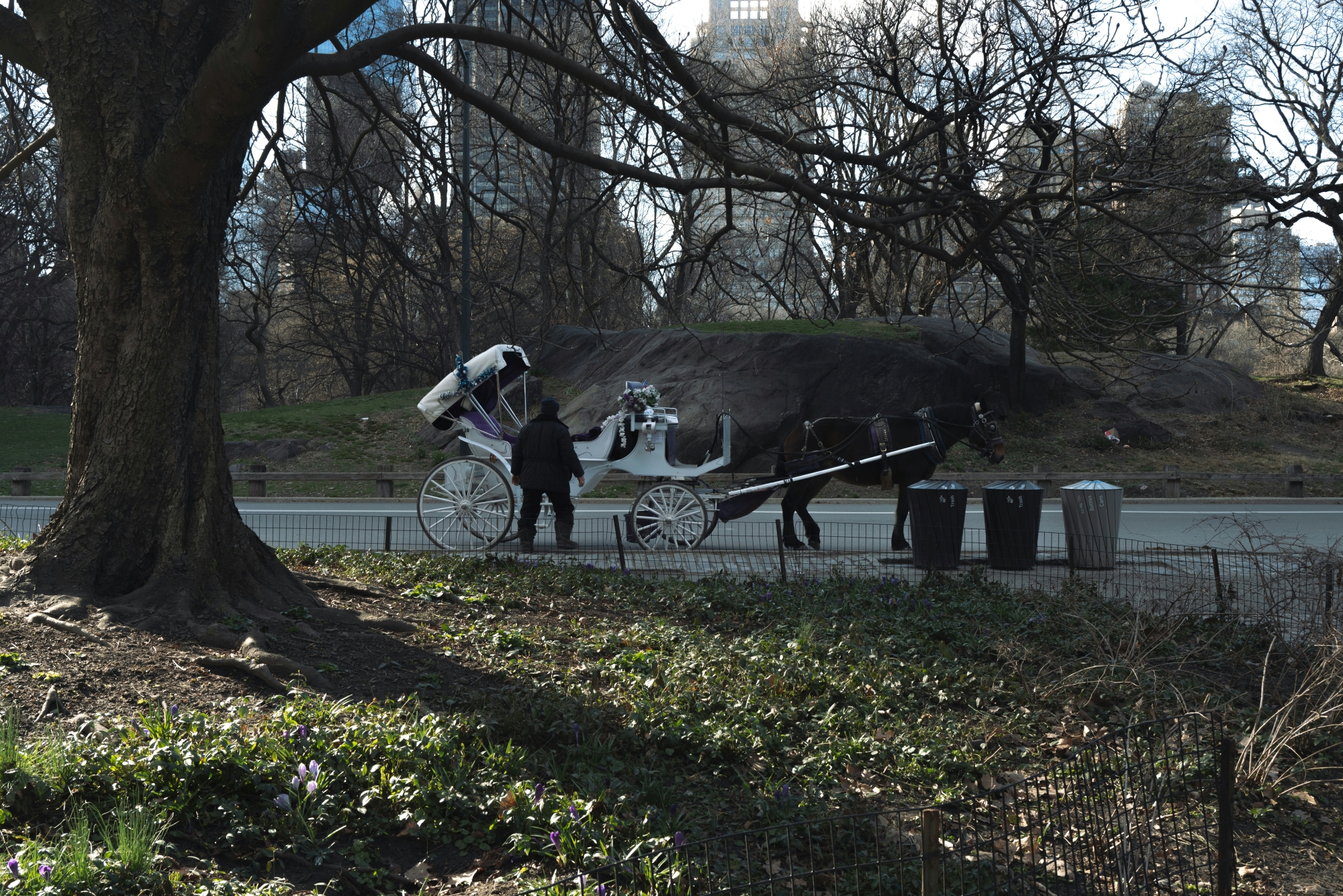
The City Council will hold a hearing next month on Ryder’s Law, a bill that would phase out horse-drawn carriage rides, after a teenager was thrown from a carriage in Central Park and died this week. Speaker Julie Menin on Wednesday announced a July hearing on the legislation, which would phase out the city’s horse-drawn carriage industry. A Council subcommittee nixed a previous version of the law in November despite support from former Mayor Eric Adams. In addition to the death of the 18-year-old tourist on Wednesday, there have been seven additional horse-related incidents over the last 13 months, including last week when a carriage horse had a medical emergency and died, according to the New York Times.
“Today’s tragic death of a teenager following an incident involving a horse carriage in Central Park is horrific and heartbreaking. Our thoughts are with the victim’s loved ones and everyone affected by this devastating loss,” Menin and Council Member Lynn Schulman said in a statement.
“It is now time to act. The Council recently introduced Ryder’s Law to address longstanding concerns surrounding the horse carriage industry, and we will hold a hearing on the bill in July. We look forward to hearing from all stakeholders and reviewing measures to address horse welfare and public safety concerns as we work toward a thoughtful solution to this urgent issue.”
Introduced in 2022 and sponsored by Council Member Christopher Marte, Ryder’s Law is named after a horse that collapsed in Hell’s Kitchen and was later euthanized. Following the incident, a poll by the Animal Legal Defense Fund found that 71 percent of New Yorkers supported banning horse-drawn carriage rides, as 6sqft previously reported.
Despite support from Adams, the bill was defeated in November after the City Council’s Committee on Health voted 4-1 against it, with two abstentions. The measure would have phased out the city’s horse-drawn carriage industry by 2026 and helped drivers transition into other jobs.
Now, two recent incidents involving horse-drawn carriages in Central Park have reignited a push for the measure. On June 9, a 16-year-old carriage horse collapsed and died on West 72nd Street near Central Park West while pulling a carriage ride, as reported by CBS News.
On Wednesday, a carriage horse bolted after its driver stepped away from the vehicle to take a photo for an Indian family visiting NYC. The family’s 18-year-old son fell from the carriage and struck his head. He later died at New York-Presbyterian Weill Cornell Medical Center on the Upper East Side.
In a statement, the Central Park Conservancy renewed its call for the passage of Ryder’s Law, pointing to previous incidents involving carriage horses in the park, noting eight horse-related incidents in Central Park over the past 13 months. In August, the group took a public stance on the issue for the first time, backing the measure.
“This is the tragedy we feared when we first called last year for horse carriages to be banned from Central Park due to the risks they pose to public safety,” the Conservancy said in a statement. “A young man came to enjoy our park and lost his life. That is not an acceptable cost of an antiquated industry operating in the middle of one of the most heavily used public spaces in America.”
“We renew our call for NYC to pass Ryder’s Law, which would ban horse carriages and provide transitional job placement services for drivers. Every day horse carriages are in the park is a day the safety of New Yorkers and visitors is in jeopardy.”
Under Ryder’s Law, the city would be prohibited from issuing new licenses for horse-drawn carriages and would eventually ban their use. The measure would also require the city to create a workforce development program to help industry workers transition to other jobs. Some proposals also include electric alternatives to horse-drawn carriages.
There are currently more than 100 carriage horses in Manhattan. The rides have been a fixture of Central Park since the late 1800s, when horses were still the primary mode of transportation across the five boroughs. The Transportation Workers Union Local 100, which represents roughly 170 carriage drivers in Central Park, has pushed back against Ryder’s Law, saying it threatens workers’ livelihoods.
In a statement, Alexander Kemp, administrative vice president of TWA Local 100, said he was “stunned” by the incident and that it underscored the need for additional safety protections rather than the elimination of the city’s carriage horse industry.
“We’re absolutely gutted and stunned by this tragedy,” Kemp said. “We’ve never had a fatal accident like this before. We have shuttered the stables and ceased operations today while we have extensive internal discussions of safety protocols and how they can be improved.”
Kemp also told amNY that Council Member Marte has not outlined a “realistic plan” to support carriage drivers and owners if the industry is phased out. He said Marte has not provided detail on economic support or a transition plan for more than 150 drivers and owners who he said would be “financially ruined,” nor on long-term care for nearly 200 horses.
Meanwhile, Mayor Zohran Mamdani has continued former Mayor Eric Adams’ support for ending horse-drawn carriages in Central Park, but has stopped short of explicitly backing Ryder’s Law. Speaking at a Wednesday press conference, he said he “look[ed] forward to working with union leaders” to advance efforts to end carriage horse operations in the park.
RELATED: