MTA to bring new fare gates to 20 more subway stations after 35% drop in evasion
Credit: Susan Watts/Office of Gov. Kathy Hochul on Flickr
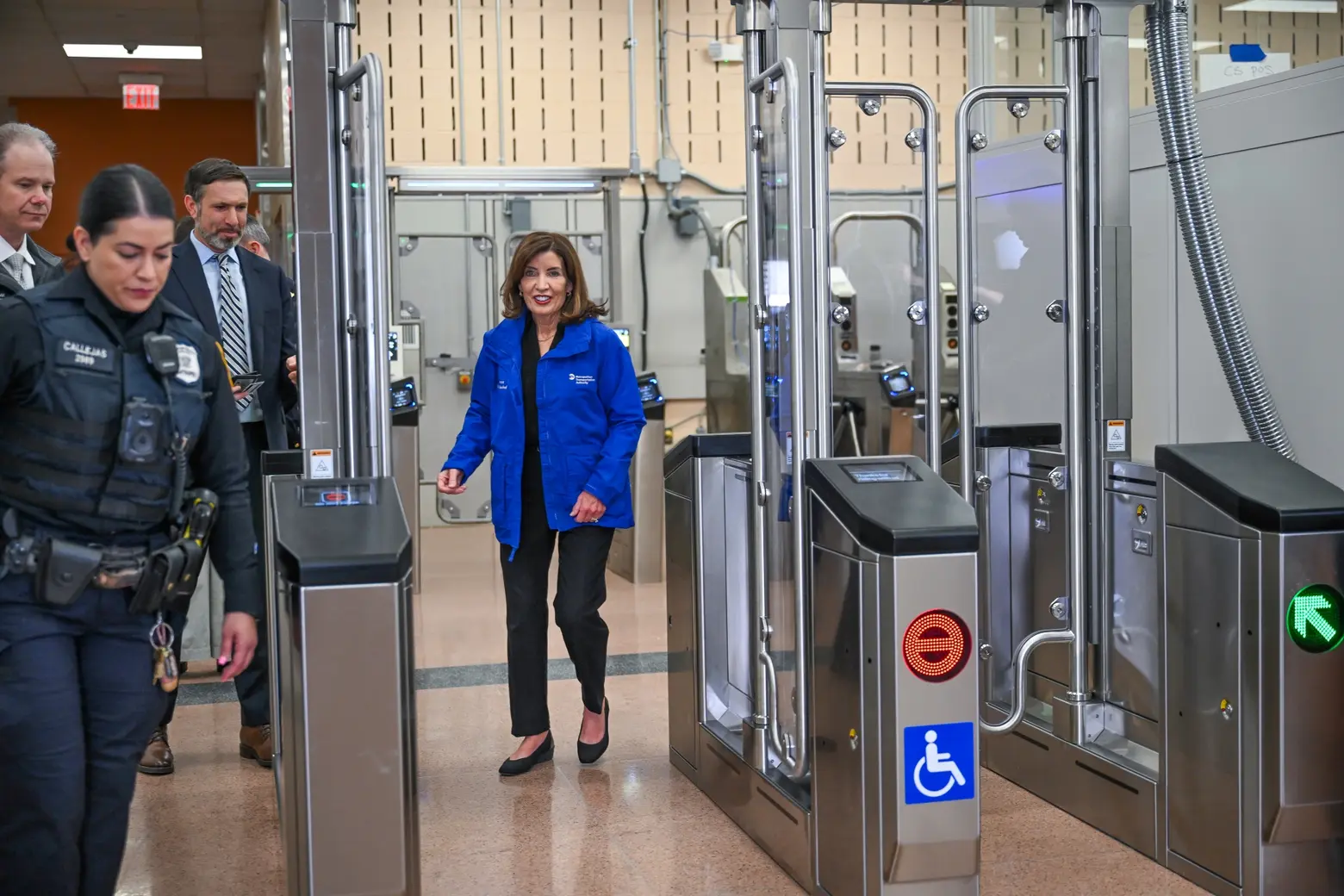
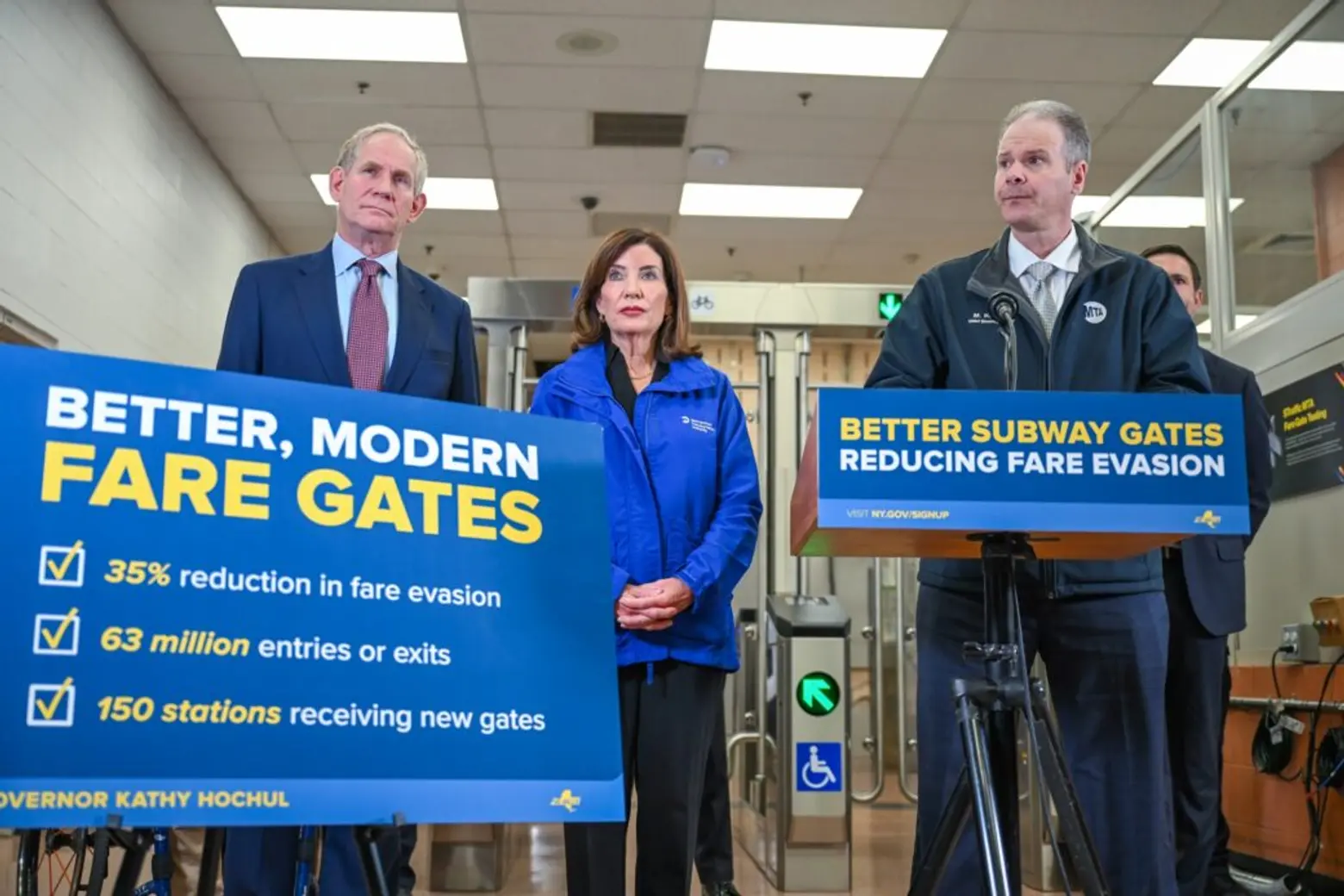
After a pilot program of new fare gates at select New York City subway stations led to a 35 percent drop in fare evasion, the MTA plans to install them at 20 additional stations this year. Gov. Kathy Hochul on Wednesday announced the pilot results, as well as the next 20 stations to receive the modernized gates, which feature elements that make it much harder for commuters to hop over. The MTA has invited design firms Cubic, STraffic, and Conduent to submit bids for the next batch of gates, which are slated to be installed by the end of 2026.
Amid a rise in fare evasion following the pandemic, the MTA stepped up efforts to prevent commuters from skipping out on fares while riding the subway. Some riders have evaded the fare by hoisting themselves over the turnstile bar, ducking underneath it, or carefully sliding around it.
Previous efforts to deter this behavior have included installing spikes and paddles on traditional fare gates to prevent hopping, as well as deploying unarmed private security guards to discourage fare evasion and alert the NYPD when they witness it.
However, those efforts have failed to address a fundamental issue with the gates: their design. To take a substantial step toward cutting fare evasion, the MTA has sought to replace traditional fare gates with newer designs that are more difficult to sneak around, marking the first comprehensive overhaul of the fare array system in more than three decades.
In December 2023, the MTA issued a request for information seeking qualified firms to design modern fare gates that would make it harder for customers to evade payment. Three vendors, Cubic, STraffic, and Conduent, advanced to the pilot phase and developed new gates at no cost to the MTA, installing them at 20 stations to test their effectiveness in preventing fare evasion.
The new gates feature sensors, long double doors that are difficult to climb or crawl under, and machine-learning technology designed to prevent unpaid entry, as 6sqft previously reported.
Last fall, the MTA began evaluating the gates based on their impact on fare evasion, accessibility, customer experience, entry and egress, maintenance, integration, and data and detection accuracy.
Since the pilot began, the new gates have recorded roughly 29 million entries and 34 million exits, with an estimated 40 to 50 percent of typical daily subway riders having used them at least once.
On Wednesday, Hochul said the new gates have led to a 35 percent reduction in fare evasion on average at the stations where they have been deployed. The largest decreases were recorded at the Hoyt Street and Nostrand Avenue stations, which both saw fare evasion fall by 72 percent, and at 3rd Avenue-138th Street, which saw a 65 percent reduction.
Building on the success of the pilot, the MTA will install the new gates at 20 additional stations. The stations include:
Brooklyn:
- 36th Street (D, N, and R)
- Bedford Avenue (L)
- Coney Island-Stillwell Avenue (D, F, N and Q)
- Hoyt-Schermerhorn (A, C, and G)
- Myrtle Avenue (J, M, and Z)
- Newkirk Plaza (B and Q)
The Bronx:
- 3rd Avenue-149th Street (2 and 5)
- 161st Street-Yankee Stadium (4, B, and D)
- Fordham Road (B and D)
- Parkchester (6)
Manhattan:
- 14th Street-Union Square (4, 5, 6, L, N, Q, R, and W)
- 72nd Street (1, 2, and 3)
- 86th Street (4, 5, and 6)
- 125th Street (4, 5, and 6)
- Chambers Street (1, 2, and 3)
- Spring Street (C and E)
Queens:
- Astoria Boulevard (N and W)
- Flushing-Main Street (7)
- Forest Hills-71st Avenue (E, F, M, and R)
- Sutphin Boulevard/Archer Avenue-JFK Airport (E, J, and Z)
The MTA is currently working towards purchasing gates from the three approved vendors. Early station preparation work is expected to begin this month.
During Wednesday’s press conference announcing the expansion, Hochul said the rollout was just the beginning, with the MTA planning to install the new fare gates at all 472 subway stations across the five boroughs.
She added that the new gates could save taxpayers nearly $100 million annually that would otherwise be lost to fare evasion. In effect, the savings could offset the cost of installing the gates while generating additional revenue that could be reinvested in the public transit system.
“The data is clear: these new fare gates have created a better riding experience for customers and made it harder for would-be fare evaders to enter the system without paying,” Hochul said. “Now, we’re ramping up our plan to install these world-class fare gates across the subway system so even more riders can benefit.”
“New York’s transit renaissance is powered by historic investments in aging infrastructure and improvements to safety and reliability,” she added, “and by replacing turnstiles that date back to the token-era, we can achieve the twin benefits of accessibility upgrades and reduced fare evasion that riders deserve.”
RELATED: