Flatbush Avenue now has center-running bus lanes
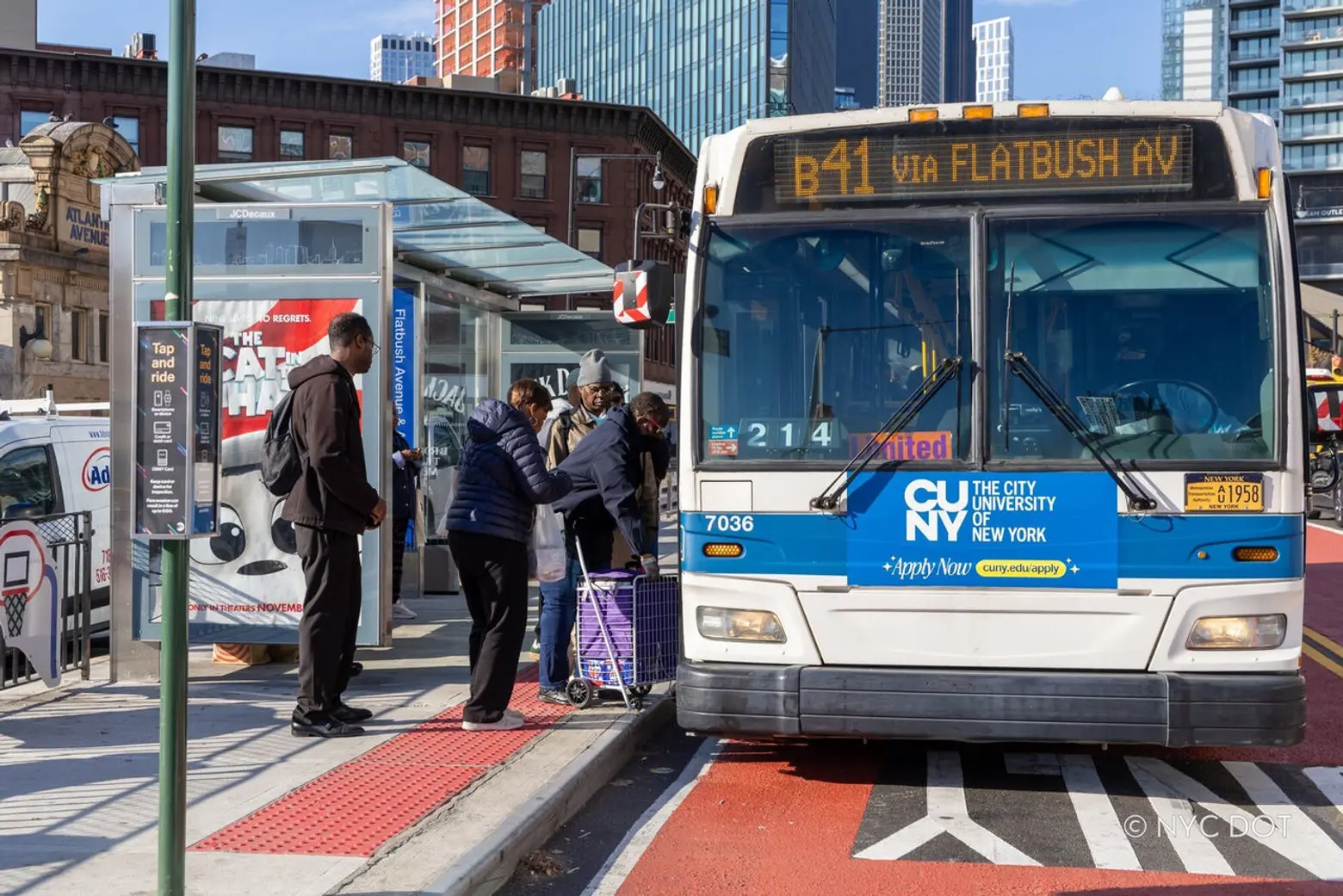
Credit: NYC DOT
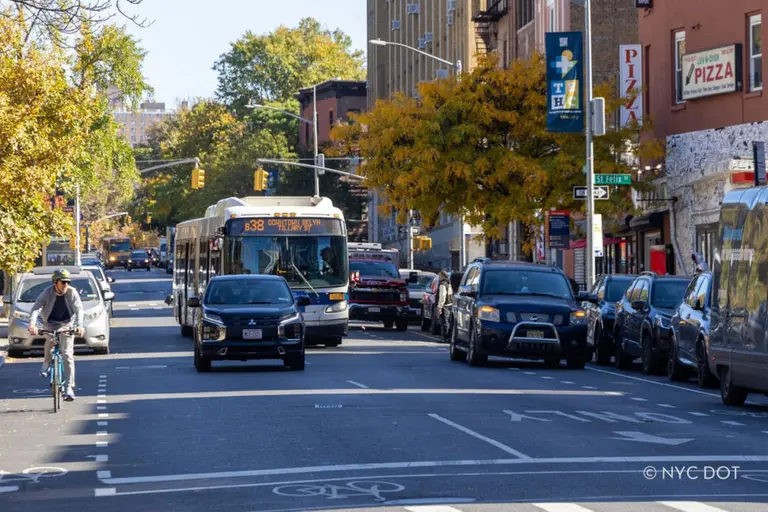
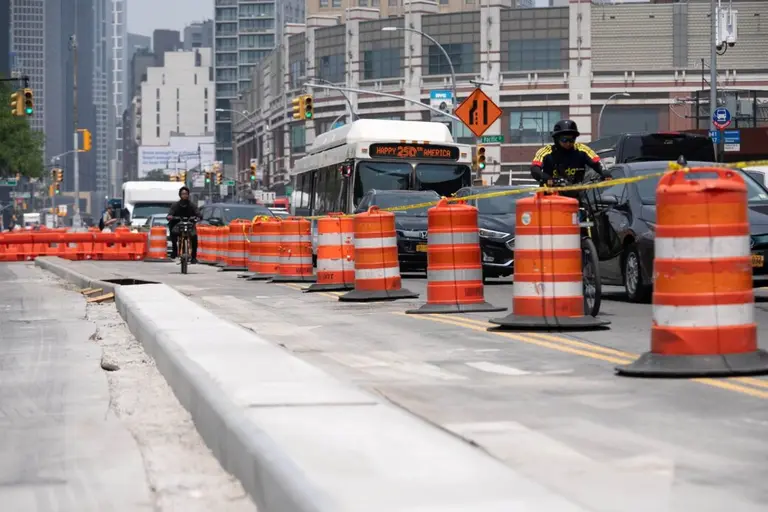
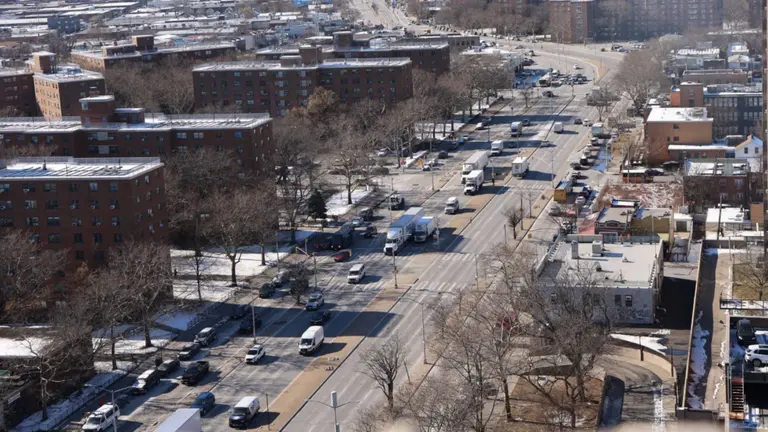
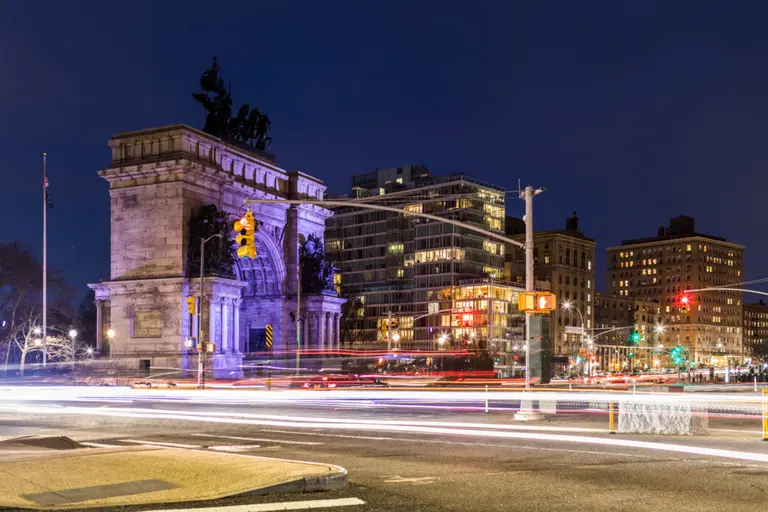
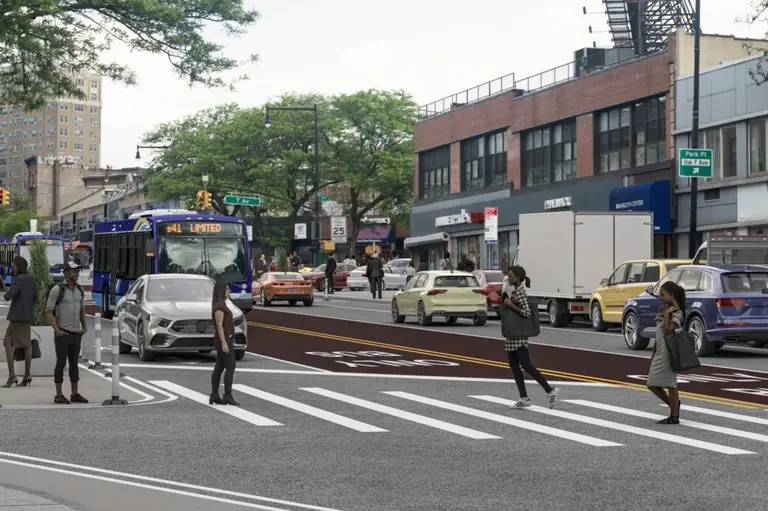
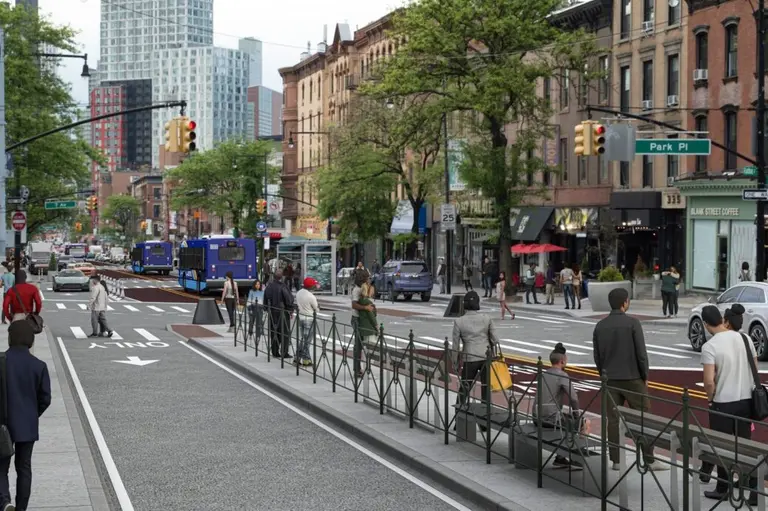
A section of Flatbush Avenue now has center-running bus lanes, speeding up commutes for more than 100,000 daily bus riders. Department of Transportation Commissioner Mike Flynn unveiled on Tuesday the 1.9-mile barrier-protected bus lanes from State Street to Grand Army Plaza, the first phase of the four-part initiative to reduce congestion on one of the borough’s busiest roads. The two new lanes run in the center of the roadway, with six concrete bus boarding islands designed to make boarding safer for passengers, shifting most car traffic to a single lane in each direction.
The Flatbush Avenue redesign is the most ambitious street infrastructure project launched under the Mamdani administration and the first of its scale to be implemented in-house by the DOT, Flynn said.
Known for average bus speeds of under 4 miles per hour during peak periods, Flatbush Avenue is also considered one of Brooklyn’s most dangerous streets and designated a Vision Zero Priority Corridor. The avenue has seen 55 people killed or seriously injured since 2019, as 6sqft previously reported.
In addition, roughly 60 percent of households along Flatbush Avenue lack access to a personal vehicle, making reliable bus service critical. Buses along the corridor primarily serve Black, female, and low-income riders. Most live in surrounding zip codes and have household incomes below $80,000, according to a Pratt Center study.
Unveiled in June 2025, the project centers on dual center-running bus lanes that provide a dedicated, physically separated space for buses, reducing conflicts with other vehicles along the avenue. Concrete bus boarding islands have been added next to the lane, so passengers can safely board.
City officials say riders of the B41, one of Brooklyn’s busiest bus routes, as well as the B67, B45, and B103 will benefit the most. The protected lanes are reserved for buses 24 hours a day, though emergency and paratransit vehicles can also use them.
Equating to 29,000 additional square feet of pedestrian space, every concrete island features bus shelters, benches, and leaning bars, while crews also added 36 new bike racks along the street. The changes eliminated 41 parking spaces while adding new loading zones for trucks and deliveries on side streets, according to Gothamist.
Additional upgrades include revised parking regulations that allow commercial and passenger vehicles to use metered spaces in every parking lane, improving access for delivery drivers and customers of local businesses.
Work crews also installed new streetlights and about 45 signal poles to accommodate improvements such as left- and right-turn signals, accessible pedestrian signals, pedestrian countdown signals, and traffic signals for the new bus boarding islands.
The corridor has also received a splash of color through a collaboration between Montreal-based artist Marc-Olivier Lamothe and the DOT. Fabricated by the agency’s sign shop, the artwork features illustrations collectively titled “Day to Day,” depicting everyday scenes of New York City life, from “basketball courts and brownstones” to “bodega cats and greenery.”
The signs are installed on fences along the new concrete bus boarding islands and will remain on display through fall 2027.
Center-running bus lanes have become a key feature of several recent DOT street upgrades across the boroughs. According to Flynn, a similar redesign of 161st Street in the Bronx has helped increase bus speeds by 43 percent. Similarly, in April, the DOT announced plans to redesign parts of Brooklyn’s Linden Boulevard with center-running bus lanes by 2027.
Those efforts, along with other initiatives, are part of the administration’s broader push to improve bus speeds along 50 priority corridors across the five boroughs. Unveiled in June, “Next Stop: Fast Buses, Better Service” aims to boost speeds through a combination of service changes, traffic enforcement improvements, and street redesigns.
“New Yorkers deserve a world-class transit system, and the Mamdani administration is delivering it first right on Flatbush Avenue with bus lanes that are fully protected from traffic so riders can get where they are going quickly and reliably,” Flynn said.
“NYC DOT was able to deliver this transformative upgrade quickly, in just a few months, as the first building blocks for future bus rapid transit on the corridor,” he added. “We will be using the coming months to monitor the project’s success as New Yorkers adapt to the new patterns and will make any adjustments needed.”
RELATED: