Policy

May 20, 2015

NASA-Inspired Green Wheel Lets You Grow Your Own Food Indoors

Growing your own food is the first step on the self-sufficiency journey, and it can never hurt learn having fresh food close at hand. But as we New Yorkers know, it's not always easy to create a lush garden on the fire escape. To tackle this subject, Italian studio DesignLibero created The Green Wheel, a rotary, hydroponic garden that provides a constant supply of micro-herbs and salad. Its futuristic aesthetics are sleek and modern; in fact, it takes direct inspiration from a 1980s NASA idea.
Learn more about this wheeled vegetable patch
May 20, 2015

Four Seasons Renovation Plans Shot Down by Landmarks Preservation Commission

Aby Rosen's plans to update the Four Seasons has been squashed by the city's Landmarks Preservation Commission. According to Crain's, the only upgrade that received a nod from the commission was a request to change the carpet. Bigger renovations, like replacing a non-original fissured glass partition with planters and to replace a fixed walnut panel between the public and private dining rooms with a movable one, were all rejected. "There is no good reason why they should make these changes," said Meenakshi Srinivasan, the commission's chairwoman, Crain's reports. "There's no rationale. The space could function perfectly well without these changes, so why do it?"
Find out more
May 19, 2015

Community Board Wants Moratorium Placed on Central Park Skyscrapers Taller than 600 Feet

Those looking to build a behemoth along Central Park may have to look elsewhere. The Manhattan Community Board Five's Sunshine Task Force has voted in favor of a resolution calling for an immediate, temporary moratorium on any new construction of 600 feet or taller that is not already undergoing public review, particularly with those threatening to cast shadows over Central Park in an area bounded by 53rd Street and Central Park South, and Fifth Avenue to Eighth Avenue. The board voiced their concerns and outlined the ban in a policy brief (via DNA Info) which made its way to the desks of the Department of City Planning and the mayor last week.
FInd out more here
May 19, 2015

Mayor’s Plan to Revamp the City’s Public Housing Addresses Disrepair and Need for Revenue

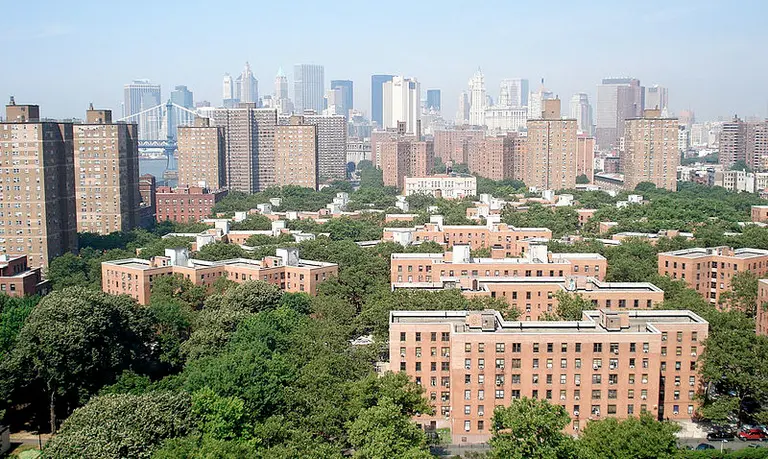
Mayor de Blasio is expected to announce today the rollout of a ten-year plan to improve the city's debt-and-disrepair-riddled public housing. According to the New York Times, plan items include–perhaps most notably–the leasing of land within a number of housing complexes to developers; other items include the transference of some New York City Housing Authority (NYCHA) employees (and the $90 million a year it costs the agency to pay them) to other city agencies and increased rents as well as higher parking fees for residents.
Find out how the mayor plans to shore up the city's public housing
May 14, 2015

City Council Announces New Task Force on Tracking and Preserving Affordable Housing

City councilman Mark Levine announced Wednesday the creation of the Affordable Housing Preservation Taskforce, which will track existing affordable units across the city on the brink of becoming market rate. The task force is the latest in an effort to address the monumental task of preserving the city's affordable housing. According to Crain's NY, the 14-member task force, which will be led by Council Speaker Melissa Mark-Viverito, will work with residents, landlords and nonprofits to identify buildings headed toward market rate rent status. Rent regulation, for example, stipulates that rent can only be raised by a certain percentage each year as set by the New York City Rent Guidelines Board.
More on the new task force
May 11, 2015

Charting the Property Taxes of the City’s 10 Most Expensive Apartments

Back in March, we learned that the owner of the $100 million apartment at One57 (the most expensive sale ever in the city) pays only $17,268 in annual property taxes– "or 0.017 percent of its sale price, as if it were worth only $6.5 million," as we noted. "In contrast, the owner of a $1.02 million condo nearby at 224 East 52nd Street is paying $24,279, or 2.38 percent of its sale price." Why does this happen? It's in part due to the 421-a program, which offers tax breaks for the inclusion of affordable housing and "lowers the billable-assessed value of a property to incentivize real-estate development," according to CityLab. It's also thanks to the city's haphazard system for assessing market values of condos and co-ops. In response to this growing issue of inequality, Mayor de Blasio announced just last week that he hopes to end 421-a for condos, as well as implement an even stricter mansion tax. To make the issue a bit more black-and-white, CityLab has put together two charts that show just how disproportionate the actual value of the city's ten most-expensive apartments is compared with their property taxes. As they note, "In NYC, billionaires pay 1/100th the average property-tax rate."
Find out more here
May 7, 2015

To Increase Affordability, Mayor de Blasio Wants to End 421-a for Condos and Up the Mansion Tax

From the onset, Mayor de Blasio has been extremely vocal about his plan to add 200,000 units of affordable housing over 10 years, 80,000 of which will be new construction. Though many feel this is an arbitrary number, backed up by no data as to where the units will be, the Mayor seems committed to reforming current policies to reach his goal. And after months of speculation, he has revealed his planned changes to the city's 421-a tax incentive program, which is set to expire in June. According to the Times, under his proposal, the controversial tax would no longer apply to condo projects (to understand the logic behind this decision just look at the $100 million sale at One57 that received the tax abatement). But it would apply to new rental projects, which would have to have apartments for poor and working-class residents make up 20 to 30 percent of the building in order to qualify for city tax breaks. It would also extend the abatement from 25 years to 35 years. Another part of the overhaul is to eliminate so-called poor doors. De Blasio also wants to up the city's mansion tax. Currently, home sales over $1 million are subject to a 1 percent tax, but de Blasio proposes adding an additional 1 percent tax for sales over $1.75 million, as well as a third 1.5 percent tax for sales over $5 million. He estimates this will bring in an extra $200 million a year in tax revenue, money that would be allocated to affordable housing programs.
More details ahead
May 7, 2015

Combine Life, Work and Sleep in a 7x7x7-Foot Catch-All Pod

As New Yorkers we're used to multi-tasking; we eat while we work, we text while we walk, check our e-mail while we brush out teeth. So why not bring all of our urban dweller idiosyncrasies under one very, very small roof? The creation of Yazdani Studio of CannonDesign, this tiny 7x7x7-foot pod is actually a space designed for young entrepreneurs who can't turn it off. But given the habits of most of New York's labor force (yes, you), and the fact most of us are used to squeezing into smaller than average quarters, this petite pod could prove a boon to the work-obsessed—or what finally pushes them over the edge.
Find out more here
May 7, 2015

Organize Your Music by City with Spotimap

Next time you really feel like getting in that "New York State of Mind," just organize your playlist to include only NYC-centric songs. This would normally be an arduous task, but thanks to a new Spotify-based mapping program called Spotimap, you can sort and stream music relevant to a specific city simply by clicking on it, marked by a green musical note, on a map. As CityLab reports, once a user clicks a city, a list of songs about that place will pop up based on this highly detailed Wikipedia list. For New York, the map offers 2,707 songs about the city, sorted in alphabetical order.
Find out more here
May 6, 2015

Landmarks Greenlights 190 Bowery Restoration Plan with Iconic Graffiti Intact

After several weeks of back and forth on whether or not the new owner of 190 Bowery, Aby Rosen’s RFR Realty, would keep its iconic graffiti, it's now official that the historic Germania Bank Building will remain in all its tagged glory. As Yimby reports, the Landmarks Preservation Commission approved the proposed restoration and conversion to an office building with ground-floor retail. The plan, conceptualized by preservation architecture firm Higgins Quasebarth & Partners with the help of MdeAS Architects, "calls for restoration of metal gates, wooden doors, stained glass, and other elements, but not removing the graffiti or cleaning the façade."
More on the approved plans here
May 5, 2015

3D-Printed Hawks and Owls Are Scaring Away NYC Pigeons

Are you in the "rats with wings" camp of not being too fond of New York City pigeons? Well then you'll welcome this modern take on the "pigeon scarecrow." The Observer recently took a look at the 3D-printed hawks and owls from Robox, noting that "they’ve found that pigeons are so frightened by the watchful and intimidating gazes of the 3D printed birds that even the incentive of food isn’t enough to convince stray pigeons to stick around in their presence." But if you happen to be a pigeon lover, have no fear, these little objects are seen as a much better way to curb the spread of diseases from pigeons than traps and repellents.
Find out how you can get your own 3D-printed pigeon scarecrow
May 1, 2015

Public Shaming: New Campaign Uses DNA to Recreate the Faces of Litterbugs

We've all seen those folks who callously toss their garbage into the street when there's a trashcan just ten steps away. While most of us usually remain hush and pick up the slack, there's a group out there that's fed up with litter and they most certainly aren't afraid to point fingers. As part of a campaign developed by Ogilvy to help clean the streets of Hong Kong, activists including Hong Kong Cleanup, Ecozine, and The Nature Conservancy joined forces to give a face—or literally, faces—to the problem plaguing cities worldwide.
find out more about this genius campaign here
May 1, 2015

VIDEO: Watch a 57-Story Skyscraper Go Up in Just 19 Days

While New York City developers have been laser-focused on bringing us the world's tallest residential towers, the Chinese are in pursuit of another marker: building them the fastest. A 57-story skyscraper was recently completed in Changsha, Hunan Province in just 19 working days, erected at an incredible rate of three floors a day. Called "Mini Sky City," the construction is an assembly of 2,736 glass-and-steel modules fabricated off-site over the course of roughly five months. Though the tower may have come quickly, the offerings within don't fall short: the new high-rise boasts 19 atriums, office space for 4,000 people, 800 apartments, and is reportedly earthquake-resistant.
Watch the incredible video here
April 29, 2015

Central Park Sunshine Task Force Meets to Speak Out Against Supertall Shadows

There are a dozen supertalls (1,000 feet or higher) in the construction or planning stages in Manhattan, many of which are sprouting up along the billionaires' row hotbed south of Central Park. The trend has incensed many New Yorkers because of the shadows these giant towers will cast on the park. Last month, Councilman Mark Levine introduced legislation to create a task force that will examine, as he put it, “the looming threat of shadows falling on our parks from the rising number of skyscrapers.” A similar group of concerned parties, the Central Park Sunshine Task Force of Community Board 5, met last night to discuss the issue. As Curbed reports, in the standing-room-only town hall meeting at the New York Public Library the group covered issues including zoning laws, transparency in the building process, construction safety, matters of light and air, overdevelopment, and even the "'phallic' nature of the buildings themselves."
More on the meeting here
April 27, 2015

Ikea’s Concept Kitchen 2025 Predicts We’ll Soon Use Smart Tables and Drone-Delivered Groceries

As part of Milan Design Week, Ikea has revealed their Concept Kitchen 2025, created in collaboration with London-based design firm IDEO and students from Sweden's Lund and Eindhoven universities. The futuristic kitchen prototype is based on predictions about what the world will be like ten years from now. It assumes we'll all be living a much greener, reduced lifestyle and technology such as smart tables and drone-delivered groceries will run kitchen operations.
Learn all about the modern kitchen prototype
April 22, 2015

Crimes Against Architecture: Treasured NYC Landmarks Purposely Destroyed or Damaged

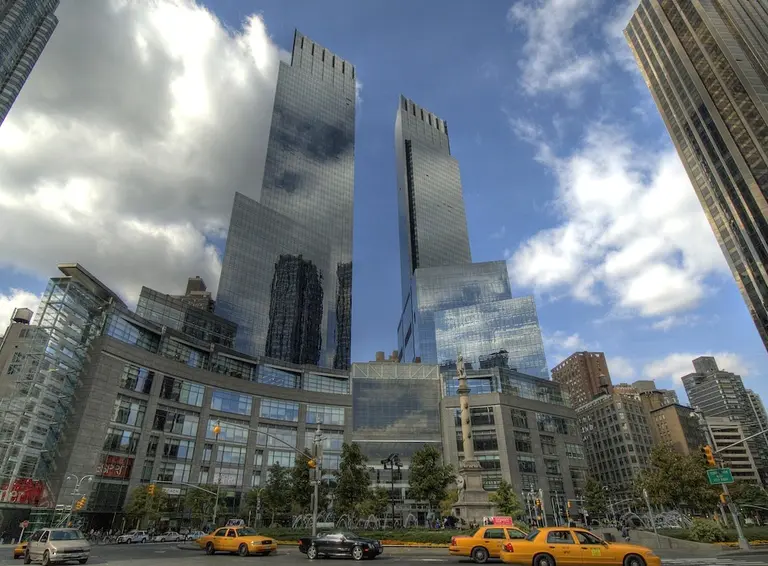
At Monday's MCNY symposium “Redefining Preservation for the 21st Century,” starchitect Robert A.M. Stern lamented about 2 Columbus Circle and its renovation that rendered it completely unrecognizable. What Stern saw as a modernist architectural wonder, notable for its esthetics, cultural importance (it was built to challenge MoMA and the prevailing architectural style at the time), and history (the building originally served as a museum for the art collection of Huntington Hartford), others saw as a hulking grey slab. Despite the efforts of Stern and others to have the building landmarked, it was ultimately altered completely. This story is not unique; there are plenty of worthy historic buildings in New York City that have been heavily changed, let to fall into disrepair, or altogether demolished. And in many of these cases, the general public realized their significance only after they were destroyed. In honor of the 50th anniversary of the NYC landmarks law, we've rounded up some of the most cringe-worthy crimes committed against architecture.
Check out our list right here
April 20, 2015

VIDEO: Has the ‘Misguided’ Landmarks Law Bulldozed New York City’s Future?

Concerted efforts to preserve the city's buildings are a relatively new phenomenon; it wasn't until 50 years ago that the NYC Landmarks Law was enacted, providing protection for the city's most storied structures. While many of us feel that New York wouldn't be half of what it is today if developers were allowed free range of our urbanscape, a video by ReasonTV contends that the Landmarks Act is actually keeping the city from its true potential.
Find out why they detest the landmarks law
April 15, 2015

NYC Council Introduces Tech Program to Engage Residents and Increase Transparency

Last week it was announced that the New York City Council was introducing new legislation to alter the landmarks law in favor of historic preservation. But just four days later, after facing scrutiny for proposing already-existing stipulations to the law, the council spoke out that they were in fact not proposing any legislation. Now, Council Speaker Melissa Mark-Viverito has revealed with perfect timing Council 2.0, "a new tech program aimed at familiarizing and engaging residents with the city council," reports Next City. The goals of the program include making the council's website more accessible, using social media outlets like Facebook and Twitter to generate feedback on hearings, programs, and proposals and creating a new website called Council Labs to help New Yorkers visualize the budget process.
More details here
April 14, 2015

How Would a Minimum Wage Hike Change the Way New Yorkers Spend Money?

Today, the Daily News reports that increasing the minimum wage to $15/hour would add $10 billion annually to city paychecks and increase earnings for almost 1.5 million people, according to an analysis by City Comptroller Scott Stringer. Says the paper, "The typical family getting the boost would spend $1,100 to $1,800 more a year on housing, and up to $600 on groceries, $400 on entertainment, and $300 eating out, Stringer predicted." How would this increase in spending compare to a given family's financial patterns before the minimum wage hike? The Washington Post has used newly released data from the Bureau of Labor Statistics to analyze where the poor and rich spend really spend their money. Looking at four categories (housing, transportation, food, and pensions/life insurance) and three classes (low, middle, and high), the results are mainly as to be expected. The rich spend more all around, but as a percentage of their total income, they spend less; the middle class spends the most on transportation; and basically all Americans have similar spending patterns when it comes to groceries. But the big difference between the upper and lower classes is saving. "For every dollar they spend at the grocery store, the poorest households save 12 cents, while the wealthy sock away $3.07 in pensions and life insurance."
What does this mean? See the infographics here
April 13, 2015

Fire Escapes Going Extinct as Building Codes Shift

The outdoor fire escape has long been a fixture in the New York City streetscape, but more and more buildings are losing their iron appendages now that fireproof interior stairwells are seen as the emergency exit of choice, reports the Post. Moreover, the fire, buildings and city planning departments are amending fire safety rules in response to the influx of supertall towers to allow for "more occupant-evacuation elevators that can be used to move people down a tower in the event of an emergency." While the new regulations are progressive and safer, losing the fire escape architecture is like losing a piece of New York City history.
Find out more here
April 9, 2015

New Landmarking Proposal Would Automatically Consider Any 50-Year-Old Building for Designation

Though landmarking has come under fire over the past year, with the Real Estate Board of New York claiming that historic designation limits affordable housing, the City Council is drafting legislation to alter the landmarks law in favor of historic preservation. As Crain's reports today, "Backers of the legislation say it will bring more clarity to a process that has been criticized for hindering development, but critics say the 'devil is in the details.'" Headed up by Manhattan Borough President Gale Brewer and drafted by Councilmen Brad Lander, Stephen Levin, and Daniel Garodnick, the new legislation, among other stipulations, would automatically consider any building older than 50 years for historic designation and make it harder for developers to demolish a property in "landmarking limbo." This comes just four months after the Landmarks Preservation Commission released a proposal to de-calendar 94 historic sites and two historic districts. The plan was eventually receded, but signaled to many a turn in the city's policy.
See the full terms of the legislation here
April 6, 2015

Landmarked Religious Institutions in Midtown East Look to Change Air Rights Rules

With declining memberships, it has become a common issue among New York City religious institutions that they're land-rich but cash-poor. To solve the problem, religious leaders are turning to the sale of air rights, allowing developers to build on unused land or above the existing structure or altogether transferring the rights to an adjacent property. It's the latter trend that's become the center of debate with St. Patrick's Cathedral, along with other landmarked institutions, as they're looking to change the air rights rules to allow transfers to properties that are not directly adjacent. The Wall Street Journal takes a close look at this trend and a city plan that would allow East Midtown landmarks to sell their air rights to sites that are several blocks away.
More details ahead
March 31, 2015

City Council Task Force Will Look at Park Shadows Cast by Supertall Towers

It comes up every time a rendering is released for the latest supertall tower –how will the massive structure impede the views of its neighbors and what kind of obstructive shadows will it cast below? With a dozen supertalls (1,000 feet or higher) in the construction or planning stages in Manhattan, the threats are imminent and unavoidable, but Councilman Mark Levine hopes to get ahead of the issue moving forward. Levine, who chairs the parks committee, will introduce legislation today to create a task force that will examine, as he put it, "the looming threat of shadows falling on our parks from the rising number of skyscrapers," according to Capital New York.
More information here
March 31, 2015

Extension of NoMad Historic District Has Preservationists at Odds with Building Owners

Over the past few years, NoMad (north of Madison Square Park) has been the subject of countless articles looking at its rise to becoming a go-to place for culture, food, business, and residential opportunities. In fact, as we reported last June, since 2009 the neighborhood has seen price-per-square-foot averages rise by 40 percent. But not everyone looks at this neighborhood as the next frontier. Local residents and preservationists see the area as a relic of the late 19th century, when it was home to the city’s most opulent hotels and mansions and brownstones occupied by New York’s elite, as well as of the Roaring Twenties, when the community boomed as a commercial hub. For these cultural reasons and for NoMad's wealth of industrial and gilded architecture, a proposal will be heard tonight in front of the landmarks committee of Community Board No. 5 to extend the Madison Square North Historic District. NoMad property owners and developers don't agree with the proposal, citing that the area's building stock has been significantly altered over the years. As the Wall Street Journal reports, "The face-off is significant because it is centered in an area that has seen hundreds of millions of dollars of private investment, with new hotels and apartment buildings breaking ground, and new stores and restaurants opening almost weekly. In the eyes of real-estate executives, it would freeze growth in a rare section of Midtown Manhattan still ripe for development."
More details
March 30, 2015

Airbnb Continues to Thrive Even as New York City Wages Battle

The city and the hotel industry have been waging war against Airbnb since last September in an effort to both preserve affordable housing and to protect hotel operators throughout the city. Though millions of dollars have been spent by both parties campaigning for change, apart from a couple of rulings ousting affordable renters for putting their apartments on the home-sharing site, not much has changed. Airbnb has failed to sway lawmakers, and the group leading the anti-Airbnb movement, ShareBetter, has only kept Airbnb from changing a state law that prohibits tenants in buildings with three or more units from renting out their home for short stays. In fact, according to Crain's, Airbnb is thriving in NYC with now more than 27,000 rooms and apartments on its site.
Find out more here