City Living

June 20, 2016

New Bill Adds Penalties of up to $7,500 to Airbnb Laws

The 2010 legislation that forbids some properties from being listed on sites like Airbnb–whole apartments without the original tenant present, for example–was just given more firepower. WSJ reports that both houses of the New York City legislature just passed a bill stating that advertisers of those illegal short term rentals could be smacked with fines of up to $7,500. According to Assemblywoman Linda Rosenthal, a Manhattan Democrat who sponsored the bill with Staten Island Sen. Andrew Lanza, “This bill will clarify that if you engage in such renting, there will be stiff penalties.”
Who's for it, who's against it
June 17, 2016

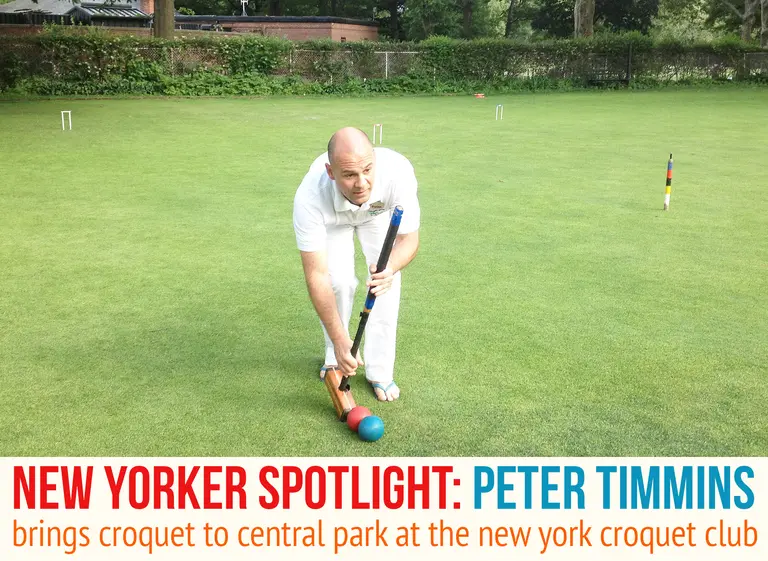
Spotlight: New York Croquet Club’s Peter Timmins Brings the Game to Central Park

If you head west on the road that winds by the Sheep Meadow in Central Park, there's a good chance you'll see New Yorkers dressed in white, playing croquet on a stretch of green lawn. Yes, the sport associated with tea parties and country clubs has a home in New York thanks to the New York Croquet Club. But the club’s dedicated members are not playing the typical backyard version. Instead, they're playing American Six-Wicket Croquet, an iteration of the sport played in the United States that exists on the croquet spectrum alongside the internationally played Association Rules as well as the widely popular Golf Croquet. American Six-Wicket is an intense game that's full of strategy, as players try to maneuver balls with their mallets in ways that are hard for those unfamiliar with the sport to imagine. At the New York Croquet Club’s helm is Peter Timmins, an ambassador for the sport in New York City. Peter tells everyone he meets to give croquet a try at one of the club’s free Monday evening clinics, which is exactly how he was first introduced to it. 6sqft recently spoke with Peter to learn about the complexities and excitement of croquet and why there is nothing better than playing the sport in Central Park.
Read the full interview here
June 15, 2016

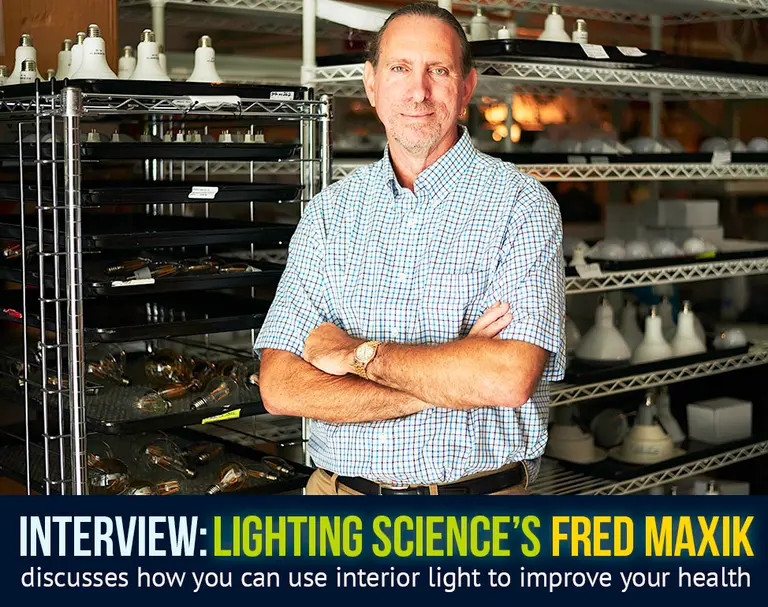
Lighting Science’s Fred Maxik Discusses How to Use Interior Light to Improve Sleep and Health

Studies have shown that getting a good night's sleep is critical to keeping one's self happy, healthy and fully functioning. But with advances in technology, modern humans have increasingly found themselves typing and swiping into the wee hours of the night without any regard for what time it is. Unfortunately, exposure to light before bed can have serious negative effects on our body, messing with our circadian rhythms and suppressing our ability to produce melatonin—the hormone that controls our sleep and wake cycles. But beyond feeling tired and irritable the next day, not getting enough sleep also has tremendous long-term effects that include, but are certainly not limited to, depression, immune stress, weight gain, premature aging and disease. Luckily, there are researchers out there harnessing the power of the light spectrum to engineer light bulbs that work with our bodies and environment, rather than against them. To help urban dwellers sleep better, we tapped Lighting Science Group founder and Chief Technology Officer Fred Maxik to learn more about the challenges we face when it comes to city and indoor light, as well as for some tips on how to improve health, productivity, sleep, and even happiness by simply switching bulbs. Lighting Science is one of the world’s leading LED manufacturers and they've worked with everyone from NASA to national sports teams to the creators of the Lowline Underground Park.
Learn more about what lighting is best for your home and health here
June 10, 2016

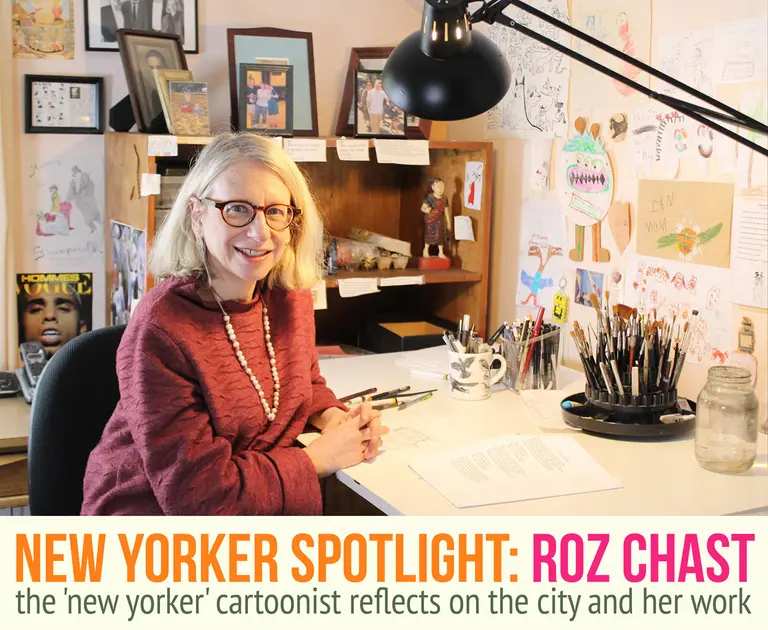
Spotlight: ‘New Yorker’ Cartoonist Roz Chast Reflects on the City and Her Work

Photograph of Roz Chast in her Studio, 2015, by Jeremy Clowe. Norman Rockwell Collections In April, the Museum of the City of New York opened a new exhibit featuring the work of Roz Chast. While not every New Yorker may know Roz by name, most New Yorkers are familiar with her illustrations. In 1978, just a year after graduating from the Rhode Island School of Art and Design, Roz dropped off her portfolio at The New Yorker. The magazine not only selected one of her drawings for publication but also told Roz to keep the work coming. Since then, she has published over 1,200 works in The New Yorker, including 18 covers. And perhaps more than any other contemporary illustrator, Chast—a born and raised New Yorker—has consistently managed to capture the humor, beauty and at times, the sheer difficulty of living in the city. Ahead we catch up with Roz, who reflects on her New York upbringing, her love for interiors, and what makes NYC so different from other cities.
read our interview with roz chast here
June 9, 2016

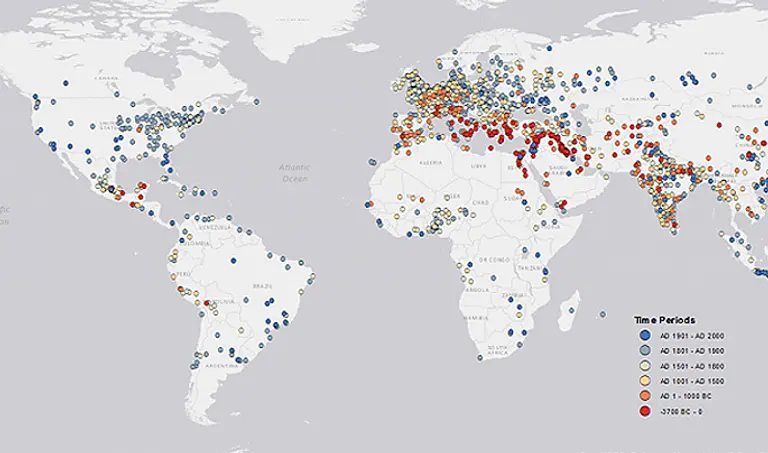
MAP: Visualizing Urban Development from 3700 B.C. to 2000 A.D.

Previously, 6sqft featured an interactive map from Esri that showed how the world's population boomed over the course of 2,000 years. Now comes a new paper and visualization (h/t CityLab) from Scientific Data that takes population and archeological records from as far back as 2250 B.C. and transforms them into a fascinating map that reveals the world's first recorded urban centers, and how they've distributed themselves over 6,000 years.
the complete map here
June 6, 2016

Interview: Engineer Joseph Gulden Discusses Wooden Skyscrapers Surpassing 1,000 Feet

Could wood one day again be the material of choice for buildings? In response to rising construction costs and climate change, there's been a resurgence of interest in wood construction, with some even saying that we're in the beginnings of a "timber age." Many architects, engineers and builders have started to embrace the material, having erected, or making plans to construct, high-rises that reach several hundred feet in the air. In fact, in April, one architecture firm proposed bringing a 1,000-foot timber tower to London's Barbican. But is wood really a reliable alternative to concrete and steel? What about fire safety? And how tall can we really go at this point in time without compromising a building's structural integrity? To answer these questions and many more, 6sqft decided to pick the brain of DeSimone Project Manager Joseph Gulden. DeSimone is one of the world's leading engineering firms with a roster of top NYC projects that include Zaha Hadid's High Line project, 220 Central Park South and 45 East 22nd Street; Joseph himself is a licensed Professional Engineer (PE) as well as a licensed Structural Engineer (SE) with extensive experience constructing in regions with high seismic risk. He's also worked on numerous high-rises and tall wood structures both in the U.S. and abroad. Ahead Joseph discusses some of the challenges and advantages of building with wood, engineered timber, deforestation concerns, and if a wooden supertall will ever be in reach.
read the interview here
June 3, 2016

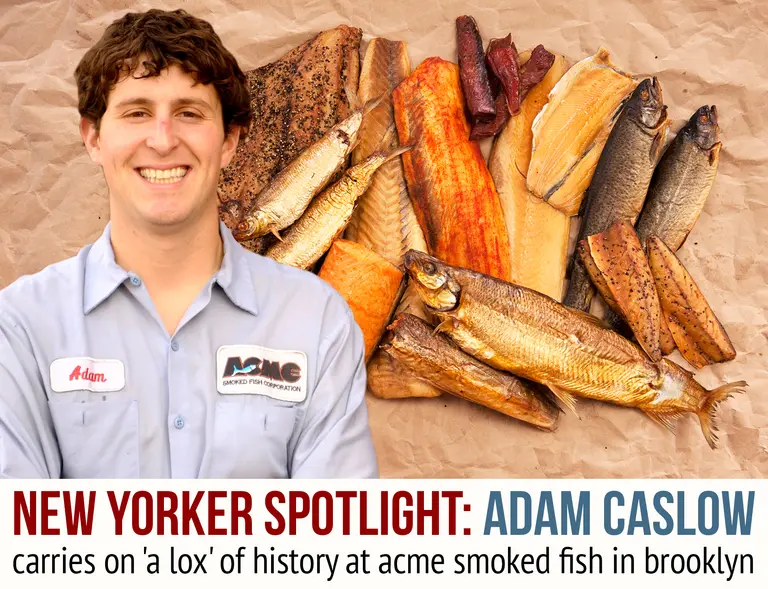
Spotlight: Adam Caslow Carries on ‘A Lox’ of History at Acme Smoked Fish

For many smear-loving New Yorkers, there's no better way to usher in the weekend than with a bagel and lox. And one of the companies keeping this culinary tradition alive is Brooklyn-based Acme Smoked Fish, a family business that traces its roots back to 1906 when Harry Brownstein started selling fish out of a wagon. For over 100 years, members of the Brownstein and Caslow families have been providing New York with smoked salmon, herring, fish salads, and other specialties. Adam Caslow and his cousin David Caslow are part of Acme’s fourth generation, continuing to grow the company and adapt to the city's current "Renaissance in appetizing." 6sqft recently spoke with Adam to learn more about Acme's rich history, smoked fish, and how he feels about carrying on a family tradition.
Read the full interview
June 2, 2016

Fusing Art and Luxury Real Estate, Two Pros Discuss Their Approach

With so many high-end and ultra-luxury towers coming to the market, it’s becoming increasingly difficult for developers to stand out in the crowd. While wild amenities have typically dominated as a way to distinguish one’s building, some developers are trying to extend their reach even further by appealing to the artistic sensibilities of the wealthy. As CityRealty writes, for […]

May 27, 2016

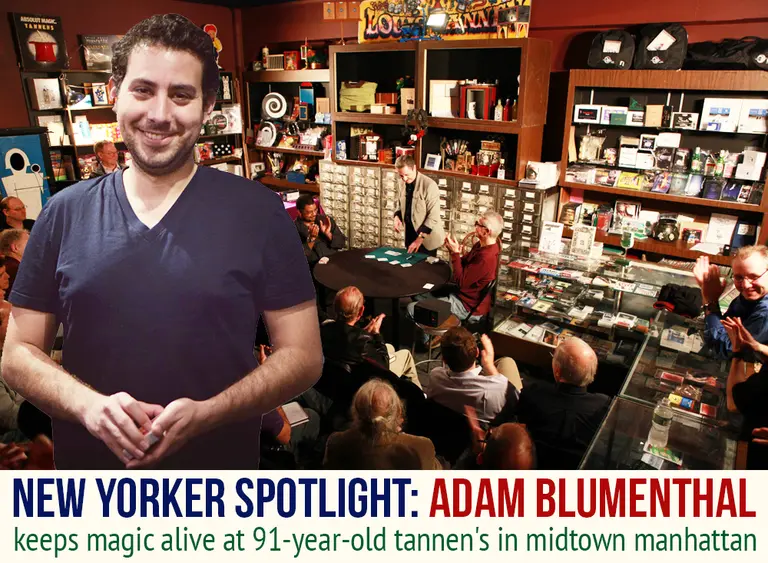
Spotlight: Adam Blumenthal Keeps Magic Alive at 91-Year-Old Tannen’s

At a time when the inner workings of so many things have been demystified, magic still has the ability to stump us. But for magicians to make tricks look seamless, a tremendous amount of time is invested in perfecting the craft and engaging with colleagues who can help them grow and develop their skills. And in New York, magic is cultivated on a daily basis above the hustle and bustle of 34th Street at Tannen’s Magic. The business has been serving the magic community since Louis Tannen opened a street stand in 1925. He later took the business indoors, where it became a gathering place for magicians of all ages and skill levels to purchase and practice their tricks. The current keeper of Tannen’s tradition is Adam Blumenthal, who fell in love with magic at a young age, in part thanks to the store, and is now responsible for ensuring its legacy and introducing it to a new generation of magicians. 6sqft recently spoke with Adam to learn more about magic, Tannen’s, and New York’s magicians.
Read the interview here
May 25, 2016

$40 Million Overhaul Will Make 8 Parks More Neighborhood-Friendly

The city has announced plans to make eight of the city's parks more welcoming and integrated into their surrounding neighborhoods, the New York Times reports. According to officials, the green-space face-lifts are part of a plan to improve city parks and part of the larger goal of having 85 percent of New Yorkers living within walking distance of a park. The parks, chosen by a nomination process that used feedback from residents, include Seward Park on the Lower East Side of Manhattan, Faber Pool and Park on the North Shore of Staten Island, Jackie Robinson Park in northern Manhattan, Van Cortlandt Park and Hugh Grant Circle and Virginia Park in the Bronx, Flushing Meadows-Corona Park in Queens, and Fort Greene and Prospect Parks in Brooklyn. According to parks commissioner Mitchell J. Silver, the many improvement suggestions the city received were "proof positive of how excited New Yorkers are to increase accessibility and openness in their favorite parks.”
Find out more about the park plans
May 25, 2016

POLL: Can New York’s Middle Class Stage a Comeback?

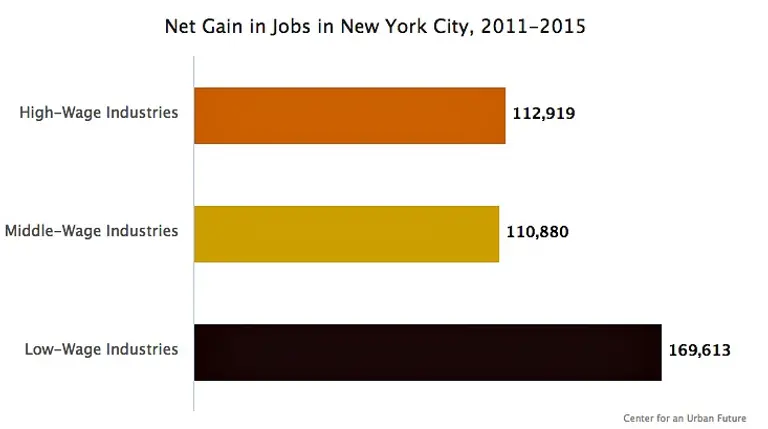
The lack of affordability in New York is typically, and justly, blamed on skyrocketing rents, but when it comes to the middle class it might be more closely tied to a lack of jobs. The Wall Street Journal shares a new report from the Center for an Urban Future, which finds that "while the city added a record number of jobs since 2011, middle-wage industries paying between $40,000 and $80,000 a year added the fewest positions, and a lot of those were temp jobs." Additionally, middle-wage jobs lost the most employees. Low-wage industries (paying under $40,000) such as restaurants and home health care services disproportionately added the most jobs. However, the report also points to a few factors that may indicate a comeback for the middle class. For one, middle-wage industries accounted for three of the eight sectors with a net gain of at least 10,000 jobs since 2011. These are employment services, building equipment contractors, and colleges/universities, respectively. In total, 23 middle-wage sectors added at least 1,000 jobs during this time, not far off from the low-wage sector's 24 and high-wage's 28. But are these figures enough to give the middle class staying power?
Cast your vote here!

May 24, 2016

Your Daily Commute Never Looked So Good As It Does in This Colorful Data Visualization

The daily commute to work and back might be the last thing you want to see more of, but sometimes it helps to see things in a new light: Here's your daily traffic torment, subway sardine-fest or bus-stop hustle, represented in candy-colored motion. Michigan-based data wrangler Mark Evans shows us the workday migrations of American commuters using census data so that they resemble a jubilant gathering of rainbow dots, expanding and contracting from each county with the day's open and close (h/t Citylab).
Check out your colorful commute
May 20, 2016

Spotlight: Frank Cullen Wants to Teach You the Joys of Surfing at Rockaway Beach

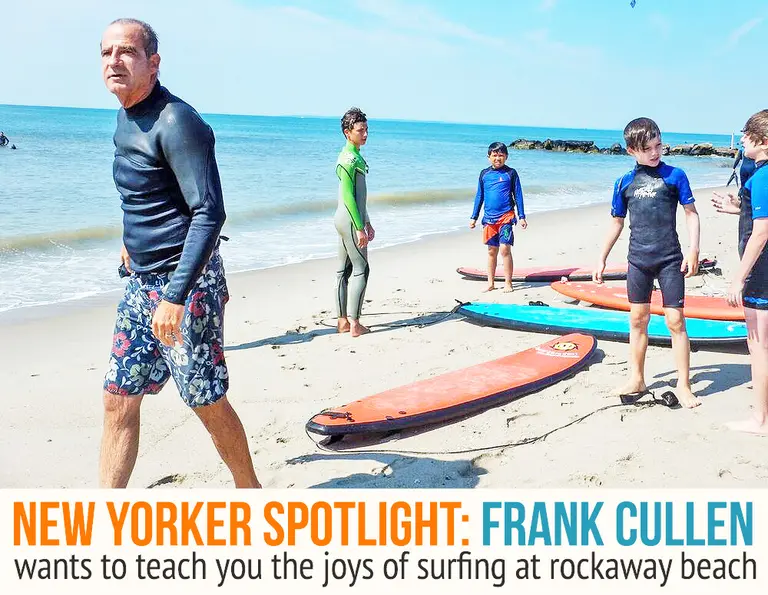
While temperatures outside are still a bit chilly, New York’s devoted wetsuit-clad surfers at Rockaway Beach are not deterred. Right now they have plenty of room in the water, but in the next few weeks there will be a bit more traffic when the busy summer crowds arrive at this popular surf spot. Amongst the experienced longboarders and shortboarders, there will be a fair number of newbies who'll be starting their surfing journey under the guidance of Frank Cullen and the New York Surf School. Frank has deep roots at Rockaway Beach. He first began surfing with the local guys during summers and later founded the New York Surf School there. When not out teaching kids and adults how to catch a wave, Frank is also a real estate broker working in Rockaway and parts of Brooklyn. Given his connection to the beach as a surfer and local resident, while also dabbling in local real estate, it goes without saying that he possesses a unique perspective on the changes taking place at Rockaway Beach. 6sqft recently spoke with Frank to find out more about surfing at Rockaway Beach, the New York Surf School, and to find out how he thinks the neighborhood will continue to change in the coming years.
read the interview here
May 18, 2016

Study: Is NYC ‘Youthful’ Enough to Keep Millennials From Leaving?

Yet another survey on the fascinating habits of millennials comes to us via Gothamist, this time taking a closer look at where that generation’s critical masses are migrating en masse, and why. The Youthful Cities Global Millenial Survey by the data jocks at Decode interviewed 15,000 millennials in 34 cities throughout the world, then divided the results by continent. The study focused on the idea that millennials were more likely to be satisfied enough to remain in their current city if it's perceived as a "youthful city." Some criteria for this magical metric include a government that listens to the concerns of young people, access to fulfilling jobs, safety, healthy residents and access to health services, good post-secondary education programs and clean green space. North American respondents saw affordability as the top concern, followed by employment, safety, and decent public transportation. The survey shows that millennials see "a direct link between having a youthful city–a dynamic, curious, open, inventive, connected and playful city–and economic and financial benefits, including higher employment rates, more jobs, a stronger economy and a thriving environment for small business and entrepreneurship."
We're happier, but less employed
May 18, 2016

Interview: CetraRuddy Founder, Nancy Ruddy, Discusses Her Firm’s Notable New York Works

One architectural name dominating the new development scene is CetraRuddy. Nancy Ruddy and her husband Jon Cetra formed the firm back in 1987, and over the decades that followed the pair built an architectural powerhouse that’s erected countless buildings across the globe. But while their breadth of work touches everything from the educational to hospitality to […]

May 13, 2016

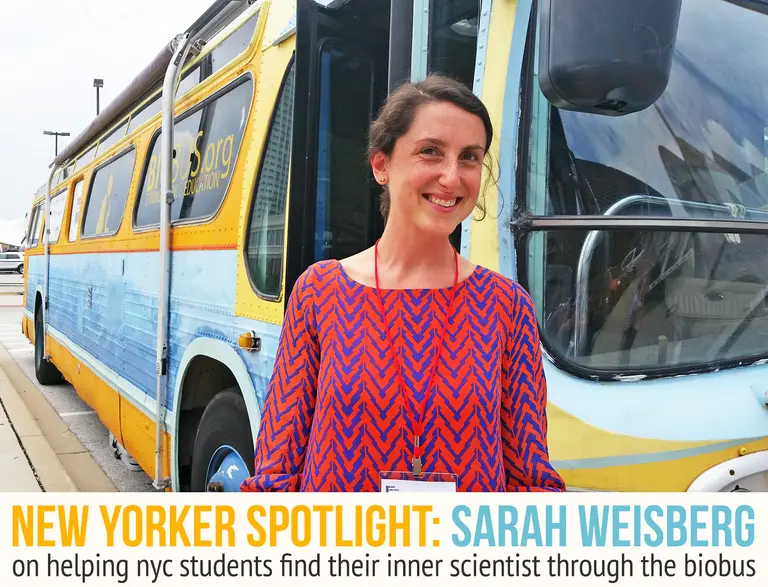
Spotlight: BioBus’ Sarah Weisberg Helps NYC Students Find Their Inner Scientist

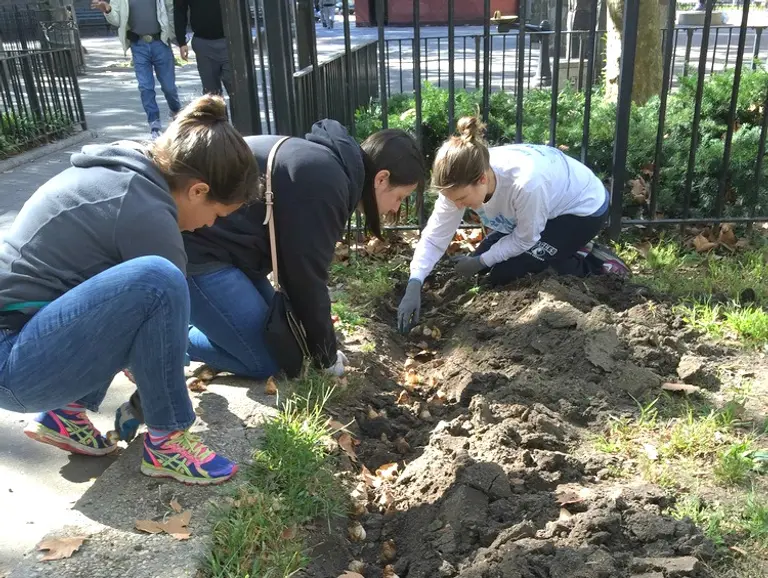
An early appreciation for science can lead to a lifelong passion for the subject, but it can be a challenge to get elementary, middle and high school students excited about the sciences from inside the classroom, which is where the BioBus comes in. The mobile science lab was founded in 2008 by Ben Dubin-Thaler, who has a PhD in Biology from Columbia University. The bus began “as an experiment to test his hypothesis that, given the opportunity to use research-microscopes to perform live experiments, anyone would be excited about science.” To test his hypothesis, he purchased a bus on Craigslist and transformed it into a mobile laboratory equipped with state-of-the-art microscopes that could travel to students. The bus now serves thousands of New York City students and has a sister in the BioBase, located at the Lower East Side Girls Club, a hub created so that bus's lessons can be expanded upon through additional programming. BioBus’s Chief Scientist Sarah Weisberg is a great example of what's possible with careers in science. While she originally envisioned working in academia as a researcher, she found her passion for science programming and advocacy through BioBus. She is now hard at work growing the organization and its mission of presenting science in a fun, accessible way to children. 6sqft recently spoke with Sarah to learn more about the BioBus and how it's helping young New Yorkers discover their inner scientists.
Read the interview with Sarah here
May 11, 2016

NYC Must Produce 20,000 New Housing Units a Year to Keep Up With Exploding Population

The 2015 census puts New York City's population at a record high of 8.6 million. This is a 375,000-person increase from 2010, the biggest spike since the 1920s. The rise is attributed to the nearly 250,000 jobs that were created in 2014 and 2015, the $7.3 billion in venture capital present in the city in 2015 (the second-highest level ever), and record-breaking tourism that's created a boom in the hospitality industry. And of course, with more people comes the need for more places to put them, and Commercial Observer estimates that the city "needs to produce at least 20,000 new housing units each year just to keep pace with demand and population growth."
What does this mean for NYC's housing stock?
May 9, 2016

Williamsburg Unsurprisingly Tops List of NYC’s 15 Fastest Gentrifying Neighborhoods

Williamsburg has become the poster child for the hipsterfication of Brooklyn and NYC gentrification in general, but behind the beards and beet smoothies are actual facts to back it up. NYU's Furman Center released a report that identifies the city's 15 gentrifying neighborhoods, out of 55 total, and finds that Williamsburg/Greenpoint comes in at number one (h/t DNAinfo). Of course, it's difficult to define gentrification, but the study looks at areas that were relatively low-income in 1990 (among the bottom 40% in the city), but experienced higher rent growth over the past 20 years than other neighborhoods, a trend that the Furman Center feels is of "greatest concern in lower-income neighborhoods." Williamsburg and Greenpoint had a startling 78.7 percent jump in rent over this time period, followed by Central Harlem at 53.2 percent and Chinatown/Lower East Side at 50.3 percent.
See the full list here
May 6, 2016

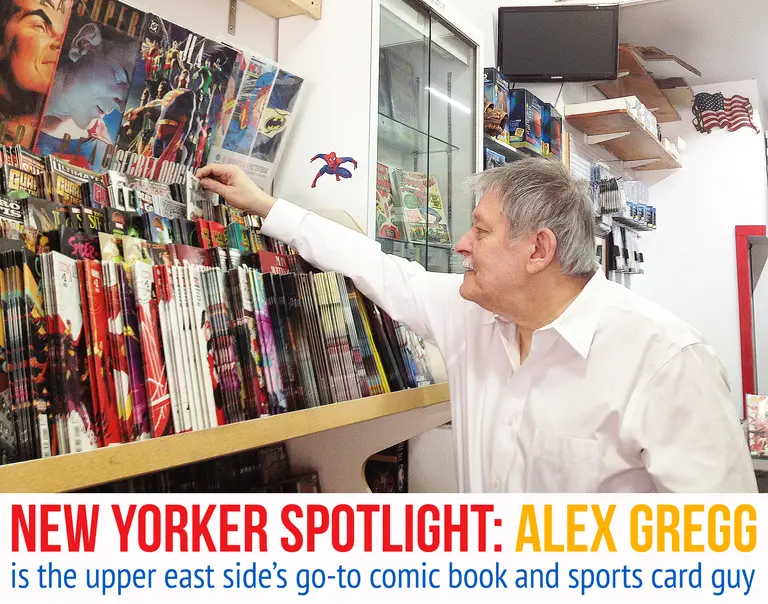
Spotlight: Alex Gregg Is the Upper East Side’s Go-To Comic Book and Sports Card Guy

At a time when Batman and Captain America are all over the big screens and sports culture is becoming increasingly digital, one might think superheroes' and athletes' presence on paper is waning. But collecting cards and comics is alive and well in Yorkville, where Alex's MVP Cards and Comics has everything an X-Men-, Archie-, or sport-loving aficionado could want. Alex Gregg first opened a store on the Upper East Side 27 years ago. The business grew out of his own personal collection and interest and is now the place to locate that latest rookie card, newest comic, or buy a piece of memorabilia. Alex certainly knows a great deal about history - particularly New York history - having worked for 22 years as a bartender at the famed (and now closed) establishment Elaine’s. 6sqft recently spoke with Alex about how cards and comics have both changed and remained the same and about his days at Elaine’s.
Read the interview with Alex
May 6, 2016

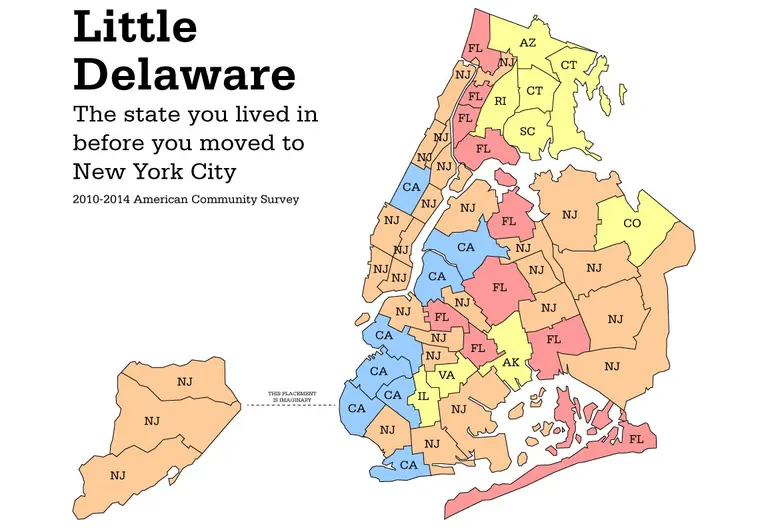
The Garden State of New York: Jerseyans Move to Manhattan and Brooklyn More Than Anyone

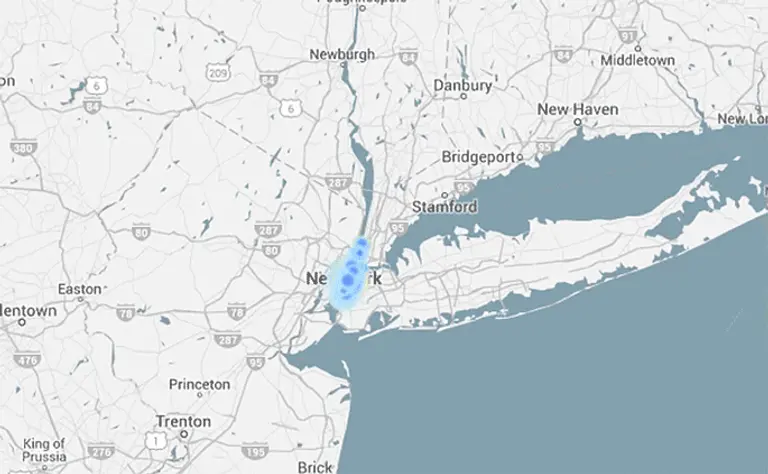
New Yorkers might want to stop hating on Jerseyans, because without the bridge and tunnel demographic the city would be a barren wasteland, at least according to this fun map from Very Small Array. First spotted by Brokelyn, the map uses census data to plot the state from which most people come in a given neighborhood (excluding those originally from New York). And as you can see, New Jersey makes up the majority of the city, followed not surprisingly by California. Florida, the third-place state, is a bit more unexpected, as is the fact that Mill Basin/Bergen Beach is full of Alaskans.
More data this way
May 4, 2016

Stuff You Should Know: How Eminent Domain Works

It has been called the most coercive public policy after the draft. It has also been said that without it, construction in major cities would come to a shuddering stop. What is this powerful, controversial tool? Can both statements be true? Eminent domain is the policy by which a governmental agency can acquire or "take" property from an owner unwilling to sell in order to build something else there, and it has been around for centuries. Some say it derives from the medieval concept of the divine right of kings, empowered by God the Almighty to be sovereign over all. And by inference, that includes the land, which individual owners occupy and trade at the king's sufferance. When he wants it back, it is his right to take it. So under eminent domain, all land theoretically belongs to the state, which can assume control at any time.
more on eminent domain here
May 3, 2016

The Whole Foods Effect: Does the Green Grocery Increase Home Values?

Fairway Market, considered by many the quintessential New York City supermarket, filed for bankruptcy yesterday, citing competition from "natural, organic and prepared food rivals" and "online ordering and home delivery services," according to the Wall Street Journal. Perhaps their biggest threats are Whole Foods and Trader Joe's, which both seem to be in a very different boat. Yahoo! Finance looked at data of four million homes in the U.S. that are located in a zip code with either one of these stores, "finding that average property values in a ZIP code with Trader Joe's appreciated by about 40 percent since they were purchased, while homes with a Whole Foods in the ZIP code appreciated by nearly 34 percent." The reasoning is quite simple -- people will pay a premium for the convenience of being near their favorite stores. And proximity to a store like Whole Foods, often thought of as more high-end than other grocery stores, adds an air of prestige to a neighborhood. But the science behind it is a bit of a chicken or the egg situation -- does a retailer directly affect home values, or are these companies able to identify locations where they'll generate the most interest?
Find out this way
May 3, 2016

VIDEO: A Visit to the ‘Creepy’ Depths of the ‘90s Subway Finds Some Things Haven’t Changed

Here’s a video that drops a subway token on the dark ages of 1990, when the city's underground transit system may have been a little “creepy,” but buses still took forever. While our ideas of what’s merely unruly (afterschool hordes) and what’s downright dangerous (the NYPD, eek!) may have been changed by the intervening years, it’s interesting to note the things that have stayed the same (capacity crowds on the Lexington Avenue line). Our host, a Fonzie-meets-Geraldo-esque Newsday columnist by the name of Ellis Henican, skims the surface of the many, many things that are going on below it in the city’s subway tunnels of the day, including ghost stations, locked restrooms and more.
Find out what's changed, what hasn't and what's still creepy
April 29, 2016

Spotlight: Mommy Poppins’ Anna Fader Shares Tips for Raising Kids in NYC

With school out for break this week, parents all over New York City have been looking for activities to occupy their youngsters. Many turn to Mommy Poppins, a local guide for the best preschools, classes, camps, events, trips, and generally fun stuff to do with kids in the city on every budget. The go-to site for parents was founded in 2007 by native New Yorker Anna Fader who wanted to share her vision for a "more artsy, educational, non-commercialized and community-oriented way to raise kids in New York City." It's since expanded to include Long Island, New Jersey, Westchester, Connecticut, Boston, Philadelphia, and Los Angeles, as well as an app that helps parents find things like playgrounds and restaurants on the go. 6sqft recently caught up with Anna to learn about her personal experiences raising a family downtown and get some insider tips on the best things to do with kids in New York.
Read the interview here