All articles by Devin Gannon

July 24, 2017

De Blasio urges Cuomo to ‘take responsibility’ for MTA

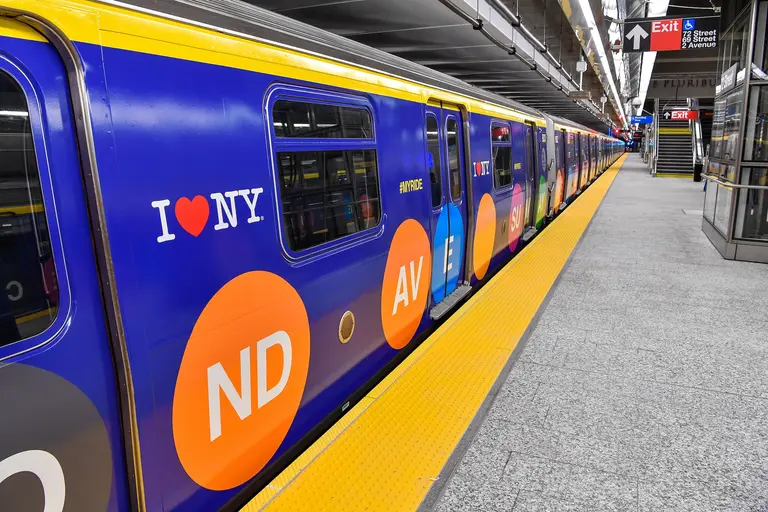
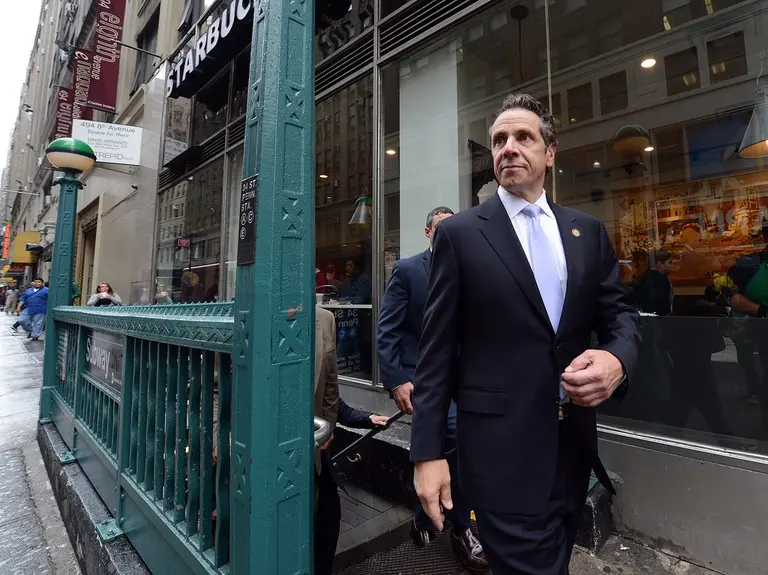
The ongoing public debate over whether the state or city controls the subway continued this weekend when Mayor de Blasio, riding a Manhattan-bound F train on Sunday, demanded Governor Cuomo “take responsibility” over the Metropolitan Transportation Authority. The mayor’s comments come after Cuomo and Joseph Lhota, the recently appointed chairman of the MTA, called on de Blasio and the city last week to contribute more money to the authority for repair work. As the New York Times reported, de Blasio said the MTA has a lot of money that they’re not spending, including the $2.5 billion contributed by the city in 2015, to the MTA's 2015-2019 capital plan.
Find out more
July 21, 2017

Nearly complete tunnels under Hudson Yards need more funding to finish

Currently, the first part of two box tunnels under the Hudson Yards development, below 10th and 11th Avenues on Manhattan’s west side, sits mostly finished. While construction of the final piece has yet to begin, when it’s complete the remaining section would link the tubes to the proposed new tunnel under the Hudson River, providing better access to Penn Station. However, according to the New York Times, both tunnel projects, which fall under the multi-billion dollar Gateway Program, lack the funding needed to finish.
More details here
July 21, 2017

Cuomo says New York City is responsible for subway system, not the state

Although New York City’s subway is currently in a state of emergency, no government official seems to want to take ownership of the failing transit system. Governor Cuomo and Joseph Lhota, the recently appointed chairman of the Metropolitan Transit Authority, called on Mayor de Blasio and City Hall to contribute more money for repairing the subway system on Thursday, citing a law that puts the city in charge of the track system. As the New York Times reported, Lhota and the MTA are preparing an emergency plan to deal with the subway, expecting more funds to come from the city. The plan, which Cuomo ordered the MTA to create within 30 days, is set to be completed by the end of next week.
Find out more
July 20, 2017

Help the NYPL geotag historic photos of New York City

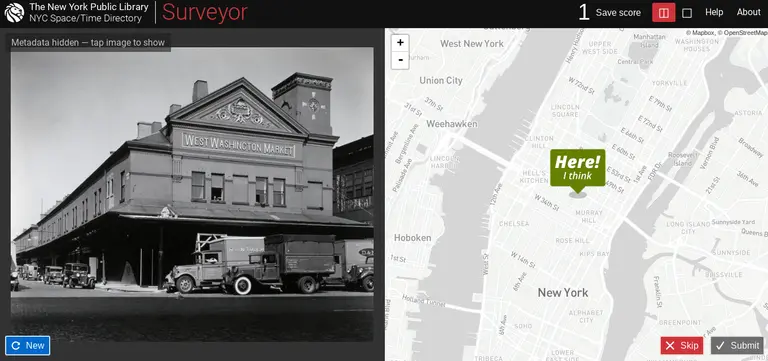
The New York Public Library has a challenge for all history gurus and NYC experts: Place unlabeled historic photos of the city at the correct location on a map. The new website called Surveyor crowdsources geotags of the NYPL's photo collections with the goal of creating a digital database to make it easier to find images by the location they were taken. While some photos come with helpful titles that describe the location or the address, others only include the neighborhood or vague details. Since algorithms and search engines won’t be able to pick up locations of these old photos, the NYPL is seeking help from the public.
Get more info
July 20, 2017

Governor Cuomo will invest $5.6B to transform the LIRR

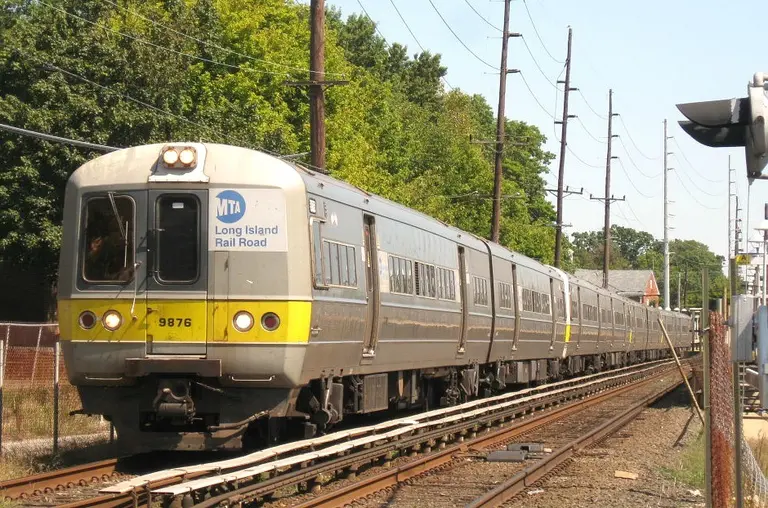
With the renovations at Penn Station just getting underway, the state released a plan on Wednesday to invest $5.6 billion in renovating 39 Long Island Rail Road stations. This includes the reconstruction of the system’s tracks, switches and signals. According to Governor Cuomo, the project, part of his encompassing $100 billion infrastructure plan, would increase rider capacity by more than 80 percent.
Find out more
July 19, 2017

Experts say NYC’s noise issues will only grow worse

With its 8.5 million residents, honking taxis, constant construction and vibrant nightlife scene, New York City remains one of the noisiest places on Earth. Although quieter neighborhoods like the Upper East Side once offered a quiet reprieve from the city’s cacophony, these pockets of peace are getting harder to find as NYC’s population expands. As the New York Times reported, despite the fact that noise pollution has already been linked to harmful health effects like stress, hypertension and heart disease, about 420,000 noise complaints were filed citywide with the city’s 311 hotline in 2016, more than doubling the number of complaints made in 2011.
Find out more
July 19, 2017

The history of Fort George: Manhattan’s long-lost amusement park in Inwood

Did you know Washington Heights and Inwood used to be home to a giant amusement park? In 1895, the Fort George Amusement Park opened on Amsterdam Avenue between 190th and 192nd Streets, overlooking the Harlem River in what is now Highbridge Park. Located in the same spot as George Washington’s fight against the British, "Harlem’s Coney Island" rivaled Brooklyn’s Coney Island with roller coasters, Ferris wheels, a skating rink, fortune tellers, music halls, casinos, and hotels.
Learn more about the Fort George Amusement Park
July 19, 2017

New York State gets approved for $550M loan for new Moynihan Station

The first phase of Governor Cuomo’s plan to revamp Penn Station wrapped up last month with two new entrances opening on the corners of West 31st and West 33rd Streets and Eighth Avenue. Plus, the West End Concourse was expanded and now boasts a new color scheme, LED screens and murals. Adding to the project's progress, the state was approved for a federal loan on Tuesday for up to $550 million for the second phase of the plan, which will convert the Farley Post Office across the street into Moynihan Train Hall, expanding Penn Station floor space by 50 percent, as reported by Politico NY.
Find out more
July 18, 2017

The world’s largest tire was used as a Ferris wheel at NYC’s 1964 World’s Fair

The world's largest tire, the Uniroyal Giant Tire, reached 80 feet high and weighed 20 tons when it debuted as a Ferris wheel at the New York World's Fair in 1964. First located in Flushing, Queens, the towering tire was commissioned by the Uniroyal Tire Company and designed by Shreve, Lamb & Harmon, the same architectural firm behind the Empire State Building. During its time at the fair, the tire carried over two million passengers, including Jacqueline Kennedy and her children, Telly Savalas, and the Shah of Iran. Each ride cost just $0.25 and would last 10 minutes.
How did the tire end up in Detroit?
July 18, 2017

Crowd-sourced maps show where tourists and hipsters land in every big city

While most New Yorkers can describe each neighborhood in just a word or two, a new website takes these definitions and puts them on a map, giving users a better understanding of how locals see each city block. As ArchDaily learned, the platform, Hoodmaps, crowd sources information, letting the public “paint” parts of the city using six colors to represent “uni”, “hipster,” “tourists,” “rich,” “suits” and “normies.” In NYC, it’s no surprise users painted Times Square, Hell’s Kitchen and the High Line in red, marking high tourist spots. And of course, Williamsburg was yellow marking it “hipster central” on the map.
Find out more
July 17, 2017

Vintage maps reflect the population distribution of Americans in 1930

Using the 1930 census for their data, two distorted maps show where residents in the United States lived during this period of time. Both vintage cartogram maps exhibit how bunched Americans were in the north and the east coast, clustered in urban areas, despite the westward expansion of the previous century. As the Making Maps blog first featured and as Slate discovered, the size of New York and New Jersey grows in proportion to its expanding populations, moving further east into the ocean.
Find out more
July 17, 2017

A former Wells Fargo horse stable in Jersey City gets converted into a modern plywood loft

Located in the historic 1890 Wells Fargo building, the Wells Fargo Loft was originally used for the company’s horses and city carts. The loft, located at 299 Pavonia Avenue in Jersey City, was redesigned over the last few decades, but most recently by Jeff Jordan Architects in 2016 (h/t Architizer), who took full advantage of the ceiling heights ranging from 14 to 50 feet and amazing NYC views. To create a better live-work balance, the architects removed and reconfigured walls for a clearer separation between art studio and living spaces by using plywood and ample storage space.
See inside the unique loft
July 17, 2017

Live in a studio across from the Brooklyn Navy Yard for $947/month

The Navy Green R3 in Fort Greene includes townhouses and condominiums located directly across the street from the bustling Brooklyn Navy Yard. New Yorkers earning between $34,355 and $40,080 annually can apply to enter the waitlist for $947/month studios in the complex's 45 Clermont Avenue. The eight-story building includes spacious units with high-end finishes, as well as amenities like a community room, bike storage, and large outdoor space.
Find out if you qualify
July 14, 2017

On this day in 1645, a freed slave became the first non-Native settler to own land in Greenwich Village

In 1626, the Dutch West India Company imported 11 African slaves to New Amsterdam, beginning New York’s 200 year-period of slavery. One man in this group, Paolo d’Angola, would become the city’s first non-Native settler of Greenwich Village. As the Greenwich Village Society for Historic Preservation (GVSHP) discovered, and added to their Civil Rights and Social Justice Map, as a recently freed slave, d’Angola was granted land around today’s Washington Square Park for a farm. While this seems like a generous gesture from a slave owner, d’Angola’s land actually served as an intermediary spot between the European colonists and the American Indians, who sometimes raided settlements. This area, in addition to Chinatown, Little Italy, and SoHo, was known as the “Land of the Blacks.”
Find out more
July 14, 2017

The city added 24,293 affordable housing units this fiscal year, the most since 1989

Image via Pixbay After more than three years into Mayor de Blasio’s $41 billion, 10-year affordable housing initiative, the city announced on Thursday that 24,293 affordable apartments and homes were secured in Fiscal Year 2017. Out of those units, 40 percent were for families earning less than $43,000 a year, with more than 4,014 homes for families of three earning less than $26,000 a year. According to city officials, the mayor’s Housing New York initiative aims to help an estimated half of a million people afford to live in New York City. Despite these promising numbers, the plan still fails New Yorkers with extremely low-income, by making their affordability benchmarks too high.
Find out more
July 13, 2017

The top 10 neighborhoods NYC artists are moving to

According to a new analysis by the Center for an Urban Future (CUF), the number of artists in New York City has grown in almost every discipline, borough and neighborhood between 2000 and 2015. Citywide, the number of artists has increased by an all-time high of 17.4 percent, to 56,268 as of 2015. Since 2000, the Bronx saw the number of visual and performing artists nearly double, to 2,920 from 1,524, while Manhattan saw a decline of 10 percent, from 28,454 artists to 25,650. On the other hand, Brooklyn grew 72 percent to 17,605, Queens grew at 35 percent to 8,726 and Staten Island experienced an 8 percent growth to total 1,367 in 2015.
Find out more
July 13, 2017

Live around the corner from Harlem’s new Whole Foods for $1,015/ month

Image via Whole Foods' Facebook New Yorkers earning 50 percent of the area median income can apply for two affordable one-bedroom apartments for $1,015 per month at 40 West 126th Street. The Central Harlem multi-family building was renovated in 2013 and is just steps away from the 2 and 3 train lines, an abundance of restaurants and bars like the Red Rooster and Sylvia's, the Studio Museum in Harlem, both the Apollo Theater and National Black Theatre, and the city's latest Whole Foods that's set to open next week.
Find out if you qualify
July 13, 2017

Design concept replaces Rikers jail with community-based ‘justice hubs’

Speaker Melissa Mark-Viverito and the Independent Commission on New York City Criminal Justice, along with the Van Alen Institute, released a set of guidelines to decentralize Rikers Island and improve city jails in every borough. The "Justice in Design" report outlines recommendations for healthier jails, including interior and exterior design elements, greater amenities, and ways to better integrate the jail with the surrounding neighborhood. As one of the first steps to permanently closing Rikers, these new justice hubs, or decentralized borough-based jails, would be tailored to the needs of detainees, officers, lawyers, visitors and community members.
See the design concepts
July 12, 2017

The story behind ‘Scabby the Rat,’ NYC’s symbol of unionized labor

Despite a nationwide decline in union membership, New York City continues to defy this trend. The number of city workers who belong to unions has risen for the last three years in a row, growing from 21.5 percent of all workers to 25.5 percent in 2016. And because of this high number of unionized employees, city residents have become even more familiar with Scabby the Rat--one of the most recognizable symbols of unions. The giant inflatable rodent, with its sharp buck teeth and beady red eyes, has been a staple of union construction protests in NYC and across the country for decades, and if there's a development project that enlists nonunion labor in New York, expect to see Scabby out on the street.
Find out more about Scabby's story
July 12, 2017

Apply for 22 affordable units in East Harlem’s HAP Ten, from $913/month

The HAP Ten building at 2211 Third Avenue and 121st Street in East Harlem was created by HAP Investment Developers and designed by Karl Fischer Architects, who employed a gray brick facade with metal panels and several rows of glass balconies. Starting tomorrow, New Yorkers earning 60 percent of the area median income can apply for 22 affordable apartments in the 108-unit building, ranging from $913/month studios to $1,183/month two-bedrooms. Amenities include a concierge, fitness center, rooftop terrace, parking, outdoor entertainment space, and bike room.
Find out if you qualify
July 12, 2017

Construction of Columbia’s Manhattanville campus to create $6.3 billion in local investment

More than ten years after it was first proposed, the expansion of Columbia University into Manhattanville is finally coming together, with its first building opening on Harlem’s west side. While some residents worried the expansion would infringe on the Harlem community, the president of the university, Lee Bollinger, said the ongoing construction will result in roughly $6.3 billion in local investment. As the Daily News reported, the school paid $578 million to minority-, women-, and locally owned firms for construction work in the last five years. The project also created more than 1,500 construction jobs each year.
Find out more
July 11, 2017

Entire 62-acre Connecticut ghost town sells for $1.85M

The small-town of Johnsonville in East Haddam, Connecticut has just sold for $1.85 million, after being abandoned for nearly 20 years. As Business Insider discovered, the international religious organization Iglesia Ni Cristo, known as Church of Christ, purchased the 62-acre property to turn it into a recreation center for its members.  The current owner is hotel company Meyer Jabara Hotels, who paid $2.5 million for the town in 2001.
See the ghost town here
July 11, 2017

Construction of locally-sourced food hall underway in Washington Heights

New York City’s furor for food halls has not fizzled out quite yet. Construction is currently in progress for the North End Food Hall in Washington Heights at 4300 Broadway and 183rd Street. Set to be the largest food and beer hall in upper Manhattan, the space stretches 6,000 square feet and will feature locally sourced and sustainable goods. As Eater NY learned, seven kiosks will serve everything from fair-trade coffee and craft beer to organic barbecue and burgers.
See inside
July 11, 2017

‘Talking Statues’ project brings NYC history to life with a new smartphone app

If statues could talk, what would they say? Thanks to a new project called New York Talking Statues, you will now be able to find out. Beginning tomorrow, July 12, New Yorkers will be able to listen to the voices of 35 statues across the city through a smartphone app (h/t Untapped Cities). Users will be able to scan the QR code found on a sign next to each statue or type in the web address into the web browser. The team behind the project chose the statues by looking at their historical significance to the city, especially those with a special tie to immigrant communities as well as artists who have contributed directly to the city.
Find out more
July 10, 2017

Perkins Eastman’s 99 Hudson Street will be the tallest building in New Jersey

While Jersey City boasts beautiful views of Manhattan, the NJ water-front community continues to build up its own impressive skyline. In the last twenty years, 15 towers reaching more than 500 feet tall have been built, with seven more in the works. Notably, as CityRealty discovered, the latest tower rising in Jersey City at 99 Hudson Street will be the state’s tallest building, reaching a height of 889 feet. When the condominium’s construction is complete in 2019, the tower will be the 15th tallest in the country, outside of New York and Chicago.
Find out more