Search Results for: how many apartments arp

May 18, 2015

Developer Scott Resnick Takes Us Inside Norman Foster’s 551W21

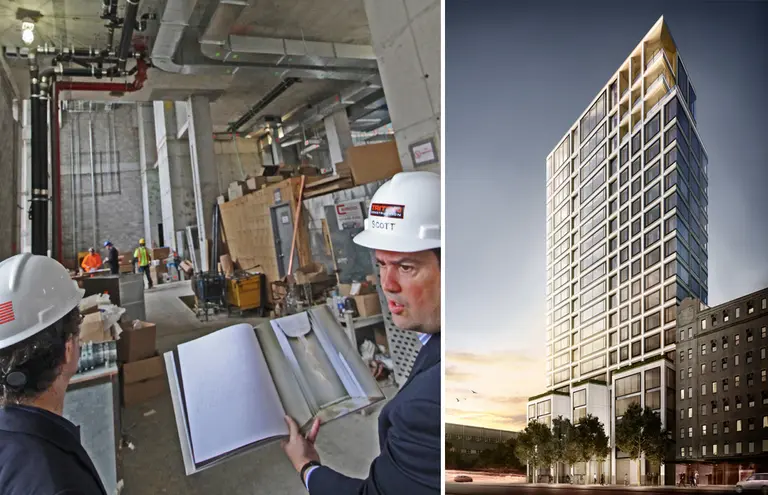
How do you follow up managing the building of the city’s newest and most exciting museum, the Whitney Museum of American Art on the Hudson River waterfront in the West Village, that kicks off the city’s most popular architectural extravaganza, the High Line elevated park? You commission Sir Norman Foster, one of the world’s master architects to rise to the starchitect challenge of the High Line, the city’s seemingly overnight sensation that is a phenomenal explosion of really interesting designs in a city too long mired in architectural mediocrity and bogged down mightily by the burden of rampant NIMBYism, the well-intentioned but dreaded Not In My Back Yard syndrome. Scott Resnick, the head of SR Capital, has asked Foster to design a 19-story residential condominium building at 551 West 21st Street, half a block west of the High Line. “We’ve got the Hudson River,” Resnick retorts, casually destroying the real estate myth of “location, location, location.” This, of course, is the back story to the supertall onslaught of the south end of Central Park. How can mere 250-footers at best compete with the 1,000-foot-plus stompin’ boots of oligarchs in and around the city’s platinum core of double-height retailing, grand hoteling and horse-and-buggy bashing? Talk about 76 trombones! Still, in a metropolis of more than eight-million yarns, there is eternal hope for the spunky “little guys,” “da bums.”
Inside Foster's new building in progress this way
May 15, 2015

What’s Your Favorite Building in NYC? 6sqft’s Writers and Friends Square Off

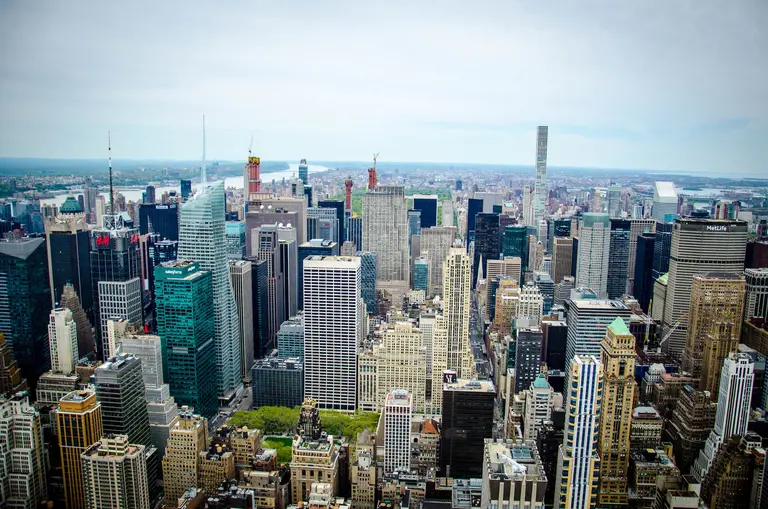
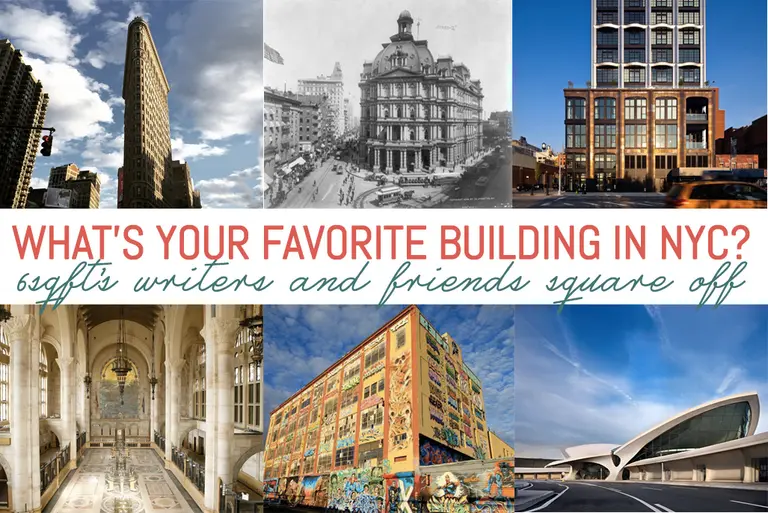
Once upon a time, when 6sqft was not yet launched, a group of writers were asked for their thoughts on their favorite building in New York City. Their choices, some easily recognizable and others a little further from the beaten path, were mixed together with those of a few folks a lot like our readers—interested in and passionate about all things New York. The result? A wonderful blend of what makes this city great: its diversity, not simply demographically but also in the opinions of those eight million souls who weave together the fabric of all five boroughs to create the most interesting city in the world. And it stands to reason the most interesting city in the world is home to quite a few interesting buildings. As one might expect, there was barely a duplicate in the bunch. Some weren't even on our radar! Is your favorite on the list? If not, we’d love to know what you think in the comments.
Read on to see if you agree with our selections
April 20, 2015

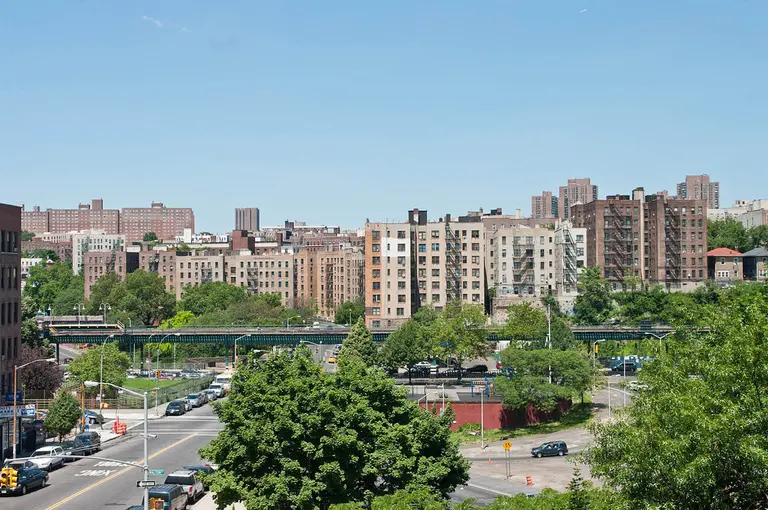
Going Green and Curbing Gentrification: How the Bronx Is Doing It Differently

“Ladies and gentlemen, the Bronx is burning." The infamous phrase, uttered in a 1977 broadcast of a Bronx fire, has stuck in the mind of many New Yorkers even today. Indeed, the Bronx saw a sharp decline in population and quality of life in the late 1960s and 1970s, which culminated in a wave of arson. By the early 1980s, the South Bronx was considered one of the most blighted neighborhoods in the country, with a 60 percent decline in population and 40 percent decline of housing units. Although revitalization picked up by the '90s, the Bronx never quite took off like its outer-borough counterparts Brooklyn and Queens. While media hype, quickly rising prices and a rush of development has come to characterize those two boroughs, the Bronx has flourished more quietly. The borough, nevertheless, has become home to growth and development distinct from the rest of New York City. Innovative affordable housing, adaptive reuse projects, green development and strong community involvement are redefining the area. As Bronx Borough President Ruben Diaz Jr. said during this Municipal Arts Society discussion in 2014, this is "The New Bronx."
Keep Reading About What's Going on in the Bronx
March 4, 2015

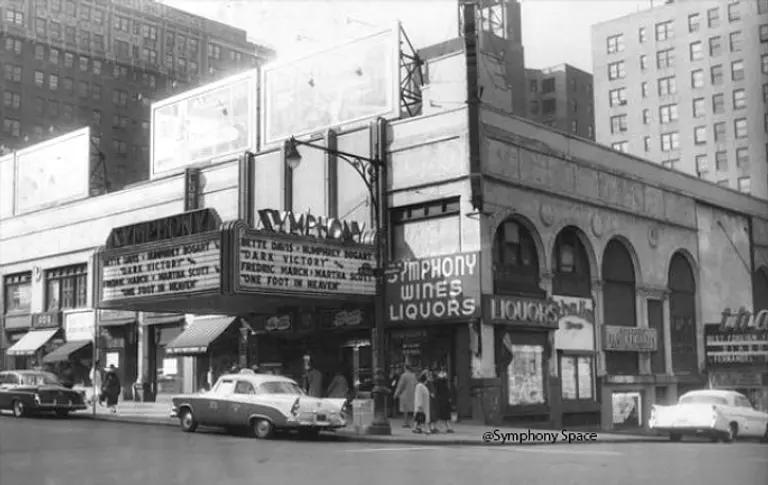
The History of Symphony Space: From the Astor Market to the Leonard Nimoy Thalia

We were saddened here at 6sqft to hear about the passing last week of Leonard Nimoy, an extraordinary actor, director, poet, singer, and photographer, known worldwide for his role as Mr. Spock in "Star Trek." Closer to home, though, Nimoy was also known as a dedicated philanthropist who adored the Upper West Side's Symphony Space. In fact, in 2002 the multi-disciplinary performing arts organization renamed its historic Thalia Theater the Leonard Nimoy Thalia to reflect their patron's generosity. Just like the storied career of Nimoy, Symphony Space has its own eclectic past, from its beginnings as a food market funded by Vincent Astor to the Crystal Palace skating rink and, finally, to a neighborhood institution frequented by the likes of Stephen Colbert and Cynthia Nixon.
Learn about this history of Symphony Space here
March 2, 2015

Where Will Mayor de Blasio Land on the 421-a Tax Abatement Debate?

Developers have been rushing to break ground on projects before June, when the controversial 421-a tax abatement is set to expire, as it provides incentives to developers for up to 25 years when they reserve at least 20 percent of a building’s units for low- and moderate-income tenants. However, those against the 40-year-old program criticize it for using working people's tax dollars to build swimming pools and pet hotels for the world's billionaires; after all, the construction of One57, where a penthouse recently sold for $100 million, was built using subsidies from the program. But on what side of the debate does Mayor de Blasio, whose goal is to implement "the largest affordable housing program that any city, any state has attempted in a ten-year time span in the history of the republic," fall? Though many of his supporters oppose 421-a, in order to reach his goal of building 80,000 new affordable housing units–especially in places like East New York where a rezoning would be necessary to allow for denser construction that mandates the inclusion of permanently affordable apartments–de Blasio says he needs the program, according to Capital New York.
More on the 421-a debate here
January 21, 2015

Get ‘Em While They’re Cheap: A Look at Crown Heights Real Estate Past and Present

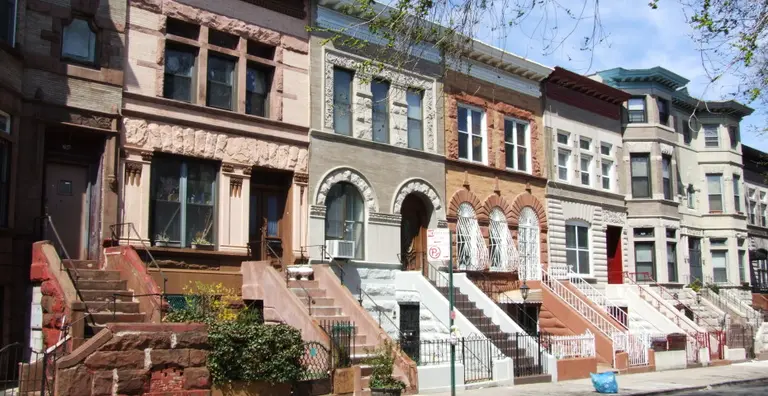
What once seemed unheard-of in terms of where to rent or buy in tertiary neighborhoods is now a thing of the past—be it Harlem, Williamsburg, Hell’s Kitchen, Long Island City, or the Lower East Side. But one of the best examples of rapid transformation is Brooklyn. Certainly there are many coveted communities such as Brooklyn Heights, Prospect Heights, and Park Slope, but there is another neighborhood making what looks like a very successful run at gentrification: Crown Heights.
More on the Crown Heights renaissance here
October 20, 2014

Extraordinary Dwellings: These Amazing Homes Are Hidden in Plain Sight

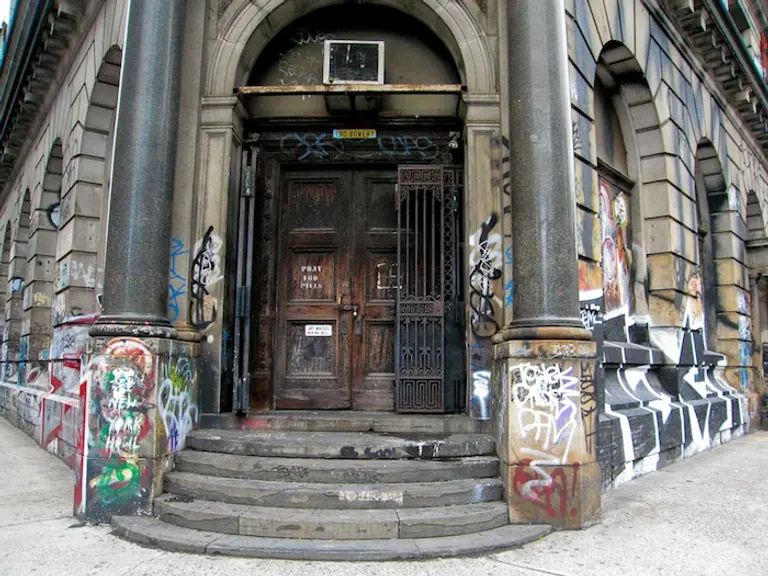
It isn’t unusual to see old warehouses, churches and banks converted into luxury multi-unit condos and apartments. But far more rare, and often shrouded in myth and mystery, are one-of-a-kind buildings that had former lives as banks, schools, a synagogue, a public bath house, a Con Ed substation, even a public restroom and a hillside cave–and have more recently served as home and workspace for a lucky handful of bohemian dreamers (and hard-working homeowners).
Find out who lives behind the gates of those those cavernous, mysterious buildings
September 17, 2014

Sunset Park: How Creativity and Commerce are Transforming This Waterfront Neighborhood

With plans in place that call for a public waterfront bustling with creative industry and commerce rather than luxury residential developments, Sunset Park is not on its way to becoming the next hip NYC residential neighborhood–and that’s a good thing. Located on Brooklyn's western waterfront flank, there are really two sides to Sunset Park. The neighborhood, generally defined as the area between 65th Street, the Prospect Expressway, Eighth Avenue and the East River, has long been a thriving residential community. Sunset Park is also home to about 15 million square feet of warehouse and light industrial space. The key to the neighborhood’s future may be the point at which the two meet.
Find Out How Fashion May Give Sunset Park a Chance to Shine As the New Garment District
September 8, 2014

Cliffs Notes on New York’s Most Famous Storied Residential Buildings

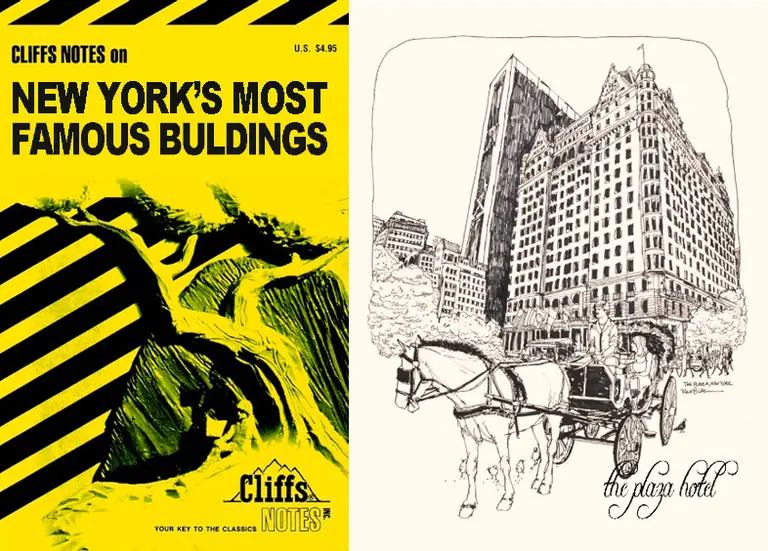
The newest apartment houses, be it now or some 150 years ago has always been of great interest to New York buyers and renters. And like today, their appeal make sell-outs as easy as pie. From Manhattan's very first apartment building to those that followed a decade or so later, those initial projects continue to remain the city's most coveted digs—not to mention the city’s most expensive. But what stands out among these famous buildings as the years passed was the introduction of not-yet-available services—ranging from running water and elevators to electricity and communal amenities. Whether we are talking about the Dakota or the luxurious the Osborne Flats, learn why these century-plus-old buildings continue to enchant the rich, the famous, and the rest of us.
Click here for Cliffs Notes on NYC's most historic homes