NYC voters approve all five Mamdani ballot proposals. Here’s what changes
Credit: Open Journalism Network by InOldNews on Flickr
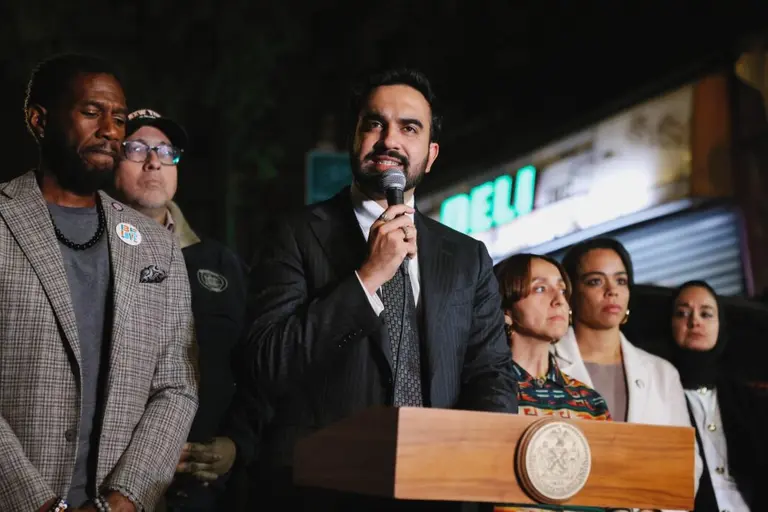
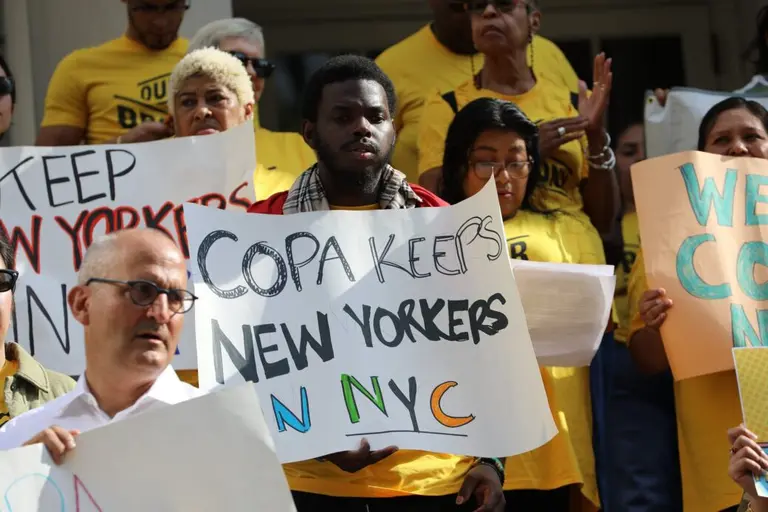
All five ballot proposals put forward by Mayor Zohran Mamdani’s Charter Revision Commission passed on Tuesday, with New Yorkers voting to streamline city government and cut red tape around everything from outdoor dining to bike lanes and construction permits. The mayor’s Commission on Government Efficiency (COGE), a charter commission he appointed to help advance his agenda, put forward the proposals. Ahead, find out what the approved proposals mean for city government moving forward.
What is COGE?
Launched by the mayor in May, COGE examined how the New York City Charter could be amended to better support “public excellence” by improving efficiency, modernizing city government, and ensuring that government meets the needs of New Yorkers. Led by Democratic strategist Patrick Gaspard, the 15-member panel was tasked with reviewing the city charter, gathering public input, and proposing amendments.
Over the summer, COGE held 10 public meetings to hear directly from New Yorkers about how the city charter could be changed to make government more effective. Following those meetings, the commission put forward five ballot proposals and launched a $1.6 million voter education campaign ahead of Tuesday’s election. All five measures have unofficially passed, with the remaining votes still being counted as of Wednesday morning.
“Tonight, New Yorkers voted for a government that moves as fast as they do,” Mamdani said. “From opening outdoor dining faster to speeding up street safety projects to accelerating housing production, we are cutting red tape that will directly address the affordability crisis and help New Yorkers stay in the city they love. Now comes the work of turning these votes into results.”
Measure 1: Streamlining the process for using public space
The first measure, which passed with 63.38 percent of the vote as of Wednesday morning, according to the city’s Board of Elections, is designed to streamline approvals for the private use of public space. It eliminates mandatory public hearings and removes the City Council’s authority to disapprove individual sidewalk cafe applications, according to amNY.
It also streamlines outdoor dining permits by combining the application processes for sidewalk and roadway dining while allowing community boards, borough presidents, and council members to submit comments.
According to COGE, the measure, combined with a separate Department of Transportation (DOT) initiative to clear the outdoor dining program’s application backlog, could reduce approval times by 75 percent, from as long as eight months to roughly two months. It could also save small businesses up to $1,800 in application costs and thousands of dollars in staff time.
The NYC Hospitality Alliance, a trade association representing restaurants and bars, called the measure a “common sense” solution that would eliminate “unnecessary red tape while preserving input from communities and elected officials,” according to the New York Times.
In contrast, Common Cause, a nonpartisan nonprofit organization that advocates for government accountability, opposed the measure, arguing that while government efficiency is important, “it should not come at the expense of public participation and legislative oversight.” The Kings County Republican Committee called the measure a “power grab” by Mamdani that would “weaken oversight.”
The changes are slated to take effect on March 1, 2027.
Measure 2: Reforming the contracting process for small businesses and nonprofits
Measure two, which passed with 61.77 percent of the vote, aims to reduce paperwork for businesses and nonprofits seeking city contracts. The measure authorizes the city’s Procurement Policy Board to simplify contractor questionnaires based on factors such as contract size, industry, and whether a vendor is a small business.
The measure would also require the board to meet quarterly, eliminate mandatory hearings for required client services reports, and allow certain contract approvals to be delegated to agency officials. According to the Mamdani administration, reducing administrative burdens on small businesses and nonprofits could save them up to 30 days in the city contracting process.
Common Cause backed the proposal, saying it would reduce “unnecessary administrative burdens” and help smaller businesses and nonprofits participating in city contracting, according to the Times.
On the other hand, the Brooklyn Republican committee argued that the city already spends billions of dollars on outside contracts and that “spending on that scale deserves more scrutiny, not less.”
Measure 3: Speeding up street safety projects, office leasing, and the disposition of unused city property
The third measure, which passed with 65.7 percent of the vote, aims to simplify reviews of street safety projects to reduce construction times. The proposal also seeks to accelerate the disposition of unused city-owned property and expedite the leasing of office space for the city workforce.
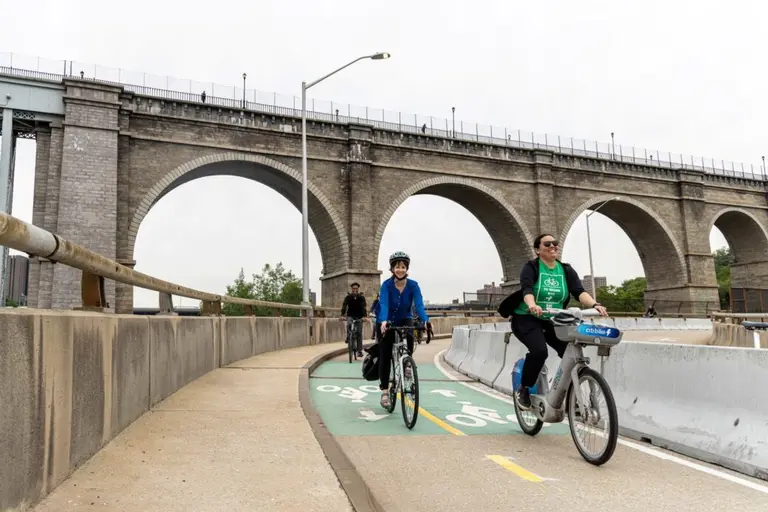
Previously, the process for building bus and bike lanes required the city to consult with local elected officials, community boards, and police before work could begin.
Under the new measure, the DOT can begin work while conducting outreach simultaneously, giving the agency greater flexibility to advance projects addressing “immediate safety concerns.” According to the administration, the change could speed up street safety projects, including bike lanes, by at least 33 percent.
The proposal also allows certain city properties measuring 10,000 square feet or less, as well as transfers of unused development rights from city-owned landmarks, to go through shorter approval processes. The City Planning Commission (CPC) would have final approval over those actions.
Finally, the measure eliminates the need for CPC and City Council approval of city government office leases, delegating those decisions to the Department of Citywide Administrative Services instead. These changes could unlock more than $200 million in potential city revenue through the sale of small surplus lots and unused air rights over city-owned landmarks, according to the Mamdani administration.
The measure received support from the Citizens Budget Commission, a fiscal watchdog group, which said it would “make street safety projects and real estate transactions faster and more predictable,” according to the Times.
However, the Municipal Art Society of New York, a historic preservation group, argued that the proposal could “make it easier to sell or transfer valuable public land and development rights without sufficient safeguards to ensure lasting public benefits.”
Measure 4: Simplifying the building permitting process
Passed with 67.7 percent of the vote, the fourth measure aims to streamline the construction permitting process by creating a centralized hub that brings 40 approvals from 18 separate offices and agencies under one roof.
Under the proposal, the Department of Buildings could take over permitting for waterfront structures from the Department of Small Business Services. The agency’s commissioner could also authorize more officials to sign off on construction permits, accelerating approvals and saving builders time and frustration.
The system has a target launch date of December 1, 2029, though its implementation will depend on funding and the deadline could be extended, according to amNY.
Measure 5: Setting a target for the city’s rainy day fund
The fifth measure, which passed with 72.5 percent of the vote, establishes a savings target of 12 percent of total tax revenue. The measure also requires the Mayor’s Office of Management and Budget, in collaboration with the comptroller, to develop a methodology for calculating contributions to the city’s rainy-day fund.
State Comptroller Thomas P. DiNapoli expressed support for the measure, calling it “an important step to prepare NYC’s finances for the storms that lie ahead,” according to the Times.
The Citizens Budget Commission opposed the measure, arguing that the city should set higher targets for its rainy-day fund. The group said the proposal, as written, “enshrines the failing status quo in policy” and creates the “illusion of progress.”
RELATED: