New York imposes nation’s first one-year ban on new large data centers
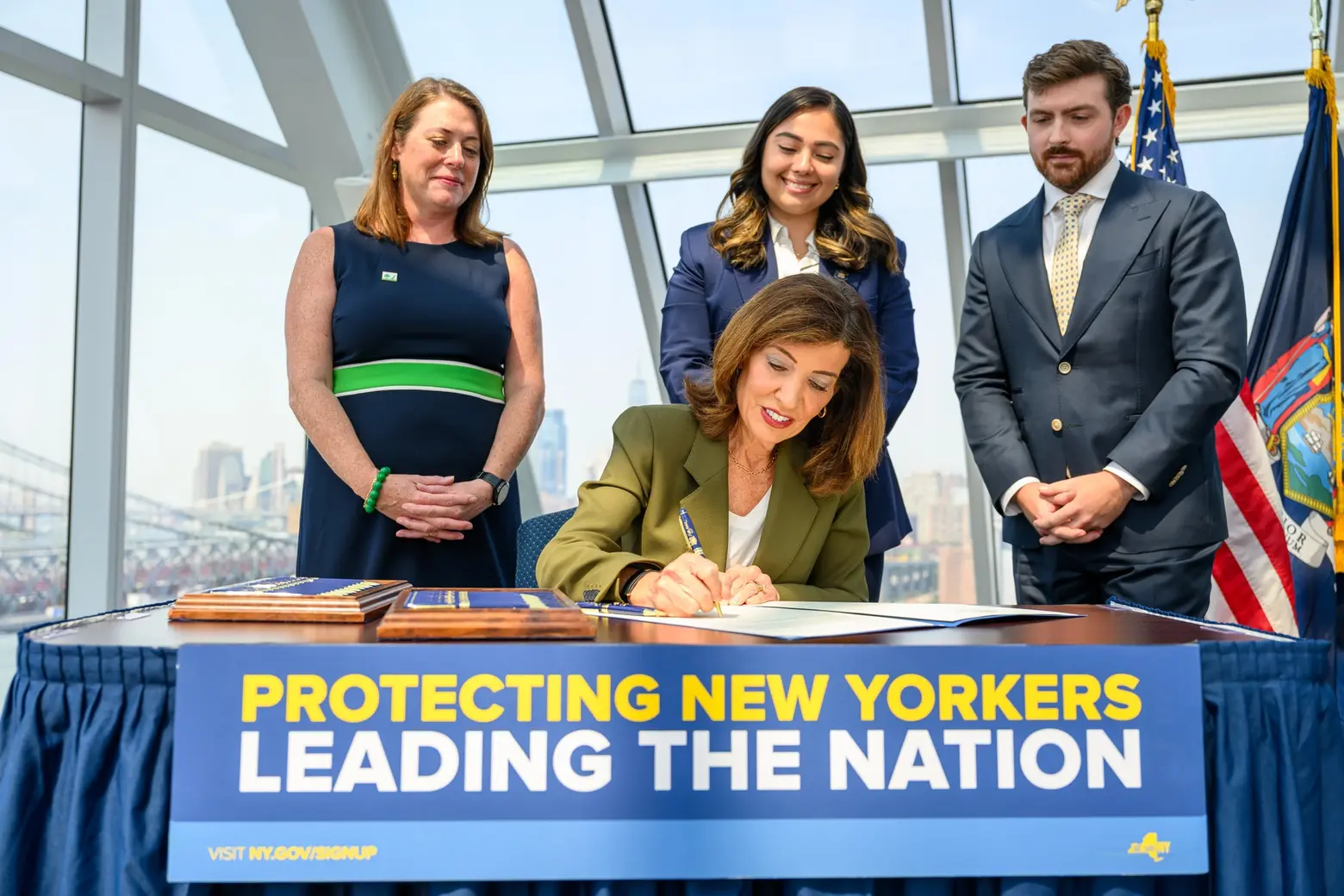
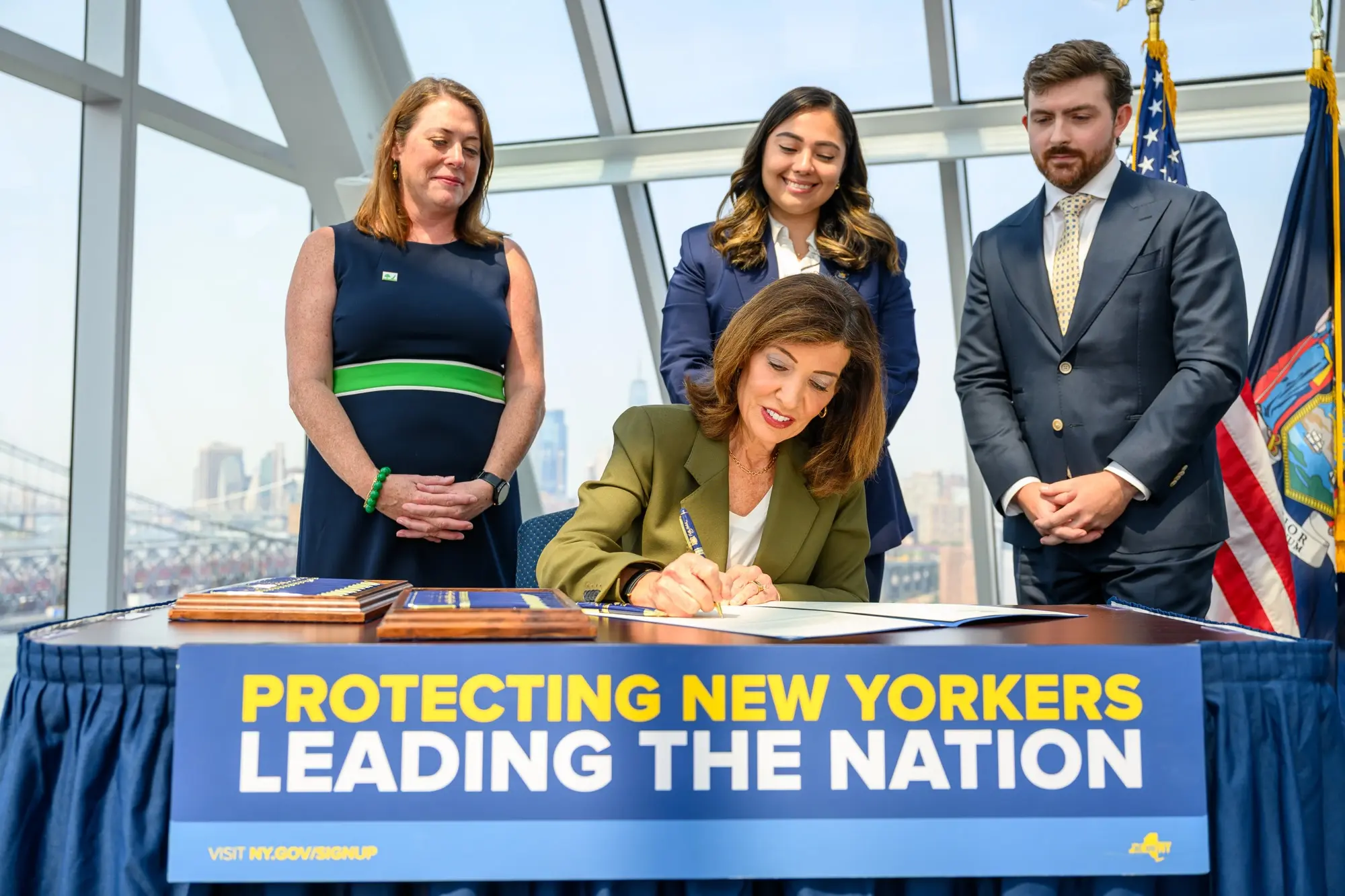
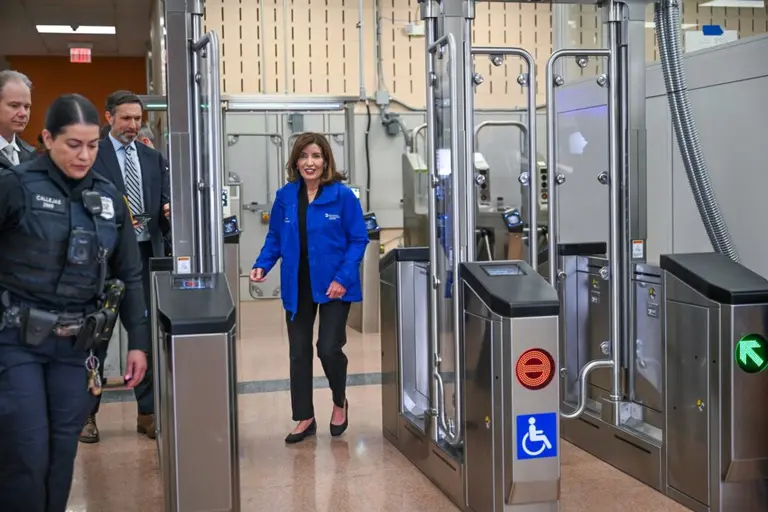
Credit: Susan Watts/Office of Gov. Kathy Hochul on Flickr
New York became the first state in the nation on Tuesday to impose a temporary moratorium on the construction of large new data centers, which require immense power to fuel artificial intelligence tools. Gov. Kathy Hochul announced a one-year pause on new data centers that consume 50 megawatts or more of power to give officials time to develop measures to protect New Yorkers and the environment following concerns raised by communities about the environmental impacts and rising energy costs stemming from the facilities.
The New York State legislature passed the Responsible Data Center Development Act last month, which goes further than the order announced by the governor on Tuesday. The bill calls for a one-year pause on permits for new hyperscale data centers over 20 megawatts.
Officials told the New York Times that the governor had issued the order “for the sake of expediency” but that she would continue to review the legislation.
“AI has changed the way we work, learn, communicate, and do business. It has also sparked a heated debate over the rapid construction of massive energy-guzzling infrastructure that is needed to power the industry,” Hochul said. “These hyperscale data centers consume enormous amounts of power, truly threatening to outpace our grid’s capacity and driving up costs for ratepayers.”
“I refuse to let those costs be passed onto New Yorkers, who already pay too much for utility bills. These data centers require millions of gallons of water, straining local supplies, and drive up our carbon footprint,” she added. “Progress shouldn’t arrive with a higher utility bill, depleted water supply, or noise pollution. We have no choice but to address these challenges created by these massive facilities.”
During the moratorium, the state’s Department of Environmental Conservation will not issue discretionary permits for projects whose applications have not already been deemed complete, according to Reuters.
Instead, Hochul has directed state officials to prepare a Generic Environmental Impact Statement to establish consistent standards for future data centers and assess the potential environmental impacts of their construction and operation across New York.
The move comes as communities across the country have pushed back against similar projects. According to Reuters, only one in three Americans approves of the rapid pace of data center construction, and a majority oppose building one in their own community. The opposition is bipartisan, with a recent Gallup poll indicating that both Democrats and Republicans express concerns about data center development.
Several state legislatures have also introduced bills aimed at limiting the impact of data centers on electricity costs and the environment.
In March, the Seminole Nation approved a moratorium on data center development on tribal land in Oklahoma. The following month, the Maine Legislature passed what would have been the country’s first statewide moratorium on data centers, but the measure was vetoed by Gov. Janet Mills, according to the New York Times.
Moratoriums have been proposed in nearly a dozen other states, but none have gone as far as New York, which is now the only state in the country to impose a statewide moratorium on large new data centers.
Supporters of new data centers argue they would boost job growth and help prevent China from advancing its lead in the competitive artificial intelligence industry.
President Donald Trump, who has expressed broad support for the facilities, has sought to address concerns over their energy demands by securing commitments from technology companies to cover their own energy costs, according to the Times.
Other Democratic governors, including Gretchen Whitmer of Michigan and Gavin Newsom of California, have also expressed support for data centers, citing their potential to drive economic growth in states facing “deindustrialization.”
Carlo A. Scissura, president and CEO of the New York Building Congress, said that while the data center industry requires “guardrails,” the moratorium is the “wrong tool” for addressing concerns.
Instead, he said the issue requires targeted regulation rather than a statewide pause. He also disputed Hochul’s argument that New Yorkers would bear the burden of higher energy costs, saying the evidence “points the other way.”
“Grid modernization costs don’t disappear when data centers do,” Scissura said. “They shift onto everyday New Yorkers, who will shoulder a larger share of infrastructure modernization.”
“And then there are the jobs—tens of thousands of them. When projects go to other states, the work goes with them, and so, often, do the workers,” he added.
Earlier this year, Hochul required data centers to either generate their own power by building on sites with existing power infrastructure or pay a premium to purchase electricity from the grid. Those rules are slated to take effect within the next year.
As of May, more than 12 gigawatts of large energy-consuming facilities, including data centers, were slated to connect to New York’s power grid, according to Reuters.
While New York has the eighth-most expensive residential electricity rates in the country, which has limited data center growth compared with states like Texas and Ohio, the state has continued to attract interest from server warehouses.
After the moratorium is lifted, communities will be able to negotiate directly with tech companies over new projects. The state will provide guidelines to help local governments seek concessions from developers, including investments in local infrastructure and commitments to using union labor.
RELATED: