Explore how ‘The Odyssey’ is depicted in art at the Met
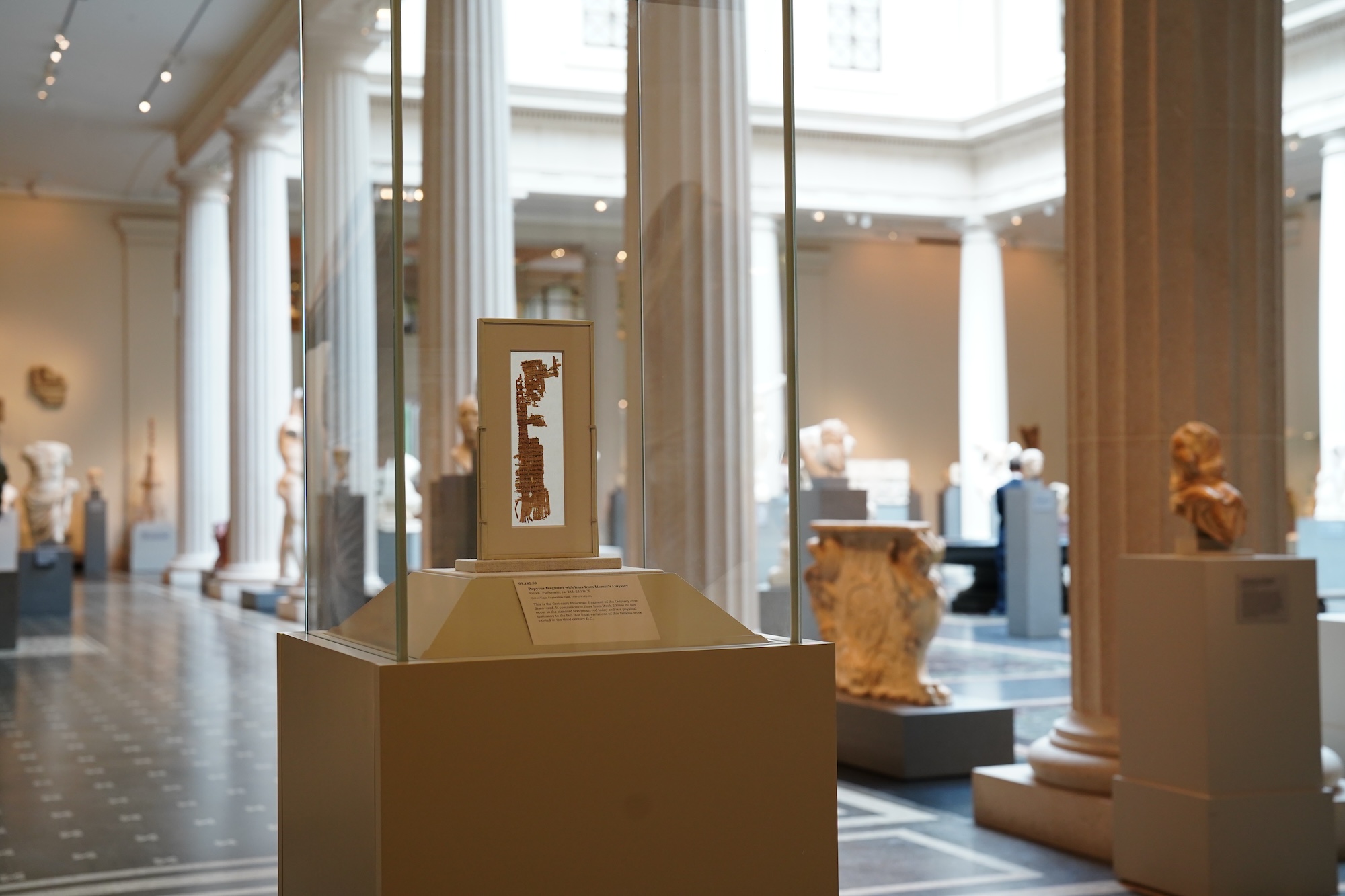
Photo by Rebecca Schear, Courtesy of The Met
If you haven’t been able to snag one of the elusive tickets to see Christopher Nolan’s adaptation of “The Odyssey” in IMAX 70-millimeter film at AMC Lincoln Square (join the club), a visit to the Metropolitan Museum of Art may temporarily suffice. The museum’s collection of Greek and Roman art comprises more than 30,000 works, including several related to Homer’s epic poem, a story that has inspired artists for thousands of years. Ahead, discover pieces currently on view at the Met that retell the story of Odysseus’ 10-year journey home to Ithaca after the Trojan War.
Since its creation in the 8th century BCE, the Odyssey has been retold and interpreted across various media over centuries. Museums around the world display these interpretations, from ancient Greek wine jars at the Museum of Fine Arts in Boston to a decorated chest from Renaissance Italy at the Art Institute of Chicago, as the New York Times reported.
Kenneth Lapatin, the curator of antiquities at the J. Paul Getty Museum in Los Angeles, told the Times: “You have it on vases,” he said. “You have it in silver. You have it in wall paintings. You have it on gems. You have it in sculpture.”
Several objects on view at the Met take you on Odysseus’ famed journey:
Papyrus fragment with lines from Homer’s Odyssey
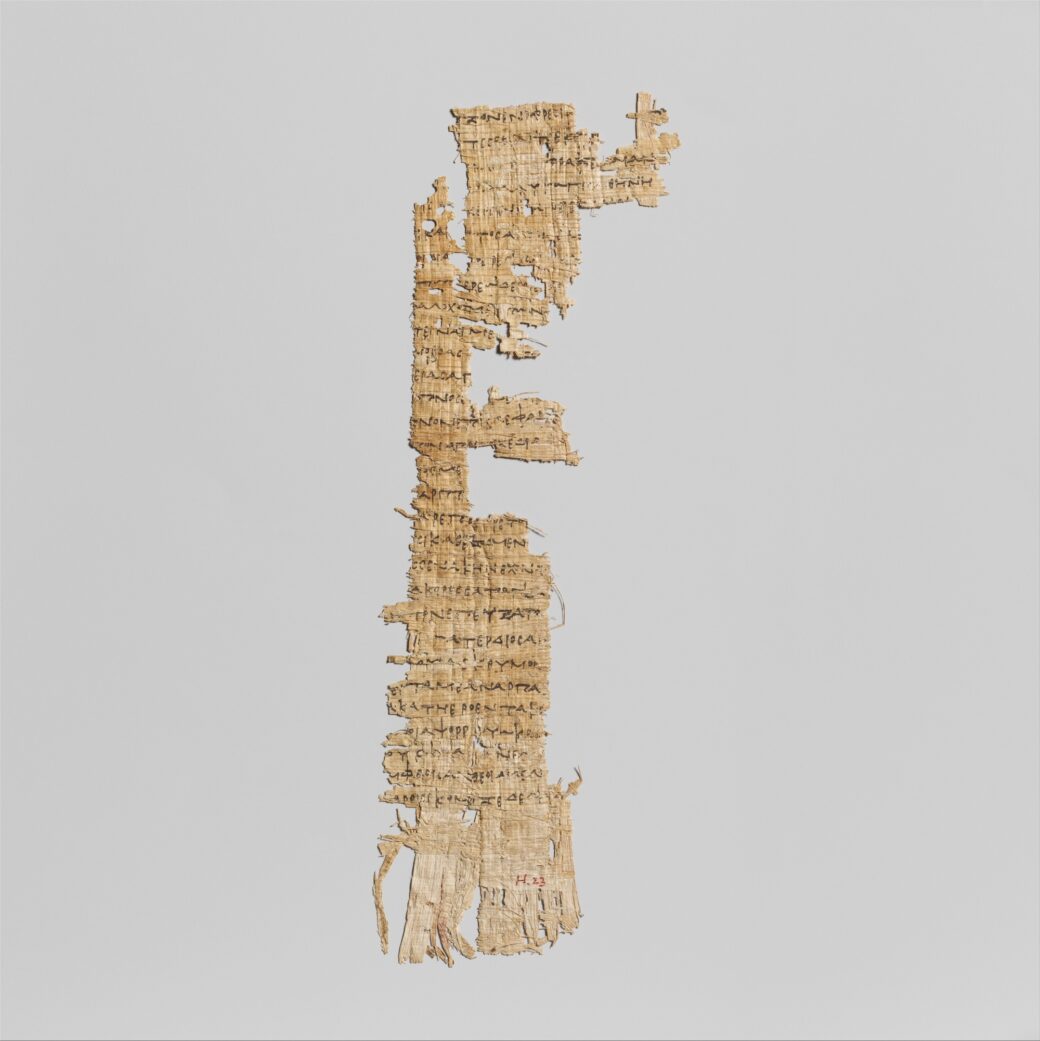
This is the first early Ptolemaic fragment of the Odyssey ever discovered. According to the museum, this piece dates to around 285-250 BCE from Egypt. The text was written with a stylus in ink made of charcoal and water on papyrus. It has three lines from Book 20 that do not exist in the standard text preserved today, showing that local variations of the work existed in the third century B.C.
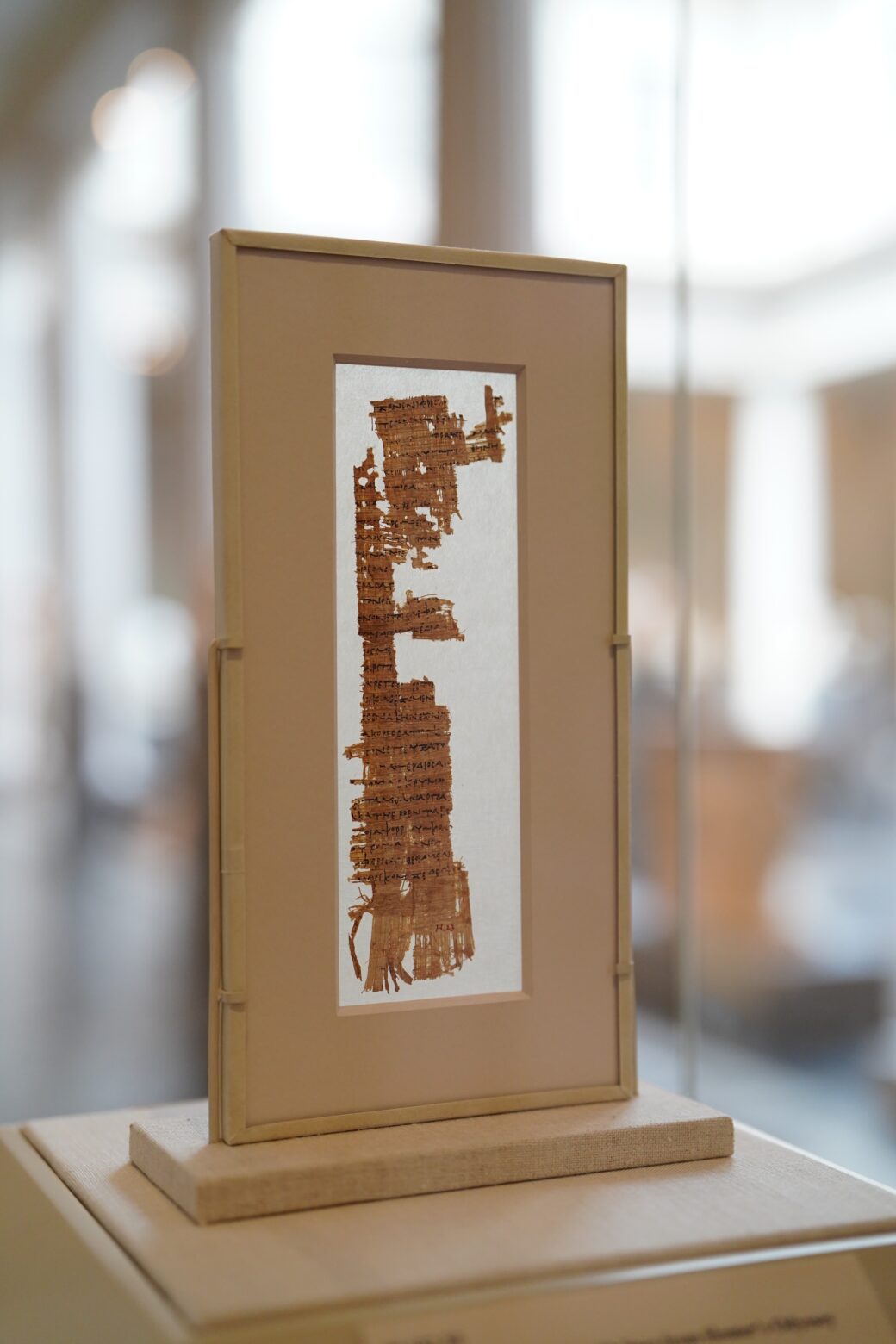
The Met just recently announced the fragment would be back on view after not being displayed to the public for many years. “It’s incredibly rare to have a fragment like this of such an early book,” Séan Hemingway, the Met’s curator in charge of Greek and Roman Art, said in a video posted by the museum on X.
Terracotta oil lamp
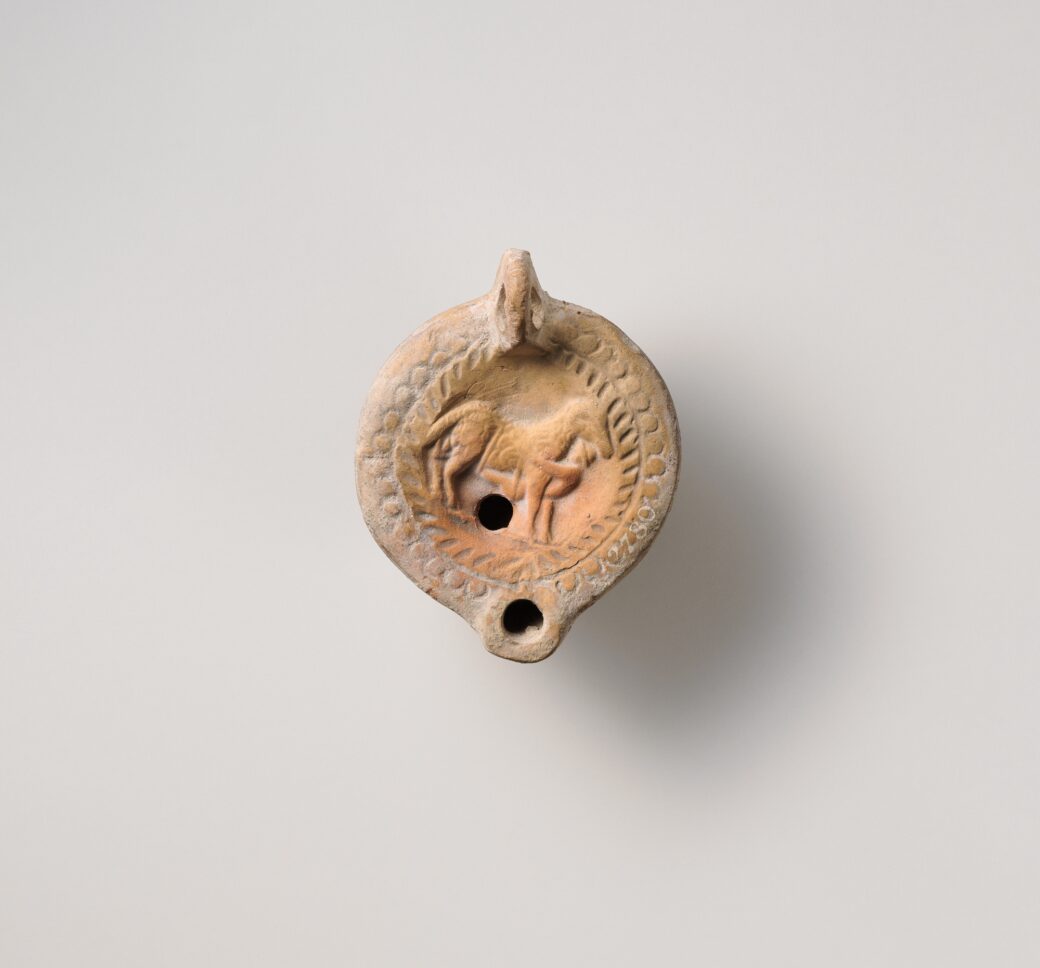
This terracotta oil lamp is a Roman artifact from 150-250 CE depicting Odysseus escaping from the Cyclops Polyphemus. The hero escapes the cave of the one-eyed monster by holding onto the belly of a large ram.
Terracotta plaque
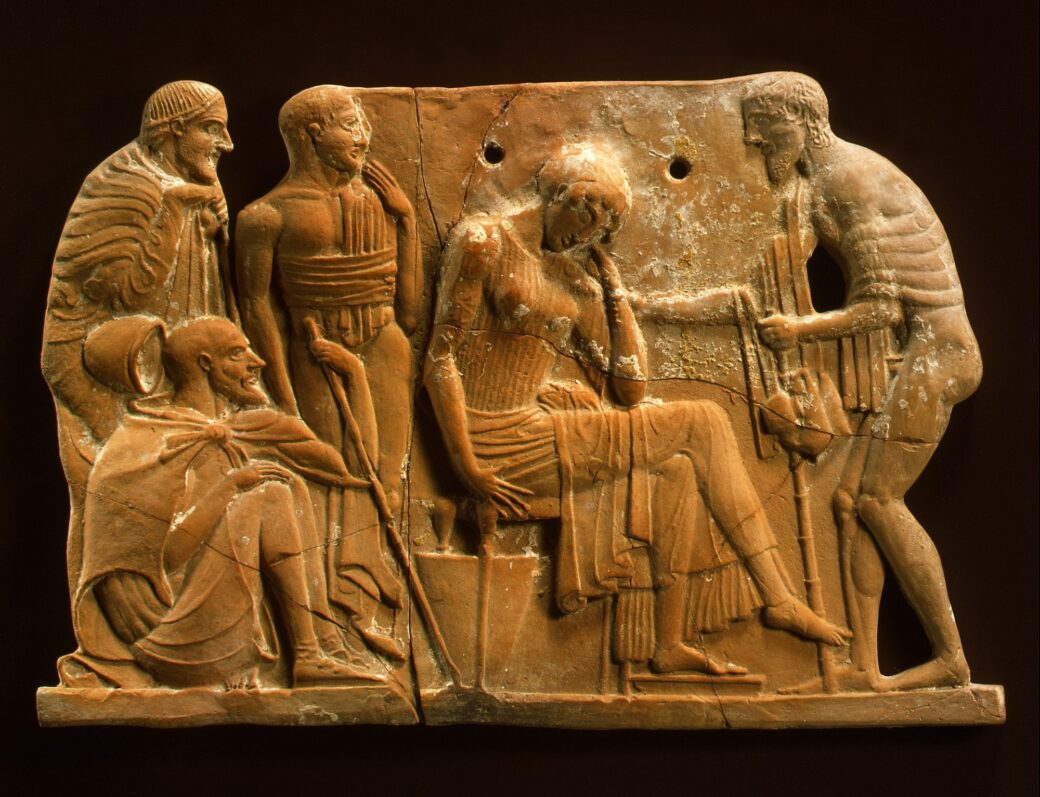
This terracotta plaque, dating to around 460-450 BCE, shows one of the final interventions of Athena, as the museum describes, at the end of Odysseus’ journey. The goddess disguises Odysseus as a beggar so he can sneak into the palace, where he finds his wife Penelope harassed by suitors who “deplete his wealth.” In the plaque, Penelope is seen expressing her grief, as members of his household, his father, Laertes, his son, Telemachos, and the swineherd, Eumaios, sit behind her.
Terracotta plaque
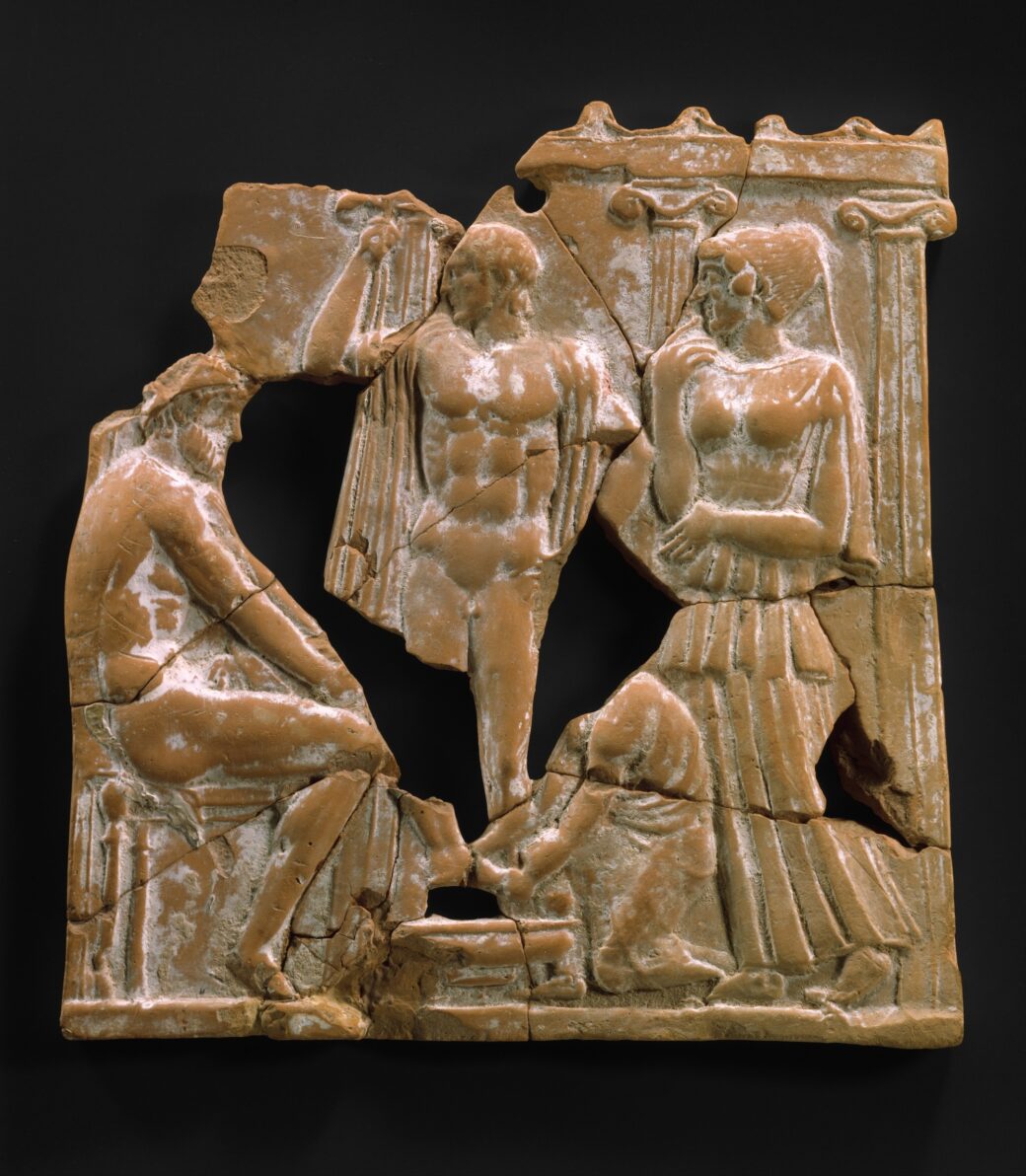
Terracotta plaque, ca. 450 BCE. Fletcher Fund, 1925. On view in Gallery 157.
This terracotta plaque shows another scene near the end of the Odyssey. After being away for 20 years, Odysseus is not recognized by his family at first. But his wet nurse Eurykleia, who is seen here washing his feet, recognizes him from an old scar. The plaque also shows his son Telemachos and wife Penelope.
As noted by the Met in a blog post, other items from the museum’s collection that are related to The Odyssey include a scarab made of carnelian that is carved with the Trojan Horse, a terracotta jug showing Odysseus using a bow, and a 1st-century BCE fresco showing Polyphemus in a more “compassionate light,” as the museum notes.
RELATED: