Central Park breaks ground on new $35.7M stormwater system
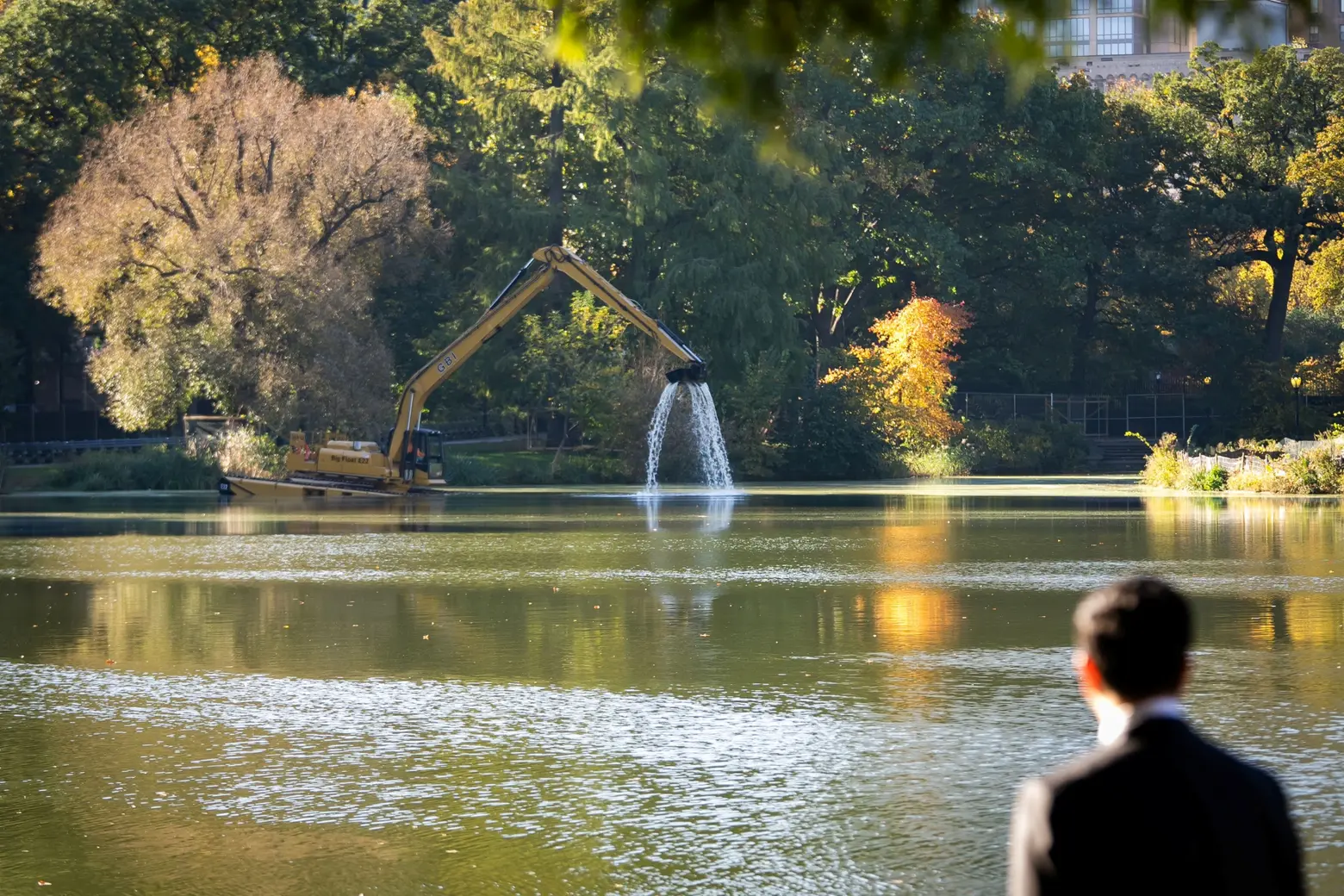
Credit: Ed Reed/Mayoral Photography Office on Flickr
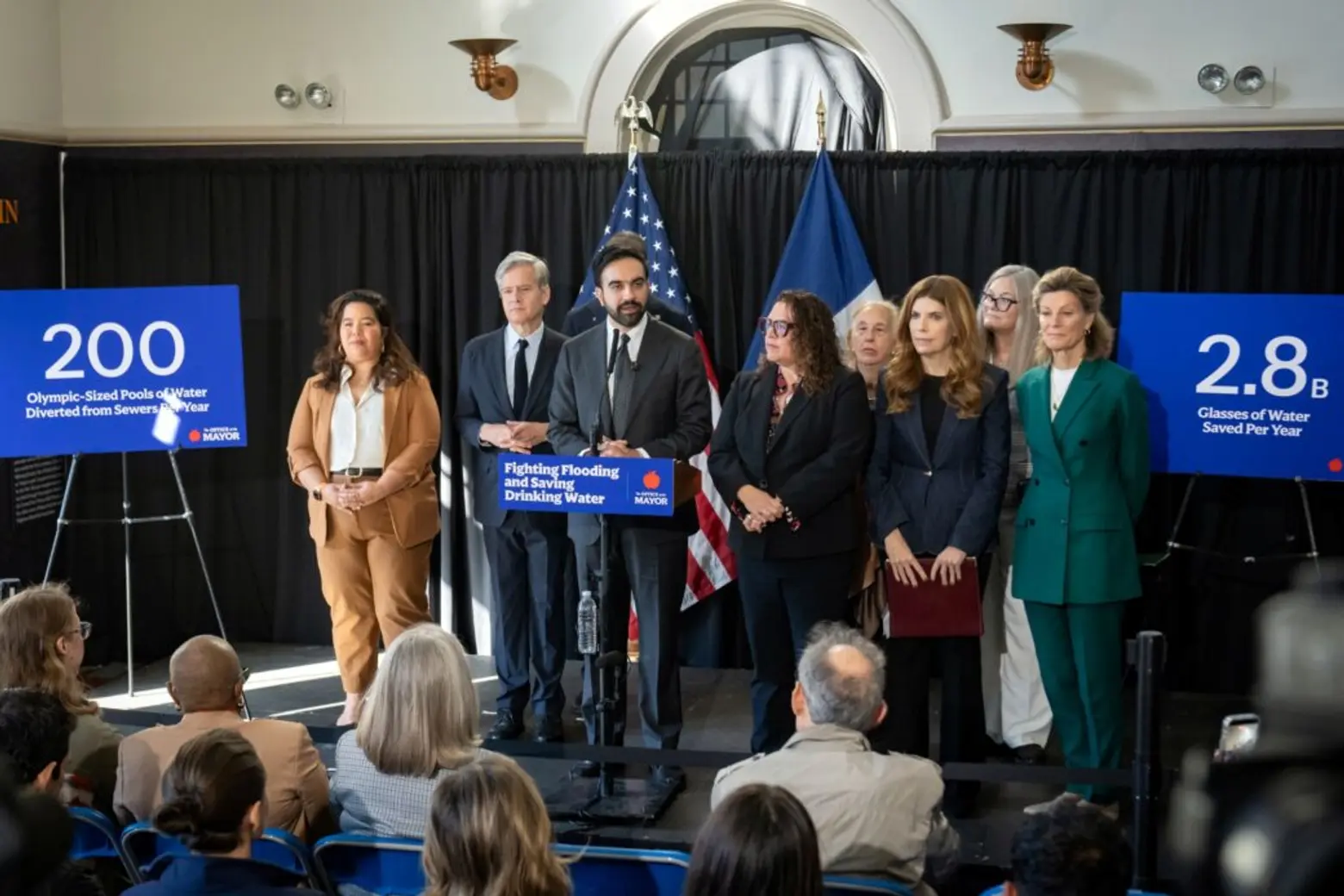
Work began this week on a $35.7 million project to reduce flooding across Harlem by improving stormwater management in northern Central Park. Gov. Kathy Hochul, Mayor Zohran Mamdani, and the Central Park Conservancy on Monday broke ground on the North End Recirculation Project, which will ease pressure on the combined sewer system serving the park and surrounding neighborhoods while conserving the city’s drinking water supply. Slated for completion in fall 2028, the project is expected to divert 132 million gallons of water from local sewers and save 175 million gallons of drinking water annually.
The new stormwater system will connect the Harlem Meer, the Loch, and the Pool, recirculating and filtering water between the three bodies of water. During dry weather, water will be diverted from the Meer and pumped to a point south of the Pool before flowing back through the system by gravity, according to a press release.
Ahead of a major storm, the system will lower the Meer’s water level to create additional capacity for incoming rainfall. As the storm arrives, rainwater will refill the Meer and the other water bodies. Once conditions return to normal, the system will resume its regular circulation process.
According to the state Department of Environmental Conservation, the work includes constructing filtration and pumping systems in below-grade vaults near the water bodies, along with associated controls, piping, and electrical equipment.
It will also modify the Meer’s existing outflow control structure and connect to existing storm sewers and water mains. Additional work includes removing sediment, stabilizing shorelines, and installing filter intakes and return piping in the Meer and the Pool. The project will also involve site restoration, new plantings, and pavement and curb repairs.
The project is also expected to improve water quality and reduce harmful algal blooms, which tend to thrive during warmer months.
The system will manage stormwater across a 204-acre park watershed, reducing stormwater flows into city sewers by 90 percent. It will also reduce the park’s reliance on the city’s drinking water supply, which currently serves as the primary water source for the Meer, the Loch, and the Pool.
During Monday’s press conference announcing the start of work, Central Park Conservancy President and CEO Betsy Smith called the effort the organization’s “most ambitious infrastructure project to date.”
“This is the kind of work that most people will never see but is essential to the future of Central Park and its surrounding neighborhoods,” Smith said. “It addresses a fundamental civic challenge: how we manage water more responsibly in one of the City’s most important public spaces.”
She added, “By conserving drinking water, managing stormwater during and after major storms and improving water quality, we are creating a system that will benefit the Park and surrounding communities for generations to come.”
All five community boards surrounding Central Park support the project. The Landmarks Preservation Commission reviewed the proposal as part of its oversight of the park’s designated scenic landmark status and issued a favorable advisory report. The city’s Public Design Commission granted final design approval in December 2024.
Funding comes from a mix of city, state, and private sources, including more than $19.6 million in city capital funding, of which $14.2 million comes from the city’s Department of Environmental Protection. Another $10 million comes from a Green Resiliency Grant awarded by the state’s Environmental Facilities Corporation.
Additional contributions include $2 million from City Council Speaker Julie Menin, $500,000 from Manhattan Borough President Brad Hoylman-Sigal, $100,000 from Council Member Gale Brewer, and $3.5 million from Central Park Conservancy donors.
RELATED: