Transit

October 25, 2017

MTA will test floor-to-ceiling protective barrier on L-train platform

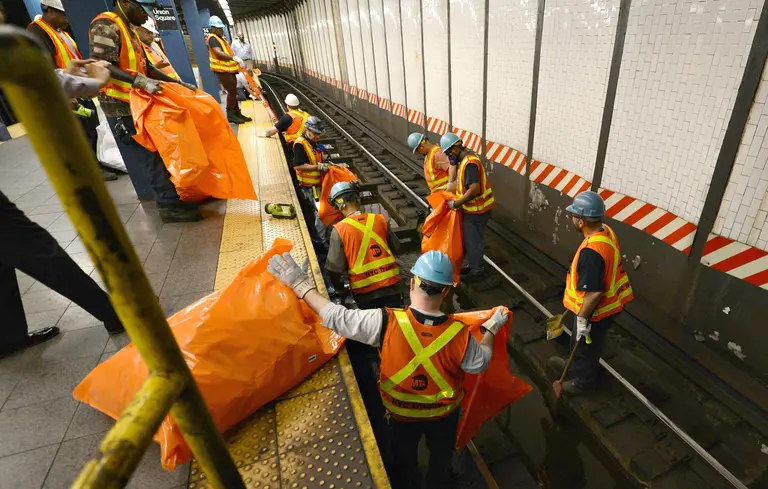
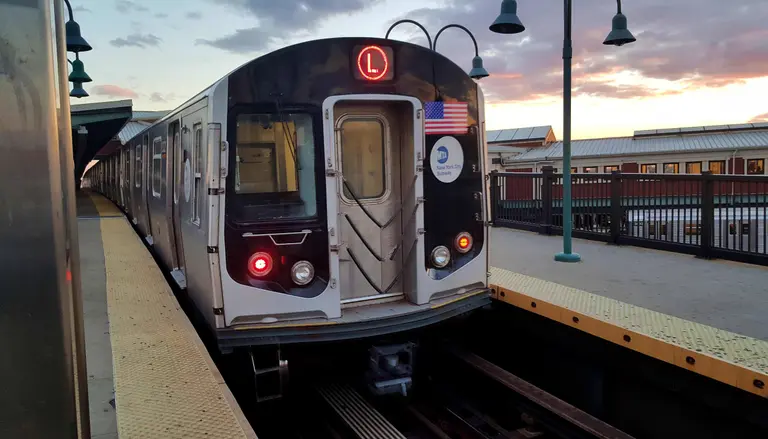
As part of its NYC Subway Action Plan aimed at enhancing the straphanger experience, the Metropolitan Transportation Authority (MTA) will install a floor-to-ceiling screen at the L-train’s Third Avenue station to prevent people from jumping or being pushed onto the tracks. As a pilot program, the new screen doors will be put into place in 2019 during the train’s shutdown and are expected to be ready in 2020 when the L-train resumes service. As the New York Post reported, the authority is still working on a design that could work in different sized-stations in the future.
More ahead

October 24, 2017

Former MTA official suggests a surcharge on rents to pay for transit maintenance

Although it’s obvious New York City’s subway system remains in desperate need of repair, it’s less clear how these renovations, and the required infrastructure maintenance, will be funded. During a “Fixing Mass Transit” event hosted by Crain’s, a former official with the Metropolitan Transportation Authority, Michael Horodniceanu, suggested creating a “transit-maintenance district.” By adding a $1.50 charge to the core business district’s $60-to $70-per-square-foot rents, more than a billion dollars could be raised for transit upkeep, Horodniceanu said (h/t Crain's).
Find out more
October 23, 2017

MTA’s new cardless fare system will be rolled out by 2020

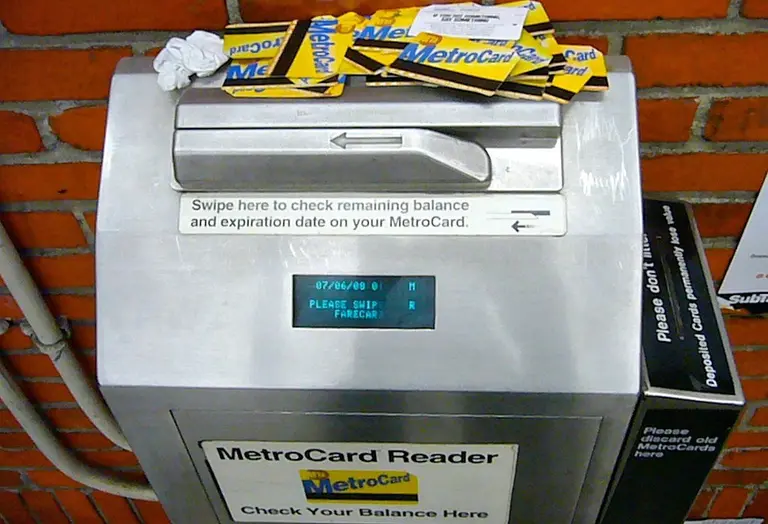
6sqft previously reported on the launch of testing on a mobile device scanning and fare payment system with the goal of eventually phasing out the use of MetroCards in the New York City subway system. New turnstiles have already been installed in the Bowling Green and Wall Street Stations, where riders can make the transfer using scanners that allow them to swipe their phones. According to the New York Times, a rollout of the new fare system citywide is not far off: The new readers will hit 500 subway turnstiles and 600 bus fare boxes starting in late 2018; the remainder of subway stations and buses will have them by late 2020.
Find out more
October 23, 2017

De Blasio unveils five-point plan to reduce congestion on NYC’s busiest streets

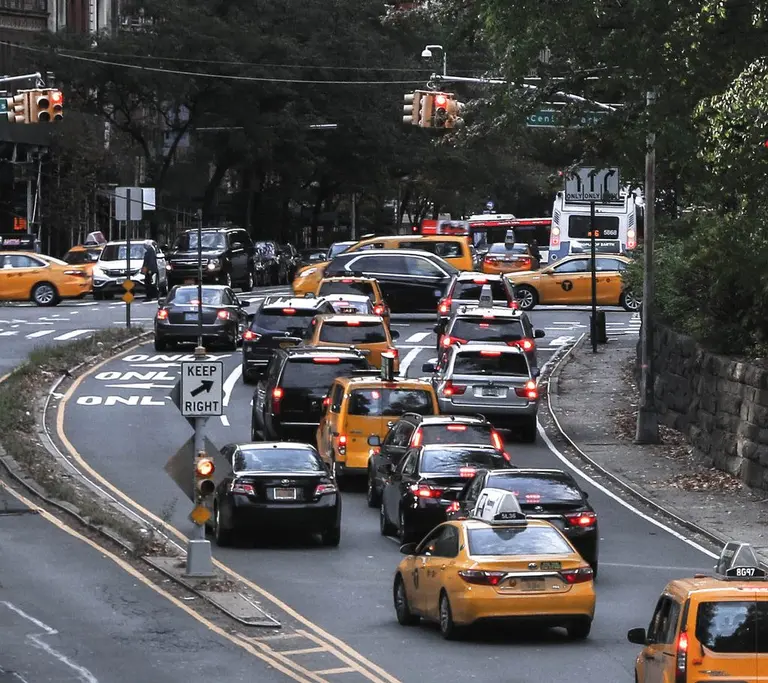
Mayor Bill de Blasio announced on Sunday a five-point plan designed to ease congestion in the city’s busiest neighborhoods. The program, called “Clear Lanes,” includes a series of initiatives like creating new moving lanes in Midtown, clearing curbs during rush hour and expanding NYPD enforcement of block-the-box violations. Beginning in January, in addition to the heavily congested Midtown, rush-hour deliveries will be banned during a six-month test run on Roosevelt Avenue in Queens and Flatbush Avenue in Brooklyn (h/t New York Times).
Find out more
October 20, 2017

A never-built transit plan would have shuttled New Yorkers through elevated tubes

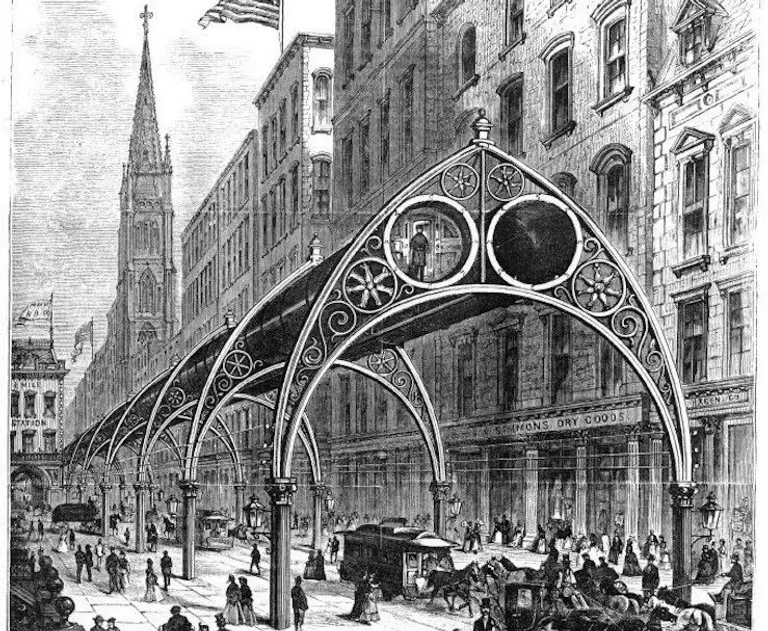
6sqft has marveled at the 1951 proposal by Goodyear Tires for a giant conveyor belt to carry people between Times Square and Grand Central and Alfred Ely Beach's underground pneumatic tube system. The New York Public Library's Science, Industry and Business Library (SIBL) fills in the blanks on an early idea for an elevated rail system that was ahead of its time. In 1870, Appleton's Journal of Literature, Science and Art introduced an article with a lament about the state of New York City public transportation that sounds uncannily familiar even in the 21st century: "the present means of travel are not only inadequate in extent, but are far too slow and cumbersome." The anonymous author then tells of the futuristic vision of one Rufus Henry Gilbert, a New York-born surgeon, Civil War veteran and inventor.
Find out more
October 17, 2017

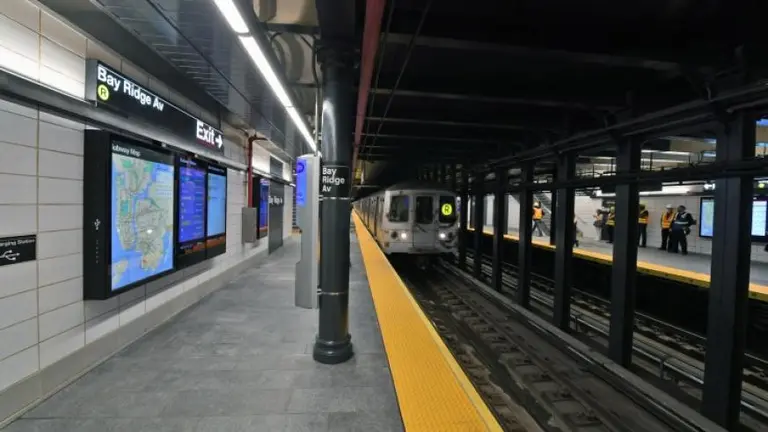
Bay Ridge Avenue R subway stop reopens with a modernized station

The Bay Ridge Avenue train station that was once a dark and dreary stop along the R line has completed its six-month renovations, the MTA announced Friday. The 102-year-old station was closed in April so the agency could bring it into the modern age with countdown clocks at all three entrances, Wi-Fi, digital displays, USB ports […]

October 17, 2017

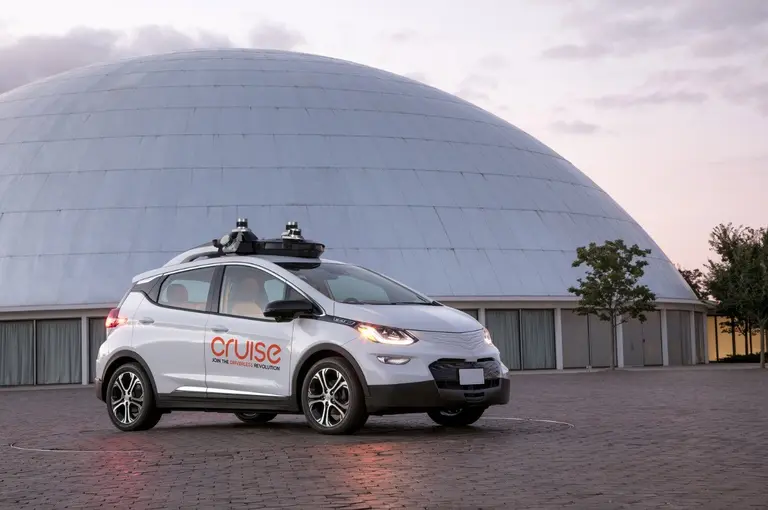
General Motors will bring self-driving cars to Manhattan in 2018

General Motors will bring a fleet of self-driving cars to a 5-square-mile section of lower Manhattan early next year, becoming the first company to deploy autonomous cars in New York City. As the Wall Street Journal learned, in partnership with driverless-car developer Cruise Automation, GM's testing will include an engineer in the driver's seat to monitor the performance and a second person in the passenger seat. In May, Governor Andrew Cuomo and the state began accepting applications from companies interested in autonomous technologies in New York. GM and Cruise's planned testing will become the first time Level 4 autonomous vehicles will be tested in NYC, getting a head start on making the Big Apple a hub for self-driving cars.
More this way
October 13, 2017

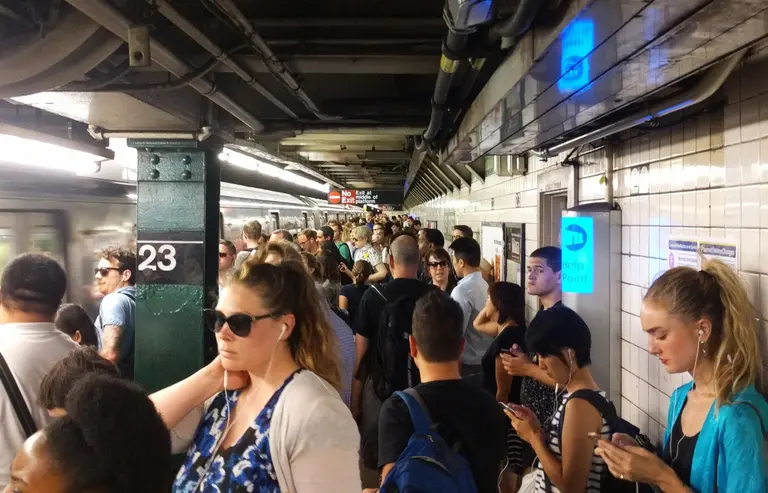
Subway delays cost New Yorkers $1.23M a day in lost work time

6sqft recently covered a report released by the city's Independent Budget Office that analyzed the impact of a growing number of subway delays and found that subway downtime could be costing the city up to $389 million annually in lost wages and productivity for businesses. According to the New York Times, the problem is getting worse, and it's affecting everyone's earnings. The cost of subway delays on a typical workday morning translates to $864,000 a day in lost work time for intra-city commuters, $257,000 for commuters who live beyond city borders and $109,000 for subway riders traveling for reasons other than work. The total daily cost: about $1.23 million. Multiplied by 250 working weekdays a year, that adds up to about $307 million that New Yorkers lose in work time every year.
Find out more
October 12, 2017

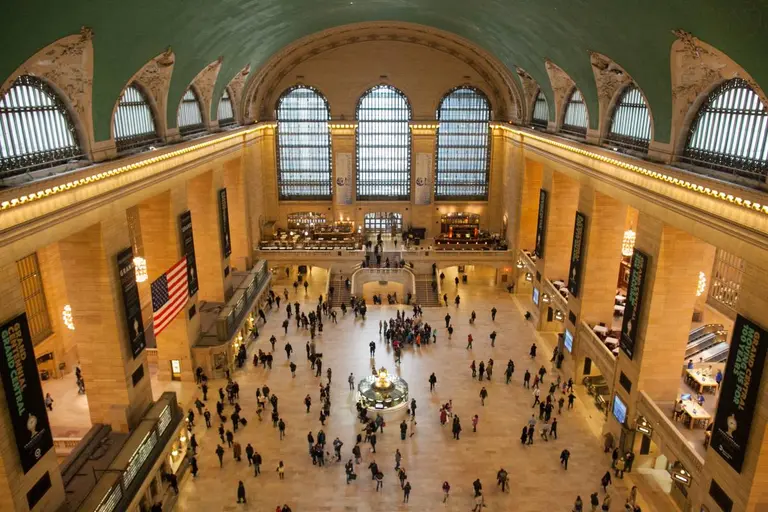
MTA will replace Grand Central Terminal’s old eateries with more ritzy ones

At Grand Central Terminal, it’s in with the new, out with the old. The Metropolitan Transportation Authority said it will replace stores that have served the busy terminal’s commuters for over two decades--Junior’s, Two Boots Pizza, Grand Harvest Wines--with more upscale shops. As the New York Post reported, new stores include Art Bird & Whiskey Bar, run by Oprah Winfrey’s former personal chef, Art Smith, and Tartinery, an open-face sandwich vendor. The restaurant refashioning process is expected to run through 2018.
Find out more
October 11, 2017

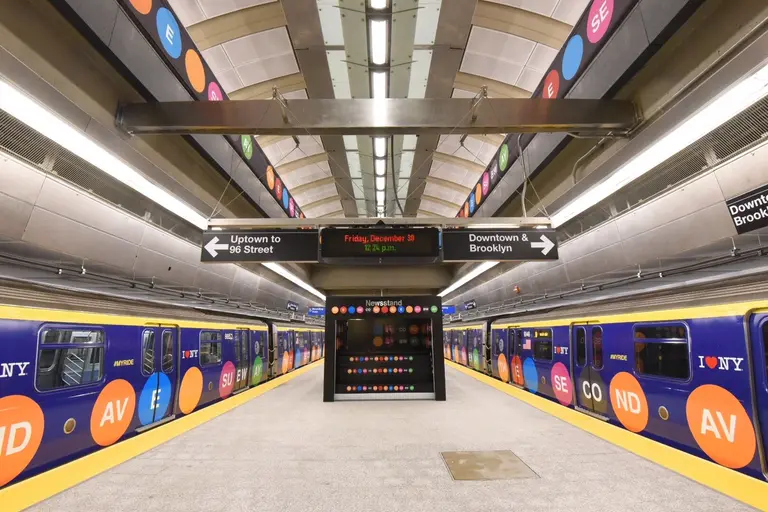
Why are the Second Avenue Subway’s newsstands still empty?

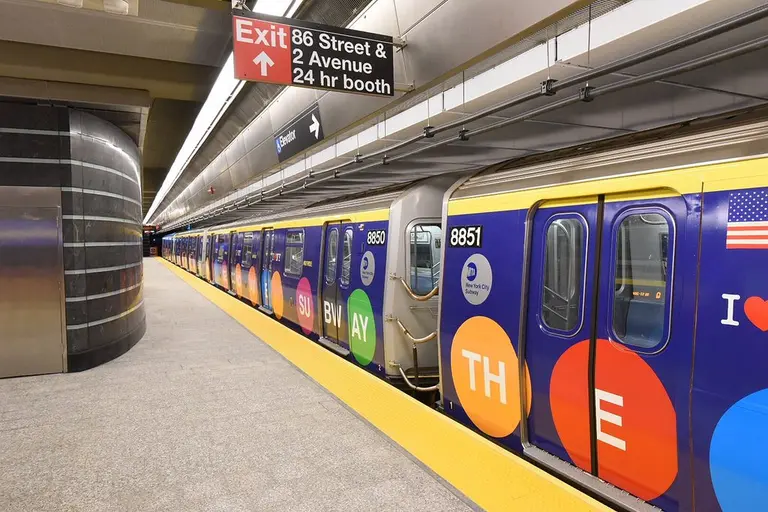
TodWhen the city first got a look inside the new Second Avenue Subway stations ahead of the line's New Year's Day 2017 opening, one of the shiniest, most colorful elements was the collection of newsstands. Ten months later, however, the kiosks still sit empty, decked out in the signature marketing of rainbow polka dots. According to the New York Times, the MTA says it's selected an operator for the newsstands, and though they won't reveal who, claim that they'll open soon. But is the fact that Q train riders seem overwhelmingly unaware and unaffected by the lack of newsstands a sign that they're not actually wanted or needed in a time when newspapers and magazines have been replaced by tablets and iPhones and candy and sodas with organic oatmeal and Juice Press?
Get the whole scoop
October 9, 2017

Quirky NYC Train Sign adds real-time subway data to home decor

New York City life got easier when we could see live data on when the next subway train would arrive via signs on platforms, in stations and on our mobile phones. Now a Brooklyn-based startup called NYC Train Sign has created a way to display that data in our homes and businesses (h/t Curbed). In an interesting evolution of the wall clock, the company's flagship product is an artfully-designed countdown clock that displays real-time MTA data for trains in both directions for any train stop you choose. You can add a customized text slide, logo and real-time weather updates, too.
Cool. Where can I get one?
October 9, 2017

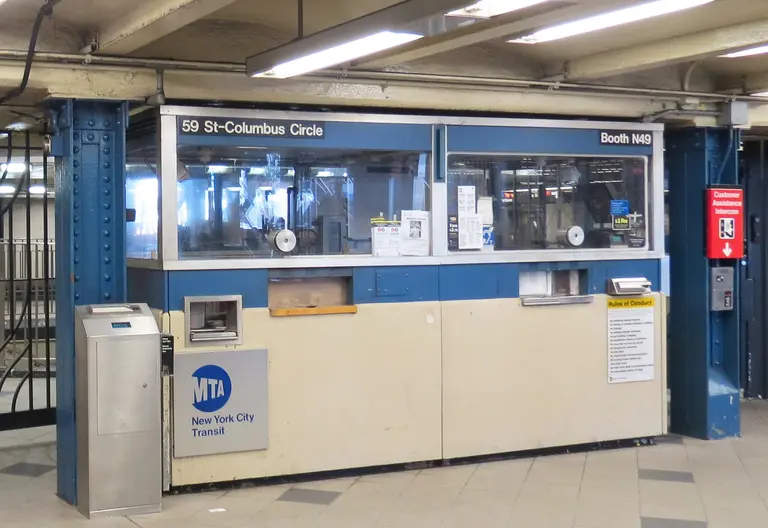
MTA may replace subway booth workers with roaming ‘ambassadors’

Fresh off their announcement that they've begun the testing phase of a mobile device scanning and payment system to replace the MetroCard, the MTA has revealed that they're also considering doing away with the ye-olde subway booth worker. According to the Daily News, the latest attempt at modernization will replace the workers with "customer service ambassadors" who will roam stations to provide real-time travel info and answer questions.
They're even getting new uniforms
October 9, 2017

MTA begins testing of new subway fare system, first step to phasing out MetroCards

With the goal of eventually phasing out the use of MetroCards in the New York City subway system, the MTA has begun the testing phase of a mobile device scanning and payment system. Untapped Cities reports that the first trials of a new mobile fare system are being installed at points where Metro-North commuters transfer to the subway, as an expansion of the Metro-North and Long Island Rail Road's eTix app. At specific stations, riders can make the transfer with turnstiles fitted with scanners that allow them to swipe their phones. The new turnstiles have already been installed in the Bowling Green and Wall Street Stations in lower Manhattan for a test run; the expansion is a pilot for the eventual phasing out of MetroCards altogether.
Find out when and where you can try out the new system
October 6, 2017

Airbus passes testing milestone on CityAirbus flying taxi

If you're stuck in city traffic, you'll appreciate this news: Airbus helicopters has just announced that it has completed its first full-scale testing on the propulsion system of the company's CityAirbus demonstrator, Designboom reports. The vehicle in question is a a multi-passenger, self-piloted electric vertical take-off and landing (VTOL) vehicle made for urban air mobility–in essence, a flying taxi.
Should we cancel our Uber account?
October 4, 2017

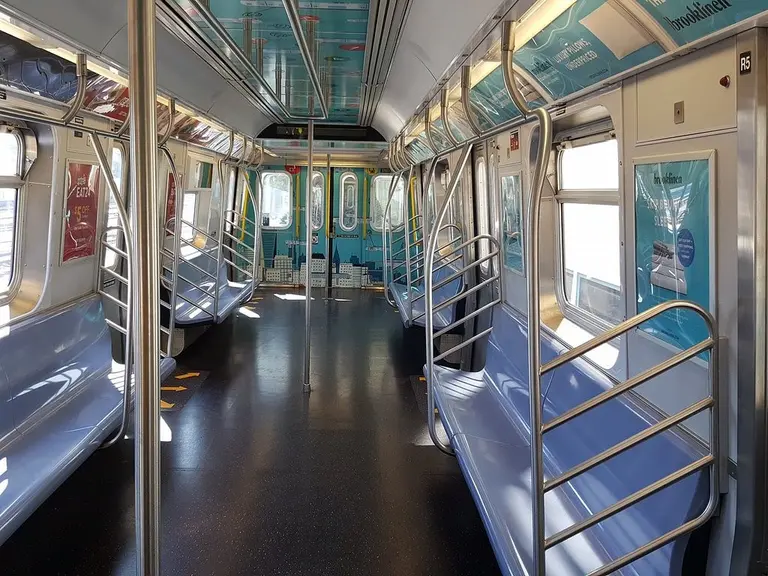
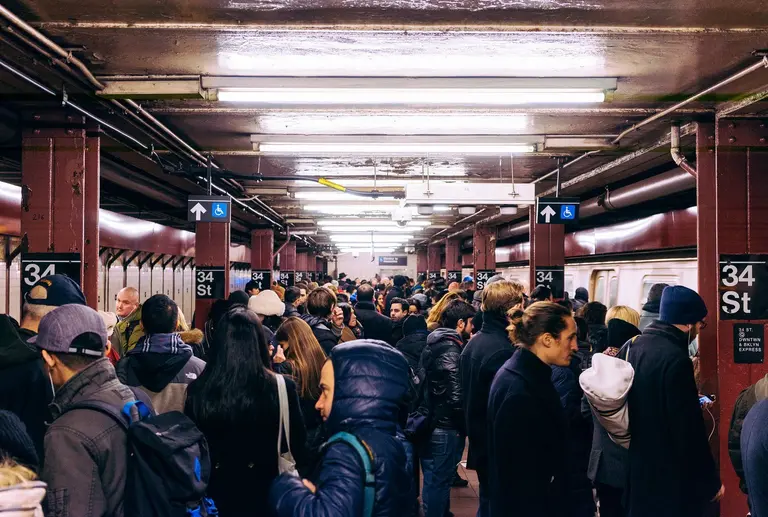
MTA refurbishes and removes seats from E train to squeeze more riders in cars

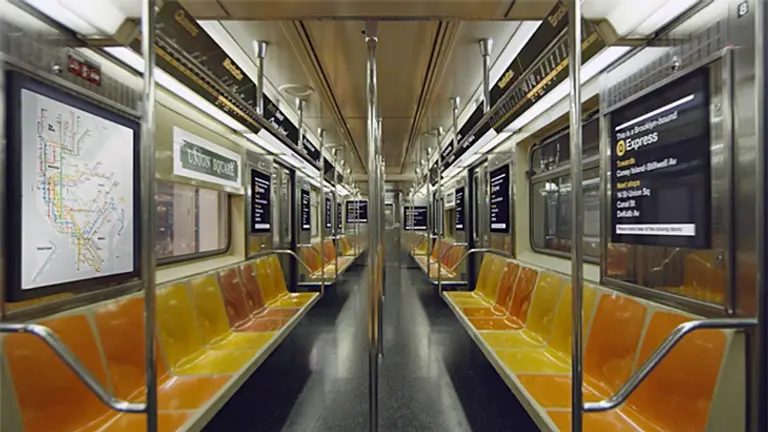
The Metropolitan Transportation Authority (MTA) on Tuesday revealed the first cars refurbished and reconfigured under their "NYC Subway Action Plan." The authority has removed some seats on a few E train cars to allow more riders to board and limit delays caused by overcrowding. The redesigned trains are part of a 100-car pilot created to increase capacity; seat removal is expected to increase capacity by between 80 and 100 passengers. Subway delays continue to be problematic for commuters: an analysis from City Comptroller Scott Stringer this week found the economic cost of subway delays could range from $170 million per year to $389 million in lost wages and productivity for businesses.
See the new trains
October 2, 2017

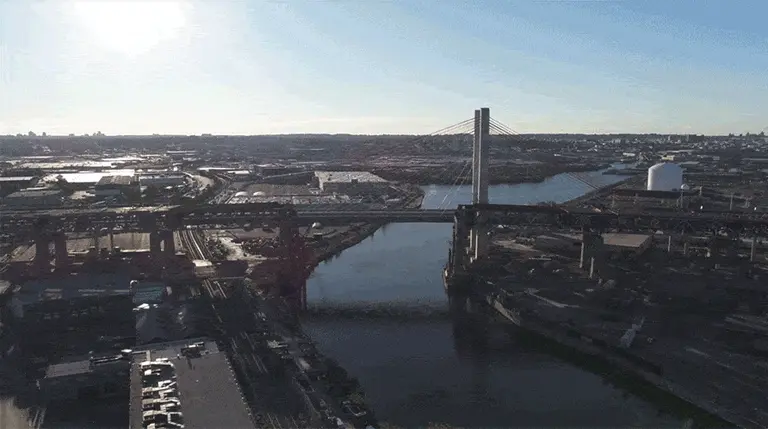
VIDEO: Watch the 78-year-old Kosciuszko Bridge crumble in minutes in ‘energetic felling’

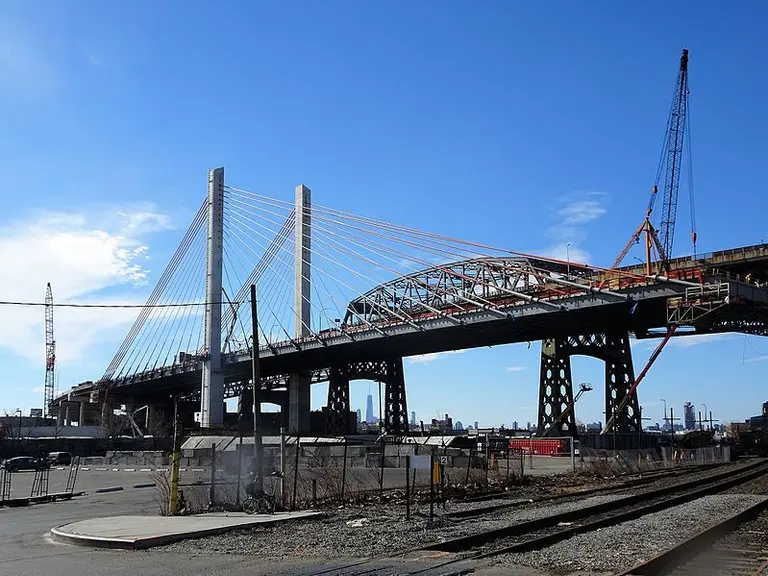
As of 8 a.m. Sunday morning, the old, traffic-snarling Kosciuszko Bridge is no more. The decaying bridge, which was officially closed in April when the eastbound span of its replacement opened, crumbled and fell to the ground in a matter of minutes in a process known as "energetic felling, the city's first ever implosion of a major bridge using explosives.
See the full video footage of the bridge getting blown to bits
October 2, 2017

Subway delays could cost the city’s economy up to $389M annually

New York City Comptroller Scott Stringer released an analysis on Sunday that found the economic cost of subway delays could range from $170 million per year to $389 million in lost wages and productivity for businesses. The comptroller’s office used data from the MTA that looks at train schedules, passenger volumes and wait assessments by each subway line (h/t NY Times). Stringer’s analysis listed five subway lines that cause the biggest economic losses: 5, 7, A, F, and 4 trains. During a news conference Sunday, Stinger said, "The summer of hell is turning into the fall of frustration for subway commuters."
Find out more
September 29, 2017

Kosciuszko bridge officially getting blown up this Sunday

The long-delayed demolition of two old sections of the Kosciuszko Bridge has been scheduled for this Sunday, October 1, according to AM New York. The demolition will herald the first stage of the $825 million construction of the new Kosciuszko Bridge. The first section of the new bridge was opened to eastbound and westbound traffic in April. The implosion of the 78-year-old bridge–still subject to change depending on weather conditions–has been scheduled for 8 a.m. according to Councilman Stephen Levin's office.
Find out more
September 28, 2017

MTA bringing 40,000+ digital video ad screens to subway cars and stations

If you thought those ads in taxicabs were annoying, wait until you see what's in store for NYC's beleaguered subway riders. The Post reports that the MTA has just announced that they'll be serving up ads on digital screens that will soon be appearing in subway stations and cars. Through a partnership with OUTFRONT Media, who will cover the $800 million installation, they plan to install nearly 14,000 screens in stations and platforms, 31,000 in 5,134 subway cars, and an additional 3,900 on LIRR and Metro North commuter trains.
You're kidding, right?
September 27, 2017

There’s a trolley car graveyard buried without a trace in Canarsie, Brooklyn

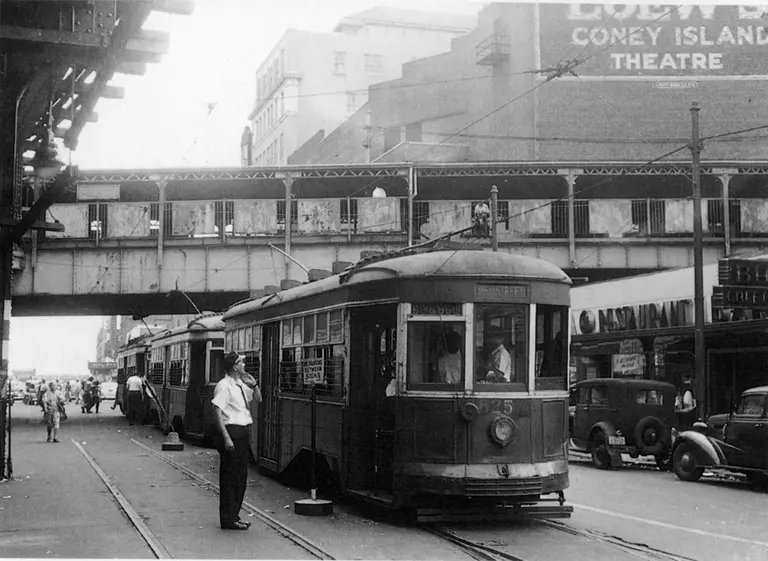
It may be hard to imagine today, but Brooklyn of the late-19th and mid-20th centuries was full of trolley cars. A number of different companies built out an expansive trolley system that connected residents to different neighborhoods and up to Queens—in fact, by 1930, nearly 1,800 trolleys were traveling along the streets of Brooklyn from Greenpoint to Gowanus to Bay Ridge and beyond. (The Brooklyn Dodgers were originally known as the “Trolley Dodgers,” for the practice of jumping out of the path of speeding electric streetcars.) But as automobiles began to take over the streets, trolley use diminished throughout New York. That, of course, meant that Brooklyn needed to figure out what to do with all those unneeded cars. According to Atlas Obscura, there were a few options, including sending cars to other cities as well as countries as far as South America, or selling them to museums. But the most fascinating—and forgotten—end to the Brooklyn trolley car can be found in Canarsie, where many were simply sunk into a pit about the size of a city block at the end of the Canarsie train line.
Learn more about this trolley graveyard
September 26, 2017

Map shows less than 1/4 of NYC subway stations are accessible

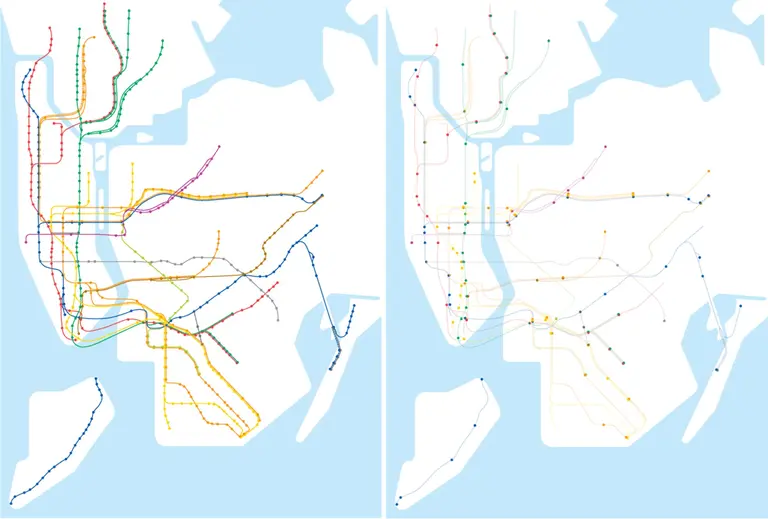
Out of NYC's 472 subway stations, only 117 are fully accessible, a major problem considering more than 800,000 or one-in-ten New Yorkers have a physical disability (and this doesn't take into account those who get injured or are with a stroller). The reason for this is that our subway system was built starting in 1904, long before the Americans with Disabilities Act (ADA) became law in 1990. To highlight the issue, the Guardian put together these startling maps that show worldwide metro systems in their entirety as compared to versions that only include fully accessible stations.
Get all the facts
September 25, 2017

MTA to provide more honest stats about subway service with new digital dashboard

While your train will probably still be delayed and overcrowded, the reasons behind your slow commute may soon become clearer. The Metropolitan Transportation Authority managers will present statistics to the agency's board on Monday that reflect the rider’s experience, rather than MTA staff. As the Daily News reported, the MTA will unveil a digital dashboard that informs strap-hangers how much longer than usual they will wait for a train and how many minutes are spent on delayed trains. Plus, the new service will provide a tally of major incidents.
Find out more
September 21, 2017

Eight months after opening, Second Avenue Subway still doesn’t have its safety certificate

When the Second Avenue Subway opened this past New Year's Day, it was nothing short of a miracle. Not only had the $4 billion infrastructure project been 100 years in the making but in the months leading up to its deadline, there was much talk about delays related to the system’s “rigorous testing schedule" not being met. As it turns out, the testing wasn't met; the Times tells us that when the train opened on January 1st, "the fire alarm system was still being tested and more than 17,000 defects found during inspections had not been fixed." And eight months later, the train is still operating under a temporary safety certificate.
Get all the details
September 11, 2017

John Catsimatidis wants his Coney Island development to have its own street car

As part of his “Ocean Dreams” development in Coney Island, billionaire real estate mogul John Catsimatidis plans to build a streetcar that would link the mixed-use project to the Stillwell Avenue subway station in Coney Island. Developed by Catsimatidis’ Red Apple Group, the project at 3514 Surf Avenue includes three buildings between West 36th and West 37th Streets that will feature retail space, 440 market-rate apartments and a 254-car garage. As the Coney Island News first reported, Catsimatidis said the streetcar would be available to everyone, not just residents of his development.
Find out more
September 8, 2017

Trump appears receptive to funding multi-billion Gateway tunnel project

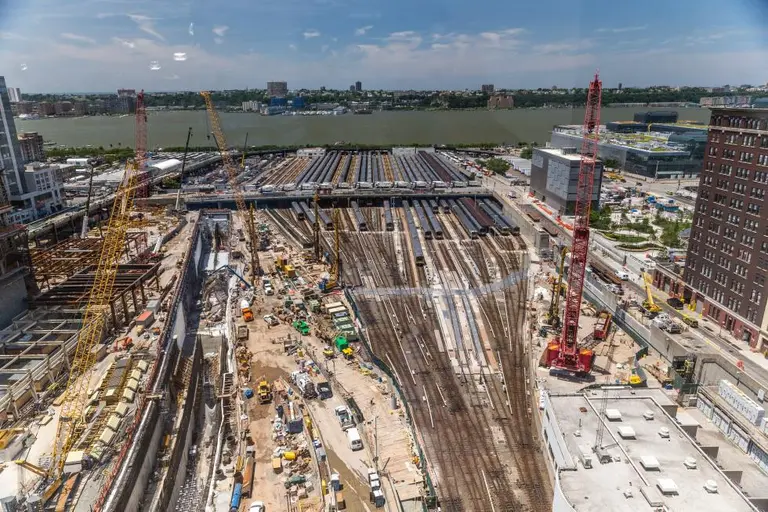
Even though the U.S. Department of Transportation withdrew in July from the board that oversees the Gateway Program, President Trump is keeping an open-mind about the nearly $30 billion project that would add a second rail beneath the Hudson River. According to the Daily News, during a meeting at the White House between New York and New Jersey elected officials and the Trump administration, the president showed interest in the project and appeared to support having the federal government pay for half of the cost. The new train tunnel under the Hudson would provide a critical link between NJ and Penn Station.
More this way